
Review · ISTANBUL WALKING TOURS
Istanbul City Walk: Blue Mosque, Hagia Sophia & Basilica
Old Istanbul packs centuries into a few streets. This three-hour walk links the Hagia Sophia, Blue Mosque, and Basilica Cistern with a licensed local guide, making it a useful first look at Sultanahmet. I like the small-group format and the way guides such as Emre, Hussein, Hassan, John, and Elif have brought history to life with clear explanations and plenty of time for questions.
I also like that the tour connects Byzantine churches, Ottoman mosques, an ancient stadium, and an underground water system in one compact route. The main drawback is that the sites can be crowded and noisy, and the phrase priority admission does not mean every entrance is queue-free, especially at the active Blue Mosque.
Key points to know before booking
- Three major sights in three hours: The route covers Hagia Sophia, Sultan Ahmed Mosque, the Basilica Cistern, the Hippodrome, and Sultanahmet Square.
- The Basilica Cistern may be an option: Check that your booking includes its admission, since the Cistern is not included with every version of the tour.
- Small groups help in crowded streets: Guides work hard to keep everyone together, and some departures use audio equipment.
- Expect a walking tour, not a bus tour: The monuments are close together, but there is still a moderate amount of walking and standing.
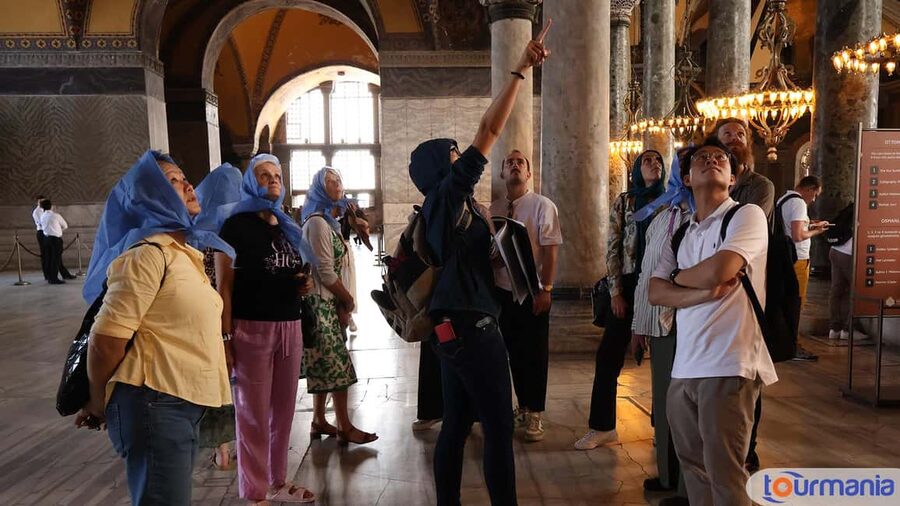
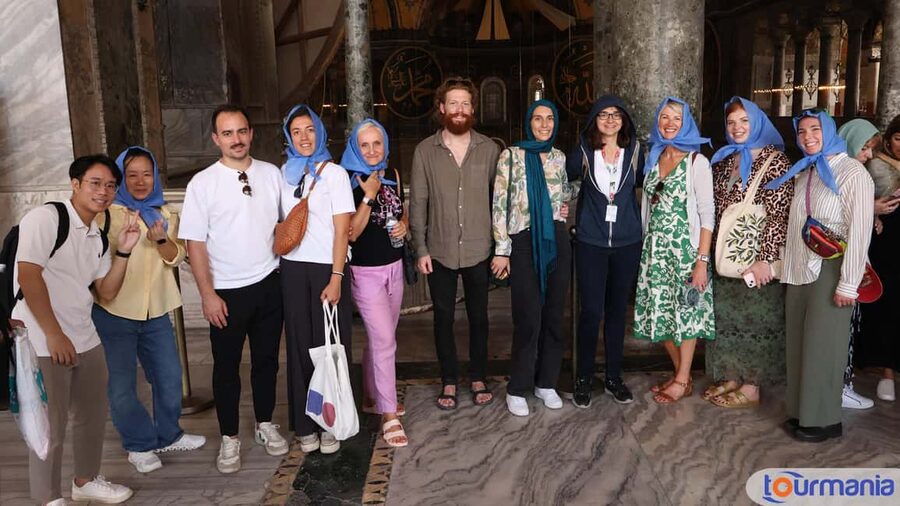
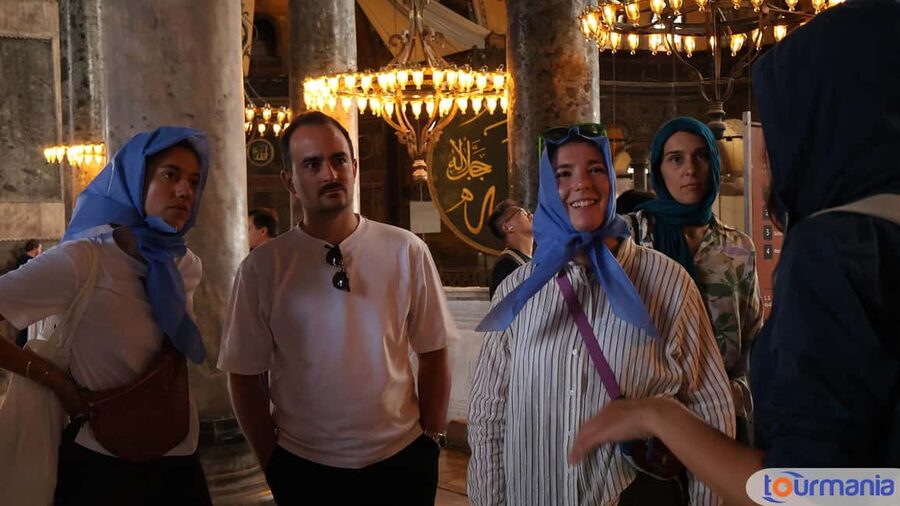
- Dress for active religious sites: Women need a headscarf for Hagia Sophia Mosque, and everyone must dress modestly for the Blue Mosque.
- The strongest feature is the guiding: The tour is best for first-time visitors who want context, not just quick photographs.
Why this Sultanahmet walk works well for a first visit
At $32 per person, this tour offers solid value if you want to see the center of Istanbul without sorting out tickets, routes, and background information on your own. The price includes a three-hour guided walk and priority admission to Hagia Sophia. Basilica Cistern admission is included only if you choose that option, so check the exact package before paying.
The real value is the guide. A good explanation changes the way you see these buildings. Hagia Sophia is not simply a grand dome, the Blue Mosque is not simply a place for pretty tiles, and the Basilica Cistern is not just a dark room with columns. The guide links each site to the city’s Byzantine and Ottoman periods, helping you understand how Istanbul changed hands and faiths over time.
The group size is designed to remain fairly personal. Several departures have been praised for being small enough to ask questions, and one 2024 departure had only one participant. That cannot be guaranteed, but the format is more intimate than a large coach excursion.
Meet at the German Fountain, known locally as Alman Çeşmesi, where your guide holds a Tourmania sign. Arrive early. The meeting area can be crowded, and the guide may not be able to wait more than five minutes for late arrivals.
A few more walks around Turkey worth a look
- Istanbul: Blue Mosque, Hagia Sophia, & Old Town Walking Tour
★ 4.8 · 2,372 reviews - Istanbul: Fener Balat Half-day Guided Walking Tour
★ 4.9 · 1,711 reviews - Istanbul Highlights Small-Group Walking Guided Tour
★ 4.5 · 1,346 reviews
Starting at the German Fountain and Hippodrome
The tour begins in Sultanahmet, Istanbul’s historic core. The German Fountain is a practical meeting place because it sits near the main monuments, but it can be busy with other groups. Look for the Tourmania sign and confirm your guide before setting off.
From here, the guide introduces the Sultanahmet district and the former Byzantine Hippodrome. This open square once served as a major public center for Constantinople, with chariot races and civic events shaping daily life. Today, the surviving obelisks and open space offer an easy introduction to how the old city was organized.
I like this early orientation because it gives you a map in your head. You learn why the monuments sit so close together and how the district functioned before the tour moves indoors. The Hippodrome stop is also a chance to take photos without entering a ticketed site.
The downside is sound. Cars, tour groups, street activity, and special events can make it hard to hear. One departure was affected by a race in the square, and another group found the noise difficult at times. If your guide uses an audio system, keep the receiver close and tell the guide if the sound cuts out.
Seeing the Blue Mosque as an active place of worship
The Sultan Ahmed Mosque, usually called the Blue Mosque, is one of the tour’s most anticipated stops. Its nickname comes from the İznik tiles used in the interior, where blue tones help create the building’s famous look. The guide explains the mosque’s design and its place in Ottoman religious life rather than rushing you through for a single photograph.
The mosque remains an active place of worship. That matters in practical terms. Prayer times can limit access, and you may need to wait outside before entering. There is no reliable way to avoid every delay here, so keep your schedule flexible after the tour.
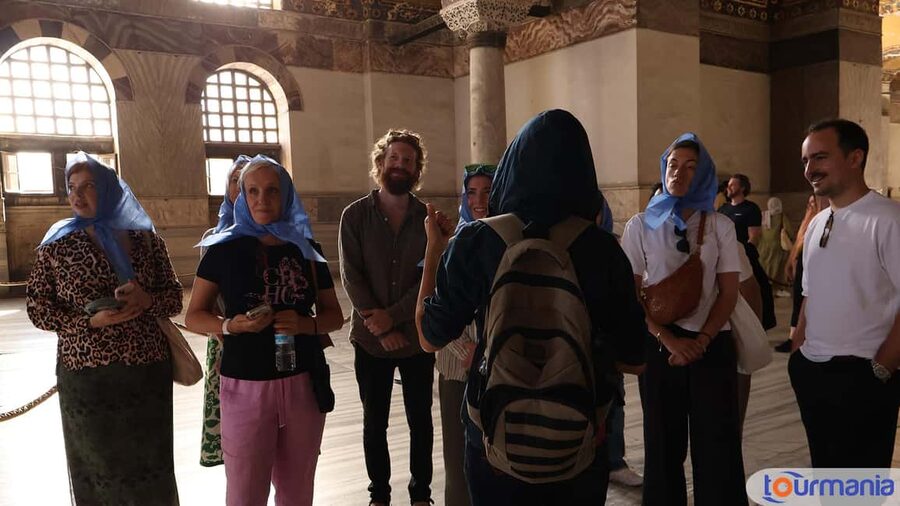
Modest clothing is required. Shorts and short skirts are not suitable, and women need a headscarf when entering the mosque. Bring one with you if possible. Comfortable shoes also matter because you will remove footwear before entering, then continue walking afterward.
Flash photography is not allowed. Large bags, backpacks, and large umbrellas may also be refused for security reasons. Carry only what you need for the walk, such as water, sunscreen, a camera, and a small personal bag.
The Blue Mosque is especially rewarding with a guide because the building can feel visually overwhelming. A good explanation helps you notice the tiles, the dome, and the way the interior works as a place of worship. Guides including Emre, Fatih, Hussein, and others have received strong praise for explaining the building clearly and answering questions.
Entering Hagia Sophia and its layers of faith
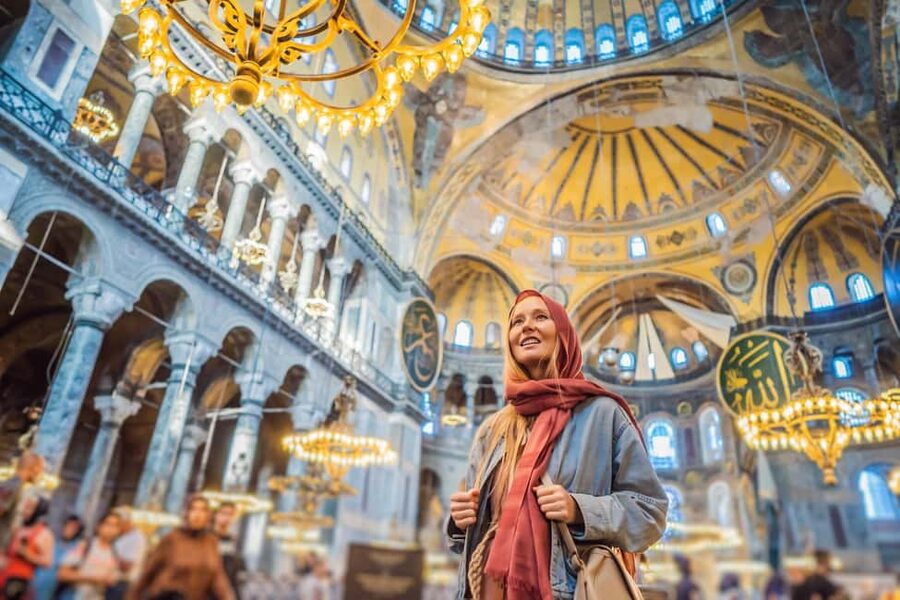
Hagia Sophia is the tour’s major architectural stop. Its enormous dome, Roman columns, Christian mosaics, paintings, minarets, and mosque features tell a complicated story. The building has served as a church and a mosque, and the tour explains how it changed after the Ottoman conquest of Constantinople.
Priority admission to Hagia Sophia is included for the standard small-group experience. This can save meaningful time when the ticket line is long. Keep your expectations realistic, though. Priority access does not guarantee an empty entrance, and crowd levels can change throughout the day.
Inside, the guide points out details you could easily miss alone. You learn about the Virgin Mary mosaic, the later İznik tiles, and the Ottoman decision to bury sultans in the courtyard. These details show how new rulers added to the building rather than wiping away every earlier layer.
That mixture is what makes Hagia Sophia so powerful. Christian imagery and Islamic decoration occupy the same monumental space, reflecting the city’s changing rulers and communities. The guide’s role is important here because the building can be difficult to understand without a timeline.
The interior may be noisy, and several groups can gather in the same areas. One guide’s microphone occasionally cut out, while another group found it difficult to hear during outdoor noise. Stay close, use the audio equipment when provided, and ask the guide to repeat anything you miss.
Women should bring a headscarf for entry to Hagia Sophia Mosque. Modest dress is also expected. Flash photography is prohibited, and large bags and umbrellas are not allowed inside.
Same streets, a different way to see them:
- Istanbul: European and Asian Side Guided Foodie Walking Tour
★ 4.9 · 1,038 reviews - Istanbul: Colorful Fener & Balat Walking Tour w/Expert Guide
★ 4.7 · 234 reviews - Istanbul: Asian Side Walking Tour with Ferry Ride
★ 4.4 · 224 reviews - Istanbul Highlights Small-Group Walking Guided Tour
★ 4.4 · 179 reviews
Walking through the Basilica Cistern
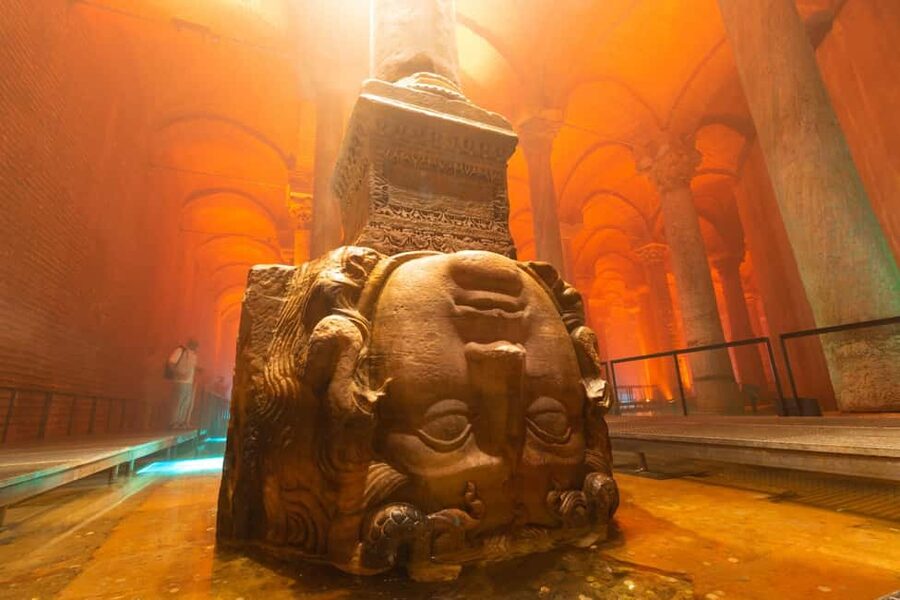
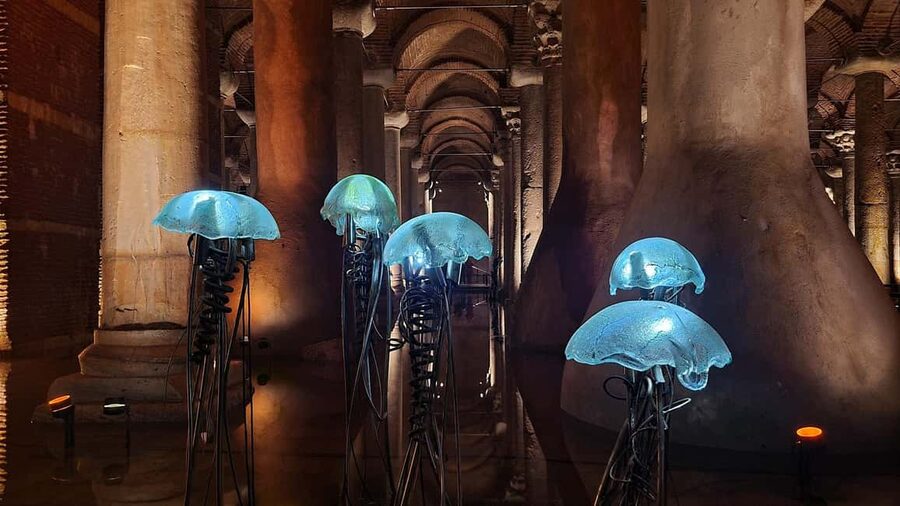
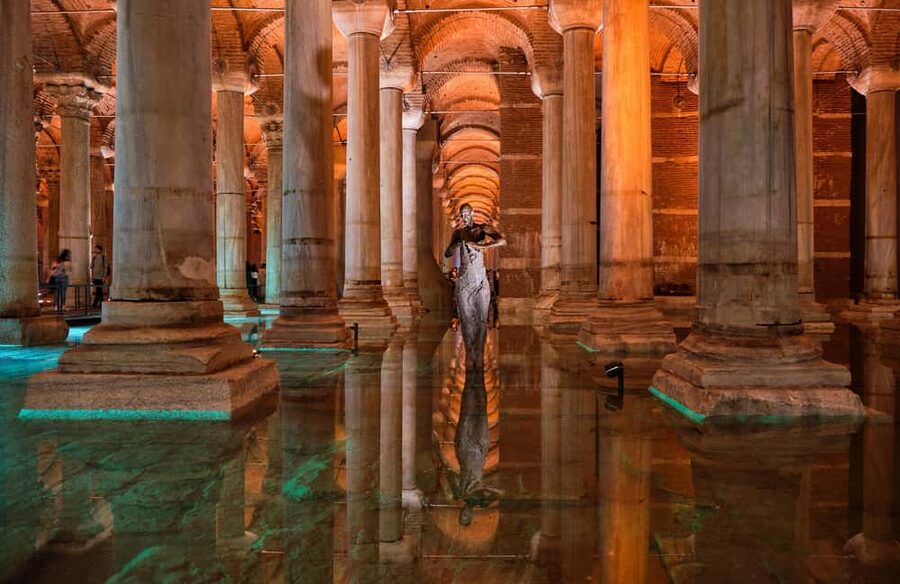
The Basilica Cistern, often called the Subterranean Palace, gives the tour a completely different mood. You descend below the city to see a Byzantine water reservoir supported by rows of columns. Wooden walkways pass above the water, creating a dark, atmospheric route through the underground chamber.
The famous upside-down Medusa heads are the star attraction. The guide explains their place in the Cistern and helps you find the best points for photographs. This is one of the stops where a guide adds real value because the details are spread around a dim, echoing space.
Choose the Cistern option carefully when booking. Admission is included only with the selected package, and one participant felt the tour title was misleading because the Cistern was not included in their version. This is the most important detail to confirm before you reserve.
The Cistern may not suit everyone. The tour information specifically warns that it is not suitable for people with claustrophobia, and the whole experience is not wheelchair accessible. The walkways and underground setting also make comfortable shoes especially useful.
Many people consider the Cistern the highlight because it feels so different from the mosques above ground. You move from open courtyards and bright tilework into a quiet underground space, then return to the streets of Sultanahmet with a better sense of how the Byzantine city managed water.
How the three-hour pace feels
Three hours is enough for an introduction, not an exhaustive study. You will hear the main historical points, see the most important features, and have time for photographs and questions. The route does not include hotel pickup, drop-off, meals, or drinks, so plan to eat and drink separately.
The walking is moderate. The monuments are close together, but you will stand, walk on uneven surfaces, remove shoes, and deal with busy public spaces. Children under five may find the pace difficult, and pregnant people or anyone with back problems should consider the amount of walking before booking.
The best guides keep the group moving without making it feel rushed. Hassan, Hussein, John, Emre, Fatih, Elif, Deniz, Beritan, and Samed have been praised for clear explanations, good pacing, humor, patience, and attention to individual needs. One guide used visual aids, while others helped with photos and offered suggestions for exploring the city afterward.
That personal attention matters in Sultanahmet. The district attracts many tour groups, and it is easy to lose your guide near an entrance or courtyard. Stay near the sign or audio group, especially when moving between sites.
Language, group size, and the guide’s role
The tour is available with guides speaking English, German, Russian, French, Italian, Arabic, Portuguese, and Spanish, subject to availability. If you need a specific language, confirm it before booking rather than assuming every departure offers every option.
The small-group setup is one of the tour’s strongest features. You can ask questions without interrupting a large crowd, and the guide can keep an eye on the group. It also makes it easier to hear, though no system can fully defeat the noise around the busiest monuments.
One practical concern is that not every guide uses the same equipment or style. Some groups praised audio devices, while others struggled when a microphone failed or when outdoor noise became loud. If you cannot hear, speak up early. A short pause or repeated explanation can make a big difference.
Private groups are available if you want more control over pace and questions. The standard tour is likely the better value for solo visitors and couples who want expert guidance without paying for a fully private outing.
What to bring and what to leave behind
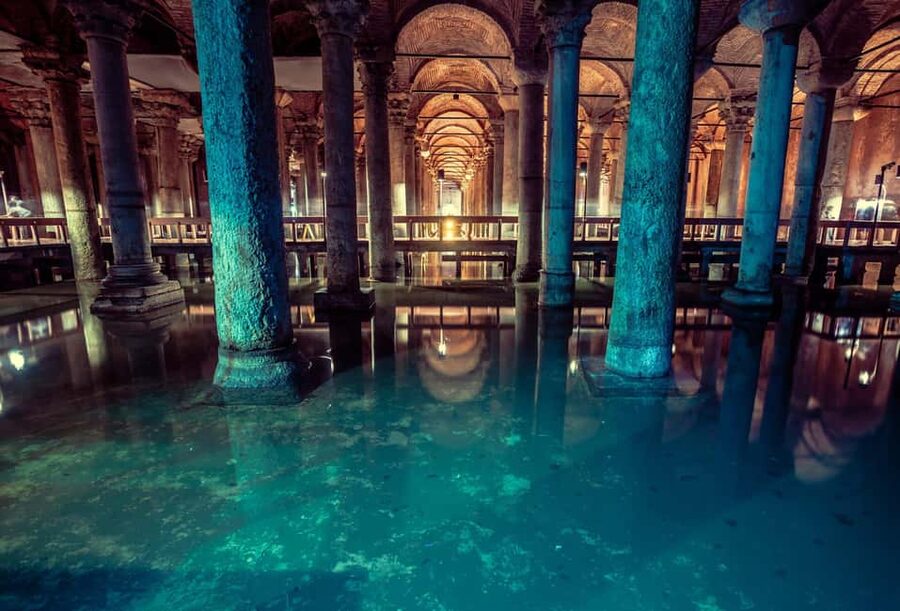
Wear comfortable walking shoes. You will spend the full tour on foot, and the Cistern’s walkways and the mosque entrances make practical footwear more useful than stylish footwear.
Bring water, a camera, sunscreen, and a sun hat for the outdoor portions. A headscarf is required for women entering Hagia Sophia Mosque, so bringing your own is the simplest approach.
Avoid shorts, short skirts, smoking, flash photography, large backpacks, large bags, and large umbrellas. Security rules can slow entry, so traveling light helps the group move through the sites.
The tour is not wheelchair accessible and is not suitable for people with mobility impairments. It is also a poor match for people with claustrophobia because of the underground Cistern. If you have mobility limitations but can walk with care, contact the provider before booking rather than relying on assumptions.
Should you book the Istanbul City Walk?
Book this tour if you are visiting Istanbul for the first time and want the city’s major Sultanahmet sights explained in a single morning or afternoon. The price is reasonable for a licensed guide, Hagia Sophia priority admission, and a small-group route through several of the city’s most important monuments.
Choose the Basilica Cistern option if you want the full three-site experience. Confirm that admission is included, and leave room in your plans in case the Blue Mosque closes temporarily for prayer or the entrances are crowded.
Skip it if you prefer to explore slowly on your own, dislike group timing, or need a fully accessible route. For most first-time visitors, though, this is a useful introduction: compact, historically focused, and strongest when your guide is as attentive as the highly praised guides who have led recent departures.
FAQ
How long does the tour last?
The guided tour lasts three hours.
Where does the tour meet?
It meets at the German Fountain, also called Alman Çeşmesi, in the Sultanahmet area. The guide holds a Tourmania sign.
What sites are visited?
The route includes the Sultanahmet district, Hagia Sophia, Sultan Ahmed Mosque, the Hippodrome, Sultanahmet Square, and the Basilica Cistern if that admission option is selected.
Is Basilica Cistern admission included?
It is included only when you select the option that includes Basilica Cistern priority admission. Check your chosen package before booking.
Are Hagia Sophia tickets included?
Priority admission tickets to Hagia Sophia are included for the small-group tour. The provided information specifies that this benefit does not apply to private tours.
What languages are available?
Guides may be available in English, German, Russian, French, Italian, Arabic, Portuguese, or Spanish. Availability depends on the selected departure.
What should I wear?
Wear comfortable shoes and modest clothing. Shorts and short skirts are not suitable for the Blue Mosque, and women need a headscarf for Hagia Sophia Mosque.
Is the tour suitable for wheelchair users?
No. The tour is not wheelchair accessible and is not suitable for people with mobility impairments. It is also not recommended for people with back problems or claustrophobia.
Just added around Turkey
- Istanbul Highlights Small-Group Walking Guided Tour★ 4.4 · 179 reviews
- Istanbul: Private Guided Walking Tour★ 4.8 · 167 reviews
- Istanbul City Walk: Galata Tower, Istiklal Street & Karaköy★ 4.7 · 97 reviews
- Istanbul: Best of the City Private Full-Day Walking Tour★ 4.5 · 125 reviews
- Istanbul: Colorful Fener & Balat Walking Tour w/Expert Guide★ 4.7 · 234 reviews
- Istanbul: Asian Side Walking Tour with Ferry Ride★ 4.4 · 224 reviews
- From Kusadasi/Izmir: Ephesus Private Tour with Less Walking★ 4.9 · 121 reviews
- Cappadocia: Guided Full-Day Tour with Lunch and River Walk★ 4.6 · 99 reviews
Istanbul Walking Tours, compared.
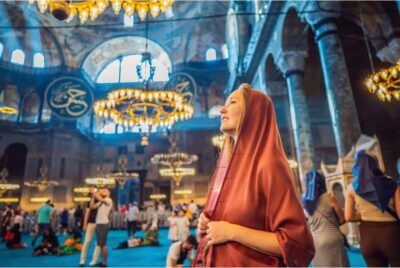
Blue Mosque, Hagia Sophia, & Old Town Walking Tour
Read our review →

Istanbul Highlights Small-Group Walking Guided Tour
Read our review →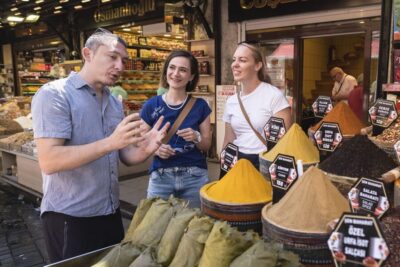
European and Asian Side Guided Foodie Walking Tour
Read our review →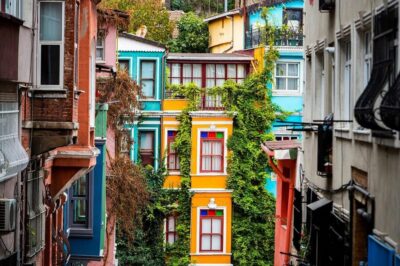
Colorful Fener & Balat Walking Tour w/Expert Guide
Read our review →
Istanbul Highlights Small-Group Walking Guided Tour
Read our review →
Browse the lists this tour appears in