
Review · UK WALKING TOURS
Manchester: Media City & The Quays Guided Walking Tour
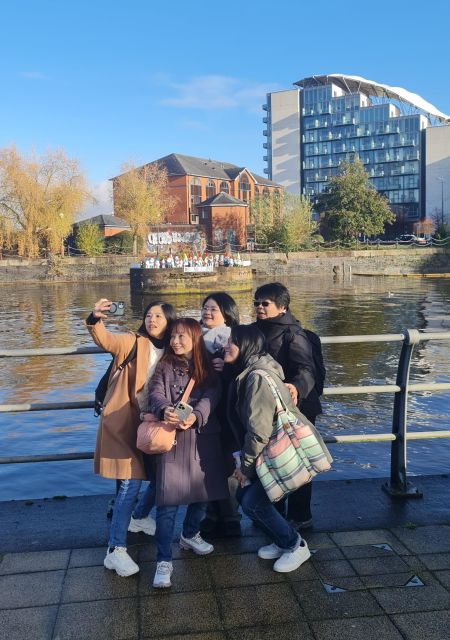
Manchester’s old docks tell a surprisingly modern story. This two-hour walk links the Manchester Ship Canal’s industrial past with Media City’s digital future, and I like the clear route between the Lowry Arts Centre and Imperial War Museum North. I also like the live headsets, which let you keep looking around without losing the guide’s commentary. The main catch is simple: it is a 5-kilometre outdoor walk, so Manchester’s rain and wind can become part of the itinerary.
The tour begins and ends in Media City Piazza, beside the Metrolink station and under the large digital screen. Guides such as Frank have earned especially warm praise for turning local facts, old photographs, and future development plans into an engaging story. If you want a quick orientation to Salford Quays, this is a strong $18 investment, though anyone hoping to spend lots of time inside the museums will need separate admission and extra time.
Key points at a glance
- Five kilometres in two hours: The route gives you a broad look at Media City and Salford Quays without taking up a full day.
- Past beside the canal: You learn how the Manchester Ship Canal shaped the area and why the docks mattered to Manchester and Salford.
- A guide-led view of the future: The walk explains current and planned changes in the United Kingdom’s major urban regeneration project.
- Headsets make a real difference: You can hear the guide clearly while walking, pausing, and taking photographs.
- A particularly strong guide record: Frank is repeatedly praised for his friendly delivery, old photographs, humour, and command of local history.
- Easy to adapt: The route can avoid steps, the pace can change for the group, and dogs on leads are welcome.
Starting under Media City’s giant screen
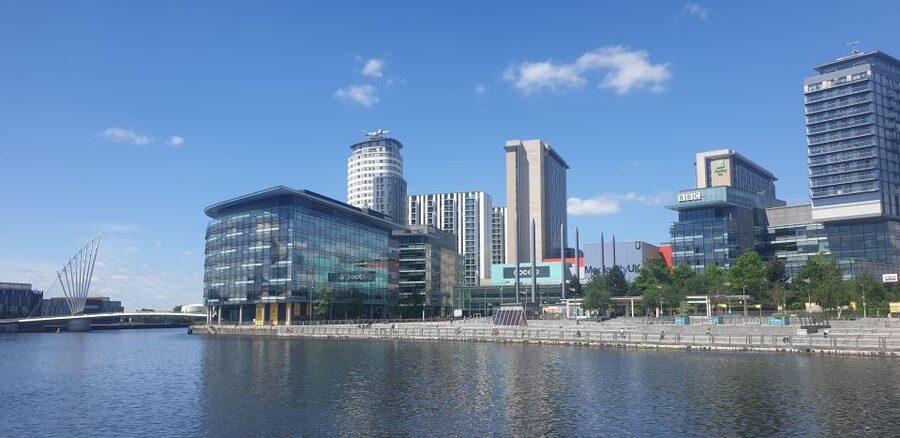
Your meeting point is hard to miss. Meet beneath the large digital screen in Media City Piazza, opposite BBC Quay House and next to the Media City Metrolink station. Starting here makes sense because the piazza immediately shows you the area’s new identity: big screens, modern buildings, creative businesses, and a public space designed for people to gather.
This is not old Manchester in the usual red-brick, Victorian sense. Media City is contemporary and imposing, and its presence helps explain why Salford Quays has become one of Greater Manchester’s major visitor areas. The tour uses that setting as its opening chapter before taking you toward the older dockland story.
I recommend arriving with enough time to find the piazza without rushing. The tour returns to the same place, which makes the start and finish easy to combine with a tram ride, a meal, shopping, or more sightseeing around The Quays.
The guide speaks in English, and you receive an English headset. That small detail matters more than it may sound. Open waterfront spaces can be windy, and groups can spread out while crossing bridges or stopping for photographs. With an earpiece, you can hear the explanation without crowding around the guide.
More Guided Walks in the UK:
- Magical London: Harry Potter Guided Walking Tour
★ 4.7 · 22,044 reviews - Edinburgh: Harry Potter Magical Guided Walking Tour
★ 4.8 · 11,944 reviews - Edinburgh Castle: Guided Walking Tour with Entry Ticket
★ 4.7 · 11,699 reviews
From dockland industry to Media City
The central theme is change. You are not simply walking past attractive buildings. You are following the transformation of an area once defined by docks and canal traffic into a centre for media, business, culture, and leisure.
The Manchester Ship Canal is the key to that story. The waterway connected Manchester to the sea and helped the city operate as an inland port. On the walk, the canal becomes more than a pleasant backdrop. It explains why Salford Quays developed where it did and why the area carried such economic weight.
A strong guide helps you read the waterfront in layers. You see the present-day restaurants, public spaces, bridges, and cultural buildings, while hearing about the working docks that came before them. Frank is especially good at this kind of comparison, using photographs to show how much the Quays have changed.
That visual aid is useful because regeneration can otherwise feel abstract. An old image placed beside a modern building makes the scale of the change clear. Several people with long connections to Manchester have said the walk taught them new things about an area they already thought they knew.
The Lowry Arts Centre and the cultural Quays
The Lowry Arts Centre is one of the route’s major landmarks. It gives the walk a cultural focus and shows that Salford Quays is not only a business district or residential development.
The building is also a helpful pause point. You can take in the architecture, hear about the role of the arts in the area’s renewal, and consider how theatres and galleries change the feel of a former industrial zone. The tour does not replace a visit inside The Lowry, but it helps you understand its place within the wider Quays.
I like this part of the route because it broadens the story. The walk is not only about cranes, offices, and investment. It also deals with art, public life, and the way cultural venues draw people to the waterfront.
Do not expect a long indoor visit here. This is a walking tour, and the focus remains on the outside setting and the guide’s explanation. If you want a performance, exhibition, or longer look inside, plan that separately after the walk.
Crossing bridges beside the Manchester Ship Canal
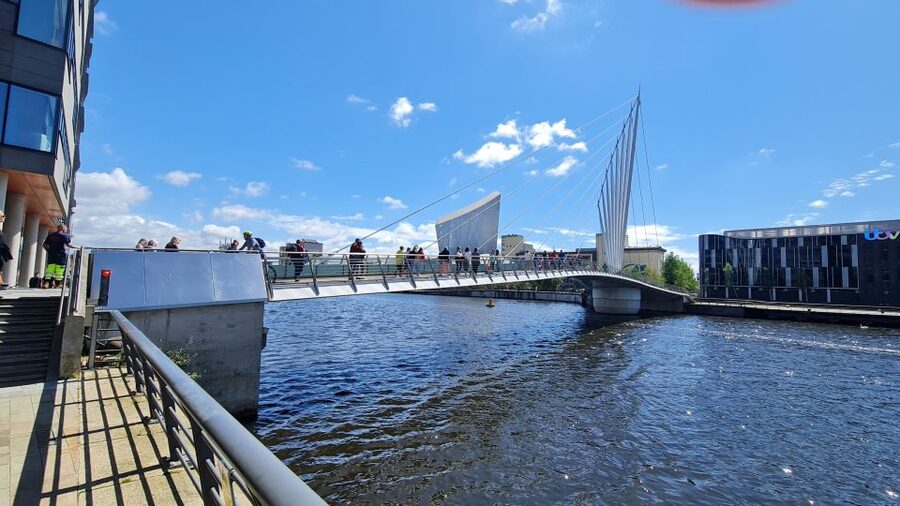
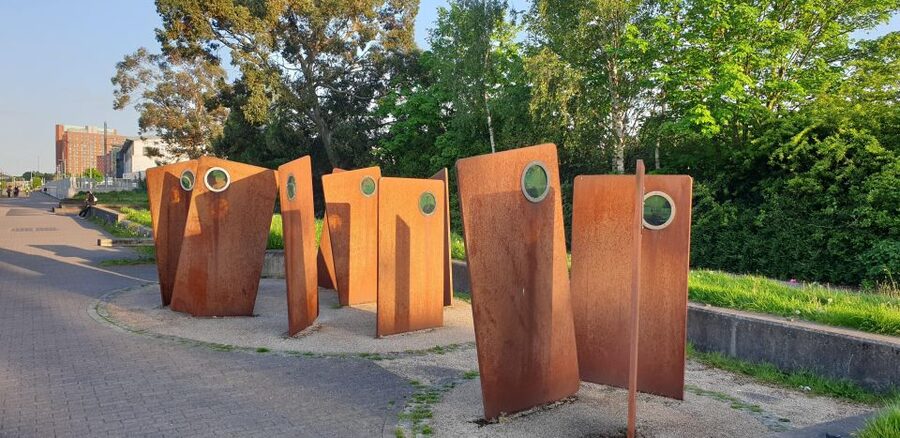
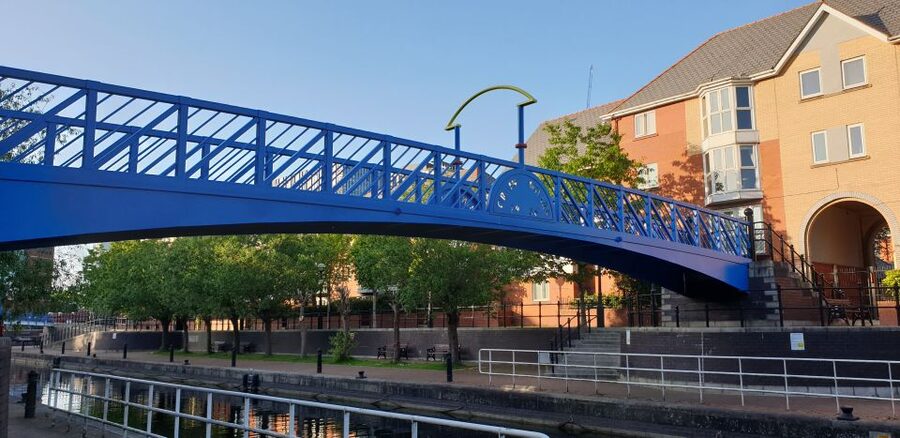
The route covers about 5 kilometres, with time to pause at notable locations and look across the water. Bridges and canal-side paths provide changing views of the Quays, while the guide explains why each part matters.
The walking itself is manageable for most people who are comfortable with a two-hour stroll. Still, 5 kilometres is not a token amount. You will be on your feet for much of the experience, and you should wear comfortable shoes. High heels are not allowed, which is sensible on a route involving bridges, paths, and changing outdoor surfaces.
The pace appears to be adaptable. One person noted that Frank’s long stride could make the walk feel brisk, though the route can be adjusted to suit the group. If you prefer a slower pace, say so at the start. The stated aim is to adapt the walk, not to force everyone into the same speed.
The route can also be changed to avoid steps, making it suitable for wheelchair users. That is useful, but outdoor conditions can still affect comfort. Ask the provider about your specific needs when booking if you require more detailed access information.
A few more walks around the UK worth a look
- Underground Vaults Walking Tour in Edinburgh Old Town
★ 4.5 · 8,506 reviews - London: The Original Jack the Ripper Walking Tour
★ 4.7 · 7,833 reviews - Oxford University Walking Tour With University Alumni Guide
★ 5.0 · 6,905 reviews - Edinburgh Castle: Guided Walking Tour with Entry Ticket
★ 5.0 · 5,540 reviews
Imperial War Museum North and the wider story
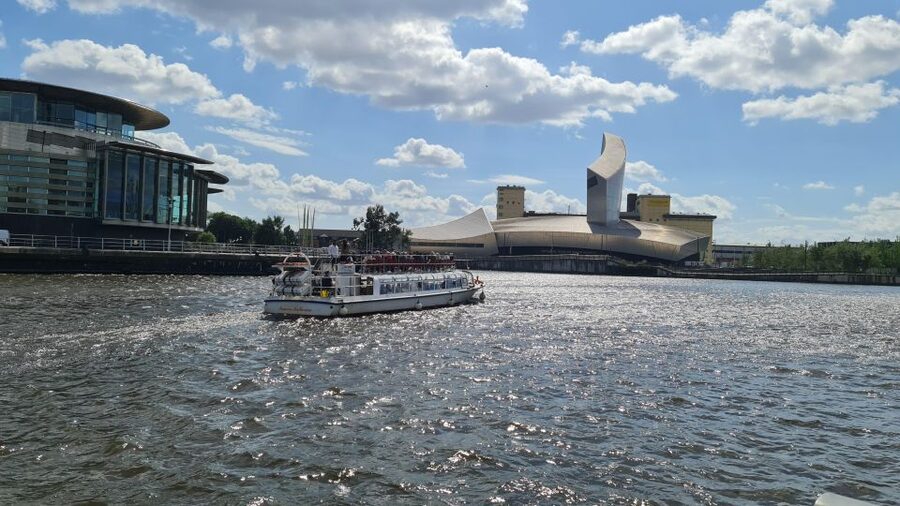
Imperial War Museum North is another major landmark along the way. Its presence adds a different historical angle to the tour and gives the route a strong visual destination beyond the canal itself.
The walk does not include a full museum visit, so you should not treat the two hours as an exhibition tour. Instead, you see the museum as part of the Quays setting and hear how important buildings and institutions fit into the area’s wider development.
This is one reason the tour works well as an introduction. You get a sense of where the main attractions are, how they relate to one another, and which places deserve a longer visit. If you have only a short stay in Greater Manchester, that orientation can save you from wandering without a plan.
The area has enough to fill more than two hours. The tour gives you the framework, then you can return to the museum or cultural venues that interest you most.
Media City and the next chapter
The tour’s final theme is the future of Media City and The Quays. This is more useful than it might sound. Many walking tours explain what a place used to be, then stop. This one also discusses current development and planned changes.
Media City has become a major centre for the United Kingdom’s digital and creative businesses. The tour uses the buildings and public spaces around you to explain that newer identity, while placing it against the former dockland setting.
I appreciate that balance. Regeneration is not just a success story with shiny buildings. It is an ongoing process, and the guide’s job is to explain what has changed, what is being built, and how the area may continue to develop.
Frank receives particular praise for this part of the experience. His folder of old photographs helps connect past scenes with present views, while his explanations cover media, architecture, local history, art, and future plans. Other guides may lead the walk, including Craig, who has also been praised for answering questions clearly.
Because development continues, details about future projects can change. Listen for the broader pattern rather than treating every proposal as guaranteed. The lasting lesson is how Salford Quays moved from industrial waterfront to a major urban renewal project.
What makes the guide important
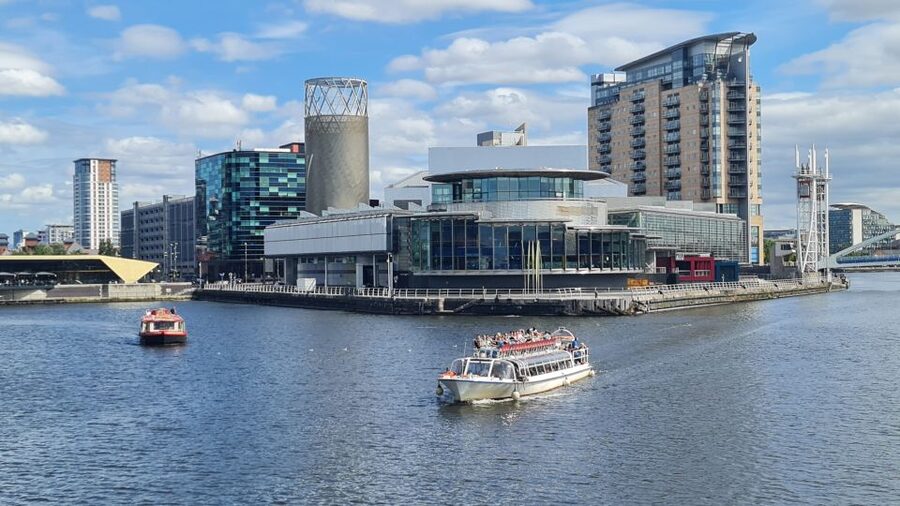
The route is straightforward to follow. The guide is what gives it depth.
The strongest feedback focuses on Frank’s ability to make information personal and lively. He is praised for being friendly, professional, humorous, and willing to answer questions. That matters on a subject that could easily become a list of dates and building names.
The old photographs are another useful touch. They let you compare the working docks with the present-day Quays, and they give local details a visual anchor. If you already live near Manchester, you may still learn something new. Several people who had known the city or visited Salford Quays for years found the walk added a fresh angle.
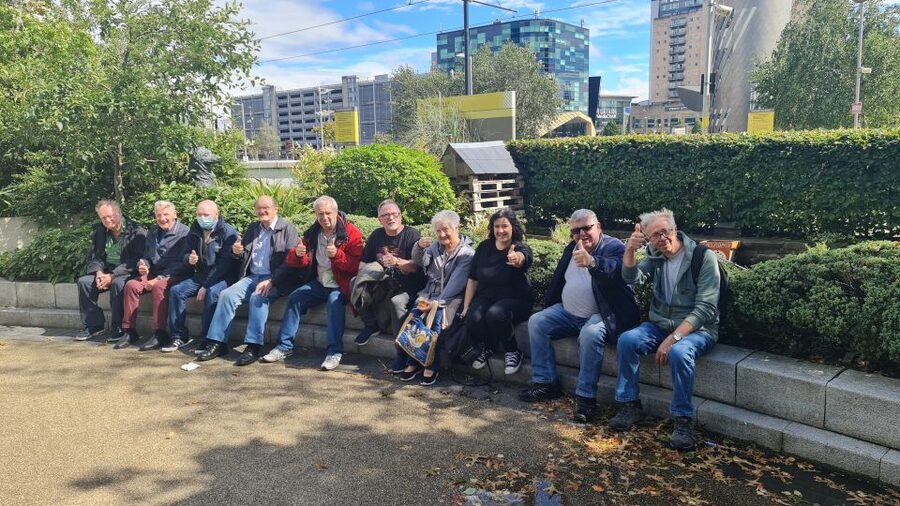
Group size can vary. Some departures have had only one, two, or three people, while others may be larger. A small group allows more questions and a more personal pace, but you should not assume every departure will be private.
The headsets are consistently valuable. You can stand back, take a photograph, or walk at the edge of the group without missing the explanation. For an outdoor tour, that is a practical feature rather than a gimmick.
Price, timing, and practical value

At $18 per person, this is reasonably priced for a two-hour guided experience covering about 5 kilometres. You are paying for a local guide, the route planning, the historical material, and the audio equipment. The walk also gives you a useful introduction to several major sights in one outing.
I would consider it especially good value if you are new to Manchester, interested in industrial history, or curious about urban redevelopment. A self-guided walk around the Quays is easy enough, but you would miss the connections between the canal, docks, arts venues, museum, media businesses, and future plans.
The value is less clear if you dislike outdoor walking or already know the area very well and want only a museum visit. You can see the main landmarks from public paths without booking a tour. The difference is the explanation, and that is where this experience earns its fee.
The walk lasts two hours, though you should allow the full time and avoid scheduling something immediately afterward. It runs in rain or shine. Wear waterproof or weather-appropriate clothing, and bring comfortable shoes. December departures can feel cold by the water, so warm layers are sensible.
Booking conditions are flexible: you can cancel up to 24 hours before the start for a full refund, and you can reserve now and pay later. The tour is family-friendly, suitable for all ages, and dogs on leads are welcome.
Who will enjoy this walk most
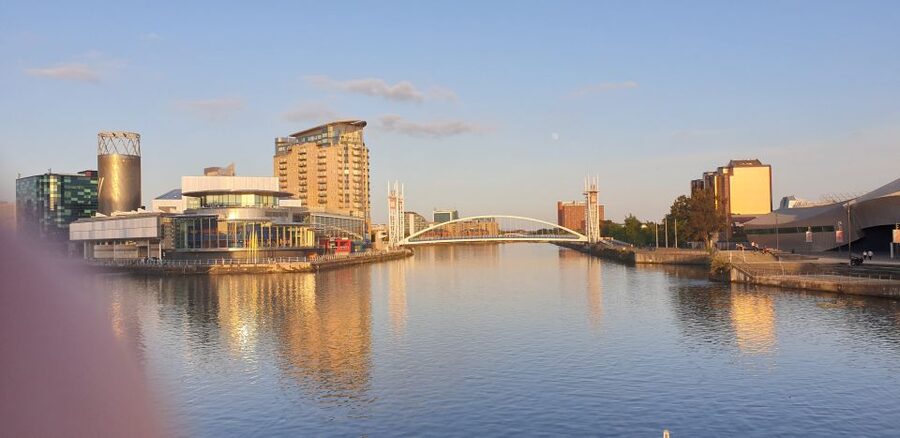
I would recommend it to first-time visitors who want to understand Salford Quays rather than simply photograph it. The route gives you a useful map in your head and helps you decide what to revisit afterward.
It also suits Manchester residents and repeat visitors. The comments from long-term locals are telling: familiarity with the city does not guarantee familiarity with the Quays’ industrial past or planned future.
Families should find the format manageable, especially because the route can be adapted and the guide can adjust the pace. Children who enjoy bridges, water, large modern buildings, and stories about how places change may get more from it than children expecting a hands-on attraction.
It is also a good option for solo visitors. The guide-led format gives structure, and the friendly presentation can make a solo booking feel comfortable. People who prefer a slow wander with frequent café stops should schedule those before or after, since the tour keeps moving.
A few limits to keep in mind
This is not a deep museum tour, architecture seminar, or food walk. Its strength is the broad story of the area, delivered while you move between landmarks.
The waterfront can be exposed to weather. A sunny day will make the bridges and canal views more pleasant, but you should book with a rain-or-shine mindset. A waterproof jacket and warm layer can protect your enjoyment.
The route length also deserves respect. Five kilometres over two hours is not extreme, yet it may feel tiring if you have already spent the morning walking around central Manchester. Comfortable footwear matters more than dressing up.
Finally, your guide shapes the experience. Frank has received exceptional praise, but availability of a particular guide is not guaranteed. The provider uses English-speaking local guides, and the tour’s strong design gives them a useful framework, but the personal style may differ from one departure to another.
Should you book the Media City and The Quays tour?
Yes, if you want a clear, friendly explanation of how Manchester’s docks became Salford Quays and Media City. At $18, the combination of a 5-kilometre route, headsets, local history, cultural landmarks, and future development plans offers solid value.
Book it early in your visit so you can use the orientation for the rest of your time in the area. Choose comfortable shoes, dress for the forecast, and arrive ready to walk outside for two hours.
Skip it only if you want a short indoor attraction, a very slow stroll, or a detailed museum visit. For everyone else, this is a practical way to see The Quays with context instead of just a camera roll full of modern buildings.
FAQ
Where does the Media City and The Quays walking tour begin?
The tour begins underneath the large digital screen in Media City Piazza, next to the Media City Metrolink station. It is opposite BBC Quay House.
Where does the tour finish?
The walk returns to Media City Piazza, where it began.
How long is the tour?
The tour lasts two hours. The route covers approximately 5 kilometres, so allow the full two hours.
What language is the tour in?
The live tour guide speaks English, and the included audio headset is also in English.
What landmarks does the route include?
The route passes the Lowry Arts Centre, Imperial War Museum North, the Manchester Ship Canal, Media City, bridges, and other locations around Salford Quays.
Is the tour suitable for families?
Yes. It is family-friendly and suitable for all ages.
Is the tour wheelchair accessible?
Yes. The route can be adjusted to avoid steps, and the pace can be adapted for each group.
Can I bring my dog?
Yes. Dogs are welcome when kept on leads.
What should I wear and bring?
Wear comfortable shoes and clothing suited to the weather. The tour operates in rain or shine, and high heels are not allowed.
Just added around the UK
- Belfast Eclectic Walking City Center Experience, The Marti Way★ 5.0 · 348 reviews
- The Real Eclectic Belfast City Walking Tour/Experience.★ 5.0 · 152 reviews
- Belfast Political Tour-Conflicting Stories Walking Tour★ 4.5 · 459 reviews
- The Real Story of Belfast walking tour with a local guide★ 5.0 · 144 reviews
- Best of Belfast Walking Tour★ 5.0 · 399 reviews
- Belfast Centre Food Tour of 12+ Local Irish Dishes & Drinks★ 5.0 · 266 reviews
- Belfast Troubles Murals Street Art and Peace Wall Walking Tour★ 5.0 · 163 reviews
- BATH: 2-Hour Bath Walking Tour of Bridgerton Filming Locations★ 5.0 · 99 reviews
UK Walking Tours, compared.

Magical London: Harry Potter Guided Walking Tour
Read our review →
Edinburgh Castle: Guided Walking Tour with Entry Ticket
Read our review →
Underground Vaults Walking Tour in Edinburgh Old Town
Read our review →

Oxford University Walking Tour With University Alumni Guide
Read our review →Edinburgh Castle: Guided Walking Tour with Entry Ticket
Read our review →
Edinburgh Castle Guided Walking Tour in English
Read our review →Browse the lists this tour appears in