

Review · CASTLE AND PALACE WALKING TOURS
Florence: Pitti Palace Entry Ticket and Guided Walking Tour
A palace full of power and paintings. This two-hour guided visit takes you through Florence’s Pitti Palace, once home to the Medici grand-dukes of Tuscany and later the Italian royal family. I like the chance to see major works by Caravaggio, Botticelli, Rubens, and Titian without trying to make sense of the enormous collection alone. I also like that you can continue into the Boboli Gardens and other museums after the guided portion.
The main thing to consider is time. Two hours is enough for a focused introduction to the Palatine Gallery and palace, but not enough to see every museum inside the complex. The $82 price is reasonable if you want a live guide and a skip-the-ticket-line entry, but less attractive if you prefer to wander independently.
Key Points Before You Book
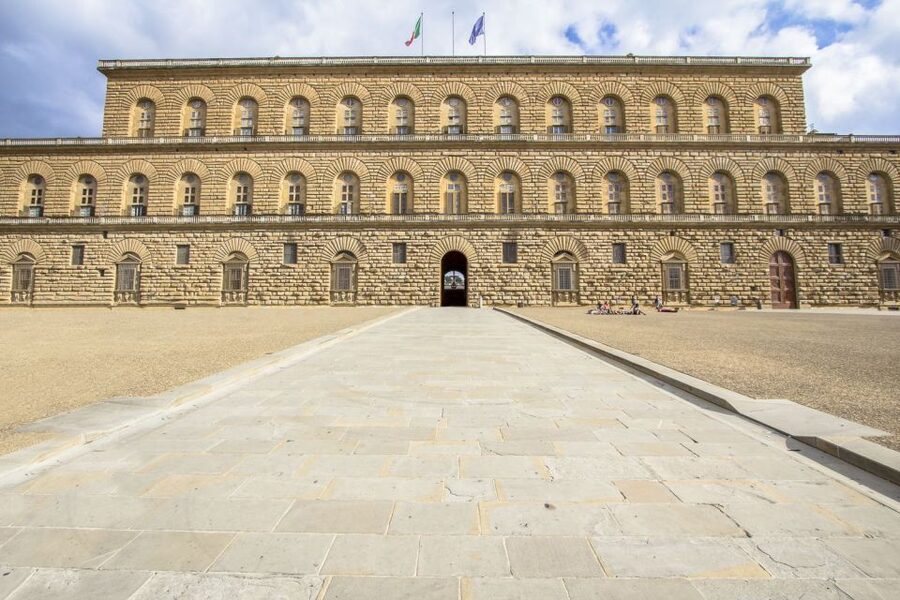
- The Palatine Gallery is the main event: You see works connected with Caravaggio, Botticelli, Rubens, and Titian during the guided visit.
- The palace tells a power story: The rooms connect the Medici family with the grand-dukes of Tuscany and the later Italian royal family.
- A strong guide makes the difference: Natalia, Virginia, and Marcello received especially warm praise for clear, engaging presentations.
- Two hours goes quickly: The tour focuses on key rooms and paintings, while the modern art and costume museums require extra time afterward.
- Boboli Gardens are not part of the guided visit: You may explore them at your own pace after the tour.
- The tour works for different group sizes: Earphones are provided when more than eight people join, and a private group option is available.
Arriving at Palazzo Pitti in Piazza de’ Pitti

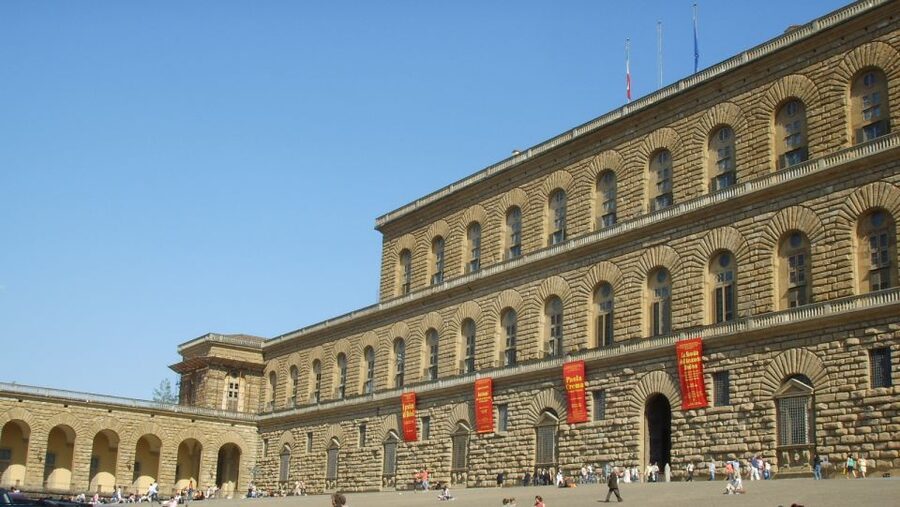
Your meeting point is the main entrance of the Pitti Museum at Piazza de’ Pitti, 1. This places you directly in front of the palace, so there is no separate city transfer or complicated meeting arrangement to manage.
The Pitti Palace was built in the second half of the 15th century. Its importance grew well beyond its original construction, as it became the residence of the Medici family, the grand-dukes of Tuscany, and later the Italian royal family. You are not simply entering an art museum. You are entering a building designed to express authority, wealth, and rank.
That context matters because the palace rooms and the paintings belong together. The art was displayed in a setting meant to impress. Large rooms, formal decoration, and powerful names on the walls all reinforce the same message: this was a home built for rulers, not a quiet private retreat.
The tour is wheelchair accessible, and comfortable shoes are a sensible choice. You will be walking through a large museum for two hours, then perhaps continuing through the gardens or other collections. The visit returns to Palazzo Pitti, so you do not need to arrange transportation from one attraction to another.
More Castle and Palace Walks in Italy:
- Venice: Doge’s Palace and St Mark’s Basilica Walking Tour
★ 4.4 · 6,291 reviews - Venice: Walking tour, Doge Palace, & St. Mark’s Basilica
★ 4.5 · 884 reviews - Florence: Pitti Palace and Boboli Gardens Walking Tour
★ 4.6 · 182 reviews
Inside the Palatine Gallery
The Palatine Gallery is the heart of the guided experience. It contains the private art collection of the Medici family, and the tour uses major painters to help you understand both the art and the people who collected it.
You can expect to see works associated with Caravaggio, Botticelli, Rubens, and Titian. These names give the visit real weight, but the point is not simply to tick famous artists off a list. A guide helps you look at why certain works mattered to the Medici and how art functioned in a court setting.
I find guided art visits most useful when the collection is large and the rooms begin to blur together. That is a real possibility here. The Pitti collection is massive, and an unguided visit can leave you admiring plenty of paintings without remembering much about them. A good guide gives you a path through the material and helps you focus on the strongest works.
Virginia was praised for being friendly, entertaining, and well informed. Her approach helped one group avoid feeling overwhelmed by the size of the collection while still gaining an appreciation of the Medici themselves. That is exactly the kind of guidance this museum needs: not a rushed list of dates, but a clear way to connect the objects with the people who owned them.
The guide may also help you notice the difference between seeing a famous name and understanding its place in the collection. Caravaggio brings drama and intensity. Botticelli connects the palace with the artistic world of Florence. Rubens points to the broad European reach of elite collecting. Titian adds another major name to the picture. The value of the tour lies in the links between these works, rather than in a quick roll call of artists.
Understanding the Medici Residence

The Pitti Palace gives you a look at the private and public world of the Medici family. These were not ordinary residences. The rooms communicated rank to political allies, visitors, and anyone who entered the grand-ducal orbit.
The tour explains the history of the site while you move through the palace. That can make the building easier to read. Instead of treating each room as a decorated container for paintings, you begin to see how art, architecture, and authority worked together.
The Medici were not only patrons of individual artists. Their collection helped shape Florence’s cultural reputation and reflected the family’s place in European politics. Inside the Pitti Palace, that power appears through the combination of a royal residence and a major art collection.
The later connection with the Italian royal family adds another layer. The building did not stop mattering when Medici rule ended. It remained linked with the highest levels of Italian public life. A guided visit can make those changes easier to follow, especially if you are unfamiliar with the history of Florence.
The palace is also a useful counterpoint to Florence’s better-known religious buildings. You are not looking at art in a church setting here. You are seeing paintings in a former residence built around court life and state power. That change of setting helps explain why the same work can feel different when viewed in a palace rather than a chapel.
What Two Hours Really Covers
The advertised duration is two hours, and that is best understood as a focused introduction. You get a guided visit to the Palatine Gallery and the palace areas included in the tour. You do not get enough time to study every room or fully explore every museum in the complex.
One Spanish-speaking visitor found the guide excellent and appreciated the information that would have been difficult to gain alone. At the same time, the modern art museum and the costume museum were not covered because they needed much more time. That is useful advice for planning your day.
If the Palatine Gallery is your priority, the two-hour format works well. You can see major works, hear the palace story, and then decide what deserves your own time. If you want a full visit to all the collections, plan to stay after the guide finishes.
The structure also gives you some freedom. You are not trapped in a full-day group schedule. Once the guided portion ends, you can continue through the other museums at your own pace. You might spend extra time with the paintings, move on to the Boboli Gardens, or visit the modern art and costume collections.
Earphones are supplied when the group has more than eight people. That matters in a palace where rooms can be large and the guide may be speaking from several steps away. A private group is also available if you want a more personal format, though the supplied information does not specify the extra cost or exact group size.
More Tickets and Entries in Italy:
- Milan: Guided Walking Tour & Last Supper Visit with Ticket
★ 4.7 · 5,409 reviews - Florence: Duomo Complex with Tickets & City Walk Guided Tour
★ 4.7 · 2,057 reviews - David & Accademia Guided Tour with Time Entry Ticket
★ 4.5 · 1,705 reviews - Pompeii: Guided Walking Tour with Entrance Ticket
★ 4.3 · 1,423 reviews
Boboli Gardens After the Guided Visit
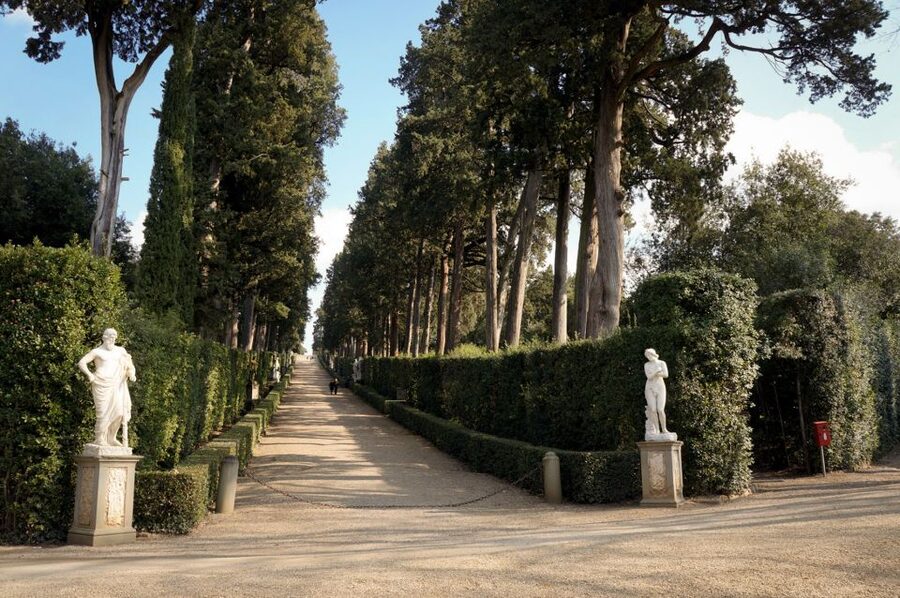
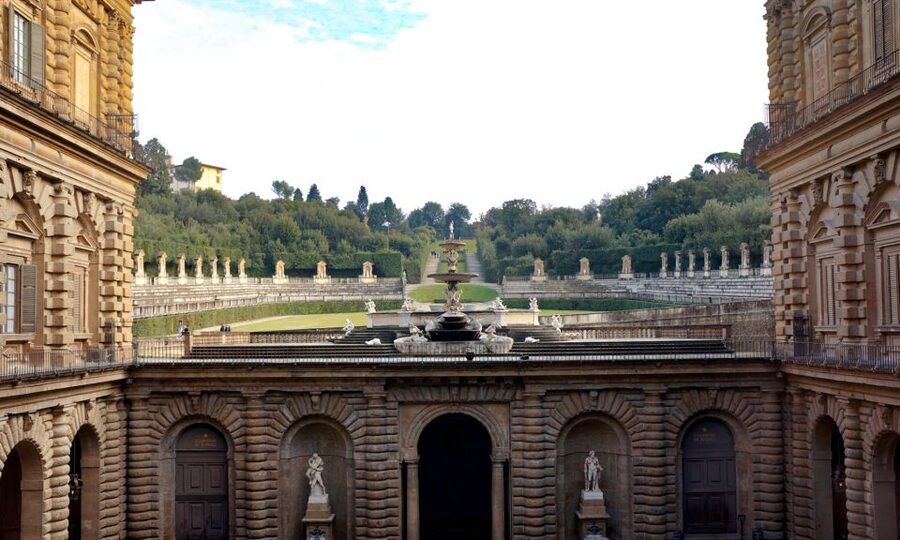
After the palace tour, you can visit the Boboli Gardens on your own. The gardens offer a useful change of pace after two hours indoors, with room to walk, pause, and absorb what you have seen.
The gardens are included as a post-tour option in the experience description, but they are not part of the guided two-hour route. You should treat them as extra time rather than part of the main escorted visit.
This arrangement suits you if you prefer not to be hurried. A guide can give you the palace framework, then you can decide how much energy remains for the outdoor spaces. If you arrive with a tight schedule, though, do not assume the guided portion leaves time for a complete garden visit.
The gardens also help put the palace in perspective. The residence was not an isolated building. It formed part of a larger world of court life, leisure, display, and control. You get a better sense of the privilege enjoyed by the Medici when you continue outside and see the scale of the grounds for yourself.
Guide Quality and Language Choices
The tour is offered in Italian, English, and Spanish. That choice is important in an art museum, where the quality of the explanation can shape the entire experience.
Natalia received a five-star mention from an American participant. Alicia, visiting from Argentina, specifically praised a Spanish-speaking guide for explaining information that would otherwise have been difficult to discover. Virginia was praised for combining knowledge with friendliness and humor, while Marcello was called an exceptional guide.
Those names suggest a strong pattern: the human guide is one of the biggest reasons to book this experience. The art is already inside the palace. What you are paying for is help understanding what deserves attention and why.
Guide quality can vary on any scheduled tour, so you should view these individual reports as encouraging rather than guaranteed. Still, the praise is specific. The strongest feedback centers on clear explanations, good Spanish, an entertaining style, and the ability to reduce the feeling of being overwhelmed.
If your group includes someone who is new to Renaissance or Baroque art, a guided tour is particularly useful. You do not need to arrive with a background in painting. The guide can provide the basic structure, names, and stories that allow you to look with more confidence.
Is the $82 Price Worth It?
At $82 per person, this is not the cheapest way to enter the Pitti Palace. The price includes the entry ticket, the guided tour, and skip-the-ticket-line access. It also gives you the option to keep exploring after the guide leaves.
The value depends on how you like to visit museums. If you are comfortable reading labels and choosing your own route, the price may feel high for a two-hour visit. You would be paying for the guide and convenience more than for extra time inside the building.
I think the price makes more sense if you want a clear introduction to a large collection. The Palatine Gallery can feel like a lot to take in, and a focused guide helps you spend your attention wisely. The skip-the-line feature also has practical value when Florence is busy, though the supplied information does not state how long you will save.
The price is easier to justify for first-time visitors to the Pitti Palace, families who need structure, and anyone who wants explanations in English, Italian, or Spanish. A private group may suit you if personal attention matters, but you should check the current price before booking.
The non-refundable policy also matters. You should be confident about your date and starting time before paying. Availability changes by time slot, so check the schedule carefully rather than assuming you can adjust later.
Who Should Choose This Pitti Palace Visit?
I would recommend this tour to you if you want the main artistic and historical ideas without trying to cover the entire palace alone. It is especially helpful if Caravaggio, Botticelli, Rubens, and Titian are high on your Florence list.
It also suits you if you enjoy understanding how art fits into the lives of rulers. The Medici connection gives the tour a clear story, and the former royal residence adds more than a standard gallery visit.
You may want a different plan if you prefer long, quiet museum visits with no fixed route. Two hours is structured, and the guide will choose the key points. You can stay afterward, but the guided portion will not cover every collection.
Families and mixed-interest groups may find the format practical. The guide supplies a starting point, and people can then split up after the tour. One person might continue with the modern art collection, another with the costume museum, and another with the Boboli Gardens.
Wear comfortable shoes and leave room in your schedule after the tour if you want more than the Palatine Gallery. The palace is large enough that rushing onward would waste much of the value.
Should You Book the Pitti Palace Tour?
Book it if you want a guided introduction to the Medici residence, the Palatine Gallery, and the major artists displayed there. The strongest reason to choose it is the guide. Natalia, Virginia, and Marcello were praised for making a large and potentially confusing collection easier to understand.
Skip it if you plan to spend several hours studying every museum independently and do not need commentary. The $82 cost is harder to defend for a self-guided museum visit.
For most first-time visits, I think the tour offers a useful balance: two hours of focused guidance, skip-the-line entry, and the freedom to continue alone afterward. Just remember that the modern art museum, costume museum, and Boboli Gardens need extra time. The guided visit gives you the framework. Your own wandering finishes the job.
FAQ
Where does the Pitti Palace tour meet?
Meet at the main entrance of the Pitti Museum, Piazza de’ Pitti, 1, 50125 Firenze.
How long does the guided tour last?
The guided tour lasts two hours.
What does the ticket include?
The price includes the entry ticket and guided tour. Earphones are provided if the group has more than eight people.
Which languages are available?
The tour is offered in Italian, English, and Spanish.
Can I visit the Boboli Gardens after the tour?
Yes. After the guided visit, you can explore the Boboli Gardens at your own pace.
Can I see the other Pitti Palace museums during the tour?
The two-hour visit focuses on the Palatine Gallery and palace history. Afterward, you can explore the other museums independently, including the modern art and costume museums, but the supplied information indicates that these require more time than the guided visit.
Just added around Italy
- Private Bologna Food & Market Tour with 6 Tastings & Wine★ 5.0 · 102 reviews
- Bologna Walking Tour with Audio and Written Guide★ 4.5 · 132 reviews
- Bologna historical art walking tour with hidden gems and tastings★ 5.0 · 108 reviews
- Bergamo: Digital guide made by a local for your walking tour★ 5.0 · 184 reviews
- Full Day Tour by Car and Walking among the Apulian Beauties★ 4.5 · 182 reviews
- The Original Street Food Walking Tour in Bari★ 4.5 · 226 reviews
- Bari Walking City Tour★ 4.5 · 511 reviews
- Bari: Street Food Walking Tour with a Local Guide★ 5.0 · 160 reviews
Castle and Palace Walking Tours, compared.

Edinburgh Castle: Guided Walking Tour with Entry Ticket
Read our review →
Doge’s Palace and St Mark’s Basilica Walking Tour
Read our review →
3-Hour Walking Tour of Old Town & Prague Castle
Read our review →Edinburgh Castle: Guided Walking Tour with Entry Ticket
Read our review →
Edinburgh Castle Guided Walking Tour in English
Read our review →

Walking Tour of Split and Diocletian’s Palace
Read our review →Browse the lists this tour appears in