
Review · JEWISH HERITAGE WALKING TOURS
Amsterdam: Anne Frank and World War II Walking Tour (TOP RATED)
History becomes more powerful on foot. This two-hour Amsterdam walk links the Jewish Quarter with memorials, synagogues, deportation sites, and Dam Square, giving you a clear sense of how the city’s wartime story unfolded. I especially like the small group limit of 15 and the chance to ask questions as you go.
I also like that the tour reaches beyond Anne Frank alone. Guides such as James, Keese, Masha, Peter, and Stan have been praised for adding personal stories, local detail, and modern perspective. The main caution is important: the Anne Frank House is not included, and some people found the walk long or shorter than the advertised two hours.
Key points to know before you book
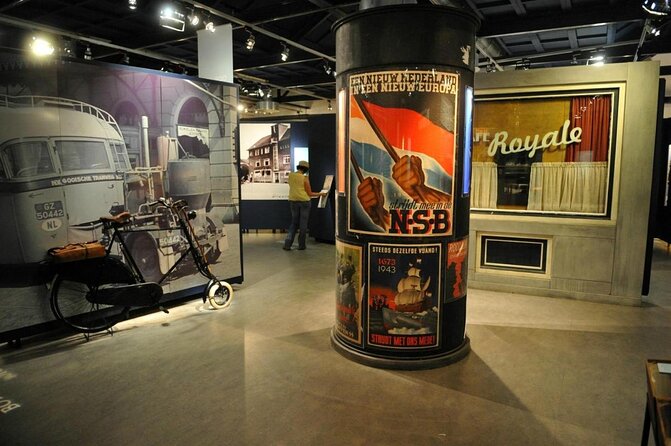
- The Anne Frank House is not part of the tour: You visit the surrounding history, but no museum entrance is included.
- The route covers serious wartime sites: Expect memorials, deportation history, resistance, and the destruction of Amsterdam’s Jewish community.
- Small groups make questions easier: The maximum group size is 15, with a private upgrade available.
- The walk can feel long for children: An eight and ten-year-old were described as tired by the time the route reached the Anne Frank area.
- Guide quality matters greatly: James, Keese, Masha, Peter, and Stan have all been praised for clear explanations and personal storytelling.
- The price is reasonable for a guided history lesson: At $29.45 per person, you are paying mainly for interpretation rather than admissions.
What this Amsterdam history walk is really about
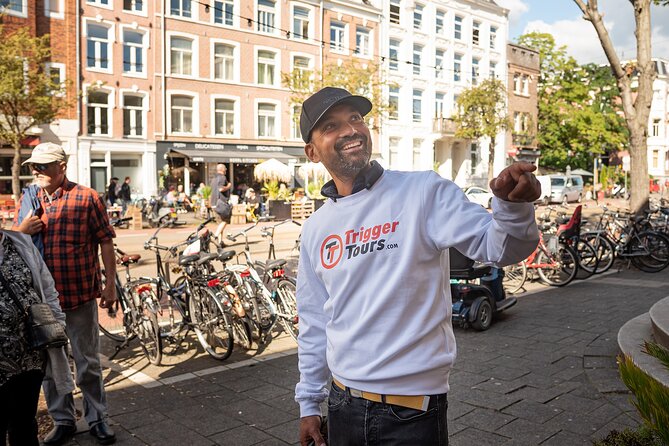
The title may lead you to expect a tour inside the Anne Frank House. That is not what you get. This is an outdoor walking tour about Amsterdam’s Jewish community, World War II, the Holocaust, resistance, deportation, and Anne Frank’s place within that wider story.
That distinction matters when planning your day. The Anne Frank House requires its own entrance ticket, and that ticket is not included here. This experience can help you understand the city before or after visiting the house, but it does not replace the museum visit.
The route lasts about two hours and begins at Amstel 51C, near public transportation. You walk between a series of important places, with roughly ten minutes allocated at each listed stop. The pace gives you time for photographs and questions, though this is still a serious city walk rather than a relaxed sightseeing stroll.
At $29.45, the value depends on what you want. If you only need directions to memorials, you can see several of these places independently. If you want someone to explain how the sites connect, why they matter, and how Amsterdam’s Jewish community changed during the war, the price is fair.
More Jewish Heritage Walking Tours in Amsterdam
- Amsterdam Anne Frank: Small-Group Walking Tour & Local Guide
★ 4.8 · 12,789 reviews - Anne Frank’s Story – Guided Walking Tour through Amsterdam
★ 5.0 · 11,619 reviews - Amsterdam: Anne Frank Guided Walking Tour in DE/EN/IT/ES
★ 4.9 · 3,107 reviews
Starting at the Portuguese Synagogue
The Portuguese Synagogue is a strong opening because it brings Amsterdam’s Jewish story back to the Dutch Golden Age, long before the Second World War. The Sephardic community here became one of the largest and wealthiest Jewish communities in Europe, and the size of its synagogue reflected that success.
You should not expect a full interior visit as part of this walk. The stop is listed as free, and the guide uses the building to explain the community’s origins, influence, and place in Amsterdam. The synagogue remains an active place of worship and is also open as a tourist attraction at other times, but an admission ticket is not included in this tour.
This first stop gives the walk needed context. Anne Frank’s story is not an isolated episode. It belongs to a much older Jewish presence in Amsterdam, one that was deeply tied to the city’s economic and cultural life.
Auschwitz Monument and the cost of remembrance
At the Auschwitz Monument, the guide turns from community life to deportation and murder. The monument is a quiet place to pause, and the subject matter is heavy. You will hear about the Jewish people deported from Amsterdam and the meaning of memorializing those who were killed.
This is one of the moments when a good guide makes a major difference. James and Keese have been praised for making difficult history understandable without treating it lightly. Keese, in particular, brought family stories into his explanations, which helped connect broad events with individual lives.
Do not expect entertainment here. The value comes from careful explanation and time to think. Some visitors described the tour as thought provoking and mindful, which is a fair description of this section.
The Resistance Museum area and Jewish resistance

The stop near Verzetsmuseum Amsterdam focuses on resistance by the Jewish community. The tour does not include museum admission, so you should think of this as an outdoor explanation near the museum rather than a museum visit.
The subject adds an important layer to the usual wartime narrative. You hear not only about persecution and deportation, but also about the choices people faced and the ways people resisted. The guide may point out details you would easily miss if you walked past alone.
The surrounding Plantage district also helps show how Amsterdam’s wartime story is spread through ordinary streets. You are not moving from one grand monument to another. Much of the power comes from realizing that major events took place in familiar neighborhoods.
More Jewish Heritage Walking Tours in the Netherlands
- Amsterdam: Anne Frank Guided Small Group Walking Tour
★ 4.8 · 2,722 reviews - Anne Frank Walking Tour Amsterdam Including Jewish Cultural Quarter
★ 5.0 · 1,879 reviews - Anne Frank’s Last Walk & See Anne Frank House in Virtual Reality
★ 5.0 · 957 reviews - Anne Frank and Jewish Quarter Amsterdam Private Walking Tour
★ 5.0 · 684 reviews
Hollandsche Schouwburg and the deportation story
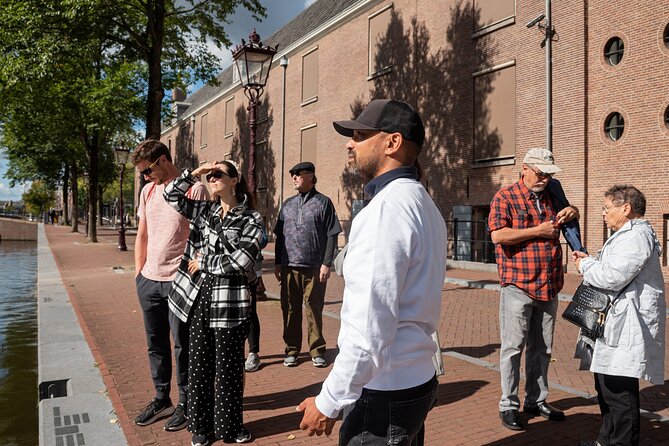
The Hollandsche Schouwburg is one of the most sobering stops. This former theater became a holding place for Jewish people before deportation to camps. The guide explains how the building fit into the system of removal and transport.
This part of the tour is likely to be especially useful if you know Anne Frank’s diary but have less understanding of what happened to Amsterdam’s Jewish population as a whole. The walk widens the story from one family to an entire community.
Guides praised for this route have been described as clear, passionate, and easy to follow. That matters here. The subject includes names, dates, policies, and places, and a good explanation keeps the story human rather than turning it into a list of facts.
Plantage and the city around the history
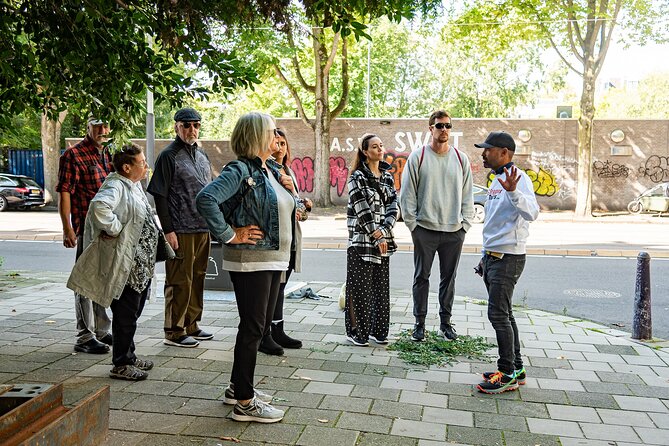
The Plantage area provides a change in setting without changing the subject. You see a pleasant part of Amsterdam while learning how the district was connected to Jewish life and wartime events.
I like this contrast. It reminds you that history does not happen only in bleak-looking places. Streets can look peaceful now and still carry painful memories. The walk lets you take photographs, but you should remain respectful at the memorials and keep the mood of the group in mind.
The route is not built around grand interiors or long museum visits. Its strength is the connection between place and story. You keep moving, then stop for a focused explanation before walking on.
Spinoza Monument and Amsterdam’s intellectual tradition
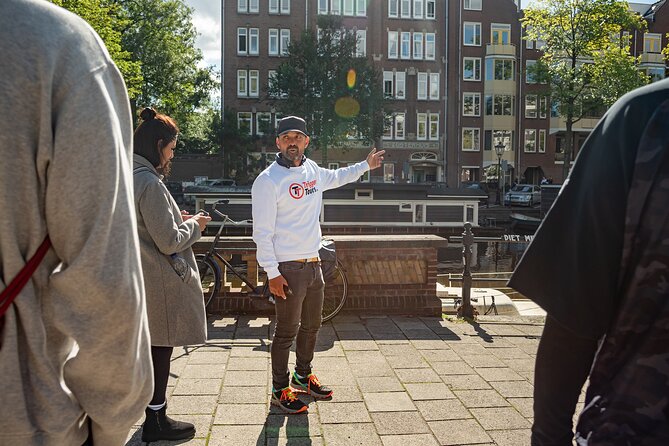
The Spinoza Monument introduces another part of Amsterdam’s Jewish and intellectual story. The guide explains the monument and its connection to Baruch Spinoza, the philosopher associated with Amsterdam.
This stop broadens the tour again. You are not only learning about persecution in the twentieth century. You are also seeing how Jewish thinkers and communities shaped the city’s ideas and public life over time.
The stop itself is short, listed at around ten minutes. That is enough for an introduction, but not a full study of Spinoza. If philosophy is a main interest, treat this as a useful pointer rather than the central reason to book.
Walking toward Dam Square
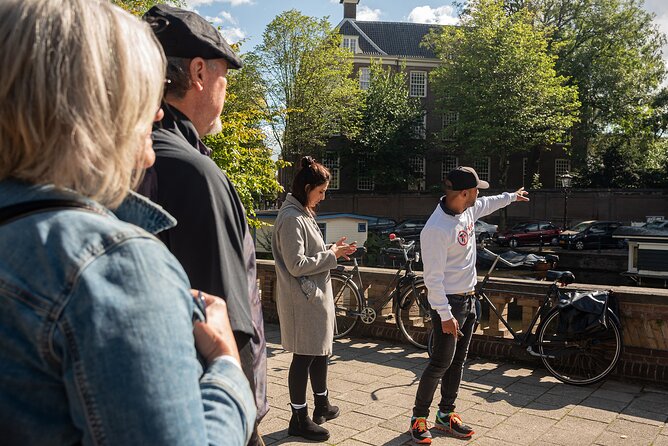
After the Jewish Quarter stops, the group walks toward Dam Square and the Royal Palace. This transition gives you a chance to see more of central Amsterdam while the guide continues connecting the city’s past with its present.
The exact route is not fully detailed, so you should allow for normal city walking conditions. There may be bicycles, crowds, uneven attention needed at crossings, and frequent pauses. Wear comfortable shoes and keep water with you.
Families should take the distance seriously. One family found the walk tiring for children aged eight and ten. Adults who enjoy walking should manage it comfortably, but this is not a short series of curbside stops.
Dam Square and De Schaduwkade
At Dam Square, the guide discusses the national monument and the Royal Palace area. Dam Square is one of Amsterdam’s best-known public spaces, so this section places the wartime story in the middle of the city’s everyday center.
The monument is a major place of remembrance, and the stop helps connect local history with national memory. You can also see how the square functions as a public gathering place, which makes the discussion feel current rather than sealed away in the past.
The final listed stop is De Schaduwkade, or the Schaduwkade monument. The guide explains the memorial and its meaning before the activity returns to the meeting point.
Because the tour covers many stops in a limited time, some explanations will be brief. That is useful if you want a broad introduction, but less satisfying if you hope to spend a long time at each location.
The guides can shape the whole experience
The strongest praise has focused on the guides. James has been described as clear, informed, and able to add modern perspective. Keese has been praised for linking the subject to his own family history. Masha has been noted for flexibility and detailed explanations, while Peter was praised for patience and an easy speaking style.
Stan also received strong praise for his command of Anne Frank and Jewish history. Other guides, including Aaron and an Irish guide with a warm, down-to-earth manner, were valued for going beyond the basic script.
That range is worth keeping in mind. The experience may feel personal and vivid with one guide, and more basic with another. One private booking ended early and felt as if it could have been completed in an hour, while other experiences filled the full period with stories and questions.
There was also one serious service problem involving a guide who did not appear, leaving the group waiting for 30 minutes. It appears to be an exception among mostly positive experiences, but it is still a practical reason to keep your booking confirmation and provider contact details handy.
Group size, private upgrades, and pace
The group limit is 15 people. That is small enough for questions without making the walk feel like a private excursion. A private upgrade is available if you want more control over the pace or a more personal discussion.
A small group is especially helpful for this subject. You may want to ask about your own family connection, a memorial, Anne Frank’s family, or the Dutch Jewish community. The guides have been praised for answering questions rather than rushing through a fixed speech.
The pace will not suit everyone. The itinerary gives around ten minutes at many stops, then adds walking between them. You get a broad view of the subject, but not long periods for quiet reflection at every memorial.
Who should book this tour?
I would recommend it to first-time visitors who want a clear introduction to Amsterdam’s Jewish Quarter and wartime history. It also suits people who have read Anne Frank’s diary and want to understand the wider setting around her family.
It is a good choice for adults, older children, history students, and anyone who prefers learning through streets and memorials rather than sitting indoors. The small group and English-language format make it easy to ask questions.
I would be more cautious if you have limited walking ability, very young children, or only want to visit the Anne Frank House. The tour does not include that entrance, and the route may feel long for children. It is also not the best fit if you want a light sightseeing activity, since much of the subject is painful and emotionally demanding.
Practical details that affect your decision
The experience is offered in English, accepts mobile tickets, and is near public transportation. Service animals are allowed, and most people can participate, but you should still prepare for a sustained walk through central Amsterdam.
Food and drinks are not included. Bring water, especially in warm weather. The experience requires good weather, and poor weather can lead to a different date or a full refund.
Free cancellation is available up to 24 hours before the start time. Cancellations or changes made less than 24 hours ahead do not qualify for a refund. Since the tour is often booked well in advance, planning early is sensible, especially if you also hope to secure a separate Anne Frank House ticket.
Should you book the Amsterdam Jewish Quarter walk?
Book it if you want a serious, guided introduction to Amsterdam’s Jewish history and World War II sites, and you are happy to learn outdoors. At $29.45, the price is reasonable for two hours of interpretation, especially with a strong guide and a group capped at 15.
Do not book it expecting entry to the Anne Frank House. Buy that ticket separately, then use this walk to place Anne Frank’s story within the much larger history of Amsterdam’s Jewish community, deportation, resistance, and remembrance.
The best reason to choose this tour is the human explanation. Guides such as James, Keese, Masha, Peter, and Stan have helped turn streets and memorials into a connected story. Just wear good shoes, check the forecast, and allow more walking time than the title alone may suggest.
FAQ
Is the Anne Frank House included?
No. Entrance to the Anne Frank House is not included in the tour price. The walk discusses Anne Frank and the surrounding history, but you need a separate ticket for the museum.
How long does the walking tour last?
The tour lasts approximately two hours. The route includes several stops of about ten minutes each, along with walking between sites.
Where does the tour start?
The meeting point is Amstel 51C, 1018 EJ Amsterdam, Netherlands.
Where does the tour finish?
The activity ends back at the meeting point.
How large is the group?
The tour has a maximum of 15 participants. A private tour upgrade is also available.
What happens if the weather is poor?
The tour requires good weather. If it is canceled because of poor weather, you will be offered another date or a full refund.
Just added around Amsterdam
- Small Group Walking Tour in Amsterdam with Friendly and Fun Guide★ 5.0 · 281 reviews
- Amsterdam: Private Introduction Walking Tour (TOP RATED)★ 5.0 · 223 reviews
- Humans of Amsterdam: Cultural Walking Tour incl. meeting 2 locals★ 5.0 · 320 reviews
- Amsterdam Private Historical Walking Tour★ 5.0 · 75 reviews
- Private Tour: Amsterdam City Walking Tour and Canal Cruise★ 4.5 · 142 reviews
- Anne Frank and Jewish Quarter Amsterdam Private Walking Tour★ 5.0 · 684 reviews
- Small Group Walking Tour – Hello Amsterdam★ 5.0 · 505 reviews
- Amsterdam: Anne Frank Small Group Walking Tour★ 5.0 · 98 reviews
Jewish Heritage Walking Tours, compared.

Amsterdam Anne Frank: Small-Group Walking Tour & Local Guide
Read our review →
Anne Frank’s Story – Guided Walking Tour through Amsterdam
Read our review →
Jewish Quarter Walking Tour with Admission Tickets
Read our review →
Anne Frank Guided Walking Tour in DE/EN/IT/ES
Read our review →
Old Town and Jewish Quarter Guided Walking Tour
Read our review →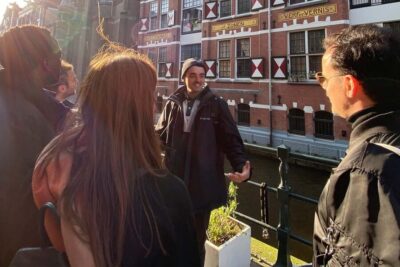
Anne Frank Walking Tour Amsterdam Including Jewish Cultural Quarter
Read our review →