
Review · UK WALKING TOURS
Discovering Birmingham 2 hour Walking Tour to the Jewellery Quarter
Look up from Birmingham’s shopping streets. This two-hour walk links Centenary Square and the Jewellery Quarter through canals, alleys, historic squares, and major civic buildings, giving you a fuller sense of how the city has changed. I especially like the secret canal route into the Jewellery Quarter and the use of an audio receiver, which helps you hear the guide even when the group spreads out. The main drawback is the brisk, outdoor nature of the tour, with limited time inside buildings.
At $20.80 per person, this is a fair introduction to central Birmingham, particularly if you are new to the city or want local context before exploring alone. Guides such as Jonathan Berg and Bernard bring humor, props, old objects, and plenty of stories, though the maximum group size of 40 means this may feel more like a lively city walk than a private tour.
Key points to know before you book
- The Jewellery Quarter is reached by a little-used canal route, adding a sense of discovery to the walk.
- Jonathan Berg often uses props and historic objects, turning streets and buildings into an outdoor museum.
- The route connects old and new Birmingham, from Georgian architecture to modern redevelopment around Chamberlain Square.
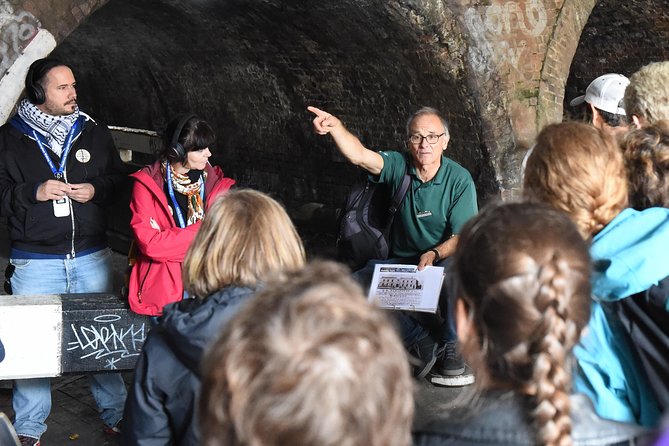
- An audio receiver is supplied, so you can hear the guide from farther back in the group.
- Birmingham Cathedral may be visited inside, time and events permitting, for its Edward Burne-Jones stained glass.
- The tour begins and ends at the Library of Birmingham, at 1:30 pm, and lasts about two hours.
Starting at Centenary Square with the city in view
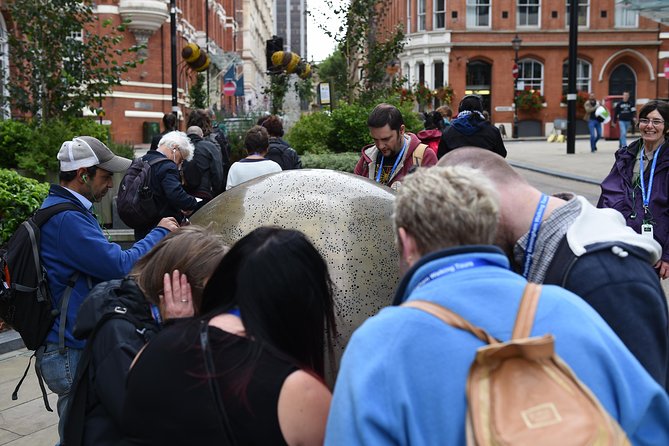
The walk begins at the Library of Birmingham in Centenary Square, a useful meeting point in the middle of the city. You spend about 20 minutes here, using the square and its surrounding buildings to get your bearings and begin reading Birmingham as a city rather than a collection of separate sights.
This opening matters because Birmingham can feel confusing at first. Major roads, post-war buildings, grand civic spaces, canals, and newer cultural projects all sit close together. A guide can point out how those pieces fit, giving you a clearer sense of direction for the rest of your stay.
I like the choice of Centenary Square as a starting point. It is not simply a place to gather the group. It gives the tour room to explain Birmingham’s public face before moving into tighter streets and less obvious routes.
The group then heads toward the Jewellery Quarter. You will be walking on city pavements and through backstreets, so sensible shoes are a good idea. The tour is suitable for people with a moderate level of fitness, and poor weather does not automatically cancel it. Bring a waterproof coat or umbrella. In icy conditions, the route may change.
A few more walks around the UK worth a look
- London: Ghastly Ghosts 2-Hour Walking Tour
★ 4.9 · 794 reviews - James Bond Shooting Locations 2-Hour Walking Tour of London
★ 4.7 · 332 reviews - BATH: 2-Hour Bath Walking Tour of Bridgerton Filming Locations
★ 5.0 · 99 reviews
Entering the Jewellery Quarter by canal
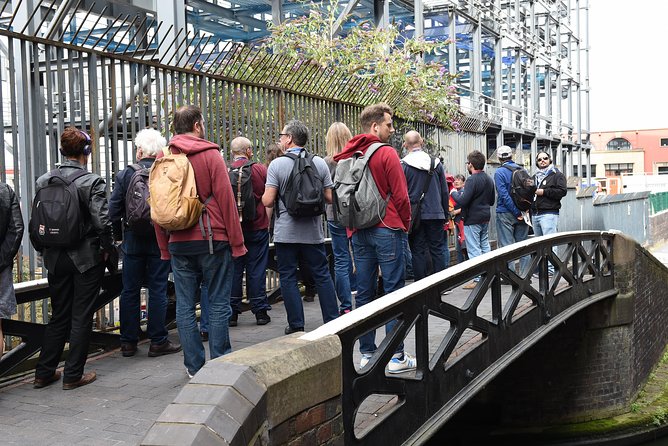
The route into the Jewellery Quarter is one of the strongest parts of the experience. Instead of approaching only by the main road, the guide takes you along a secret canal route that even many local residents have not used. That change of pace is important: the city opens up in a different way when you leave the traffic behind.
You spend about 30 minutes learning how the Jewellery Quarter developed from Georgian times onward. The focus is not just on old buildings. You also hear about the different businesses that shaped the area and how the Quarter is adapting to modern Birmingham.
This is where the tour earns its price. You can walk around the Jewellery Quarter on your own, but it is easy to see only the obvious streets and miss the connections between workshops, canals, historic buildings, and new projects. A local guide gives the area a clear story.
The modern side of the Quarter also gets attention. You are not shown a frozen version of Birmingham that exists only in the past. The guide points out how the district is taking its place in the present city, which helps explain why old industrial areas continue to change.
The canal section may be less comfortable in rain, and a group of up to 40 people can make narrow routes feel busy. The audio receiver helps here. You do not need to stand directly beside the guide at every moment, and you can still follow along if you pause to look at something.
A Georgian church and the value of looking up
The walk pauses outside the church known as the Jewellery Quarter church, a lovely example of Georgian architecture from 1779. The visit is exterior only, but the building gives the guide a strong subject for discussing the Quarter’s development and the architectural character of this part of Birmingham.
This is the kind of stop I appreciate on a walking tour. You do not need a long interior visit for a building to matter. Its age, style, and position help you understand the area around it, especially when the guide adds the human stories and business background that are easy to miss when you pass by alone.
The stop also shows the tour’s general approach. It does not race from one famous attraction to the next. Instead, it uses streets, buildings, and small details to explain how Birmingham grew.
Birmingham Cathedral and a possible look inside
From the Jewellery Quarter, the route turns back toward Birmingham Cathedral, also called St Philip’s Cathedral. The building is an English Baroque landmark, and the tour allows about five minutes for this part of the walk.
If time allows and no conflicting event is taking place, you may go inside to see the Edward Burne-Jones stained glass. This is an important qualification. The interior visit is not guaranteed, so you should treat the cathedral as primarily an exterior stop with a possible bonus inside.
The stained glass is one reason to hope for that extra few minutes. Still, even from outside, the cathedral helps mark the change from the smaller streets of the Jewellery Quarter to Birmingham’s formal civic centre.
Because the interior visit depends on timing and events, this tour is not the right choice if entering the cathedral is your main goal. If you want a slower church visit, plan separate time for it. The walking tour gives you context, but it cannot promise a full cathedral experience.
Same streets, a different way to see them:
- Magical London: Harry Potter Guided Walking Tour
★ 4.7 · 22,044 reviews - Edinburgh: Harry Potter Magical Guided Walking Tour
★ 4.8 · 11,944 reviews - Edinburgh Castle: Guided Walking Tour with Entry Ticket
★ 4.7 · 11,699 reviews - Underground Vaults Walking Tour in Edinburgh Old Town
★ 4.5 · 8,506 reviews
St Chad’s and Birmingham’s car-first past
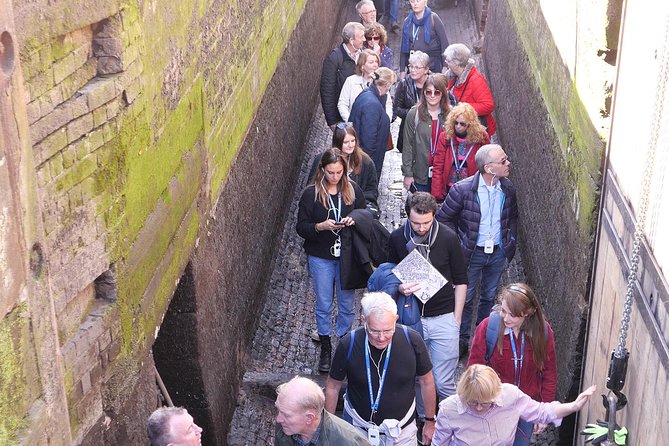
The route then takes you to view St Chad’s from the inner ring road. This is a short but thoughtful part of the tour because it deals with post-war redevelopment and the period when the car shaped city planning.
The setting makes the point clearly. Instead of seeing the church in isolation, you consider how roads and large-scale redevelopment affected older buildings. The guide encourages you to decide for yourself how well Birmingham’s redevelopment was planned.
I like this honest approach. The tour is not just a parade of attractive façades. It asks you to notice the costs of city planning and the tension between traffic, public space, historic buildings, and future development.
You may find this stop less scenic than the canal route or cathedral. That is part of its value. It adds urban context and helps explain why Birmingham sometimes feels fragmented. The city’s past decisions are visible in the roads and spaces around you.
Victoria Square and the return through central Birmingham
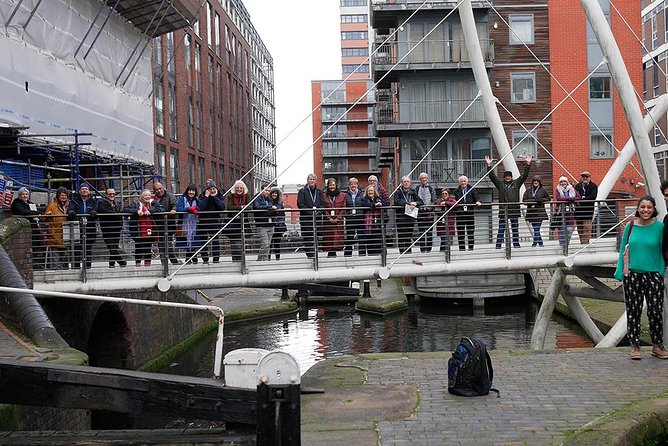
The walk continues toward Victoria Square after passing St Philip’s Cathedral and other important city squares. You spend about 10 minutes here before moving on toward the Library of Birmingham.
Victoria Square gives the tour another chance to connect architecture with civic life. The route is not limited to one historic quarter. You see how central Birmingham is arranged around a series of public spaces, each with its own role in the city.
This section also makes the tour useful as a first-day activity. By the end, you have crossed between the Jewellery Quarter, the cathedral area, the inner ring road, and the main civic squares. That broad orientation can help you plan the rest of your visit.
The pace remains fairly steady. You will have time to listen and look, but this is not a leisurely photography walk with long breaks at every stop. If you like to linger over every building, you may want to return later on your own.
Chamberlain Square and Birmingham’s next chapter

The final listed stop is Chamberlain Square, which has been renovated as part of the city’s ongoing changes. You spend about five minutes here, learning how Birmingham is reconfiguring for the future.
This is a useful ending because it brings the tour back to the present. You have seen Georgian architecture, historic religious buildings, old business districts, canals, and the effects of post-war planning. Chamberlain Square gives you a chance to think about what the city wants to become next.
I also like that the tour does not pretend every part of Birmingham belongs to one neat era. The city is a mix of older structures and new work, and the walk makes that mixture part of the story.
The tour finishes back at the meeting point by the Library of Birmingham. That makes the timing convenient if you have afternoon plans nearby. It also means you are not left at an unfamiliar end point.
The guide makes the difference
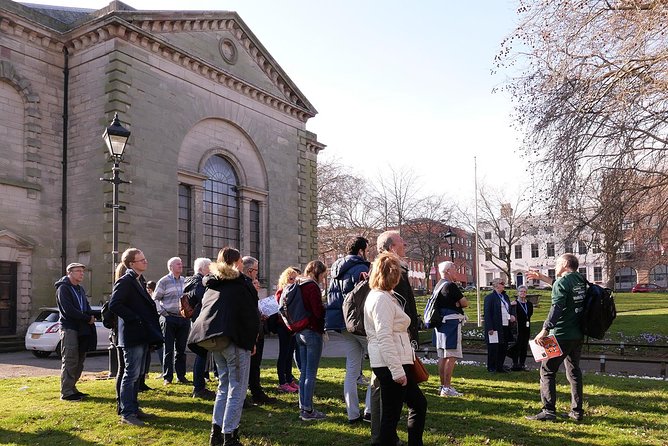
The strongest praise for this experience centers on the guides, especially Jonathan Berg. His style combines facts, jokes, props, and old objects. He has even been known to hand out one of his books, and he describes his collection of objects as a kind of museum on the streets.
That approach suits Birmingham well. The city has plenty of major buildings, but its character also sits in small details and overlooked corners. A guide who carries visual aids can make those details easier to remember.
Bernard and Ann and Maria are also associated with warm, entertaining tours. The guide’s personality matters here because much of the experience takes place outdoors, and weather can affect your mood. A cheerful, funny guide can keep the walk enjoyable even in persistent rain.
The audio receiver is another practical strength. Group walking tours often have a simple problem: you stop to take a photo or stand at the back, then miss the explanation. The receiver reduces that problem and lets you keep a little distance without losing the thread.
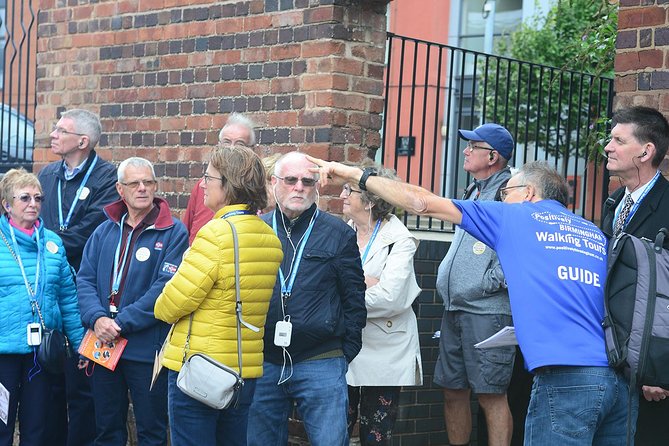
Still, group size can reach 40 people. You should not expect the constant personal attention of a private guide. If you want to ask many individual questions, try to walk near the guide or speak with them during transitions between stops.
Price, timing, and who gets the best value
At $20.80, the tour offers good value for a two-hour introduction. You are paying for a local guide, the route planning, the audio receiver, and the explanations that turn ordinary streets into meaningful places.
There are no separate entry tickets required. The cathedral visit, when possible, is part of the experience rather than an added admission expense. Since most of the tour takes place outside, the price stays modest compared with an attraction-heavy city tour.
I think the best value comes if you take the walk early in your Birmingham stay. You will learn the layout of the centre, then have time to return to the Jewellery Quarter, cathedral, squares, or canal route at your own pace.
The tour is offered in English and starts at 1:30 pm. It is booked an average of 21 days ahead, so advance planning makes sense if your dates are fixed. Confirmation arrives at booking, and free cancellation is available up to 24 hours before the start time. Changes or cancellations inside that window are not accepted for a refund.
Who should choose this Birmingham walk?
I would recommend it to first-time visitors who want a useful overview without spending half a day on a coach. It is also a good fit for people who enjoy architecture, local stories, urban planning, public art, canals, and the way old districts change.
It works surprisingly well for Birmingham residents too. The route includes places many locals have walked past without stopping, and the canal crossing and backstreets can reveal a side of the city you have not seen.
The tour may suit families and mixed-age groups, provided everyone can manage about two hours of walking and outdoor conditions. Service animals are allowed, and the start point is near public transport.
I would hesitate only if you want a long indoor sightseeing visit, a very small group, or a tour devoted solely to the Jewellery Quarter. This experience covers a broad slice of central Birmingham, so each individual stop receives a short visit.
Should you book the Discovering Birmingham walk?
Yes, if you want a friendly, well-priced orientation with more personality than a basic city highlights tour. The canal route, Georgian church, cathedral, St Chad’s, and renovated squares create a varied two hours, while the guide’s stories and props give the walk its character.
Book it early in your stay, wear shoes suitable for city walking, and bring rain protection. Choose another option if you need guaranteed cathedral entry or prefer a slow, highly detailed visit to one district.
For most people, this is a smart way to meet Birmingham: part architecture walk, part city-planning lesson, and part local storytelling session.
FAQ
Where does the Birmingham walking tour start?
The tour starts at the Library of Birmingham in Centenary Square, Birmingham B1 2ND, UK.
What time does the tour begin?
The tour begins at 1:30 pm.
How long does the tour last?
The experience lasts approximately two hours.
Where does the tour finish?
The walk ends back at the meeting point near the Library of Birmingham.
Is the tour offered in English?
Yes. The tour is offered in English.
Is an entry ticket needed for the tour?
No entry tickets are required. The tour includes outdoor visits to the main stops, and the guide may take the group inside Birmingham Cathedral if time allows and no event conflicts.
Can I hear the guide in a large group?
Yes. An audio receiver is loaned to you so you can hear the guide even when you are some distance away.
What happens if it rains?
Tours generally operate in adverse weather. You should bring a suitable coat or umbrella. If conditions are icy, the route may be adapted.
Can I cancel for a refund?
Yes, if you cancel at least 24 hours before the experience start time. Cancellations or changes made less than 24 hours before the start time are not refunded or accepted.
Just added around the UK
- Birmingham Slogging Gangs Walking Tour with Edward Shelby★ 4.5 · 306 reviews
- Birmingham Walking Tour: Canals, Victorians & Today (1:30pm)★ 5.0 · 346 reviews
- Birmingham City Centre Daily Walking Tour (10:30am & 2pm)★ 5.0 · 265 reviews
- The Real Eclectic Belfast City Walking Tour/Experience.★ 5.0 · 152 reviews
- Belfast Political Tour-Conflicting Stories Walking Tour★ 4.5 · 459 reviews
- Belfast Eclectic Walking City Center Experience, The Marti Way★ 5.0 · 348 reviews
- The Real Story of Belfast walking tour with a local guide★ 5.0 · 144 reviews
- Best of Belfast Walking Tour★ 5.0 · 399 reviews
UK Walking Tours, compared.

Magical London: Harry Potter Guided Walking Tour
Read our review →

Edinburgh Castle: Guided Walking Tour with Entry Ticket
Read our review →
Underground Vaults Walking Tour in Edinburgh Old Town
Read our review →
Oxford University Walking Tour With University Alumni Guide
Read our review →Edinburgh Castle: Guided Walking Tour with Entry Ticket
Read our review →
Edinburgh Castle Guided Walking Tour in English
Read our review →Browse the lists this tour appears in