
Review · UK WALKING TOURS
Birmingham Walking Tour: Canals, Victorians & Today (1:30pm)
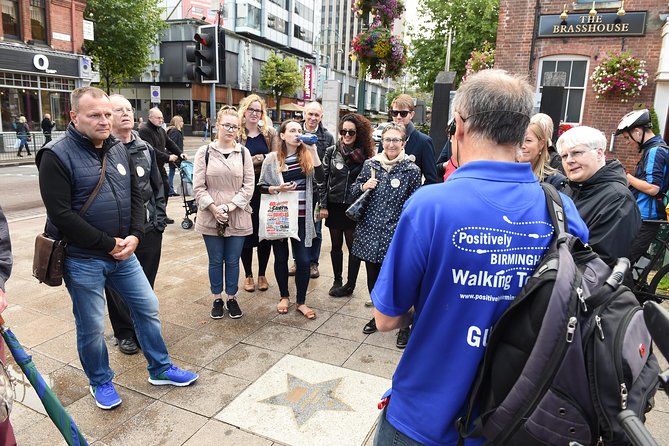
Birmingham reveals itself best on foot. This two-hour walk links Gas Street Basin and the Victorian city centre, then brings you back through modern Birmingham, including the Library, ICC, and Mailbox. I like the clear route and the mix of old and new. I also like the guides’ personal approach, especially the local stories and humor shared by Jonathan and Michael. The main drawback is that the canals receive less attention than the title may suggest.
At $20.80 per person, this is a sensible way to get your bearings soon after arriving. You cover a lot without paying separate admission fees, and the tour ends where it begins at the Library of Birmingham. You should be ready for two hours on foot, with a moderate level of fitness needed and no promise of entering every building along the way.
The live audio system is a useful touch. You can hear the guide without standing shoulder to shoulder with the group, although you need earphones with a 3.5mm socket or can use a new pair supplied on the day. The maximum group size is 35, but some departures may feel much smaller. The tour is in English and starts at 1:30pm.
Key points to know before you book
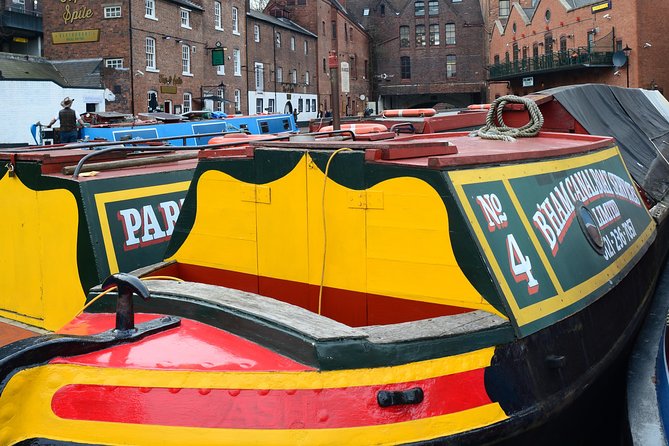
- Gas Street Basin gives the tour its most atmospheric setting, with Birmingham’s canal network at the centre of the story.
- Jonathan and Michael bring different strengths, from Jonathan’s energetic humor to Michael’s calm, informed explanations.
- The route covers old and new Birmingham, including Victorian public buildings, postwar changes, public art, and recent redevelopment.
- The Library of Birmingham is both meeting point and landmark, giving you an easy place to find the group and continue exploring afterward.
- The audio receivers help in a group of up to 35, especially when city noise makes ordinary conversation difficult.
- The tour is best for orientation, not for long interior visits or a detailed canal walk.
Starting beside the Library of Birmingham
Meet at the Library of Birmingham in Centenary Square. The building itself is a strong opening point, with its bold modern design and central position in the city. You get a quick introduction here, and the tour also returns to this spot at the end.
I like starting at the Library because it gives you an immediate sense of Birmingham’s changing identity. The route does not treat the city as a collection of isolated monuments. Instead, it asks you to look at how new buildings, restored structures, public spaces, and older street plans sit beside one another.
The first stop lasts about ten minutes and admission is free. You should not expect a long visit inside the Library. The point is to use the building and the square as a starting lesson in present-day Birmingham.
A few more walks around the UK worth a look
- Magical London: Harry Potter Guided Walking Tour
★ 4.7 · 22,044 reviews - Edinburgh: Harry Potter Magical Guided Walking Tour
★ 4.8 · 11,944 reviews - Edinburgh Castle: Guided Walking Tour with Entry Ticket
★ 4.7 · 11,699 reviews
The ICC, Symphony Hall, and Brindleyplace
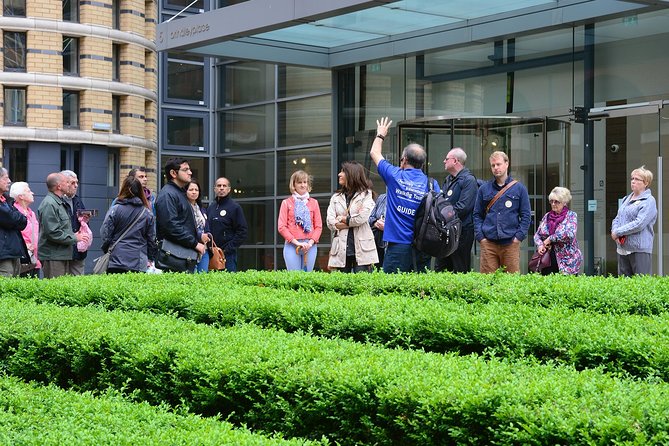
From the Library, the walk heads toward the International Convention Centre and Symphony Hall. The guide explains their place in the city and how this part of Birmingham serves as a major meeting and performance area.
The stop takes about ten minutes. It is useful because it shows how the city uses large civic buildings to draw people into the centre for concerts, conferences, and events. The emphasis is on context rather than a formal tour of the interiors, so you see the buildings from outside and hear why they matter.
Next comes Brindleyplace, another ten-minute stop. Here, the focus shifts to redevelopment and modern city life. The area gives you a clear example of how Birmingham has reshaped former industrial and commercial spaces for offices, restaurants, leisure, and public use.
I find this part particularly helpful if you are new to Birmingham. You begin to see that the city is not simply old or new. Its character comes from the constant overlap between industrial foundations and modern redevelopment.
Gas Street Basin and Birmingham’s canal story
Gas Street Basin is the tour’s most atmospheric stop. Allow about fifteen minutes here, which is longer than at most other points on the route.
This is where the canal theme has its strongest focus. The guide discusses the arrival of the canals and the basin’s importance within the country’s canal network. Water, brick, bridges, and narrow routes make this a more intimate part of the walk than the broad civic squares.
I would keep your expectations sensible. If you book mainly for a long waterside stroll, you may find the canal section too brief. One useful point about this tour is that it uses the canals as a doorway into Birmingham’s growth, rather than treating them as the whole subject.
The basin also provides a welcome change of pace. After the large modern buildings around the ICC and Brindleyplace, the waterway gives you a chance to pause and look closely at the city’s older working infrastructure.
Victoria Square and Birmingham’s Victorian ambitions
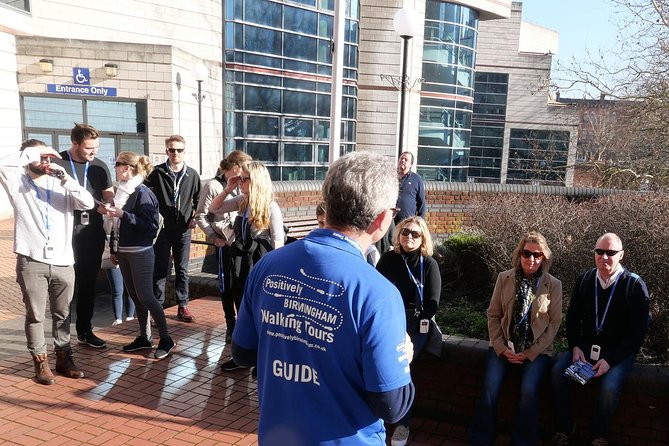
The route then moves toward Victoria Square, where the guide discusses public art and Birmingham’s development during the Victorian period. This stop lasts about ten minutes.
Victoria Square is a good place to consider how a growing industrial city presented itself. Public buildings, monuments, and open civic spaces were part of Birmingham’s effort to express confidence and importance. The guide also connects that earlier development with the city you see today.
This is where the tour’s title makes sense beyond the canals. You are not just looking at façades. You are being encouraged to read the square as evidence of changing public priorities, from Victorian civic pride to modern public art and urban design.
The stop is short, so you will not get an exhaustive account of every statue or building. Still, the guide’s style matters here. Jonathan is known for energetic delivery, personal research, quick jokes, and a strong affection for Birmingham. Michael brings a different tone, with years spent explaining the city to students and a friendly, measured manner.
Same streets, a different way to see them:
- Underground Vaults Walking Tour in Edinburgh Old Town
★ 4.5 · 8,506 reviews - London: The Original Jack the Ripper Walking Tour
★ 4.7 · 7,833 reviews - Oxford University Walking Tour With University Alumni Guide
★ 5.0 · 6,905 reviews - Edinburgh Castle: Guided Walking Tour with Entry Ticket
★ 5.0 · 5,540 reviews
Chamberlain Square and the city looking forward
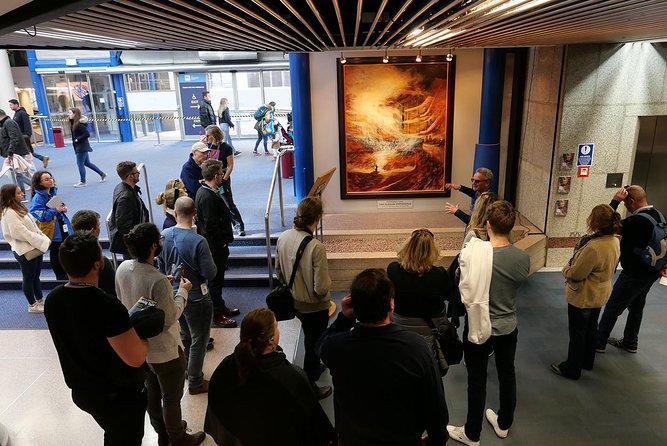
Chamberlain Square provides another ten-minute pause. Here, the guide looks at how Birmingham is moving into the future.
The square helps you understand the city as an ongoing project. Older institutions and historic architecture sit beside newer public spaces and updated routes through the centre. The walk does not pretend every change is simple, but it gives you a way to notice what is being retained, altered, or replaced.
I appreciate this forward-looking section because many city tours stop once they reach the Victorian period. This one tries to explain Birmingham as a place still changing. That makes the tour more useful for a first visit, when you want a basic map of how the centre fits together.
Birmingham Museum and Art Gallery’s 1880s entrance
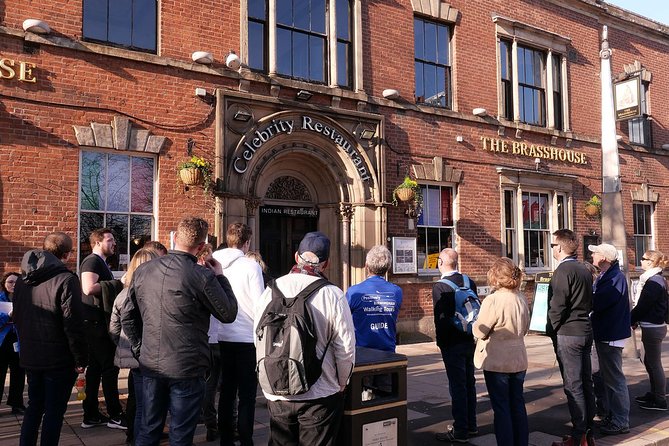
The walk passes the entrance to Birmingham Museum and Art Gallery. You stop for about two minutes to look at its double portico and the building’s 1880s design.
This is a brief exterior view, not a museum visit. If you want to see the collections, you will need to return independently. The stop is still worthwhile because the entrance gives you another example of Victorian civic architecture, and the guide can place it within the wider story of Birmingham’s public institutions.
A walking tour is often at its best when it helps you notice buildings you might otherwise pass without a second thought. This short stop does exactly that.
The Mailbox, The Cube, and the Ikon Gallery
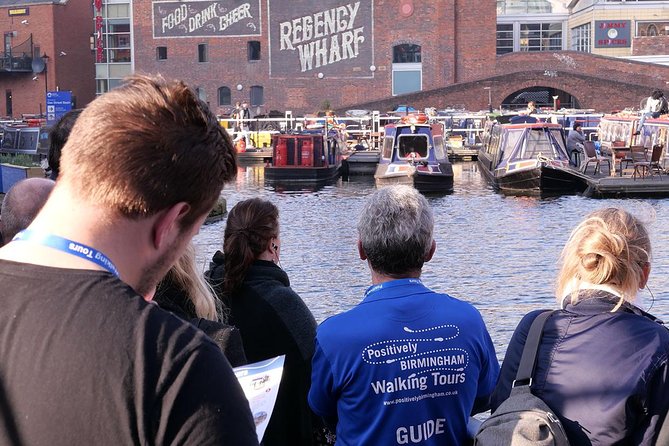
The Mailbox shows a different kind of urban change. The former post office sorting office has been converted into a mixed-use development, including the Birmingham headquarters of the BBC. The stop lasts about five minutes.
You see how a building created for one practical purpose can acquire a second life. The tour does not suggest that redevelopment erases the past. Instead, it points out how Birmingham keeps using old structures in new ways.
Nearby, The Cube is covered briefly. Its upper floors are said to offer some of the city’s best views, but this walking tour does not include a lengthy visit or an extended viewing stop. Treat it as a quick architectural reference rather than a chance to go up for the panorama.
The Ikon Gallery is also noted along the way. It was originally built as a school and is one of more than forty buildings designed by the architects Martin and Chamberlain. That detail is exactly the kind of small connection that makes a city walk rewarding. You start seeing repeated design ideas across Birmingham instead of viewing each building as a separate object.
The Hall of Memory and the route back to the canals
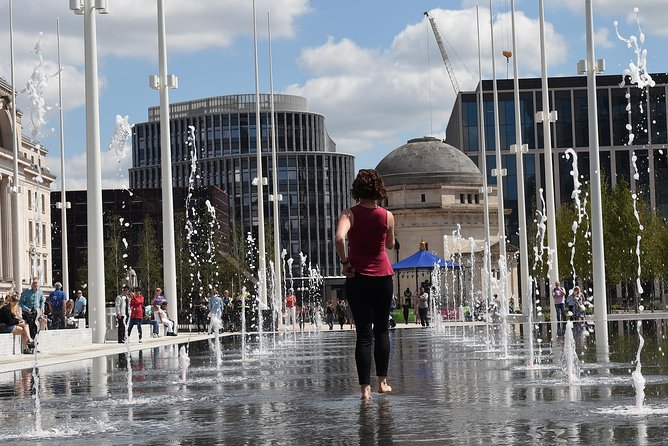
The Hall of Memory is a five-minute stop. This Art Deco memorial was built in 1925 to remember those who died in the First World War and now includes later conflicts, including the Second World War and more recent wars.
The guide points out Art Deco details, including William Bloye tablets. This is a quieter part of the route, and the subject calls for a respectful pause. It adds another period to the walk, moving beyond Victorian buildings into Birmingham’s twentieth-century civic memory.
The ICC Mall follows, taking about ten minutes. This is the main route between Centenary Square and the canalside. The stop helps tie the route together, showing how the city’s public squares, convention district, and waterways connect on foot.
That connection is one of the tour’s practical strengths. You are not simply driven from landmark to landmark. By walking between them, you see how close many of Birmingham’s central sights are and how the character changes from one block to the next.
Birmingham Town Hall and the finish at the Library
The final named stop is Birmingham Town Hall in Victoria Square. Built in 1834, it is the oldest building in the square.
The five-minute visit gives you one last look at Birmingham’s civic past before the walk returns to the Library. The Town Hall is a useful closing point because it brings together several of the tour’s themes: Victorian confidence, public architecture, the city’s changing centre, and the relationship between older buildings and current urban life.
The tour finishes back at the Library of Birmingham. That makes onward plans easy. You can use the Library as a fixed reference point, continue around Centenary Square, or make your own way to nearby attractions and transport.
What the guide style adds
The guides are a major reason this walk receives such strong marks, with a 4.9 rating and 98 percent recommendation rate from 346 reviews.
Jonathan is described as high-energy, funny, and full of local detail. His approach includes personal research, current stories, and plenty of humor, including the occasional dad joke. That style suits you if you like a guide who keeps moving and talks quickly.
Michael offers a more measured experience. He is also praised for his humor and clear explanations, with a background explaining Birmingham to students at Birmingham City University. If you prefer a calm guide who can answer questions without turning the walk into a lecture, his style may suit you well.
The feedback also points to a useful feature for visitors who do not speak English as their first language. One small group found that the guide spoke slowly and clearly, and the audio equipment made every explanation easier to follow.
The audio system is not used on every departure, but it may be provided. Each person can receive a receiver, while the guide wears a radio transmitter. Bring earphones with a 3.5mm connection if you have them. Otherwise, a new pair can be supplied.
Is $20.80 good value?
I think the price is fair for a two-hour guided introduction. You pay $20.80 per person, and the value comes from the explanation rather than admission tickets. Most stops are outside, so you are paying for the guide’s route planning, local knowledge, storytelling, and ability to connect the buildings.
The tour is especially good value if Birmingham is new to you. In two hours, you see the central library, ICC, Symphony Hall, Brindleyplace, Gas Street Basin, Victoria Square, Chamberlain Square, the Museum and Art Gallery entrance, Mailbox, The Cube, Ikon Gallery, the Hall of Memory, and Town Hall.
It is less suitable if you want extended time inside museums, galleries, or landmark buildings. You also will not spend most of the afternoon beside the canals. Think of this as a city orientation with a canal section, not a full canal tour.
Practical details for a smoother afternoon
The tour starts at 1:30pm and lasts about two hours. You should wear comfortable shoes and be prepared to walk at a steady pace. The feedback suggests the pace is active but manageable, and the stated requirement is moderate physical fitness.
The tour is near public transportation, and service animals are allowed. It is offered in English and uses a mobile ticket. The group can reach 35 people, although some departures may be much smaller.
Birmingham weather can change quickly, so bring suitable outerwear. The experience requires good weather. If poor conditions force cancellation, you receive the choice of another date or a full refund.
You can cancel free of charge up to 24 hours before the 1:30pm start for a full refund. Cancellations or changes within 24 hours are not refunded or accepted, so keep the local cut-off time in mind.
Who should book this Birmingham walk?
I would choose this tour if you want a friendly first look at central Birmingham, especially soon after arrival. It suits people who like architecture, civic history, redevelopment, public art, and local stories more than long museum visits.
It also works well for repeat visitors. The route can show you how familiar places fit together, while the guides add personal observations about the city’s past and present. One especially appealing feature is the chance to ask questions and get suggestions for further exploring Birmingham afterward.
You may want another tour if your main goal is a detailed canal walk, a full day of museum interiors, or an in-depth visit to each landmark. The route covers many sights, but most stops are short and viewed from outside.
FAQ
Where does the Birmingham walking tour start?
It starts at the Library of Birmingham in Centenary Square, Birmingham B1 2ND.
What time does the tour begin?
The tour begins at 1:30pm.
How long does the walking tour last?
It lasts approximately two hours.
Where does the tour finish?
The tour ends back at the Library of Birmingham, where it begins.
Is the tour offered in English?
Yes, the tour is offered in English.
What happens if bad weather cancels the tour?
If the tour is canceled because of poor weather, you are offered another date or a full refund.
Just added around the UK
- Birmingham Slogging Gangs Walking Tour with Edward Shelby★ 4.5 · 306 reviews
- Discovering Birmingham 2 hour Walking Tour to the Jewellery Quarter★ 5.0 · 333 reviews
- Birmingham City Centre Daily Walking Tour (10:30am & 2pm)★ 5.0 · 265 reviews
- The Real Eclectic Belfast City Walking Tour/Experience.★ 5.0 · 152 reviews
- Belfast Political Tour-Conflicting Stories Walking Tour★ 4.5 · 459 reviews
- Belfast Eclectic Walking City Center Experience, The Marti Way★ 5.0 · 348 reviews
- The Real Story of Belfast walking tour with a local guide★ 5.0 · 144 reviews
- Best of Belfast Walking Tour★ 5.0 · 399 reviews
UK Walking Tours, compared.

Magical London: Harry Potter Guided Walking Tour
Read our review →
Edinburgh Castle: Guided Walking Tour with Entry Ticket
Read our review →
Underground Vaults Walking Tour in Edinburgh Old Town
Read our review →
Oxford University Walking Tour With University Alumni Guide
Read our review →Edinburgh Castle: Guided Walking Tour with Entry Ticket
Read our review →
Edinburgh Castle Guided Walking Tour in English
Read our review →Browse the lists this tour appears in