

Review · CHOCOLATE AND DESSERT WALKING TOURS
Dresden: Guided Walking Tour and Chocolate Museum Ticket
Dresden tells its story in grand stone. This 90-minute experience pairs a guided walk through Dresden’s Old Town with a self-guided visit to the Chocolate Museum, giving you two very different tastes of the city in one compact outing. You move from royal palaces, churches, and river views to cocoa beans, old chocolate molds, and a sweet tasting.
I like the way the tour connects Dresden’s Middle Ages, Renaissance, Baroque glory, the destruction and renewal of the city, and the peaceful revolution of 1989. I also like the flexibility of the museum ticket, which you can use at any time on the day of your walking tour. The main drawback is easy to miss: the guide does not accompany you to the museum, and a late 4:00 PM walking tour requires you to visit the museum beforehand.
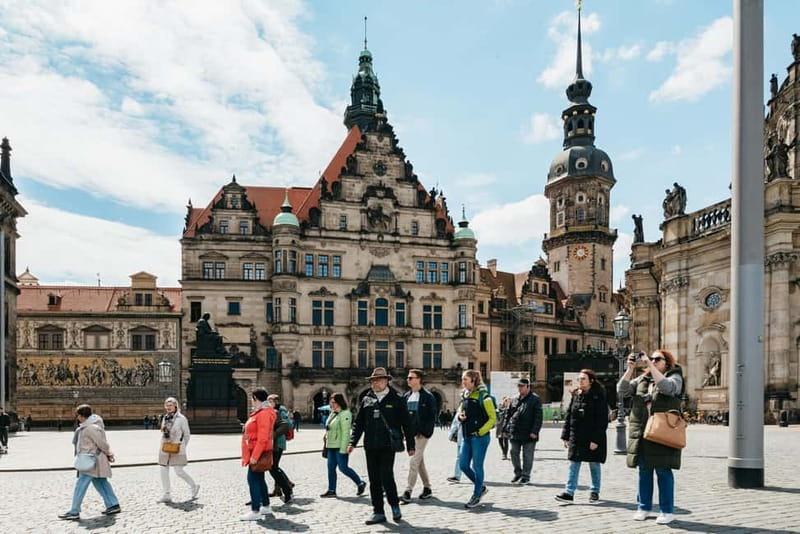
- A compact route through major sights: Dresden Castle, Brühl’s Terrace, the Procession of Princes, Stallhof, Dresden Cathedral, Taschenbergpalais, Augustus Bridge, Frauenkirche, and the Baroque Zwinger area all feature in the walk.
- History with a wide time frame: The guide covers the Middle Ages, Renaissance, Baroque Dresden, the Peaceful Revolution, and German reunification.
- A flexible museum visit: Your voucher works at the Chocolate Museum on the same day without a separate time reservation.
- A sweet local claim: The museum explains Dresden’s former place as Germany’s capital of chocolate and the city’s connection to the origins of milk chocolate.
- A good short-tour price: At about $18 per person, the combination is inexpensive for a live city walk, museum entry, and chocolate tasting.
- German-language guiding only: This matters if you need an English-language tour.
Starting at the QF Passage
Your meeting point is in the basement of the QF Passage, in the seating area of Dresden Information. That is a useful central location for a walk focused on the Old Town, but you should allow enough time to find the lower level rather than arriving at the last moment.
The tour lasts 1.5 hours. That is long enough to put Dresden’s main historic center into context, but not long enough for a slow, detailed look inside every sight. Think of it as a well-packed introduction, not a full-day architectural study.
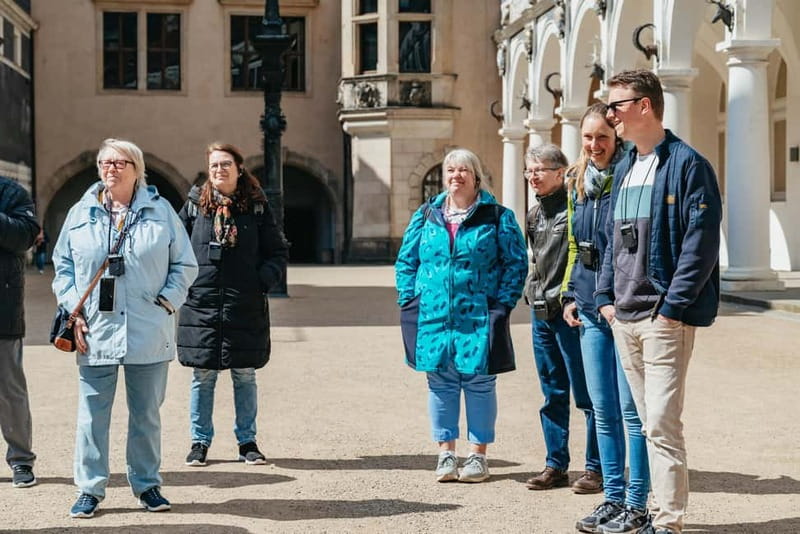
The guide leads in German. If you understand German, the format should suit you well, especially because the guides are praised for being enthusiastic, witty, well prepared, and good at explaining a lot in a short time. If you do not understand German, this is not the right choice simply because the route itself is attractive. The live explanations are a central part of the experience.
The tour is wheelchair accessible, which makes the central walking route more practical for many visitors. You should still consider your own comfort with a 90-minute walk and the surfaces around historic buildings.
Dresden Castle and the First Layers of History
The walk begins near Dresden Castle, a natural place to start because it brings together several centuries of the city’s story. Here, you begin with the older Dresden of the Middle Ages before moving toward the wealth and ceremony of the Renaissance and Baroque periods.
I like this broad approach. Instead of presenting Dresden as a city that appeared fully formed in the eighteenth century, the guide shows how its character changed over time. You hear about difficult medieval conditions, the energy of the Renaissance, and the grand court culture that shaped later Dresden.
The short format means the history comes in clear pieces. You will not receive an academic lecture on each period, but you should come away with a useful framework for understanding the buildings around you. That is especially helpful if this is your first day in Dresden and you want to know what you are looking at before visiting museums or churches on your own.
More Chocolate and Dessert Walks in Germany:
- Paris: Montmartre Cheese, Wine & Pastry Guided Walking Tour
★ 4.8 · 2,255 reviews - Brussels: Historical Walking Tour with Chocolate & Waffle Tasting
★ 5.0 · 1,165 reviews - Private Montmartre Food Tour with Wine, Cheese & Pastries
★ 5.0 · 1,027 reviews
Brühl’s Terrace and the Riverfront Views
From the castle area, the route continues to Brühl’s Terrace. Often associated with grand views and Dresden’s riverfront setting, this section gives the tour a little breathing room after the tight concentration of palace and church façades.
You get a chance to look across the Elbe and see how the city’s position shaped its history and appearance. The route does not treat the river as mere scenery. It helps you understand why Dresden became a significant political and cultural center.
This is also one of the better places to take in the scale of the Old Town. The tour is mostly about history and landmarks, but these open views help you connect the individual buildings into one city picture.
Procession of Princes and Stallhof

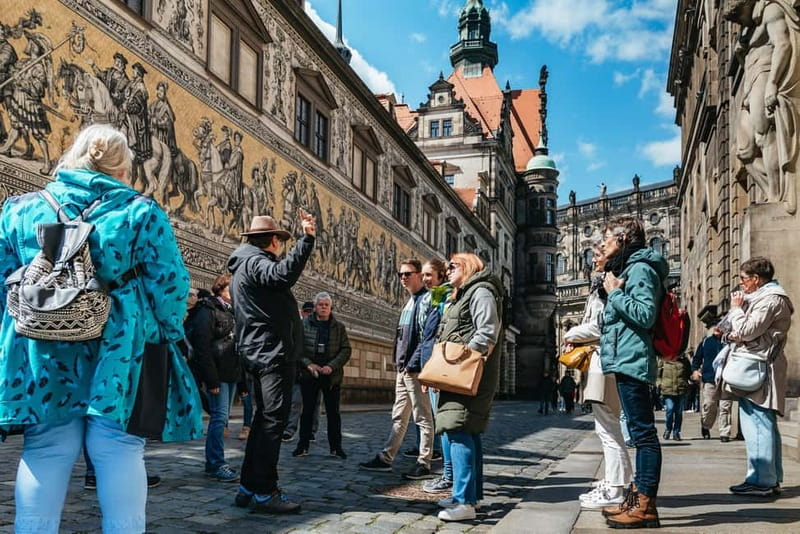
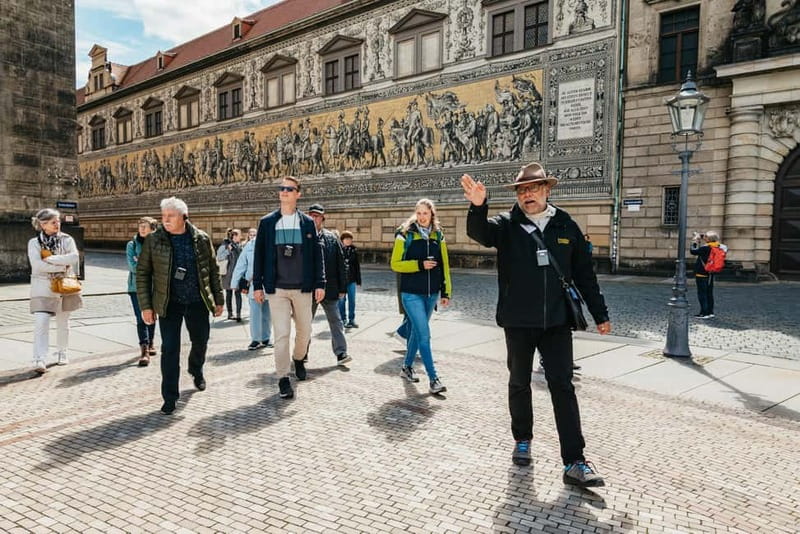
The Procession of Princes is one of Dresden’s most memorable outdoor artworks. The long mural presents a procession of Saxon rulers and adds a visual record to the route’s discussion of power, dynasties, and the city’s past.
You then reach Stallhof, the former courtyard connected with the royal complex. These spaces are valuable because they let you see how Dresden’s court life was staged. The setting is more than a pretty backdrop. It shows the relationship between rulers, ceremony, public display, and architecture.
I would pay attention here even if you are tempted to hurry toward the next famous church. This part of the route gives you details that are easy to miss when you simply walk between the major sights with a map.
Dresden Cathedral and the Taschenbergpalais
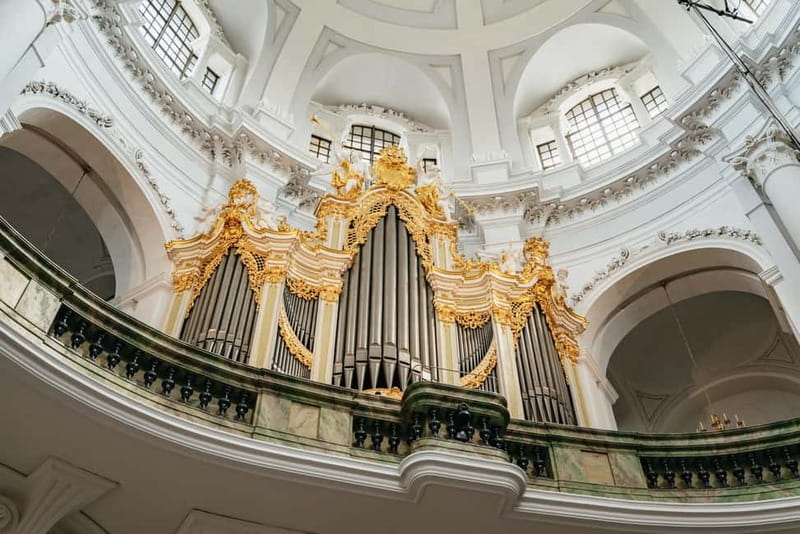
Dresden Cathedral adds another major building to the route and helps widen the story beyond royal residences. The guide places the church within the city’s changing religious and political past, including the major eras covered during the walk.
Next comes the Taschenbergpalais, another reminder of the courtly Dresden built around the castle. The route works well here because you are not seeing isolated monuments. Each stop sits close to the next, and the guide explains how they relate to the city’s ruling culture.
You should expect exterior-focused sightseeing rather than long interior visits. The tour’s strength is the movement through the historic center, with commentary that gives meaning to the façades, courtyards, and public spaces.
More Museum Visits in Germany:
- Berlin: Berlin Wall & East Side Gallery Walking Tour
★ 4.9 · 264 reviews - Cold War, Berlin Wall, Spies and the East Side Gallery
★ 4.8 · 254 reviews - Acropolis monuments & Parthenon Walking Tour with Optional Acropolis Museum
★ 5.0 · 2,678 reviews - Frida Kahlo VIP [Museum Tickets Included] Walk, Markets & Churros
★ 5.0 · 982 reviews
Augustus Bridge and Frauenkirche
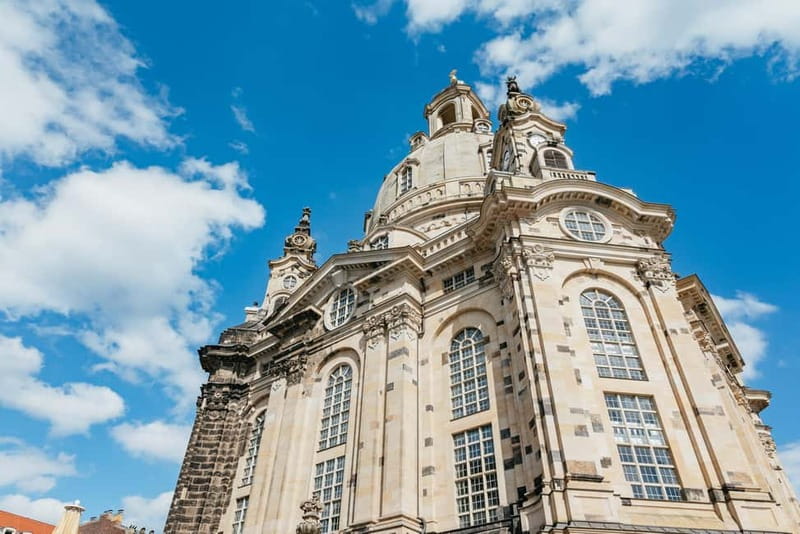
The route continues toward Augustus Bridge and finishes near Frauenkirche. The bridge provides another view of Dresden’s historic center and its relationship to the Elbe, while Frauenkirche offers the emotional center of the walk.
Frauenkirche is also essential for understanding Dresden’s twentieth-century story. The guide discusses the dark period surrounding the city’s destruction and the later rebuilding of its historic center. That story leads naturally into the Peaceful Revolution of 1989 and the reunification of East and West Germany.
This is one of the tour’s strongest features. You are not given only a Baroque postcard version of Dresden. The walk also addresses the city’s more painful chapters and the political changes that shaped modern Germany.
The tour ends near Frauenkirche, which is convenient if you want to continue exploring the Old Town afterward. It also places you near one of Dresden’s best-known landmarks for an independent visit, though the included tour does not promise an interior visit.
The Baroque Zwinger Area and Landmark Context
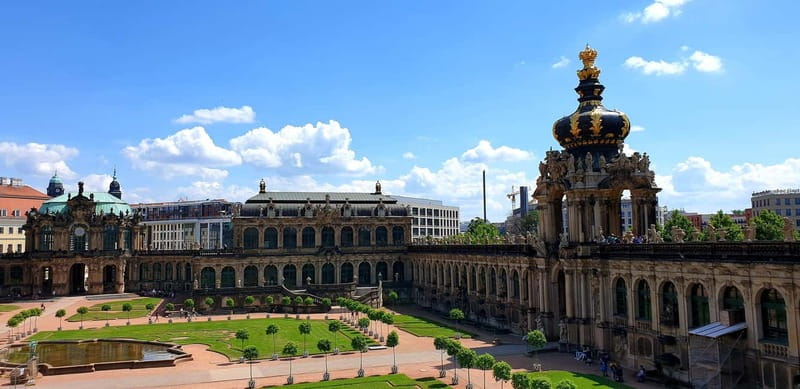
The Baroque Zwinger is included among the important sights you see during the walk. Its decorative architecture reflects the ambition and spectacle of Dresden’s Baroque age.
A short walking tour cannot give the Zwinger the same attention as a dedicated museum visit. Still, seeing it as part of the wider route helps you understand how it fits with the castle, cathedral, palace buildings, and royal spaces nearby.
I find this kind of overview useful at the start of a Dresden stay. You can return later to the places that catch your interest, instead of spending your first few hours wondering how the historic center fits together.
Dresden’s Chocolate Museum After the Walk
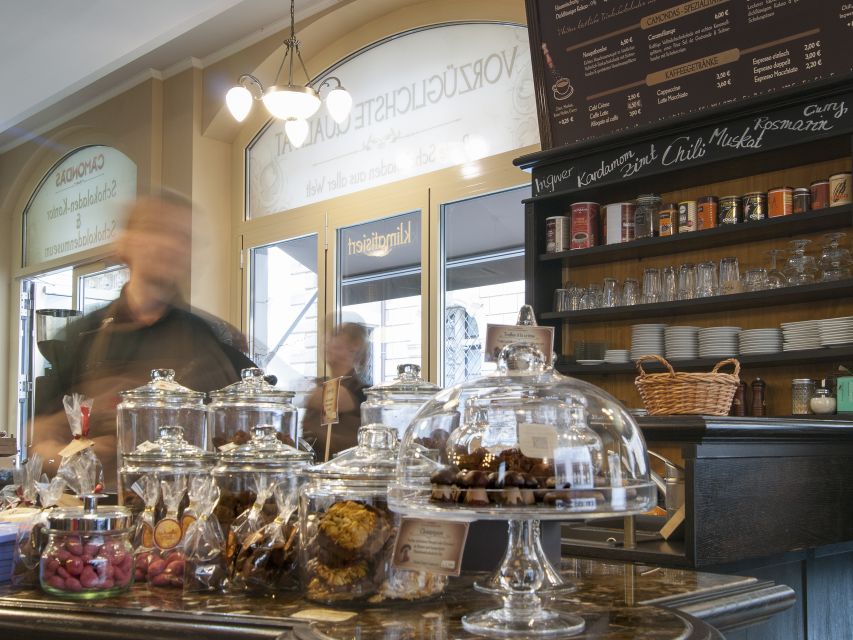
The Chocolate Museum is self-guided. You use your voucher to enter at any time on the date of the walking tour, with no advance museum time slot required. The museum is open daily from 11:00 AM to 6:00 PM, although you should check for unusual closing times before setting your schedule.
The museum explores Dresden’s former status as Germany’s capital of chocolate. It covers the origins of chocolate, the ingredients that affect quality, and the long route from cocoa beans to finished bars.
One especially unusual feature is the large collection of chocolate molds by Anton Reiche. These molds help show how chocolate production changed from a handmade craft into an organized industry. You also learn about the many chocolate factories that operated in nineteenth-century Dresden.
The museum discusses the claim that milk chocolate was invented in Dresden. The wording matters: this is presented as a city connection and historical claim, not a simple fact that settles every argument about chocolate’s origins. Either way, it gives the museum a local angle rather than making it a generic display about cocoa.
You can also find out what early chocolate bars may have tasted like and sample German milk chocolate after the exhibits. The tasting is modest but welcome. It gives the visit a clear ending and makes the museum appealing to families, chocolate fans, and anyone who wants a lighter activity after a history walk.
How to Plan the Two Parts Without Missing the Museum
The easiest plan is to take a morning or early afternoon walking tour, then visit the museum afterward. That order follows the natural structure of the experience and leaves you plenty of time before the museum closes at 6:00 PM.
A 4:00 PM walking tour needs more care. You must visit the Chocolate Museum before the walk because the museum may close before the tour finishes. This timing detail has caused confusion, so I would treat the museum as the first appointment on that day, not an optional stop for later.
The museum ticket can be used at any time on the date of the walking tour, without prior notice. You do not need to join the guide for the museum section, and the guide will not accompany you there.
Allow extra time between the two parts if you want to read the exhibits closely. The walking tour itself lasts 90 minutes, but the museum experience depends on how much detail you want. The supplied information does not specify a fixed museum duration, so you should plan around your own pace and the 11:00 AM to 6:00 PM opening window.
What the $18 Price Really Buys You
At about $18 per person, this is a strong-value introduction to central Dresden. You receive a live guided walk, entry to the Chocolate Museum, and a chocolate tasting. Buying those pieces separately could cost more, and the combination saves you from choosing between a standard city tour and a themed museum visit.
The value is best if you want an overview rather than a long specialist tour. In 90 minutes, you see many of the central landmarks and hear a useful outline of Dresden’s history. You then have a flexible museum visit that adds a completely different subject.
The price is less compelling if you need a tour in English, want extensive time inside each landmark, or have no interest in chocolate. In those cases, the museum ticket may feel like an add-on you did not need.
The rating of 4.5 from 479 bookings suggests consistently strong satisfaction, and the most praised qualities are clear: lively delivery, humor, enthusiasm, and the ability to explain the city in a short time. The main practical complaint is not about the walking route itself. It is confusion over the fact that the museum visit happens independently, so read the timing instructions before booking.
Who Should Book This Dresden Combination?
I would recommend it to first-time visitors who want a quick orientation to the Old Town without spending half a day on a formal tour. It also suits families and couples who like to mix architecture and history with a simple food tasting.
German-speaking visitors get the full benefit of the live guide. The tour is also useful for anyone with only a short stay, since the route covers many major sights in a compact area.
You should think twice if you want a slow, quiet museum experience with a guide beside you. The Chocolate Museum is self-guided, and the walking tour gives you an overview rather than extended time at each stop.
School classes and youth groups of 10 or more people with participants under 15 need to arrange an exclusive group tour. That rule is worth checking before booking for a large school or youth group.
Should You Book the Dresden Walking Tour and Chocolate Museum?
Book it if you want history, major Old Town landmarks, and a chocolate tasting for about $18. The guide-led walk gives Dresden shape, while the museum adds an unusual local subject and a flexible second stop.
Choose another tour if you need English, want a longer architectural tour, or prefer a guide to accompany you through every part of the experience. For German-speaking visitors who want a lively introduction and an easy museum add-on, this is a practical and fairly priced choice. Just remember to visit the museum before a 4:00 PM walk.
FAQ
How long does the Dresden walking tour last?
The guided walking tour lasts 1.5 hours.
What language is the walking tour in?
The live tour guide speaks German.
Where is the meeting point?
Meet in the basement of the QF Passage, in the seating area of Dresden Information.
Is the Chocolate Museum visit guided?
No. The museum visit is self-guided, and the walking tour guide does not accompany you.
Can I visit the Chocolate Museum at any time that day?
Yes. Your voucher can be used at any time on the day of your walking tour, without prior notice.
What are the Chocolate Museum opening hours?
The museum is open daily from 11:00 AM to 6:00 PM. You should check its website for special closing times.
What happens if I book the 4:00 PM walking tour?
You should visit the Chocolate Museum before the walking tour because the museum may close before the tour ends.
Is chocolate tasting included?
Yes. The experience includes a chocolate tasting after the museum visit.
Is the experience wheelchair accessible?
Yes. The activity is listed as wheelchair accessible.
Can I cancel the booking for a refund?
Yes. You can cancel up to 24 hours in advance for a full refund.
Just added around Germany
- Berlin Walking Tour★ 4.5 · 378 reviews
- Small Group Walking Tour of East Berlin with a French Guide★ 5.0 · 176 reviews
- Berlin Street Art Walking Tour – Off The Grid★ 5.0 · 270 reviews
- Berlin Highlights Private Guided Walking Tour★ 4.5 · 89 reviews
- Private Walking Tour: World War 2 and Cold War Sites in Berlin★ 5.0 · 230 reviews
- East Meets West: Berlin Food Culture & Street Art★ 5.0 · 157 reviews
- The History of Berlin: WWII PRIVATE Walking Tour With Locals★ 5.0 · 209 reviews
- Kreuzberg Berlin: Off the Beaten Track PRIVATE Walking Tour★ 5.0 · 128 reviews
Chocolate and Dessert Walking Tours, compared.

Montmartre Cheese, Wine & Pastry Guided Walking Tour
Read our review →
Historical Walking Tour with Chocolate & Waffle Tasting
Read our review →
Private Montmartre Food Tour with Wine, Cheese & Pastries
Read our review →

Saint-Germain: Gourmet Chocolate & Pastry Walking Food Tour
Read our review →
Aveiro: Walking Tour, Boat Cruise, Sweets & Church Entrance
Read our review →
Le Marais Walking Food Tour with Cheese, Wine & Pastries
Read our review →Browse the lists this tour appears in