
Review · AMSTERDAM WALKING TOURS
Absolutely Amsterdam – the Essential Introductory Walking Tour
Amsterdam makes more sense on foot. This 2.5-hour introduction links major sights with the stories behind them, from the old harbor to the Royal Palace. I like the small maximum of 15 people and the guide-led mix of serious history, local habits, and humor. I also like that the low price lets you decide what the tour is worth through a tip.
The main consideration is the subject matter. You will hear about prostitution, drug policy, religious conflict, Nazi occupation, colonial trade, and the darker side of Amsterdam’s wealth. That makes the tour more honest, but it may feel weighty at times. It is also an outdoor walk, so good shoes and weather-ready clothing matter.
Key points to know before you book
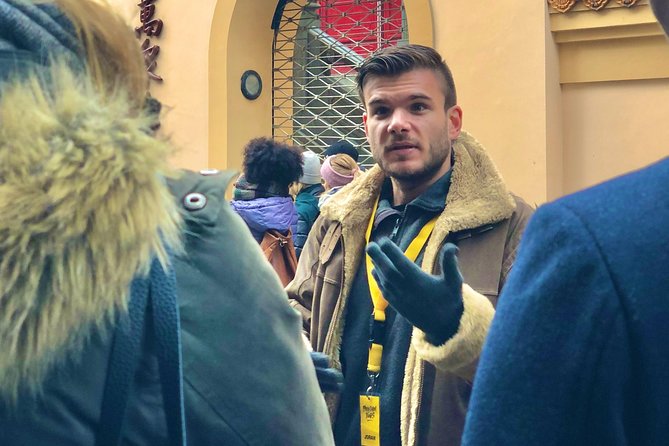
- Ten central stops in about two and a half hours: You cover the old harbor, Chinatown, Waterlooplein, the Amstel, Oudemanhuispoort, and Dam Square.
- A history tour with sharp edges: Expect frank discussion of prostitution, Catholic worship, marijuana policy, Jewish persecution, and the legacy of the Dutch East India Company.
- English-speaking guides with distinct styles: Past guides have included Raymond, Jaap, Sergio, David, Fernando, Roman, Esi, Alexander, and Sebastien.
- A very low upfront cost: The listed price is $5.93 per person, with tips left to your judgment.
- Visual aids add context: Guides may use maps, photographs, paintings, and other images to make the stories easier to follow.
- Wear comfortable shoes: The pace is manageable, but you cover plenty of ground through busy old-city streets shared with bicycles.
Why this is a strong first look at Amsterdam
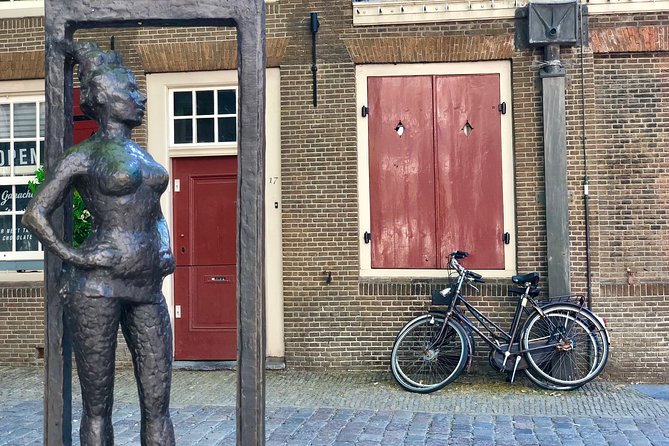
Amsterdam can seem easy to understand at first. There are canals, narrow houses, bicycles, and boats everywhere. Yet the city’s shape comes from water control, trade, religion, war, migration, and money. This walk gives you a useful framework for all of it.
I like the way the route moves through different sides of the city instead of staying only around the postcard canals. You see the commercial center, the Red Light District, Chinatown, the old Jewish Quarter, university buildings, and the royal heart of the city. That variety helps you understand Amsterdam as a working city, not just a pretty collection of canal views.
The guide style is another major strength. The best accounts describe guides who use humor without turning the city into a joke. Raymond is praised for being a lifelong local who explains clearly and keeps the group together. Jaap is known for a funny, engaging presentation and strong command of Dutch history. Sergio, David, Fernando, Alexander, Sebastien, Roman, Esi, and others are also singled out for energy, clarity, and personal recommendations.
You should still expect variation. This is a live walking tour, so the feel depends partly on the guide assigned to your departure. The route can also be affected by weather and crowd levels. Busy streets make it harder to hear and require care around bicycles.
A few more walks around Amsterdam worth a look
- Amsterdam Anne Frank: Small-Group Walking Tour & Local Guide
★ 4.8 · 12,789 reviews - Anne Frank’s Story – Guided Walking Tour through Amsterdam
★ 5.0 · 11,619 reviews - Amsterdam: Anne Frank Guided Walking Tour in DE/EN/IT/ES
★ 4.9 · 3,107 reviews
Beurs van Berlage and Damrak: Amsterdam begins with water and trade
The walk starts at Beursplein 5, in front of the Beurs van Berlage. This is a smart starting point because the site helps explain why Amsterdam exists where it does. The city grew around the Amstel River, and the old waterway once ran through the area where the exchange buildings now stand.
Here, you get the basic story of Amsterdam’s rise. Water was not simply scenery. It shaped transport, trade, defense, and the city’s physical growth. Finance then turned that location into a center of commercial power.
The next stop is Damrak, the old harbor. This is where the tour shifts from economics to the uneasy relationship between religion and prostitution. You hear how the Red Light District developed, how the Church and commercial sex existed side by side, and how prostitution became a legal profession in the Netherlands.
That frank approach is useful. Amsterdam often gets reduced to its permissive reputation, but this stop puts the district into a longer social and religious story. You also hear about changes in the neighborhood and the problems it faces today.
The streets here can be crowded. Stay close to the guide, listen for instructions, and do not expect a quiet stroll. If you want polished canal photographs, this is not always the easiest section, but it is one of the most revealing.
Our Lord in the Attic and Chinatown: tolerance with conditions
At Our Lord in the Attic Museum, the guide explains how Catholic worship continued after Catholicism was made illegal in the seventeenth century. The key point is that tolerance did not mean full equality. Catholic practice was allowed under unusual conditions, including worship in a concealed church inside a canal house.
You do not enter the museum or the hidden church on this tour. Instead, you see the building from outside and look at images of the interior. That limitation matters if this museum is high on your list. You will get the context, but not the full architectural experience.
Still, the topic fits the larger route well. The guide draws a line between past religious tolerance and the way tolerance works today. Amsterdam’s reputation for freedom has always involved rules, compromises, and limits. This is one of the tour’s better history lessons because it avoids treating tolerance as a simple Dutch personality trait.
The route then reaches Chinatown, where the subject turns to drug policy. You learn how the area became associated with crime and danger in the 1970s, and how that helped shape the rise of coffeeshops selling marijuana.
This section is about policy, not a shopping stop. You should not book the walk expecting a tour of coffeeshops or a cannabis experience. The value is in understanding why Amsterdam’s system developed and why the city’s approach remains more complicated than its popular image suggests.
The Waag: art, medicine, and a famous painting
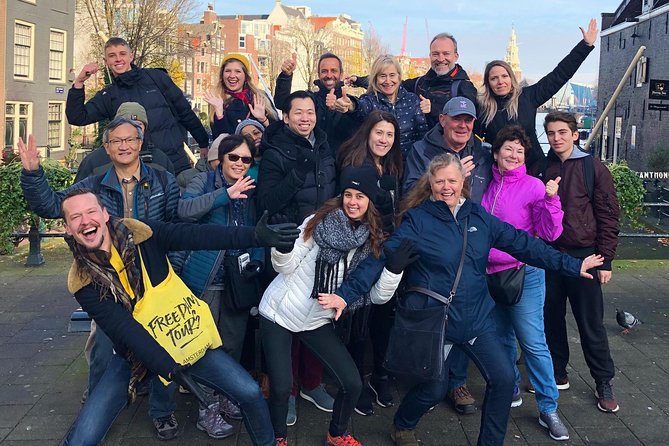
The Waag provides one of the walk’s shorter but more memorable stops. Here, the guide discusses the place connected with Rembrandt’s first major work and explains how the painting changed portrait making.
A copy of the painting is used to point out details. That is a small touch, but it makes a difference. In a crowded square, it can be hard to see what a guide means when discussing a work of art. A visual reference gives you something concrete to inspect.
The stop also adds a cultural layer to the route. So far, you have looked at trade, religion, prostitution, and drug policy. The Waag brings art and public identity into the picture. It shows how Amsterdam’s commercial success supported a culture in which painters, merchants, scientists, and civic institutions all played visible roles.
You will spend about ten minutes here, so think of it as an introduction rather than a full art lesson. If Rembrandt is central to your plans, you will need a museum visit later.
Same streets, a different way to see them:
- Amsterdam: Anne Frank Guided Small Group Walking Tour
★ 4.8 · 2,722 reviews - Amsterdam: Cultural Highlights Walking Tour
★ 4.9 · 2,629 reviews - Amsterdam: Ganja Walking Tour
★ 4.2 · 2,127 reviews - Anne Frank Walking Tour Amsterdam Including Jewish Cultural Quarter
★ 5.0 · 1,879 reviews
Oostindisch Huis: Amsterdam’s wealth and its darker legacy
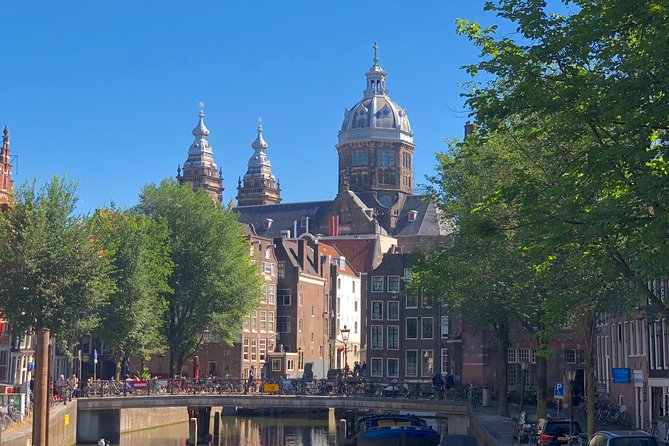
Oostindisch Huis is one of the most important stops for understanding Amsterdam’s Golden Age. During weekdays, the group may enter a seventeenth-century courtyard hidden inside the building. The setting itself is special, but the larger story matters more.
This was the headquarters of the Dutch East India Company, a huge trading corporation that helped Amsterdam become one of the wealthiest cities in the world. The guide explains how global commerce operated and how this early corporate structure helped shape modern capitalism.
The tour does not present that success as a clean fairy tale. You also hear about the damage and exploitation connected to the period. That balance is essential. Amsterdam’s grand houses and canal wealth came from trade, but trade was tied to power, violence, and colonial control.
The weekday detail is practical. If seeing the courtyard is important to you, choose a weekday departure. On other days, the stop may need to focus on the building and its story from outside.
Waterlooplein: Jewish Amsterdam and wartime survival
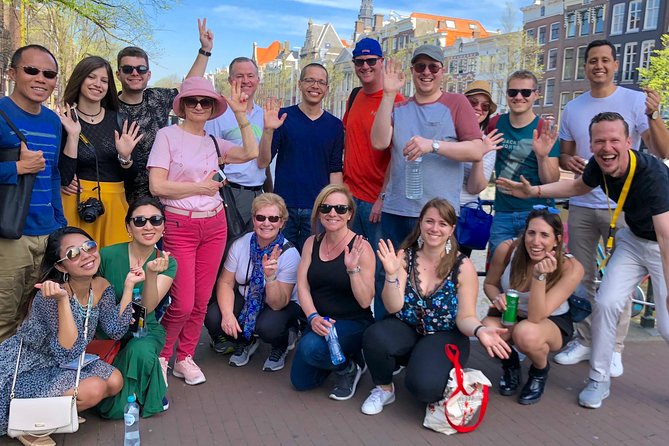
Waterlooplein is home to Amsterdam’s oldest market and sits in the former Jewish Quarter. This stop deals with the destruction of Jewish life during the Second World War and the consequences of Nazi occupation.
The guide explains that the neighborhood was nearly destroyed, but the story does not stop with a simple account of Nazi persecution. You also learn how the occupation changed daily life and what Amsterdammers did to survive the final hunger winter of the war.
This is one of the tour’s more serious sections. It deserves attention and patience, especially because the subject is presented as part of the city’s physical streets rather than as an isolated museum display. You are standing in a district where community life once shaped the markets, homes, and public spaces.
The stop cannot provide the depth of the Anne Frank House, the Jewish Cultural Quarter, or the National Holocaust Names Monument. I would treat it as a concise orientation, then visit one of those sites if you want more time with the subject.
The Amstel and canal houses: clues hidden in plain sight
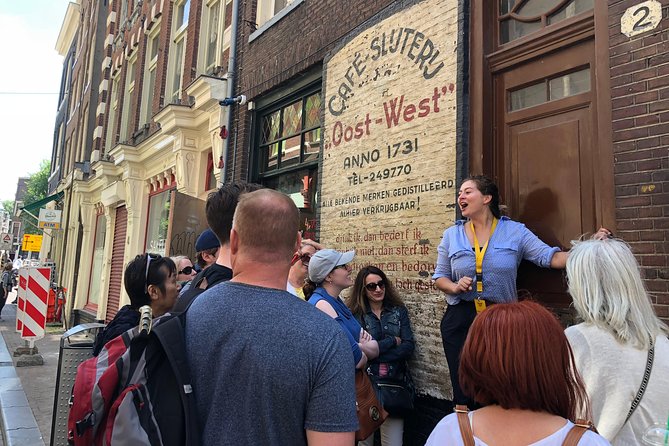
At the Amstel, or at another canal if weather or guiding conditions require a change, the group looks at the city’s most famous features. The guide explains why Amsterdam has canals and how the canal houses reflect the city’s commercial past.
You will learn why many houses are narrow, why some lean, and why leaning is not always an accident. The hooks on the façades also get explained, as do the famously open curtains.
These details are fun, but they are not trivial. Amsterdam’s houses reveal how people moved goods, used limited plots of land, and adapted buildings to a wet urban setting. Once you know what to look for, a canal stroll becomes more interesting.
This part is also a good reminder that the tour is not only about major monuments. Much of Amsterdam’s character sits in ordinary architectural details. The guide helps you notice them.
Oudemanhuispoort and the bicycle question
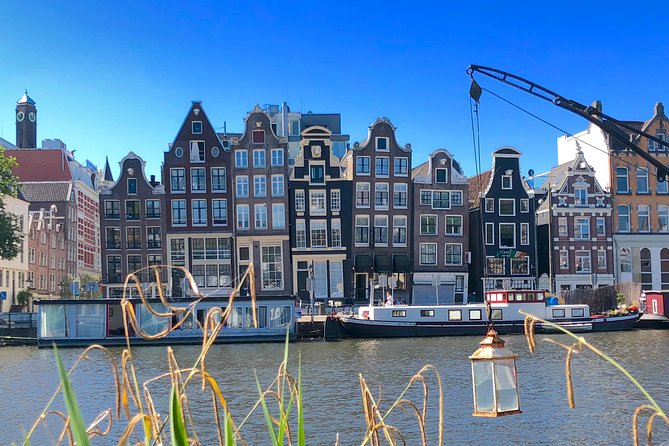
Oudemanhuispoort is a former monastery that later became a hospital and is now part of the University of Amsterdam. It is a fine setting for the discussion of Dutch bicycle culture, especially because it is easy to miss if you are simply following a standard sightseeing route.
The guide explains why Amsterdam has more bicycles than people and why so many bikes look plain, worn, or unattractive. The practical answer is more important than style. In a city where bicycles are used for daily transport, they need to be useful, familiar, and replaceable.
You also get a warning that applies to the entire walk: bicycles have priority in many situations, and they move quickly. Keep out of marked cycle lanes, listen when the guide asks the group to move, and do not stop in the middle of a bike path for photographs.
Several reviews praise the easy pace, but easy does not mean effortless. You are on your feet for around 150 minutes, crossing busy streets and uneven city surfaces. Comfortable shoes and a drink are sensible choices.
Royal Palace and Dam Square: ending with the monarchy
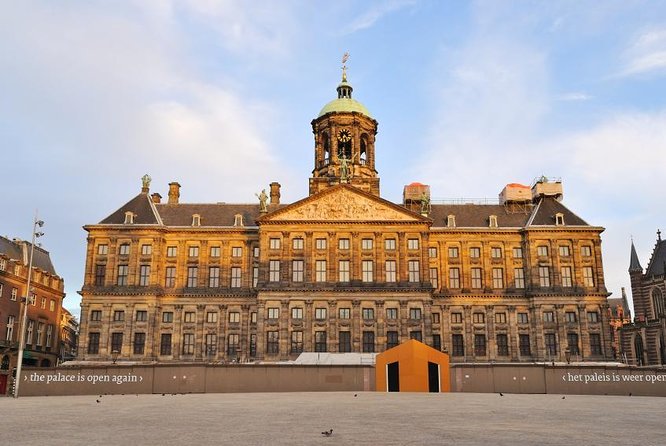
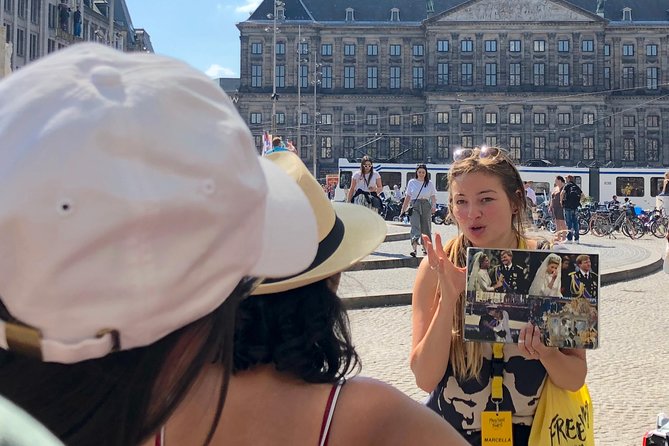
The final major stop is the Royal Palace Amsterdam on Dam Square. The guide explains the unusual shift from a Dutch republic to a monarchy and introduces the current royal family with photographs.
This gives the tour a useful political finish. Amsterdam’s story begins with civic power, merchants, and a republic, then ends with a modern constitutional monarchy. The Royal Palace is a reminder that the country’s political system changed even while the city retained strong civic traditions.
The tour description identifies Dam Square as the end of the route, while the meeting information says the activity ends back at the meeting point. Because those details do not fully match, confirm the exact end location when you book. Either way, you finish in a central area with easy access to more sightseeing.
What $5.93 really gets you
At $5.93 per person, this is an unusually cheap way to get a structured introduction to Amsterdam. The price is not meant to cover museum entry or provide a private guide. It gives you a small-group walking experience, with tips left to your judgment.
That tip-based model can be excellent value if you want orientation before spending money on museums, canal cruises, or specialist tours. A strong guide can help you decide which parts of the city deserve more of your time. Fernando, for example, is praised for suggesting places that people might not otherwise find during a short stay.
The low price also means you should keep expectations sensible. You are not buying admission to Our Lord in the Attic, the Royal Palace, or any other attraction. Those stops are viewed from outside, discussed, or supported with images.
The tour is offered in English and has a maximum of 15 people. That is small enough for questions and group contact, though a full departure can still feel crowded in narrow streets.
Who should book this Amsterdam walk?
I would choose this tour if you are visiting Amsterdam for the first time and want to understand the city before choosing your paid attractions. It also suits repeat visitors. One review describes learning new things even after several previous trips, which makes sense because the route focuses on stories and connections rather than only landmark photographs.
It is a good fit for you if you:
- Want a clear introduction to central Amsterdam
- Enjoy history mixed with humor and local observations
- Prefer walking to riding in a bus
- Are comfortable discussing adult and difficult subjects
- Want recommendations for the rest of your stay
- Need a low-cost way to get your bearings
It is less suitable if you want extensive time inside museums, a quiet architectural tour, or a route devoted only to scenic canals. It also may not suit you if long periods outdoors are difficult. Most people can participate, service animals are allowed, and the meeting point is near public transportation, but the experience still requires steady walking.
Free cancellation is available if you cancel at least 24 hours before the start time. Cancellations within 24 hours are not refunded, and the tour requires a minimum number of participants.
Should you book Absolutely Amsterdam?
Yes, if you want an affordable and lively first look at the city. The strongest reasons are the broad route, the small group limit, the honest treatment of Amsterdam’s difficult past, and the guides’ use of humor and visual aids.
Book it early if your dates are fixed, since it is often reserved about 24 days ahead. Choose comfortable shoes, allow for crowded streets, and consider taking it near the start of your stay so you can use the advice for later plans.
I would skip it only if you want substantial indoor sightseeing or a narrow subject such as art, architecture, or wartime history. For most first-time visitors, this walk gives Amsterdam a useful human shape, and it does so without asking much of your budget.
FAQ
How long does the Amsterdam walking tour last?
The tour lasts approximately 2 hours and 30 minutes.
What language is the tour offered in?
The tour is offered in English.
How much does the tour cost?
The listed price is $5.93 per person. It is a tip-based experience, so you can decide how much to give.
Where does the tour begin?
The stated meeting point is Freedam Tours, Beursplein 5, 1012 GZ Amsterdam, Netherlands.
Where does the tour end?
The route information says the tour ends at Dam Square, while the meeting information says it ends back at the meeting point. Confirm the exact end location when booking.
Does the tour enter Our Lord in the Attic Museum?
No. The guide discusses the museum and shows images of the hidden church, but admission is not included and the group does not enter.
What is the cancellation policy?
You can cancel up to 24 hours before the start time for a full refund. Cancellations or changes made less than 24 hours before the start time are not refunded or accepted.
Just added around Amsterdam
- Small Group Walking Tour in Amsterdam with Friendly and Fun Guide★ 5.0 · 281 reviews
- Amsterdam: Private Introduction Walking Tour (TOP RATED)★ 5.0 · 223 reviews
- Humans of Amsterdam: Cultural Walking Tour incl. meeting 2 locals★ 5.0 · 320 reviews
- Amsterdam Private Historical Walking Tour★ 5.0 · 75 reviews
- Private Tour: Amsterdam City Walking Tour and Canal Cruise★ 4.5 · 142 reviews
- Anne Frank and Jewish Quarter Amsterdam Private Walking Tour★ 5.0 · 684 reviews
- Amsterdam: Anne Frank and World War II Walking Tour (TOP RATED)★ 4.5 · 72 reviews
- Small Group Walking Tour – Hello Amsterdam★ 5.0 · 505 reviews
Amsterdam Walking Tours, compared.

Amsterdam Anne Frank: Small-Group Walking Tour & Local Guide
Read our review →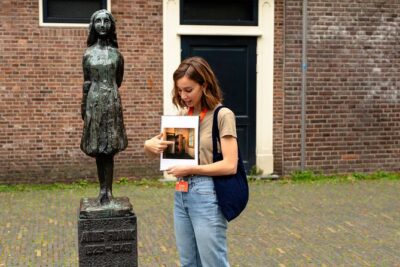
Anne Frank’s Story – Guided Walking Tour through Amsterdam
Read our review →
Anne Frank Guided Walking Tour in DE/EN/IT/ES
Read our review →

Anne Frank Walking Tour Amsterdam Including Jewish Cultural Quarter
Read our review →
Giethoorn Tour Scenic Cruise, Cheese & Free Time
Read our review →Browse the lists this tour appears in