
Review · BARCELONA WALKING TOURS
Barcelona Architecture Walking Tour With Casa Batlló Upgrade
Barcelona’s best architecture deserves more than a quick photo. This two-hour to two-and-a-half-hour walk links Sant Pau, Sagrada Família, Casa Batlló, and other modernist landmarks with an architecture-focused guide. I like the smart route from the former Sant Pau hospital to Passeig de Gràcia, and I like that you can add Casa Batlló if your budget allows. The main concern is pace: one past group found the guide walked too quickly and was hard to hear on noisy streets.
The tour costs $35.07 per person, before any optional building admission. That is fair for a guided introduction to several major Barcelona sights, especially if you want context rather than a list of photo stops. Plan for a fair amount of walking, and do not expect entry to most buildings unless you choose the Casa Batlló upgrade.
Key points to know before you book
- Sant Pau opens the story: Begin at Lluís Domènech i Montaner’s former hospital complex, one of Barcelona’s finest modernist sites.
- Sagrada Família is viewed from outside: You’ll study its façades and symbols, but admission to the basilica is not included.
- Passeig de Gràcia is the grand finale: See Casa Milà, Casa Batlló, Casa Amatller, and Casa Lleó Morera along Barcelona’s most famous modernist avenue.
- The Casa Batlló upgrade adds real value: It lets you explore one of Gaudí’s most elaborate buildings after the walking tour.
- Chocolate is part of the route: At Casa Amatller, you enter the ground-floor shop and sample Barcelona chocolate.
- Guide quality matters: Past guests praised guides including Perrine and Patricio, but one group found the pace too fast and the guide difficult to hear.
From Sant Pau to Gaudí, a smart two-hour route
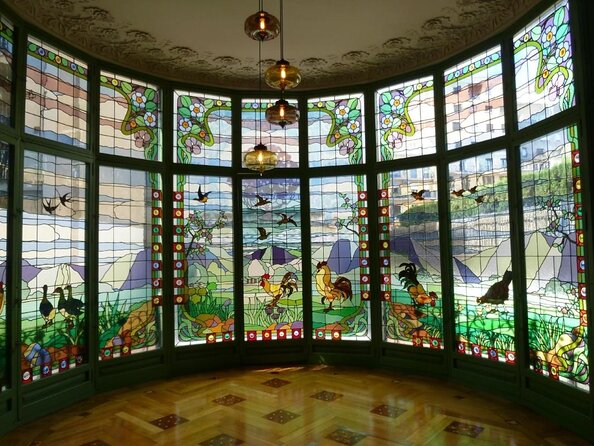
This is not a general city walk with a few decorative façades tossed in. The route is built around Catalan modernism, the artistic movement that reshaped Barcelona in the late 19th and early 20th centuries.
You begin at the Recinte Modernista de Sant Pau, at Carrer de Sant Antoni Maria Claret 167. From there, the route moves down Avinguda Gaudí to Sagrada Família, then continues toward the grand buildings of Passeig de Gràcia. The finish is in front of Casa Lleó Morera at number 35 on the avenue.
That route gives you a useful visual progression. You start with a large civic complex, move to Gaudí’s enormous basilica, then finish with private homes built for wealthy Barcelona families. I like this sequence because it shows that modernism was not just a style for churches. It shaped hospitals, apartment blocks, shops, and whole city streets.
The tour is offered in English and normally lasts about two hours to two hours and 30 minutes. The group can include up to 20 people, though one past group had 12. That is small enough for a personal feel, but large enough that your ability to hear may depend on the guide’s voice, the street noise, and the group’s position.
A few more walks around Barcelona worth a look
- Barcelona Tapas and Wine Experience Small-Group Walking Tour
★ 5.0 · 5,804 reviews - Barcelona: Tapas Walking Tour with Food, Wine, and History
★ 4.8 · 4,261 reviews - Barcelona: Food Walking Tour with Tapas and Wine
★ 4.9 · 2,180 reviews
Sant Pau reveals Barcelona’s civic side
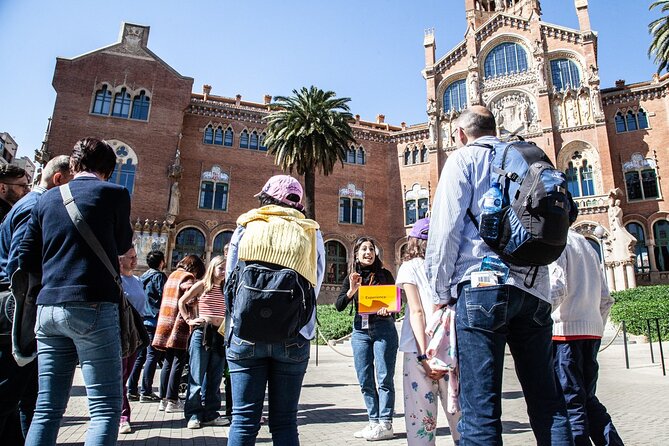
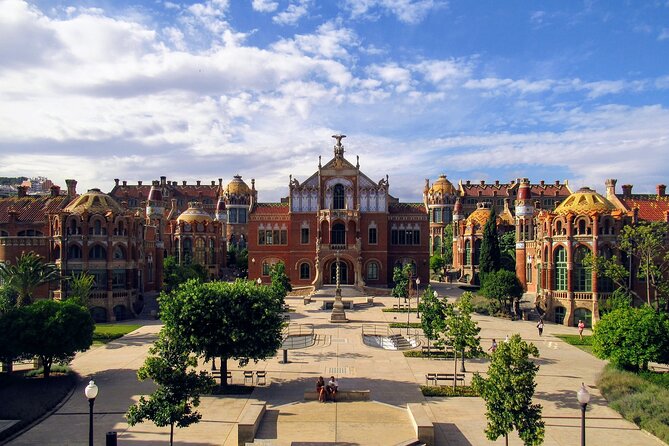
The Recinte Modernista de Sant Pau is the first major stop, with about 15 minutes devoted to it. Lluís Domènech i Montaner designed the complex, and he is often described as one of the fathers of Catalan modernism.
The site once served as one of Barcelona’s most important hospitals. It remained in use until the late 1990s, a detail that gives the ornate buildings extra force. This was not simply a decorative showpiece. It was a working medical institution, designed to provide a setting very different from the cramped hospital conditions common in older urban areas.
You’ll look at the complex from outside, since admission is not included. Fifteen minutes is enough for an introduction, not a full visit. If Sant Pau is high on your list, you may want to return separately and buy an entry ticket. The walking tour gives you the architectural frame, while an interior visit would require more time than this schedule allows.
This is a strong opening because it introduces Domènech i Montaner before the tour turns to Gaudí. That comparison matters. Barcelona’s modernist story is broader than one famous architect.
Sagrada Família without the ticket line
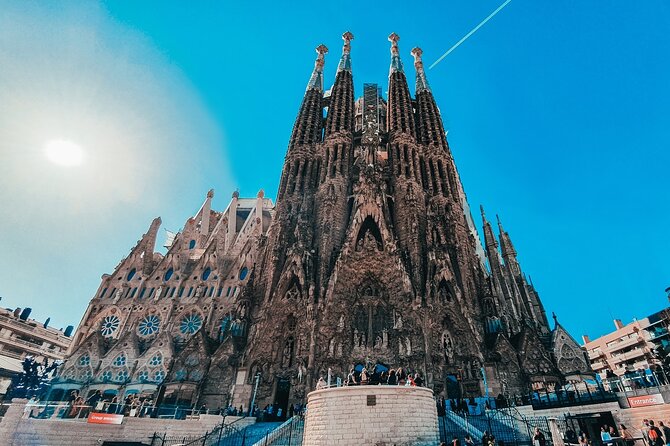
The walk along Avinguda Gaudí leads to the Basilica de la Sagrada Família, the city’s defining landmark. The tour allows about 30 minutes here, making it one of the most substantial stops.
You will view the basilica from several angles and learn about the symbols worked into its façades. That outside perspective is useful because the building can look very different depending on where you stand. A guide can point out details that are easy to miss when you are focused on the towers and the crowds around the entrance.
Admission is not included. This is important. You cannot treat this tour as a substitute for an interior visit to Sagrada Família.
I like the idea of pairing this walk with a separate ticket for the basilica on another day. One past guest did exactly that and found the two experiences worked well together: the walking tour supplied context and outside views, while the separate visit allowed time inside. That is sensible planning, especially if you want to study the interior at your own pace.
The drawback is that the tour’s 30-minute stop may leave you wanting more. But that is also its purpose. It introduces the building without using up your whole day.
Short stops at Macaya and Casa de les Punxes
After Sagrada Família, the tour pauses at CaixaForum Macaya for about 10 minutes. This is a smaller stop, but it helps show how modernist design appears beyond the city’s best-known buildings.
You’ll hear the story behind this building and see another example of the period’s decorative approach. Admission is not included, so the value here comes from the guide’s explanation and the chance to place the building within the wider modernist movement.
The next stop is Casa de les Punxes, with about 15 minutes. Its name refers to its pointed roof towers, which give it a fairy-tale appearance. The tour focuses on the story behind what is often called Barcelona’s most fairy-like house.
Again, you view it as part of the route rather than entering. That is fine if your goal is to see a range of façades. If you prefer long interior visits, the short timing may feel thin. This tour works best when you want a connected overview, not a detailed inspection of every building.
Same streets, a different way to see them:
- Barcelona Tapas Walking Tour: Food, Wine & History
★ 4.5 · 1,928 reviews - Barcelona Helicopter, Sailboat & Old Town Private Walking Tour
★ 5.0 · 1,395 reviews - Barcelona: Old Town and Gothic Quarter Walking Tour
★ 4.8 · 1,393 reviews - Barcelona: City Walking Tour with a Local Guide
★ 4.9 · 1,384 reviews
Passeig de Gràcia brings the big names together
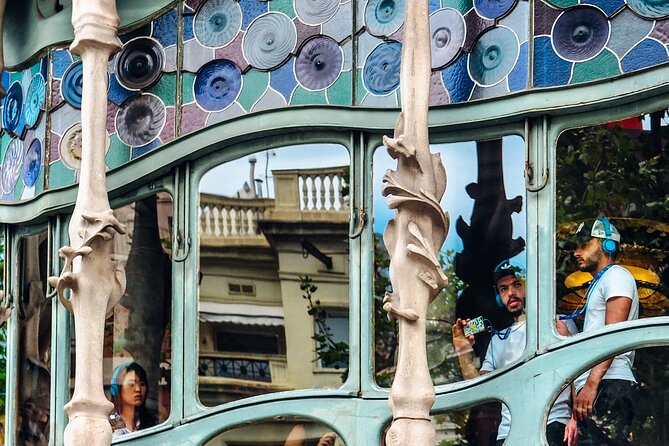
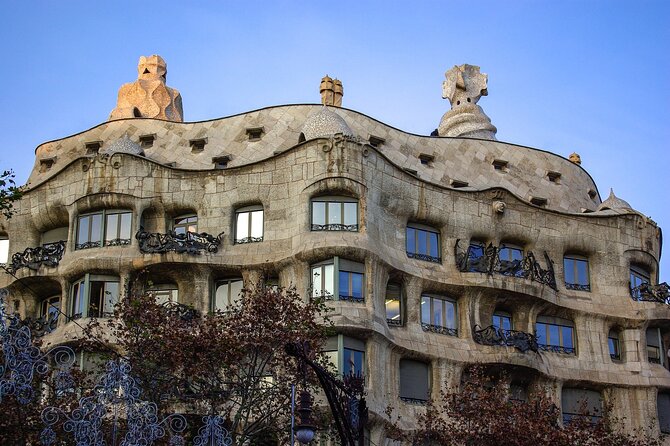
The route reaches its richest stretch on Passeig de Gràcia, where about 30 minutes are devoted to several major modernist homes. This is where the architecture lesson becomes easiest to read because famous buildings sit close together along the same grand avenue.
Your guide discusses:
- Casa Milà, also known as La Pedrera
- Casa Batlló
- Casa Amatller
- Casa Lleó Morera
The concentration of important work here is remarkable. Gaudí, Domènech i Montaner, Puig i Cadafalch, and other architects competed for attention through façades covered in stonework, iron, tile, glass, and unusual shapes.
The tour also identifies La Mansana de la Discordia, the famous block where several leading architects created neighboring modernist houses. The name refers to the rivalry and visual competition among the buildings. You can stand in one place and compare different ideas about color, ornament, structure, and fantasy.
This section is one of the tour’s strongest features. You do not just see Casa Batlló in isolation. You see it beside Casa Amatller and Casa Lleó Morera, which makes Barcelona’s architectural rivalry much easier to understand.
One small issue is that the itinerary includes Passeig de Gràcia in more than one stage, so the exact timing may feel less tidy than the list suggests. In practice, that simply means the avenue receives a strong share of the tour, which is good news if modernist façades are your main reason for booking.
Casa Amatller adds a taste of local life
Casa Amatller receives about 15 minutes, including a stop in the ground-level shop and a sample of Barcelona chocolate. This is a modest detail, but it breaks up the architecture talk in a pleasant way.
The building itself is part of the modernist group on Passeig de Gràcia. The chocolate connection also reflects the Amatller family’s historic business, giving you a glimpse of the commercial world behind the elegant residence.
The sample is included, and the shop is free to enter as part of the tour. Do not expect a full food tour. This is a short taste paired with an architectural stop. Still, it gives the walk a more human rhythm and may help younger members of your group stay interested.
Is the Casa Batlló upgrade worth paying for?
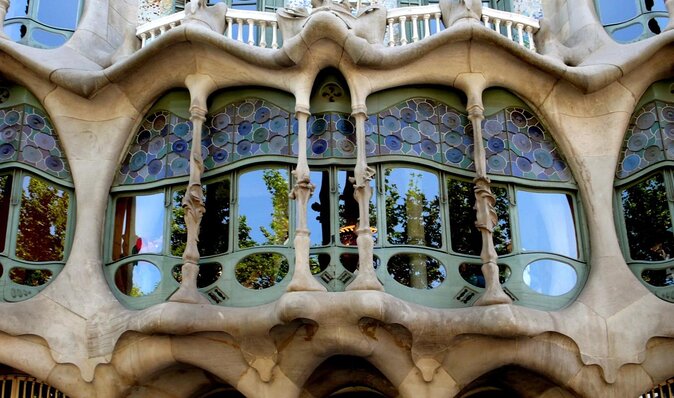
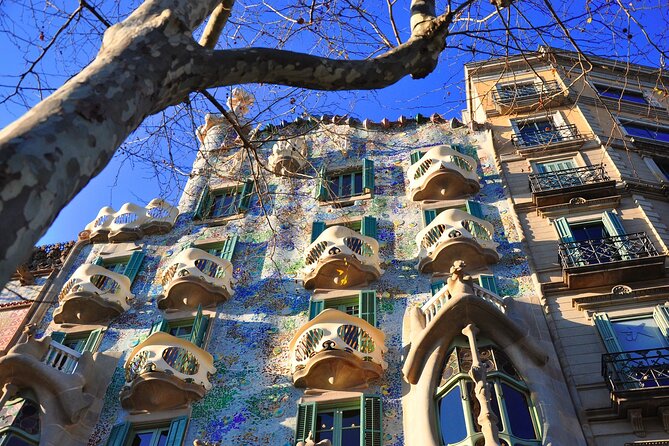
Casa Batlló is one of Gaudí’s most elaborate creations, known for its strong colors and detailed window decorations. The standard walk gives you the exterior and explains its place on Passeig de Gràcia. The optional upgrade adds admission to the building.
I consider the upgrade worthwhile if you have not already planned a separate visit. Casa Batlló is not just another façade to photograph. The exterior hints at the imaginative spaces inside, and the upgrade gives you a chance to see more of Gaudí’s design at close range.
It is less useful if you have already bought a Casa Batlló ticket or want to keep the day strictly low-cost. The base price of $35.07 is reasonable for the guided walk, but the total cost rises with admission. Think of the standard option as an architectural orientation and the upgrade as a more complete Gaudí visit.
The supplied details also mention an optional expert architect guide. If that option is available when you book, it may suit you if architectural theory, construction, and design matter more than a broad sightseeing walk. Check the exact upgrade terms before paying, since the included elements can vary by option.
The guide can make or break the experience
The best part of a tour like this is the person connecting the buildings. A strong guide can explain why the façades look the way they do, place Gaudí beside his rivals, and add political, cultural, and economic context.
Perrine received especially warm praise for her enthusiasm and for explaining the work of Domènech i Montaner, Gaudí, and Sayrach through that wider context. Patricio was also praised for making Gaudí’s work accessible and engaging. Another guide, remembered as Cal, was described as fun and helpful, with local tips added by a guide in training.
That said, you should pay attention to the practical side of guiding. One group found the pace too quick, and without listening devices the guide was difficult to hear over traffic and city noise. Questions were answered, but the answers did not always reach the whole group.
I would arrive ready to stay near the guide and speak up if you cannot hear. A group of up to 20 is manageable, but street conditions change from stop to stop. If you have hearing concerns, ask at the start whether the guide uses audio equipment. The tour provider’s performance may vary by guide.
Price, walking effort, and who will enjoy it
At $35.07 per person, the base tour offers good value if you want a guided introduction to Barcelona’s modernist core. You see several major buildings, receive explanations from a local guide, and get a chocolate sample without paying separate entry fees at each stop.
The price is less of a bargain if you want to enter several buildings. Most admissions are not included, and Sagrada Família is not part of the ticket. Add the Casa Batlló upgrade only if you want that interior visit and have room in your budget.
You should also expect continuous walking between stops. The route links Sant Pau, Sagrada Família, and Passeig de Gràcia, so comfortable shoes are sensible. The experience lasts only two to two-and-a-half hours, but the distance and standing time still matter.
This tour suits you best if:
- You enjoy architecture, urban history, and design details.
- You want a strong first look at Gaudí and his modernist peers.
- You prefer a guide to explain façades rather than exploring them without context.
- You want to combine a short walking tour with separate interior visits.
- You are willing to walk at a steady city pace.
It may not suit you if you want long visits inside each building, a relaxed food tour, or a slow stroll with little commentary. It is also not ideal if you need guaranteed audio equipment unless the provider confirms that in advance.
The meeting point is near public transportation at Sant Pau. The tour ends on Passeig de Gràcia, in front of Casa Lleó Morera, which leaves you near several central sights and shops. Confirmation arrives at booking, and most people can participate. Free cancellation is available up to 24 hours before the start time, while later cancellations and changes are not accepted.
Should you book this Barcelona architecture walk?
Book it if you want a clear, efficient introduction to Barcelona’s modernist buildings and plan to explore one or two interiors separately. The route is especially useful early in your stay, since it gives you a visual map of Gaudí, Domènech i Montaner, Puig i Cadafalch, and their peers.
I would choose the Casa Batlló upgrade if you have never been inside and want more than exterior photographs. I would skip it if your schedule already includes the building or if your main goal is Sagrada Família’s interior, since that admission is not included here.
The main thing to remember is that the guide matters. Stay close, ask for repetition if street noise gets in the way, and expect a brisk walk. For architecture fans, the combination of Sant Pau, Sagrada Família, Casa Amatller, Casa Batlló, and the Mansana de la Discordia gives you a lot to see for a modest base price.
FAQ
How long does the Barcelona architecture walking tour last?
The tour lasts approximately two hours to two hours and 30 minutes.
Where does the tour begin?
It begins at the Recinte Modernista de Sant Pau, at Carrer de Sant Antoni Maria Claret 167 in Barcelona.
Where does the tour end?
The tour ends on Passeig de Gràcia, at number 35, in front of Casa Lleó Morera.
Is admission to Sagrada Família included?
No. The tour views Sagrada Família from outside, and admission to the basilica is not included.
What does the Casa Batlló upgrade include?
The optional upgrade includes admission to Casa Batlló. The standard walking tour covers the building’s exterior.
Is chocolate included?
Yes. The tour includes a chocolate sample at the ground-level Casa Amatller shop.
Can I cancel for a full refund?
Yes. You can cancel at least 24 hours before the experience start time for a full refund. Cancellations or changes made less than 24 hours before the start time are not accepted.
Just added around Barcelona
- Barcelona Private Food Tour: Tapas, Paella & 8+ Food Tastings★ 5.0 · 164 reviews
- Barcelona Gothic Quarter Walking Tour with Tapas★ 5.0 · 248 reviews
- Picasso Museum and Walking Tour Plus Optional Wine & Food Tasting★ 5.0 · 596 reviews
- Private Barcelona Old Town and Gothic Quarter Walking Tour★ 5.0 · 134 reviews
- Montjuïc Walking Tour With Optional Flamenco Show★ 5.0 · 196 reviews
- Semi-Private Montserrat Monastery, Funicular & Scenic Nature Walk★ 5.0 · 172 reviews
- Gothic Quarter Donation-Based Walking Tour in English★ 5.0 · 72 reviews
- Barcelona: La Boqueria Food, Wine & History Walking Tour★ 5.0 · 126 reviews
Barcelona Walking Tours, compared.

Barcelona Tapas and Wine Experience Small-Group Walking Tour
Read our review →
Tapas Walking Tour with Food, Wine, and History
Read our review →

Barcelona Tapas Walking Tour: Food, Wine & History
Read our review →
Barcelona Helicopter, Sailboat & Old Town Private Walking Tour
Read our review →
Helicopter Flight, Boat Ride, and Walking Tour
Read our review →Browse the lists this tour appears in