
Review · UK WALKING TOURS
Bath: City Walking Tour with Optional Roman Baths Entry
Bath rewards a good first walk. I like the way this tour links Roman Bath with Georgian grandeur, from Pulteney Bridge and Bath Abbey to the Royal Crescent and Circus. I also like the friendly, story-led guiding, with names such as George, Jamie, John, Ewan, and Anna repeatedly praised for making the city easy to understand.
The main point to watch is the Roman Baths arrangement. The walking tour is guide-led, but the optional Baths visit is generally self-guided with an audio guide, so you should allow extra time after the walk and not expect your guide to continue inside.
Key points at a glance
- Bath in two historic acts: Connect Roman engineering with the polished Georgian city built centuries later.
- Pulteney Bridge included: Walk across Bath’s Palladian bridge, one of the city’s most distinctive sights and a film location associated with Les Misérables.
- Royal Crescent and Circus: See two of England’s finest Georgian architectural set pieces and learn how they were planned.
- Roman Baths option: Add entry to the ancient bathing complex, with its objects, remains, and hot geothermal springs.
- Strong local guiding: Guides including George, Jamie, John, Ewan, Tom, and Anna are praised for humour, clear explanations, and a good walking pace.
- Good value at $26: The price covers the walking tour and a Bath Abbey donation, with Roman Baths admission included only when that option is selected.
Why this Bath walking tour works so well

Bath can look almost too polished at first. Honey-coloured stone, formal terraces, grand squares, and the river make it easy to admire the city without understanding how it developed. This tour gives you the basic story in a compact 1.5 to 2 hours.
I like that the route does not treat Bath as just a Roman site. You begin with the city centre and its medieval church, see the Roman remains, then move into the 18th-century world of assembly rooms, fashionable addresses, and carefully planned streets. That broad sweep helps you see Bath as a city built in layers.
The tour also suits a first visit. You get a useful orientation before deciding where to spend more time later. Several people who joined early morning departures found the quieter streets especially helpful, and a 9am start can make it easier to hear the guide and take in the buildings without a large crowd around you.
The price is $26 per person. For that amount, you receive a live English-language walking tour, a guide, and a donation to Bath Abbey. If you choose the Roman Baths option, admission is added, which makes the package more useful for a first visit. The value is strongest if you want a quick introduction rather than a full-day historical program.
A few more walks around the UK worth a look
- Magical London: Harry Potter Guided Walking Tour
★ 4.7 · 22,044 reviews - Edinburgh: Harry Potter Magical Guided Walking Tour
★ 4.8 · 11,944 reviews - Edinburgh Castle: Guided Walking Tour with Entry Ticket
★ 4.7 · 11,699 reviews
Starting beside Bath Abbey
The meeting point is at or near Bath Abbey in the city centre, though the exact location can vary with the option you book. Check your confirmation carefully before setting out. One person arrived with the wrong meeting-point information and found the guide patient and helpful, but it is still better to avoid beginning your visit in a small logistical muddle.
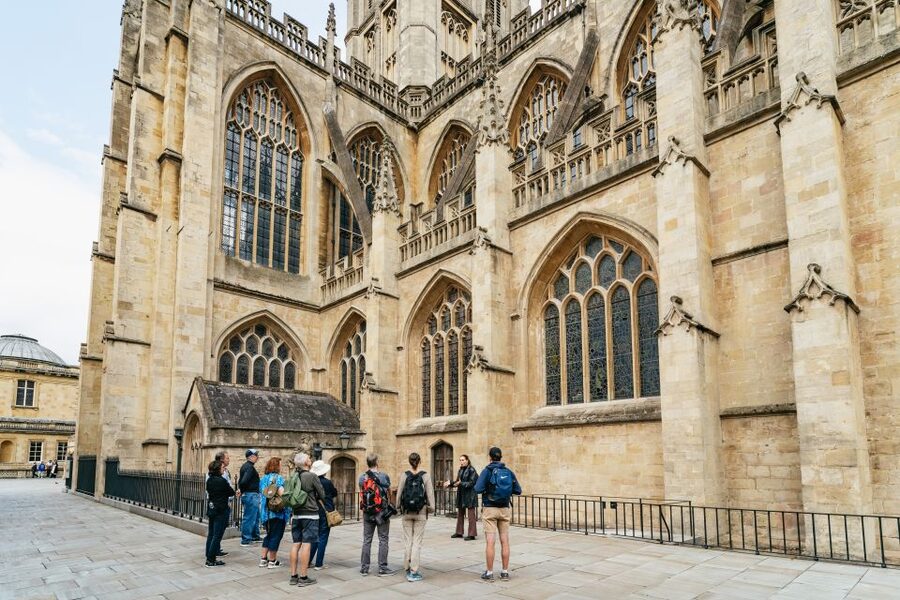
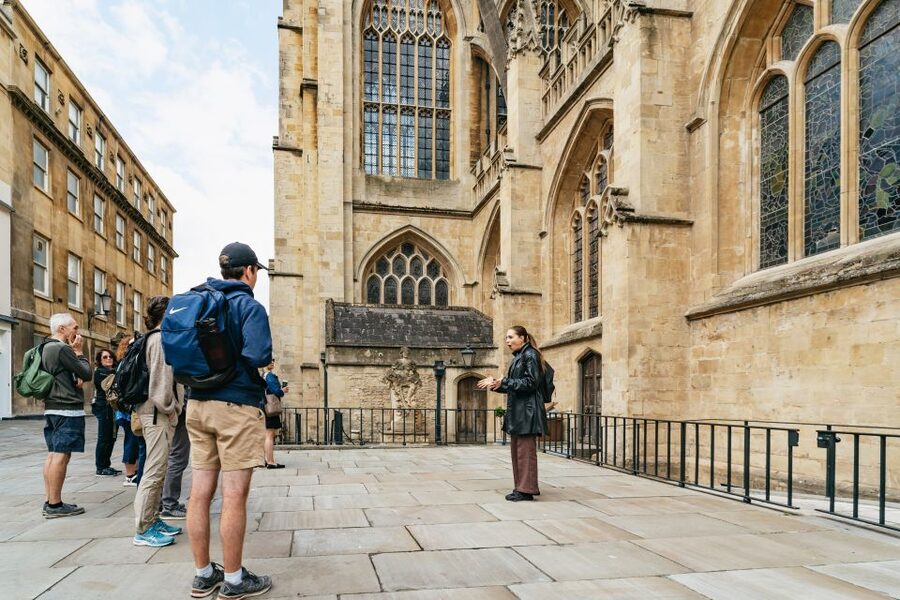
Bath Abbey is a fine opening stop. Its Perpendicular Gothic design gives you an immediate sense of the city’s importance as a religious centre. The tour includes a donation to the abbey, but the information provided does not promise a full interior visit, so think of this first stop mainly as part of the outdoor walking route unless your guide says otherwise.
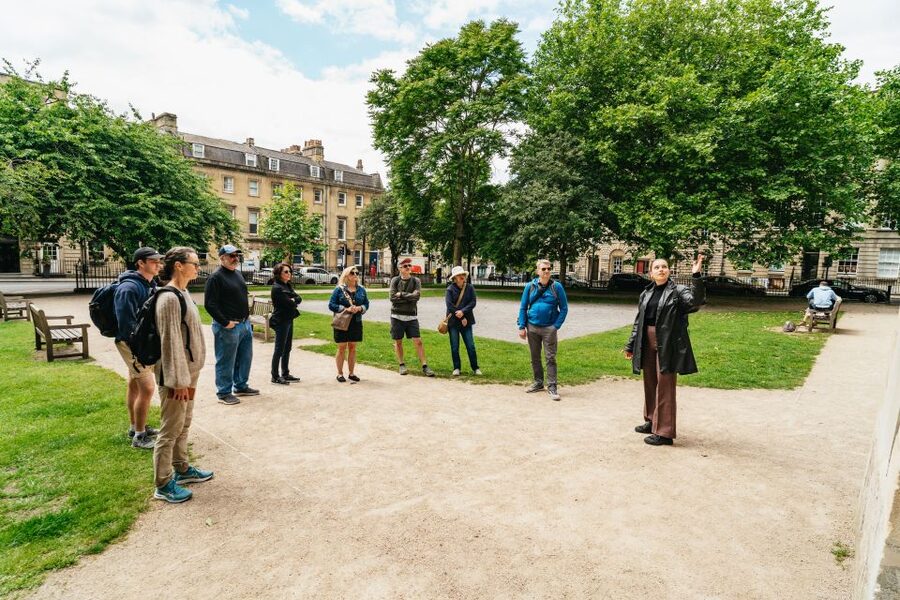
The guides are one of the strongest parts of the experience. George is often praised for combining facts with humour and for explaining Bath’s growth from a small settlement into a major city. Jamie is described as friendly, energetic, and good at bringing everyone into the conversation. John, Ewan, Tom, Anna, and others receive similar praise for being approachable and clear.
That matters because Bath’s story includes many names, dates, architectural terms, and changes in fashion. A good guide turns that material into a conversation rather than a lecture. The best guides also adjust to the group, pause for questions, and keep the pace comfortable.
Pulteney Bridge and the river view
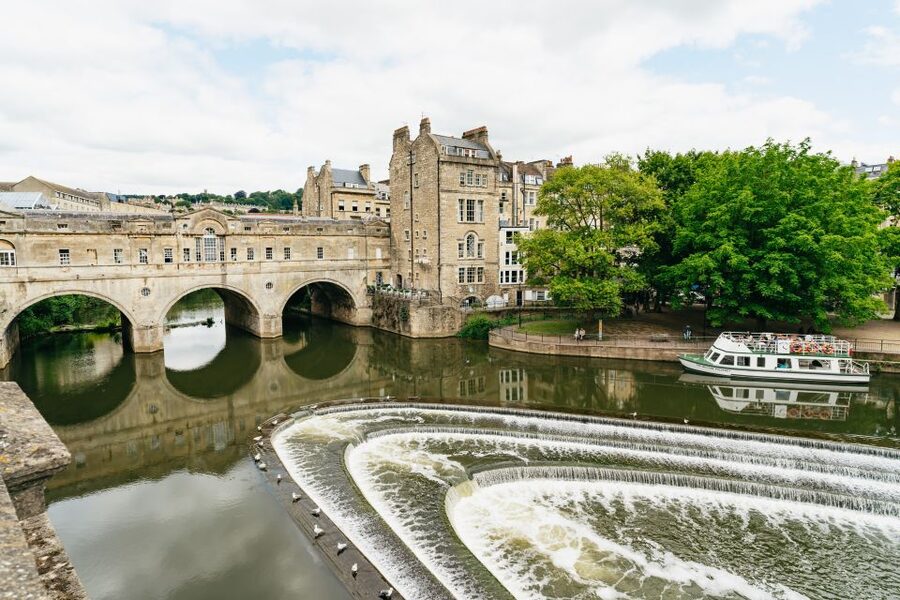
Pulteney Bridge is one of the tour’s most memorable stops. Its Palladian design gives it a grand, almost theatrical appearance, yet it also works as a practical crossing over the River Avon. Shops built into the bridge make it unusual among famous European bridges.
You will walk across the bridge and get a chance to see why it photographs so well. Its connection with Les Misérables adds a bit of film interest, but the bridge is worth seeing even if you have no interest in movie locations. The design, river setting, and strong symmetry do most of the work.
This is also a good point to listen for the difference between seeing a building and understanding it. Your guide can point out the ideas behind Palladian design and explain how grand public architecture helped present Bath as a fashionable city. The information supplied does not promise a long stop or a dedicated river walk, so expect a concise explanation rather than an extended photography session.
The Roman Baths and the hot spring
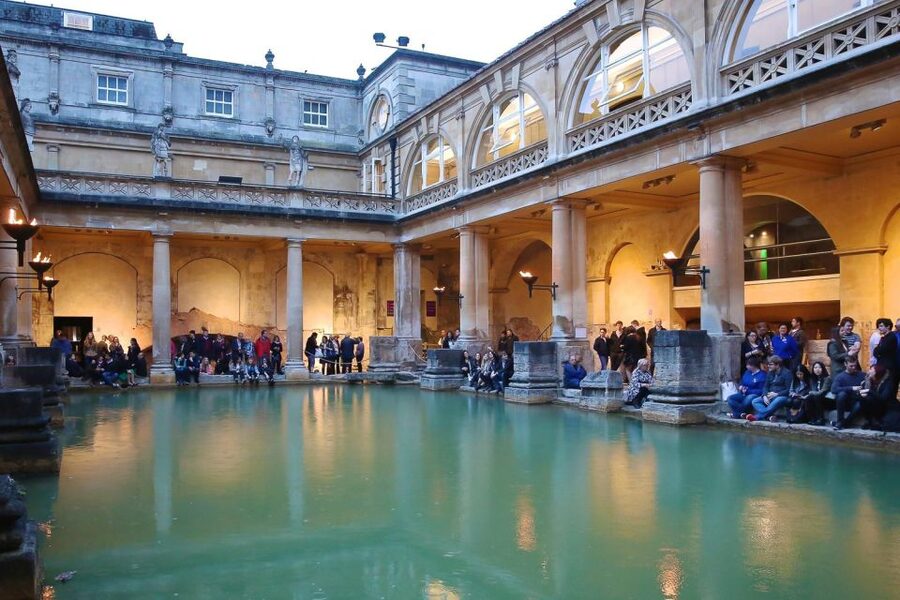
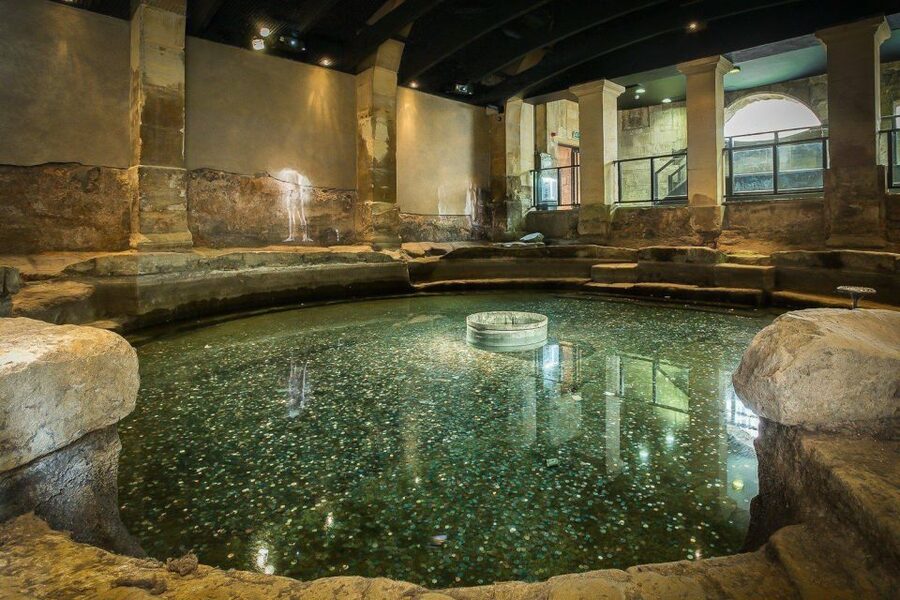
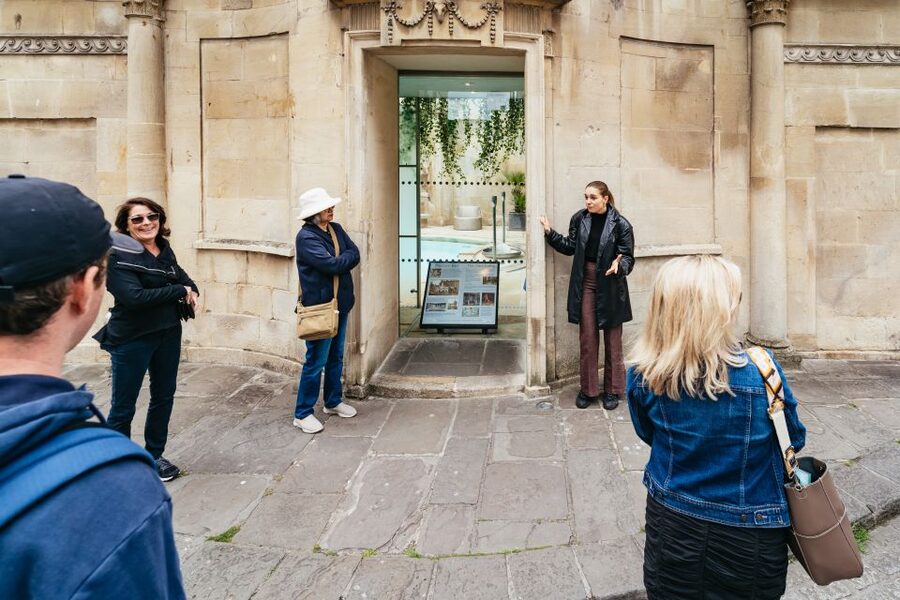
The Roman Baths are the obvious reason many people choose this experience. Bath’s geothermal spring continues to produce naturally hot water, and the ancient bathing complex gives you a close look at how the Romans used the site.
If you select the entry option, the walking tour takes you to the Baths, then you continue inside at your own pace. The indoor visit includes Roman objects, remains, and information about the legacy of Roman occupation. An audio guide is available inside, according to the practical feedback from the tour, so your guide normally does not lead the entire museum visit.
Plan your time carefully here. The walking portion lasts 1.5 to 2 hours, but adding the Baths can bring the total visit to roughly 3.5 to 4 hours. That extra time is worthwhile if Roman engineering and archaeology are high on your list. It is less useful to book the entry option if your schedule allows only a quick walk through Bath.
The Baths can become crowded. One person found it difficult to see parts of the complex when too many people were admitted at once. An early start may help, since the 9am tour was praised for its calm streets and smaller group atmosphere, although the tour data does not guarantee a particular crowd level at the Baths.
There is a small but important distinction here. The guide-led walk gives you interpretation and local context, while the Roman Baths visit gives you a self-guided museum experience. If you want a historian beside you for every exhibit, this may feel incomplete. If you prefer to pause at objects that interest you and move on from displays that do not, the audio format gives you more control.
Same streets, a different way to see them:
- Underground Vaults Walking Tour in Edinburgh Old Town
★ 4.5 · 8,506 reviews - London: The Original Jack the Ripper Walking Tour
★ 4.7 · 7,833 reviews - Oxford University Walking Tour With University Alumni Guide
★ 5.0 · 6,905 reviews - Edinburgh Castle: Guided Walking Tour with Entry Ticket
★ 5.0 · 5,540 reviews
The Pump Room and Bath’s fashionable past
After the Roman section, the tour turns toward Bath’s Georgian identity. The Pump Room and nearby central buildings help explain how the city changed from a place of Roman bathing into an 18th-century resort for wealthy visitors.
The Pump Room was tied to Bath’s social life and the ritual of taking the waters. From here, the route continues toward the Upper Assembly Rooms, where fashion, dancing, music, and social connections shaped the city’s public life.
This part of the walk is valuable because architecture here was never just decoration. The buildings were designed to impress, but they also created a setting for meeting people and displaying status. Your guide can help you read the broad façades, formal proportions, and grand entrances as part of a social system.
You should not assume that the tour includes interior access to the key Georgian buildings. One person specifically wished there had been a chance to go inside some of Bath’s major buildings. The strength of this experience is the outdoor route and the explanation of what you are seeing, not a series of interior visits.
Royal Crescent, Bath’s great Georgian address

The Royal Crescent is the visual high point of the walk. Its long sweep of 30 Grade I listed houses is one of the clearest examples of Georgian planning in England.
From the front, the crescent looks like one enormous palace. In fact, it is a row of separate houses joined by a unified façade. That contrast between private homes and public grandeur gives your guide plenty to explain: the residents wanted individual comfort, but the architecture presented a single image of wealth and order.
The open space in front helps you appreciate the full curve. This is where the walking pace may slow for photographs and questions, though the route still needs to fit into a short tour. You will get an explanation of the crescent’s design and importance, but do not expect a long visit inside a house.
I especially like this stop for first-time visitors because it gives Bath a clear visual signature. The Roman Baths show what lies beneath the city. The Royal Crescent shows the polished world Bath wanted to present above ground.
The Circus and the ideas behind it
The Circus is smaller and more enclosed than the Royal Crescent, but it can be even more intriguing. The circular layout creates a sense of mystery, and the buildings form an architectural masterpiece rather than a simple open square.
The guide explains how the Circus fits into Bath’s Georgian design and why its shape matters. Look closely at the repeated façades and the way the buildings create a continuous formal boundary. The design invites you to think about proportion, symmetry, and the desire to make ordinary urban living look grand.
The Circus and Royal Crescent work well together. The crescent gives you a sweeping view, while the Circus makes you look more carefully at detail and planning. Seeing both on foot is far more useful than ticking them off from a bus window.
The route includes a small hill toward the end. It is described as an easy walk overall, with that modest climb the main effort. You should still wear comfortable shoes, since the experience covers a fair amount of central Bath on foot and includes steps in the form of ordinary city walking.
Guide style, group size, and pace
The guiding style varies slightly by person, but the general pattern is clear: friendly, conversational, and packed with local stories. George is praised for humour and a strong sense of Bath’s development. Jamie is noted for involving everyone and keeping the walk lively. Ewan brings local insight and plenty of anecdotes, while Anna is described as organised and comfortable handling questions.
Tom, John, Will, Marcel, and other guides are also praised for making the route easy to follow. One early morning walk had such a small group that it felt more like a conversation than a standard tour. In that setting, the guide could spend more time answering questions and even allowed the tour to run beyond its planned time.
That smaller-group experience is not guaranteed. A larger group may make it harder to hear, especially in busy streets. One person noted that headphones would have helped later in the day. If clear audio is important to you, an early start is a sensible choice.
The pace is another strength. You cover the major sights without feeling pushed from one stop to the next. Several people described the walk as well paced, and one noted that the route covered a lot of ground without rushing. The 1.5 to 2 hour length is long enough to be useful but short enough to fit into a day trip.
Who should book it?

I would choose this tour if you have one day in Bath, want a clear introduction, or prefer a local guide to an audio-only city walk. It is especially good for families and mixed-age groups because the guides use humour and stories rather than relying only on dates and architectural vocabulary.
It also suits anyone who wants to connect the Roman Baths with Bath’s later Georgian buildings. Many city tours focus on one period. This one makes the transition from Roman settlement to fashionable 18th-century city easier to grasp.
You may want something else if you have already spent several days studying Bath’s architecture or want extended access to building interiors. The walk is broad rather than specialist, and the Roman Baths section is self-guided after the outdoor tour. You should also allow more than two hours if the Baths are a main reason for booking.
For the best experience, choose an early start when available, check the meeting point, wear comfortable shoes, and leave enough time after the walking route for the Roman Baths. The tour is non-refundable, so confirm your timing before purchase.
Should you book the Bath walking tour?
At $26, this is a strong first-visit choice. You get Bath Abbey, Pulteney Bridge, the Roman Baths area, the Pump Room, the Upper Assembly Rooms, the Royal Crescent, and the Circus in one well-paced route.
Book it if you value a personable local guide and want the city’s Roman and Georgian stories joined together. Add the Roman Baths entry if you can spare another 1.5 to 2 hours and want to see the exhibits and hot spring remains at your own pace.
Skip the optional entry only if your schedule is tight or you already plan to visit the Baths separately. The walking tour itself offers the best value for orientation, architecture, and local context, while the Baths add the archaeology. Taken together, they make a well-rounded introduction to Bath.
FAQ
How long does the Bath walking tour last?
The walking tour lasts approximately 1.5 to 2 hours. If you add the Roman Baths visit, allow roughly 3.5 to 4 hours for the combined experience.
Is Roman Baths entry included?
Roman Baths entry is included only when you select the option that includes admission. The basic walking tour does not automatically include entry.
Is the Roman Baths visit guided?
The city walk is led by a live English-speaking guide. Inside the Roman Baths, the visit is generally self-guided with an audio guide rather than a continuation of the walking tour.
What sights are included on the walk?
The route includes Bath Abbey, Pulteney Bridge, the Roman Baths area, the Pump Room, the Upper Assembly Rooms, the Royal Crescent, and the Circus.
What language is the tour conducted in?
The tour is conducted in English. English is the listed language for both the guide and the activity.
Is a private group available?
Yes. A private group option is available, though the exact meeting point may vary depending on the option you book.
Just added around the UK
- Birmingham Slogging Gangs Walking Tour with Edward Shelby★ 4.5 · 306 reviews
- Birmingham Walking Tour: Canals, Victorians & Today (1:30pm)★ 5.0 · 346 reviews
- Discovering Birmingham 2 hour Walking Tour to the Jewellery Quarter★ 5.0 · 333 reviews
- Birmingham City Centre Daily Walking Tour (10:30am & 2pm)★ 5.0 · 265 reviews
- The Real Eclectic Belfast City Walking Tour/Experience.★ 5.0 · 152 reviews
- Belfast Political Tour-Conflicting Stories Walking Tour★ 4.5 · 459 reviews
- Belfast Eclectic Walking City Center Experience, The Marti Way★ 5.0 · 348 reviews
- The Real Story of Belfast walking tour with a local guide★ 5.0 · 144 reviews
UK Walking Tours, compared.

Magical London: Harry Potter Guided Walking Tour
Read our review →

Edinburgh Castle: Guided Walking Tour with Entry Ticket
Read our review →
Underground Vaults Walking Tour in Edinburgh Old Town
Read our review →

Oxford University Walking Tour With University Alumni Guide
Read our review →Edinburgh Castle: Guided Walking Tour with Entry Ticket
Read our review →
Edinburgh Castle Guided Walking Tour in English
Read our review →Browse the lists this tour appears in