
Review · AUSTRALIA WALKING TOURS
Best of Uluru – Segway and Walking Tour
Red rock, moving stories, and a little balance. This four to five-hour outing gives you two useful ways to see Uluru: you glide along part of its base on a Segway, then walk into caves, Aboriginal rock-art sites, Kantju Gorge, and Mutitjulu Waterhole. I especially like the small groups of up to 10 people and the patient training, which makes the activity approachable even if you have never used a Segway.
I also like the way the tour gives Uluru more meaning than a quick photo stop. Guides such as Sye, Britney, Tori, Thomas, Emily, Amber, and Nick have been praised for clear explanations, good storytelling, and a genuine respect for Anangu culture. The main consideration is that this is not a pure Segway ride. You will walk on the Mala route and into Mutitjulu Waterhole, and the park entry ticket costs extra.
The tour in six useful points
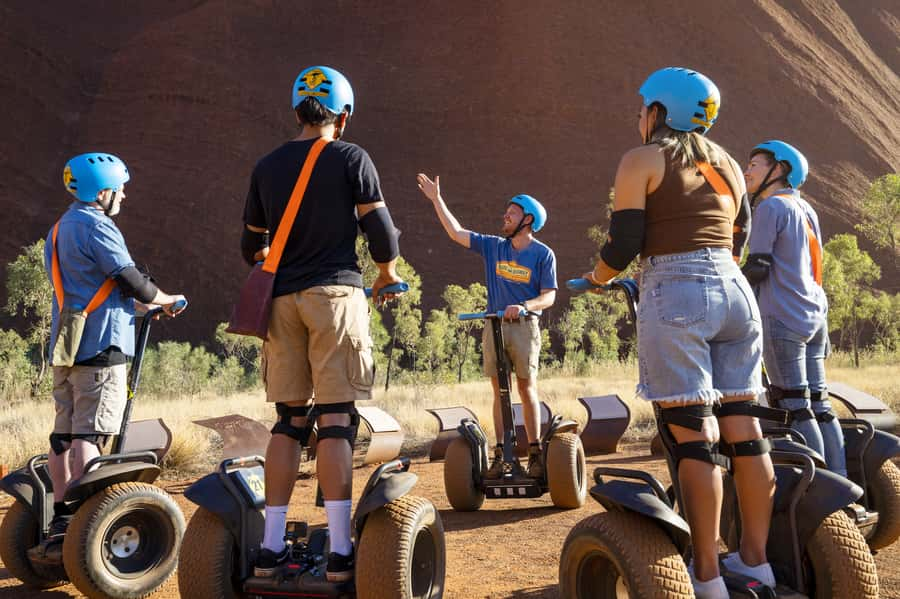
- You learn the Segway before setting off: About 30 minutes of instruction and practice helps first-time riders gain control on flat ground.
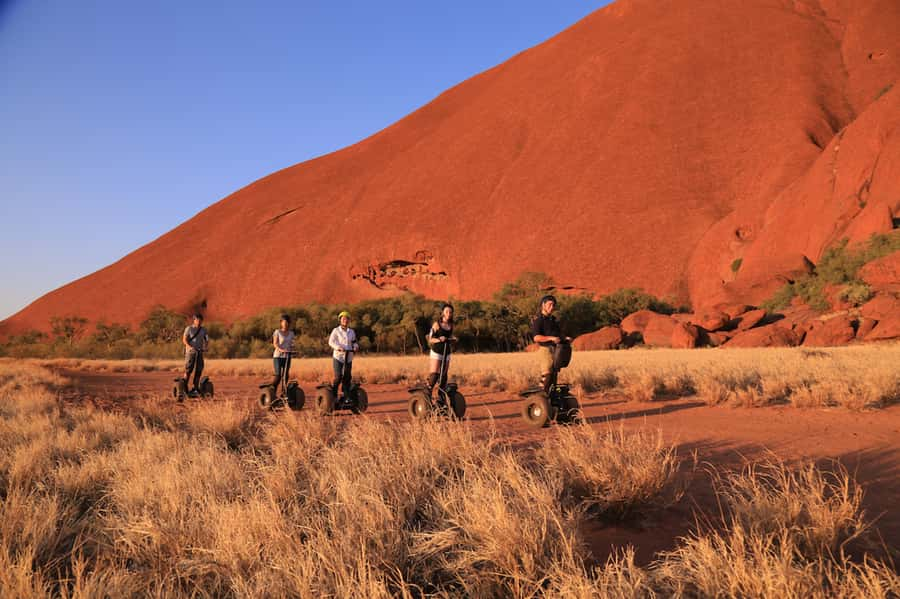
- You ride only part of Uluru: The guided Segway section covers roughly a quarter of the rock’s base, rather than the full circumference.
- Walking adds the cultural depth: The Mala Walk, caves, Kantju Gorge, and rock art provide access to places a ride alone would miss.
- The group stays small: A maximum of 10 participants allows guides to watch riding technique and answer questions.
- Transfers are included: Pickup and return are available from four Ayers Rock Resort locations.
- You need proper footwear: Closed-toe shoes, water, sunglasses, and a hat are essential. Flip-flops are not accepted.
Why this combination works at Uluru
Uluru is too large to understand from one lookout or a single bus stop. Its base changes as you move around it. One section shows caves and shaded overhangs, another reveals ancient rock art, and another brings you to water and narrow rock walls.
The Segway solves a practical problem. Walking around the entire base takes time and energy, especially in Central Australia’s heat. Here, you cover a scenic section without spending every minute on foot. The electric vehicle is quiet, so you can move along the rock without the noise of a motorcoach.
The walking sections solve a different problem. A Segway gets you from one viewpoint to another, but it does not take you into the details. On foot, you can pause at caves, listen to cultural explanations, and look closely at the rock surfaces and shelters.
I think that balance is the strongest part of the experience. You get the fun of riding, but the visit does not become a novelty activity detached from Uluru’s cultural importance.
A few more walks around Australia worth a look
- Sydney Opera House Official Guided Walking Tour
★ 4.5 · 3,770 reviews - From Sydney: Blue Mountains Tour with Waterfall Walk & Lunch
★ 4.8 · 2,400 reviews - Sydney The Rocks Guided Walking Tour
★ 5.0 · 1,546 reviews
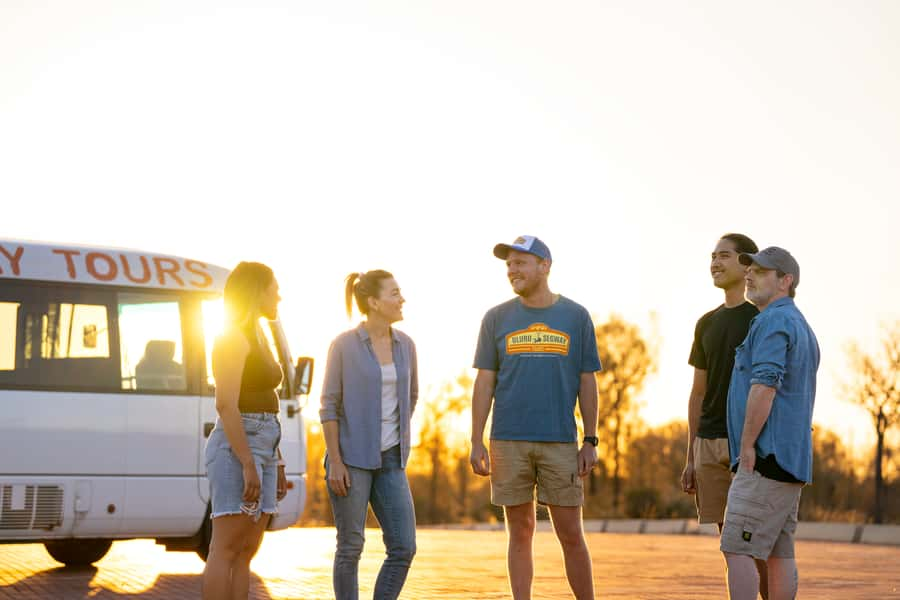
Pickup from Ayers Rock Resort
The tour includes transfers from four locations:
- Outback Pioneer Bar and Bottle Shop
- Ayers Rock Resort Campground
- Desert Gardens Hotel
- Sails in the Desert
The same pickup points are used for the return journey. If you are staying at Emu Walk Apartments, the Desert Gardens pickup point is used. Visitors at The Lost Camel Hotel are directed to Sails in the Desert.
The first transfer takes about 30 minutes. That matters because the outing is not simply four hours on the rock. Some of your time is spent getting to the national park, changing between bus sections, and returning to the resort.
The transport has been rated highly overall, though one useful practical complaint came up: there may not be cold water or phone charging available on the bus. Bring a full water bottle and a charged phone, or carry a power bank if photography matters to you. A dead battery is a poor souvenir from Uluru.
Kantju Gorge and the first close look at Uluru
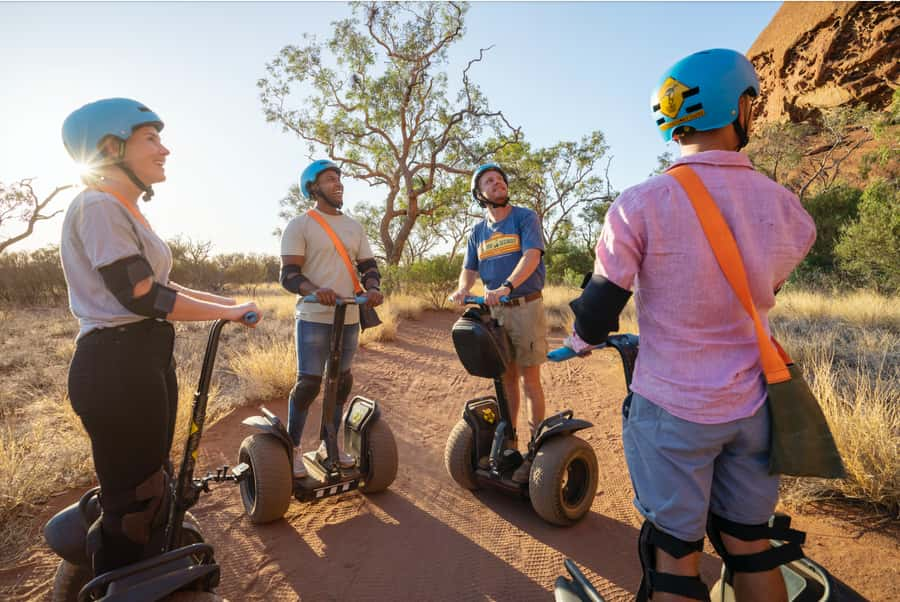
The listed route begins with a bus ride to Kantju Gorge, followed by about 45 minutes with your guide. This is a valuable start because it places you close to the rock before the riding begins.
Kantju Gorge lets you focus on Uluru’s forms at walking pace. Your guide can point out the way water has shaped the sandstone, explain local plant and animal life, and connect the physical setting with Anangu traditions and European contact.
The tour’s guides use simple visual demonstrations as well. One participant especially appreciated seeing geography explained with sticks and rocks, which made the ideas easier to picture. That is the kind of teaching that works well outdoors. You are not sitting through a lecture. You are looking at the very surfaces being discussed.
The 45-minute walk also gives you a first sense of the physical demands. It is not a full-day hike, but you should be comfortable walking on an outdoor route in the heat. If you are expecting to remain on a Segway almost the entire time, this early stop may come as a surprise.
Thirty minutes of Segway training for beginners
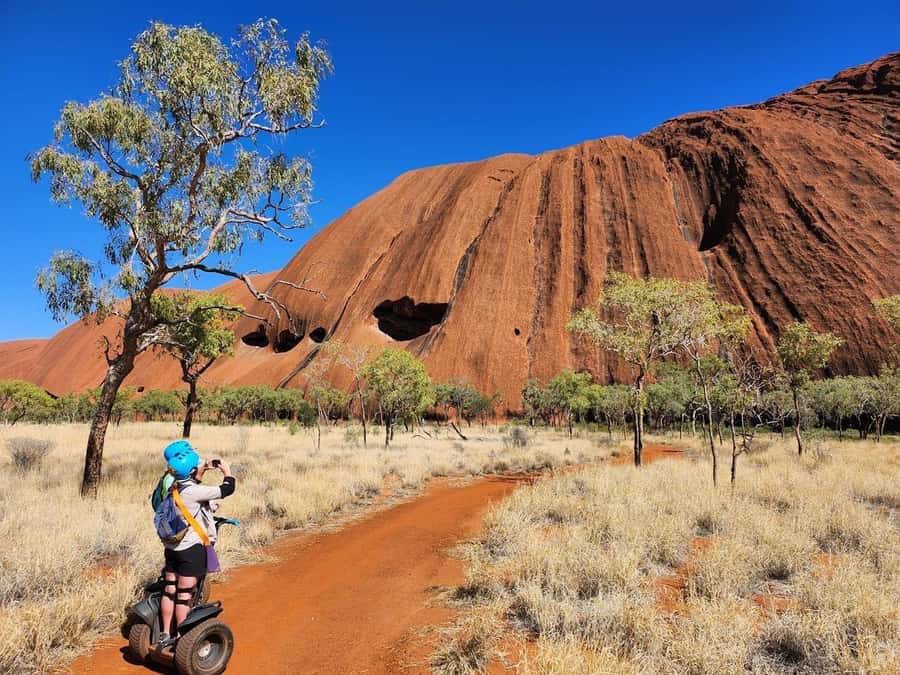
After the first walking section and a short bus transfer, you receive about 30 minutes of Segway training. The guide covers basic controls, stopping, turning, and safe riding before leading you onto the main route.
This is one of the most praised parts of the activity. First-time riders describe the Segways as easy to handle after instruction, and several older participants found the training reassuring. One person in their sixties had never ridden before and managed it comfortably. Another participant in their early sixties said the activity worked well despite hip pain that made extended walking difficult.
That does not mean the Segway is suitable for everyone. You need to be able to ride a bicycle, maintain balance, and follow safety instructions. The experience is not suitable for people with back problems, recent surgery, certain pre-existing medical conditions, or visual impairment. It is also not designed for wheelchair users.
The stated recommended age is 12 to 65. People over 70 are not accepted, and the listed weight limits are 99 to 260 pounds, or 45 to 118 kilograms. These rules may feel strict, but they relate to balance, control, and the equipment itself.
Same streets, a different way to see them:
- Ultimate Melbourne Walking Tour: History, Laneways & Culture
★ 5.0 · 1,451 reviews - Sydney: The Rocks 90-Minute History Walking Tour
★ 4.7 · 1,092 reviews - Great Ocean Road Tour Plus Koalas, Forest Walk and Morning Tea
★ 4.5 · 1,068 reviews - Sydney Cricket Ground (SCG) and Museum Walking Tour
★ 4.9 · 616 reviews
Riding roughly a quarter of Uluru’s base
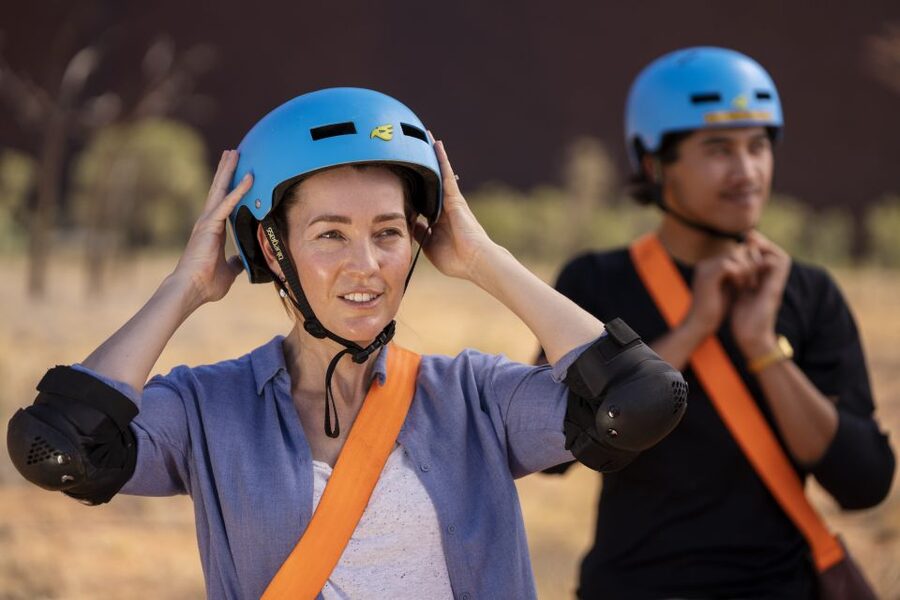
Once the group is ready, the guided ride lasts about an hour. You quietly cruise along roughly a quarter of Uluru’s enormous base, stopping at selected points for views, photographs, and explanations.
This is not a race and not a free-roaming rental. You stay with the guide, who sets the pace and keeps the group together. That makes the ride suitable for beginners, but it also means experienced Segway users may find the pace gentle.
The main advantage is efficiency. You see a long section of Uluru without walking every metre, then stop close enough to appreciate the sandstone walls, caves, textures, and changing angles. Several people liked having time to take photographs, and guides often help with group pictures. Thomas, for example, was praised for explaining the geology clearly and taking photos that couples could not easily manage themselves.
You should set your expectations correctly. The tour does not circle the whole rock. A few participants would have preferred a longer ride or more distance. If your priority is maximum riding time, a different activity may suit you better. If you want a manageable introduction to the base, this shorter route is sensible.
Mutitjulu Waterhole and Aboriginal rock art
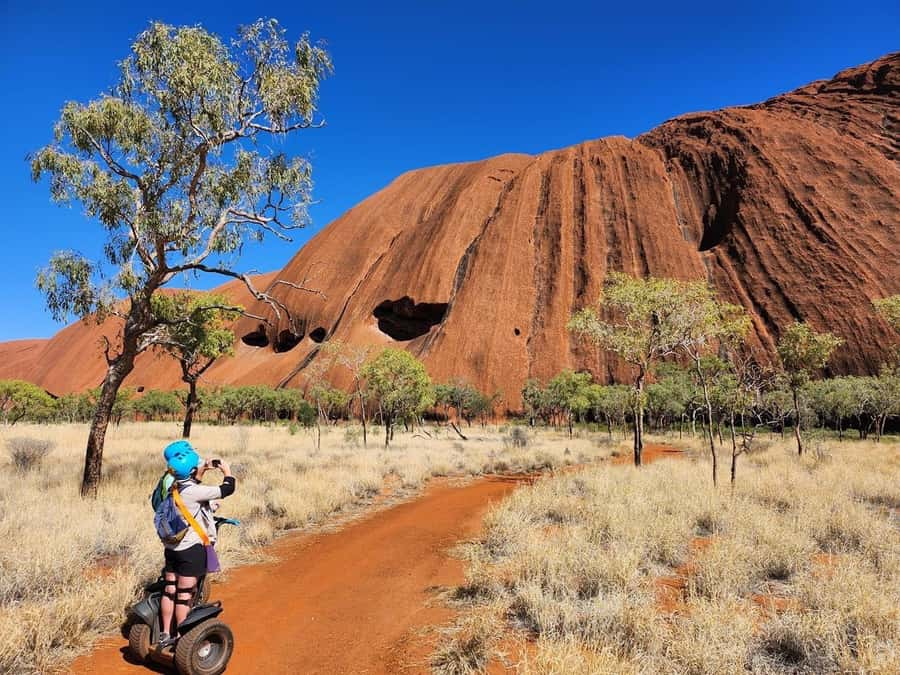
The Mutitjulu Waterhole section is done on foot and lasts about 30 minutes. It is one of the quieter parts of the outing, and the change from riding to walking works in its favor.
At the waterhole, your guide can explain why water is so important in this dry part of Australia and point out the sights and sounds around the gorge. You also have the chance to see authentic Aboriginal rock art and learn about the Anangu relationship with the place.
This is where the tour moves beyond scenery. Uluru is not simply a large sandstone formation waiting to be photographed. It is a cultural place with stories, rules, and continuing significance for the Anangu people. A good guide helps you understand that without turning the visit into a dry classroom session.
The rock-art sites also reward patience. You may need to look closely at the rock surfaces rather than expect a large, obvious panel. Listen carefully to the guide and follow any instructions about where to walk and what not to touch.
The Mala Walk, caves, and Kantju Gorge
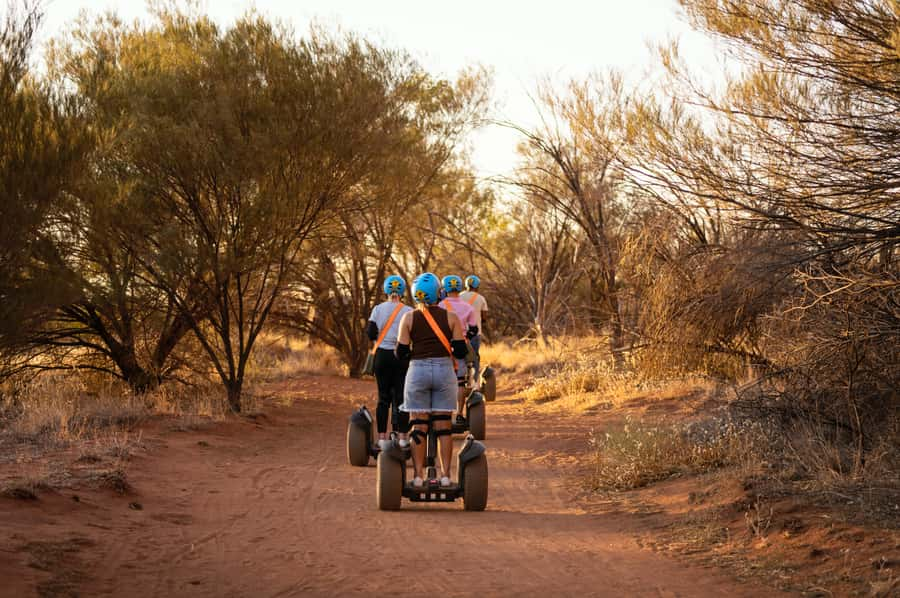
The walking part continues around the Mala area, with access to caves and shaded overhangs. This is the section that many people value most after the initial excitement of learning to ride.
The caves show how Uluru has been used as shelter and a place of daily activity. The guide discusses Aboriginal culture, local stories, the natural setting, and the evidence visible in the rock. In some places, the walls also hold rock art that gives the stop a strong sense of age and connection.
The Mala Walk is also the clearest reason not to describe this as a Segway-only tour. You will be walking, stopping, listening, and taking photographs. One participant enjoyed the whole experience but felt the amount of walking was not made obvious enough in advance. Take that advice seriously if you have limited mobility or are trying to avoid time on foot.
The route through the caves and gorge is more personal than viewing Uluru from a distant platform. You are close to the stone, close to the shadows, and close to the places your guide is describing. Wear shoes with a firm, closed toe and bring enough water for the full outing.
The guides make the difference
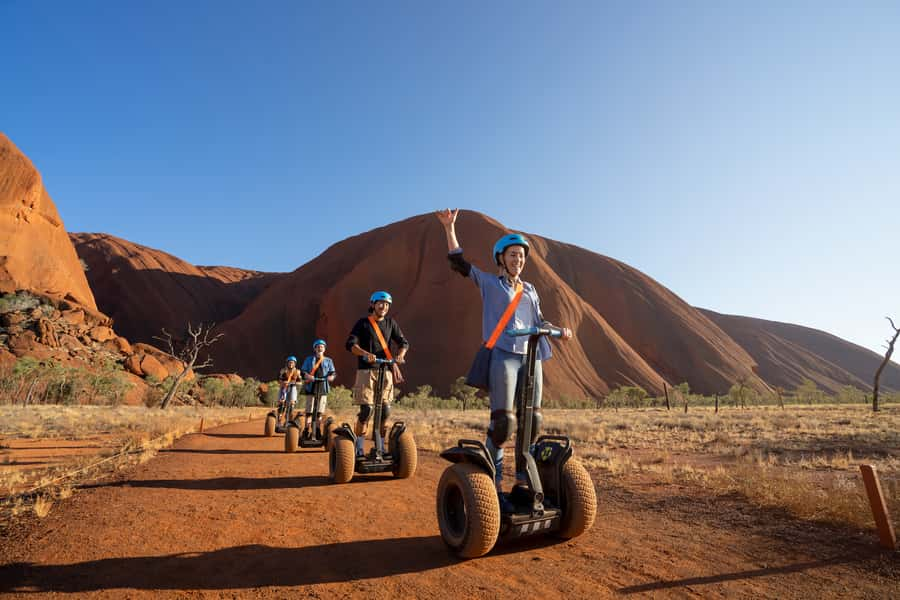
The activity depends heavily on the guide. The strongest praise has gone to guides who combine three things: riding instruction, cultural care, and an easy way of explaining geology and history.
Sye has been singled out for making the experience feel respectful and special. Nick was praised for local knowledge and storytelling, while Kayla was noted for helping with the pickup and overall organization. Britney, Tori, Thomas, Emily, Amber, Sarah, Blaize, Sam, and others have also received warm praise for patience and clear explanations.
The guide names vary by departure, so you cannot choose a particular person in advance based on this information. Still, the pattern is clear: the staff are expected to manage beginners, keep the group safe, explain the area, and help with photos.
A small group helps here. With no more than 10 participants, the guide can watch your riding, answer questions, and avoid the feel of a large coach excursion. It also means the group may move at the pace of the least confident rider. That is good for beginners but can feel slow if everyone else already rides Segways.
What $119 buys you
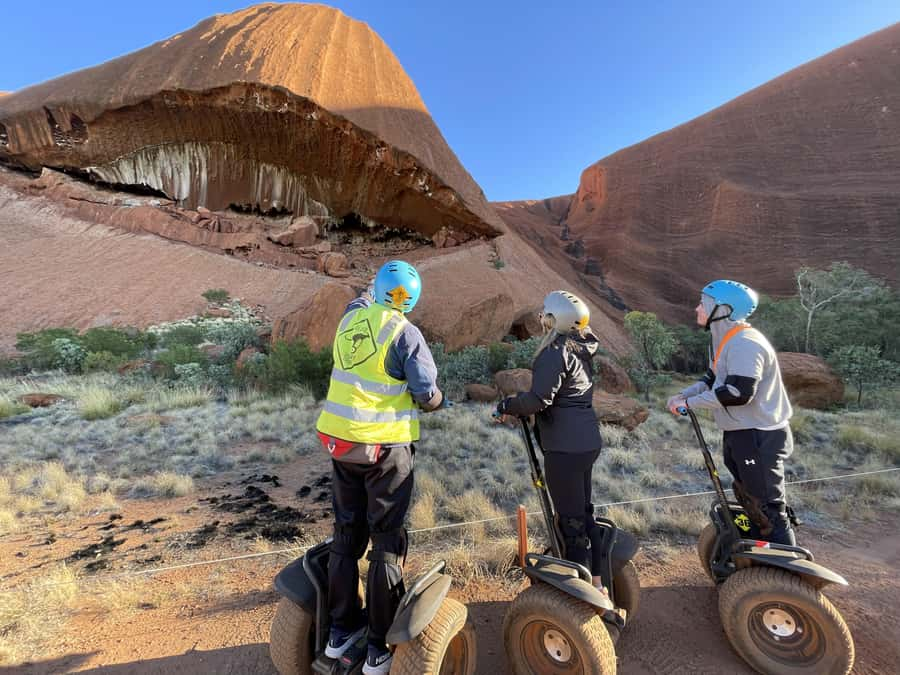
At $119 per person, the price is reasonable if you want a guided introduction that combines transport, riding, and walking. The fee includes pickup and return within Ayers Rock Resort, Segway instruction, about one hour on the Segway, the Mutitjulu Waterhole walk, and the Mala Walk.
You are paying for more than the equipment. The cultural interpretation and park access to several key sites are important parts of the value. A self-guided visit might cost less in tour fees, but it would not provide the same safety instruction, storytelling, or organized movement between stops.
The Uluru-Kata Tjuta National Park entry ticket is not included. You must buy that separately in advance, so include it in your total budget. The tour price also does not promise refreshments. One older comment referred to snacks and drinks in a different context, but the current inclusions listed here do not include them. Bring your own water.
Free cancellation up to 24 hours before departure and the option to reserve now and pay later make the booking less risky if your schedule is still changing. Check the available start time carefully because the total duration can run from four to five hours.
Heat, flies, and what to pack
Central Australia can be demanding even when the activity itself is manageable. Wear a sun hat, sunglasses, and closed-toe shoes. Carry water and use sun protection suitable for a long outdoor morning or afternoon.
Flies can be a nuisance, especially in warmer months. One useful tip from an earlier visit was to bring a fly net. It may look a little comical, but eating, drinking, or listening to a guide while waving flies away is less amusing than it sounds.
A fully charged phone is worth treating as part of your kit. The scenery invites photographs, and guides may help take pictures, but bus charging options are not guaranteed. A small power bank is practical.
Do not arrive in flip-flops. Open-toed shoes are not allowed, and you may be refused participation if that is all you are wearing.
Who should book this experience?
I would choose this tour if you want to see Uluru up close but do not want to walk the entire base. It suits first-time Segway riders, active adults, families with children aged 12 and above, and people who prefer a guide to explain the cultural setting rather than simply point out photo stops.
It can also work well for someone who can walk but finds a long continuous hike uncomfortable. The riding breaks up the distance, while the walking sections lead you to places the Segway cannot replace.
I would be more cautious if you dislike balance-based activities, have a back or mobility issue, cannot ride a bicycle, or want a relaxed sightseeing day with almost no physical effort. The walking is real, the sun can be strong, and the equipment rules are firm.
Should you book the Uluru Segway and Walking Tour?
Yes, if you want a well-rounded half-day at Uluru. The ride is fun, but the caves, Mala Walk, Mutitjulu Waterhole, rock art, and Anangu cultural explanations give the tour its lasting value.
Book it knowing that you will not travel around the entire base and that walking is a substantial part of the schedule. Add the national park entry ticket to the $119 price, bring water and closed shoes, and arrive with a charged phone.
For many visitors, this is a better choice than a ride-only outing because it lets you cover ground without sacrificing the quiet, close-up moments that make Uluru meaningful.
FAQ
How long does the Best of Uluru Segway and Walking Tour last?
The tour takes approximately four to five hours, including transfers between Ayers Rock Resort, Uluru, and the activity stops.
How much does the tour cost?
The listed price is $119 per person. The Uluru-Kata Tjuta National Park entry ticket is not included.
Is hotel pickup included?
Yes. Pickup and return are available from Desert Gardens Hotel, Sails in the Desert, Ayers Rock Resort Campground, and the Outback Pioneer Hotel area.
How many people are in each group?
The tour is described as a small-group experience limited to 10 participants.
Do I need previous Segway experience?
No. The tour includes about 30 minutes of Segway instruction and practice before the guided ride.
How long is the Segway ride?
The guided Segway portion lasts about one hour. The route covers roughly a quarter of Uluru’s base.
Is walking included?
Yes. The experience includes a guided walk to Mutitjulu Waterhole, the Mala Walk, cave visits, and the Kantju Gorge section.
What should I bring?
Bring sunglasses, a sun hat, water, and closed-toe shoes. A fully charged phone or power bank is also useful for photographs.
Are children allowed to join?
Children under 12 are not permitted. The recommended participant age is 12 to 65.
Who cannot take part?
The experience is not suitable for pregnant women, wheelchair users, people with back problems, people who cannot ride a bicycle, visually impaired people, people with recent surgery or pre-existing medical conditions, people over 70, people over 260 pounds or 118 kilograms, or people under 99 pounds or 45 kilograms.
Just added around Australia
- Welcome to Adelaide Walking Tour★ 5.0 · 119 reviews
- Ultimate Adelaide Walking Tour★ 5.0 · 222 reviews
- Cultural Caper Adelaide Walking Tour★ 5.0 · 122 reviews
- Melbourne: 3-Hour Foodie Discovery Walking Tour★ 4.9 · 313 reviews
- Sydney: Spirits of the Rock and Dark Past Walking Tour★ 4.0 · 144 reviews
- Sydney: City & The Rocks 3.5-Hour Walking Tour with a Drink★ 4.9 · 234 reviews
- Sydney Cricket Ground (SCG) and Museum Walking Tour★ 4.9 · 616 reviews
- Sydney Convicts, History & The Rocks 2.5-Hour Walking Tour★ 4.9 · 181 reviews
Australia Walking Tours, compared.
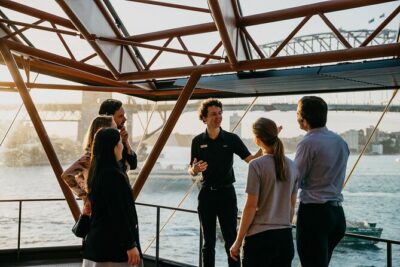
Sydney Opera House Official Guided Walking Tour
Read our review →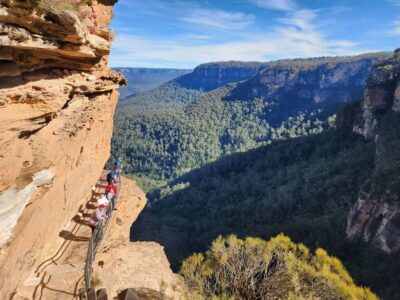
Blue Mountains Tour with Waterfall Walk & Lunch
Read our review →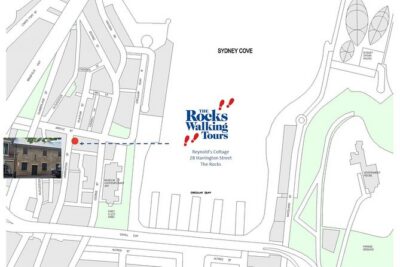
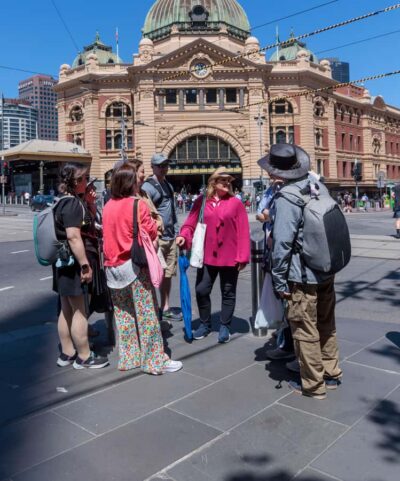
Ultimate Melbourne Walking Tour: History, Laneways & Culture
Read our review →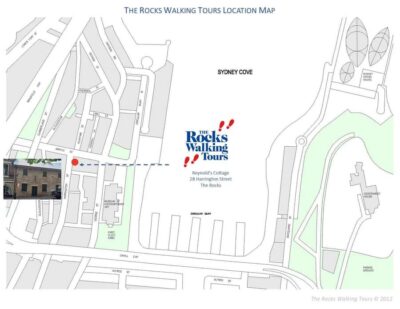
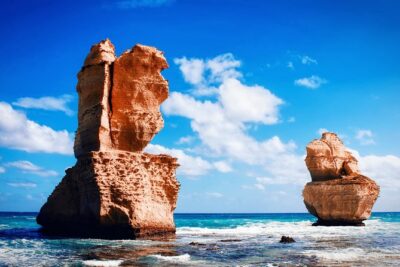
Great Ocean Road Tour Plus Koalas, Forest Walk and Morning Tea
Read our review →
Sydney Cricket Ground (SCG) and Museum Walking Tour
Read our review →
Great Ocean Road 12 Apostles & Rainforest Walk with Morning Tea
Read our review →Browse the lists this tour appears in