
Review · OLD TOWN WALKING TOURS
Dubrovnik: Old Town Walking Tour
Dubrovnik rewards a closer look. This 90-minute walk gives you a clear introduction to the Old Town and explains how the Republic of Ragusa grew into a powerful maritime state. I like the route’s focus on major sights, and the headsets are a smart touch in crowded lanes. The main limitation is simple: you see churches and museums from outside only.
I also like the guides’ mix of history, humor, and present-day advice. Guides such as Branko, Davor, Goran, Lana, and Alex have been praised for making the past easy to follow, while still offering useful tips on ice cream, restaurants, and the city walls. At $23 per person, this is a strong value if you want context before exploring on your own.
Key points at a glance
- Pile Gate sets the scene: Begin at Dubrovnik’s western entrance, close to the bus stop and Old Town.
- The route covers essential sights: See Stradun, Large Onofrio’s Fountain, Orlando’s Column, Sponza Palace, Rector’s Palace, the Cathedral, and the Old Port.
- Headsets help in crowded streets: You can hear the English-speaking guide without needing to stay shoulder to shoulder.
- The history reaches beyond medieval walls: The tour covers more than 1,400 years, including the Republic of Ragusa and modern Croatia.
- The pace is manageable: The walk lasts 90 minutes and is described as suitable for everyone and wheelchair accessible.
- It ends near the Old Port: That makes it easy to continue sightseeing, find lunch, or begin another activity.
Why this short Dubrovnik walk works so well
Dubrovnik’s Old Town can look almost too perfect at first. Pale stone streets, polished facades, church towers, and defensive walls create a grand picture, but the details are easy to miss when you are simply following the crowds.
A guide gives those details a place in the story. You learn why the city became wealthy, how it protected its independence, and how trade shaped its public buildings and social life. The walk also helps you understand that Dubrovnik was not only a beautiful fortified town. It was a serious maritime republic with its own government, diplomacy, economy, and cultural traditions.
The tour is especially useful early in your stay. After 90 minutes, you have a mental map of the center and a better idea of which places deserve a longer visit. One guide may suggest the city walls, another a good place to eat, and another a quiet spot for ice cream. Those small pointers can save you time later.
The high rating of 4.8 from 5,174 reviews reflects a consistent strength: the guides make the information enjoyable. Branko is often praised for humor and personal stories. Davor is described as a strong storyteller with real feeling for Croatian history. Goran, Antun, Lara, Alex, and others have also been singled out for clear explanations and an easy manner.
The standard can vary slightly by guide. A few people found that certain guides spoke quickly, especially in English. The headsets help, but you should still ask for a slower explanation if needed.
More Old Town Walking Tours in Croatia
- Dubrovnik Discovery Old Town Walking Tour
★ 5.0 · 4,458 reviews - Dubrovnik Old Town History Walking Tour
★ 5.0 · 1,684 reviews - Dubrovnik: City Walls, Old Town Walking Tour & Adriatic View
★ 4.9 · 982 reviews
Meeting at Pile Gate, the practical starting point
The meeting point is at Brsalje 8, by the Pile local bus stop. Look for the Dubrovnik Walks representatives under an orange umbrella. This is the final bus stop before the Old Town, so it is a useful location if you are arriving by local transport.
Arrive 10 minutes early. Pile Gate can feel confusing at busy times, and you will want a moment to find the orange umbrella, check in, and settle your headset before the group moves off.
Starting here is more than a logistical choice. Pile Gate is the Old Town’s storied western entrance, and it gives your guide a natural place to explain Dubrovnik’s defenses, access points, and relationship with the sea. You begin outside the walls, then pass into a place that feels separated from modern city life.
Bring comfortable shoes, water, and sunscreen. The route is not presented as strenuous, but it is still a walking tour on stone streets. In wet weather, rain can affect the footing. One guide even supplied ponchos during a rainy outing, which is a nice sign of practical care, but you should still check the forecast.
Pile Gate and the first look at Dubrovnik’s defenses
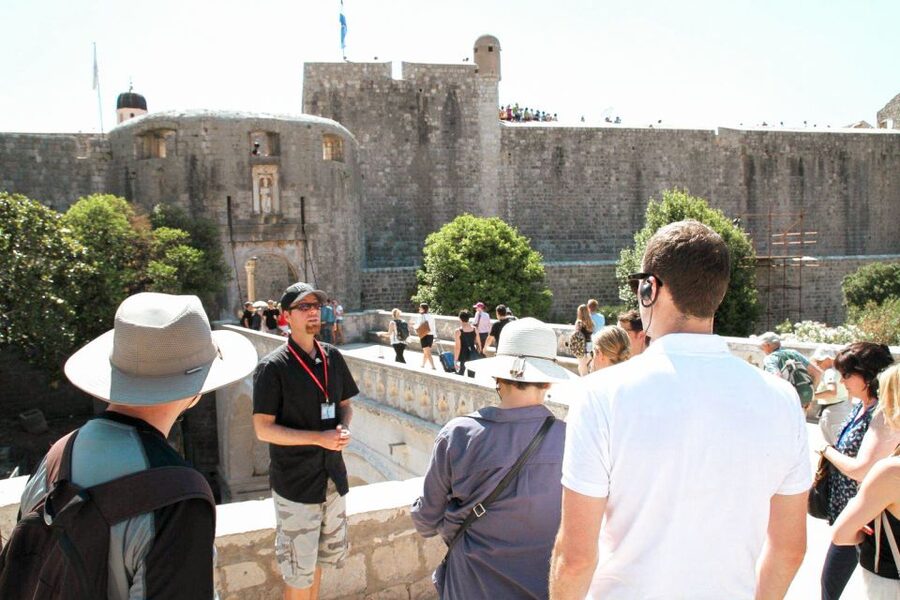
The first stop lasts about 10 minutes and focuses on Pile Gate. This is where the story of Dubrovnik becomes easier to picture. The gate was not just a passage for people arriving in town. It was part of a defensive system designed to control access to the city.
From here, your guide begins placing Dubrovnik in its wider setting. The city’s prosperity came from trade, shipping, diplomacy, and careful political choices. The old republic had to deal with larger powers around the Adriatic, so independence depended on more than stone walls.
This opening is useful because it gives the rest of the tour a theme. You are not simply looking at old buildings. You are seeing the physical results of a city that valued security, commerce, public order, and negotiation.
Walking through the Old Town’s main streets
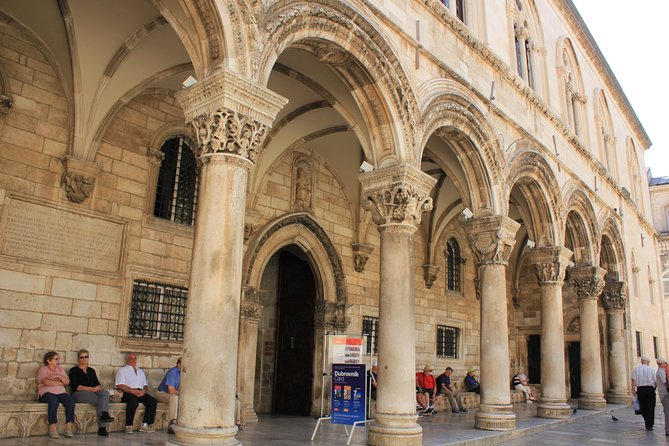
The next section takes about 25 minutes and leads through the heart of the Old Town. This is the longest part of the walking route, giving your guide time to explain how daily life worked behind the handsome facades.
Expect plenty of context about Dubrovnik’s social and economic development. The guide may point out details you would likely pass without noticing, then connect them to the larger story of the Republic of Ragusa. The city’s culture developed through contact with the wider Adriatic world, but it also kept a distinct identity.
This is where the personal style of the guide matters most. The best guides mix dates and political facts with stories about ordinary life, local customs, and modern Dubrovnik. Davor, Branko, and Lara have been praised for combining older history with recent events and personal observations.
The Old Town can be crowded, especially when several groups gather in the same space. Stay close enough to hear the guide and keep an eye on your group. The headsets make this easier, since you do not have to stand directly beside the guide at every moment.
More Old Town Walking Tours in Dubrovnik:
- Dubrovnik: Old Town Walking Tour
★ 4.9 · 792 reviews - Dubrovnik: Old Town History Walking Tour
★ 4.9 · 474 reviews - Dubrovnik: Panoramic Ride and Old Town Guided Walking Tour
★ 4.7 · 261 reviews - Dubrovnik: Old Town & City Walls Private Walking Tour
★ 5.0 · 206 reviews
Stradun, Dubrovnik’s grand central street

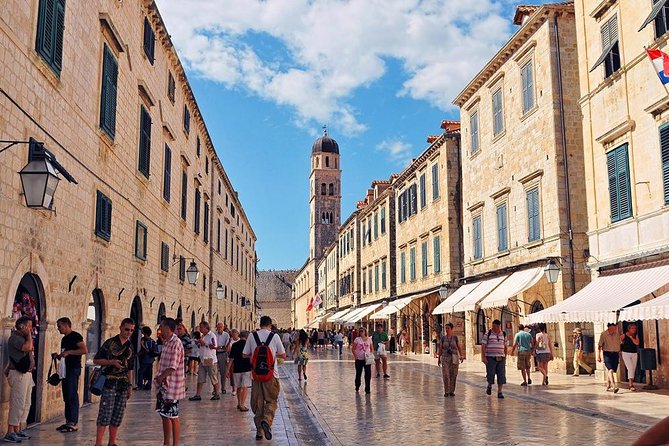
The tour spends about 10 minutes on Stradun, the Old Town’s main street. It is the place where Dubrovnik’s polished public image is most obvious. Stone paving, formal buildings, and steady foot traffic create a strong first impression.
Your guide helps explain why this street matters beyond its appearance. Stradun connects key parts of the historic center and acts as a civic spine. It is also a good place to understand how the Old Town functions today, with historic architecture sharing space with shops, restaurants, and visitors.
Do not expect a long stop for photographs. Ninety minutes requires a steady pace, and the guide is trying to keep the group moving while still allowing time for questions. If you want detailed photos of every building, return later on your own.
Large Onofrio’s Fountain and Dubrovnik’s water supply
Large Onofrio’s Fountain receives about 10 minutes. It is one of the Old Town’s most recognizable landmarks, but its real importance lies in what it tells you about medieval city planning.
A reliable water supply was essential to Dubrovnik’s survival and growth. The fountain represents practical public infrastructure, not just decoration. Your guide can connect it to the city’s ability to support residents, merchants, and ships.
This is the kind of stop that makes a guided walk worthwhile. You can admire the fountain independently, but an explanation turns it into evidence of how the republic organized urban life.
Orlando’s Column and the symbols of independence
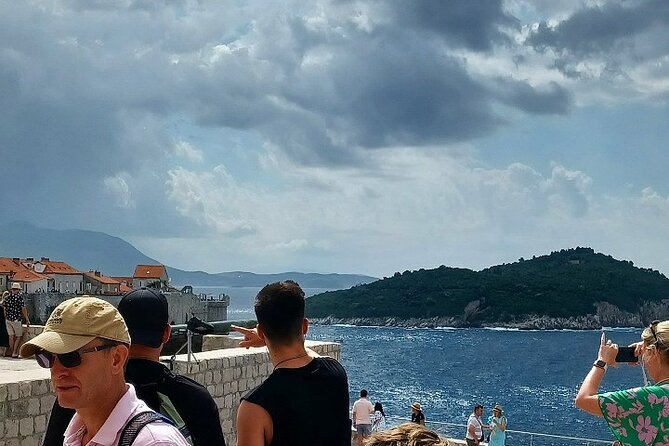
The stop at Orlando’s Column lasts about five minutes. The column is a small landmark with a large symbolic role, tied to Dubrovnik’s political identity and public traditions.
Your guide explains why monuments like this mattered in a republic that guarded its autonomy carefully. Dubrovnik’s leaders used public spaces and symbols to express civic values, authority, and connection to the wider European world.
This is a quick stop, so listen closely. The group may gather around the column while other people pass through the square. The headset helps you follow the explanation even when the space is noisy.
Sponza Palace and Rector’s Palace

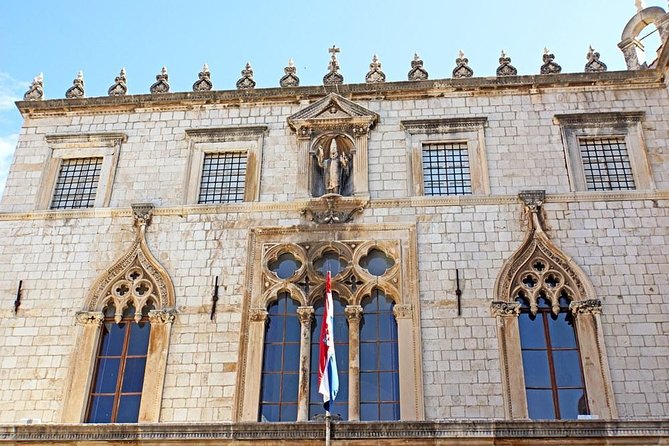
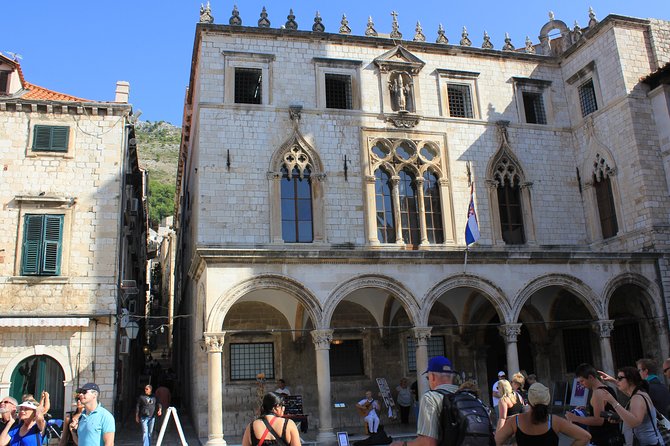
Sponza Palace receives about five minutes. Its elegant design reflects Dubrovnik’s commercial and administrative importance. This was a place connected with trade, government, and public business, so it helps you see the city as an organized republic rather than a pretty coastal settlement.
Rector’s Palace is also covered for about five minutes, but the tour passes by rather than entering. This is an important limitation to understand before booking. You will hear why the palace mattered and see its exterior, but you will not explore its rooms or museum displays during this walk.
For a first visit, that outside explanation is still useful. The palace helps introduce the role of the rector and the political structure of the old republic. If you want to study the interior, you will need to return separately and allow extra time.
Gundulićeva Poljana and the Cathedral exterior
The route continues to Gundulićeva Poljana for about five minutes. This square gives the guide another setting for discussing public life, local culture, and Dubrovnik’s long civic tradition.
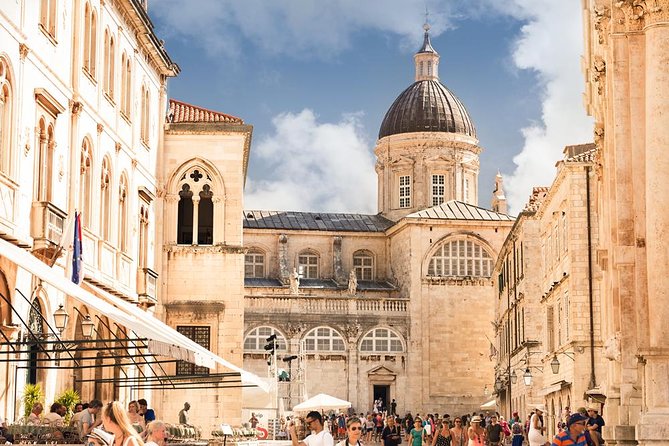
The Cathedral is also viewed from the outside for about five minutes. Its place in the Old Town reflects the connection between religion, art, government, and daily life. Again, the tour does not enter churches, so consider this a preview rather than a full architectural visit.
That arrangement suits people who want a broad introduction. It is less satisfying if your main purpose is to study church interiors, religious art, or museum collections. The tour gives you the story and the location, then leaves you free to decide what deserves a separate visit.
Finishing at the Old Port
The final 10 minutes bring you to Dubrovnik’s Old Port. This is a fitting end because the port explains much of the city’s power. Dubrovnik’s wealth and influence depended heavily on maritime trade, shipping, and its position on the Adriatic.
By ending here, the walk links the grand buildings of the center to the sea that made the republic prosperous. You can also use the location as a practical handoff to the rest of your day. From the Old Port, you may want to continue exploring, find food, or follow advice from your guide.
The end point is near the Old Town port, not back at Pile Gate. Keep that in mind if you have a scheduled bus, pickup, or timed attraction afterward.
What the $23 price gets you
At $23 per person, the tour offers solid value for a first visit. You get a licensed local guide, a 90-minute route through the essential center, and a headset so you can hear the commentary. The price does not include entry to churches, museums, or other paid sights, but the tour is not designed as an interior museum visit.
I would compare the cost with the time it saves. Reading about Dubrovnik before arrival can give you facts, but a guide shows you where those facts happened and answers questions as they come up. That is especially helpful in a compact historic center where several important buildings are close together.
The value is strongest if you are visiting for the first time, have limited time, or want a clear foundation before exploring alone. If you already know Dubrovnik’s political and architectural story well, you may prefer a self-guided walk or a more specialized experience.
The reserve-now, pay-later option also makes planning easier, and free cancellation is available up to 24 hours in advance for a full refund. Check your voucher for the exact starting time.
Who should book this Old Town tour?
I would recommend it for first-time visitors, couples, families, solo sightseers, and anyone arriving by cruise ship with only part of a day in Dubrovnik. The route covers the city’s essential landmarks without requiring a full-day commitment.
It also suits people who want history delivered in a relaxed way. The guides are praised for humor, clear English, personal stories, and useful local suggestions. If you enjoy asking questions, the format gives you a good chance to do so.
The tour may be less suitable if you want to enter museums and churches, climb the city walls, or spend long periods photographing individual buildings. It is an overview, not an intensive architectural study.
The activity is listed as wheelchair accessible, and one account describes the pace as easy and flat. Still, Dubrovnik’s historic center has stone paving and crowded sections, so contact Dubrovnik Walks in advance if you need specific mobility details.
Final verdict: a smart first step in Dubrovnik
Book this walk if you want the Old Town to make sense instead of appearing as a series of beautiful facades. The route is short, reasonably priced, and packed with the landmarks that define Dubrovnik’s public story.
I especially value the combination of local voices, strong storytelling, and working headsets. Guides such as Branko, Davor, Goran, and Lara have helped make the experience both informative and warm. Just remember that interiors are not included, the pace may feel quick for some English speakers, and the tour ends at the Old Port.
For most first-time visitors, this is a useful opening chapter. Take the walk early, note the guide’s suggestions, then return to the places that deserve more time.
FAQ
Where does the Dubrovnik Old Town tour meet?
The meeting point is at Brsalje 8, by the Pile local bus stop. Look for Dubrovnik Walks representatives under an orange umbrella.
How early should I arrive?
You should arrive 10 minutes before the scheduled starting time.
How long does the tour last?
The tour lasts 90 minutes.
What language is the tour in?
The live tour guide speaks English.
What landmarks are included?
The route includes Pile Gate, the Old Town, Stradun, Large Onofrio’s Fountain, Orlando’s Column, Sponza Palace, Rector’s Palace, Gundulićeva Poljana, Dubrovnik Cathedral, and the Old Port.
Does the tour enter churches or museums?
No. The tour views several churches and historic buildings from outside, but it does not include interior visits.
Are headsets provided?
Yes. Headset devices are included so you can hear the guide clearly.
Is the tour wheelchair accessible?
Yes. The activity is listed as wheelchair accessible.
What should I bring?
Bring comfortable shoes, sunscreen, and water. Video and audio recording are not allowed.
Just added around Dubrovnik
- Dubrovnik: Explore Dubrovnik Old Town Walking Tour★ 4.9 · 96 reviews
- Dubrovnik: Walls and Wars Walking Tour★ 4.8 · 501 reviews
- Dubrovnik: Game of Thrones And Iron Throne Walking Tour★ 4.8 · 505 reviews
- Dubrovnik: Old Town Walking Tour★ 4.9 · 792 reviews
- Dubrovnik: Panoramic Ride and Old Town Guided Walking Tour★ 4.7 · 261 reviews
- Dubrovnik: Karaka – Game of Thrones Cruise & Walking Tour★ 4.8 · 613 reviews
- Dubrovnik By Night Walking Tour★ 4.8 · 208 reviews
- Dubrovnik: Early Bird Walking Tour★ 4.9 · 123 reviews
Old Town Walking Tours, compared.

Underground Vaults Walking Tour in Edinburgh Old Town
Read our review →
3-Hour Walking Tour of Old Town & Prague Castle
Read our review →

Old Town and Jewish Quarter Guided Walking Tour
Read our review →
Cartagena: Historic Center and Getsemaní Shared Walking Tour
Read our review →
Prague Ghost and Legend of Old Town Walking Tour
Read our review →Browse the lists this tour appears in