
Review · UK WALKING TOURS
Glasgow: Gander Walking Tour
Glasgow reveals itself one corner at a time. This three-hour Glasgow Gander walk links major sights, overlooked buildings, street art, and old city stories in a route that feels both well planned and personal. I like that Johnny, a proud local Glaswegian, brings the city to life with humor, strong opinions, and practical advice for the rest of your stay.
I also like the useful follow-up: recommendations for pubs, museums, parks, day trips, food, and family activities. The main consideration is pace. You cover a lot of central Glasgow, and although stops break up the walking, three hours can feel full, especially in cold or wet weather. This is an introduction to central Glasgow, not a tour of the entire city.
Five things to know before you book
- Johnny is the main attraction: His local knowledge, warmth, humor, and obvious affection for Mother Glasgow shape the experience.
- The route covers 13 central stops: You see famous landmarks, old streets, architecture, murals, and places easy to miss on your own.
- It mixes history with present-day Glasgow: Expect stories about industry, politics, food, music, shopping, pubs, and daily city life.
- You get practical advice for afterward: Johnny can suggest museums, parks, pubs, day trips, and places suited to your interests and schedule.
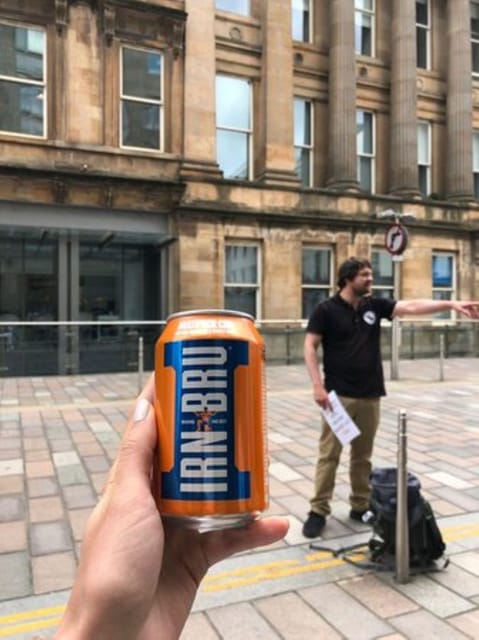
- The music venue visit depends on opening: Entrance to an antique music venue is included when it is open, along with a taste of a classic Scottish soft drink.
- The meeting point matters: Go to the Costa Coffee in Royal Exchange Square, beside the Gallery of Modern Art and the cone-topped statue, not George Square.
Starting beside the Duke of Wellington
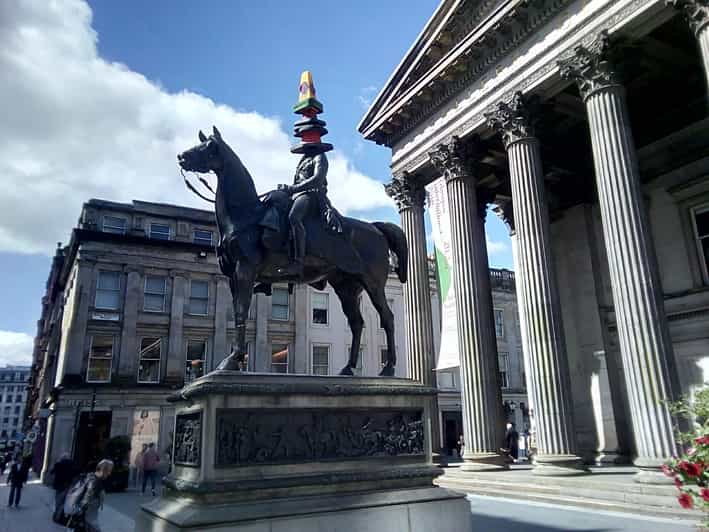
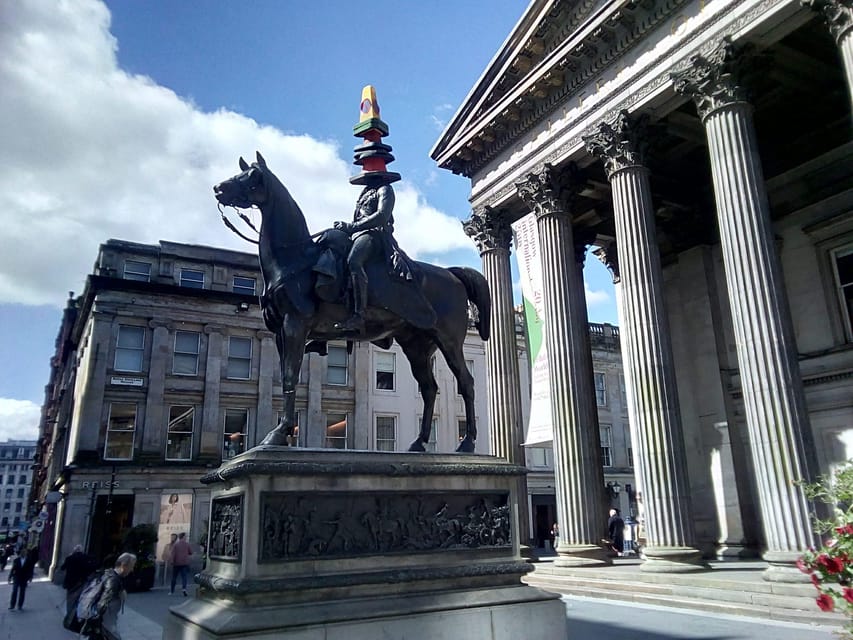
The tour begins outside Costa Coffee in Royal Exchange Square, next to the Gallery of Modern Art. Look for the guide wearing a black and white Glasgow Gander shirt or jacket. The statue of the man on horseback with a traffic cone on his head is your best landmark.
That statue is the Duke of Wellington, and the cone is one of Glasgow’s most famous bits of public mischief. It is not an official monument feature. Locals repeatedly place traffic cones on the duke’s head, and the city’s response has become part of the joke. Johnny uses this stop to introduce Glasgow’s humor, independence, and habit of treating grand civic symbols with a raised eyebrow.
This is a smart place to begin. You are near the Gallery of Modern Art, Royal Exchange Square, Buchanan Street, and George Square, so the tour quickly places you in the middle of the city. It also gives you an early photo opportunity without wasting time on a long introduction.
A few more walks around the UK worth a look
- Magical London: Harry Potter Guided Walking Tour
★ 4.7 · 22,044 reviews - Edinburgh: Harry Potter Magical Guided Walking Tour
★ 4.8 · 11,944 reviews - Edinburgh Castle: Guided Walking Tour with Entry Ticket
★ 4.7 · 11,699 reviews
Buchanan Street and Glasgow’s civic character
From the statue, the walk heads toward Buchanan Street, one of Britain’s best-known shopping streets outside London. You will not simply be pointed toward the shops. Johnny explains how Glasgow used this public commercial space to make a political statement against apartheid South Africa.
That detail helps show why this tour works better than a basic list of buildings. The streets are not treated as decoration. You hear how Glasgow’s public life, political views, trade, and identity have shaped the city. For you, that means the walk gives context to places you might otherwise cross quickly while shopping or heading between attractions.
Buchanan Street is also a useful orientation point. If you have only a short stay, you can see how the central shopping district connects to the civic heart around George Square and the older streets farther east.
George Square and the rooftop ship
George Square is the city’s grand public room. Here, the tour turns toward Glasgow City Chambers, an elaborate building often regarded as one of northern Europe’s finest civic structures.
Look up as well as ahead. One of the tour’s small surprises is a ship on a rooftop. It is the kind of detail you could easily miss while admiring the square’s monuments and formal buildings. Johnny is particularly good at drawing attention to these odd, easy-to-overlook features.
This part of the route gives you a sense of Glasgow’s confidence during its commercial and industrial rise. It is also a practical stop for visitors who want to return later for photographs or a closer look at the City Chambers. The tour does not appear to include a full interior visit, so treat this as an outdoor introduction rather than a formal building tour.
Trades Hall and an unusual Georgian story
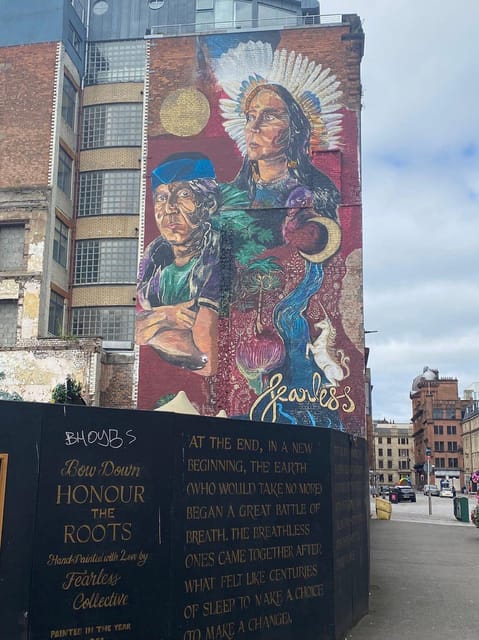
Glasgow’s Trades Hall is one of the stops that rewards attention. It is less obvious than the city’s most photographed landmarks, yet it opens a window onto Georgian Glasgow and the institutions that shaped civic and commercial life.
Johnny also tells the story of a club where gluttony was celebrated. That unusual episode adds just the right amount of absurdity to the architecture. You are not asked to memorize dates and names. Instead, a building becomes easier to remember because it is tied to a vivid human story.
I like this balance. The tour regularly moves between formal history and strange local anecdotes, so the three hours do not feel like a classroom lecture.
Same streets, a different way to see them:
- Underground Vaults Walking Tour in Edinburgh Old Town
★ 4.5 · 8,506 reviews - London: The Original Jack the Ripper Walking Tour
★ 4.7 · 7,833 reviews - Oxford University Walking Tour With University Alumni Guide
★ 5.0 · 6,905 reviews - Edinburgh Castle: Guided Walking Tour with Entry Ticket
★ 5.0 · 5,540 reviews
An Art Deco interior and the route’s architectural variety
The walk includes what is described as the only public Art Deco interior in Glasgow city centre. This is a valuable change of mood after the grand Victorian and Georgian buildings around the main squares.
The exact experience depends on access at the time, but the stop shows how much architectural variety is packed into central Glasgow. The city is not only about stone façades, medieval survivals, or industrial-era monuments. Art Deco adds another layer, with a more modern style and a different sense of design.
This is also one reason to ask questions as you go. Johnny welcomes questions and adapts recommendations to personal interests. If architecture is your priority, tell him early. If you care more about music, food, museums, or local pubs, say so. His strongest quality, according to the available feedback, is his ability to speak with different people rather than deliver a rigid script.
Hutcheson’s Hall and the making of industrial Glasgow
At Hutcheson’s Hall, the route moves into one of the city’s most important transitions. Johnny explains how Glasgow changed from a commercial centre into an industrial powerhouse.
That shift matters. It helps connect the grand civic buildings, old trading routes, and later industrial identity into one story. You begin to understand why Glasgow looks the way it does and why its character differs from Edinburgh’s more polished historic centre.
The tour is especially useful here because the city’s past is not presented as a string of isolated facts. The stops build on one another. Trade leads to money, money leads to institutions and architecture, and industry changes the scale and purpose of the city.
Trongate, an old road with a musical surprise
Trongate is one of Glasgow’s ancient thoroughfares. Today, you might pass along it without realizing how long it has served as a route through the city.
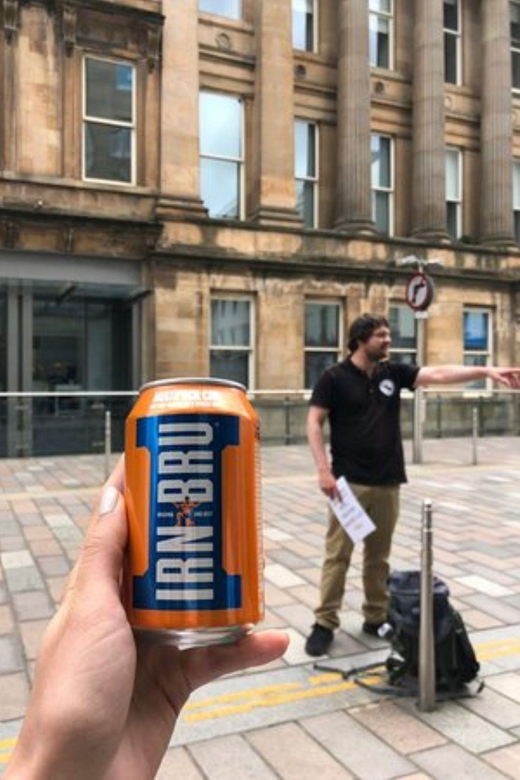
The tour may include entry to an antique music venue, provided it is open. That qualification matters. You should see this as a welcome bonus, not a guaranteed indoor feature. When available, it adds a strong connection to Glasgow’s entertainment past and gives you a break from the street.
The included soft drink tasting is another small but thoughtful touch. It is non-alcoholic and offers a taste of a quintessential Scottish favorite. Do not book this tour expecting a food tour, but these details help make the walk feel local rather than purely academic.
Glasgow Cross and the Tolbooth Steeple
At Glasgow Cross, the Tolbooth Steeple rises as a reminder of the old city. The 17th-century structure marks the historic centre of Glasgow and gives Johnny a natural setting for stories about law, punishment, commerce, and everyday life in earlier times.
This is one of the places where the route feels most connected to old Glasgow. You are no longer looking only at grand civic spaces. The streets here carry the memory of a working city, with the steeple acting as a fixed point amid centuries of change.
The walk is described as fast-moving, but it is not a march. Stops come often, and the route includes plenty of explanation. Still, wear comfortable shoes and be ready to remain outdoors for much of the morning or afternoon.
High Street, street art, and a fried recommendation
High Street is the city’s main ancient thoroughfare, and the tour uses it for several memorable details. Johnny points out a striking face with a large story behind it, then gives you a recommendation for a quintessential deep-fried Scottish delicacy.
This is where the tour’s food advice becomes useful. You are not just told what Glasgow is famous for. You get a suggestion you can consider trying during your stay, along with the local context behind it. You can ask Johnny for more food ideas if you have particular needs or preferences.
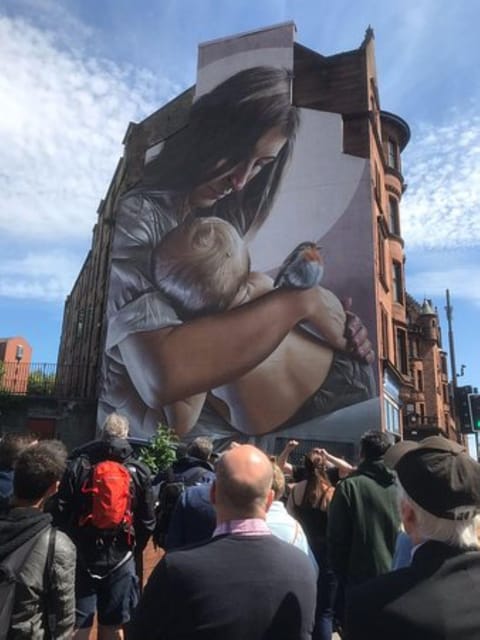
The nearby mural features one of Glasgow’s most celebrated sons. It is cleverly placed, so you might walk past without noticing the artwork or the way it fits into the surrounding street. The mural stop reflects the modern city, while High Street and the Tolbooth Steeple connect you to much older Glasgow.
I particularly like this contrast. The tour does not separate old Glasgow from new Glasgow. Medieval buildings, public art, food traditions, and current city life appear within the same walk.
Provand’s Lordship and Glasgow’s oldest house
Provand’s Lordship is Glasgow’s oldest house, dating from the 15th century. Its age makes it one of the most important buildings on the route, but Johnny also draws attention to four unusual buildings nearby.
One is rumored to assist inter-dimensional travel. That playful claim is clearly part of the tour’s storytelling style, not a reason to plan your physics research around Glasgow. It shows how Johnny mixes fact, local lore, and humor without losing sight of the city’s real past.
This section is a good reminder to look beyond the obvious landmark. Provand’s Lordship deserves attention for its age, but the surrounding buildings and stories give the stop more character. You are encouraged to notice the street as a whole, not simply photograph one old house and move on.
Glasgow Cathedral and the Victorian Necropolis
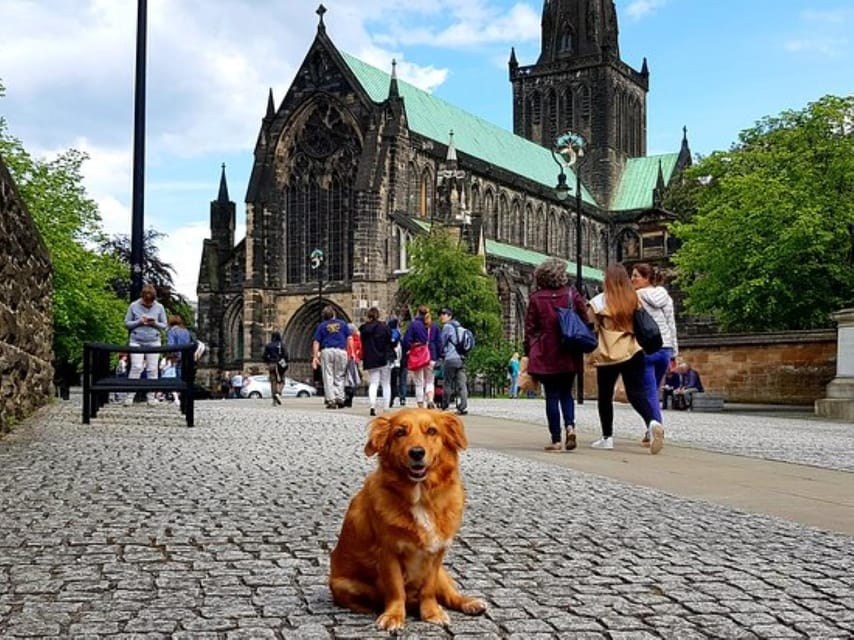
The tour ends at Glasgow Cathedral, a major medieval Scottish Gothic building and one of the city’s strongest architectural sights. It is framed by the Victorian Necropolis, often described as Glasgow’s city of the dead.
Ending here gives the walk a clear sense of arrival. The route has moved from shopping streets and civic buildings through old roads and city stories to Glasgow’s medieval religious centre. The cathedral is not just a final photo stop. It brings together the city’s age, architecture, and changing fortunes.
If you have time afterward, you can continue exploring this part of town. The tour itself concludes here, so plan your next activity with the finishing location in mind. Johnny’s recommendations can help you decide what fits the rest of your day.
Why Johnny makes the difference
The strongest feature of this experience is the guide. Johnny’s enthusiasm is not a performance added on top of the tour. It shapes the whole walk.
You can expect a guide who answers questions, chats with people individually, and offers suggestions based on how long you are staying and what you enjoy. The available feedback repeatedly praises his humor, energy, clear explanations, and love for Glasgow. One useful detail is that he may send a long list of recommendations after the tour, including museums, pubs, parks, day trips, food, and activities for families.
That follow-up advice can be worth a lot. A standard sightseeing walk ends when the guide says goodbye. Here, you leave with ideas for using the rest of your time well. If you have only 24 or 48 hours in Glasgow, tell Johnny at the start. His advice can help you avoid spending your limited time on places that do not suit you.
The tour also appears comfortable for a range of ages. A senior visitor was specifically accommodated, and another participant noted that the pace remained accessible despite covering plenty of ground. It is wheelchair accessible, but the route still involves outdoor city walking, so ask for any details you need when booking.
Is $16 good value for three hours?
At $16 per person, this is strong value if you want a broad introduction to central Glasgow. You get three hours with a local guide, a route covering 13 stops, a soft drink taste, and possible access to an antique music venue when open.
The value is not only in the sights. It is in the interpretation and the recommendations afterward. A guide who helps you choose a museum, pub, park, or day trip can save you time and make the rest of your stay more rewarding.
The tradeoff is that you are buying an overview, not an intimate visit to every location. You will see many places from the outside, and the entire city is not covered. The music venue is subject to availability, and the route can feel full if you prefer slow photography or long indoor visits.
You can cancel up to 24 hours ahead for a full refund, and you can reserve now while paying later. The tour is in English and led live by Johnny.
Who should book the Glasgow Gander walk?
I would choose this tour for a first day in Glasgow. You get your bearings, learn the city’s main story, and receive ideas for the days that follow.
It suits you especially well if you enjoy:
- Local stories instead of a formal lecture
- Architecture, street art, and civic history
- Food, pub, museum, and day trip suggestions
- A walking tour with room for questions
- A guide who brings humor and personal pride
- A broad look at central Glasgow in one outing
You might choose something else if you want a very slow route, a specialist architecture tour, or extended interior visits. The walk is lively and information-packed. It rewards curiosity, but it asks you to keep moving.
Should you book it?
Yes, if you want a friendly and useful introduction to Glasgow for a modest price. The route covers the famous sights, but its real strength is the way Johnny connects them to local politics, old customs, architecture, music, food, and modern city life.
Book it early in your stay, preferably on your first day in Glasgow. That gives you time to use the recommendations for museums, pubs, parks, day trips, and meals. Just meet at the correct Costa Coffee in Royal Exchange Square, dress for Scottish weather, and expect a full three hours on foot.
FAQ
Where does the Glasgow Gander walking tour meet?
It meets outside Costa Coffee in Royal Exchange Square, next to the Gallery of Modern Art and the statue of the Duke of Wellington with the cone on his head. It does not meet in George Square.
How long does the tour last?
The walking tour lasts three hours.
What language is the tour in?
The live tour is conducted in English.
Who leads the tour?
The tour is led by Johnny, a local Glaswegian guide associated with Glasgow Gander Walking Tours.
What places are included on the route?
The route includes Royal Exchange Square, the Duke of Wellington statue, Buchanan Street, George Square, Trades Hall, an Art Deco interior, Hutcheson’s Hall, Trongate, the Tolbooth Steeple, High Street, a High Street mural, Provand’s Lordship, and Glasgow Cathedral.
Is entry to the antique music venue guaranteed?
No. Free entry is included when the antique music venue is open, so access depends on availability.
Is anything included besides the walking tour?
Yes. The experience includes a free taste of a quintessential Scottish non-alcoholic soft drink. Entry to the antique music venue is also included when it is open.
Is the tour wheelchair accessible?
Yes, the activity is listed as wheelchair accessible.
Can I cancel the booking?
Yes. You can cancel up to 24 hours in advance for a full refund. You can also reserve now and pay later.
Just added around the UK
- The Real Eclectic Belfast City Walking Tour/Experience.★ 5.0 · 152 reviews
- Belfast Political Tour-Conflicting Stories Walking Tour★ 4.5 · 459 reviews
- Belfast Eclectic Walking City Center Experience, The Marti Way★ 5.0 · 348 reviews
- The Real Story of Belfast walking tour with a local guide★ 5.0 · 144 reviews
- Best of Belfast Walking Tour★ 5.0 · 399 reviews
- Belfast Centre Food Tour of 12+ Local Irish Dishes & Drinks★ 5.0 · 266 reviews
- Belfast Troubles Murals Street Art and Peace Wall Walking Tour★ 5.0 · 163 reviews
- BATH: 2-Hour Bath Walking Tour of Bridgerton Filming Locations★ 5.0 · 99 reviews
UK Walking Tours, compared.

Magical London: Harry Potter Guided Walking Tour
Read our review →
Edinburgh Castle: Guided Walking Tour with Entry Ticket
Read our review →
Underground Vaults Walking Tour in Edinburgh Old Town
Read our review →
Oxford University Walking Tour With University Alumni Guide
Read our review →Edinburgh Castle: Guided Walking Tour with Entry Ticket
Read our review →
Edinburgh Castle Guided Walking Tour in English
Read our review →Browse the lists this tour appears in