
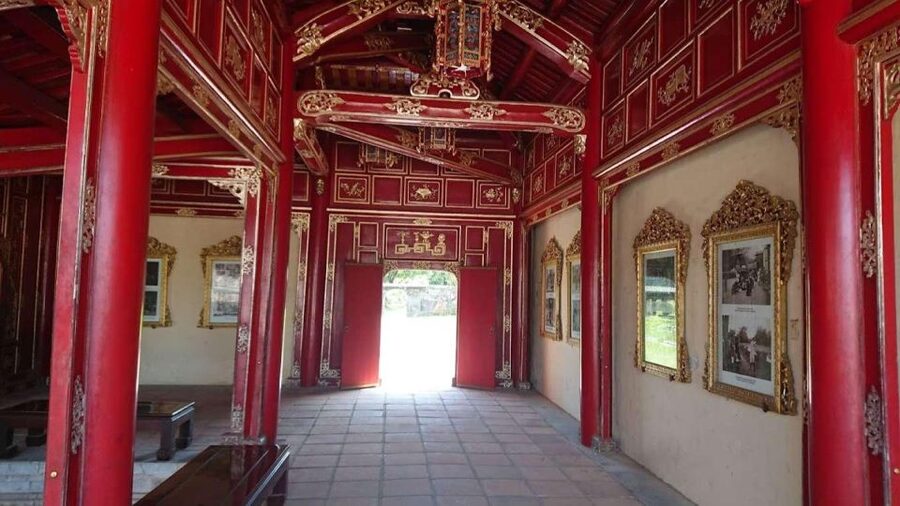
Review · VIETNAM WALKING TOURS
Hue Customizable Tour with Imperial Citadel & Forbidden City
Hue rewards a slower look. This flexible tour gives you two useful ways to see the former royal center: a 150-minute guided walk through the Imperial Citadel and Forbidden Purple City, or a private car trip lasting up to eight hours. I like the clear focus of the walking option, especially the chance to understand emperors, queens, concubines, and palace life rather than simply photograph old gates. I also like the private-car choice, which lets you add tombs and pagodas at your own pace.
The main catch is that entrance tickets are extra, and the private-car driver is not a licensed tour guide. You will need to choose carefully between low-cost transport and proper explanation. For the walking tour, the meeting point is precise but easy to mishandle: look for the four bronze cannons by Ngan Gate, not the five cannons across the road.
Key details before you book
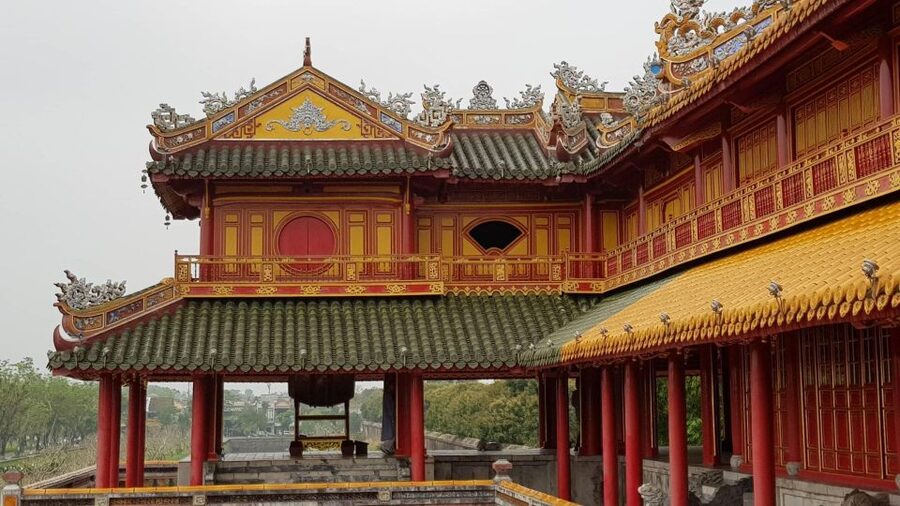
- Two very different tours: Pick the guided Citadel walk for historical detail, or the private car for a wider day around Hue.
- A strong guide team: Misa, Ha, Nhi, Nhien, Linh, Duy, and others receive praise for clear English, warmth, patience, and good storytelling.
- The walking tour lasts about 2.5 hours: Expect steady walking through gates, courtyards, temples, gardens, and damaged palace areas.
- The starting price is attractive: The advertised price is $12 per person, but admission tickets and food are not included.
- Entry costs matter: Imperial City admission is listed at 200,000 Vietnamese dong per adult. Combo tickets can cover the Citadel and two or three royal tombs.
- Private cars cover more ground: You can combine the Imperial City with Thien Mu Pagoda, royal tombs, and Thuy Tien Abandoned Water Park.
Why Hue’s Imperial Citadel needs a guide
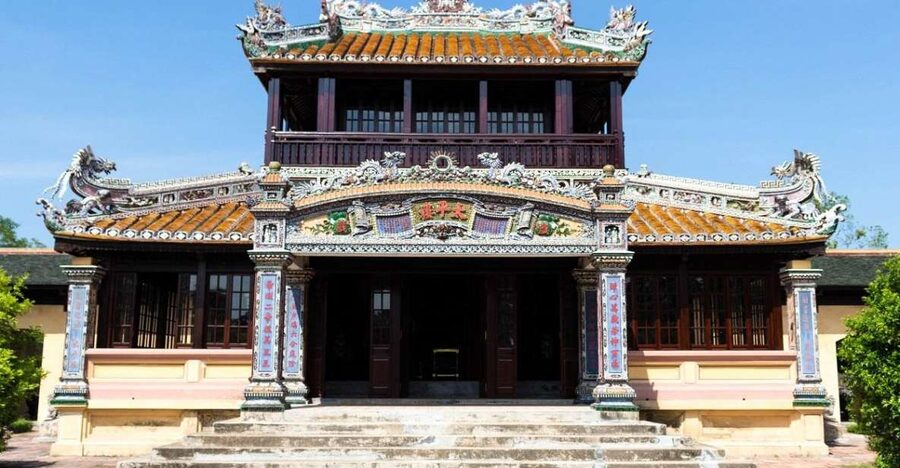
Hue’s Citadel can look simple at first: walls, gates, lawns, temples, and a scattering of surviving buildings. The layout makes far more sense once someone explains the symbols, rank, rituals, and family life behind it.
The walking tour focuses on the Nguyen dynasty, Vietnam’s last imperial family. You learn where kings held ceremonies, where royal ancestors were worshipped, and where the emperor’s household lived behind layers of court protocol.
This is especially useful in the Forbidden Purple City. Many buildings were damaged or lost, so a guide helps you picture what the area once meant. The subject is not only kings and battles. It includes royal wives, minor wives, concubines, eunuchs, court servants, and the strict separation between public ceremony and private life.
The strongest praise goes to guides who make this material easy to follow. Misa is repeatedly described as warm, funny, and good at explaining symbolism. Nhi is praised for her detailed account of the Nguyen dynasty and for keeping families engaged. Ha, Nhien, Linh, Duy, and Hoa also receive strong marks for clear English and friendly conversation.
You should expect interpretation rather than a formal lecture. Good guides stop for questions, point out architectural details, and allow time for photographs. That balance matters because Hue’s royal complex can become tiring if you are marched from one location to the next.
Other walking tours people book around Vietnam:
- Private Street Food Evening Walking Tour in Ho Chi Minh City
★ 5.0 · 3,175 reviews - [HOT] Hanoi Old Quarter Walking Street Food – Small Group Tour
★ 5.0 · 2,163 reviews - Super Niche Walking Street Food Tour in Ho Chi Minh City
★ 5.0 · 1,636 reviews
Meeting the guide at Ngan Gate
The walking tour begins at the four bronze cannons near Ngan Gate, also called Cua Ngan. The guide holds an A4 sheet with your name. This sounds simple, but pay attention to the cannon count. There are five cannons on the opposite side, and the wrong side of the entrance could leave you circling the Citadel.
The nine Holy Cannons were cast by Hue craftsmen in 1803 during the second year of Emperor Gia Long’s reign. They are important works of bronze art and once sat near the Ngo Mon Gate before being moved to their present position during the reign of Khai Dinh.
This first stop gives the tour a useful opening. The cannons are not merely old weapons. They connect the founding of the Nguyen dynasty with the ceremonial and defensive design of the imperial capital.
From the Flag Tower to Ngo Mon Gate
The Flag Tower, or Ky Dai, rises from the southern side of the Citadel. It sits within the Nam Chanh fortress and served as the place where the royal flag was displayed.
You get a short stop here, mainly for photographs and orientation. The tower helps you understand the Citadel as a defended royal city rather than a collection of isolated monuments. It also gives you a sense of the scale of the southern approach.
Next comes Ngo Mon, the Noon Gate. Built in 1833 during the reign of Emperor Minh Mang, it was used for royal ceremonies and troop movements. Its position and formal design show how carefully access to the imperial center was controlled.
This is one of the most recognizable places in Hue, so expect plenty of photo interest. The drawback is that a short stop cannot explain every layer of the gate’s design. If you are fascinated by architecture, ask your guide questions here rather than waiting until later.
Thai Hoa Palace and the ceremonial heart
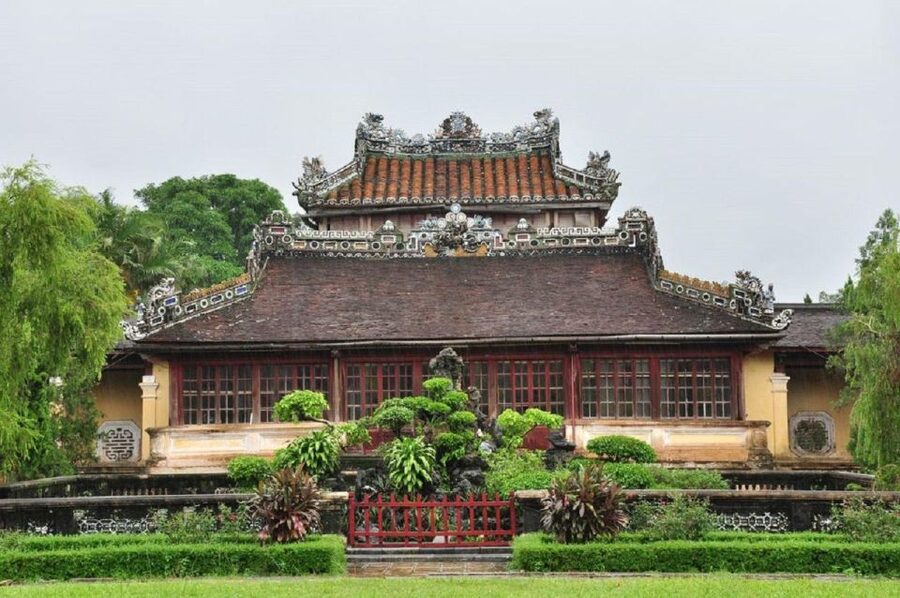
Thai Hoa Palace, or the Palace of Supreme Harmony, was the coronation site for 13 Nguyen emperors, from Gia Long to Bao Dai. In a feudal state, this was the symbolic center of government.
The palace is valuable because it helps explain how royal power was displayed. The emperor did not simply live in a large house. He occupied a carefully arranged ceremonial world, with buildings and courtyards reflecting rank, authority, and Confucian order.
Your guide may also discuss the links between architecture, Confucian ideas, Buddhism, and feng shui. One particularly praised guiding style uses questions to keep you involved rather than asking you to memorize dates.
The palace area can be hot, especially in the middle of the day. Guides such as Misa and Linh have been praised for choosing shady places for explanations and allowing cooling breaks. I would still choose an early start if you can, since much of the visit takes place outside.
Same streets, a different way to see them:
- Private Walking Tour of Hanoi City
★ 5.0 · 1,251 reviews - Hanoi: Small-Group Street Food Walking Tour
★ 4.8 · 1,165 reviews - Private Hanoi Street Food Walking Tour With Real Foodie
★ 5.0 · 1,042 reviews - Hanoi: Michelin Guide Street Food Walking Tour
★ 4.8 · 961 reviews
Hien Lam Pavilion, the dynastic urns, and royal memory
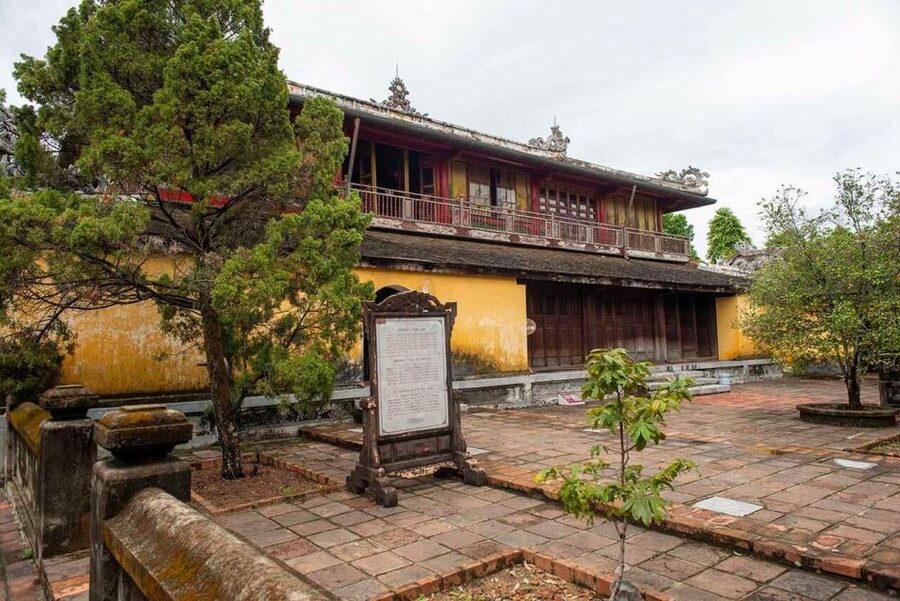
Hien Lam Pavilion leads you toward one of the most striking areas of the Citadel, the Nine Dynastic Urns. These huge bronze urns were commissioned by Emperor Minh Mang in 1835 and completed in 1837.
The urns stand in front of The Mieu Temple. Each one represents a Nguyen emperor and the dynasty’s idealized view of the country. Their decoration carries symbolic meaning, including references to nature, animals, and the wider realm ruled by the court.
This is a good place to ask about numbers and symbols. A guide can turn details that might look decorative into clues about royal beliefs and political ideals. Families may find this section especially helpful because children can look for animals and patterns while listening to the explanation.
The Mieu, also called The To Mieu, was built in 1821 by Minh Mang. It honors ten Nguyen kings. The temple gives the tour a more personal side, moving from public authority to ancestor worship and the duty of later rulers to preserve the dynasty.
The nearby Hung To Mieu and Hung Mieu add more religious and dynastic context. The stops are relatively short, so the experience works best if you let your guide explain the connection between the buildings instead of treating each as a separate photo stop.
Entering the Forbidden Purple City
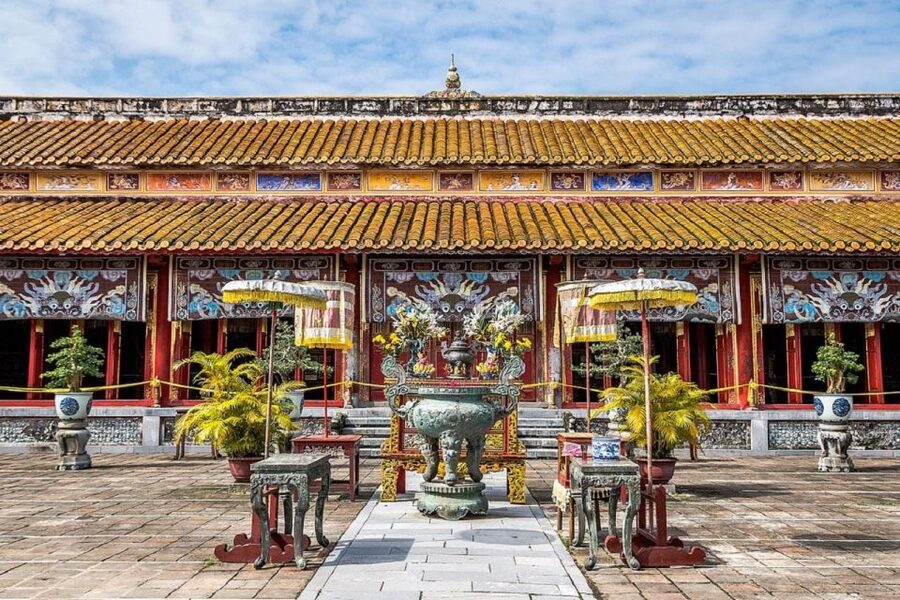
The Forbidden Purple City was first built by Gia Long in 1804 and renamed during the third year of Minh Mang’s reign in 1822. Located behind Thai Hoa Palace, it was the center of daily life for the emperor and his household.
This is the part most people want to understand, but it is also where the physical remains can feel uneven. Some areas are restored, some are damaged, and some are open courtyards that require imagination.
A guide helps fill those gaps. You can learn how court life was divided between the emperor, queens, minor wives, concubines, eunuchs, and servants. The subject is unusual for a standard sightseeing walk because it brings private palace life into the story.
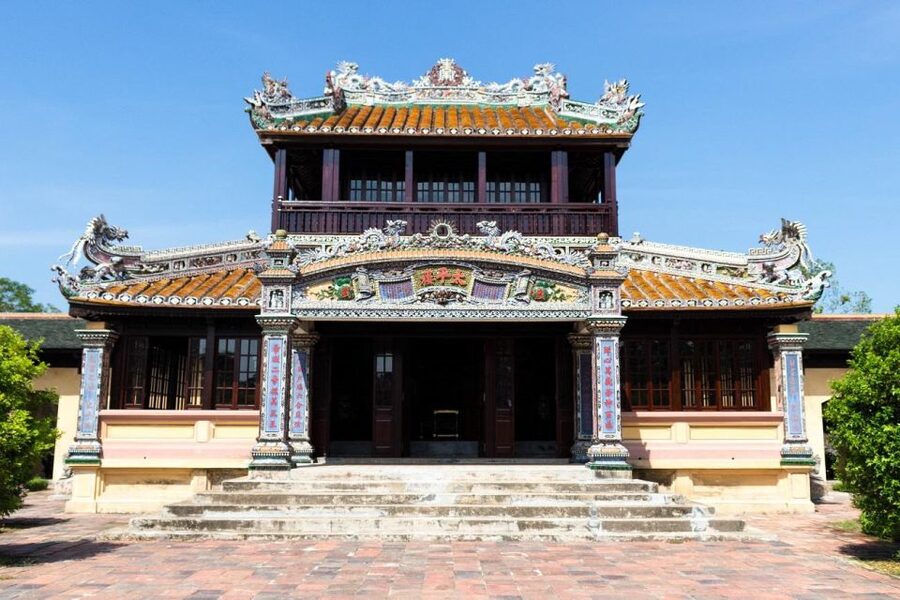
The itinerary includes several interior and garden areas, including Kien Trung Palace, Thai Binh Pavilion, Thieu Phuong Garden, and the Duyet Thi Duong Royal Theater. You may pass through or pause at these places depending on the route and current access.
Kien Trung Palace is associated with the later imperial period. Thai Binh Pavilion and Thieu Phuong Garden show the quieter side of palace life, while the Royal Theater points to court entertainment and performance.
Do not expect every building to be open or intact. The real value is seeing how the Forbidden City was arranged and hearing what each zone was used for.
The final gates and the end of the walk
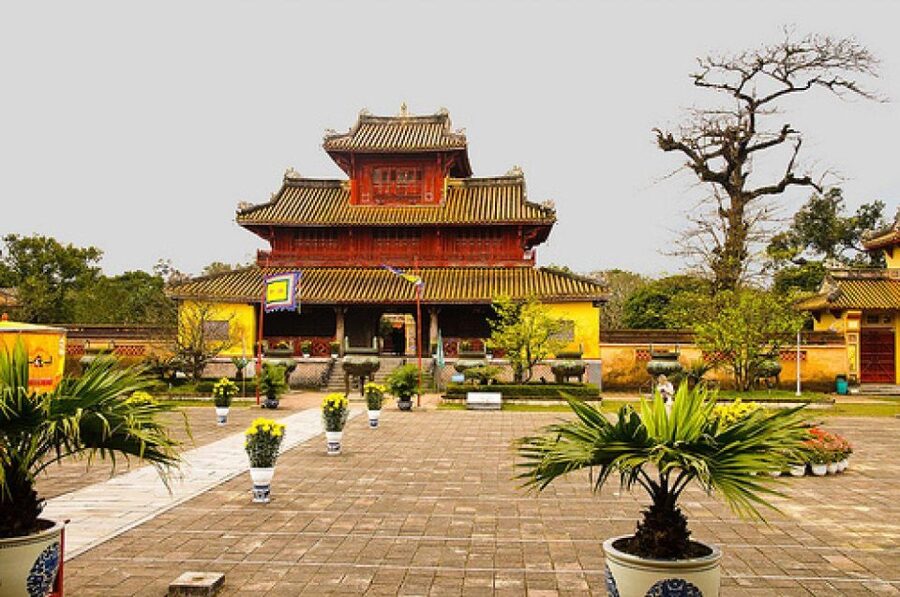
The route may continue toward Trieu To Mieu and Hien Nhon Gate. These final stops help complete the picture of the Citadel’s ceremonial and residential zones.
The walking portion lasts about two and a half hours, though the exact pace can vary. You get time for photos, questions, and some independent looking around. Several guides are praised for not rushing, which is important in a place where the best details are often small.
After the guided walk, you are free to continue exploring around the Citadel on your own. That is useful if you want more photographs or need a quiet break after the historical explanation.
Plan for sun, humidity, and a lot of walking. Light clothing, water, sun protection, and comfortable shoes will make a bigger difference here than any clever packing trick.
Choosing the private-car option
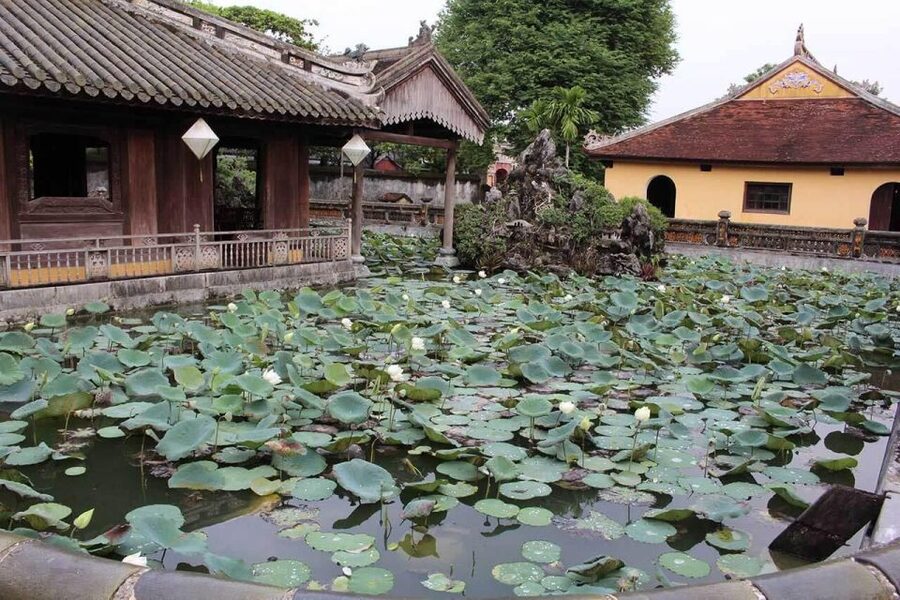
The private-car version is a different experience, not simply a longer walking tour. An English-speaking driver picks you up from a central Hue hotel or Hue Railway Station, then takes you to the sights you select.
The listed choices include:
- Imperial City
- Thien Mu Pagoda
- Minh Mang Tomb
- Tu Duc Tomb
- Khai Dinh Tomb
- Thuy Tien Abandoned Water Park
This is the better choice if you want to see several major Hue sites in one day, or if walking in the heat is difficult. You can set your own pace and avoid arranging separate taxis between the Citadel and the royal tombs.
The important limitation is the driver’s role. The driver speaks English for communication but is not described as a professional licensed guide. You receive transport and practical help, not the same level of historical explanation offered on the walking option.
For many people, that tradeoff is fair. If you already know some Hue history and want reliable transport, the car offers flexibility. If this is your first visit and you want the meaning behind the buildings, the guided walk is the stronger pick.
Private-car pickup and drop-off are included for central hotels in Hue and Hoi An, as well as Hue train station and Phu Bai Airport. Locations outside the central areas may bring an extra charge, so confirm the address before departure.
What the $12 price really gives you
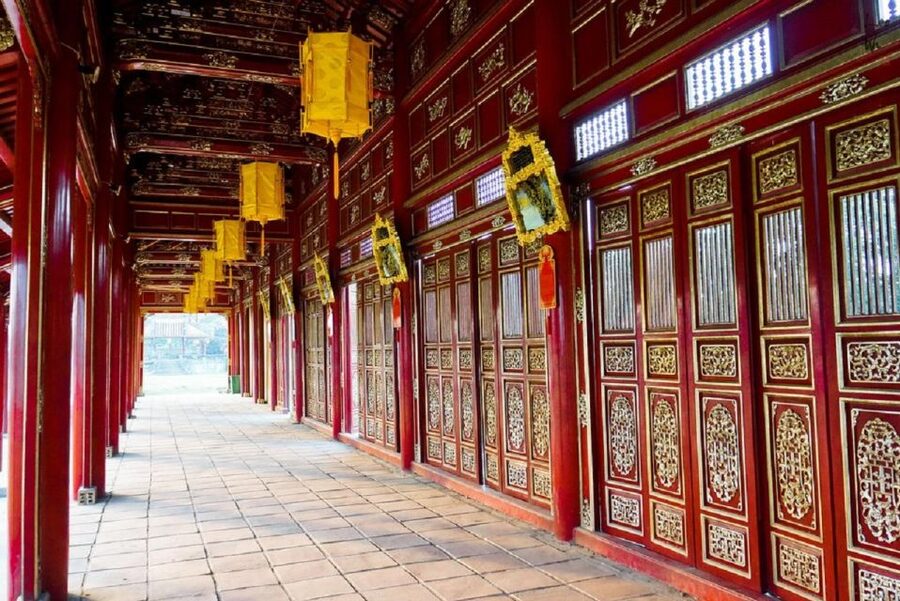
At $12 per person, the advertised starting price is excellent value for a guided introduction to the Imperial Citadel. You are paying mainly for the guide’s time and interpretation, not for admission.
The Imperial City ticket is listed separately at 200,000 Vietnamese dong per adult. If you plan to visit tombs, a combo ticket may be more economical: the listed options are 420,000 dong for the Citadel plus two tombs, or 530,000 dong for the Citadel plus three tombs, valid for two days.
That changes the total cost, but not necessarily for the worse. The combo ticket can work well with the private-car option, especially if you want to see Minh Mang, Tu Duc, and Khai Dinh.
Food and drinks are not included. You can buy them during the day, but the tour details do not promise a meal stop. Bring water, especially during the hotter months.
The price is strongest for solo visitors, couples, and small groups who want context without paying for a full private guide. The private-car price may vary by selected option, so check the exact booking choice rather than assuming the $12 figure covers an eight-hour vehicle day.
Who will enjoy this Hue tour most
I would choose the walking option if you:
- Want a clear introduction to the Nguyen dynasty
- Prefer a small group or private experience
- Like asking questions
- Want to understand palace symbolism and family life
- Are happy to walk outdoors for about 2.5 hours
Families can do well here because guides explain animals, numbers, and symbols in ways children can follow. The route may be less suitable if you dislike heat or need a slow, seated visit.
I would choose the private car if you:
- Want to combine the Citadel with pagodas and tombs
- Are arriving by train or flying into Hue
- Prefer flexible timing
- Want door-to-door transport
- Do not need a full historical lecture at every stop
The car can also suit mixed-age groups, though remember that the driver is not the walking guide.
Should you book it?
Yes, if you want the Imperial Citadel to make sense rather than simply look impressive. The guided walk is the best value here, with a sensible length, strong English-speaking guides, and enough time for photographs and questions.
Choose the private car only when transport and coverage matter more than detailed interpretation. Before paying, confirm your pickup point, selected sights, entrance-ticket costs, and whether you want the walking guide or driver-only service.
My practical choice would be the walking tour early in the day, followed by your own lunch and an afternoon trip to one or two tombs if you have the time. That gives you the useful stories first, then lets you explore the rest of Hue without being hurried.
FAQ
How long does the Hue walking tour last?
The walking tour lasts about 150 minutes, or two and a half hours. It covers the Imperial Citadel and Forbidden Purple City.
Where does the walking tour meet?
The guide meets you at the four bronze cannons near Ngan Gate, also called Cua Ngan. The guide carries an A4 paper with your name.
How can I identify the correct cannons?
Look for the four cannons near Ngan Gate. Five cannons are located on the opposite side, so check carefully before waiting.
Is the Imperial City entrance ticket included?
No. The Imperial City ticket is listed at 200,000 Vietnamese dong per adult and must be paid separately.
What does the private-car option include?
The private-car option includes a private sightseeing vehicle and an English-speaking driver. Pickup is available from central hotels, Hue Railway Station, and Phu Bai Airport under the stated conditions.
Is a tour guide included with the private car?
No. The driver can communicate in English but is not a professional licensed tour guide. A local guide is included with the walking-tour option.
Which sights can I visit by private car?
The listed choices include the Imperial City, Thien Mu Pagoda, Minh Mang Tomb, Tu Duc Tomb, Khai Dinh Tomb, and Thuy Tien Abandoned Water Park.
Can I cancel the booking?
You can cancel up to 24 hours in advance for a full refund. The experience also offers reserve-now, pay-later booking under the stated conditions.
Just added around Vietnam
- Ho Chi Minh City: Super Niche Walking Street Food Tour★ 5.0 · 438 reviews
- Hanoi: Street Food Walking Tour & Water Puppet Show★ 4.8 · 205 reviews
- Saigon: Private Backstreets Walking Food Tour★ 4.9 · 83 reviews
- Ninh Binh Sunset Tour And Visit Hoa Lu Walking Town At Night★ 4.4 · 94 reviews
- Hue Imperial City Walking Tour: Citadel & Forbidden City★ 4.8 · 245 reviews
- Hue Imperial Ancient City Walking Tour★ 4.8 · 308 reviews
- Hoi An Ancient Town – Walking Tour with Local Guide★ 4.9 · 385 reviews
- Hoi An: Ancient Town Guided Walking Tour★ 4.9 · 766 reviews
Vietnam Walking Tours, compared.

Private Street Food Evening Walking Tour in Ho Chi Minh City
Read our review →![[HOT] Hanoi Old Quarter Walking Street Food – Small Group Tour](https://1.walkingtourer.com/wp-content/uploads/hot-hanoi-old-quarter-walking-street-food-small-group-tour-400x267.jpg)
[HOT] Hanoi Old Quarter Walking Street Food – Small Group Tour
Read our review →
Super Niche Walking Street Food Tour in Ho Chi Minh City
Read our review →

Private Hanoi Street Food Walking Tour With Real Foodie
Read our review →

Tasting 8 Different Street Foods + Local Drink at Evening Time by Walking
Read our review →Browse the lists this tour appears in