
Review · JEWISH HERITAGE WALKING TOURS
Krakow: Jewish Ghetto Walking Tour
Empty chairs can speak volumes. Kraków’s one-hour Jewish Ghetto walking tour brings the Podgórze district’s wartime past into focus through the Ghetto Wall, Ghetto Heroes Square, and the Under the Eagle Pharmacy. I like the compact route and the way guides connect major events with ordinary daily life. I also like the low $11 price, which makes this an easy addition to a Kraków day.
The main consideration is time. One hour gives you a clear introduction, but not room for every story or a full museum visit. The walk is flat and manageable, yet you will be outdoors in all weather, and the pharmacy may be closed during your visit.
Key points at a glance
- The surviving Ghetto Wall: See one of the few remaining fragments that once enclosed more than 15,000 people in only a few city blocks.
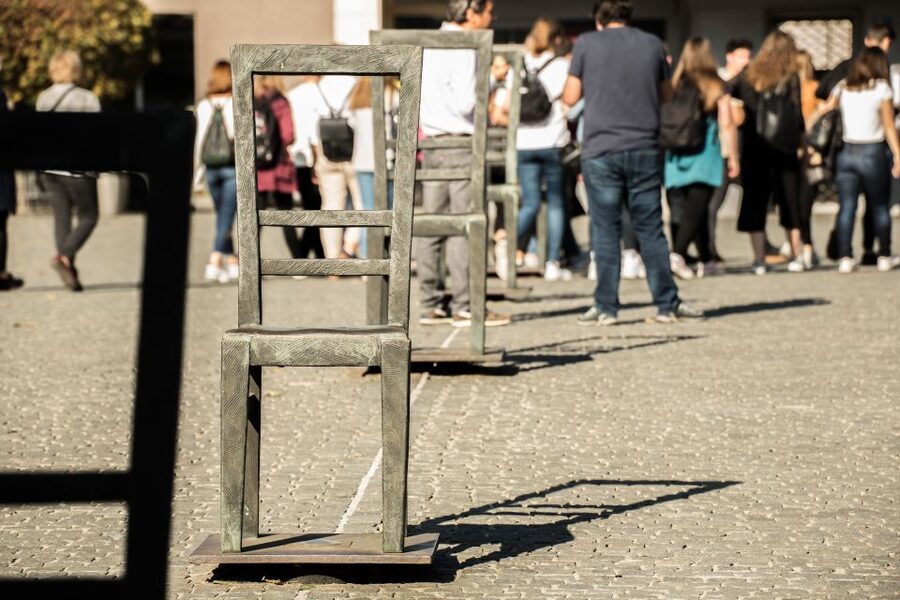
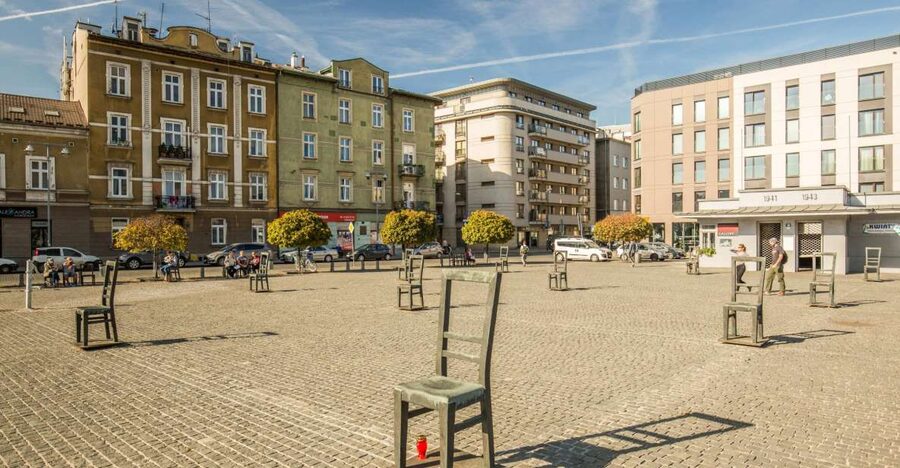
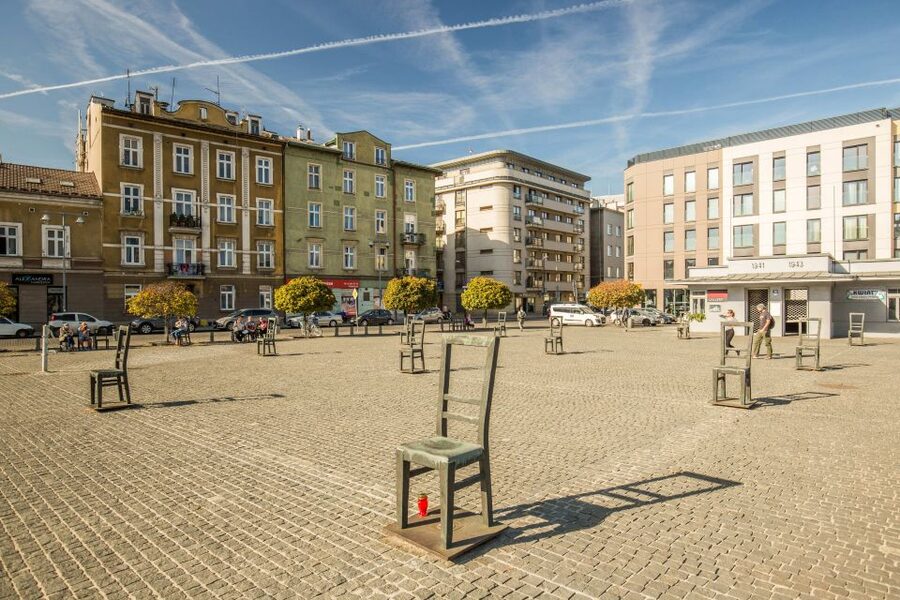
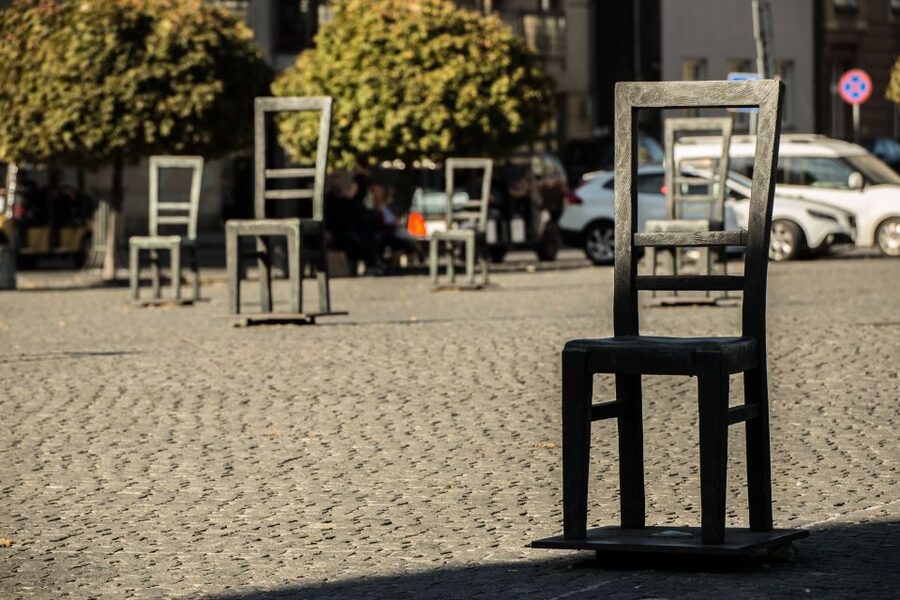
- Ghetto Heroes Square: Learn the meaning behind the empty metal chairs, one of Kraków’s most powerful memorials.
- Under the Eagle Pharmacy: Hear how Tadeusz Pankiewicz and his staff helped people trapped inside the ghetto.
- A short, focused walk: The one-hour route covers important sites without taking over your whole day.
- Strong guiding: Guides including Olga, Aga, Joanna, Ewa, Helen, and Phil have been praised for clear, sensitive storytelling.
- Good value at $11: You get a live guide, a historical route, and context you could easily miss on your own.
Why Podgórze matters to your Kraków visit
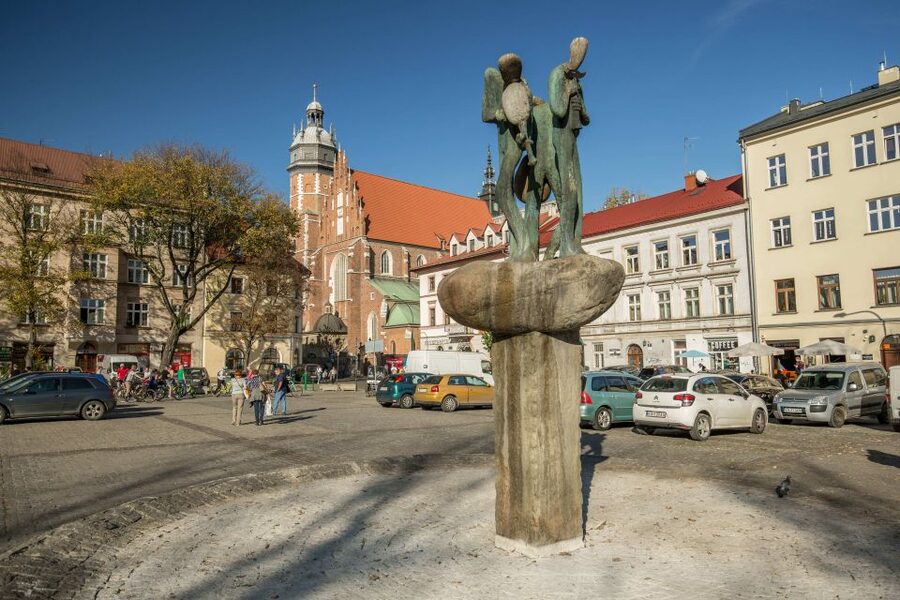
The former Jewish Ghetto lies in Podgórze, across the Vistula River from Kraków’s Old Town. It is not a polished historic district where every building has been preserved for display. Modern life continues here. Cars pass, people walk to work, and ordinary buildings occupy streets that once held an extraordinary amount of suffering.
That contrast is part of the experience. You are not walking through a fully reconstructed museum. You are moving through an active neighborhood where fragments, street lines, walls, photographs, and memorials help reveal what happened.
During the German occupation of Poland, Jewish residents were forced into this confined area. More than 15,000 people were held within a few city blocks. The tour explains how the ghetto was formed, how people managed daily life, and how deportations eventually tore families apart.
I find that local setting especially useful for understanding the Holocaust at a human scale. A visit to Auschwitz can show the machinery of mass murder. This walk focuses more closely on the earlier stages: confinement, hunger, fear, forced movement, uncertainty, and the struggle to keep some form of family and community life alive.
More Jewish Heritage Walking Tours in Poland
- Krakow: Kazimierz Jewish Quarter Walking Tour
★ 4.8 · 571 reviews - Krakow: Jewish Quarter Guided Walking Tour
★ 4.8 · 119 reviews - Jewish Krakow Walking Tour in English
★ 4.8 · 102 reviews
Starting near Schindler’s Factory
The meeting point varies with the option you book, so check your confirmation rather than assuming every departure begins at the same place. Several departures have begun near Schindler’s Factory, a practical location if you are already visiting that museum.
That pairing makes sense. The factory helps explain the wider setting of Kraków under Nazi rule, while the walking tour takes you into the streets where Jewish residents were confined. One person described starting at the factory as a particularly good way to begin, and another used the tour as a follow-up after visiting it.
Do not assume the tour includes entry to Schindler’s Factory. The listed experience provides the walking tour and guide. Museum admission, food, and drinks are not included.
Arrive 10 minutes early. This matters more than it sounds. Once the group leaves, latecomers cannot join, and the ticket cannot be refunded. Some departures provide an audio headset or earphones, which helps you follow the guide beside busy streets or in a larger group.
The walking pace is generally steady. Joanna was praised for keeping a pace that suited slower walkers, and another person described the route as flat and not especially demanding. Still, you will spend the full hour on your feet, so wear shoes that can handle pavement and bring clothing suited to the forecast.
Following the original Ghetto Wall
One of the first major stops is a surviving section of the original Ghetto Wall. Only fragments remain, which means you need the guide’s explanation to understand its former scale and purpose.
On its own, a piece of wall can look modest. With context, it becomes much more disturbing. The guide explains how this barrier helped seal off more than 15,000 people in a tightly packed area. You learn not only that the wall existed, but what it meant for movement, food, family contact, and the basic choices of daily life.
This is where the tour’s value becomes clear. You could walk past the remaining wall without knowing what it marked. A guide supplies the missing frame: what the boundary enclosed, how people lived behind it, and how fear shaped even ordinary routines.
Several guides have used old photographs to show how the area looked during the war. That visual comparison helps you read the present-day streets. You begin to notice how little of the original built environment remains, while also understanding that the street layout still carries traces of the former ghetto.
Do not expect a preserved medieval quarter or a row of intact wartime buildings. One person found that little of the old architecture survives. That is a fair warning. The power here comes less from grand ruins and more from knowing what took place on otherwise ordinary streets.
Ghetto Heroes Square and the empty chairs
The route continues to Ghetto Heroes Square, the emotional center of the walk. During the occupation, this was connected with gatherings and deportations to concentration camps. Today, empty metal chairs fill the square.
The chairs are a simple but forceful memorial. They suggest the belongings and lives left behind when people were removed from their homes. Instead of relying on a long inscription or a monumental statue, the memorial uses repeated everyday objects to create a sense of absence.
Your guide will explain the meaning of the chairs and the events linked to the square. This is usually a quiet point in the tour, and it deserves time for you to look around rather than simply take a photograph and move on.
The square also helps connect the ghetto’s geography with its human story. You are no longer hearing about deportations as distant events on a map. You are standing in a place where people gathered under pressure, often without knowing what would happen next.
Some tours finish around this area, while others include the pharmacy before ending. The precise order may vary by departure, so pay attention to the guide’s opening instructions. One person was briefly confused because the ending point differed from the start. That is worth knowing if you have a tight schedule afterward.
More Jewish Heritage Walking Tours in Krakow:
- Krakow: Jewish Ghetto Guided Walking Tour
★ 4.7 · 78 reviews - Krakow: 2h Kazimierz (Jewish Quarter) Walking Tour
★ 4.5 · 75 reviews - Amsterdam Anne Frank: Small-Group Walking Tour & Local Guide
★ 4.8 · 12,789 reviews - Anne Frank’s Story – Guided Walking Tour through Amsterdam
★ 5.0 · 11,619 reviews
Under the Eagle Pharmacy and Tadeusz Pankiewicz
The historic Under the Eagle Pharmacy is one of the most important stops. Tadeusz Pankiewicz, the pharmacist, and his staff risked their lives to help people in the ghetto. The pharmacy provided medicine and shelter, and its story adds a vital note of courage to an otherwise grim route.
This stop matters because it shifts the focus from what was done to Jewish residents to what people did for one another under extreme danger. The guide explains the practical acts of help, not just a broad claim that people showed bravery.
The pharmacy can also function as a museum. One person described it as a highly informative museum at the end of the walk. However, another found it closed on the day of the tour. Do not treat entry as guaranteed unless your booking specifically confirms it. Even when you cannot go inside, the exterior and the guide’s account remain part of the route.
I would especially value this stop after visiting the wall and square. First, you see the system of confinement. Then, you see a place linked to individual choices, care, and resistance. The contrast keeps the tour from becoming only a sequence of tragedies.
The stories behind the streets
The strongest part of this walk is the explanation of daily life. The guide covers more than dates and military events. You hear about the people forced into the ghetto, the pressures they faced, the deportations, and the ways some tried to survive.
That human focus has earned the tour its high overall rating of 4.6 from 349 ratings. The most praised feature is the guiding. Olga has been described as friendly and well prepared. Aga connected the history of the ghetto and the Nazi occupation with the need to learn from the past. Ewa was praised for telling the story with care and respect, while Helen was noted for her clear delivery and compassion.
Phil has also been praised for bringing old photographs and getting the group involved. His approach shows why a live guide can make such a difference here. The streets do not explain themselves. A photograph, a personal story, or a careful explanation of one building can help you picture the crowded, controlled world that once occupied the same space.
The tone is serious, as it should be, but it is not necessarily cold or academic. Some guides add a little warmth or humor while keeping the subject respectful. That balance can help you stay attentive during a difficult hour.
The tour may also touch on the experience of Polish people living under German control, not only the Jewish population. That wider context is useful, provided you remember that this walk is centered on the Kraków Ghetto and the Jewish residents imprisoned there.
How much walking is involved?
The distance is not described in exact numbers, but the route is repeatedly characterized as manageable and flat. You will walk between several sites in Podgórze rather than spend the hour at one memorial.
For most people, the physical effort should be modest. The bigger challenge is weather. The tour runs rain or shine, and a winter departure can be very cold. One group waited in temperatures of minus 9 degrees Celsius and appreciated being invited indoors before the start.
Bring a warm coat in winter, waterproof layers when rain is likely, and shoes with a good grip. In summer, a hat and water may make the hour more comfortable, though food and drinks are not included.
If you have limited mobility, the published information does not provide detailed accessibility specifications. Ask the operator before booking if you need precise information about surfaces, seating, or the walking distance.
Language, group size, and the one-hour limit
Group tours operate in one language, selected at booking. Available languages include English, French, German, Italian, Spanish, Russian, Portuguese, Swedish, and Slovak. This is useful if you do not want to follow a multilingual commentary switching between several languages.
A private group option is also available. The standard tour may suit you if you want the lowest price and a shared experience. A private departure is worth considering if you want to ask many questions, set a slower pace, or keep the focus tailored to your group.
The one-hour format is both a strength and a weakness. It works well after Schindler’s Factory, before dinner, or on a busy sightseeing day. You get the main sites and a clear outline without giving up half a day.
But one hour can feel tight. One guide, Anna, had enough material for several more hours, and the short schedule meant some information could not be fully developed. If you already have a strong interest in Kraków’s wartime history, you may leave wanting more.
Think of this as a focused introduction, not the final word on the subject. It gives you the places and the basic framework. You can then spend more time at the pharmacy, Schindler’s Factory, or other museums if your schedule allows.
Is $11 a good price?
At $11 per person, this is one of the easier Kraków activities to justify. The cost covers a live guide and a full walking route through sites that can be hard to interpret alone. You are paying for context, not expensive admission or transport.
The value is strongest if you know little about the former ghetto. Without a guide, you might find the wall, square, and pharmacy but miss how they connect. You might also mistake the quiet streets for a normal historic neighborhood rather than a place shaped by forced confinement and deportation.
The value is a little less obvious if you want a long museum visit or extensive architectural detail. The tour does not include food, drinks, or guaranteed entry to the pharmacy, and the one-hour length limits the amount of discussion.
Free cancellation up to 24 hours before departure and reserve-now, pay-later booking make it easier to fit into a changing Kraków schedule. Just remember that arriving late means losing your place without a refund.
Who should book this Kraków Ghetto walk?
I would recommend it to first-time visitors who want to understand Kraków beyond the Old Town. It is also a good choice after Schindler’s Factory, when the wider wartime setting is already fresh in your mind.
The tour suits you if you prefer:
- A short route with several meaningful stops
- Clear spoken explanation instead of reading plaques alone
- A focus on ordinary life, deportation, and survival
- A respectful guide-led experience
- A low-cost activity that fits around other plans
It may not suit you if you want a relaxed sightseeing stroll with light subject matter. This is emotionally heavy. It may also disappoint if you expect large sections of the original ghetto to remain intact or want a long visit inside the pharmacy.
The experience is suitable for adults and older children who can engage with difficult wartime history, though the provided information does not give a specific minimum age. Use your own judgment about how much detail younger children can handle.
Practical verdict: book it for context
I would book this tour if you want the former Kraków Ghetto to make sense as a place, not just a name in a guidebook. The surviving wall, empty chairs, and pharmacy are meaningful on their own, but the guide ties them together and explains what happened between those landmarks.
Its limits are clear: one hour is short, the pharmacy may be closed, and much of the original architecture has disappeared. Still, at $11, the tour offers strong value, careful storytelling, and a direct way to understand a difficult part of Kraków’s past.
Book it early enough to arrive 10 minutes before the start, wear weather-ready shoes, and leave extra time afterward if you want to continue at Schindler’s Factory or pause at Ghetto Heroes Square. For a compact, serious introduction, this is a worthwhile use of an hour.
FAQ
How long is the Kraków Jewish Ghetto walking tour?
The tour lasts one hour.
How much does the tour cost?
The listed price is $11 per person.
What sites does the tour visit?
The route includes the remains of the original Ghetto Wall, Ghetto Heroes Square, the Chair Memorial, the Under the Eagle Pharmacy, and wartime buildings and street layouts in Podgórze.
Is a guide included?
Yes. An expert live guide is included with the walking tour.
Which languages are available?
The tour is available in French, German, Italian, English, Spanish, Russian, Portuguese, Swedish, and Slovak.
Can I book a private group?
Yes. A private group option is available.
Does the tour include entry to Under the Eagle Pharmacy?
Entry is not guaranteed by the provided tour details. The pharmacy may be closed on the day of the walk.
Does the tour include Schindler’s Factory?
No. The walking tour may meet near Schindler’s Factory, but museum entry is not included.
What should I bring?
Wear suitable clothing and comfortable footwear. The tour runs in all weather, including rain.
What happens if I arrive late?
You should arrive 10 minutes early. Once the group has left, latecomers cannot join and their tickets cannot be refunded.
Just added around Krakow
- Krakow: Jewish Quarter Guided Walking Tour★ 4.8 · 119 reviews
- Krakow: Old Town Guided Walking Tour★ 4.6 · 94 reviews
- Krakow: Old Town Highlights Walking Tour★ 4.5 · 173 reviews
- Krakow: Street Food Walking Tour★ 4.8 · 285 reviews
- Kraków: Old Town & Wawel Castle Walking Tour in English★ 4.8 · 532 reviews
- Krakow: 2h Kazimierz (Jewish Quarter) Walking Tour★ 4.5 · 75 reviews
- Krakow: Legends and Tales of Old Town Walking Tour★ 4.8 · 227 reviews
- Krakow: Jewish Ghetto Guided Walking Tour★ 4.7 · 78 reviews
Jewish Heritage Walking Tours, compared.

Amsterdam Anne Frank: Small-Group Walking Tour & Local Guide
Read our review →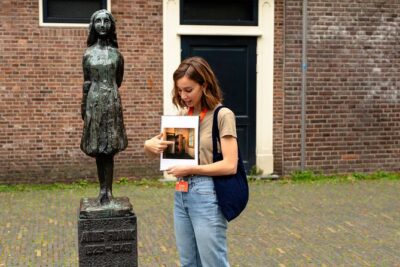
Anne Frank’s Story – Guided Walking Tour through Amsterdam
Read our review →
Jewish Quarter Walking Tour with Admission Tickets
Read our review →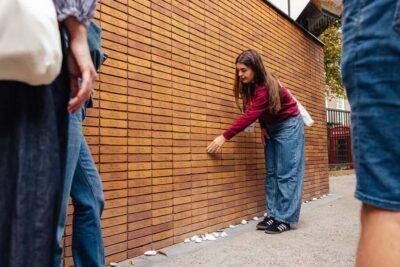
Anne Frank Guided Walking Tour in DE/EN/IT/ES
Read our review →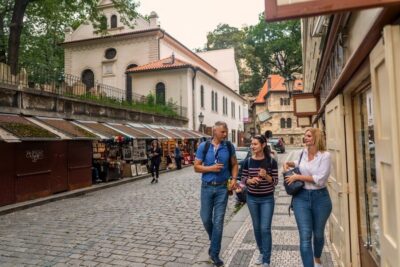
Old Town and Jewish Quarter Guided Walking Tour
Read our review →
Anne Frank Walking Tour Amsterdam Including Jewish Cultural Quarter
Read our review →
Anne Frank’s Last Walk & See Anne Frank House in Virtual Reality
Read our review →Browse the lists this tour appears in