
Review · FOOD WALKING TOURS
Rome: Trastevere & Campo de Fiori Street Food Walking Tour
Come hungry, leave with Roman tips. This 2.5-hour walk connects Trastevere’s local food shops with the market streets of Campo de’ Fiori, mixing generous tastings with stories about Rome, its neighborhoods, and the people who make the food. I especially like the small-group size, capped at 14, and the way the route includes both famous sights and ordinary places where locals eat.
The strongest part is the guide. Daniele, a Roman archaeologist, has been praised for his humor, tablet-based history lessons, and useful restaurant advice. Guides such as Alessandra, Leonardo, Fiammetta, and Caterina also receive high marks for warmth and enthusiasm. The main caution is practical: the tour is not suitable for vegans or people with gluten intolerance, and tastings can change with the season or local holidays.
The essentials at a glance
- Roman classics rather than generic snacks: Expect foods such as pizza, supplì, porchetta, sandwiches, maritozzo, and gelato, with the exact lineup subject to availability.
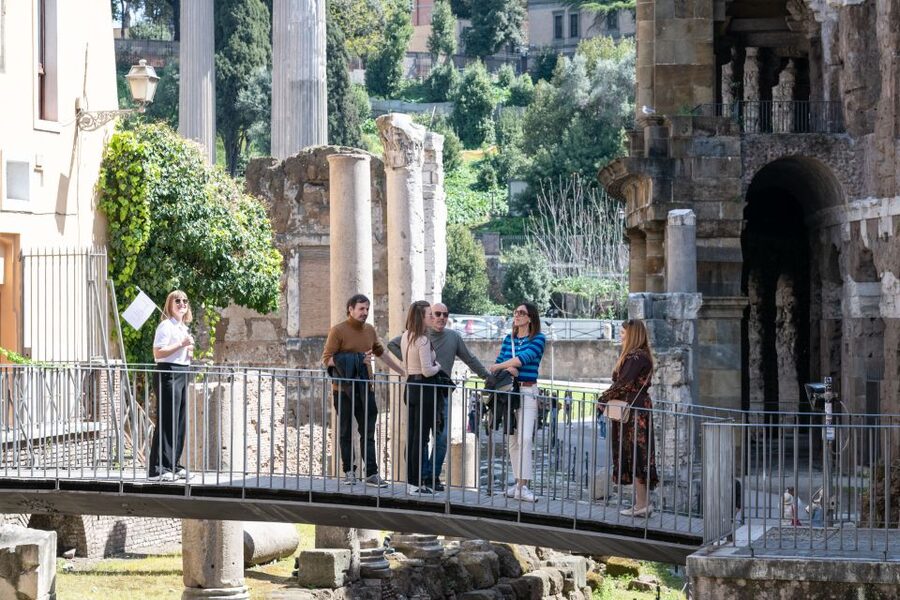
- Two historic neighborhoods in one walk: You move between Campo de’ Fiori and Trastevere, crossing the Tiber by Ponte Sisto.
- Santa Maria in Trastevere adds substance: The ancient Byzantine-style church gives the food walk a strong cultural stop.
- A generous meal for $51: Food is included, and many people find the portions large enough to replace a light meal.
- Small groups keep the tour personal: The maximum group size is 14, with private options also available.
- Best booked early in your Rome stay: Guides regularly offer restaurant and sightseeing suggestions that can shape the rest of your visit.
Starting beside the fountain in Piazza San Simeone
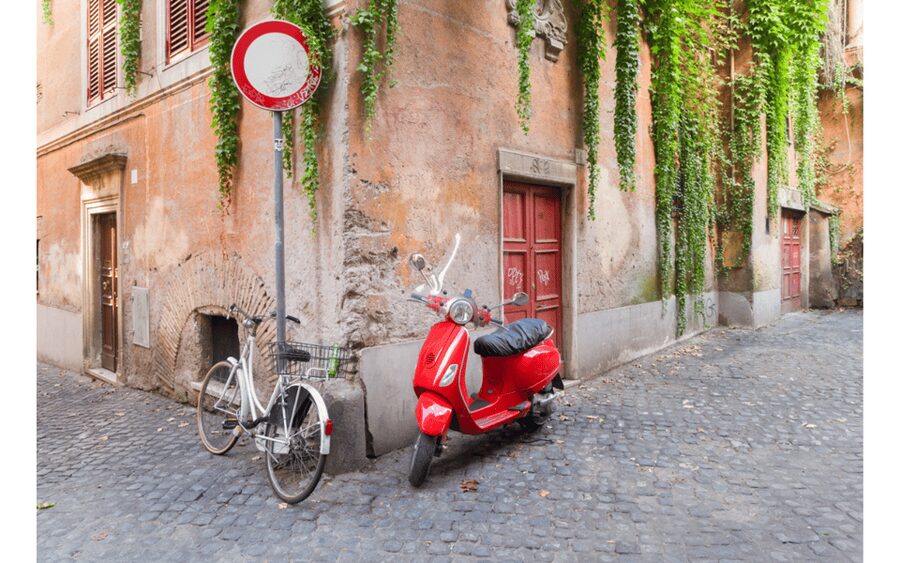
The meeting point is the fountain in the middle of Piazza San Simeone. This is a useful detail because the square is the kind of Roman meeting place where a precise landmark matters. Look for the guide next to the fountain rather than simply heading toward Trastevere and hoping to spot a group.
The walk begins near the historic center and passes the Chiostro del Bramante. You do not stop for a full visit, but the brief passage helps place the tour in Rome’s central web of churches, courtyards, and old lanes. From here, the group moves on foot to the first food stop.
This opening is not designed as a formal sightseeing lecture. It is a quick shift from meeting point to eating place, which suits the tour’s purpose. You begin learning how food fits into Roman life almost at once.
More Food Walking Tours in Italy
- Rome: Guided Food Walking Tour with Wine in Trastevere
★ 4.9 · 3,105 reviews - Rome: Trastevere Street Food Walking Tour with Local Expert
★ 4.8 · 1,784 reviews - Rome Food Tour in the Historic Centre with 8+ Food Tastings
★ 5.0 · 1,000 reviews
First tastings: Roman food with a local frame
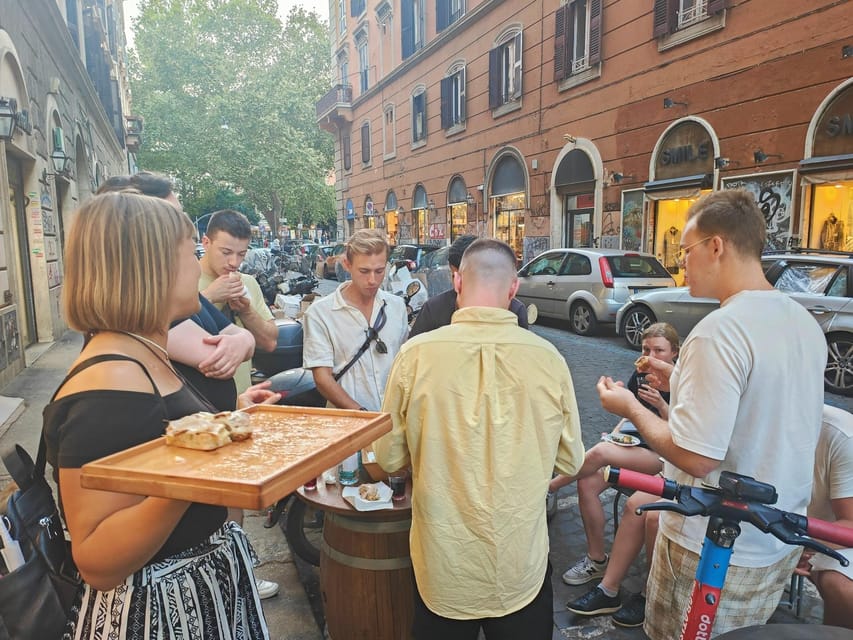
The first restaurant stop lasts about 15 minutes and focuses on street food and regional food. The supplied details identify pizza as one of the main Roman classics, including crunchy Roman-style pizza from a bakery with roots going back to 1870.
That kind of detail matters. Roman pizza by the slice is not simply a smaller version of a restaurant pizza. The texture, serving style, and quick stop at a bakery make it part of daily city life. You can expect the guide to explain what you are eating and why the food belongs to Rome, rather than handing you a sample with no context.
The next food stop is described as a secret stop, also lasting about 15 minutes. Supplì, the fried Roman rice ball, is one of the key foods associated with this part of the walk. It is a useful tasting because it gives you a different experience from pizza: crisp on the outside, warm and filling inside, and easy to eat while standing or walking.
The food is one reason this tour offers reasonable value at $51. You are not paying only for a list of landmarks. You are receiving several prepared tastings, a licensed guide, and a route that links food stops with neighborhood history. Portions have often been described as generous, so I would not schedule a large lunch immediately before the tour.
Campo de’ Fiori: a market stop with limits
After the first tastings, the group walks toward Campo de’ Fiori. The route includes about 10 minutes of walking before a 25-minute visit to the outdoor market. This is one of the clearest sightseeing sections of the tour.
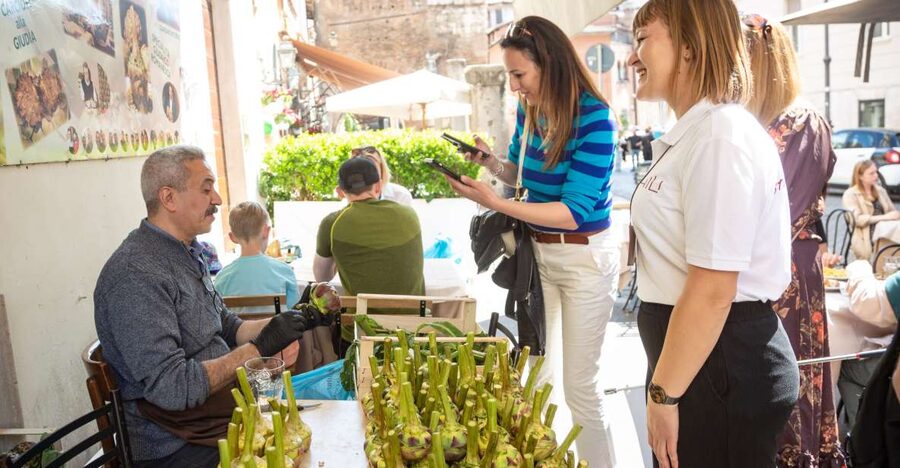
Campo de’ Fiori is one of Rome’s oldest outdoor markets, and the stop gives you time to look at the produce, food stalls, and working rhythm of the square. The guide can also point you toward places to buy or try handmade supplì. That is more useful than simply taking a quick photograph and moving on, especially if you want to understand how Romans shop and snack.
There is an important distinction here. This is a market visit within a food walk, not a dedicated market tour. You should expect a focused stop rather than a long inspection of every stall. The market can also change according to the season, so do not expect precisely the same selection on every departure.
From Campo de’ Fiori, the group passes Piazza Farnese. The stop is brief, about five minutes, but it adds another handsome central square to the route. These short passages keep the tour moving and prevent the experience from becoming a chain of indoor tastings.
Crossing the Tiber by Ponte Sisto
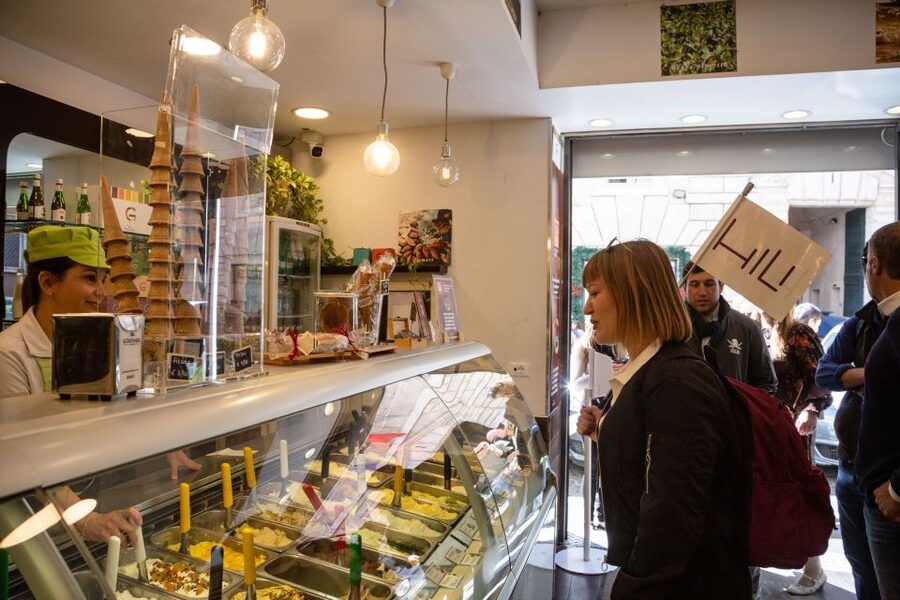
The walk to Ponte Sisto takes about 10 minutes. This is one of the route’s best connecting sections because the bridge offers scenic views and carries you from the Campo de’ Fiori side toward Trastevere.
Ponte Sisto also gives the tour a change of mood. You leave the market square and move across the Tiber, with the river acting as a natural divider between two parts of central Rome. It is a small moment, but it helps the geography make sense.
The route then passes Piazza Trilussa before another short walk. Piazza Trilussa is a lively meeting place at the edge of Trastevere, and it gives you a first look at the neighborhood’s social side. The tour does not treat the square as a long sightseeing stop. Instead, it uses the piazza as a way into the food and streets of Trastevere.
You should wear comfortable shoes. The walking is not presented as strenuous, but the tour combines many short stretches with standing at food stops, crossing streets, and moving through old urban paving. The experience works best if you are comfortable being on your feet for most of the 2.5 hours.
More Food Walking Tours in Rome
- Rome Trastevere Walking Food Tour
★ 4.8 · 97 reviews - Rome: Trastevere Food Walking Tour with Beer and Wine
★ 4.9 · 71 reviews
Santa Maria in Trastevere and the neighborhood’s older heart
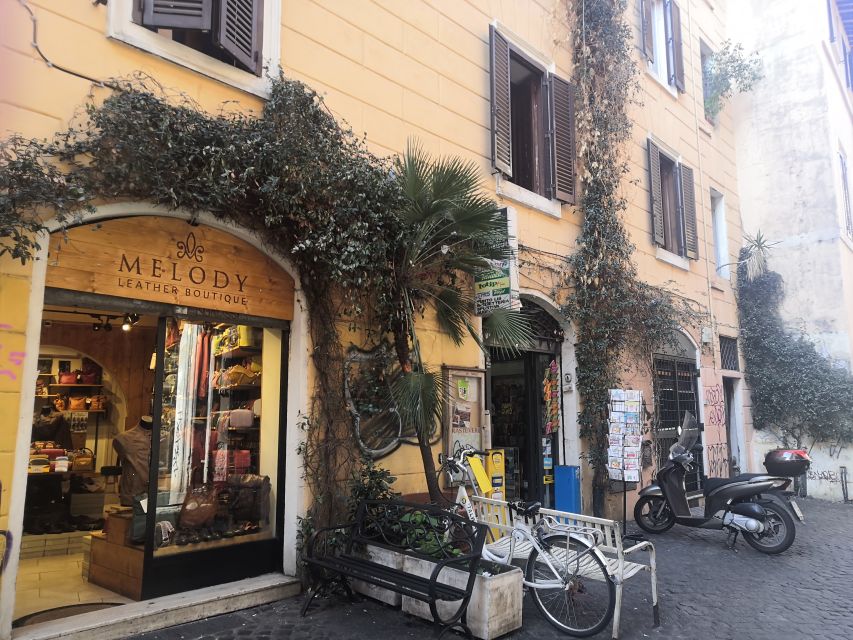
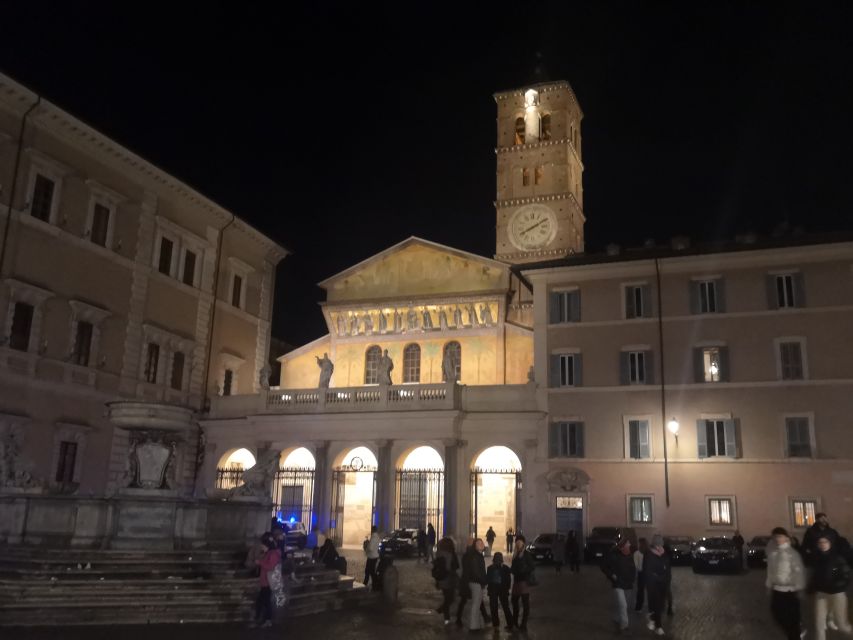
The tour explores the history of Santa Maria in Trastevere, an ancient Byzantine-style church. This is an important inclusion because the food stops gain meaning when you see the neighborhood as more than a restaurant district.
Trastevere is often treated as a place for dinner and nightlife, but the tour presents it as a long-standing Roman neighborhood with local shops, restaurants, wine stores, artisans, and familiar gathering places. The emphasis is on meeting the trasteverini, the people who have lived and worked in the area for generations.
The church itself gives the route a visual and historical anchor. Even if your main reason for booking is food, the stop helps explain why Trastevere feels different from the grand ceremonial center around the major monuments. You get a closer look at a neighborhood where religious buildings, small businesses, and everyday streets sit close together.
This is also where the guide matters most. Daniele’s background in archaeology has helped make the historical explanations especially memorable, while guides such as Fiammetta and Alessandra have been praised for connecting Roman food traditions with the city’s past. The best version of this tour is not a lecture followed by snacks. It is a conversation in which the church, street, and dish all belong to the same story.
The later food stop: sandwich, porchetta, and Roman variety
A second local restaurant stop lasts about 15 minutes. The advertised description mentions a traditional Roman sandwich, and food examples reported from recent departures include porchetta and mortadella. The exact offerings can change, so treat these as likely possibilities rather than a fixed menu.
This stop helps round out the tasting. Pizza and supplì show off Roman street-food staples, while a sandwich or porchetta introduces a more substantial, meat-based bite. Some people appreciate the variety; others may find the total amount of food surprisingly large for a walking tour.
That generosity is a repeated strength of the experience. One guide, Daniele, has been praised for keeping people eating while also explaining the city with humor. Leonardo has received similar praise for combining food with local stories and restaurant recommendations. The guides appear to understand that a food walk is partly about comfort and sociability, not just collecting small samples.
If you have dietary needs, contact the provider before booking. Vegetarian and other dietary options are supported, but the tour is specifically listed as unsuitable for vegans and people with gluten intolerance. Do not assume that a general dietary request will automatically fit the menu.
Finishing with gelato in Trastevere
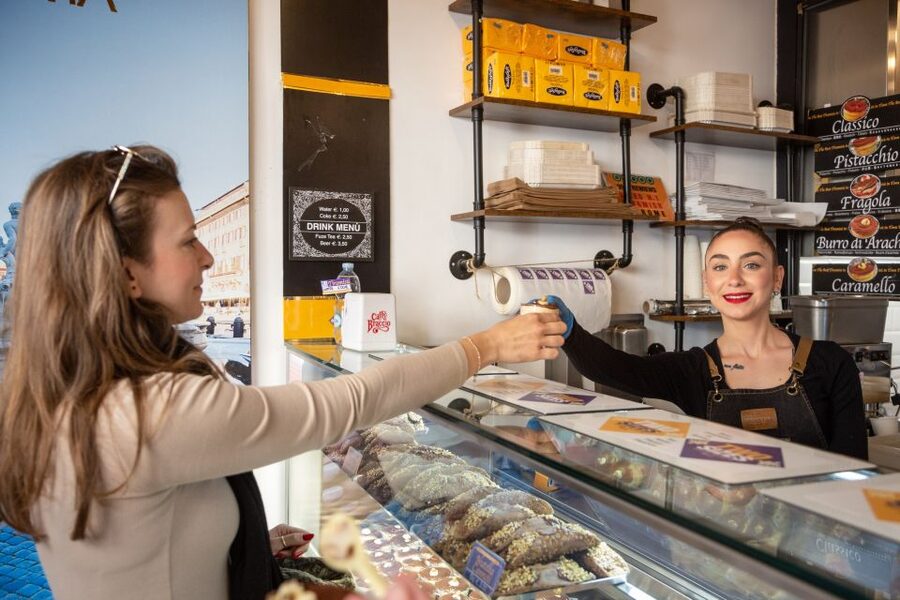
The final food stop is at Gelateria Regusto, where the tour ends with artisanal gelato. The tasting lasts about 15 minutes, followed by a short walk to Piazza di San Giovanni della Malva, the finishing point.
Ending with gelato is a smart choice. It gives you a sweet finish after the salty foods and makes the final stretch feel relaxed rather than rushed. The gelateria stop is also a chance to discuss what makes artisanal gelato different from the bright, piled-up displays aimed at passing tourists, though the exact explanation will depend on your guide.
The tour finishes at Piazza di San Giovanni della Malva, not back at the starting fountain. That matters when planning your day. The ending puts you in Trastevere, so you can continue with dinner, drinks, or an evening walk, but you should not expect a return transfer to Piazza San Simeone.
Drinks are not included in the stated price. Some departures may offer wine or another drink as an optional choice, but you should budget separately rather than counting on beverages as part of the package.
Why the guides make such a difference
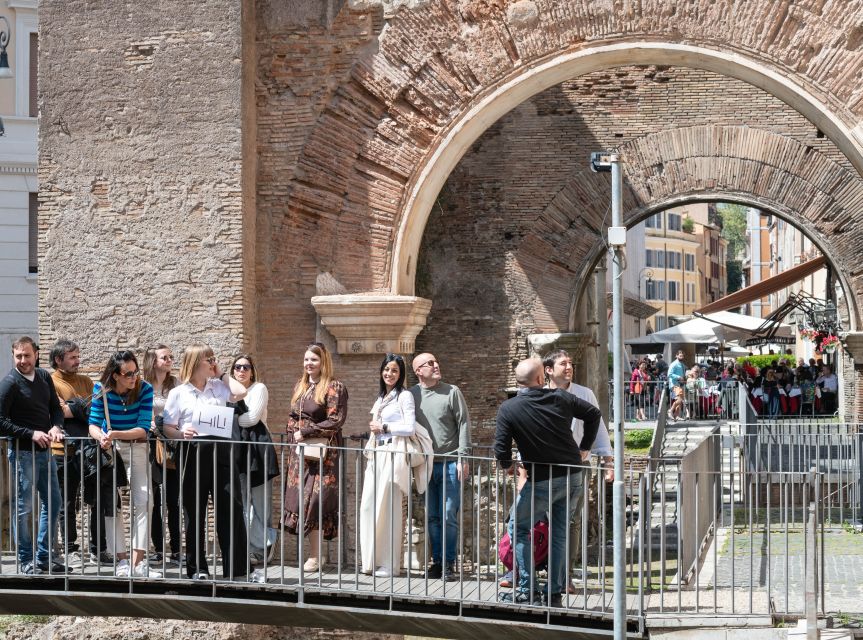
Food tours rise or fall with the person leading them, and this one has an unusually strong pattern of praise for its guides. Daniele is repeatedly described as funny, personal, and full of Roman pride. His archaeology background adds useful context, and he has used a tablet to show images and videos during the walk.
Leonardo is another name worth noting. He has been praised for remembering guests’ names, keeping children engaged, and recommending restaurants that people later chose for birthdays or additional meals. Fiammetta is described as warm and helpful, with practical suggestions for the rest of a Rome stay.
Alessandra and Caterina receive similar comments for making people feel included and encouraging questions. That is valuable in a small group, where a stiff guide can make the whole experience feel like a moving queue. Here, the guide’s personality appears to be a major part of the price.
You cannot choose a particular guide from the information provided, so it is best to view the names as examples of the standard people have experienced, not a guarantee for your departure. Still, the range of praised guides suggests that the quality is not tied to one individual alone.
Is $51 a fair price?
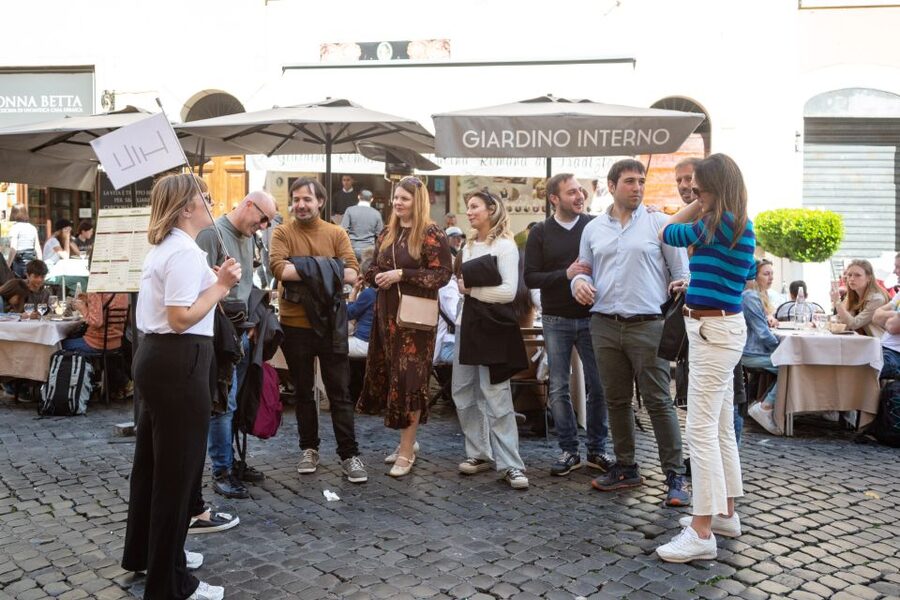
At $51 per person, the tour sits in a sensible range for a small-group Rome food experience. The price includes 2.5 hours, a licensed guide, and food at several stops. It does not include drinks.
The value improves if you arrive hungry. The food examples cover pizza, supplì, a sandwich or meat specialty, and gelato, with some departures also including porchetta, maritozzo, or mortadella. Several people have found the portions more generous than expected, so you may receive something closer to a light meal than a few decorative bites.
The price is less attractive if you mainly want a formal history tour or if you prefer to choose your own restaurants. You are paying for the guide’s route and food relationships, not for a sit-down meal or a full visit to each historic site.
The group limit of 14 helps justify the cost. You get a better chance to ask questions and hear the guide than you would in a large coach group. Private and small-group formats are available, but the price can depend on the selected option, so check the current booking details.
Who should book this Roman food walk?
I would recommend it to a first-time Rome visitor who wants to get oriented quickly. Booking it near the start of your stay makes sense because the guides offer restaurant suggestions and practical advice about what to do next. Several people have returned to places recommended during the tour, which is a good sign that the advice is useful rather than generic.
It also suits repeat visitors. The route goes beyond the most famous monuments, and the food gives you a reason to look at Trastevere and Campo de’ Fiori differently. Even if you have already seen the major sights, a local guide can add context to familiar streets.
Families can benefit as well. One guide was praised for connecting with young children, and the food format keeps the outing active. That said, children need to be comfortable walking, standing, and trying unfamiliar foods.
I would be cautious if you need a strict vegan or gluten-free menu. The tour does not suit those diets. Vegetarians and people with other dietary needs should notify the provider when booking and confirm what can be offered.
Booking and timing advice
The tour lasts 2.5 hours, but the schedule includes many short walks and tasting stops. Check the available starting times before you book because the experience may operate at different times on different days.
Food and the guide are included, but drinks are not. Tell the provider about allergies and dietary restrictions in advance, and remember that the itinerary and tastings can change with seasonal availability or local holidays.
Cancellation is flexible up to 24 hours before the experience for a full refund, and a reserve-now, pay-later option is available. Those policies are useful if your Rome schedule is still shifting, but they should not replace checking the exact time and meeting point before the day begins.
FAQ
Where does the Rome street food tour begin?
The guide meets you next to the fountain in the middle of Piazza San Simeone.
Where does the tour finish?
The walk ends at Piazza di San Giovanni della Malva in Trastevere.
How long does the tour last?
The experience lasts 2.5 hours.
What food is included?
Food tastings are included. The advertised examples include Roman-style pizza, supplì, a traditional Roman sandwich, gelato, and other regional specialties. Some departures may also include foods such as porchetta, maritozzo, or mortadella.
Are drinks included?
No. Drinks are not included in the stated price.
Can vegans or people with gluten intolerance join?
The tour is not suitable for vegans or people with gluten intolerance. Vegetarian and other dietary options may be supported, but you must inform the provider about allergies or dietary needs when booking.
Should you book it?
Book this tour if you want a food-led introduction to Rome with enough history to give the neighborhoods meaning. The combination of generous tastings, Trastevere streets, Campo de’ Fiori market time, Ponte Sisto views, and strong local guides makes $51 a fair price for many visitors.
I would book it early in your stay, arrive hungry, and wear good walking shoes. Skip it if you need a vegan or gluten-free menu, dislike shared tastings, or want a formal monument tour instead. For everyone else, this looks like a practical way to find Roman food you might otherwise miss, while picking up restaurant advice you can use for the rest of your visit.
More Street Food Walking Tours in Rome
- Naples: Street Food Walking Tour with Local Guide
★ 4.9 · 4,976 reviews - Private Street Food Evening Walking Tour in Ho Chi Minh City
★ 5.0 · 3,175 reviews - [HOT] Hanoi Old Quarter Walking Street Food – Small Group Tour
★ 5.0 · 2,163 reviews - Palermo Original Street Food Walking Tour by Streaty
★ 5.0 · 2,105 reviews
Just added around Rome
- Rome: Colosseum and Ancient Rome Guided Walking Tour★ 4.5 · 95 reviews
- Rome: Trevi Fountain, Spanish Steps & Pantheon Walking Tour★ 4.6 · 336 reviews
- Rome: Guided Walking Tour and Pantheon Priority Entry Ticket★ 4.3 · 317 reviews
- Rome Walking Tour: Pantheon, Trevi, Navona & Hidden Gems★ 4.8 · 501 reviews
- Rome: Trastevere Food Walking Tour with Beer and Wine★ 4.9 · 71 reviews
- Rome Trastevere Walking Food Tour★ 4.8 · 97 reviews
- Rome: Underground Trastevere Guided Walking Tour★ 4.8 · 87 reviews
- Rome: Relics from the Passion of the Christ Walking Tour★ 4.9 · 84 reviews
Food Walking Tours, compared.
Reykjavik Food Walk – Local Foodie Adventure in Iceland
Read our review →

New Orleans Food Walking Tour of the French Quarter with Small-Group Option
Read our review →

Authentic Parisian Gourmet Food Tour with 10 Local Dishes & Wines
Read our review →
Tapas Walking Tour with Food, Wine, and History
Read our review →
Browse the lists this tour appears in