
Review · INDONESIA WALKING TOURS
Sidemen Trekking: A Walk from a Different Perspective
Bali looks different from the rice fields. This $13 Sidemen walk links a traditional market, village lanes, narrow field paths, temples, irrigation channels, and broad views toward Mount Agung. I like the small-group setting, limited to 10 people, and the chance to see farming as part of daily life rather than as a staged photo stop. I also like that the route is one-way, so you keep seeing new scenery instead of retracing your steps. The main drawback is the footing: narrow paths can be slippery, uneven, and demanding if your balance or fitness is limited.
This is a gentle but active outing, not a mountain climb. I would choose it for a closer look at Sidemen’s local life, especially if Ubud’s rice terraces felt too polished or busy. Guides such as Adidas, Adi, Daria, Darya, Wayan, Komang, and Gede have been praised for their clear English, humor, local knowledge, and care with photo stops. Good shoes are essential, and you need to plan your ride from the finish point.
The best reasons to choose this walk
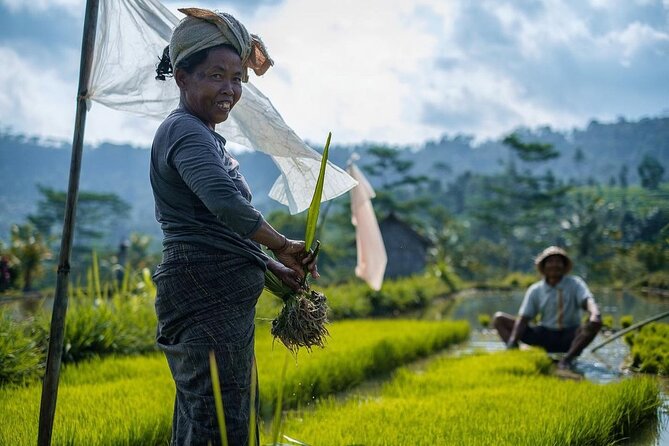
- A working countryside route: You pass farmers plowing, planting, cultivating, and harvesting rather than simply viewing fields from a road.
- A one-way adventure: The route moves from Pasar Sidemen toward Ogang Village, with changing scenery and no need to repeat the same path.
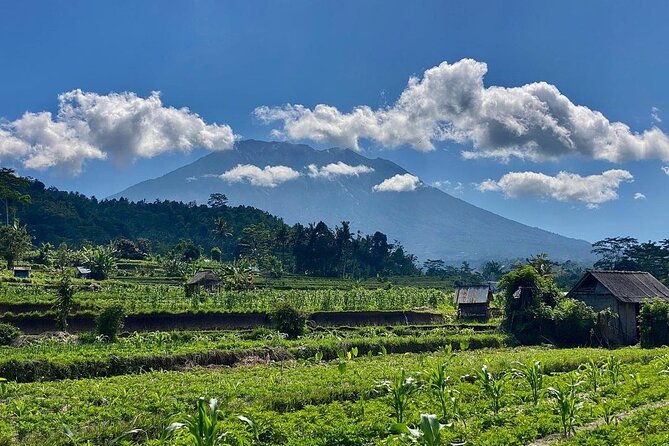
- Mount Agung views: Several viewpoints look across the rice terraces toward Bali’s famous volcano.
- A local guide matters: The paths through the fields are not always obvious, and guides explain crops, irrigation, temples, and village customs along the way.
- The Yellow Bridge crossing: Jembatan Kuning Tukad Yeh Unda adds a short, memorable crossing to the route.
- Strong value at $13: Two hours with a guide and bottled water costs little compared with many Bali activities, though transport is extra.
Starting at Pasar Sidemen and Upa Boga
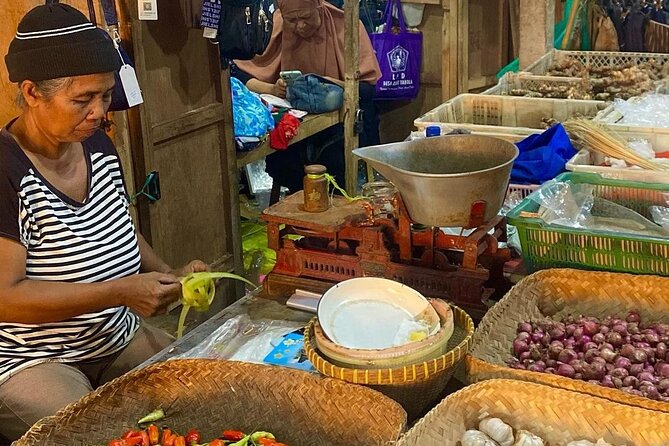
The meeting point is on Sidemen’s main road at Pasar Sidemen, the traditional market. Look for the shop marked Upa Boga, where your guide comes to meet you.
If you can arrange an early start, the market adds useful context before the walk. Pasar Sidemen operates from about 5:00 AM to 10:00 AM, with the guided visit lasting roughly 10 minutes. This is a working food market, not a large sightseeing attraction, so keep your expectations sensible. You are seeing a place used by local people for ordinary shopping before moving into the countryside.
The market timing matters. A later tour may skip the market because it has already closed. If this stop interests you, book a morning departure and arrive ready to begin on foot.
Transport to the start is not included. If you are staying in Sidemen, arrange a ride through your hotel. The operator specifically advises against relying on Grab for hotel pickup because some Sidemen hotels do not allow Grab drivers to collect passengers, though drop-off is permitted. This is a small detail that can save you a frustrating start.
A few more walks around the world worth a look
- Self guided Hike Trail to Nature Walk & Waterfall
★ 4.5 · 283 reviews - Tenerife: Underwater Walk – Sea Trek Experience
★ 5.0 · 237 reviews - Los Angeles: Griffith Observatory Guided Hike/Walking Tour
★ 4.9 · 199 reviews
Leaving the market for the rice fields
From the market, the route heads uphill and away from the main road. You move through the village before reaching the rice paddies, with the guide pointing out local plants, homes, temples, and the changing work of the fields.
The route is designed to keep moving forward. You do not simply walk to one terrace, take a picture, and turn back. Instead, the scenery changes from village streets to plantations, irrigation channels, field paths, and wider views. That variety is the main reason this short walk feels more substantial than its two-hour length suggests.
You should not expect a fast pace. The guide may stop to explain farming methods, answer questions, or help with pictures. Previous outings led by guides including Adidas and Daria have been praised for a relaxed pace and a friendly sense of humor. That style suits Sidemen. The point is to notice how the fields work, not to race through them.
Following the irrigation route toward Mount Agung
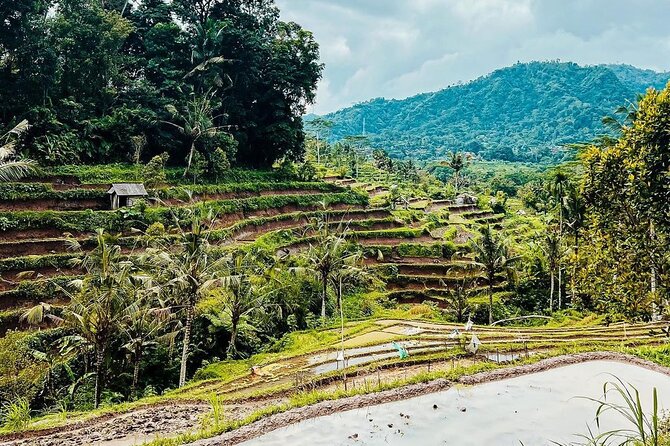
The walk follows water from the local irrigation system, known here as Subak, including the Subak of Ogang. This is one of the most useful parts of the experience because it shows how the rice fields depend on planned water channels rather than existing as isolated green terraces.
The guide can explain how water moves through the area and how farming is tied to the villages around it. You also get a better sense of why the rice terraces look the way they do. The fields are not just scenery. They are working land, shaped by water, timing, labor, and local customs.
As you gain height, there are viewpoints toward the terraces and Mount Agung. The volcano may be visible depending on weather and cloud cover, so do not treat the view as guaranteed. When conditions are clear, it gives the walk a strong focal point and helps you understand the scale of the Sidemen valley.
Bring sunscreen, a hat, and sunglasses. There is no promise of shade along the route, and even a short walk through open fields can feel hot.
Crossing Jembatan Kuning Tukad Yeh Unda

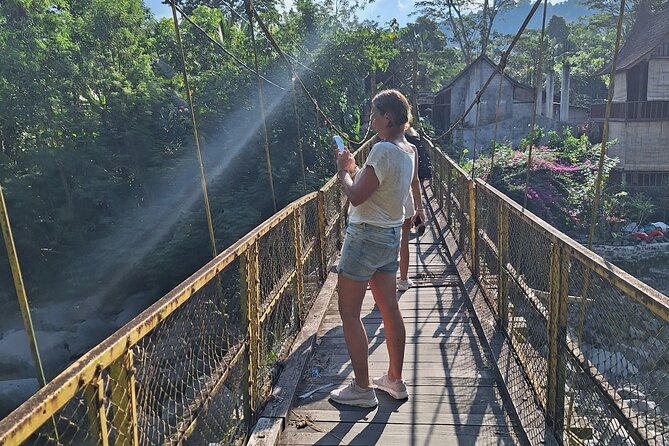
The route includes Jembatan Kuning Tukad Yeh Unda, a yellow wooden bridge used by both people and motorbikes. It is a brief stop, around 10 minutes, but it adds a different kind of interest to the walk.
The bridge may feel slightly shaky underfoot. That is part of its character, but it also means you should cross carefully and follow the guide’s lead. It is not a polished attraction built for sightseeing. It is part of the local route, and that is precisely why it feels memorable.
This is another point where sturdy footwear helps. Sandals and flip flops are not allowed for the activity, and that rule makes sense once the walk leaves paved streets.
Same streets, a different way to see them:
- Magical London: Harry Potter Guided Walking Tour
★ 4.7 · 22,044 reviews - Reykjavik Food Walk – Local Foodie Adventure in Iceland
★ 5.0 · 18,952 reviews - History and Hauntings of Salem Guided Walking Tour
★ 5.0 · 14,564 reviews - New Orleans Premier Ghost, Voodoo and Vampire Walking Tour
★ 4.5 · 12,856 reviews
Dukuh Village, temples, and ordinary village life
After the bridge, the path continues through Dukuh Village. You walk up and down streets, pass local homes and a temple used for prayer, and see how village life fits around the agricultural calendar.
The temple is not presented as a grand monument. Its value is in seeing a place used by local villagers. Your guide can add context about Balinese culture and daily customs, while also pointing out the difference between passing through a village respectfully and treating it like a photo set.
The village section also breaks up the rice-field walking. You get a change in surface and pace, though the route still includes some uphill and downhill sections. If you have limited fitness, this is where the combination of slopes, heat, and uneven ground may become tiring.
Guides have been praised for more than facts. Adidas is often described as funny and good-natured, while Daria and Darya have been praised for patience and care. Wayan has been noted for friendly guiding through the fields, and Komang for explaining rice farming in a clear way. Guide assignments can change, but the experience depends heavily on having someone who knows the local paths.
Babakan Dukuh Rice Terrace and the final stretch
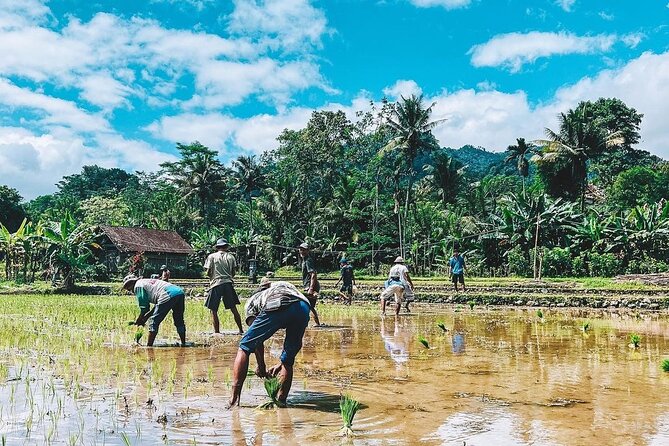
The longest section is at Babakan Dukuh Rice Terrace, with about 45 minutes of walking, sightseeing, and photo stops. This is the visual centerpiece of the route.
Here you move along narrow edges between the paddies and through different types of plantation. The paths can be slippery, especially after rain. One useful tip from the experience is to wear shoes with good grip and consider long trousers, since high grass and insects can be part of the walk. Red ants have been encountered along the way, so this is not a manicured garden stroll.
The reward is close contact with the farming scene. Depending on the season, you may see people plowing, preparing soil, planting seeds, tending crops, or harvesting. The activity does not promise one specific stage of the rice cycle, but the guide explains what is happening when you pass through.
This is also where a guide provides real value. The narrow field paths may not be easy to find alone, and a local guide can show you where walking is appropriate while helping the group move safely. Several guides also take pictures at scenic points, which is useful if you are traveling as a couple or group and want more than self-timer photographs.
Rain changes the experience but does not necessarily ruin it. The paths become more slippery, and a raincoat is worth carrying. The views may be softer or less open, particularly if clouds cover Mount Agung, but the fields and village route still provide plenty to notice.
Finishing at Warung Ume Anyar
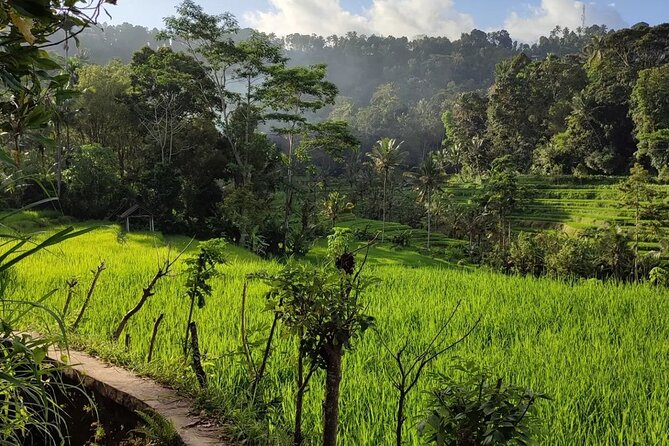
The walk ends at Warung Ume Anyar in Ogang Village. This is not the same place as the market, and that matters for your transport plans.
Arrange a driver before you start. The suggested pickup time is around two to two and a half hours after the tour begins. You may also walk back to the starting area if needed, but the return is about 3 kilometers, or 30 to 40 minutes along the main road. After two hours of walking, most people will prefer a prearranged ride.
The end point gives you a simple choice. You can continue your day from Ogang Village with your driver, or organize a separate return to your hotel. Hotel pickup and drop-off are not included in the $13 price, so factor that into your budget.
What the $13 price really buys you
At $13 per person, this is one of the better-value guided walks in Bali. You receive about two hours with an English-speaking guide, a small group of no more than 10 people, and bottled water. The real value lies in access to paths and village areas that are difficult to navigate confidently without local help.
The price does not include transport, meals, or hotel transfers. It also does not turn the walk into a private tour. If you want the guide’s full attention, ask about availability for a private outing, as some people have arranged private walks with children.
I would not book this for a polished sightseeing experience with fixed photo sets and smooth paving. I would book it because it provides a modest, direct way to see how Sidemen works. The price is fair even if the market visit is not available, and especially good if you value local explanation over a long list of attractions.
Free cancellation is available up to 24 hours before the start, and you can reserve now and pay later. Those terms help if your Bali plans are still shifting, but the practical issue remains the same: arrange your ride from Ogang Village.
Who will enjoy Sidemen Trekking most

I would recommend this walk to you if you want:
- A calm alternative to busier Bali sightseeing areas
- Rice terraces viewed from inside the farming area
- Direct contact with village roads, temples, irrigation channels, and plantations
- A short activity that fits into a morning or afternoon
- A guide who can explain local crops and farming methods
- A small group rather than a large coach excursion
Families can enjoy it, but the operator lists children under 5 as unsuitable. One family completed the route with a 6-year-old, with the guide offering extra care, but you should still judge your child’s balance and stamina carefully.
The walk is not recommended for pregnant women, people with heart problems, people over 60, or people with a low level of fitness. Those limits are worth taking seriously because the route includes slopes, narrow field edges, and slippery surfaces.
What to wear and carry
Use hiking shoes or sports shoes with a firm, non-slip sole. Do not wear sandals or flip flops.
Bring:
- Sunscreen
- Sunglasses
- A hat
- Water beyond the included bottle if you usually drink a lot while walking
- A raincoat if the forecast looks uncertain
- Long trousers if you prefer more protection from high grass and insects
The walk is only two hours, but the ground makes footwear more important than the distance suggests. You will be far better off in practical shoes than in something chosen for photographs.
Should you book this Sidemen walk?
Book it if you want to see working rice fields, local village life, and irrigation systems with a guide who can explain what you are seeing. At $13, it offers strong value, especially for anyone who finds standard Bali sightseeing too crowded or too polished.
Skip it if you need flat paths, guaranteed dry weather, hotel transport, or a completely predictable route. The walk is short but not effortless, and the slippery field edges are part of the deal.
For most reasonably fit visitors staying in Sidemen, I would choose the morning session. You may catch the traditional market before it closes, enjoy cooler conditions, and finish in time for the rest of your day. Plan your pickup from Warung Ume Anyar before you leave, wear proper shoes, and let the village route do the work.
FAQ
How long does the Sidemen Trekking experience last?
The guided walk lasts about two hours. Allow extra time for transport to the meeting point and pickup from the finish point.
Where does the trek begin?
It begins at Pasar Sidemen on the main road. Look for the shop with the sign Upa Boga, where the guide will meet you.
Where does the trek finish?
The route ends at Warung Ume Anyar Restaurant in Ogang Village.
Is hotel pickup and drop-off included?
No. Hotel pickup and drop-off are not included. Arrange transport to Pasar Sidemen and a pickup from Warung Ume Anyar in advance.
Can I visit the traditional market during the tour?
Yes, if you book a morning session. Pasar Sidemen is open from 5:00 AM to 10:00 AM, and the market portion takes about 10 minutes.
What should I wear for the walk?
Wear hiking shoes or sports shoes with good grip. Sandals and flip flops are not allowed. Bring sunscreen, sunglasses, and a hat, and consider a raincoat and long trousers.
Just added around the world
- Walking Tour of Boston’s Freedom Trail★ 4.5 · 77 reviews
- Downtown Freedom Trail Walking Tour – History & Architecture★ 4.5 · 194 reviews
- Boston Seafood Lovers Food and History Walking Tour★ 5.0 · 208 reviews
- Boston “Death and Dying” Walking Ghost Tour★ 4.5 · 223 reviews
- Boston Food of the North End Private Walking Tour★ 5.0 · 174 reviews
- Boston Movie Mile Walking Tour★ 4.5 · 119 reviews
- 1 If By Land Walking Tours★ 5.0 · 95 reviews
- Boston History and Freedom Trail Private Walking Tour★ 5.0 · 117 reviews
Indonesia Walking Tours, compared.
Tetebatu Walking Tour – Rice Terraces, Waterfall & Monkey Forest
Read our review →
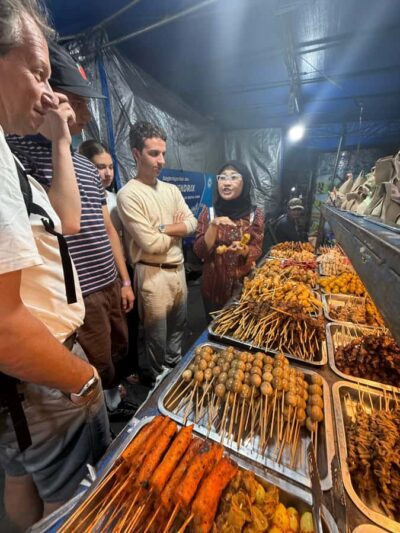
Small-Group Walking and Food Tour by Night in Yogyakarta
Read our review →
Jakarta Walking Tour: Explore Jakarta as the Locals do
Read our review →Browse the lists this tour appears in