
Review · SINGAPORE WALKING TOURS
Singapore: Chinatown, Little India, Arab Street Walking Tour
Three neighborhoods, one lively morning. This four-hour Singapore walking tour gives you a useful first look at the city’s Chinese, Indian, Malay, and Arab influences, with a licensed English-speaking guide to explain what you are seeing. I especially like the small groups, capped at 10 people, and the mix of street scenes, temples, murals, architecture, and local food advice.
I also like that the tour uses the MRT between districts instead of keeping you on foot for the entire route. Guides such as Priscilla, Chris, Jolynn, Jeremy, and Quek have been praised for explaining Singapore’s past and present in clear, engaging ways. The main drawback is simple: four hours in Singapore’s heat is a serious walk, and you pay your own MRT fares, food, drinks, and any attraction tickets.
What makes this tour worth your time
- Three cultural districts in four hours: Chinatown, Little India, and Arab Street give you a quick but meaningful introduction to Singapore’s communities.
- A small group of up to 10 people: This makes it easier to ask questions, hear the guide, and adjust the pace when possible.
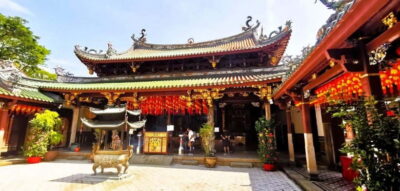
- Buddha Tooth Relic Temple: The tour begins with a 30-minute guided visit to one of Chinatown’s best-known religious landmarks.
- Street art and hidden lanes: Haji Lane, Arab Street, and Chinatown offer colorful walls, old shophouses, boutiques, and good photo stops.
- Practical food advice: Your guide can point you toward local restaurants, bars, snacks, and dishes to try later.
- A useful first-day orientation: The route helps you understand Singapore’s districts and gives you tips for exploring on your own afterward.
Starting at Chinatown Point
The meeting point is outside Starbucks at Chinatown Point Mall. This is a practical place to begin because it is easy to reach by MRT and gives the group a clear indoor landmark.
Arrive early. The tour starts promptly, and it will not be extended for late arrivals. There are no refunds for latecomers or no-shows, so allow extra time if you are unfamiliar with Singapore’s MRT system.
From the start, expect a walking tour rather than a coach excursion with occasional stops. You will spend most of the four hours outdoors, with public transport used to connect the districts. Wear shoes you can walk in for several hours, bring water, and carry an umbrella. Singapore can be hot, humid, and rainy on the same day.
A few more walks around the world worth a look
- Magical London: Harry Potter Guided Walking Tour
★ 4.7 · 22,044 reviews - Reykjavik Food Walk – Local Foodie Adventure in Iceland
★ 5.0 · 18,952 reviews - History and Hauntings of Salem Guided Walking Tour
★ 5.0 · 14,564 reviews
Buddha Tooth Relic Temple: a strong opening stop
The first major stop is Buddha Tooth Relic Temple, with about 30 minutes of guided time. Its elaborate design and religious importance make it a good place to begin learning about Chinatown beyond its food stalls and souvenir shops.
Your guide can provide context about Buddhist traditions, the Chinese community, and the role religious buildings have played in Singapore. This is also a useful stop for visitors who want more than photographs. You get a chance to understand how faith, migration, and neighborhood life connect.
Dress respectfully when entering religious sites. The tour information does not promise a full formal temple tour in every room, so think of this as an introduction rather than an extended religious lecture.
Chinatown beyond the main street
The Chinatown portion lasts about an hour, making it the longest district visit on the route. You can expect a blend of old shophouses, markets, food stalls, religious buildings, narrow lanes, and colorful murals.
This is where the guide’s local knowledge matters most. A good guide can point out details you might walk past alone, explain how the area developed, and connect older buildings with Singapore’s modern city life. Several guides, including Chris, Priscilla, Jolynn, and Quek, have been praised for answering questions and showing places that are easy to miss.
You should also treat this section as a food briefing. Food and drinks are not included, but the guide can suggest places to return to later. That arrangement is sensible: you are free to choose what suits your appetite and budget rather than being pushed into a fixed meal.
One useful extra possibility has appeared on some tours: a paid visit to a preserved Chinatown house showing how new immigrants once lived. This is not included in the basic price, so ask your guide about availability and cost if that kind of social history interests you.
Moving by MRT between districts
The MRT is part of the experience, not just a way to save time. You pay your own subway fares, but the guide helps you navigate the system and can explain how it works.
That is valuable during a short Singapore stay. After the tour, you will have a better sense of how to move between central districts without relying on taxis. Priscilla was especially praised for explaining the MRT clearly, while another guide helped guests find the correct train back to their hotel.
Still, remember that station access adds more steps, stairs, and walking. The tour is not a low-effort sightseeing option. If heat or mobility is a concern, the public transport sections will not remove the physical demands.
Same streets, a different way to see them:
- New Orleans Premier Ghost, Voodoo and Vampire Walking Tour
★ 4.5 · 12,856 reviews - Amsterdam Anne Frank: Small-Group Walking Tour & Local Guide
★ 4.8 · 12,789 reviews - Edinburgh: Harry Potter Magical Guided Walking Tour
★ 4.8 · 11,944 reviews - Edinburgh Castle: Guided Walking Tour with Entry Ticket
★ 4.7 · 11,699 reviews
Little India in 45 minutes
Little India is scheduled for about 45 minutes. The district brings a different mood and visual rhythm, with colorful fabrics, sari shops, spice aromas, henna art, religious sites, and lively storefronts.
The value here is comparison. Rather than seeing Singapore as one polished business center, you get a clearer sense of how different communities have shaped the city. Guides explain customs, food, religion, migration, and daily life, helping you understand the district instead of simply photographing it.
Forty-five minutes is enough for an introduction, but not enough for a complete exploration. If you love Indian food, shopping, or religious architecture, make a note of places you want to revisit. The guide’s suggestions can help you decide where to spend more time later.
The pace may feel brisk. One guide, Jeremy, was praised for encouraging questions, while Ka Vee was careful about shade, toilets, and refreshment stops. That kind of attentiveness matters in Little India, especially on a hot afternoon.
Arab Street, Kampong Glam, and Haji Lane
The Arab Street section lasts about 30 minutes, followed by around 20 minutes on Haji Lane. Together, these stops introduce you to the Kampong Glam area, with Middle Eastern flavors, boutiques, murals, street art, and colorful shopfronts.
Arab Street offers a chance to see a different side of Singapore’s cultural mix. Haji Lane is more compact and photo-friendly, with painted walls and independent-looking shops. The two areas work well together: Arab Street provides cultural and historical context, while Haji Lane gives you time to enjoy the visual details.
This is another section where expectations matter. You will not have hours for shopping, a long meal, or a relaxed bar visit. The guide points out places worth returning to, but you will need to come back independently if you want to browse properly.
The tour also includes a visit to Parkview Square, often called the Batman Building because of its bold art deco appearance. Its dramatic architecture makes a memorable contrast with the low-rise shophouses and narrow lanes visited elsewhere.
The guides are the heart of the experience
The tour uses different guides, so the exact personality and emphasis will vary. The strongest praise has gone to guides who combine facts with care: Chris, Priscilla, Jolynn, Quek, Tim, Jeremy, Ka Vee, and others have been singled out for clear explanations, friendly manners, and attention to group comfort.
You should expect stories about Singapore’s cultural groups, religious practices, architecture, food, immigration, and modern daily life. The best guides also leave room for questions instead of rushing through a speech.
The group size helps here. With a maximum of 10 people, you have a better chance of hearing the guide in crowded streets and asking for restaurant advice. Some departures may be smaller, and one guide was able to adapt the route when only two people joined. That flexibility is a benefit, but it should not be treated as guaranteed on every departure.
What the walking is really like
The tour covers four hours, but the total effort is more than the timetable suggests. There are district walks, station transfers, standing during explanations, and outdoor exposure. Several people found the tour comfortable with breaks, while others stressed the need for proper shoes and water.
I would choose an early start if you have the option. Morning heat is generally easier to manage, and starting early may help you avoid the worst of the humidity. The tour runs rain or shine, so bring an umbrella and accept that weather can affect comfort.
The activity is not suitable for wheelchair users or people with mobility impairments. It is also listed as unsuitable for people over 70 and people over 95, which is an unusually specific restriction. If you are older but fit, contact the provider before booking rather than assuming the walking will be manageable.
Price, inclusions, and overall value
At $53 per person, the tour is not the cheapest way to see these neighborhoods. You could visit Chinatown, Little India, Arab Street, and Haji Lane independently using the MRT and free walks.
The price becomes easier to justify if you want explanations, a ready-made route, and local advice without spending time planning. A guide can connect religious buildings, food traditions, migration, architecture, and present-day life in a way that is difficult to reproduce from a map.
The included service is the English-speaking licensed guide. You pay separately for MRT fares, food, drinks, personal expenses, hotel transfers, and attraction tickets. Read that carefully before booking. The tour is best value for a first visit, particularly if you have only a few days and want to get your bearings quickly.
Food lovers should also see the cost as a starting point rather than a complete food tour. You receive suggestions and local direction, but you still choose and pay for what you eat.
Who should book this walking tour?
I would recommend it to first-time visitors, culture-focused sightseers, solo travelers who want company, and couples or families with good walking stamina. It is especially useful early in a Singapore trip because the guide can help you plan later visits and understand the MRT.
You will get the most from it if you enjoy questions, street photography, local food ideas, and stories about how communities share one city. It also suits people who want more than Singapore’s polished central attractions.
I would skip it if you dislike group tours, struggle with heat, need a slow pace, or want long visits inside each neighborhood. Four hours gives you a broad introduction, not a leisurely deep exploration of every district.
Final verdict: a smart first look at Singapore
Book this tour if you want a well-organized introduction to three culturally distinct parts of Singapore and appreciate a guide who can explain what you are seeing. The combination of Chinatown, Little India, Arab Street, Haji Lane, Parkview Square, and MRT travel gives you a useful sense of the city’s variety.
Just prepare properly. Bring water, wear good shoes, arrive early, and budget for transport and food. If you do that, the $53 price buys more than a list of sights: it gives you context, practical orientation, and a set of places to revisit at your own pace.
FAQ
How long does the Singapore cultural walking tour last?
The tour lasts four hours.
Where does the tour begin?
It begins at the entrance of Starbucks at Chinatown Point Mall.
Which neighborhoods does the tour visit?
The route covers Chinatown, Little India, Arab Street, and Haji Lane.
Is the MRT included in the tour price?
No. You use local MRT transportation during the tour, but you pay the subway fares yourself.
Is food included?
No. Food and drinks are not included, though the guide can provide suggestions for local restaurants, bars, and foods to try.
What language is the tour conducted in?
The tour is conducted in English by a licensed English-speaking guide.
How many people can join the group?
The group has a maximum of 10 participants.
What should I bring?
Bring comfortable walking shoes, water, and an umbrella.
Does the tour operate in rainy weather?
Yes. The tour operates rain or shine.
Just added around the world
- Walking Tour of Boston’s Freedom Trail★ 4.5 · 77 reviews
- Downtown Freedom Trail Walking Tour – History & Architecture★ 4.5 · 194 reviews
- Boston “Death and Dying” Walking Ghost Tour★ 4.5 · 223 reviews
- Boston Food of the North End Private Walking Tour★ 5.0 · 174 reviews
- Boston Seafood Lovers Food and History Walking Tour★ 5.0 · 208 reviews
- Boston Movie Mile Walking Tour★ 4.5 · 119 reviews
- 1 If By Land Walking Tours★ 5.0 · 95 reviews
- Boston History and Freedom Trail Private Walking Tour★ 5.0 · 117 reviews
Singapore Walking Tours, compared.
Chinatown Hawker Market Food Tour with 7 Food Tastings
Read our review →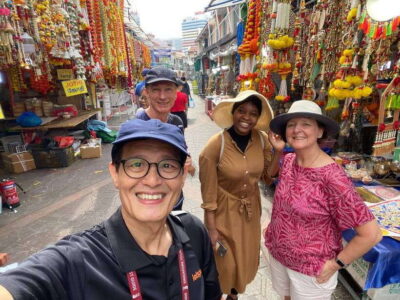
Splendour of Colonial Singapore Walking Tour with Lunch
Read our review →Browse the lists this tour appears in