
Review · FOOD WALKING TOURS
Split: Food Tasting Walking Tour
Come hungry, leave better oriented. This two-hour walk mixes Dalmatian food with the streets of Diocletian’s Palace, so you get more than a string of snacks. I like the focus on everyday local tastes, from sugared almonds and Soparnik to prosciutto and salted anchovies. I also like the access to Split’s Green Market and Fish Market, places where the city’s food culture is more real than anything served behind a tourist menu.
The main consideration is that the advertised glass of local wine may no longer be part of the experience. Recent tour details list food tastings but not wine, and one guest specifically noted its absence. At $64 per person, the price is fair if you value a small group, a guide, and many samples, but you should confirm the current tasting list before booking.
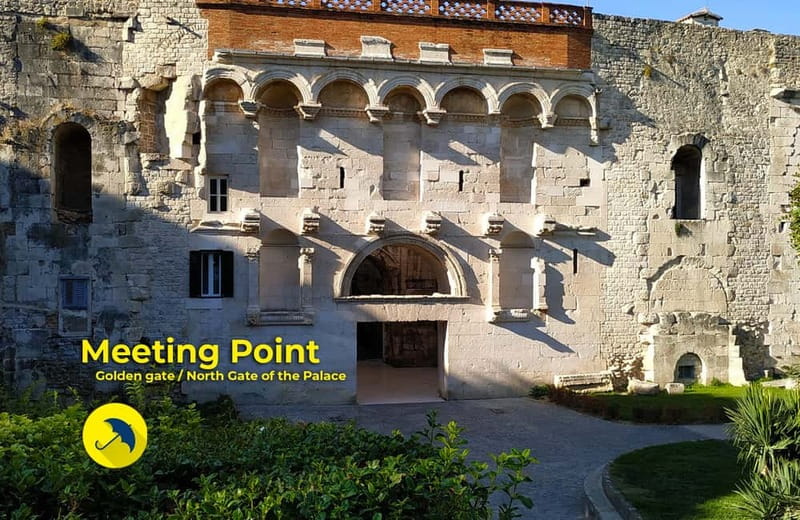
Guide quality is a major strength. Marta, Antonia, Jakov, Slavko, and Ina have all led this walk, and the feedback points to warm personalities, good local recommendations, and flexible pacing. The meeting point is easy to find: look for the blue umbrella by the Golden Gate, near the statue of Gregory of Nin.
Key points at a glance
- More than ten possible tastes: Past stops have included sugared almonds, candied citrus peel, Soparnik, prosciutto, traditional flatbreads, rafiol cake, chocolate, and salted anchovies.
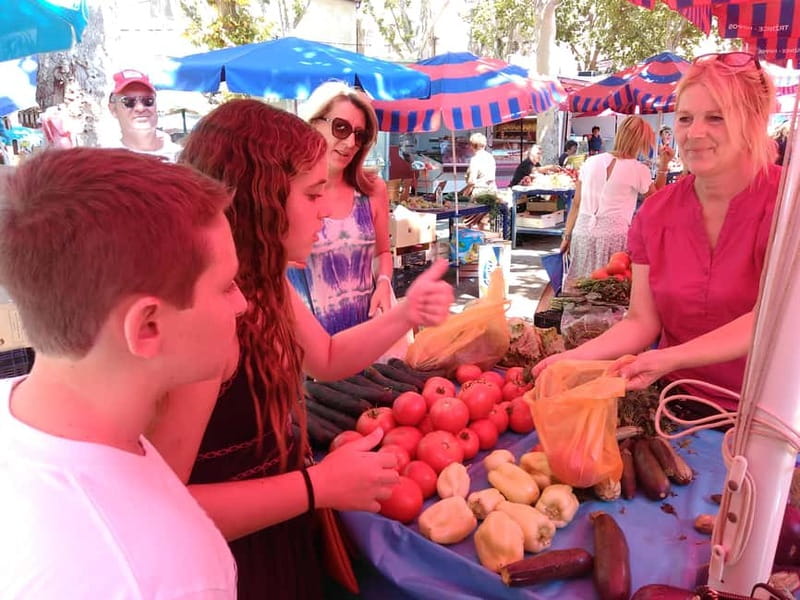
- Markets are central, not decorative: You spend real time at Split’s Green Market and Fish Market, including a lesson in eating salted anchovies.
- Diocletian’s Palace gives the food a setting: The walk uses Roman and medieval streets to explain how Dalmatian life and cooking fit together.
- Small groups make the difference: Guides can answer questions, adjust the pace, and speak with each person more easily than on a large city tour.
- Book it early in your stay: The food shops, restaurants, and market tips are more useful when you still have several days in Split.
- Bring practical gear: Comfortable shoes, sunglasses, and a sun hat matter on the exposed market streets and stone lanes.
Why food is the best way into Split
Split can feel like a history lesson at first. Diocletian’s Palace is nearly 1,700 years old, and its walls, gates, lanes, and courtyards can be hard to read without help. A food tour gives you a more ordinary way into the city. You are not just looking at old stone. You are learning what people buy, serve, preserve, and eat during a normal day.
This is especially useful in Dalmatia, where food often reflects the coast, the Mediterranean climate, and long-standing habits. The tour connects dishes with local life instead of treating each sample as an isolated bite. A guide might explain how a pastry is made, why a market product matters, or how a particular food fits into a Croatian meal.
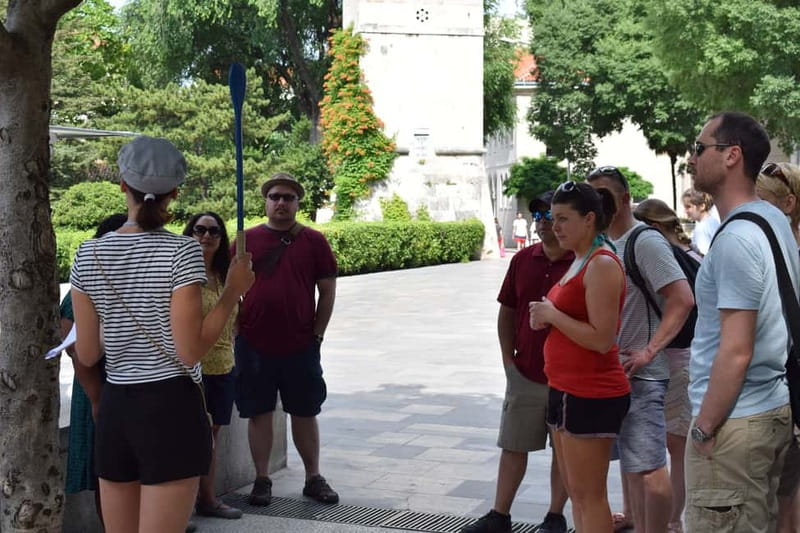
The format is active but not exhausting. The route begins at the Golden Gate and returns there after several short tasting stops. You spend about 30 minutes at each market and roughly 15 minutes at the café, bakery, bar, and restaurant stops. That makes the food easier to manage than a long sit-down meal, though you should still eat a light breakfast rather than arriving completely starved.
More Food Walking Tours in Split:
- Reykjavik Food Walk – Local Foodie Adventure in Iceland
★ 5.0 · 18,952 reviews - Little Havana Food and Walking Tour in Miami
★ 5.0 · 8,882 reviews - New Orleans Food Walking Tour of the French Quarter with Small-Group Option
★ 5.0 · 6,118 reviews
Starting at the Golden Gate and Gregory of Nin
The blue umbrella near the Golden Gate is the meeting marker. This northern entrance to Diocletian’s Palace is also beside the statue of Gregory of Nin, making it a useful place to get your bearings. Since the tour finishes here, you can easily continue sightseeing afterward.
The opening section sets the scene for the palace and Split’s older streets. You will walk through a city center shaped by Roman construction and later medieval life. The tour is not a formal archaeological lecture, but the history helps explain why food shops, cafés, homes, and businesses now occupy spaces built for a very different purpose.
I would arrive a few minutes early. The palace lanes can be confusing, and the meeting point is more specific than simply saying at Diocletian’s Palace. Look for the statue and blue umbrella rather than wandering around the gates hoping to spot the group.
Sugared almonds at the café
The first taste is a sweet local welcome: arancini, described here as almonds in sugar. This is a small sample, but it sets the tone. You are trying foods that carry local habits and memories, not simply ordering the most famous Croatian dish.
The café stop lasts about 15 minutes. That short pause gives the guide time to explain the food and answer questions without slowing the whole route. Past tastings have also included candied orange and lemon peel, which adds another sweet, slightly more complex note to the early part of the walk.
This is a good stop for anyone who likes learning how familiar ingredients change across regions. Almonds and citrus are not unusual by themselves, but the preparation and place in local food culture make them worth noticing.
Green Market and the everyday side of Split
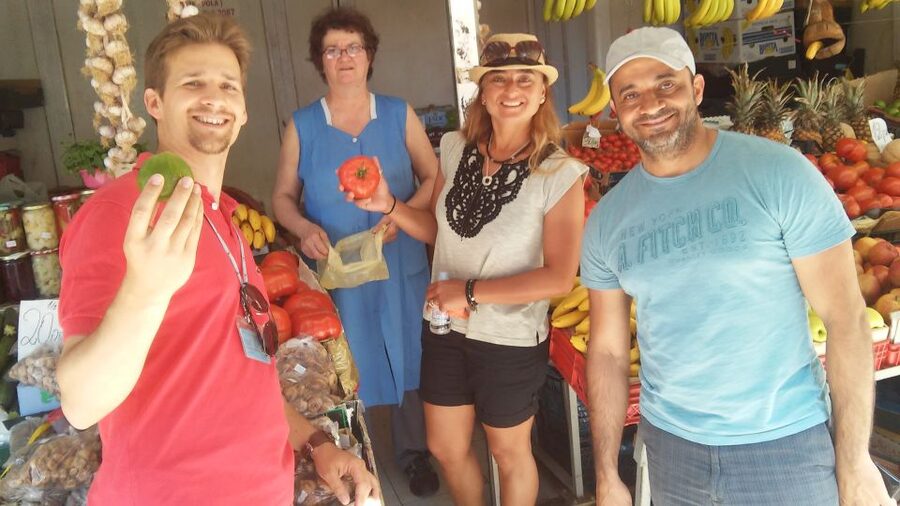
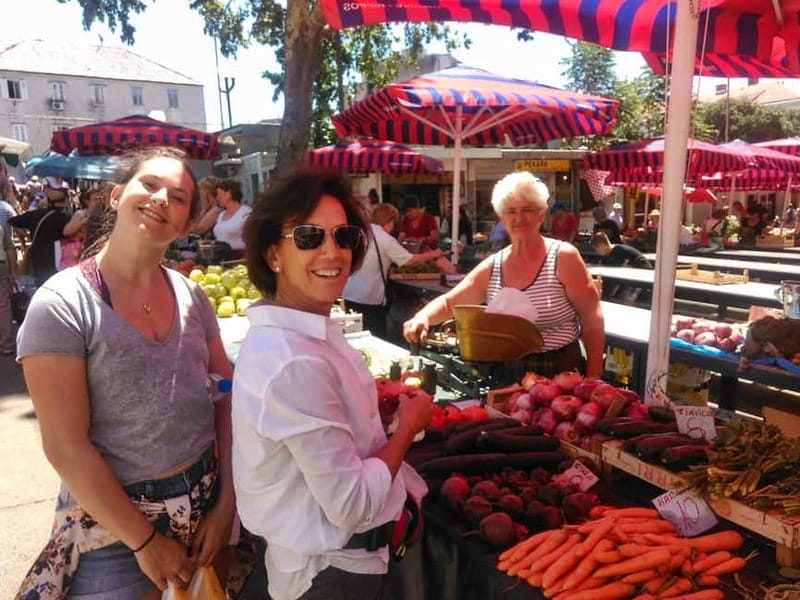
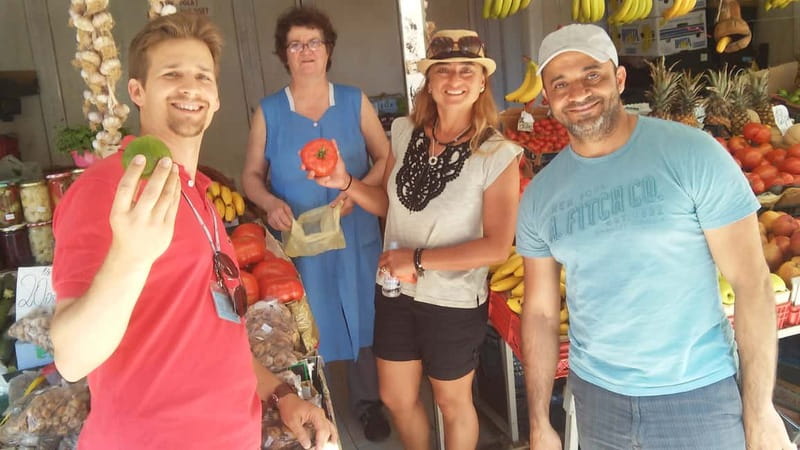
The Green Market, or Pazar, is one of the most useful stops on the route. You spend about 30 minutes here, with the guide explaining what you are seeing and how the market fits into local shopping. The experience is not only about tasting. It lets you look at the produce, talk about ingredients, and see a working part of Split’s daily food life.
The market is also where the tour feels least like a standard sightseeing walk. You are surrounded by products meant for local kitchens, and the guide can point out foods you may want to buy later. One past participant even used the tour as a starting point for purchasing groceries and having them prepared at a restaurant afterward, though that is not presented as a standard part of this experience.
Bring a little curiosity and perhaps some room in your bag. Extra market purchases are not included in the price, so any shopping is your choice and your expense. That is useful rather than annoying, since you are not forced to pay for items you do not want.
A few more walks around Split worth a look
- Split: Old Town and Diocletian Palace Walking Tour
★ 4.9 · 4,727 reviews - Walking Tour of Split and Diocletian’s Palace
★ 5.0 · 2,588 reviews - Krka Waterfalls tour with Trogir Walking tour and Krka panoramic boat cruise
★ 5.0 · 1,659 reviews - Split & Diocletian’s Palace Walking Tour
★ 5.0 · 1,125 reviews
Soparnik, flatbread, and the bakery stop
The tour includes Soparnik, a traditional Dalmatian dish protected by UNESCO recognition. It is one of the most meaningful foods on the route because it shows how a simple regional recipe can carry cultural importance. You may also sample traditional flatbreads, depending on the current arrangement with the food stops.
The supplied description pairs Soparnik with a glass of local wine. However, the included section names food tastings and not wine, while recent comments specifically say that wine was no longer included. Treat the wine as uncertain and check before you book if that pairing matters to you.
The bakery stop lasts about 15 minutes. Here you try rafiol cake, a traditional sweet, at what is described as Split’s oldest bakery. The point is not just dessert. This stop gives you a look at how recipes survive in ordinary food businesses, where the product is made for local customers as well as visitors.
Those with a serious sweet tooth will likely enjoy the balance between savory market foods and pastries. If you prefer a meal with large portions, keep your expectations in check. This is a tasting walk, not lunch.
Prosciutto and the chocolate shop
As you move through the old city, the guide introduces traditionally made prosciutto. This is a useful contrast to the earlier sweets and market produce. You get a taste of the preserved, savory side of Dalmatian food, which fits naturally with a region where cured foods and simple serving styles matter.
The chocolate stop adds a playful change of pace. The shop is connected with a Guinness record for the largest chocolate bar in the world, giving the guide an easy story to share while you sample something sweet. It may be the most overtly visitor-friendly stop on the route, but it still works because it breaks up the traditional dishes.
The mix is one of the walk’s strongest features. You are not asked to eat one type of food for two hours. The samples move between salty, sweet, crisp, soft, preserved, and freshly prepared items. One guest counted more than ten different foods, including nuts, citrus peel, prosciutto, and two types of flatbread.
Split Fish Market and salted anchovies
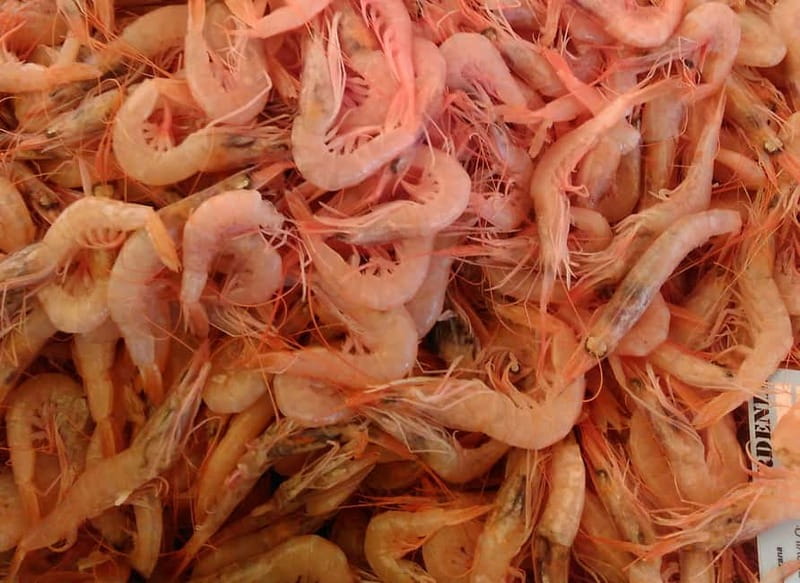
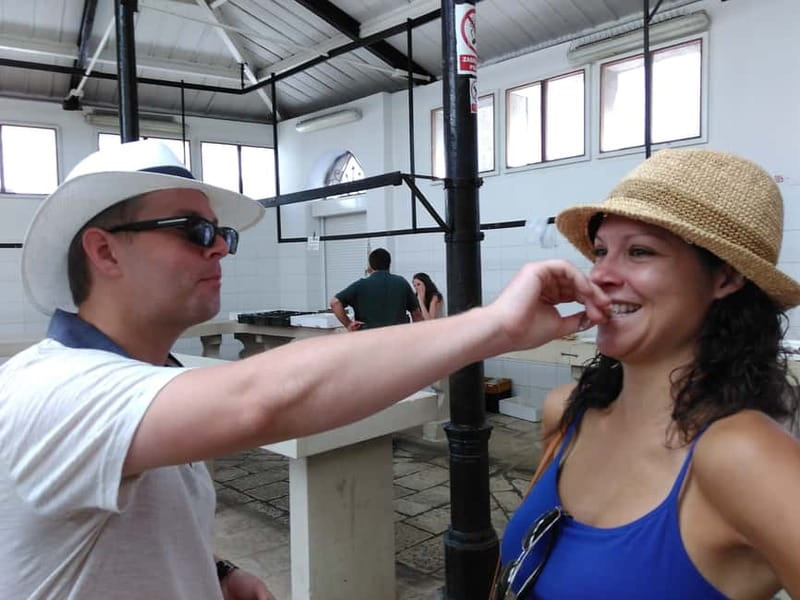
The Fish Market, known locally as Peškarija, is the other major market stop. You spend about 30 minutes here, looking at a place described as the second-oldest fish market in Europe. Its original benches are more than 120 years old, which gives the setting a strong link to the city’s working food traditions.
The guide explains how to eat salted anchovies, a traditional choice for marenda, the Dalmatian midmorning meal. This is the kind of detail that makes the tour worthwhile. You are not simply told that anchovies are local. You learn how they are eaten and when they fit into the rhythm of the day.
The fish market may be less comfortable for people who dislike strong smells or seafood. The tour is also not designed around replacing a full meal with fish. You get an introduction and a tasting, then continue on foot.
The final bar and restaurant tastings
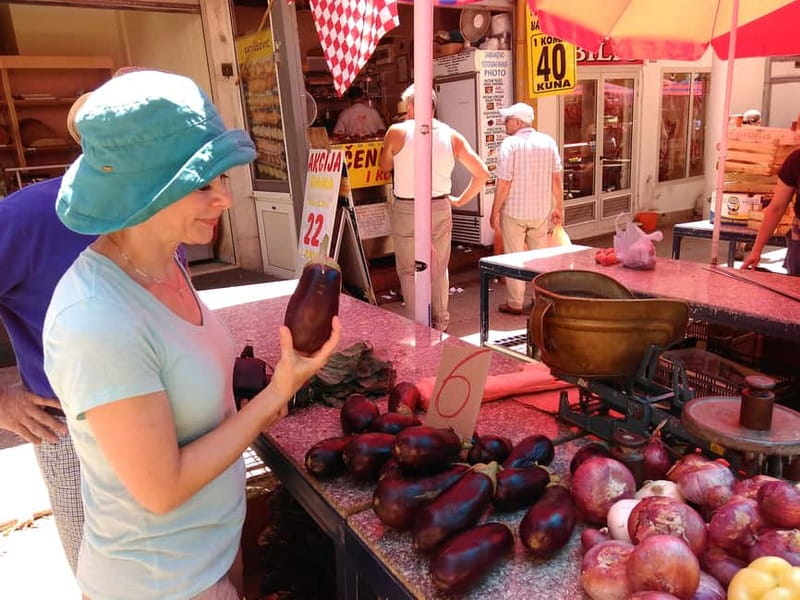
The last two food stops are a local bar and a local restaurant, each planned for about 15 minutes. These stops give the walk a more social finish and let you compare market food with dishes served in places where people eat and drink.
The restaurant visit is also where the guide’s recommendations can be most useful. Several guides have shared ideas about where to eat next, and many participants specifically appreciated receiving practical suggestions for the rest of their stay. One person wished for even more recommendations for truly traditional Croatian restaurants, so you should ask direct questions if you want a longer list.
Because guides can change, the exact menu may vary. Marta has been praised for explaining cooking methods and traditional ingredients. Antonia has been noted for her easygoing manner and willingness to spend extra time. Jakov has been described as funny, patient, and good at adapting to questions. Slavko was singled out for his personable style, while Ina made a point of speaking with everyone in the group.
What the guides add to the experience
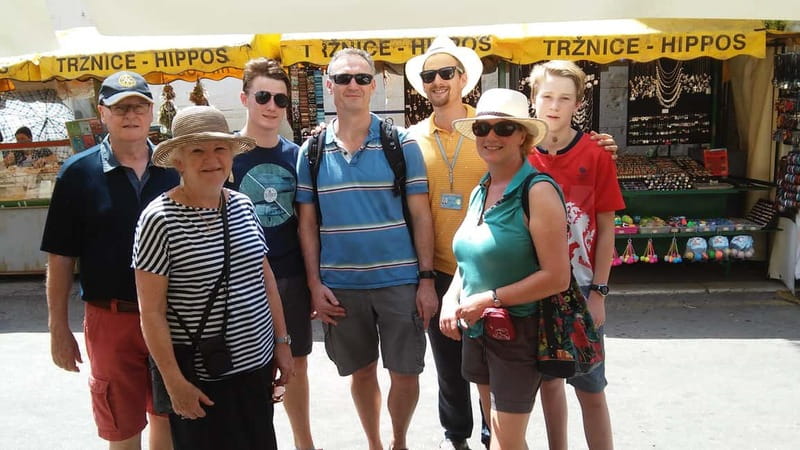
The strongest part of this tour is not any single bite. It is the way the guides connect food, place, and personal stories. They explain recipes, city details, and local habits in plain language, which makes the walk approachable even if you know little about Croatian cuisine.
The small-group format matters here. A guide can stop to explain an unfamiliar ingredient, adjust the pace, or answer questions without holding up a large crowd. The walk is offered privately or in small groups, so check the option available for your date if group size is important to you.
The guiding also seems to suit different kinds of visitors. You can ask about cooking methods, market shopping, regional ingredients, restaurants, or the history of the palace. The best use of the tour is to come with questions. Ask what to order later, what to buy at the market, and which dishes are most specific to Split rather than Croatia as a whole.
Is $64 a fair price?
At $64 per person, this is not the cheapest way to eat in Split. You could buy several snacks on your own for less. But the fee covers the guide, the organized route, food tastings, and traditional recipes, while extra market purchases remain optional.
The value improves if you want context. A self-guided visit to the Green Market and Fish Market will show you the stalls, but it will not necessarily explain how to eat salted anchovies, why Soparnik matters, or where rafiol fits into local food traditions. You are paying for interpretation and access to several stops within two hours.
The price is also easier to justify for a first visit. You get orientation inside the palace, food recommendations, and ideas for later meals. Do it early, and you can return to the markets or shops with more confidence. Do it on your last day, and much of that advice arrives too late to use.
Who should book this walk?
I would recommend it to curious first-time visitors, couples, small groups, and anyone who likes learning about a city through food. It suits people who enjoy tasting many small portions and walking through old streets rather than sitting at one restaurant for a long meal.
It is also a good fit if you want a gentle introduction to Dalmatian cooking. You do not need specialist food knowledge, and the guides explain what you are eating. Families can book, but children must be accompanied by an adult, and unaccompanied minors are not allowed.
This is not suitable for wheelchair users. The route uses old palace lanes and market areas, and the tour data specifically excludes wheelchair access. Wear comfortable shoes, and bring sunglasses and a sun hat, especially during warm, bright weather.
Free cancellation is available up to 24 hours before the start time, and you can reserve now and pay later. Check the available start times when booking, since the tour lasts two hours and schedules can vary.
My verdict: book it early, with one check
I would book this tour near the beginning of a Split stay. The combination of Diocletian’s Palace, Pazar, Peškarija, traditional recipes, and friendly guides gives you useful context quickly. The food is varied, the route is compact, and the small-group style makes it easier to ask questions.
Before paying, confirm the current tasting list and ask specifically about the wine. That detail appears to have changed. If you want a relaxed introduction to Split’s food culture and do not need a full meal, $64 is a reasonable price. If you mainly want a large lunch or a formal history tour, choose something else.
FAQ
Where does the Split food tour start?
It starts at the Golden Gate, also called the North Gate, near the statue of Gregory of Nin. Look for the blue umbrella.
How long does the tour last?
The tour lasts two hours and returns to the Golden Gate.
What language is the tour offered in?
The tour is offered in English with a live guide.
What foods might I taste?
Possible tastings include sugared almonds, Soparnik, prosciutto, traditional flatbreads, rafiol cake, chocolate, and salted anchovies. The exact selection can vary.
Does the tour include local wine?
The description mentions a glass of local wine, but the current included items list food tastings and recent feedback says wine may no longer be included. Confirm this before booking.
Are visits to Split’s markets included?
Yes. The route includes the Green Market and Split Fish Market, also called Peškarija.
Are extra market purchases included?
No. Any additional expenses at the markets are optional and paid separately.
Can children join the tour?
Children can join when accompanied by an adult. Unaccompanied minors are not allowed.
Is the tour wheelchair accessible?
No. The tour is not suitable for wheelchair users.
Just added around Split
- Split: Local History and Culture 90-Minute Walking Tour★ 5.0 · 194 reviews
- Split: 1.5-Hour Walking Tour and Diocletian’s Palace★ 4.7 · 256 reviews
- Split: Diocletian Palace & Old Town Guided Walking Tour★ 4.7 · 882 reviews
- Split: Walking tour of Split with a ‘Magister’ of History★ 5.0 · 110 reviews
- From Split: Krka Waterfalls Cruise & Trogir Walking Tour★ 4.7 · 681 reviews
- Split: History and Heritage Walking Tour★ 4.9 · 650 reviews
- Diocletian’s Palace and Old Town SMALL GROUP Walking Tour★ 5.0 · 502 reviews
- Split: City Walking Tour w/ Game of Thrones Locations★ 4.9 · 318 reviews
Food Walking Tours, compared.
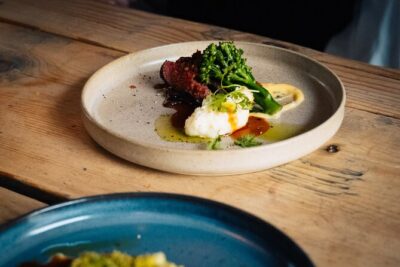
Reykjavik Food Walk – Local Foodie Adventure in Iceland
Read our review →
New Orleans Food Walking Tour of the French Quarter with Small-Group Option
Read our review →

Authentic Parisian Gourmet Food Tour with 10 Local Dishes & Wines
Read our review →
Tapas Walking Tour with Food, Wine, and History
Read our review →
Browse the lists this tour appears in