
Review · NETHERLANDS WALKING TOURS
Groningen: Walking Tour with Local Guide
Groningen reveals itself on foot. I like the compact 1.5-kilometer route, which packs a thousand years of city life into a manageable 90 minutes, and I like the mix of medieval landmarks, student energy, modern culture, and local stories. The main consideration is weather: one recent tour was cold and icy, so good shoes matter.
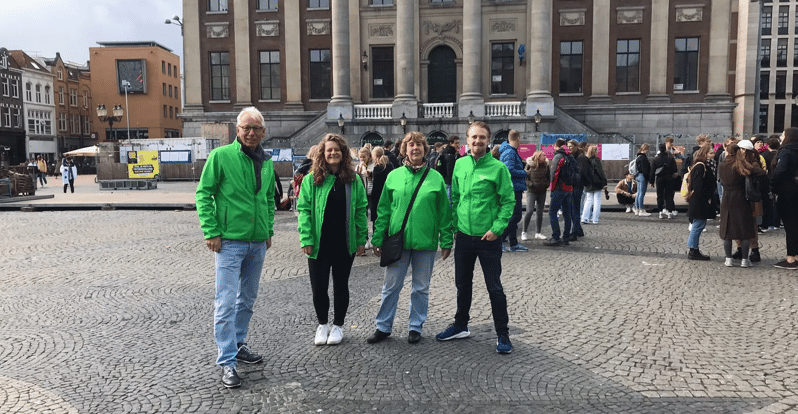
I also like that the tour finishes at Forum Groningen, where you can ride the electric stairs to a 45-meter-high platform for a wide city view. Group size is capped at 25, though a smaller group can make the guide’s stories easier to follow. Guides such as Margret and Wessel have been praised for their enthusiasm and affection for Groningen.
Key points to know before booking
- A short route with a long timeline: Cover roughly 1.5 kilometers while moving from the medieval harbor to modern Forum Groningen.
- The Martini-toren is the visual anchor: Learn why Groningen’s old gray tower matters before seeing the City Hall and Grote Markt.
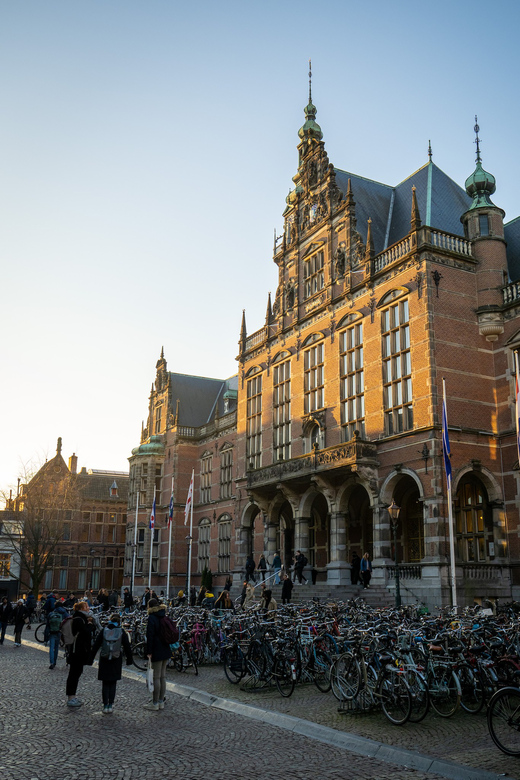
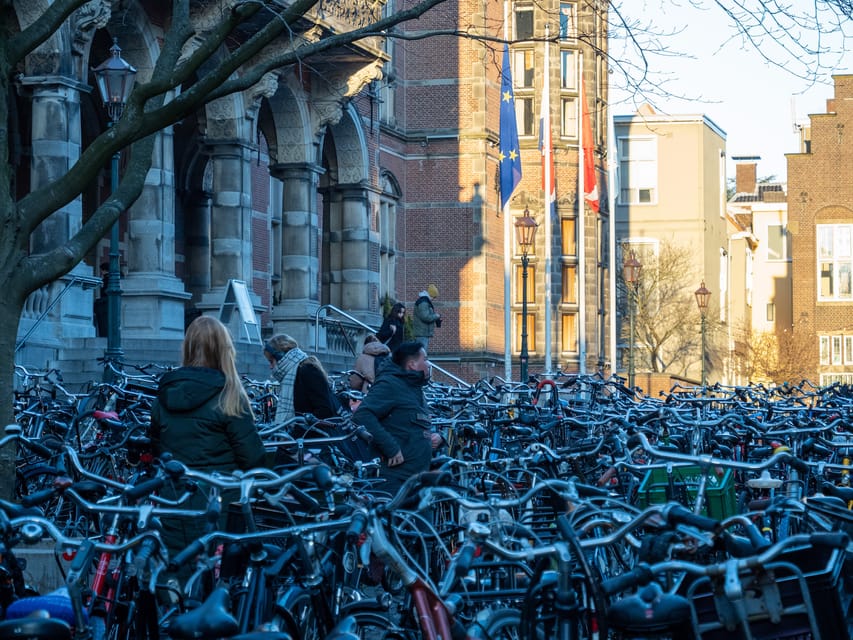
- Student life shapes the city: Bikes, academic buildings, cafés, and youthful energy are part of the story, not just background scenery.
- Folkingestraat adds a serious chapter: The old Jewish quarter brings a more reflective side to the walk.
- The Forum finish is useful: After the guided portion, take the electric stairs to the 45-meter platform on your own.
- Language details need checking: The experience is described as available in English, German, and Dutch, while the practical language information specifically lists German and Dutch.
Starting inside Forum Groningen
The tour begins inside Forum Groningen, at the yellow counter in front of the VVV-store. This is a smart meeting point because Forum is easy to recognize and gives you a first taste of present-day Groningen before the old center takes over.
Forum is not simply a place to wait. The opening part of the tour introduces technical innovation, modern culture, and current life in the city. That makes the old streets more meaningful later. Groningen is not a preserved museum piece. It is a working city with a large student population, and the Forum helps explain that modern side from the start.
Give yourself enough time to find the yellow counter. The stated meeting place is inside Forum Groningen, not outside on the square. If you are using a mobility aid, the activity is listed as wheelchair accessible, though a walking tour still involves moving through city streets and public squares.
More Guided Walks in the Netherlands:
- Amsterdam Anne Frank: Small-Group Walking Tour & Local Guide
★ 4.8 · 12,789 reviews - Anne Frank’s Story – Guided Walking Tour through Amsterdam
★ 5.0 · 11,619 reviews - Amsterdam: Anne Frank Guided Walking Tour in DE/EN/IT/ES
★ 4.9 · 3,107 reviews
New Market Square and the Martini-toren
From Forum, the guide leads you toward the New Market Square and the Martini-toren. The tower is one of Groningen’s clearest symbols, and the tour treats it as more than a place to take a photograph. Its old gray stone carries stories about the city’s long past and its changing fortunes.
The Martini-toren gives you a useful sense of scale. Groningen may be the largest city in the northern Netherlands, but the central sights sit close together. The walk lets you keep the tower in view while moving through squares, streets, and civic spaces.
This is also where the tour begins to explain the city as a student town. You will notice plenty of bicycles, and the bike traffic is part of the local character. The guide’s job is not only to point at buildings, but to explain how students, shops, cafés, history, and daily movement fit together.
For some visitors, the bike traffic may take a little attention. Stay alert when crossing streets and moving through busy areas. The tour is easy in distance, but Groningen is still a living city rather than a quiet historic set.
Grote Markt, City Hall, and old power
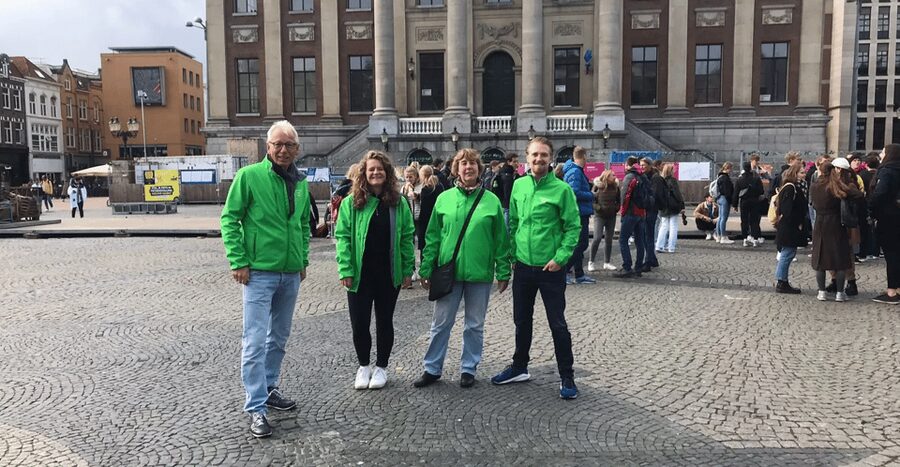
The route continues through the Grote Markt, Groningen’s central square. Here you see the City Hall along with buildings linked to earlier civic and political power, including the office of the Commissioner of the King and the former palaces of the seventeenth- and eighteenth-century regents.
This section gives the tour a useful theme: Groningen’s story is not only about churches and old streets. It is also about who governed the city, who held influence, and how public spaces expressed that authority.
The Gold Office adds another architectural and historical stop. The name alone hints at the financial side of city life, while the surrounding buildings show how Groningen combined commerce, administration, and ceremony in a compact center.
I appreciate this part because it prevents the tour from becoming a simple parade of attractive façades. You get a sense of how a northern European city organized itself, from religious landmarks to government buildings and grand town squares.
Renaissance details beside modern Groningen
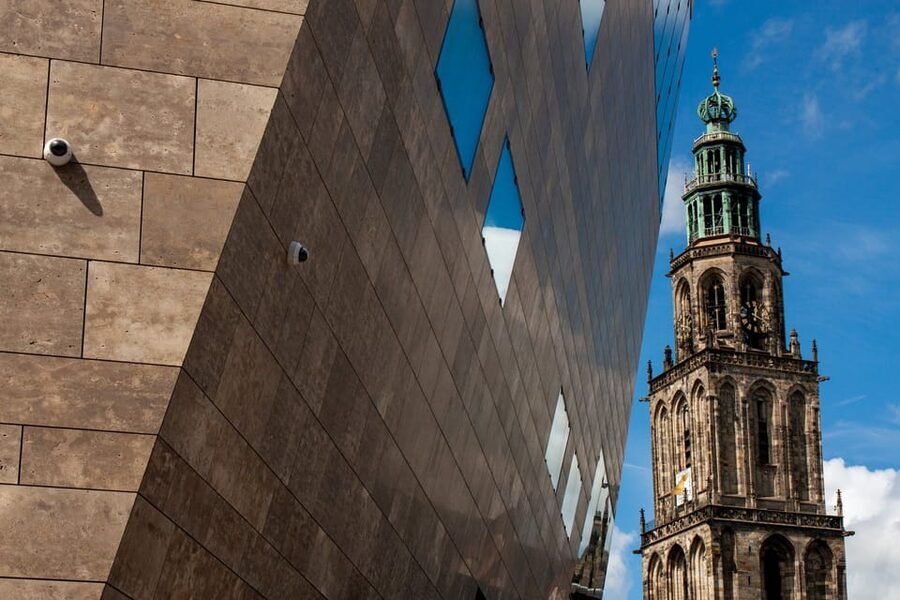
One of the tour’s strongest ideas is the contrast between Renaissance architecture and modern design. Groningen does not force you to choose between old and new. You can look at historic buildings, then turn toward contemporary spaces and see how the city keeps changing.
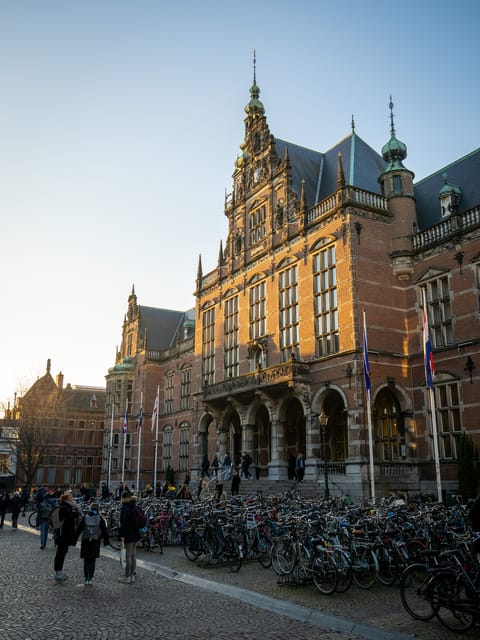
The Academic Building brings the student side into clearer focus. With about 70,000 students among the city’s roughly 235,000 inhabitants, the university population is a major part of Groningen’s identity. That helps explain the city’s cafés, shops, bicycles, and youthful pace.
The tour also points out green squares. These open spaces give you a break from the stone streets and make the center feel more relaxed. Your guide can connect the physical setting with the city’s present life, including where you might shop, have a beer, or stop for a glass of wine after the walk.
This is a good tour for first-time visitors who want orientation rather than a long lecture. You receive enough history to understand the streets, along with practical clues about where the center’s social life happens.
A few more walks around the Netherlands worth a look
- Absolutely Amsterdam – the Essential Introductory Walking Tour
★ 5.0 · 3,629 reviews - Amsterdam: Anne Frank Guided Small Group Walking Tour
★ 4.8 · 2,722 reviews - Amsterdam: Cultural Highlights Walking Tour
★ 4.9 · 2,629 reviews - Amsterdam: Ganja Walking Tour
★ 4.2 · 2,127 reviews
The yellow A-church and Groningen’s oldest harbor
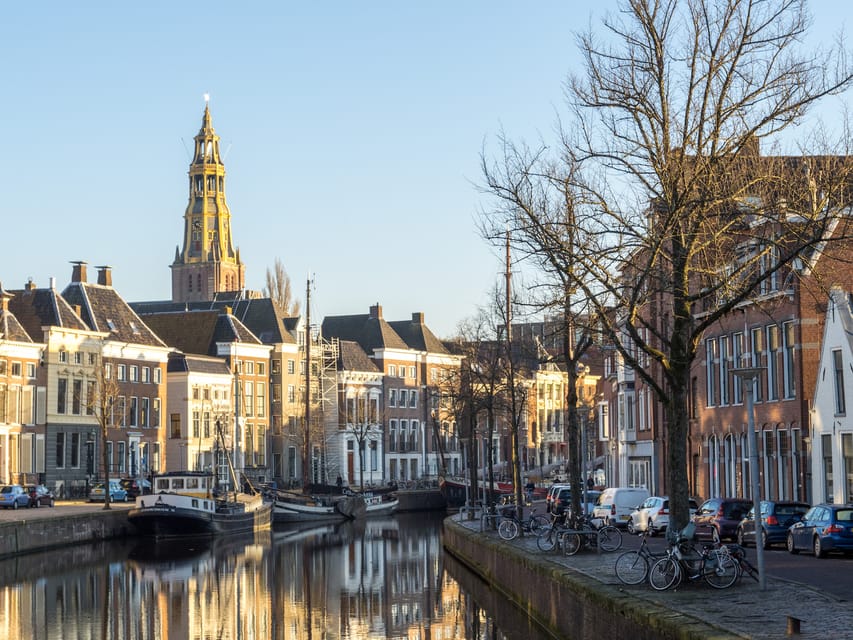
The A-church adds another strong visual stop. Its yellow tower differs from the gray Martini-toren, giving the walk a second memorable vertical landmark. The contrast helps you keep track of Groningen’s center as you move from one historic area to another.
The route then steps back roughly 800 years at Groningen’s oldest harbor. This is one of the most useful moments in the tour because a harbor explains why a settlement mattered. Water, trade, movement, and access helped shape the city long before modern student life became so important.
You can expect the guide to connect the harbor with the wider development of Groningen. The tour’s appeal lies in these links. A tower is not just a tower, and a harbor is not just a waterside view. Each stop helps explain how the city grew into a regional center.
The walk covers a lot, but it does not require a full day. That balance is valuable if you are fitting Groningen between other plans. You get a strong first look without spending hours indoors or committing to a full-day program.
Folkingestraat and the city’s Jewish story
Folkingestraat brings a more serious tone. The street has an important Jewish history, and it adds depth to the cheerful picture of shops, bikes, cafés, and student life.
I would not rush this part. The tour gives you a chance to see Groningen as a city shaped by many communities and difficult chapters, not just as a pleasant place for a drink. A local guide can provide context that a quick walk past the street would miss.
The old street also adds variety to the route. Instead of seeing only major squares and official buildings, you enter a place with a more personal and neighborhood feel. That makes the city center easier to remember.
The tour information also mentions the Pepergasthuis, a former shelter for pilgrims who came to worship Saint John the Baptist. This stop is not included on Sundays, so Sunday participants should expect a slightly different route or fewer details here. That is worth knowing if this building is high on your list.
The Forum platform at 45 meters
The guided walk ends back at Forum Groningen. At that point, you can use the electric stairs to reach the 45-meter-high platform on your own.
This is a nice finish because it changes your view of the city. After walking through streets and squares, you can look down over the places you have just visited. The platform also helps you understand Groningen’s compact center and the relationship between the old buildings and newer city design.
The viewpoint is not part of a separate guided climb. You discover it yourself after the tour, which gives you freedom to stay longer or move on. The electric stairs make the ascent part of the Forum experience rather than a demanding physical challenge.
If you have limited time in Groningen, this ending adds value to the $22 price. You are not only paying for a guide’s commentary. You also finish in a building that offers modern cultural space and a high city view.
How the guides shape the experience

A walking tour depends heavily on the person leading it. The strongest feedback here centers on enthusiasm and a clear personal connection to Groningen.
Margret has been praised for making a small group feel relaxed and interesting. Wessel has been noted for combining historical and cultural information with present-day details and unusual facts. Those are exactly the qualities you want in a city tour: not just dates, but a sense of how Groningen works now.
Another guide was described as enthusiastic and closely involved with her city, even in difficult winter weather. That matters because the route is outdoors. Cold temperatures and slippery streets can make any walk less pleasant, but a lively guide can keep the pace and attention going.
The maximum group size is 25 people. That is not an intimate private tour, but it is still small enough for a guide to address the group without turning the walk into a moving crowd. If your group happens to be smaller, expect a more relaxed feel.
Language information deserves a quick check before you reserve. The experience is described as available in English, German, and Dutch, while the practical details specifically name German and Dutch. If English is important to you, confirm the departure language in advance rather than assuming every starting time offers all three.
Is $22 a fair price?
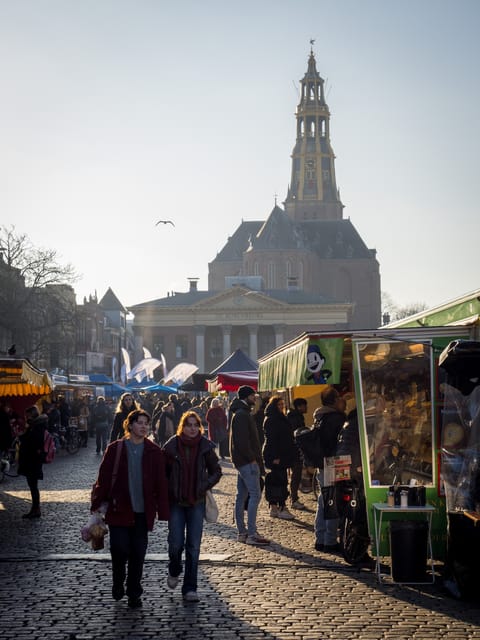
At $22 per person, this tour offers solid value if you want a broad introduction to Groningen in a short period. You cover the major central landmarks, receive historical and current context, and finish with access to a high viewpoint at Forum Groningen.
The value is strongest for first-time visitors. You can use the walk to decide where to return for shopping, a beer, wine, or a longer look at the buildings that caught your eye. It also makes sense as an early activity because it gives you a mental map of the center.
You may find the price less appealing if you already know Groningen well or prefer to explore every site at your own pace. Ninety minutes moves quickly, and the tour gives you an overview rather than extended visits inside each landmark.
The route’s short length also means the experience is not a major physical undertaking. Still, wear shoes with good grip in winter. Cold and ice affected one recent walk, and historic streets can be uncomfortable when conditions are poor.
Who will enjoy this Groningen walk?
I would choose this tour if you want history without a long academic talk. It suits first-time visitors, couples, families, and anyone who likes to understand a city through its buildings, public squares, and daily habits.
It is also a good match for people interested in urban change. The route moves from the old harbor and religious towers to university life and the modern Forum. You see how Groningen carries its past while serving a large student population today.
The tour may work well for visitors who want to stay active but do not want an all-day excursion. The distance is about 1.5 kilometers, and the duration is 1.5 hours. The activity is listed as wheelchair accessible, which makes it a useful option for many visitors, though you should still consider your own comfort with city streets and group pacing.
I would be less likely to choose it if you want a specialist tour focused only on architecture, Jewish history, university life, or wartime events. Those subjects appear as parts of a wider city story, not as the sole focus.
Free cancellation is available up to 24 hours before the start, and you can reserve now while paying later. Those terms are useful if your Groningen plans depend on weather or a changing schedule.
My take: book it for your first look at Groningen
Book this walking tour if you want a friendly, efficient introduction to the city, especially if Groningen is new to you. The combination of Martini-toren, Grote Markt, the Academic Building, Folkingestraat, the old harbor, and the Forum viewpoint gives you a broad sense of place in only 90 minutes.
I would book with two checks in mind: confirm the tour language, and look at the weather. In good conditions, the route should feel easy and full of variety. In cold or icy weather, the same walk requires better footwear and a little patience.
The best reason to choose it is the balance. You get old towers, civic history, Jewish heritage, student culture, bicycles, modern architecture, and a city view without spending the whole day. For $22, that is a sensible way to get your bearings and decide where Groningen deserves more of your time.
FAQ
Where does the Groningen walking tour start?
The tour starts inside Forum Groningen, in front of the VVV-store at the yellow counter.
How long is the walking tour?
The tour lasts 1.5 hours and covers about 1.5 kilometers.
How large can the tour group be?
The maximum group size is 25 people.
Which languages are available?
The experience is described as available in English, German, and Dutch. The practical language information specifically lists German and Dutch, so confirm the language before booking if English is important to you.
Is the walking tour wheelchair accessible?
Yes. The activity is listed as wheelchair accessible.
Does the tour include the Pepergasthuis every day?
No. The Pepergasthuis is not part of the tour on Sundays.
Just added around the Netherlands
- Small Group Walking Tour in Amsterdam with Friendly and Fun Guide★ 5.0 · 281 reviews
- Amsterdam: Private Introduction Walking Tour (TOP RATED)★ 5.0 · 223 reviews
- Humans of Amsterdam: Cultural Walking Tour incl. meeting 2 locals★ 5.0 · 320 reviews
- Amsterdam Private Historical Walking Tour★ 5.0 · 75 reviews
- Private Tour: Amsterdam City Walking Tour and Canal Cruise★ 4.5 · 142 reviews
- Anne Frank and Jewish Quarter Amsterdam Private Walking Tour★ 5.0 · 684 reviews
- Small Group Walking Tour – Hello Amsterdam★ 5.0 · 505 reviews
- Amsterdam: Anne Frank and World War II Walking Tour (TOP RATED)★ 4.5 · 72 reviews
Netherlands Walking Tours, compared.

Amsterdam Anne Frank: Small-Group Walking Tour & Local Guide
Read our review →
Anne Frank’s Story – Guided Walking Tour through Amsterdam
Read our review →
Absolutely Amsterdam – the Essential Introductory Walking Tour
Read our review →
Anne Frank Guided Walking Tour in DE/EN/IT/ES
Read our review →

Anne Frank Walking Tour Amsterdam Including Jewish Cultural Quarter
Read our review →Browse the lists this tour appears in