
Review · PORTUGAL WALKING TOURS
Lisbon: Alfama, Bairro Alto and Downtown Walking Tour
Lisbon rewards a slow walk. This private three-hour tour links Alfama’s medieval lanes with downtown’s baroque, Belle Époque, and Art Deco streets, then adds rides on the Gloria funicular and historic 28 tram. I like the mix of transport, architecture, and neighborhood life, and I like that your guide can shape the walk around your interests. The main drawback is that the meeting point can be hard to find, and one reported booking had no guide arrive.
You meet at the Statue of Saint Vicente in Alfama, then move downhill toward central Lisbon and Bairro Alto. Guides speak English, Spanish, French, German, or Italian, and past guests have praised Deborah and Dirk Fittkau for detailed explanations, warmth, and useful suggestions for the rest of a Lisbon stay.
Key points to know before booking
- Three Lisbon districts in three hours: The route covers Alfama, downtown, and Bairro Alto without trying to turn the outing into a full-day marathon.
- Two historic rides included: You get the Gloria funicular between Baixa and Bairro Alto and a ride connected with the famous 28 tram.
- Private group format: You have a guide for your own party, which makes it easier to ask questions or request more architecture, history, or local orientation.
- A strong guide can make the difference: Deborah and Dirk Fittkau received especially warm praise for clear explanations, charm, and personal attention.
- Meet at the Saint Vicente statue: The stated address is Beco de Santa Helena 25, but confirm the exact spot because the terrace and building level have caused confusion.
- Good value for a short introduction: At $82 per person, the price makes the most sense if you value a private guide and want practical orientation early in your stay.
Starting among Alfama’s old lanes

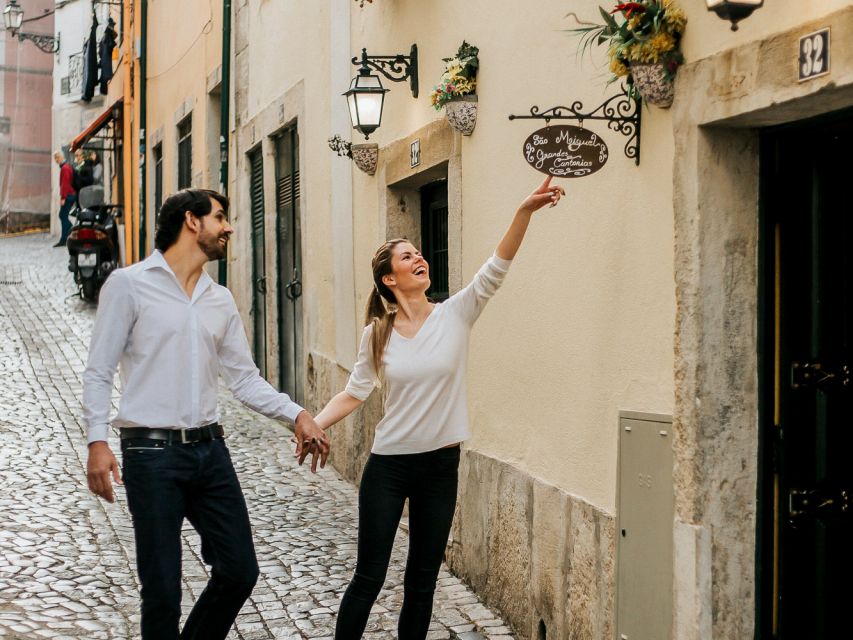
The tour begins at the Statue of Saint Vicente in Alfama, at Beco de Santa Helena 25. This is not a broad, obvious square with a large tour office. It is a more tucked-away meeting area, so I would allow extra time and check the precise meeting instructions before setting out.
That advice matters here. One guest found the address confusing because it seemed to point to a building below the actual terrace. Another specifically suggested that the guide carry a small identifying flag. These are modest issues, but they can create needless stress at the start of a three-hour tour. Confirm where the statue sits, look for your guide, and do not assume the street number alone will make the meeting point clear.
Alfama is the right place to begin. It is Lisbon’s oldest and one of its most typical districts, with old, colorful buildings and streets that feel very different from the formal downtown grid. The appeal is not one single monument. It is the change of scale: narrow lanes, older façades, and a quieter local mood within the city center.
Your guide can give this setting meaning rather than simply pointing out attractive walls. Ask about how Alfama differs from the lower city, how its architecture developed, and which details are worth noticing as you walk. The tour description emphasizes both the district’s old buildings and its sense of joy and calm, so expect an introduction based on atmosphere as much as dates and names.
The hills are part of the experience. Even without a detailed route map, you should expect uneven streets and some uphill or downhill walking in a district built on a slope. Comfortable shoes are a sensible choice. The benefit is that you see Alfama at walking pace, where its scale and character are easier to appreciate than from a vehicle.
A few more walks around Portugal worth a look
- Lisbon: History, Stories and Lifestyle Walking Tour
★ 4.8 · 10,902 reviews - Best of Lisbon Small-Group Guided Walking Tour
★ 5.0 · 4,869 reviews - Lisbon: Food and Wine Small Group Walking Tour
★ 4.9 · 4,082 reviews
Using Lisbon’s classic transport
The tour’s two transport features give the outing a useful Lisbon flavor. You are introduced to the Gloria funicular and the 28 tram, both strongly tied to the city’s steep streets and old-fashioned public transport.
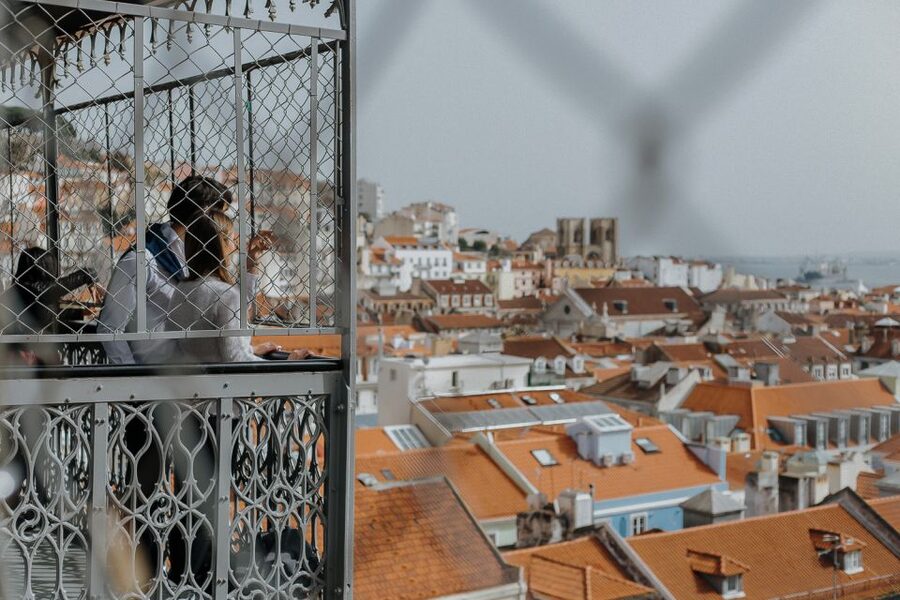
The Elevador da Glória is one of Lisbon’s three funicular railways. It links Baixa with Bairro Alto, making it more than a scenic extra. The short ride shows how Lisbon handles its hills and connects two areas that are close on a map but noticeably different underfoot.
For me, the funicular is valuable because it turns an urban connection into part of the sightseeing. You do not simply hear that Lisbon is hilly. You experience the climb in a historic vehicle, then arrive in Bairro Alto with a better sense of the city’s shape.
The 28 tram is another highlight. The information provided does not set out every section of the tram ride or guarantee a fixed number of stops, so you should view it as part of the tour’s Lisbon transport experience rather than a full tram excursion across the city. Ask your guide how much time is planned for it and whether the exact tram segment may change.
That small point is worth clarifying, especially if you are booking the tour for the tram alone. The 28 is a famous part of Lisbon’s identity, but this experience is primarily a guided neighborhood walk. The transport adds flavor and helps connect the districts. It does not replace a longer independent ride if that is your main goal.
Seeing downtown through changing architectural styles
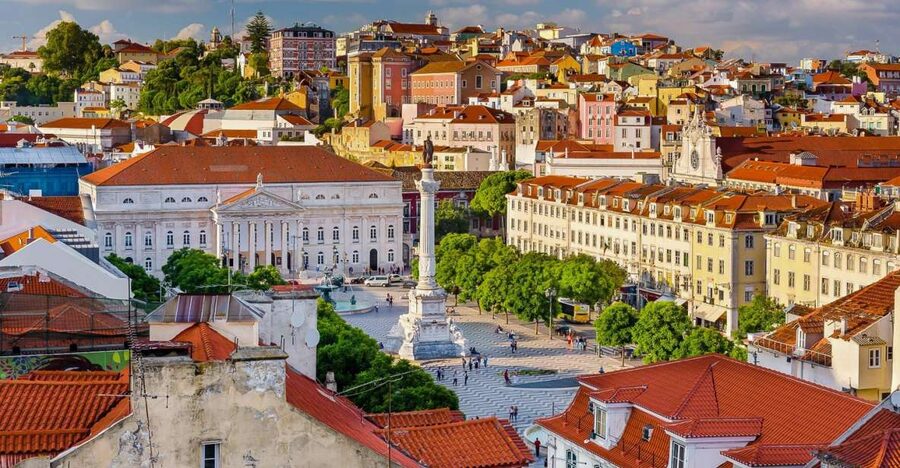
From the older atmosphere of Alfama, the tour moves toward central Lisbon. Here the visual language changes. Instead of mainly medieval lanes and colorful old buildings, you get a baroque city center with Belle Époque and Art Deco architecture.
This contrast is one of the tour’s strongest features. Lisbon is easier to understand when you see its districts side by side. Alfama offers an older, more irregular setting. Downtown gives you broader urban design and later architectural styles. Bairro Alto adds another layer, with its position above Baixa and its long connection to Lisbon’s evening life.
The walk is especially useful if you are the kind of person who sees an ornate doorway or curved façade but wants help placing it in time. Your guide can point out how baroque decoration differs from Art Deco lines, and how Belle Époque design fits into the city’s later development.
You should not expect entry into a long list of monuments. Entrance fees are not included, and the experience is built around streets, districts, transport, and exterior architecture. That keeps the tour moving, but it also means the value depends on how much you enjoy close observation and explanation outdoors.
I would treat this as a city-reading tour. You are learning how to look at Lisbon’s façades, public spaces, and neighborhood changes. If you prefer a packed schedule of interiors, museum tickets, and formal sightseeing stops, this may feel too light. If you want a clear framework for exploring on your own afterward, it can be a smart start.
Bairro Alto and the Gloria connection
Bairro Alto is reached through the Gloria funicular, which gives the tour a clear physical transition. You begin in Alfama, move through the lower center, and then rise toward a district known for its elevated position.
The funicular helps make the route memorable. It is also practical. Lisbon’s hills can turn a short walk into a tiring one, so using the historic railway lets you cover more ground without spending the entire tour climbing.
At this point, your guide’s style matters. A guide who simply names streets will give you a basic outing. A guide who links the neighborhoods can show how Alfama, Baixa, and Bairro Alto fit together and why the city feels so different from one slope to the next.
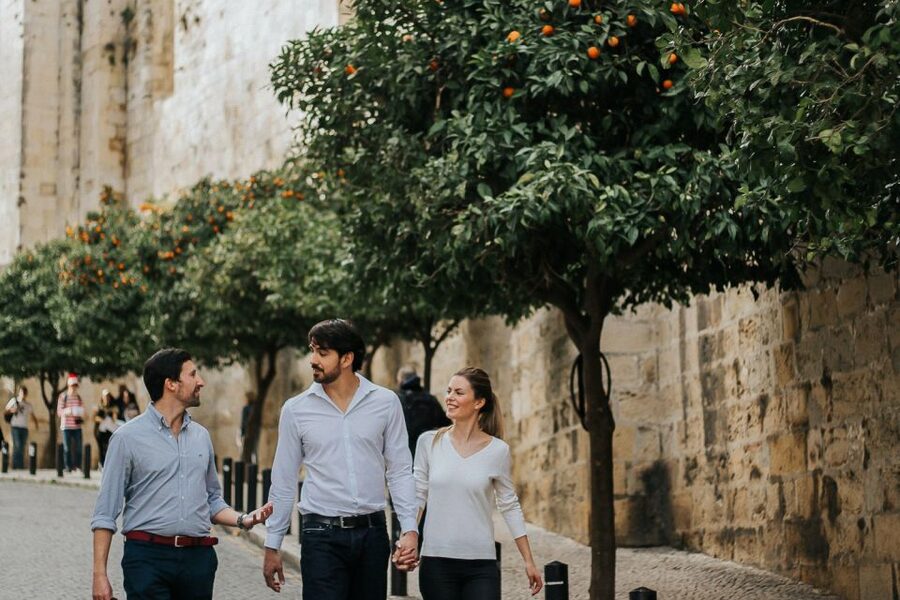
That personal approach is where the strongest praise has been directed. Deborah was described as kind, helpful, and highly competent. Dirk Fittkau was praised for charm, detailed knowledge, lively storytelling, attention to personal interests, and recommendations for places that do not appear in a standard guidebook. Since guide assignment can vary, you should not book on the assumption that one particular person is guaranteed, but those names give you a useful picture of the best version of the experience.
One French booking described a guide who adapted to the group’s expectations. That is exactly what you want from a private tour. You can ask for more architecture, more neighborhood background, or more practical advice for the rest of your visit.
Same streets, a different way to see them:
- Porto Walking Tour, Lello Bookshop, River Cruise and Cable Car
★ 5.0 · 3,354 reviews - Funchal: Old Town Walking Tour
★ 4.7 · 3,233 reviews - Best of Lisbon Walking Tour: Rossio, Chiado & Alfama
★ 4.9 · 2,700 reviews - Experience Porto’s Charm: 3-Hour Guided Walking Tour
★ 5.0 · 2,432 reviews
What a private group changes
A private group is a major part of the price. You are not sharing the guide with a large mixed crowd, and the pace can be more personal. That matters in Alfama, where a narrow street or small architectural detail can be hard to explain to a big group without stopping traffic or blocking the lane.
The format also gives you room to ask direct questions. If you are planning to explore Lisbon for several days, ask the guide for ideas that match your interests. Past praise has focused on recommendations for the rest of the stay, so this is a good place to request suggestions rather than waiting for them to appear.
Private does not mean every wish is guaranteed. The route still needs to fit three hours, and the stated highlights define the main shape of the outing. You should expect a guided introduction to the three areas, not a fully customized day with long detours or multiple paid attractions.
The available guide languages are English, Spanish, French, German, and Italian. Check your preferred language when you book. Clear communication is especially useful on a walking tour because much of the value comes from stories, comparisons, and small observations rather than from the sights alone.
Is $82 per person a fair price?
At $82 per person, this is not the cheapest way to see Lisbon’s central neighborhoods. You can walk through Alfama and downtown without paying for a guide, and public transport costs much less than a private experience.
The question is what you want your money to buy. Here, the price includes a private guide for three hours, neighborhood interpretation, and the chance to combine walking with the Gloria funicular and 28 tram. If you are traveling with family or a small group and want one person to organize the route, explain the setting, and answer questions, the cost can be reasonable.
The value is strongest at the beginning of a Lisbon visit. A good orientation helps you understand where Alfama, Baixa, and Bairro Alto sit in relation to one another. You can then return to the areas that caught your interest, armed with a better sense of direction and a list of suggestions.
The value is weaker if you mainly want transportation or a quick photo stop. Meals, drinks, and entrance fees are not included. You should budget separately for anything you choose to eat, drink, or enter, and remember that the 28 tram and funicular portions are supporting parts of the tour rather than the entire product.
Practical concerns before you go
The tour lasts three hours, which is long enough to cover the main neighborhoods but short enough to fit into a busy Lisbon schedule. Check the available start times before booking, since the exact departure options can affect how well it fits around meals or other plans.
The meeting point deserves special attention. It is the Statue of Saint Vicente at Beco de Santa Helena 25, 1100-411 Lisboa. Because one person had trouble matching the address with the terrace and another suggested a visible guide marker, I would contact the provider if the directions seem unclear. Arriving early is wiser than trying to solve the location at the last minute.
The tour includes a live guide, but not food or drinks. Bring what you need for three hours, especially if you prefer not to stop during the walk. The information provided does not specify accessibility arrangements, so anyone concerned about hills, uneven streets, or the historic transport should ask the provider before booking.
There is free cancellation up to 24 hours before the start, and you can reserve now and pay later. Those terms are useful if your schedule is still moving, but they do not solve the meeting-point issue. Read the final confirmation carefully and save the provider contact details.
One reported booking ended badly because the guide did not arrive. The payment was refunded quickly, but the missed experience was still disappointing. This appears to be an isolated serious problem among otherwise strong feedback, but it is a reason to keep your confirmation handy and contact the provider promptly if the guide is not present at the agreed time.
Who will enjoy this Lisbon walk?
I would recommend this tour to first-time visitors who want a clear introduction without joining a large group. It also suits couples, families, and small parties who care about architecture and neighborhood character more than ticking off paid attractions.
It is a good fit if you enjoy asking questions. The strongest guide experiences were praised for personal attention, lively explanations, and recommendations tailored to the group. That suggests you will get more from the tour if you arrive with interests ready, such as Art Deco, local neighborhoods, historic transport, or places to visit later.
It may not suit you if you want a museum-heavy program or a long ride on the 28 tram. It also may not be ideal if hills and uneven streets are a major concern. The tour moves across several central areas in three hours, so the walking element is not incidental.
Should you book it?
Book this tour if you want private guidance, neighborhood context, and classic Lisbon transport in one compact outing. The best reasons are the contrast between Alfama and downtown, the Gloria funicular connection to Bairro Alto, and the chance to get personal advice from a multilingual guide.
I would book it early in your stay, confirm the meeting point carefully, and ask how much time is planned on the 28 tram. At $82 per person, it is a considered purchase, not a bargain walk. For a private introduction led by a strong guide such as Deborah or Dirk Fittkau, it can be money well spent. If you only want a cheap stroll or a full tram ride, explore those options separately.
FAQ
How long is the Lisbon walking tour?
The tour lasts three hours.
Where does the tour meet?
The meeting point is the Statue of Saint Vicente at Beco de Santa Helena 25, 1100-411 Lisboa, Portugal.
Which Lisbon neighborhoods are included?
The tour covers Alfama, Bairro Alto, and downtown Lisbon.
Are the Gloria funicular and 28 tram part of the experience?
Yes. The highlights include the historic Elevador da Glória and the 28 tram.
Which languages are available?
Live guides are available in English, Spanish, French, German, and Italian.
Are meals, drinks, or entrance fees included?
No. Meals, drinks, and entrance fees are not included.
Just added around Portugal
- Small Group Walking Tour of Belém★ 4.9 · 80 reviews
- PORTO: Historical Walking Tour★ 4.8 · 92 reviews
- Porto: Sunset Walking Tour with Port Wine and Views★ 4.6 · 95 reviews
- Porto: City Center Walking Tour★ 4.6 · 227 reviews
- Porto: Highlights & hidden gems Walk – max 10★ 5.0 · 441 reviews
- Porto: Historical Center Walking Tour★ 4.8 · 898 reviews
- Porto: 3-Hour Walking City Tour & Lello Bookstore Visit★ 4.7 · 99 reviews
- Porto: Harry Potter and City of Porto Guided Walking Tour★ 4.9 · 501 reviews
Portugal Walking Tours, compared.
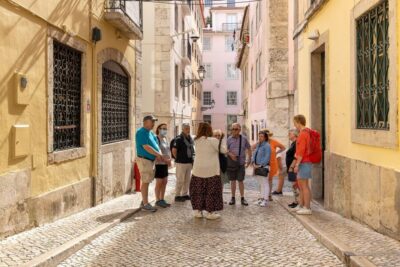

Best of Lisbon Small-Group Guided Walking Tour
Read our review →
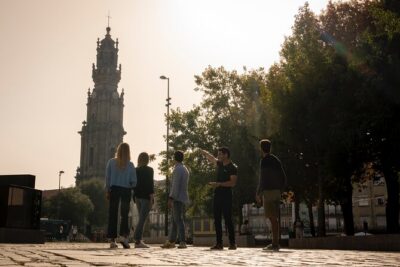
Porto Walking Tour, Lello Bookshop, River Cruise and Cable Car
Read our review →

Best of Lisbon Walking Tour: Rossio, Chiado & Alfama
Read our review →
Experience Porto’s Charm: 3-Hour Guided Walking Tour
Read our review →
Madeira: Enjoy a Guided Levada Walk in the Rabaçal Valley
Read our review →Browse the lists this tour appears in