
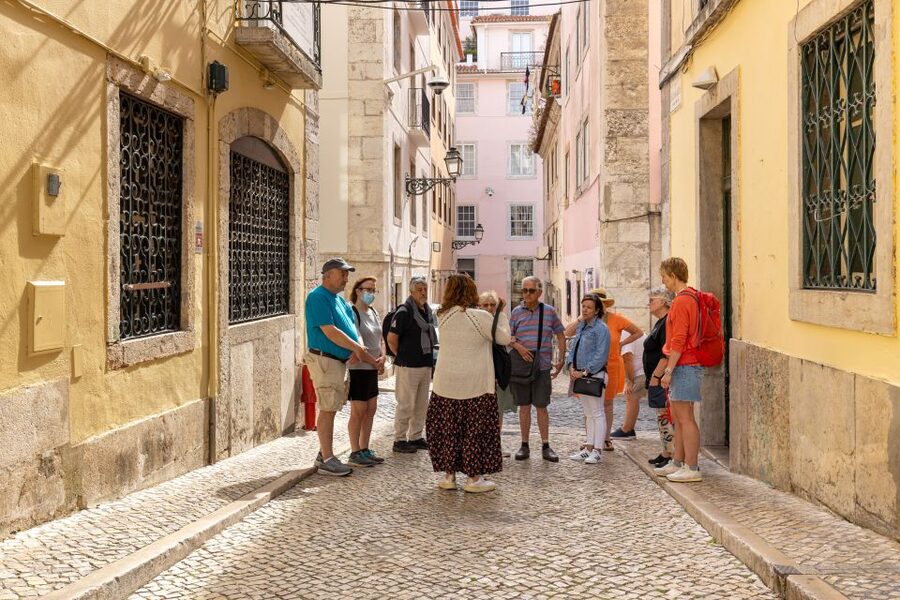
Review · HISTORY WALKING TOURS
Lisbon: History, Stories and Lifestyle Walking Tour
Lisbon rewards anyone willing to walk uphill. I like this tour because it links major sights with local stories instead of treating the city as a string of photo stops. I also like the tram ride and the simple Portuguese pause for coffee and pastel de nata. The main catch is the hills, steps, and uneven streets, so comfortable shoes matter.
At $29 per person, this is a strong introduction to Lisbon, especially at the start of a first visit. Guides such as Paulo, Ricardo, Beatrice, Anna, and João have been praised for clear storytelling, humor, and useful advice. Still, three hours goes quickly, and the tour may run beyond its scheduled finish, so avoid booking a tight afternoon plan afterward.
Key points at a glance
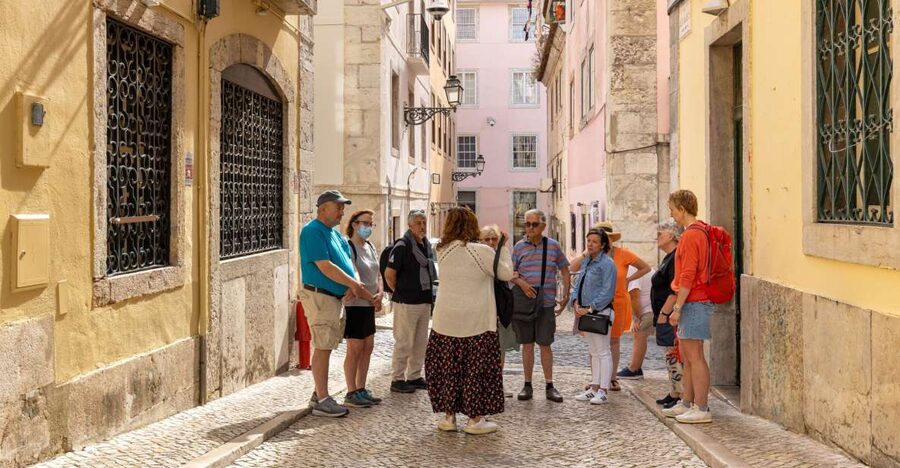
- Bairro Alto begins the story: See the 16th-century neighborhood and learn how Lisbon changed after the 1755 earthquake.
- São Pedro de Alcântara brings the views: Look across Baixa toward the south bank of the Tagus River.
- San Roque packs in the detail: Its plain exterior gives way to gilding, tiles, and paintings inside.
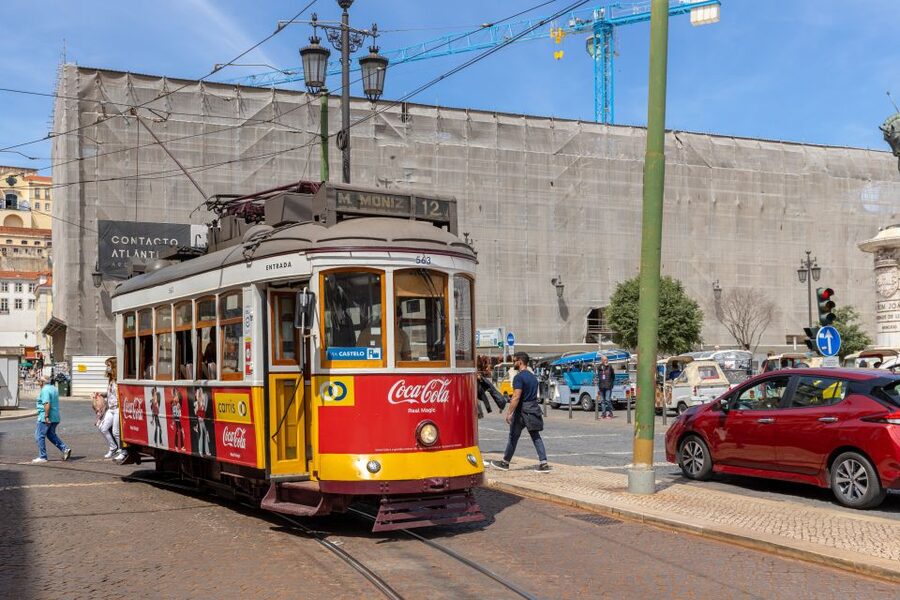
- The tram ride adds real Lisbon flavor: A short ride connects the central hills with the old neighborhoods near Portas do Sol.
- Alfama is the atmospheric finish: Narrow streets, fado houses, saint festivals, and centuries of layered architecture fill the final stretch.
- Coffee and cake make good sense: A bica and pastel de nata offer a small local break during a busy walking route.
Why this three-hour route works
Lisbon can feel confusing at first. The city spreads across several hills, and its neighborhoods change quickly from grand squares to narrow lanes. This tour gives you a useful map in your head: Bairro Alto above the center, Baixa below, the castle hill farther east, and Alfama falling toward the Tagus.
I like the route because it does not focus on one monument alone. You get architecture, political history, religion, public transport, city views, and everyday customs in one outing. That mix helps you understand why Lisbon looks the way it does, rather than simply collecting a list of famous places.
The pace is generally relaxed, with regular stops for explanations and photographs. One guide may spend extra time answering questions, while another may keep the group moving. The experience is available in English, Portuguese, Spanish, Italian, German, and French, with private and small-group options available.
Groups can be particularly rewarding here. Several guides have been praised for creating an easy atmosphere, and solo participants have found it a good way to meet people while getting oriented. A smaller group also makes it easier to hear on busy streets and ask about restaurants, neighborhoods, or later sightseeing.
More History Walking Tours in Lisbon
- Lisbon: Private Dark History Walking Tour with Drinks
★ 4.8 · 387 reviews - Lisbon Essential Walking Tour: History, Stories and Lifestyle
★ 5.0 · 316 reviews - Historic Walking Tour Through Lisbon’s Oldest Neighborhood
★ 5.0 · 233 reviews
Starting in Bairro Alto after five centuries of change
Bairro Alto is a fitting place to begin. The neighborhood dates from the 16th century, when Lisbon was expanding beyond its older center. Its name means upper district, and the elevated streets immediately remind you that Lisbon is not a flat city.
The guide explains how the area changed after the earthquake of 1755. Families from Baixa and nearby districts moved into or helped renew this part of the city, creating a new chapter in its development. That story gives you a useful way to read the streets, since Lisbon’s appearance is closely tied to the earthquake and the rebuilding that followed.
This opening section also introduces the tour’s main strength: connecting visible places to events you might otherwise miss. A street corner becomes part of a larger story about urban growth, disaster, migration, and renewal.
Expect some uphill walking early in the tour. The route has plenty of stops, but you should still wear shoes with good grip. If you have limited mobility, ask about the exact option you book, since the route includes hills, narrow streets, and steps.
São Pedro de Alcântara delivers one of Lisbon’s best views
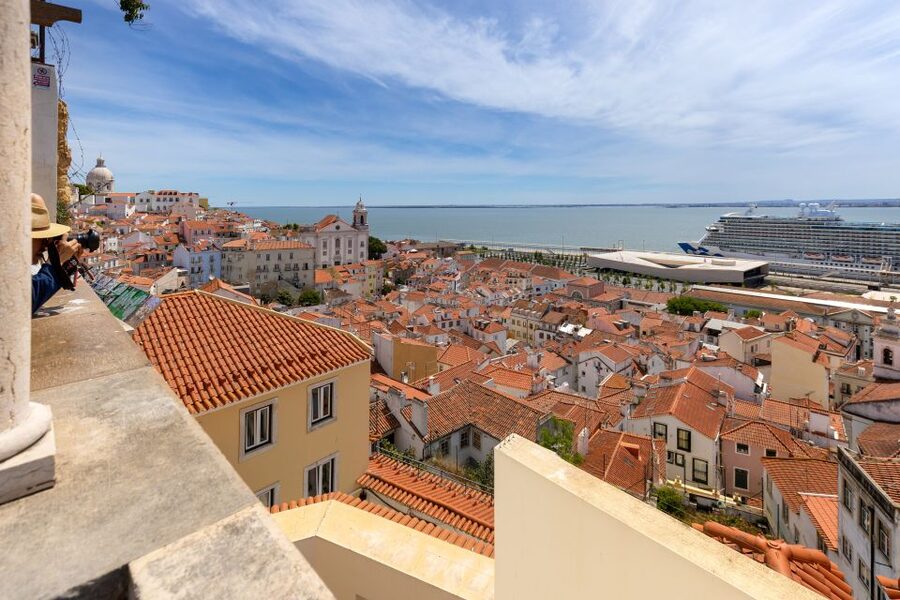
The garden at Miradouro São Pedro de Alcântara is one of the route’s visual rewards. From here, you can look over Baixa and across to the south bank of the Tagus River.
This is more than a quick photo stop. A guide can point out how Lisbon’s hills, central districts, and riverfront fit together. After walking through tightly packed streets, the open view gives you a welcome pause and helps you understand the city’s shape.
You will want a moment here for photographs, but do not rush off. The viewpoint is also a good place to ask practical questions about where to return later. Since the tour introduces many districts in a short time, these pauses help fix each neighborhood in your memory.
San Roque Church hides its best work inside
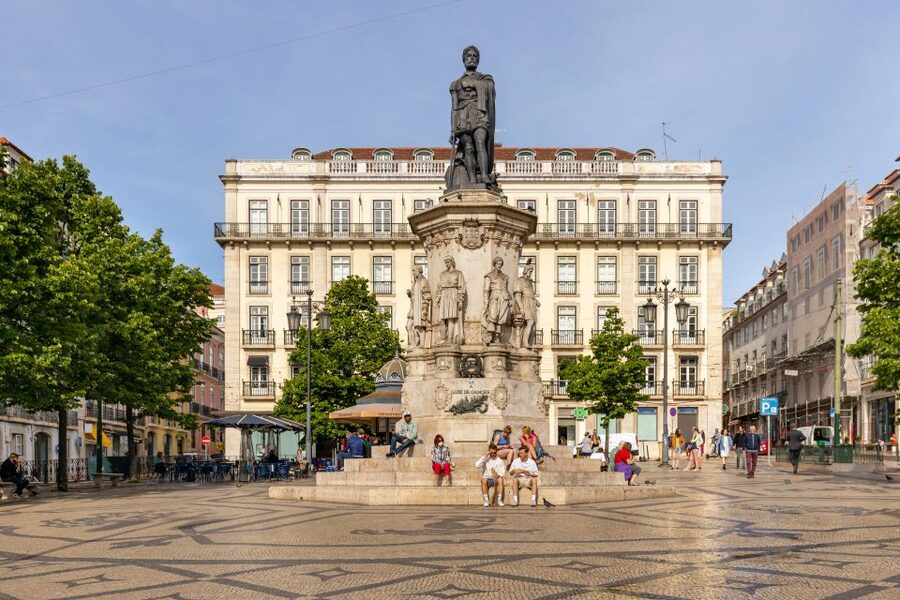
The Church of São Roque has an austere exterior, but the inside is far more decorative. Jesuit influence, gilding, tiles, and paintings create a sharp contrast with the plain façade.
I like this stop because it rewards closer looking. You are not simply being told that Lisbon has beautiful churches. You can see how different artistic styles, especially Mannerist and Baroque work, appear in one building.
The guide’s explanation matters here. Without context, the church can feel like another ornate interior. With a little background, the details become easier to read, from the arrangement of the decoration to the contrast between restraint outside and display within.
If churches are not your main interest, this is still a useful short stop because it adds another layer to Lisbon’s story. The tour does not linger only on scenic streets and overlooks. It shows how faith, art, and civic life shaped the city.
More History Walking Tours in Portugal
- Lisbon: 3-Hour The Slave Trade – An Historical Walking Tour
★ 4.9 · 179 reviews - Porto: Historic City Center Walking Tour
★ 4.7 · 1,172 reviews - Porto: Historical Center Walking Tour
★ 4.8 · 898 reviews - Porto: Jewish Heritage Walking Tour
★ 4.7 · 266 reviews
Carmo connects Gothic ruins with the 1974 revolution
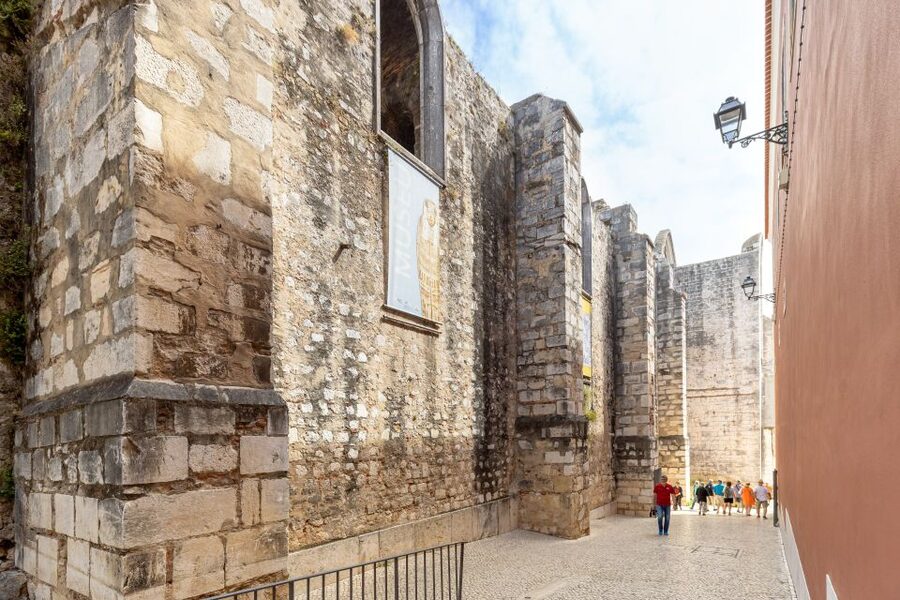
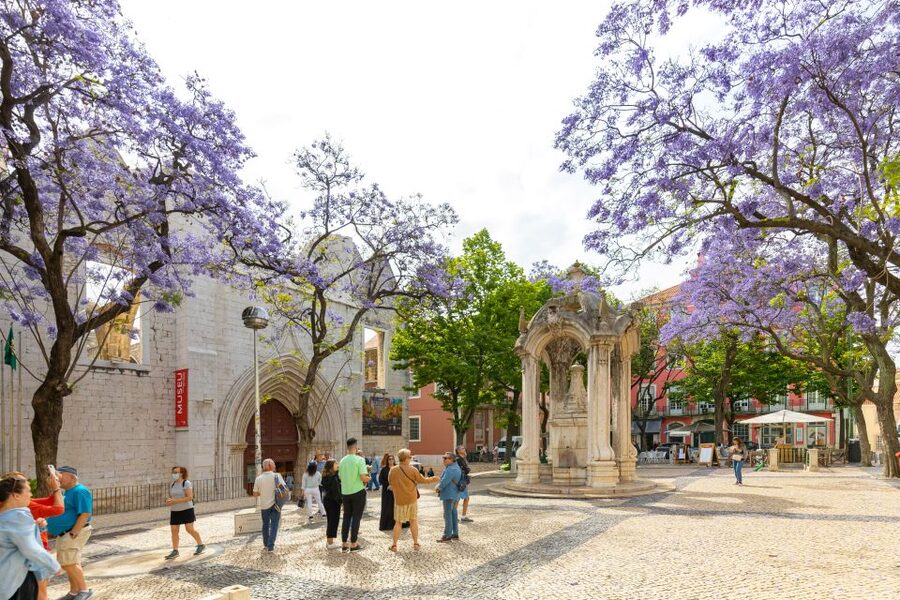
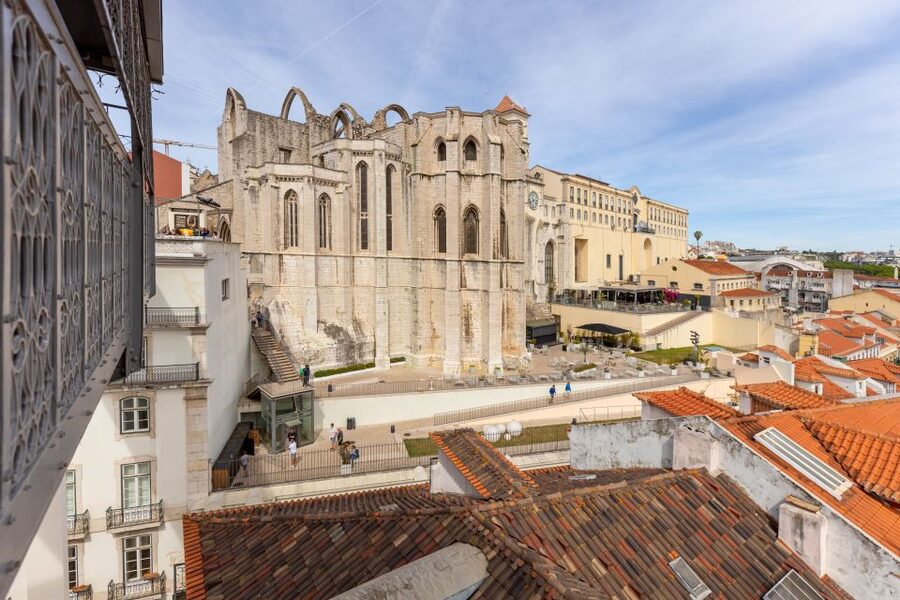
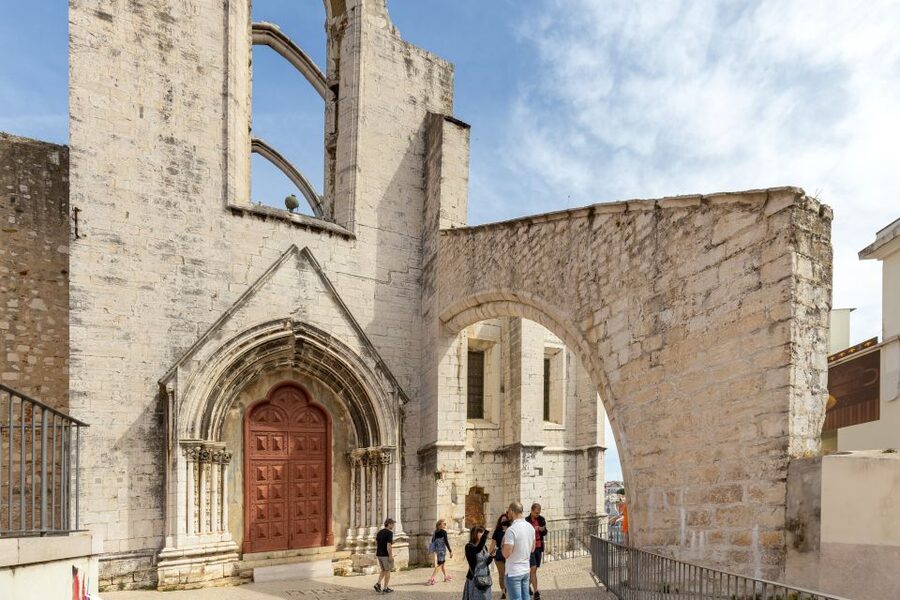
Walking downhill brings you to the Carmo convent and church, important examples of Lisbon’s Gothic architecture. The site is also tied to the Carnation Revolution of 1974, which ended almost five decades of dictatorship in Portugal.
This is one of the most worthwhile historical stops on the tour. You get architecture from an earlier era and a clear link to modern Portugal. The revolution began here, making the site more than a picturesque ruin or church façade.
Several guides have been praised for explaining the revolution in a personal and understandable way. Paulo, who lived through it as a child, has been able to add a particularly direct perspective on Lisbon life before and after 1974. That sort of local memory can make political history feel less remote.
You should pay attention here even if you came mainly for old buildings. Portugal’s recent past is essential to understanding the country, and this stop gives you a concise introduction without turning the walk into a lecture.
Santa Justa and Baixa show Lisbon’s central stage
The Santa Justa elevator is an imposing Gothic Revival structure and one of the most recognizable sights in central Lisbon. It links the lower Baixa area with the higher streets around Carmo, while also providing a well-known city viewpoint.
The tour does not simply point at the elevator and move on. You see it as part of Baixa, the rebuilt heart of Lisbon. The earthquake and later reconstruction help explain the orderly central streets and grand urban design below.
Baixa is a good contrast with Bairro Alto. The upper neighborhood feels more intimate and irregular, while the central district presents a more planned face. Moving between the two gives you a practical sense of how Lisbon’s architecture changes from hill to valley.
The Santa Justa area can be busy. Your guide should help keep the group together, but you may not have much time for a long wait or a separate ride on the elevator itself. The tour’s focus is the monument, the view, and the surrounding district.
After this section comes a short break. The included coffee and cake are modest but useful. A Portuguese bica, usually a small espresso, and a pastel de nata give you a taste of a daily Lisbon ritual while putting a little energy back into your legs.
The tram ride turns sightseeing into city life
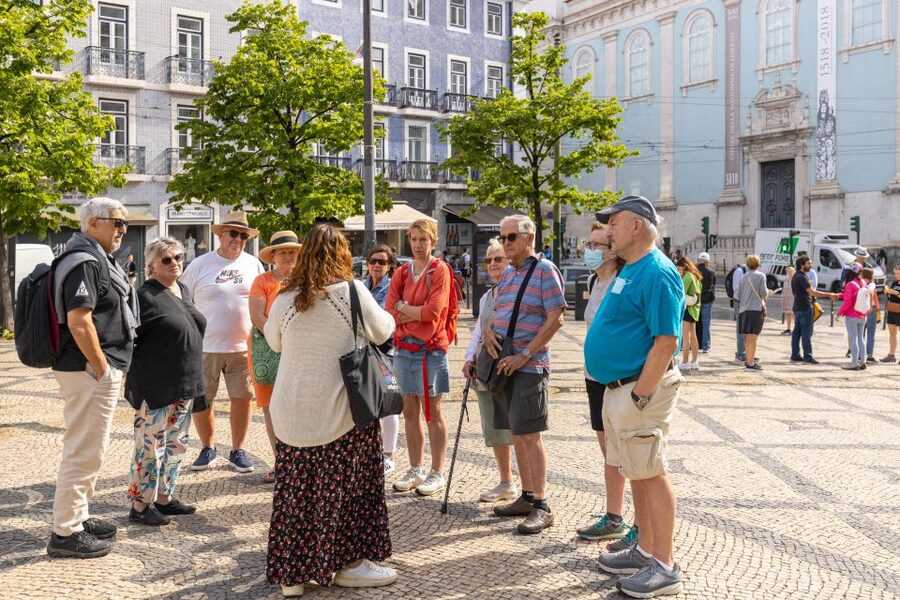
The tram is not just a convenient way to cover ground. Lisbon’s iconic streetcars are part of the city’s identity, and riding one gives the tour a welcome change of pace.
The route heads upward from the castle area toward Portas do Sol. On a walking tour filled with hills, even a short tram trip feels like a relief. It also lets you experience a piece of Lisbon’s public transport rather than viewing the city only from the pavement.
The tram can be affected by ordinary city problems. One tour had to change course when a tram broke down, while heavy rain added another challenge. The guide adapted, and the experience still worked well. That is worth keeping in mind: the tram is a highlight, but it is not fully under the tour operator’s control.
A ride on route 12 has been included on some outings. Your exact tram and route can depend on the option and conditions that day, so treat the journey as a flexible part of the experience rather than a guaranteed private ride.
Portas do Sol opens the way to Alfama
At Portas do Sol, the city opens toward the Tagus again. From this viewpoint, you can see the Monastery of São Vicente de Fora, the National Pantheon, and the dense old quarter of Alfama spreading down toward the river.
This is where the tour shifts from broad city history to neighborhood life. The view gives you the big picture, then the walk takes you into smaller streets where the city feels older and more personal.
The guide can help you identify landmarks that might otherwise blend together. The monastery and National Pantheon are not just names on a map. They help explain the religious, national, and civic importance of this part of Lisbon.
Portas do Sol can be crowded, and the narrow streets ahead are not always easy for a whole group. Stay close to the guide, especially when the route moves through busy lanes or near tram traffic.
Alfama brings the tour down to street level
Alfama is one of Lisbon’s oldest and most traditional neighborhoods. Its narrow streets and lanes run toward the Tagus, creating the kind of compact, winding setting that makes a guided walk especially useful.
You will hear about fado houses and the popular festivals of the saints, particularly the celebrations connected with Saint Anthony. These details show Alfama as a living neighborhood, not simply an old quarter preserved for sightseeing.
The area rewards patience. Doorways, tiled walls, small squares, and changing views appear in quick succession. You may find yourself wanting to stop often, so keep your camera ready but do not let it distract you from the guide.
Alfama is also where the physical demands of the tour are most noticeable. The route includes narrow streets and steps, though the guides are often praised for keeping a comfortable pace and making regular stops. Be realistic about your energy, especially in hot weather or rain.
Lisbon Cathedral finishes the historical arc
The tour ends at Lisbon Cathedral, built in 1150, only three years after the city was taken back from the Moors. Centuries of additions and changes have left the cathedral with a mixture of architectural styles.
That layered appearance makes it a fitting final stop. The tour has moved through different periods of Lisbon’s past, from medieval rule and Gothic construction to the earthquake, Baroque decoration, and the Carnation Revolution. The cathedral gathers several of those time periods into one building.
Ending here also gives you a useful location for continuing your own sightseeing. You are in the older eastern part of central Lisbon, close to more streets and attractions worth exploring at your own pace.
The guides are the main reason to book
The route is good, but the guide makes the difference. Paulo has been praised for combining personal memories with history. Ricardo is often described as warm, engaging, and generous with local suggestions. Beatrice has been praised for her energy and for adjusting the pace to suit older members of a group.
Anna has handled rain and a broken tram with calm flexibility. João has been singled out for making a rainy, windy afternoon enjoyable, while Lucie, Helena, Raquel, Claudio, and others have received praise for clear explanations and friendly service.
Names and personalities can change with the date you book, so I would not choose the tour solely because you hope for one particular guide. The repeated pattern is more useful: the guides tend to explain Lisbon with humor, answer questions, and share personal or local context.
A small group is worth considering if the price difference is reasonable for you. It makes the narrow streets easier, gives you more chances to ask questions, and can turn the walk into something close to a private introduction.
Is $29 good value?
At $29, the tour offers three hours of guiding, a walking route through several major districts, a tram ride, coffee, and cake. I consider that good value for a first visit, especially because independent sightseeing can make Lisbon’s hills and neighborhoods feel disconnected.
The value is not in the pastry alone. It is in the structure. You see Bairro Alto, São Pedro de Alcântara, São Roque, Carmo, Santa Justa, Baixa, Portas do Sol, Alfama, and the cathedral without spending time figuring out how each place connects.
You do give up flexibility. The group follows a set route, and you will not have long visits inside every church or monument. If you prefer slow photography, museum time, or shopping, a self-guided day may suit you better.
Book with a little space after the three-hour window. Some tours run over because the guide is answering questions or finishing a section without rushing the group.
Who should take this walking tour?
I would choose this for a first visit to Lisbon, especially during the first day or two. It gives you orientation, history, transport, viewpoints, and neighborhood context before you explore on your own.
It also suits solo visitors, couples, and families with older children who can manage hills and steps. The relaxed pace and frequent stops help, but this is still a walking tour across uneven urban ground.
You may want a different experience if you dislike group schedules, have difficulty with steep streets, or want a specialist focus on food, art, or fado. The route offers a broad introduction rather than a deep visit to one subject.
Should you book it?
Book it if you want a friendly, efficient introduction to Lisbon with strong local storytelling and a useful mix of major sights and everyday culture. The tram, viewpoint stops, Alfama lanes, and coffee break keep the three hours varied.
I would especially recommend it at the beginning of a Lisbon stay. You will leave with a clearer sense of where Bairro Alto, Baixa, the castle hill, and Alfama sit, plus several ideas for places to revisit.
Skip it if you need a completely flat route or prefer to set your own pace. For most first-time visitors who can handle Lisbon’s hills, $29 is a sensible price for a well-organized overview led by guides who clearly care about their city.
FAQ
How long does the Lisbon walking tour last?
The tour lasts three hours. You should leave some extra time afterward because the walk may occasionally run beyond the scheduled duration.
What is included in the price?
The price includes a live guide, the walking tour, a tram trip, coffee, and cake.
Does the tour include hotel pickup and drop-off?
No. Hotel pickup and drop-off are not included.
Which languages are available?
The tour is available in Portuguese, Spanish, Italian, German, French, and English.
Is the tour private or shared?
Both private and small-group options are available. The exact group type depends on the option you book.
Can I cancel for a full refund?
Yes. You can cancel up to 24 hours in advance for a full refund. You can also reserve now and pay later, according to the booking terms provided.
Just added around Lisbon
- Small Group Walking Tour of Belém★ 4.9 · 80 reviews
- Lisbon Tram No. 28 Ride & Walking Tour★ 4.1 · 766 reviews
- Lisbon: Walking Tour in the Center (Max 12 Participants)★ 5.0 · 741 reviews
- Lisbon Through the Eyes of a Local – Food and Walking Tour★ 4.9 · 141 reviews
- Lisbon: Private Boat Trip, Guided Walking Tour, Bike & Tram★ 4.8 · 116 reviews
- Lisbon: Kickstart Street Art Walking Tour★ 4.9 · 717 reviews
- Lisbon: Food & Wine Walking Tour Through Baixa★ 4.9 · 287 reviews
- Lisbon: Helicopter Ride, Boat Trip, & Old Town Walking Tour★ 4.7 · 480 reviews
History Walking Tours, compared.
History and Hauntings of Salem Guided Walking Tour
Read our review →
Freedom Trail History Small Group Walking Tour
Read our review →
Historic Charleston Guided Sightseeing Walking Tour
Read our review →
Tapas Walking Tour with Food, Wine, and History
Read our review →
Savannah History and Haunts Candlelit Ghost Walking Tour
Read our review →
A History of Terror – Belfast City Centre Walking Tour
Read our review →
New Orleans Garden District History Walking Tour
Read our review →Browse the lists this tour appears in