
Review · LISBON WALKING TOURS
Lisbon: Walking Tour in the Center (Max 12 Participants)
Lisbon rewards walkers with every uphill step. This 3.5-hour tour links Baixa, Chiado, Bairro Alto, and Alfama in one well-planned route, so you get a clear first look at the city instead of a scattered set of sights. I like the small group limit of 12, and I like that the walk finishes beside the Tagus at Praça do Comércio. The main catch is physical: you climb and descend three hills, and the pace may feel demanding if you have mobility limits.
I also like the human touch from guides such as Pedro, Sara, and Melina. Pedro received especially strong praise for making the tour lively and memorable, while Sara was noted for handling rainy weather with good humor and useful local advice. The only real limitation is that the route favors broad orientation over long visits inside individual monuments, so you see many places but do not spend much time exploring each one.
Key points at a glance
- Three Lisbon hills in one walk: Expect real slopes, stairs, and changing views as you move between Baixa, Chiado, Bairro Alto, and Alfama.
- A compact group of up to 12: The small size should make it easier to hear the guide and ask questions.
- A strong historic center route: The walk covers Rossio Square, the Santa Justa Lift, Carmo Monastery, Chiado, Bairro Alto, Alfama, and the Arco de Rua Augusta.
- A superb river finish: The tour ends at Praça do Comércio, directly beside the Tagus.
- German-language guiding: The stated live guide language is German, with a private option available.
- Bring proper walking gear: Comfortable shoes, sunscreen, and water matter here. Leave large bags and strollers behind.
Meeting at Rossio Square
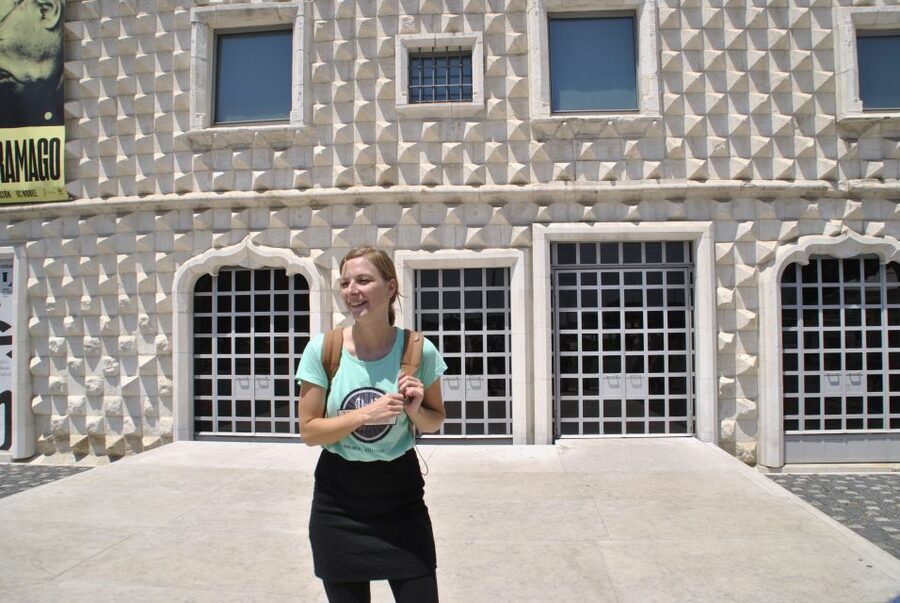
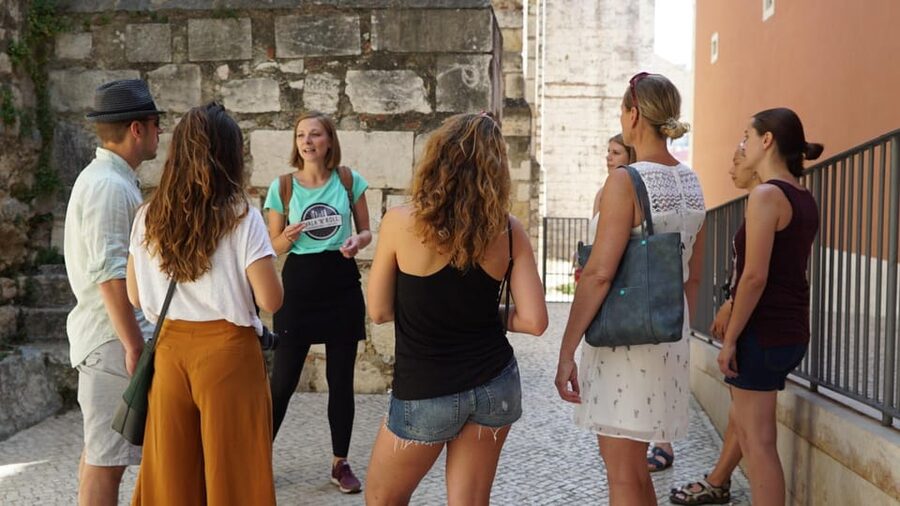
Your starting point is the north fountain in Rossio Square, between the National Theater and the Royal Statue. Look for a guide wearing a mint-colored WALK ‘N’ ROLL shirt or carrying a matching burlap bag.
Rossio is a sensible place to begin. It sits in the middle of Lisbon’s historic core, and from here the route quickly moves into Baixa, the lower town. I recommend arriving with enough time to locate the fountain without rushing. A central square can be busy, and finding the guide is easier when you know exactly which landmark to use.
The group option is capped at 12 people. That is a useful middle ground. You get the social feel and lower price of a shared walk, but not the crowd of a large sightseeing group. If you want the guide’s attention focused only on your party, a private version is also available.
The listed price is $47 per person. That is fair value if you want a structured introduction to central Lisbon, especially since the route covers several districts and includes guiding throughout. It is less compelling if you want entry time at several monuments, since this is mainly an outdoor walking tour rather than an attraction-hopping ticket.
A few more walks around Lisbon worth a look
- Lisbon: History, Stories and Lifestyle Walking Tour
★ 4.8 · 10,902 reviews - Best of Lisbon Small-Group Guided Walking Tour
★ 5.0 · 4,869 reviews - Lisbon: Food and Wine Small Group Walking Tour
★ 4.9 · 4,082 reviews
Baixa and the lower town
From Rossio, you enter Baixa, Lisbon’s lower town. This area gives you the clearest sense of the city’s central layout, with broad streets and major squares replacing the tight lanes found later in Alfama.
A guide can help turn a simple walk into a useful orientation lesson. You will learn about Portuguese history and culture while moving through the streets, rather than stopping only for photographs. That matters on a first visit, because Baixa becomes a reference point for finding your way between the higher neighborhoods and the river.
The walk is also a good chance to notice Lisbon’s decorative tiles. They are not just pretty surfaces for photographs. They are one of the visual details that give the city its particular character, and the route brings you past some of the most attractive examples.
Do not expect Baixa to feel like a quiet old village. It is the practical center of the city, with a steady flow of people and activity. That makes it useful for orientation, though anyone seeking a slow, atmospheric stroll may prefer the later sections in Alfama.
The Santa Justa Lift and Carmo Monastery
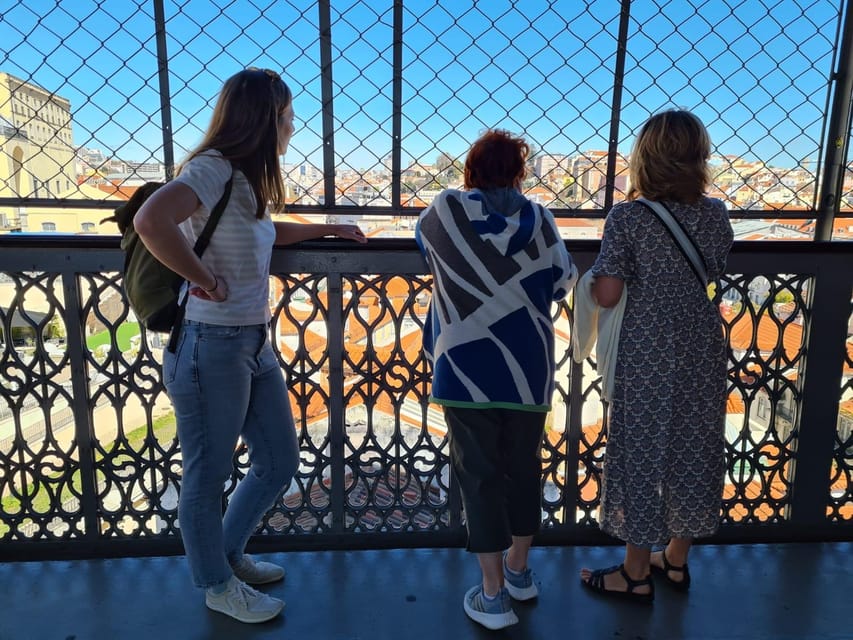
The Santa Justa Lift is one of Lisbon’s most recognizable sights. Its iron structure rises above the streets and offers a striking example of the city’s historic public works. On this tour, you admire it from the outside as the guide explains its place in central Lisbon.
The route then climbs toward the Carmo Monastery ruins. This is the first major uphill section, and it sets the tone for the rest of the walk. You should not treat the hills as a minor detail. Lisbon’s slopes are part of the experience, but they require energy, especially under strong sun or in wet weather.
The Carmo ruins are memorable because the open arches leave the damaged church exposed to the sky. Even without a long interior visit, the site gives the guide a natural way to explain major events in Portuguese history and the changing face of the city.
You will have time to look and listen, but this is not a museum visit with an extended stop inside. If your main goal is to study the Carmo site at length, plan to return on your own. The tour’s strength is the connection between places, not exhaustive time at one monument.
Chiado, the poets’ quarter
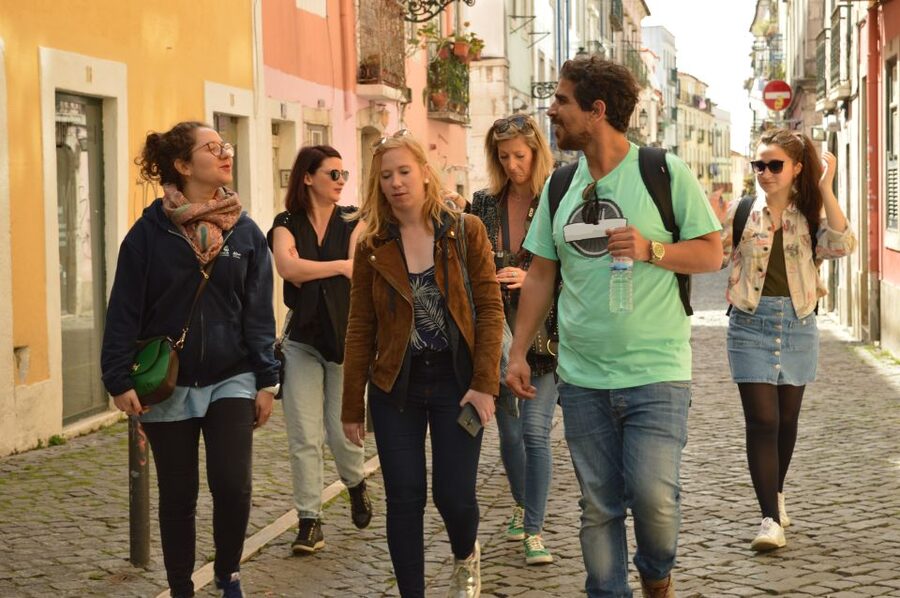
From Carmo, the route continues into Chiado, known here as the former quarter of poets. This section changes the mood again. After the formal streets of Baixa and the solemn ruins of Carmo, Chiado brings you into an area associated with literary and cultural life.
The guide’s explanations are important in this neighborhood because the streets alone do not always reveal why a place matters. The route gives you context while you walk, and that helps turn Chiado from a shopping district into a part of Lisbon’s cultural story.
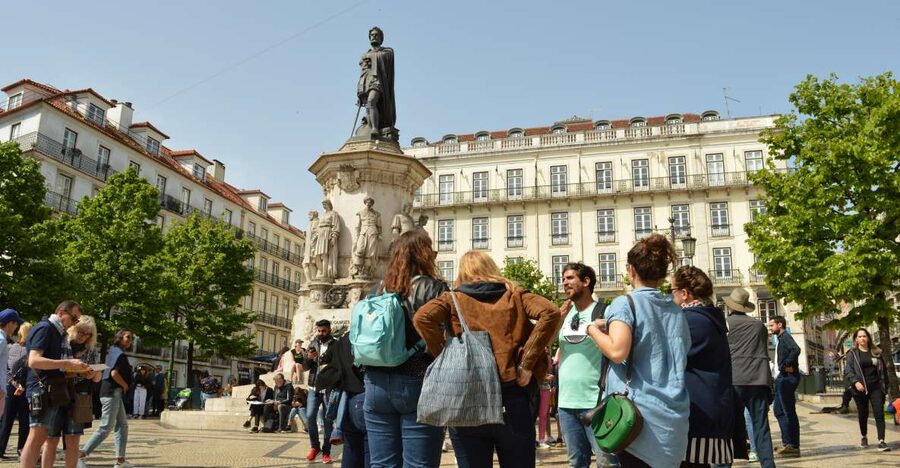
You then reach Praça Luís de Camões, a useful landmark between Chiado and Bairro Alto. The square helps mark the transition from the lower central streets to Lisbon’s higher districts. It is also a sensible pause point before the route continues uphill.
The tour does not promise a large number of formal attraction entries. Instead, you learn by moving through the city. I find that approach useful for a first day, when you want to understand how the neighborhoods connect before choosing which places deserve a longer return visit.
Same streets, a different way to see them:
- Best of Lisbon Walking Tour: Rossio, Chiado & Alfama
★ 4.9 · 2,700 reviews - Age of Discoveries Walking Tour in Belém
★ 5.0 · 1,513 reviews - Lisbon Food Tour with 10+ Tastings of Local Delicacies & Wines
★ 5.0 · 1,339 reviews - Sintra & Cascais Day Tour with Pena Palace Entry and Gardens Walk
★ 5.0 · 962 reviews
Bairro Alto and the first real workout
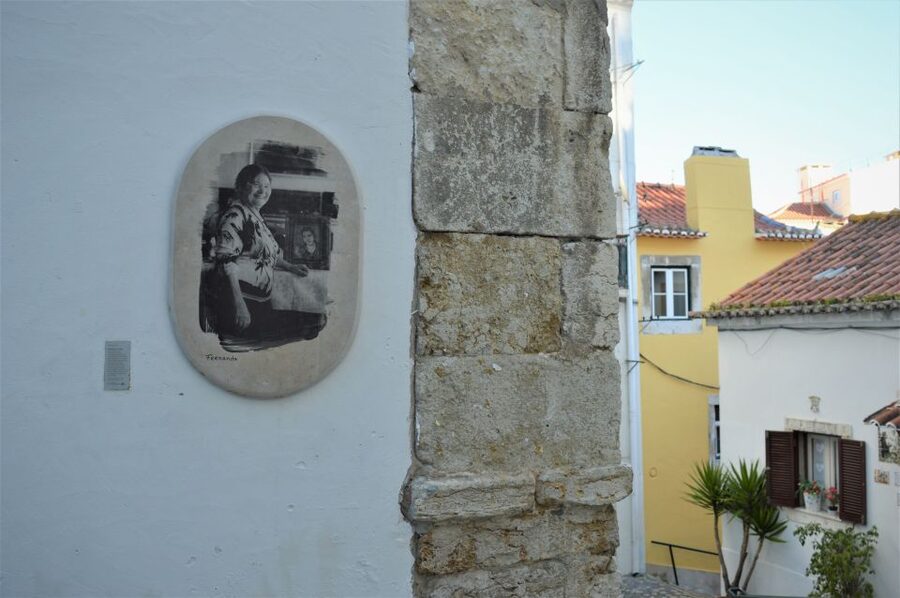
Bairro Alto is known as a residential and nightlife district, but during this daytime walk you see more than its evening reputation. The route shows how the neighborhood fits into the historic center and how sharply Lisbon’s character changes from one district to the next.
This is another uphill stretch, followed by a short break to catch your breath. The planned break is welcome. It gives you time to recover, take in the surroundings, and listen without trying to walk and concentrate at the same time.
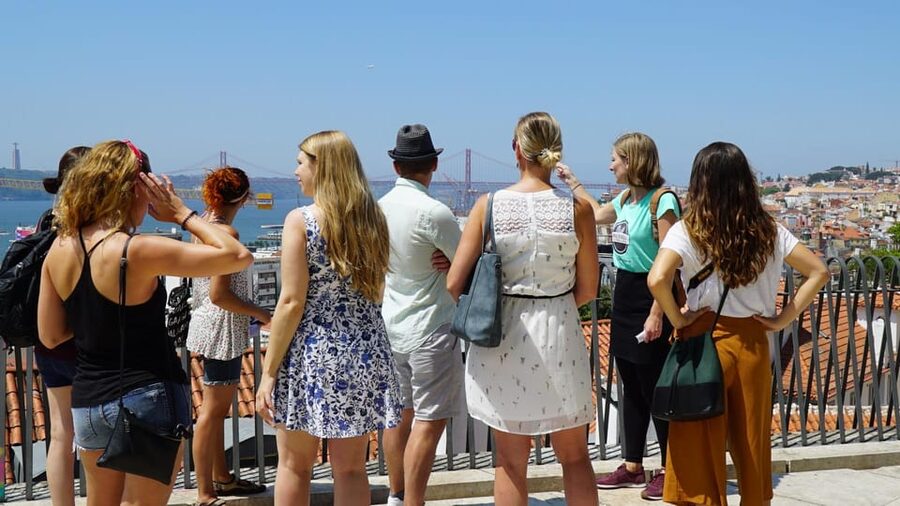
The route then reaches the Miradouro de São Pedro de Alcântara, one of the best viewing points on the walk. From here, the city opens out below you. The viewpoint is particularly useful because it lets you see Lisbon as a layered city, with the lower streets, rooftops, and hills arranged in one broad scene.
A 30-minute break is scheduled at this viewpoint. That is a generous pause for a walking tour. You can use it to rest and take photographs, though the exact feel of the stop will depend on weather and group pace.
This is where good footwear earns its keep. Lisbon’s hills can make a short distance feel much longer, and the tour continues after the break. Bring water and sunscreen. The activity runs rain or shine, so a wet forecast should affect your clothing choice, not just your mood.
Down toward the river and Rua Augusta
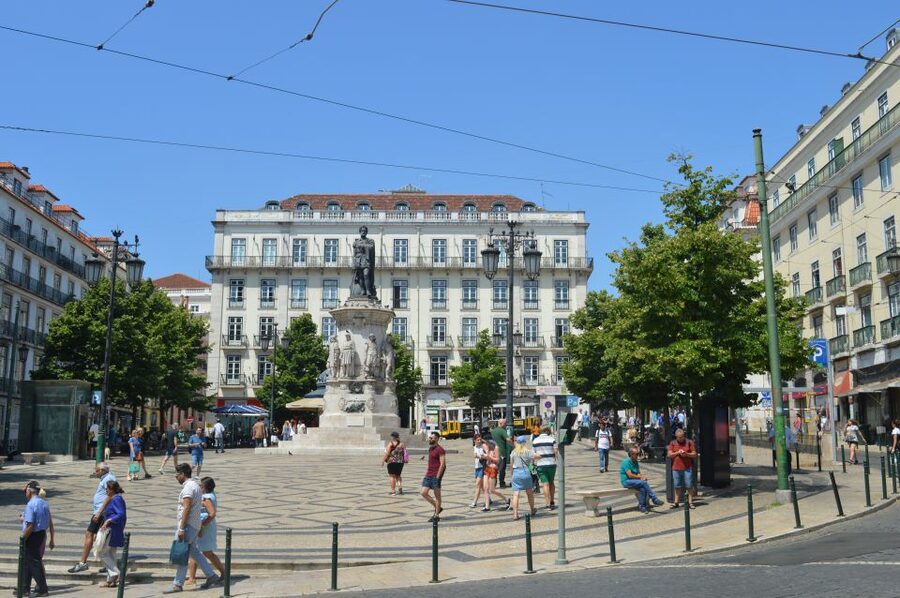
After the viewpoint, the route works its way back toward the lower city and Rua Augusta. This broad central street leads toward the river and the Arco de Rua Augusta, making it one of the clearest approaches to Praça do Comércio.
There is a brief tasting stop on Rua Augusta. The included item is listed as a liquor tasting, while food is not included. If you are hungry, do not count on this as a snack or meal. It is a small cultural touch, not a substitute for lunch.
That distinction matters when planning the timing. The tour lasts 3.5 hours, and the route includes several hills, a 30-minute break, sightseeing, and the short tasting. You may want to eat before starting or arrange food afterward, rather than expecting the tasting to carry you through the walk.
Alfama and the Tagus viewpoint
The route next heads toward Alfama, Lisbon’s oldest-feeling quarter, with winding alleys and a more intimate street pattern. This is one of the sections where walking matters most. A vehicle could take you near Alfama, but it could not give you the same sense of its narrow lanes and sudden changes in direction.
The neighborhood also brings the tour’s most romantic moments. You will follow the guide through the old streets before reaching a viewpoint over the Tagus. The river view gives the walk a strong visual payoff, especially after the climbs and descents earlier in the day.
Alfama is also where you should pay attention to the surface under your feet. The route is not suitable for people with mobility impairments or wheelchair users, and the activity information specifically warns about the three hills. Even able walkers should take the warning seriously. If you dislike steep streets or tire easily, this is not the best way to see central Lisbon.
The tour does not list a specific Alfama monument entry. Its value here comes from the streets, the viewpoint, and the guide’s explanation of Portuguese culture and history. You get a neighborhood overview rather than a deep visit to one church, museum, or castle.
Finishing at Praça do Comércio

The final stretch leads to the Arco de Rua Augusta and Praça do Comércio, right on the Tagus. This is a fitting end because the square brings together Lisbon’s grand central architecture and its connection to the river.
I like tours that finish somewhere useful, and this one does. Praça do Comércio is not just a photo stop. Once the walk ends, you are in a central riverside area with a clear sense of where you are in relation to Baixa and the water.
The finish also gives you a natural moment to decide what comes next. You may want to continue along the river, find a meal, or return to one of the neighborhoods for a slower look. Since the tour covers many districts at a steady pace, that follow-up time can be valuable.
One point to keep in mind is that the walk covers a lot of ground. A four-star assessment in the supplied feedback noted that the route showed much of the center but could have included one or two more sights. That is a fair observation, though adding more stops would also make the already demanding walk longer. The tour chooses coverage and context over a packed list of monuments.
Guides, group size, and the feel of the walk
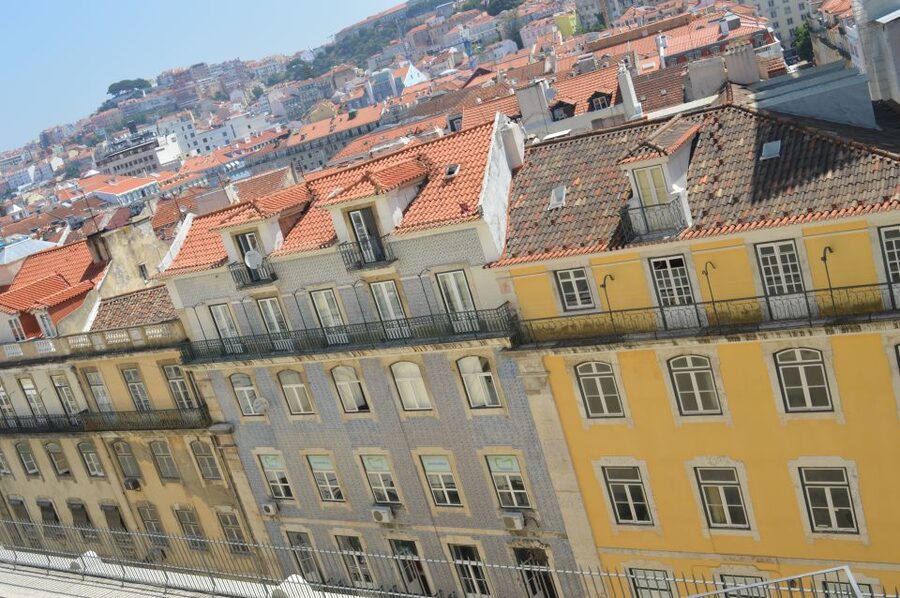
The strongest praise centers on the guides’ ability to make the history clear and entertaining. Pedro was described as phenomenal, with one rating calling the walk the best city tour the writer had taken. Sara was praised for guiding with useful information and good humor despite difficult rainy weather. Melina was noted for giving a lively look at Lisbon’s history and people, along with helpful advice for the rest of the visit.
Those details point to the experience’s main strength: the guide shapes the day. The route itself is strong, but the quality of the explanations determines whether the hills feel worthwhile or simply tiring.
The listed live tour language is German. Confirm that this suits your group before booking. The private option may be worth considering if your party wants a more personal pace or has specific interests, but the shared group already stays relatively small at 12 people.
Who should book this Lisbon walk?
I would recommend it for a first visit when you want a clear picture of central Lisbon in half a day. It suits people who like learning as they walk, want several neighborhoods in one outing, and do not mind hills.
It is also a good choice early in a Lisbon stay. The viewpoints, district connections, and guide tips can help you choose where to spend more time afterward. The tour gives you a working map of the center, not just a collection of isolated stops.
I would be cautious if you have mobility limitations, use a wheelchair, need a stroller, or plan to carry luggage. Baby strollers, large bags, and luggage are not allowed, and the terrain requires repeated uphill and downhill walking.
Book this tour if you want an active introduction, a small group, German-language guidance, and a strong riverfront finish for $47. Skip it if your priority is extended indoor sightseeing, a gentle flat route, or a meal-centered experience. For most reasonably fit walkers, the mix of views, old streets, tiles, history, and practical city orientation makes it a sound way to meet Lisbon.
FAQ
How long does the Lisbon walking tour last?
The tour lasts 3.5 hours.
Where does the tour start?
It starts at the north fountain in Rossio Square, between the National Theater and the Royal Statue.
Where does the tour finish?
The walk finishes at Praça do Comércio, beside the Tagus River, near the Arco de Rua Augusta.
How large is the group?
The shared group experience has a maximum of 12 participants. A private group option is also available.
Is the tour available in English?
The listed live guide language is German. The provided activity information does not list English as a guide language.
How difficult is the walk?
The route includes a fair amount of walking up and down three Lisbon hills. Comfortable shoes, water, and sunscreen are recommended. The tour is not suitable for people with mobility impairments or wheelchair users.
What happens if it rains?
The tour runs rain or shine. You can cancel up to 24 hours in advance for a full refund, and the booking option allows you to reserve now and pay later.
Just added around Lisbon
- Small Group Walking Tour of Belém★ 4.9 · 80 reviews
- Lisbon Tram No. 28 Ride & Walking Tour★ 4.1 · 766 reviews
- Lisbon Through the Eyes of a Local – Food and Walking Tour★ 4.9 · 141 reviews
- Lisbon: Private Boat Trip, Guided Walking Tour, Bike & Tram★ 4.8 · 116 reviews
- Lisbon: Helicopter Ride, Boat Trip, & Old Town Walking Tour★ 4.7 · 480 reviews
- Lisbon: Street Art Walk★ 5.0 · 79 reviews
- Lisbon: Kickstart Street Art Walking Tour★ 4.9 · 717 reviews
- Lisbon: Food & Wine Walking Tour Through Baixa★ 4.9 · 287 reviews
Lisbon Walking Tours, compared.
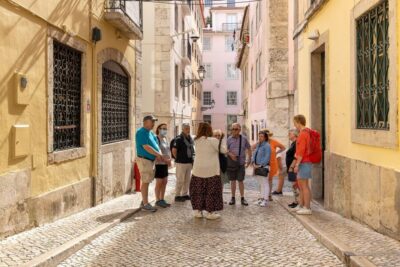

Best of Lisbon Small-Group Guided Walking Tour
Read our review →

Best of Lisbon Walking Tour: Rossio, Chiado & Alfama
Read our review →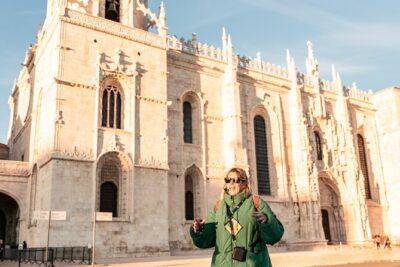

Lisbon Food Tour with 10+ Tastings of Local Delicacies & Wines
Read our review →
Sintra & Cascais Day Tour with Pena Palace Entry and Gardens Walk
Read our review →
Lisbon Roots – Small group Food & Culture Walking Tour w/tastings
Read our review →Browse the lists this tour appears in