
Review · STREET ART WALKING TOURS
Lisbon: Kickstart Street Art Walking Tour
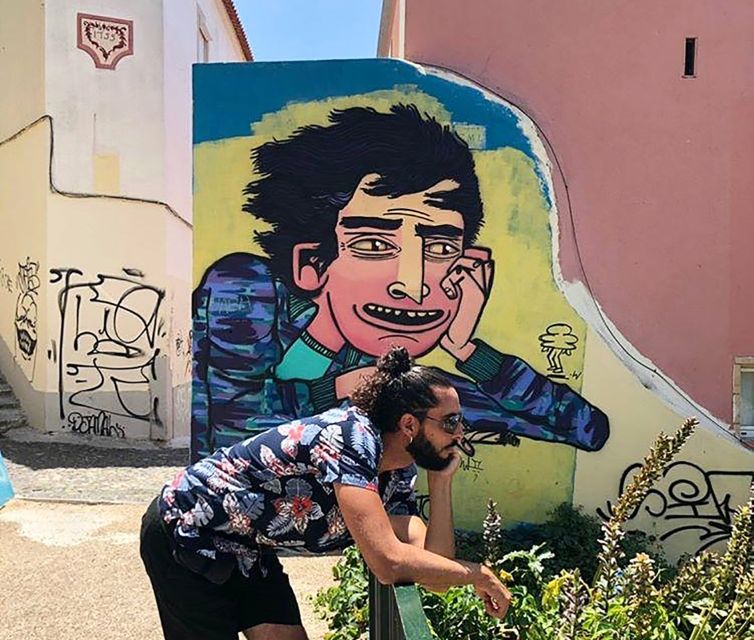
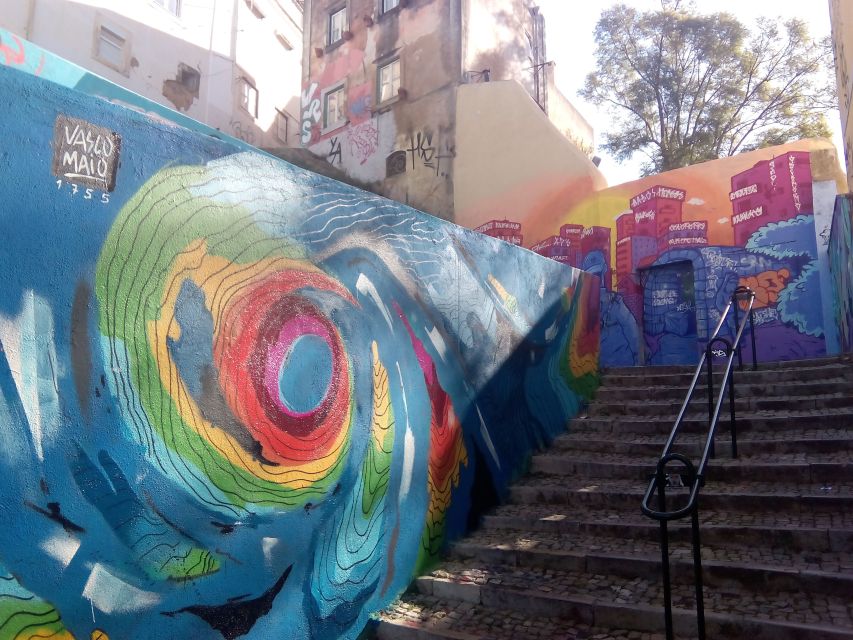
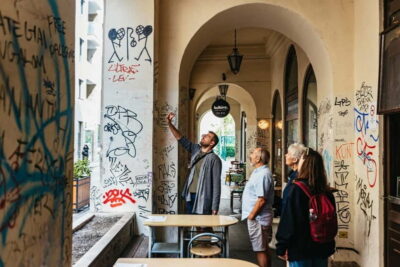
Lisbon paints beyond its postcards. This 90-minute walk through Graça connects huge murals, tucked-away walls, and the city’s older streets with clear explanations of the artists and local scene. I like the strong mix of art and neighborhood history, and I like the chance to see major works by Vhils, Obey Giant, Add Fuel, Isa Silva, Daniel Eime, and Ozearv. The main catch is simple: Graça means hills, stairs, and uneven streets, so this is not a good fit if walking is difficult.
The guides make the difference. Igor is an artist with deep ties to Lisbon’s street art scene, while Cátia has also guided the walk with energy and first-hand insight; other guides may lead the tour as well. I especially like that you learn how to read a mural, spot artistic rivalries, and understand street art etiquette instead of merely collecting photos. Bring sun protection, wear good shoes, and leave the large bag at your hotel.
Key points at a glance
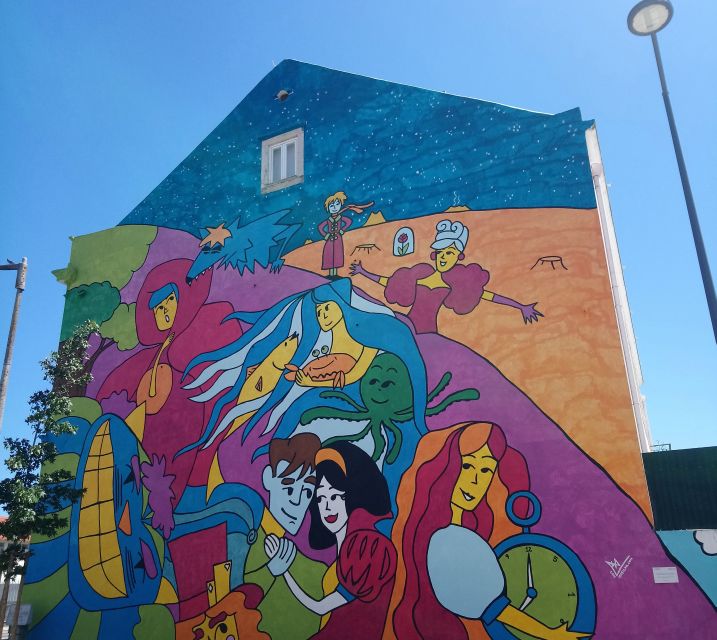
- Graça’s back streets: See urban art in side lanes and walls you would be unlikely to find on a standard city walk.
- Major artists in one compact route: Look for work by Vhils, Obey Giant, Add Fuel, Isa Silva, Daniel Eime, Ozearv, Jorge Romão, Lili Marlit, and Moami.
- A women-led International Women’s Day gallery: Visit a striking gallery created for International Women’s Day 2025.
- Street art with context: Learn the codes, etiquette, rivalries, and social ideas behind the work.
- A useful Lisbon introduction: The walk gives you a broad sense of Graça and nearby historic areas while keeping the focus on art.
- Small-group feel available: Private or small-group options make it easier to ask questions and follow the guide’s explanations.
Why Graça is the right place to start
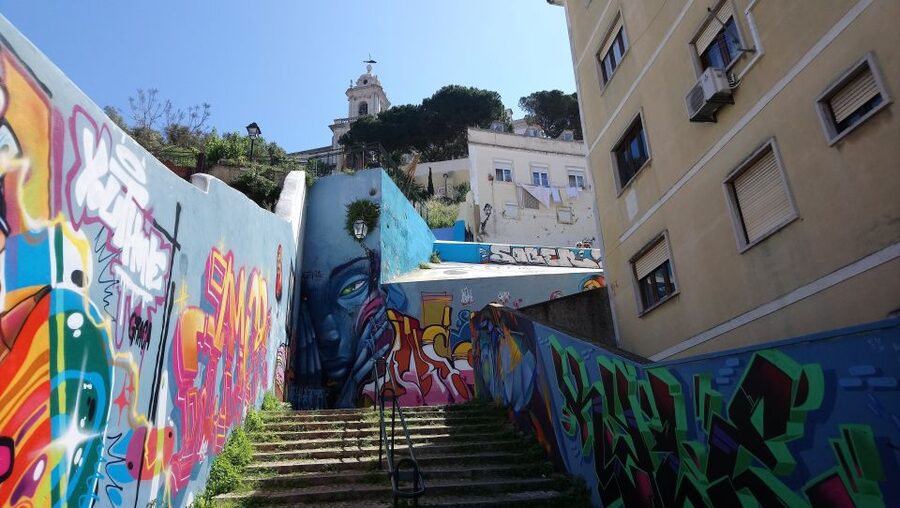
Meet in front of the Coreto da Graça at Largo da Graça, about 50 meters from Desgraça Restaurant. This is a practical starting point because you are already in one of Lisbon’s older hillside neighborhoods, where old buildings and new wall art sit close together.
Graça is not just a backdrop for murals. Its steep lanes, stairways, residential corners, and open views give the art a setting that changes how you see it. A work painted on a full building wall feels different from a small piece tucked beside a doorway. The guide helps you notice that relationship.
The route is also a useful introduction to Lisbon as a whole. You do not simply move from painting to painting. You get a feel for how the historical parts of the city fit together, how municipal support has helped bring large-scale art into public spaces, and how street art has become part of Lisbon’s modern identity.
That wider view is one of the tour’s best features. If you arrived thinking street art meant quick photos in a few alleys, you leave with a better sense of how artists, neighborhoods, public authorities, and local customs all shape what appears on the walls.
More Street Art Walking Tours in Lisbon:
- Lisbon: Street Art Walk
★ 5.0 · 79 reviews - London: Street Art and Graffiti Guided Walking Tour
★ 4.9 · 1,354 reviews - Berlin: City Street Art Guided Walking Tour
★ 4.8 · 1,051 reviews
The first 30 minutes: learning how to look
The opening part of the walk is less about rushing to famous pieces and more about giving you a visual toolkit. Your guide explains the difference between graffiti and street art, along with the etiquette and unwritten codes of the scene.
That matters because public art is not all made in the same way or for the same reason. A polished mural supported by a city project has a different story from an unsigned tag or a work placed in a contested spot. The guide also explains how artists respond to one another, which can help you see rivalries and connections that are easy to miss.
Igor’s approach, in particular, has been praised for teaching people how to understand what they are seeing rather than simply deciding if they like it. That is a useful promise for beginners. You do not need an art background, and families have found the subject accessible. Ask questions as you go, since the tour becomes more rewarding when you follow up on a detail that catches your eye.
The guide may also point out freshly painted work. Rua Josefa de Obidos is one example, and it shows why this tour should not be treated as a fixed list of permanent monuments. Street art changes. Walls are painted over, new pieces appear, and the exact selection can shift with the city.
Major walls by Vhils, Obey Giant, and Add Fuel
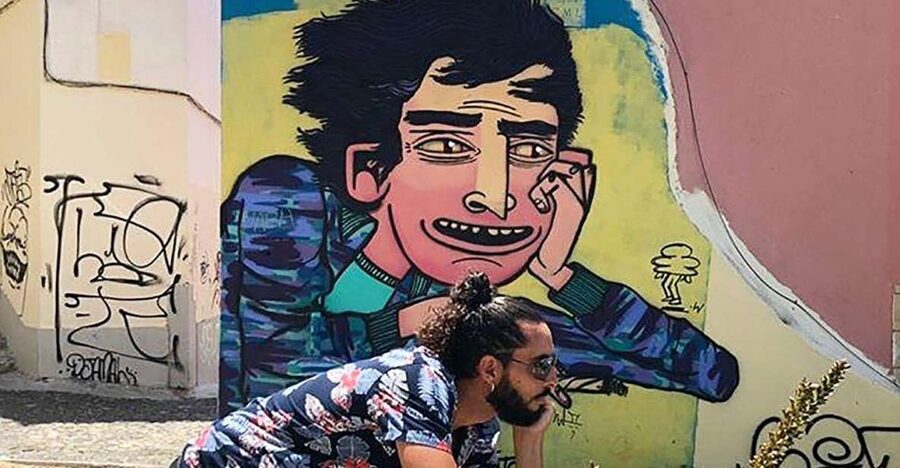
The next part brings you to several of the names that give the walk its appeal. Vhils is one of the best-known artists connected with Lisbon, and his work is particularly suited to a city where old surfaces matter. Obey Giant and Add Fuel add very different visual voices, giving you a chance to compare styles rather than seeing one kind of mural repeated all afternoon.
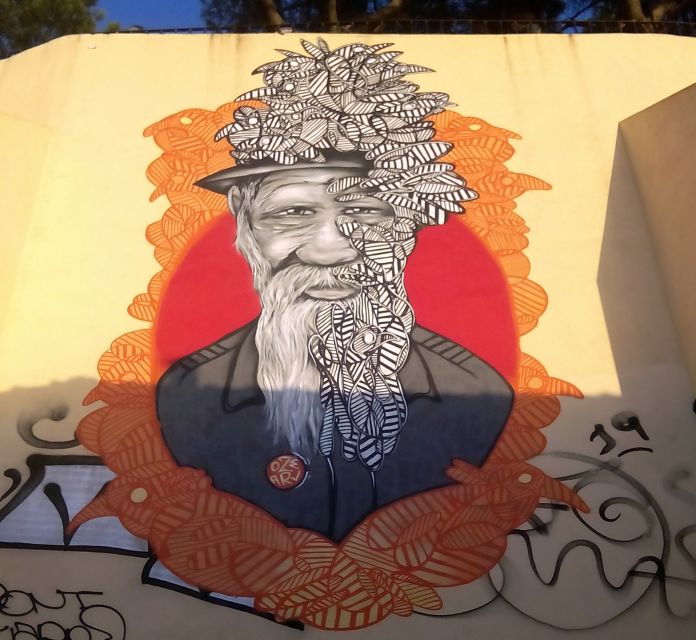
You will also encounter work by Isa Silva, Daniel Eime, and Ozearv. Jorge Romão, Lili Marlit, and Moami are part of the wider group of domestic and international artists discussed along the route. The exact balance depends on current wall conditions and the guide’s chosen path, but the selection is broad enough to show that Lisbon’s scene is not built around one famous name.
The guide’s role here is not just to identify the painter. You hear about the piece, the artist’s approach, and the setting around it. That extra layer is valuable because a large mural can be visually impressive without being easy to interpret.
You might also hear about work elsewhere by the same artists. Cátia has been praised for bringing examples of other pieces into her explanations, while Igor has shared recommendations for documentaries, artists, and other places to explore. That makes the walk useful beyond its 90-minute route.
One practical point: take photos, but do not let the camera take over. Some works are huge, and you will often need to step back to understand the composition. The guide’s explanation may be more memorable than a dozen rushed images.
The International Women’s Day gallery
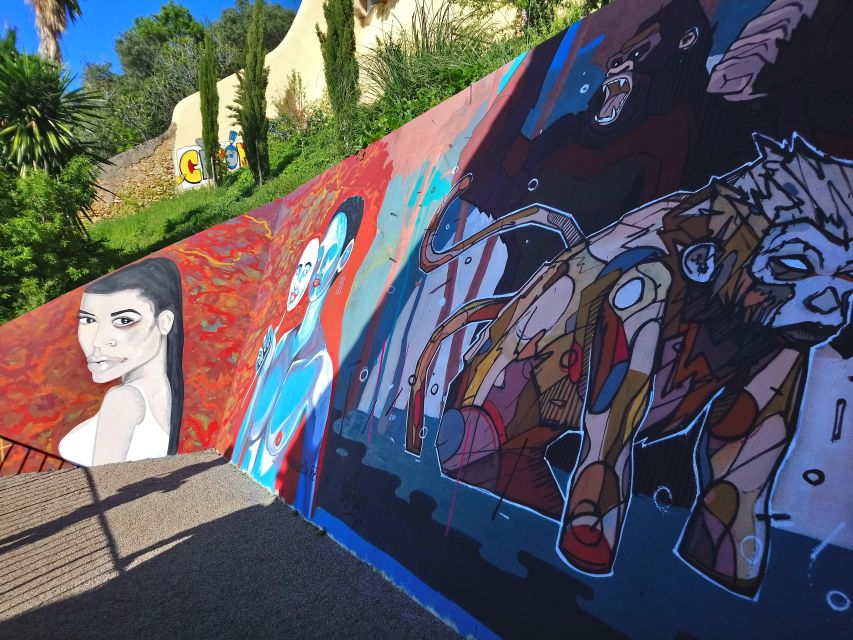
One of the most distinctive stops is the gallery made for International Women’s Day 2025. It gives the walk a clear social and cultural focus, rather than treating street art as decoration alone.
A women-led group of works can also broaden your sense of who shapes Lisbon’s art scene. The pieces create a concentrated display, with the wall itself functioning almost like an outdoor exhibition space. This is the kind of stop that rewards time, so listen for the connections between the artists and the ideas presented in the work.
The gallery is also a good example of how public art can make a neighborhood feel different. It does not sit inside a conventional museum with quiet rooms and controlled lighting. You encounter it as part of daily life, with streets, homes, and ordinary city movement around it.
Conditions can change after 2025, so I would not assume every work will remain exactly as it was when the tour description was written. Still, the stop shows the kind of current material the guide seeks out: public, local, and tied to a particular moment in Lisbon.
A few more walks around Lisbon worth a look
- Lisbon: History, Stories and Lifestyle Walking Tour
★ 4.8 · 10,902 reviews - Best of Lisbon Small-Group Guided Walking Tour
★ 5.0 · 4,869 reviews - Lisbon: Food and Wine Small Group Walking Tour
★ 4.9 · 4,082 reviews - Best of Lisbon Walking Tour: Rossio, Chiado & Alfama
★ 4.9 · 2,700 reviews
Fresh paint and the changing city
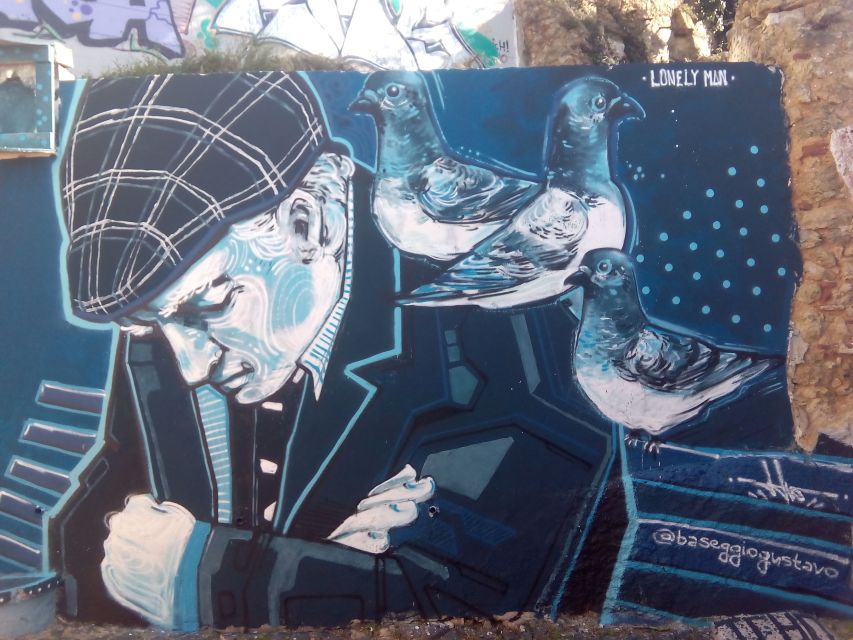
Street art rewards repeat visits because it is never entirely settled. Rua Josefa de Obidos is highlighted as a place to see freshly painted work, which gives you a useful contrast with older, more established pieces by internationally known artists.
Fresh paint can be exciting, but it also brings uncertainty. A new wall may not yet have a long story attached to it, and its appearance can change quickly. That is part of the point. Unlike a museum collection, public art remains exposed to weather, construction, repainting, and competing artists.
This is where the guide’s local connection becomes especially useful. The best information may involve what has recently changed, what has disappeared, or how artists respond to one another. Cátia and Igor have both been described as active in, or closely connected with, Lisbon’s art community, and that perspective adds value you would not get from a map alone.
The route can also change because the city changes. Think of the itinerary as a well-chosen introduction to the current scene, not a permanent catalogue of every important wall.
What the 90-minute pace feels like

An hour and a half is a good length for a first look. You see a lot without committing half a day to one subject, and the compact timing works well early in a Lisbon visit.
The pace is not a gentle, flat stroll. Graça includes hills and stairs, and the tour information specifically warns you to prepare for both. Wear comfortable shoes and expect some effort. Sunglasses, a hat, and sunscreen are sensible, especially because the walk is outdoors and shade is not guaranteed.
The short duration has one tradeoff. You will not see every important work in the city, and some explanations may move quickly if the group has many questions. If you want a long technical discussion of painting methods or a full survey of Lisbon’s art districts, you will need more time elsewhere.
For most people, though, the format works. You get enough background to recognize what you are seeing, then plenty of ideas for noticing more art on your own. Several people have found that they began spotting small and large works around Lisbon after the tour, including pieces they had walked past before.
Price, group size, and what you receive
At $23 per person, this is a sensible purchase if you want more than a list of photo stops. The price includes the street art walk, a live English-speaking guide, an exclusive street art souvenir, and hand sanitizer. Food, drinks, and transport are not included, so plan those separately.
The value comes mainly from access to interpretation. You can walk through Graça for free, but you may not find the same back alleys, current pieces, artist connections, or explanations of local codes by yourself. If you are curious about art but unsure how to approach it, the guide turns a casual walk into a focused introduction.
Private and small-group options are available. A smaller group is useful if you want to ask about technique, politics, rivalries, or particular artists. It may also make it easier to hear the guide in narrow streets, though the exact group size depends on the booking option.
There is no hotel pickup or drop-off. I would build the meeting point into your day rather than treating it as a door-to-door activity. The meeting location is in front of the Coreto da Graça, and the supplied emergency contact for the local partner is +351 910720946.
You can cancel up to 24 hours before the activity for a full refund, and a reserve-now, pay-later option is available. Those policies are useful if your Lisbon plans are still shifting, but the more important planning issue is the walking itself.
Which guide might lead your walk
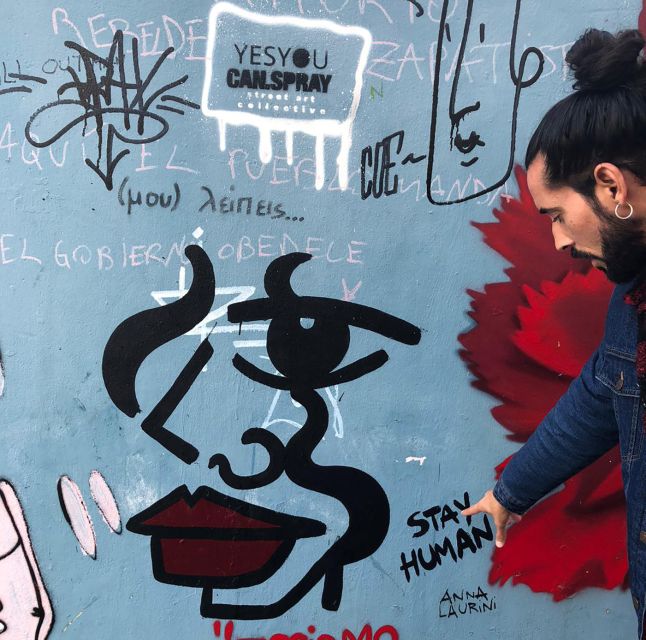
Igor and Cátia receive especially strong praise for their warmth, enthusiasm, and grasp of both the art and the neighborhood. Igor is an artist himself, and his explanations often connect a wall to the wider international street art scene. Cátia brings an artist’s eye and first-hand understanding of local painters.
Mehdi has also led the tour. Since guides can vary, I would not book solely on the hope of getting one particular person unless the provider confirms it. The consistent strength is the guide’s ability to explain rather than simply point.
Good guides make room for different levels of interest. Families, art newcomers, and serious enthusiasts can all get something from the route, especially if you ask questions. If you prefer to walk silently and take photos at your own pace, this may feel more structured than you want.
Who should book this walk?
I would recommend it to you if you:
- Want a fresh way to understand Lisbon beyond churches, viewpoints, and tiled facades.
- Like photography but want the stories behind the walls.
- Are new to street art and want a friendly introduction to its codes and styles.
- Enjoy meeting an artist or local guide who can explain the scene from the inside.
- Have teenagers or older children who can manage hills and stairs.
- Want ideas for further art stops during the rest of your visit.
I would hesitate if you have a mobility impairment, since the activity is specifically not suitable for people with mobility difficulties. I would also think twice if you dislike hills, outdoor walking, or schedules that keep moving from one stop to the next.
The tour is conducted in English. Comfortable shoes are essential, and large bags or luggage are not allowed. Carry only what you need for the walk.
Should you book the Lisbon street art walk?
Book it if you want to see Lisbon through its walls rather than only through its monuments. The combination of Graça’s old streets, major names such as Vhils and Obey Giant, current work on Rua Josefa de Obidos, and the International Women’s Day gallery gives you a useful range in 90 minutes.
At $23, it is good value for the guide’s interpretation, especially if you are not already familiar with street art. You can explore the same neighborhood independently, but you are likely to miss the meaning, local etiquette, and artist connections that make the pieces worth remembering.
Choose another activity if you need a flat route or a slower, museum-style experience. For everyone else, this is a lively, practical introduction that can change the way you see Lisbon for the rest of your trip.
FAQ
How long does the Lisbon street art tour last?
The tour lasts 90 minutes.
Where does the tour meet?
Meet in front of the Coreto da Graça at Largo da Graça, about 50 meters from Desgraça Restaurant.
What language is the tour offered in?
The live tour guide speaks English.
Which artists can I see on the walk?
The route may include work by Vhils, Obey Giant, Add Fuel, Isa Silva, Daniel Eime, Ozearv, Jorge Romão, Lili Marlit, and Moami.
Will the tour include the International Women’s Day gallery?
The experience includes a visit to the gallery created for International Women’s Day 2025.
Is the tour suitable for people with mobility impairments?
No. The route includes hills and stairs, and the activity is not suitable for people with mobility impairments.
What should I bring?
Bring comfortable shoes, sunglasses, a sun hat, and sunscreen.
Can I cancel the booking?
Yes. You can cancel up to 24 hours in advance for a full refund. A reserve-now, pay-later option is also available.
Just added around Lisbon
- Small Group Walking Tour of Belém★ 4.9 · 80 reviews
- Lisbon: Walking Tour in the Center (Max 12 Participants)★ 5.0 · 741 reviews
- Lisbon Tram No. 28 Ride & Walking Tour★ 4.1 · 766 reviews
- Lisbon Through the Eyes of a Local – Food and Walking Tour★ 4.9 · 141 reviews
- Lisbon: Private Boat Trip, Guided Walking Tour, Bike & Tram★ 4.8 · 116 reviews
- Lisbon: Food & Wine Walking Tour Through Baixa★ 4.9 · 287 reviews
- Lisbon: Helicopter Ride, Boat Trip, & Old Town Walking Tour★ 4.7 · 480 reviews
- Lisbon: Street Art Walk★ 5.0 · 79 reviews
Street Art Walking Tours, compared.


Naples Spanish Quarters Walking Tour Street Art, Folklore & Sweet
Read our review →

NYC: Brooklyn Graffiti & Street Art Walking Tour in Bushwick
Read our review →
Street Art and Underground Movements Walking Tour
Read our review →Browse the lists this tour appears in