
Review · HISTORY WALKING TOURS
Lisbon Essential Walking Tour: History, Stories and Lifestyle
Lisbon rewards a good first walk. This three-hour tour links Bairro Alto, Baixa, and Alfama with a local guide, a Tram 28 ride, and a coffee and pastry stop. I like the strong mix of city views and major sights, especially São Roque, Carmo, and Lisbon Cathedral. I also like the personal tips from guides such as Ricardo, Beatrice, Paulo, and Ana, who bring history and food suggestions into the walk. The main drawback is the hills and roughly four miles of walking, so comfortable shoes are not optional.
This is a fine choice if you want context before exploring Lisbon on your own. You will see a lot in three hours, but the pace and uneven streets may be tiring, and one reviewer found the explanations unclear. Check the meeting details carefully before setting out, since one booking problem involved an incorrect meeting place.
Key points to know before you book
- The route crosses three historic districts: You begin in Bairro Alto, pass through Baixa, and finish among Alfama’s narrow lanes.
- São Roque looks plain outside but dazzling inside: Gilding, tiles, and paintings turn this church into one of the tour’s best interiors.
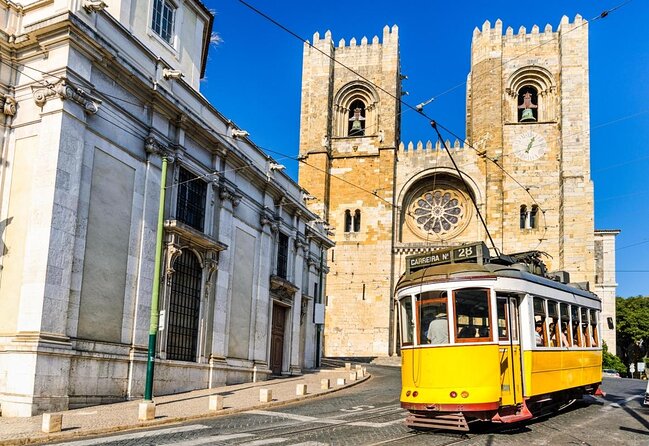
- The Tram 28 ride adds a local touch: The included tram trip takes you uphill toward Portas do Sol.
- A coffee and pastry break is included: You stop at a local café in Baixa, with pastéis de nata praised as a welcome treat.
- The walk is hilly and active: Expect close to four miles according to one account, with slopes, stone streets, and many steps.
- Small groups help: The maximum is 15 people, and the strongest guide praise goes to Ricardo, Beatrice, Paulo, Ana, Sofia, and others.
Why this makes sense on your first day
Lisbon can be hard to read at first. The city is spread across hills, old quarters, grand squares, and winding lanes, with each district carrying a different story. This tour gives you a basic map in your head while also explaining why the city looks the way it does.
I especially like the order of the route. You start high in Bairro Alto, move downhill through central Lisbon, pause for coffee, then use the tram to climb toward Alfama. The changing views help you understand Lisbon’s shape instead of treating its sights as unrelated photo stops.
The tour also connects several periods of Portuguese history. You hear about the city’s rebuilding after the 1755 earthquake, the Jesuits and São Roque, the Carnation Revolution of 1974, the city’s Moorish past, and the traditions of fado and saint festivals. That is a lot for three hours, but the route gives each subject a physical place.
At $30.25 per person, the value is good if you would otherwise pay separately for a guided introduction, a tram ride, and a café stop. The price does not include the Santa Justa elevator or transport to the meeting point, so you should factor those costs into your plans.
More History Walking Tours in Lisbon
- Lisbon: History, Stories and Lifestyle Walking Tour
★ 4.8 · 10,902 reviews - Lisbon: Private Dark History Walking Tour with Drinks
★ 4.8 · 387 reviews - Historic Walking Tour Through Lisbon’s Oldest Neighborhood
★ 5.0 · 233 reviews
Starting among Bairro Alto’s old streets
The walk begins in five-century-old Bairro Alto. This is more than a scenic starting point. Your guide explains how the neighborhood changed after the 1755 earthquake, when families from Baixa and nearby districts moved into the area and helped renew it.
That opening gives you useful context before the tour reaches the grander monuments. You begin with the way Lisbon grew and changed, rather than simply ticking off famous buildings.
The streets here are hilly, and the tour quickly reminds you that Lisbon is not a flat city. Wear shoes with a firm grip, bring water, and avoid carrying a heavy daypack. One family described the tour as enjoyable for different ages, but another account made the effort clear: close to four miles in about three hours.
The guide is an important part of this opening. Paulo is praised for being funny and friendly, while Ricardo is often credited with making Portuguese history easy to follow. Sofia is also praised for her passion for Lisbon and her ability to hold attention. Guide quality can vary on any scheduled tour, but the range of positive comments here is encouraging.
São Pedro de Alcântara and the city below
The next stop is the garden at Miradouro de São Pedro de Alcântara. From here, you look across Baixa toward the south bank of the Tagus River.
This is a useful pause after the first section of walking. Your guide can point out the city’s layered hills and help you place the neighborhoods you will visit later. Bring a camera, but do not expect a long sightseeing stop. The listed time is about 15 minutes, enough for views, orientation, and a few questions.
The viewpoint also shows why Lisbon can feel confusing without a guide. Streets rise and fall in several directions, and the river provides the clearest sense of place. I like stops such as this because they turn a city map into something you can actually see.
São Roque, a plain church with a lavish interior
From the viewpoint, you visit Igreja de São Roque. Its outside is austere, but the interior is filled with gilding, tiles, and paintings.
São Roque was built by the Jesuits and was among the first Jesuit churches in Portugal, as well as one of the earliest in the world. The contrast between its restrained exterior and ornate interior makes it a memorable stop. It also helps explain the visual power of Mannerist and Baroque religious art without requiring a separate museum visit.
The tour allows around 20 minutes here. That is enough to see the main features and hear the background, though art lovers may wish for more time. This is one place where staying close to the guide matters, since details about the chapels and decoration can be easy to miss in a busy church.
More History Walking Tours in Portugal
- Lisbon: 3-Hour The Slave Trade – An Historical Walking Tour
★ 4.9 · 179 reviews - Porto: Historic City Center Walking Tour
★ 4.7 · 1,172 reviews - Porto: Historical Center Walking Tour
★ 4.8 · 898 reviews - Porto: Jewish Heritage Walking Tour
★ 4.7 · 266 reviews
Carmo and the story of the 1974 revolution
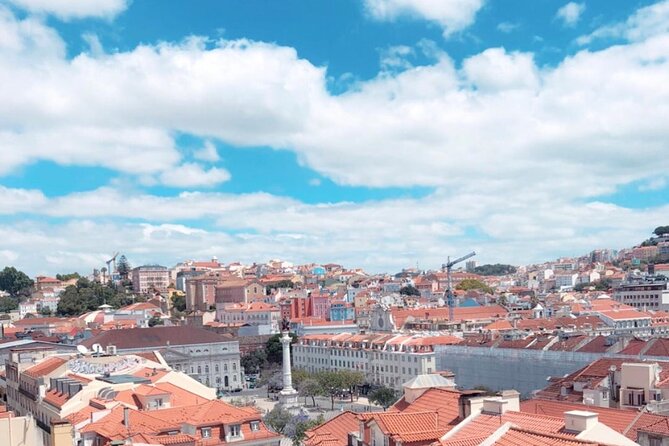
The route then heads downhill to the Carmo convent and church. The Gothic ruins are among Lisbon’s most striking sights, but this stop is also important for modern Portuguese history.
The Carnation Revolution began here in 1974, ending nearly five decades of dictatorship. That gives Carmo a role beyond architecture. You are not only looking at an old church. You are standing at a place tied to a peaceful political change that reshaped the country.
The tour allows about 20 minutes. That should work well for an introduction, especially when the guide links the building to the revolution. You may want to return later if you are interested in seeing more of the Carmo site at a slower pace, since the walking tour is designed to keep moving.
Beatrice receives especially strong praise for explaining history with humor and care. Ricardo is also repeatedly praised for his historical background and clear presentation. The tour is at its best when the guide uses these places to tell connected stories rather than giving isolated dates.
Santa Justa and the Baixa break
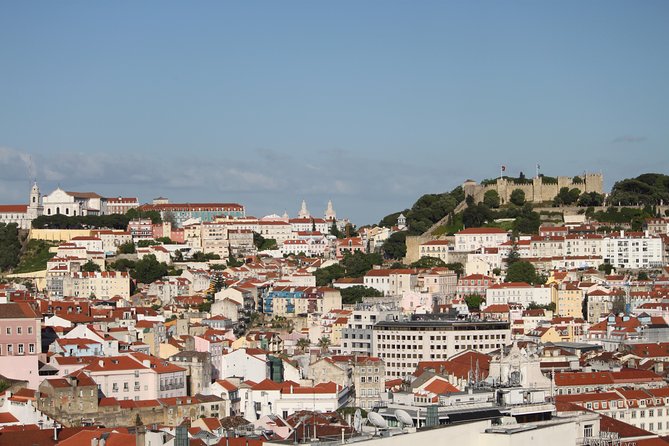
The Santa Justa elevator comes next. This tall Gothic Revival structure is one of Lisbon’s most recognizable monuments and offers one of the city’s best viewpoints.
The elevator itself is not included in the tour price. The stop is mainly about seeing the structure and understanding its role in the central city. If you want to ride or access the viewpoint, plan for that separately and check the conditions on the day.
From here, you move into Baixa, Lisbon’s central lower district. The route includes a coffee and cake stop at a local café, with pastéis de nata highlighted in several accounts. This is a small feature, but it matters. A brief sit-down gives your legs a rest, and a custard tart offers a direct taste of Lisbon rather than another monument explanation.
One stop is described as the Academic Milk Bar, where a pastel de nata was part of the break. Since exact café arrangements can vary, treat the included coffee and pastry as the dependable feature, not a guaranteed named venue.
The break is included, while additional food and drinks are not. It is a snack, not lunch, so plan another meal before or after the tour.
Praça da Figueira and the included tram ride
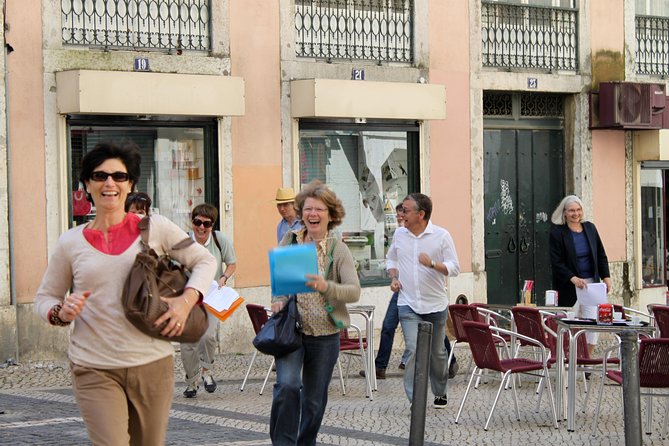
After the café stop, the route continues through Baixa and Praça da Figueira. This central square helps connect the restored downtown grid with the older districts on the hills.
The tour then includes a tram ride uphill toward Portas do Sol. This is one of the most appealing parts of the experience because it adds a normal piece of Lisbon transportation to the sightseeing. You are not only looking at the famous yellow tram from the pavement. You get to ride with the group.
The tram section also saves your legs from one steep climb, though it does not turn the tour into an easy outing. The overall walk remains active, and crowded public transport can make the ride feel less relaxed than a private vehicle.
Beatrice is praised for helping the group understand how to use Tram 28, and several accounts describe the ride as a highlight. The included tram trip adds real value to the $30.25 price, particularly if you are still learning how Lisbon’s public transport works.
Alfama, fado, and the final cathedral
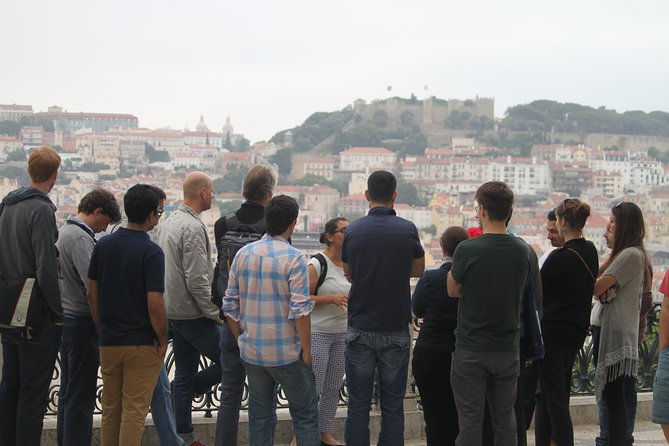
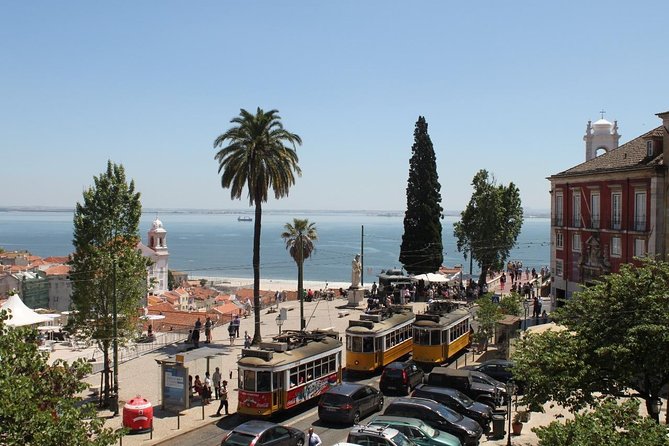
At Portas do Sol, you get views over Alfama and the Tagus. You can also see the Monastery of São Vicente de Fora and the National Pantheon from this part of the route.
Alfama is one of Lisbon’s oldest and most traditional districts. Its narrow streets run down toward the river, and the area is closely linked with fado, Lisbon’s soulful musical tradition. The tour also touches on the popular festivals of the saints, especially St. Anthony.
This section is where the walk feels most like neighborhood exploration. The lanes are not laid out like Baixa’s orderly streets, and a guide helps you understand how the district fits into the city’s past and present. Ana is praised for knowing the back alleys, while several guides are credited with explaining the origins of fado.
The route ends at Lisbon Cathedral, built in 1150, three years after the city was taken back from the Moors. Later changes gave the building a mix of architectural styles. Ending here gives the tour a clear historical marker, from the city’s medieval recovery to the modern districts you have crossed.
The finish is useful for planning the rest of your day. You are in a central historic area with more Alfama streets nearby, though no onward transfer is included.
The walking effort and group size
You should think of this as a serious city walk, not a gentle sightseeing stroll. The route includes hills, steps, uneven pavement, and about four miles according to one detailed account. Comfortable shoes and water are essential.
Most people can take part, and service animals are allowed. Still, the tour may not suit anyone who has trouble walking for three hours or finds steep streets difficult. The 15-person maximum is helpful because the group can usually stay together in narrow lanes, though the tram itself is public transportation and may be crowded.
The tour is offered in English, with other languages available when selected at booking. Clear communication matters here because the walk moves through busy streets and the historical background comes quickly.
A small administrative caution is worth noting. One booking error led to an incorrect meeting place and the guide not receiving the reservation. The guide resolved the problem, but you should confirm the starting instructions and arrive with your booking details ready.
Which guides and travelers fit this tour best
Guide quality is central to the experience. Ricardo receives especially high praise for his history lessons and engaging manner. Beatrice is appreciated for her care, humor, city tips, and ability to manage a group through busy streets. Paulo is praised for personal stories, food suggestions, and an approachable style.
Ana, Sofia, Joao, Lucie, and Richardo are also singled out for clear explanations, strong local knowledge, or an engaging personality. One account describes Lucie as making room for questions and photos, while Joao is praised for making the experience interactive.
This tour suits you best if you:
- Are visiting Lisbon for the first time
- Want history tied to actual streets and buildings
- Prefer a local guide to a self-guided map
- Like viewpoints, churches, neighborhoods, and public transport
- Want restaurant and fado suggestions for later
- Can comfortably walk uphill for three hours
It is less suitable if you want long visits inside each monument, a relaxed pace, or a tour focused mainly on food. The narration is generally praised, but one poor rating found the explanations unclear. That is a reminder that the guide makes a real difference.
Booking value, timing, and cancellation
The tour costs $30.25 per person and is often reserved about 29 days ahead. That advance demand suggests you should not leave it until the last moment if your Lisbon dates are fixed, especially if you want a certain language or guide availability.
The price includes a professional guide, the tram trip, coffee and cake, and liability and personal accident insurance. It does not include transfers to the starting point, other food and drinks, or the Santa Justa elevator.
Free cancellation is available up to 24 hours before the start time for a full refund. Changes or cancellations made less than 24 hours before the start time are not accepted for a refund. Confirmation is normally sent at booking, though bookings made within 18 hours of departure are confirmed as soon as possible and depend on availability.
Should you book the Lisbon Essential Walking Tour?
I would book this early in a Lisbon visit if you want a practical introduction rather than a list of monuments. The route covers the city’s major historical layers, gives you several fine viewpoints, includes a tram ride and a small local food break, and ends in Alfama near the cathedral.
The strongest reason to choose it is the guide-led storytelling. Ricardo, Beatrice, Paulo, and the other named guides receive praise for making Lisbon’s past understandable and for offering useful tips on food and fado. The main reason to skip it is physical: this is a hilly, active walk with limited time at each stop.
Choose it for your first day if you have good walking shoes and want the city to make more sense afterward. Skip it if your priority is a slow museum visit, a short flat route, or private transport.
FAQ
How long does the tour last?
The tour lasts approximately three hours.
How much does the tour cost?
The listed price is $30.25 per person.
What language is the tour offered in?
English is offered, and other languages may be available when selected at booking.
Is the tram ride included?
Yes. The tour includes a tram trip uphill toward Portas do Sol.
Is food included?
Coffee and a pastry are included during the Baixa café stop. Other food and beverages are not included.
Is the Santa Justa elevator included?
No. Admission to the Santa Justa elevator is not included.
How many people can join the tour?
The group has a maximum of 15 people.
Can I cancel for a full refund?
Yes, if you cancel at least 24 hours before the experience start time. Cancellations made less than 24 hours beforehand are not refunded.
Just added around Lisbon
- Small Group Walking Tour of Belém★ 4.9 · 80 reviews
- Lisbon Tram No. 28 Ride & Walking Tour★ 4.1 · 766 reviews
- Lisbon: Walking Tour in the Center (Max 12 Participants)★ 5.0 · 741 reviews
- Lisbon Through the Eyes of a Local – Food and Walking Tour★ 4.9 · 141 reviews
- Lisbon: Private Boat Trip, Guided Walking Tour, Bike & Tram★ 4.8 · 116 reviews
- Lisbon: Kickstart Street Art Walking Tour★ 4.9 · 717 reviews
- Lisbon: Food & Wine Walking Tour Through Baixa★ 4.9 · 287 reviews
- Lisbon: Helicopter Ride, Boat Trip, & Old Town Walking Tour★ 4.7 · 480 reviews
History Walking Tours, compared.
History and Hauntings of Salem Guided Walking Tour
Read our review →
Freedom Trail History Small Group Walking Tour
Read our review →
Historic Charleston Guided Sightseeing Walking Tour
Read our review →
Tapas Walking Tour with Food, Wine, and History
Read our review →
Savannah History and Haunts Candlelit Ghost Walking Tour
Read our review →
A History of Terror – Belfast City Centre Walking Tour
Read our review →Browse the lists this tour appears in