
Review · ITALY WALKING TOURS
Matera: Classic Guided Walking Tour
Matera is best understood on foot. This two-hour walk takes you from Via del Corso into the famous Sassi, where homes, churches, mills, and cellars were cut directly into the rock. I like the official Italian-speaking guide and the fact that admission to the key underground sites is included. I also like the price: at $14, you get a lot of context and several interior visits for very little money. The main drawback is that the tour is not suitable for people with mobility or respiratory problems, and the many stairs can be tiring.
You start in Matera’s historic center, then make your way through the Sassi with stops at a 13th-century frescoed rock church, an underground oil mill, and a three-level cellar. One previous participant praised the guide’s passion and expertise, which matters here because Matera’s streets and rock-cut rooms are far more meaningful when someone explains how people once lived in them. Keep in mind that the tour is conducted in Italian, and the provided details give both Via San Biagio 15 and the original meeting point as the ending location, so confirm the final stopping place when you arrive.
Key points at a glance
- A 13th-century rock church: See frescoes inside a church carved by removing stone rather than adding walls.
- Three underground working spaces: Visit a rock church, an oil mill, and a cellar, with entrance fees included.
- A useful two-hour introduction: The route covers the historic center and Sassi without taking up your whole day.
- A very low price: At $14 per person, the included admissions make this a strong-value orientation walk.
- Italian guide only: The tour is led live in Italian, so language ability will affect how much you gain from the commentary.
- Stairs and uneven ground: Comfortable shoes are essential, and the activity is not suited to people with mobility or respiratory limitations.
Starting on Via del Corso in Matera
The tour begins at the entrance of the BPER Bank on Via del Corso. Plan to arrive 10 minutes early. That small buffer is worth taking seriously, since city-center meeting points can be easy to pass if you are watching the old buildings instead of the street signs.
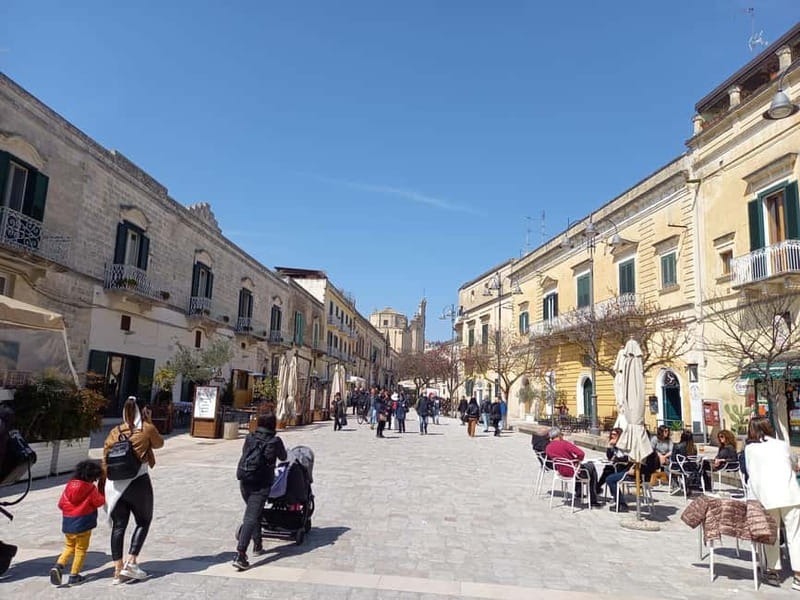
Via del Corso puts you in a useful position between Matera’s historic center and the Sassi. The first part of the walk introduces you to the city above the ravines, with its baroque churches, noble palaces, and small squares. These details help explain the sharp change ahead: one moment you are among formal stone buildings, and soon you are walking down into neighborhoods shaped by caves and rock faces.
I like this gradual start. You do not simply get dropped into a jumble of lanes and stairways. The route gives you a sense of how Matera’s later buildings and older cave dwellings fit together. Your guide can also add the human side of the setting, including daily routines and local traditions connected with the Sassi.
Because the tour is in Italian, you should have enough Italian to follow spoken explanations if you want the full benefit. The setting itself is easy to enjoy without much language, but the reasons behind the buildings, churches, and underground rooms are what turn a pretty walk into a useful history lesson.
More Guided Walks in Italy:
- Milan: Guided Walking Tour & Last Supper Visit with Ticket
★ 4.7 · 5,409 reviews - Naples: Street Food Walking Tour with Local Guide
★ 4.9 · 4,976 reviews - Florence: Highlights Walking Tour with Expert Guide
★ 4.6 · 4,662 reviews
Walking into the Sassi for two hours
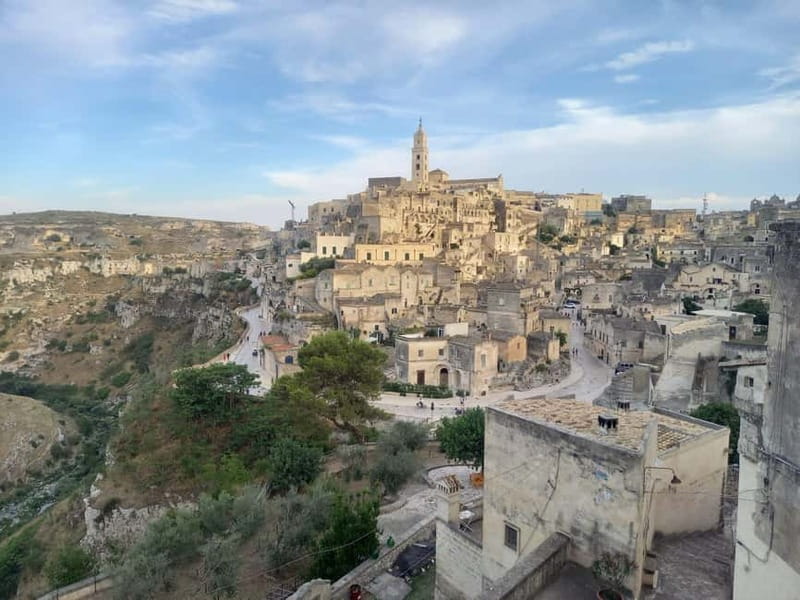
The Sassi are Matera’s ancient rock-cut neighborhoods. The word refers to the stone districts carved into the slopes, where houses and other working spaces were shaped from the local rock. This is not a museum display built for visitors. The character of the area comes from the fact that these spaces were made for worship, work, storage, and home life.
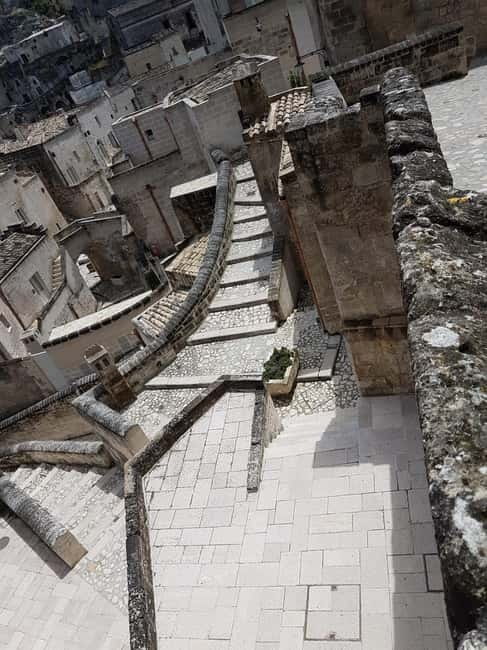
During the walk, you can expect stairways, narrow passages, viewpoints, and pauses for photographs. The route includes guided sightseeing through the Sassi, with scenic views along the way. You should wear shoes with a firm sole and comfortable clothing. Sandals with little support would be a poor choice here.
The two-hour length is one of the tour’s practical strengths. It gives you enough time to see several important interiors and hear the basic story of Matera, yet it leaves room for lunch, a second visit, or independent wandering later. If you have only a short stay in the city, this makes a sensible first activity.
The tradeoff is pace. A two-hour walk that includes several entrances cannot stop at every corner or explain every building in detail. You will get a guided introduction rather than an exhaustive study of the Sassi. I would treat it as a strong first look, especially if you plan to return on your own afterward.
The 13th-century rock church and its frescoes
The rock church is the tour’s most distinctive stop. It dates to the 13th century and was carved directly into the stone. This is an example of what the tour description calls negative architecture: the builders created the room by cutting away rock rather than assembling walls and a roof.
That idea is easier to grasp inside the church than in a photograph. You can see how the natural material becomes the structure itself. The frescoes add another layer, bringing color and religious imagery to a space that might otherwise feel austere.
The church also connects to Matera’s long tradition of rock-cut worship. The city is associated with more than 150 places of worship carved into the stone. You will not visit all of them on this short route, of course, but this one church gives you a clear example of why the Sassi are important.
I especially value the included entrance here. If you explore only the outdoor lanes, you can admire the views but miss the construction technique and the marks of religious life. The church gives the walk a firm focal point.
You should not expect a large, polished church interior. Its appeal comes from its modest scale, rough rock surfaces, and surviving painted decoration. The experience is also dependent on your guide’s explanation, particularly if you want to understand how monastic life shaped the area. The highly praised element of this tour is the guide’s passion and expertise, and this is the stop where that skill can make the biggest difference.
Inside the ancient underground oil mill
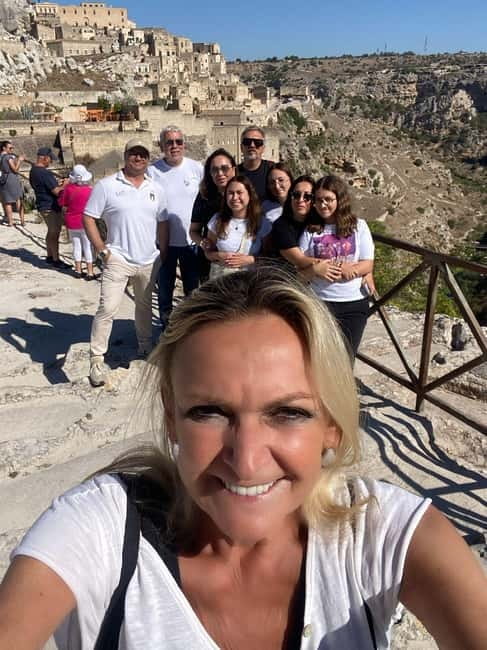
The next major interior is an old underground oil mill. Here you can see the stone millstone used to press olives and the dolii, large storage vessels used for keeping oil.
This stop adds practical detail to the Sassi. The rock-cut spaces were not only places for prayer or shelter. They also supported food production and storage. The millstone gives you a direct link to the physical work involved in producing olive oil, while the storage vessels show how the finished product was kept.
I like this kind of visit because it prevents the Sassi from becoming just a scenic backdrop. You are looking at a working space shaped for a specific purpose. The stone around you was part of the equipment, the walls, and the controlled interior environment.
The mill is also a good reason to take the guided tour instead of simply walking through the streets alone. Without a guide, you could easily pass an underground entrance without understanding what happened inside. Here, the included ticket and commentary make the stop simple and efficient.
The available information does not specify how long the group remains inside each site. Since the whole walk lasts two hours, expect focused visits rather than long, detailed sessions at every location. If oil production is a special interest for you, you may want to ask the guide any questions early, while there is still time in the route.
A few more walks around Italy worth a look
- Venice: Doge’s Palace and St Mark’s Basilica Walking Tour
★ 4.4 · 6,291 reviews - Venice: San Marco to Rialto Walk & Spritz Like a Local
★ 4.2 · 3,651 reviews - Uffizi & Accademia Timed Entry: Small Group Duomo Walking Tour
★ 4.5 · 3,630 reviews - Venice Walking Tour and Gondola Ride
★ 3.5 · 3,630 reviews
The three-level cellar beneath Matera
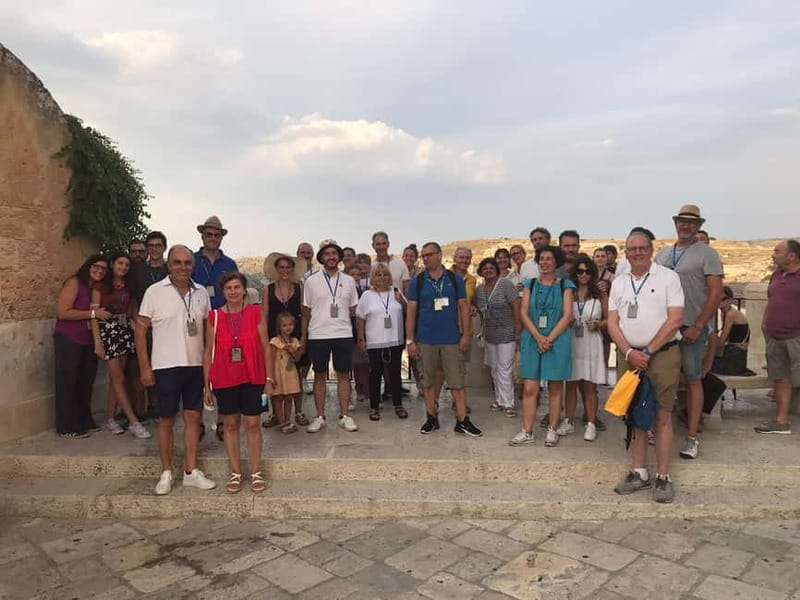
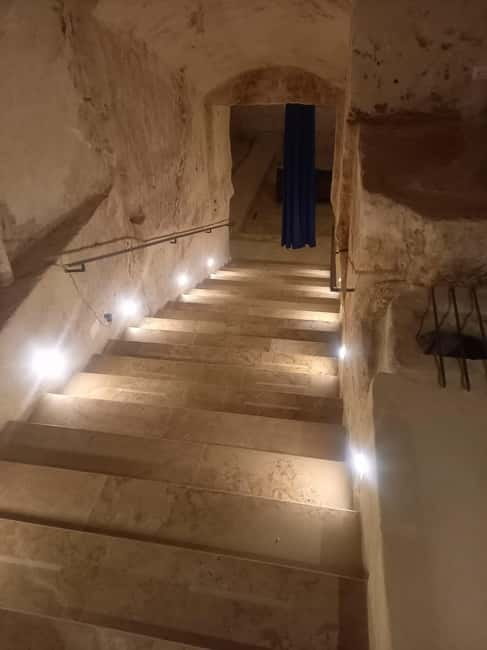
The historic cellar is excavated on three levels, making it one of the more unusual stops. Inside are original stone tanks once used for pressing olives, along with underground rooms for storing wine at a steady temperature.
This stop shows another advantage of underground construction. The rock provided a stable environment for storage, away from the heat and temperature swings outside. The cellar is not simply an old room carved into the ground. Its levels and tanks reveal a carefully arranged system for processing and storing food and drink.
For you, the cellar offers a useful contrast with the rock church. The church shows religious use of the stone, while the cellar shows agriculture, storage, and household work. The oil mill bridges the two, reminding you that the Sassi developed as a complete community rather than a collection of dramatic caves.
The itinerary also lists a food tasting. The supplied details do not say exactly what is served or how the tasting is arranged, so you should not book this expecting a full meal. Think of it as a possible small part of the walk rather than the main reason to choose the tour.
Views, photographs, and the route through the old center
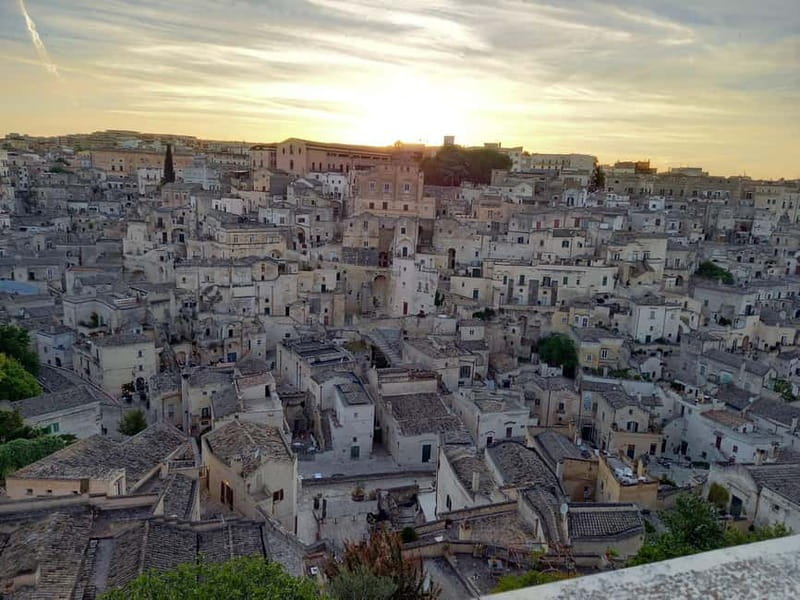
The outdoor portions include scenic views and photo stops. Matera is especially rewarding from above, where you can see the density of the rock-cut neighborhoods and the way paths descend through them.
Your guide will lead you along stairways and through old sections of the city, with pauses at viewpoints. These stops give you time to take photographs, but the tour is not designed as a dedicated photography outing. If you want long pauses for careful compositions, you may find the group schedule a little brisk.
The walk also finishes in a different part of the old city, listed as Via San Biagio 15. The meeting information says the activity ends back at the meeting point, so there is a small inconsistency in the supplied directions. I would confirm the finish with the guide at the start. Either way, you remain in the historic center and can continue exploring on foot.
This route works well as an orientation because it connects the formal upper town with the rock-cut districts below. You gain a clearer sense of direction before setting off independently. Matera is beautiful, but its stairways and levels can be confusing at first. A guide helps you spend less time checking your map and more time looking around.
Why the $14 price is good value
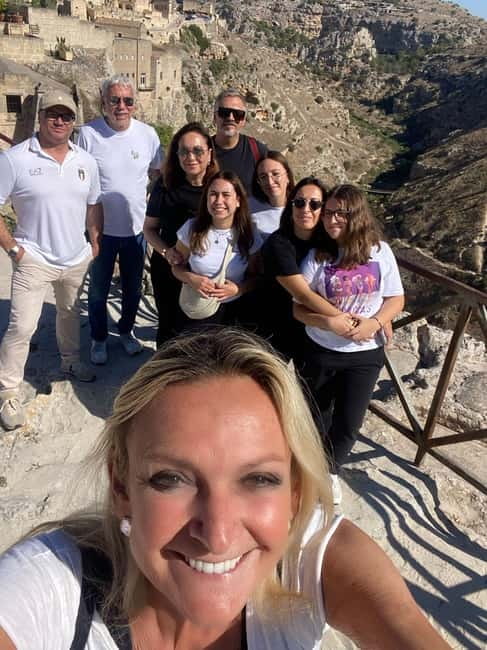
At $14 per person, this is an inexpensive way to cover several of Matera’s main sights. The fee includes the guide and entrance tickets to the frescoed rock church, underground oil mill, and historic cellar. If you visited all three places separately, admission costs could add up, assuming each site were open and available on its own.
The real value is the combination of access and explanation. You are not paying only for a walk through public streets. You are also entering rooms that could be difficult to interpret without context. The tour connects the sites into one story about worship, olive oil, wine, and everyday life.
The low price does come with limits. This is a group tour, so you will not have the same flexibility as with a private guide. The tour is also in Italian, and the two-hour schedule leaves little room for long individual questions. If you want a very detailed account of Matera’s churches or a custom route, a private experience would likely suit you better, though it would cost more.
For most people who want a well-priced introduction, the balance is favorable. The excellent 4.9 rating from 73 ratings also points to consistently strong satisfaction, especially with the guide’s contribution. One written comment praised the guide’s passion and expertise and said the visit became unforgettable with that help. That praise fits the tour’s design: the sites are striking, but the explanations give them purpose.
Who should book this walk
I would recommend this tour if you want to see the main character of the Sassi in a short period. It suits first-time visitors, people on a limited schedule, and anyone who prefers a guide to explain what they are seeing rather than simply wandering.
It is also a good choice if you want several rock-cut interiors included in one outing. The church, oil mill, and cellar each show a different use of underground space, and that variety gives the two hours real substance.
You should think twice if you have difficulty with stairs, uneven paths, or enclosed spaces. The activity is specifically not suitable for people with mobility impairments, respiratory issues, or motion sickness. Baby strollers and baby carriages are not allowed, so families with very young children should plan accordingly.
You should also skip it if you need English commentary. The live guide speaks Italian. The rock church, views, and old stone rooms remain visually impressive, but the tour’s educational value depends heavily on understanding the guide.
Comfortable shoes are not optional. Wear something that handles stairs and uneven stone, and choose clothing that lets you walk comfortably for two hours.
Booking advice and final verdict
I would book the Matera Classic Guided Walking Tour if you want a compact, low-cost introduction to the city’s most unusual quarter. The included entrances make the $14 price particularly attractive, and the route covers the places that best explain how the Sassi functioned: worship in the rock church, olive processing in the mill, and storage in the cellar.
I would not choose it as your only Matera activity if you want a full-day study of the city. Use the walk to get your bearings, learn the basic story, and identify the places you want to revisit more slowly. If the Italian language and physical demands work for you, this is an efficient and authentic way to meet Matera’s stone-carved world.
FAQ
How long does the Matera Classic Guided Walking Tour last?
The tour lasts two hours. Starting times vary, so you need to check availability when booking.
Where does the tour start?
Meet 10 minutes before the start time at the entrance of the BPER Bank on Via del Corso in Matera.
Which places are included?
The walk includes a 13th-century frescoed rock church, an ancient underground oil mill, and a historic three-level cellar. Entrance tickets are included.
What language is the tour conducted in?
The live tour guide speaks Italian.
Is the tour suitable for people with mobility impairments?
No. The activity is not suitable for people with mobility impairments. It is also not recommended for people with respiratory issues or motion sickness.
What should I bring, and are strollers allowed?
Bring comfortable shoes and comfortable clothing. Baby strollers and baby carriages are not allowed.
Just added around Italy
- Private Bologna Food & Market Tour with 6 Tastings & Wine★ 5.0 · 102 reviews
- Bologna Walking Tour with Audio and Written Guide★ 4.5 · 132 reviews
- Bologna historical art walking tour with hidden gems and tastings★ 5.0 · 108 reviews
- Bergamo: Digital guide made by a local for your walking tour★ 5.0 · 184 reviews
- Full Day Tour by Car and Walking among the Apulian Beauties★ 4.5 · 182 reviews
- The Original Street Food Walking Tour in Bari★ 4.5 · 226 reviews
- Bari Walking City Tour★ 4.5 · 511 reviews
- Bari: Street Food Walking Tour with a Local Guide★ 5.0 · 160 reviews
Italy Walking Tours, compared.
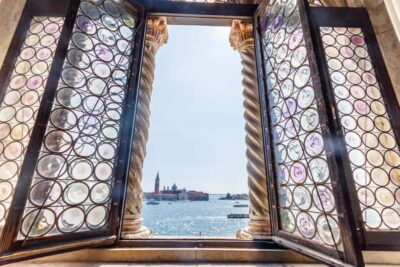
Doge’s Palace and St Mark’s Basilica Walking Tour
Read our review →
Guided Walking Tour & Last Supper Visit with Ticket
Read our review →
San Marco to Rialto Walk & Spritz Like a Local
Read our review →
Uffizi & Accademia Timed Entry: Small Group Duomo Walking Tour
Read our review →
Browse the lists this tour appears in