
Review · ITALY WALKING TOURS
Matera walking tour in English
Matera makes more sense with a local guide. This two-hour walk through the Sassi combines sweeping viewpoints with the small details that are easy to miss alone, from cave homes to the huge underground palombaro cistern. I especially like the focus on ordinary family life and the personal stories shared by local guide Gaetano Campanile. The main consideration is the hilly route, with stairs and uneven stone underfoot.
I also like the small-group feel, reported at up to 13 people, plus the use of headsets when needed. That makes it easier to hear the guide without crowding around him. At $29 per person, the tour offers solid value, particularly because the cave house and palombaro entry are included.
The walk does not include church visits according to the official tour details, so you should book it for the Sassi and social history, not as a full religious-art tour. Bring water, wear proper shoes, and expect a leisurely pace rather than a fast march across every corner of Matera.
Key points at a glance
- Local stories from Gaetano Campanile: Gaetano grew up in Matera and draws on conversations with older residents whose families lived in the caves.
- A close look at cave life: You enter a cave house and learn how families once shared these tight living spaces.
- The palombaro visit: You see the large cistern used to collect rainwater, a vital part of survival in old Matera.
- A useful two-hour introduction: The route concentrates mainly on Sasso Caveoso, giving you context before you explore alone.
- Easy-to-follow English: Gaetano’s English, humor, and clear storytelling make difficult social history approachable.
- A gentle but physical walk: Expect stairs, sloping lanes, and uneven paving, though the pace is relaxed.
Why Matera needs more than a photo stop
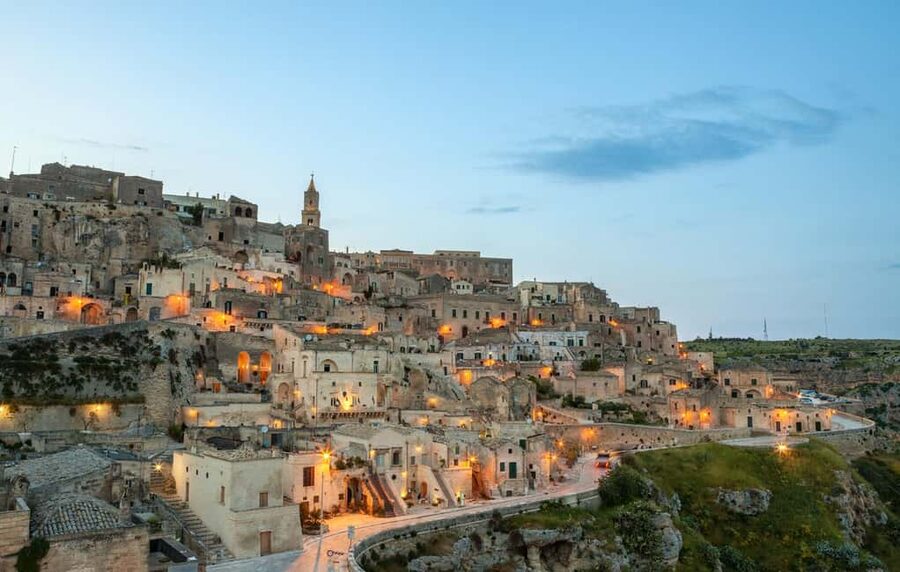
Matera is easy to admire and surprisingly easy to misunderstand. From a viewpoint, the Sassi can look like a dramatic cluster of stone houses and caves. That view is beautiful, but it does not tell you how people lived there, why families left, or how the city changed from a national embarrassment into a UNESCO-recognized cultural site.
I like this tour because it gives you that missing frame. Instead of treating the caves as an unusual backdrop, it explains them as homes, workplaces, water systems, and shared spaces. You begin to see that Matera was not simply a city carved into rock. It was a functioning community built around limited water, hard labor, and close social ties.
The story also has a sharp turn. Matera was once called the shame of Italy because of poverty and poor living conditions in the Sassi. Families were later moved out of the caves. A good guide helps you understand both sides of that change: the move brought better housing and sanitation, but it also broke apart an old way of life.
That social story is the strongest reason to take this walk early in your stay. Afterward, you can return to the Sassi and read the streets differently. A dark opening is no longer just a photogenic cave. It may have been a kitchen, bedroom, stable, workshop, or water storage space.
A few more walks around Italy worth a look
- Venice: Doge’s Palace and St Mark’s Basilica Walking Tour
★ 4.4 · 6,291 reviews - Milan: Guided Walking Tour & Last Supper Visit with Ticket
★ 4.7 · 5,409 reviews - Naples: Street Food Walking Tour with Local Guide
★ 4.9 · 4,976 reviews
Starting at San Pietro Caveoso
The meeting point is in front of the Church of San Pietro Caveoso, where the guide waits with a badge. This is a useful place to begin because you are already beside the old districts and close to some of Matera’s best views.
You should arrive with comfortable shoes and enough water. Matera’s old center rises and falls across the hill, and even a relaxed route includes stairs. The pace is designed to leave time for photographs and questions, but this is still a walking tour on old stone streets, not a flat city stroll.
The opening section helps you get your bearings. Rather than rushing through a long list of dates, Gaetano is praised for explaining the city through stories about its people, buildings, and customs. His humor is part of the appeal. It keeps the subject lively without making light of the difficult conditions many families faced.
The route focuses mainly on Sasso Caveoso. That is a sensible choice for a two-hour tour. Matera has too much to absorb in one short walk, and concentrating on one district allows the guide to explain what you are seeing instead of dragging you from one landmark to the next.
Entering a Matera cave house
The cave house is the most direct part of the tour. You step inside and get a sense of how a family could live within a single carved space. The value is not in seeing bare rock alone. It is in understanding how rooms, animals, tools, storage, and people could fit into a home shaped by the hillside.
A self-guided visit can show you the physical dimensions, but it may leave you wondering how the space worked day to day. Gaetano’s explanations connect the room to family routines and local customs. He also draws on accounts from older people born in the caves, which gives the story a personal edge.
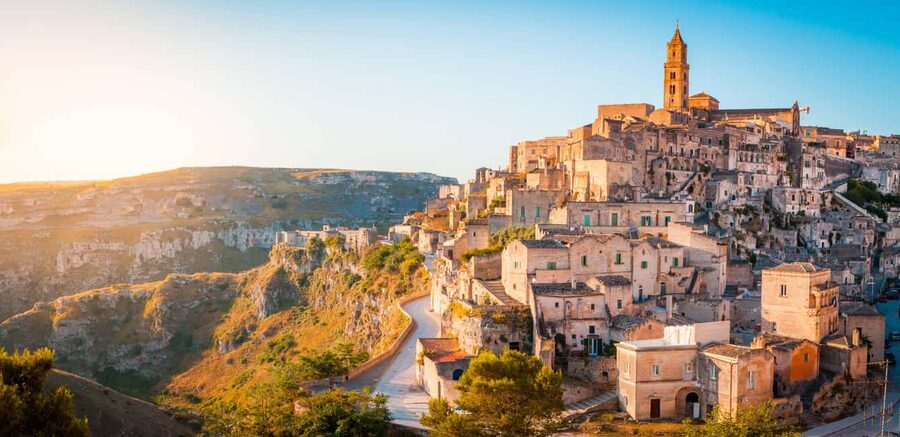
This is where the tour avoids a common mistake. Matera’s cave homes can look romantic in photographs, especially in soft evening light. Their actual history was far more demanding. The tour makes clear that the caves were part of a hard life, not simply charming old dwellings.
You will also hear about the community structure that helped people manage those conditions. Close neighbors shared problems and resources, and social bonds mattered in a place where private space was limited. That detail helps you see the Sassi as a living neighborhood rather than a collection of empty rooms.
The palombaro and Matera’s water problem
The visit to the palombaro adds a practical layer to the story. This large cistern collected rainwater, which was essential to the survival of Matera’s population. You learn how rain was gathered and stored instead of treating water as an invisible service that simply appeared at a tap.
For me, this is one of the tour’s most useful stops because it explains why the city developed as it did. The rock was not only a place to carve homes. It also offered ways to manage scarce water. The cistern shows the resourcefulness required to live in the old city.
The palombaro also makes the tour feel more complete. Without it, a visit to the cave house could seem focused only on architecture. With it, you gain a better sense of daily life, basic needs, and the systems that supported the community.
Check the exact route on the day, since the tour details promise entry to the large cistern but do not provide a named timetable for each stop. The walk is built around explanation, so your guide may spend more or less time at each point depending on questions and group interest.
Same streets, a different way to see them:
- Florence: Highlights Walking Tour with Expert Guide
★ 4.6 · 4,662 reviews - Venice: San Marco to Rialto Walk & Spritz Like a Local
★ 4.2 · 3,651 reviews - Venice Walking Tour and Gondola Ride
★ 3.5 · 3,630 reviews - Uffizi & Accademia Timed Entry: Small Group Duomo Walking Tour
★ 4.5 · 3,630 reviews
Viewpoints, lanes, and the pace of the walk
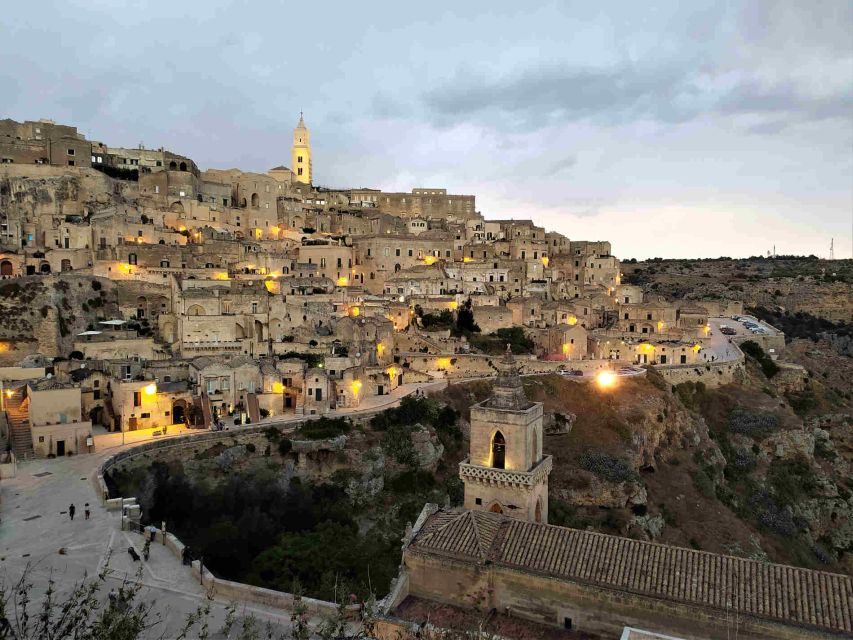
Matera’s viewpoints are a major part of the pleasure. The tour moves between broad views of the Sassi and quieter corners where the texture of the old city becomes more apparent. You get chances to photograph the stone roofs, layered homes, and steep streets, but the guide gives those views a purpose.
I appreciate the reported pace. Several people found it manageable, including groups with mixed ages and different walking abilities. The guide can choose routes that avoid some slippery stairs and pause in shaded spots during hot weather. That does not make the old city fully easy, but it does make the experience less tiring than a hurried route.
You should still be realistic about the terrain. There are stairways, sloping lanes, and uneven surfaces. Anyone with limited mobility should contact the provider before booking, since the information confirms stairs but does not promise a step-free route.
The walk is not designed to cover every part of Matera. That is a strength rather than a weakness for most people. A two-hour route with time for stories is more useful than a long circuit where you remember only a blur of viewpoints.
Gaetano’s guiding style
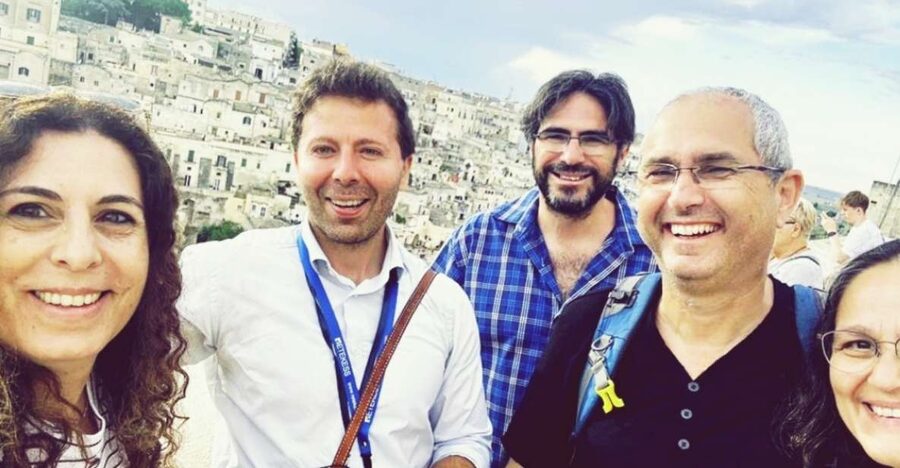
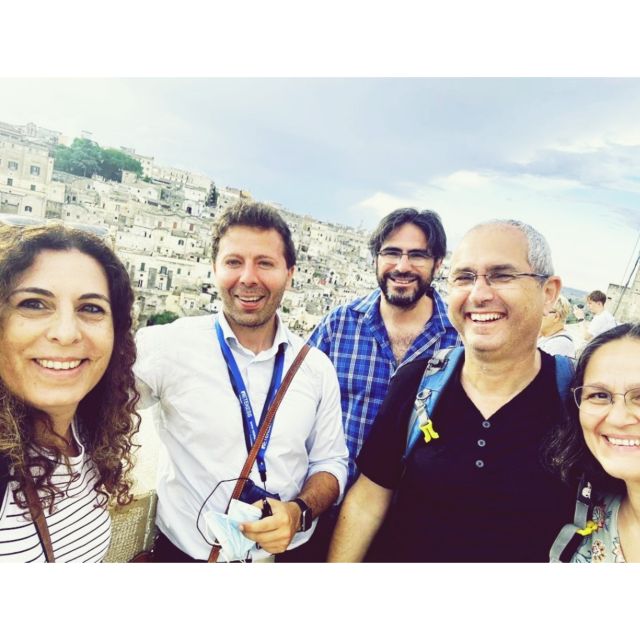
The guide is a central part of this experience. Gaetano Campanile is repeatedly praised for his clear English, humor, patience, and strong connection to Matera. He grew up in the city, and that local background gives his explanations a personal quality that a script cannot easily provide.
His approach seems especially effective for social history. He explains how people lived, why the caves were evacuated, and how the city changed over time. He also answers questions and adjusts his pace to the group rather than delivering a fixed speech at full speed.
That matters in Matera because the subject can become confusing. The city has ancient origins, religious sites, domestic caves, modern restoration, and a painful twentieth-century story. A guide who can keep the timeline clear helps you connect the pieces.
The humor is another practical advantage. A two-hour history walk can become heavy when it focuses on poverty and eviction. Gaetano’s light touch keeps the group engaged while still respecting the seriousness of the past.
Headsets may be provided, especially in a larger group. This is useful in narrow streets or near busy viewpoints, where standing shoulder to shoulder with the guide is not practical. The group size may reach 13 people, so the audio equipment matters if you want to hear every detail.
What the $29 price includes
At $29 per person, this is a good-value introduction to Matera. You are paying for a licensed guide, a two-hour walking route, entry to a cave house, and admission to the palombaro. Those included visits are important because the price is not just for an outdoor orientation walk.
The strongest value comes from the interpretation. You can wander the Sassi without paying anything, but you are likely to miss the connections between homes, water collection, evacuation, and modern preservation. A local guide turns attractive scenery into a story you can follow.
The price is also reasonable for people with limited time. If you have only one day in Matera, two hours gives you a foundation before lunch, dinner, or further exploring. You can then revisit the places that caught your attention instead of spending your entire visit trying to work out the city’s layout.
It is less suitable if you want a full archaeological or church-focused tour. The official description specifically says that churches are not visited. You should not book this expecting a detailed survey of religious art or every major monument.
Who should book this walk
I would recommend it to first-time visitors who want to understand Matera rather than simply photograph it. It is particularly useful if you enjoy local stories, domestic history, and the practical details of how communities functioned.
Families can also benefit from the lively presentation. Children may find the cave homes and water cistern more memorable than a long lecture about dates. The relaxed pace allows questions, though younger children still need to manage stairs and uneven streets.
This tour also suits people who do not usually take guided walks. The route is short, the group can be relatively small, and the focus stays close to the Sassi. You are not spending hours being moved between distant landmarks.
You may prefer a different experience if you want to cover both Sassi districts in detail, visit churches, or explore the city at a faster pace. Independent walkers can use this tour as an introduction, then continue alone. That combination gives you both local context and freedom.
Practical advice before you go
Wear shoes with a firm sole. Smooth fashion footwear is a poor match for old stone steps, and the route includes slopes and uneven paving.
Bring water, especially in warm weather. One participant became dehydrated and noted that there were not many chances to buy water along the route. A small bottle is an easy precaution.
Allow time to arrive at San Pietro Caveoso and find the guide in front of the church. If you are driving, parking garages are listed on Via Vena and Via Scotellaro. Matera’s old streets can make last-minute arrival stressful, so build in extra time.
The tour is in English and has a free cancellation policy up to 24 hours before departure. You can also reserve and pay later, which helps if your southern Italy plans are still shifting. Starting times vary, so check availability when you book.
FAQ
How long is the Matera walking tour?
The advertised duration is two hours. The route moves at a leisurely pace, with time for explanations, photographs, and questions.
What language is the tour conducted in?
The tour is conducted in English with a live guide.
Where does the tour meet?
The guide waits in front of the Church of San Pietro Caveoso and wears a badge.
Does the tour visit a cave house?
Yes. Entry to a cave house is included in the tour.
What is the palombaro?
The palombaro is a large cistern used to collect rainwater. The tour includes entry and explains how rainwater supported life in old Matera.
Are churches included?
No. The official tour details state that churches are not visited.
Is the walk difficult?
The old city lies on a hill, so you should expect stairs and uneven streets. The pace is leisurely, but comfortable shoes are essential.
What happens if I need to cancel?
You can cancel up to 24 hours in advance for a full refund. The activity also offers a reserve-now, pay-later option.
Should you book the Matera walking tour?
I would book this tour if you want the Sassi to feel like a community rather than a movie set. Gaetano’s local background, clear English, humor, and personal stories are the main reasons to choose it. The cave house and palombaro add real substance, while the two-hour length keeps the commitment manageable.
Skip it only if you want a church-heavy itinerary or prefer to cover every corner independently. For most first visits, the $29 cost is fair, the pace is considerate, and the social history gives you a much better way to read Matera afterward.
Just added around Italy
- Private Bologna Food & Market Tour with 6 Tastings & Wine★ 5.0 · 102 reviews
- Bologna Walking Tour with Audio and Written Guide★ 4.5 · 132 reviews
- Bologna historical art walking tour with hidden gems and tastings★ 5.0 · 108 reviews
- Bergamo: Digital guide made by a local for your walking tour★ 5.0 · 184 reviews
- Full Day Tour by Car and Walking among the Apulian Beauties★ 4.5 · 182 reviews
- The Original Street Food Walking Tour in Bari★ 4.5 · 226 reviews
- Bari: Street Food Walking Tour with a Local Guide★ 5.0 · 160 reviews
- Bari Walking Tour with Pasta Experience★ 4.5 · 270 reviews
Italy Walking Tours, compared.
Doge’s Palace and St Mark’s Basilica Walking Tour
Read our review →
Guided Walking Tour & Last Supper Visit with Ticket
Read our review →
San Marco to Rialto Walk & Spritz Like a Local
Read our review →
Uffizi & Accademia Timed Entry: Small Group Duomo Walking Tour
Read our review →
Browse the lists this tour appears in