
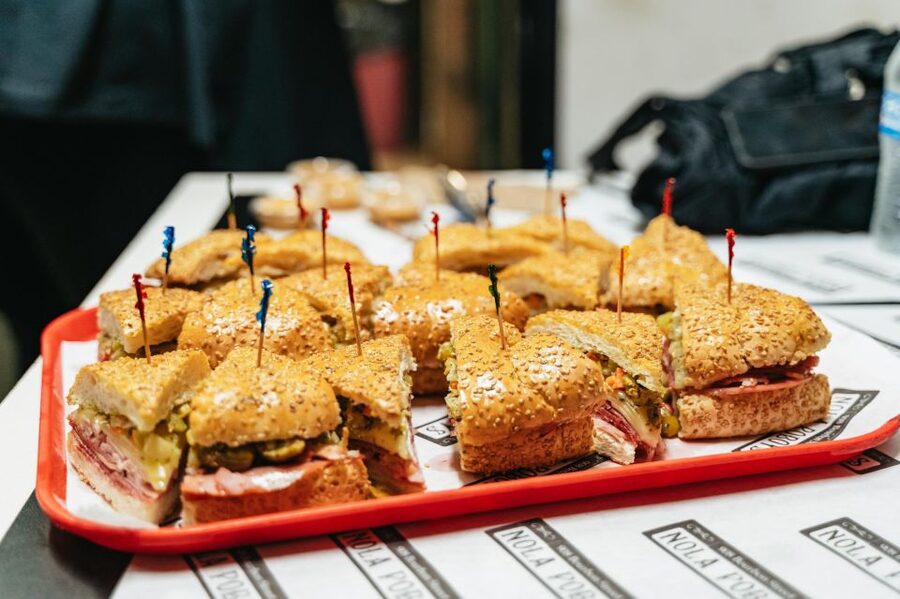
Review · FOOD WALKING TOURS
New Orleans: French Quarter Food History Walking Tour
Come hungry, leave with a city lesson. This three-hour walk through the French Quarter combines classic Louisiana food with stories about the people, customs, and neighborhoods behind each dish. I especially like the mix of sit-down restaurants, candy shops, and small local spots, along with the chance to try both a muffuletta and a po-boy in one outing. The main drawback is that the food is not fully customizable, so seafood-free diners and people with serious dietary restrictions may find the menu difficult.
I also like the way the route keeps moving without feeling like a forced march. Guides such as Beth, Gary, John, Meg, and the guide known as the Professor have been praised for making the history easy to follow and tying each bite to New Orleans culture. At $85 per person, the value depends on how much you eat, but the included food, guide, and server tips make it a reasonable choice for a first taste of the city.
Key details before you book
- Gumbo begins the story: The first food stop serves Cajun-style gumbo with warm potato salad, a useful introduction to the city’s layered cooking traditions.
- Both famous sandwiches appear: You try a fried catfish po-boy and a meaty muffuletta, two very different New Orleans staples.
- The route covers more than restaurants: Expect a hot sauce bar, Leah’s Pralines, sit-down Creole restaurants, and smaller food stops.
- The food is substantial: Several portions are large enough that you should arrive hungry, not after a full breakfast or lunch.
- Vegetarian substitutions are available: The meat and seafood dishes can be replaced with items such as black-eyed pea soup, vegetable jambalaya, and a Portobello po-boy.
- Dietary limits matter: There is no vegan, gluten-free, or dairy-free version, and alcohol and soft drinks cost extra.
Why this three-hour walk works so well
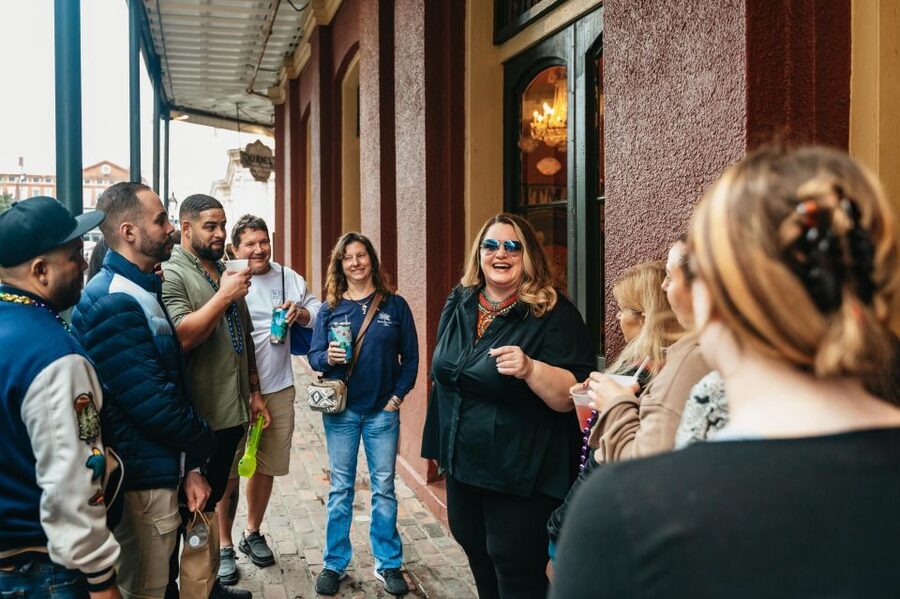
New Orleans is a city where food and history are hard to separate. A bowl of gumbo is not simply lunch, and a po-boy is not merely a sandwich. The ingredients, cooking methods, and names connect to Louisiana’s French, African, Caribbean, Spanish, and Cajun influences.
This tour gives you that context while you eat, which is more useful than looking at a menu after the fact. The guide explains what is on your plate, then connects it to the city around you. That makes the French Quarter feel less like a backdrop and more like part of the meal.
The route begins at 316 Chartres Street, inside 3rd Block Depot. From there, you cross the Old Square, or Vieux Carré, on foot. The walk includes several five-minute stretches and a few longer ten-minute transfers, with stops lasting roughly 20 to 45 minutes.
I like that rhythm. You are not parked at one table for three hours, but you are also not being rushed from bite to bite. One portion of the tour lasts around 45 minutes, giving the guide time to explain the food and answer questions.
The tour runs with up to nine food tastings in the description, while the included details specify up to eight samples. Since the exact number can vary, I would confirm the day’s tasting count when booking. Either way, the portions are intended to add up to a full meal.
More Food Walking Tours in the USA
- New Orleans Food Walking Tour of the French Quarter with Small-Group Option
★ 5.0 · 6,118 reviews - New Orleans Food and History Walking Tour
★ 5.0 · 1,544 reviews - Little Havana Food and Walking Tour in Miami
★ 5.0 · 8,882 reviews
Starting with gumbo at 3rd Block Depot
The first stop at 3rd Block Depot is a sensible opening. You meet the guide inside the restaurant, then settle in with rustic Cajun-style gumbo and warm potato salad.
Gumbo can be a tricky dish to explain because it has no single fixed recipe. The combination of broth, seasoning, meat or seafood, vegetables, and thickening method changes from kitchen to kitchen. That makes the first tasting useful: you get a clear example of the hearty, deeply seasoned style associated with Louisiana cooking.
The warm potato salad is an interesting partner for the gumbo. It adds a soft, comforting contrast rather than another strong flavor. This is also a good place to pay attention to the guide’s storytelling, since the tour’s strongest feature is not simply eating familiar dishes. It is learning why those dishes became local standards.
A small caution: the food arrives as part of a set tasting, so you do not choose the gumbo ingredients. If seafood or other specific foods are a concern, tell the operator about allergies when you book. The stated policy asks for allergies, not general dislikes or food preferences.
A hot sauce stop with plenty of heat
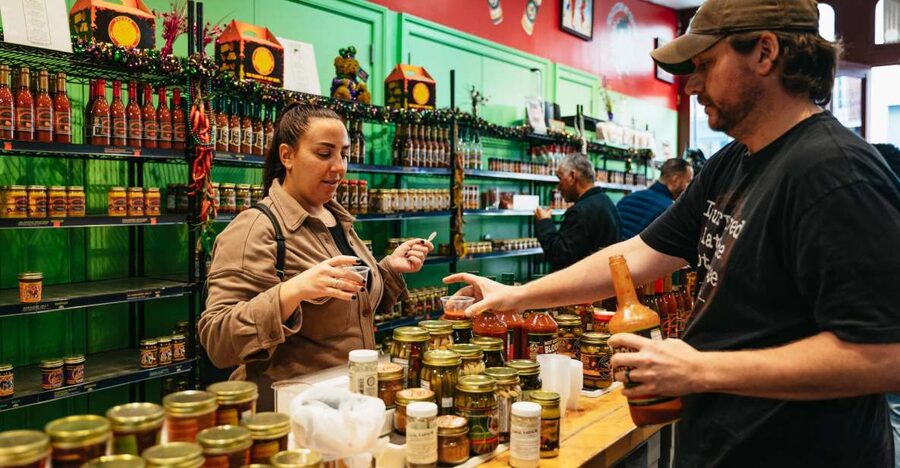
After the first tasting, the group walks about five minutes to a popular hot sauce bar. Here you can sample dozens of fiery sauces, making this one of the more playful stops on the route.
You do not need to treat every bottle like a dare. The point is to notice how different peppers, vinegar, sweetness, and seasoning change the character of a sauce. New Orleans food often has plenty of seasoning, but heat is only one part of that flavor profile.
This stop also breaks up the heavier dishes. A few drops of hot sauce can wake up your palate before the next round of food. Still, go slowly. One diner described needing milk after trying an especially spicy salsa, so enthusiasm should not outrun common sense.
The hot sauce bar is less about a large portion and more about participation. If you enjoy tasting unusual condiments, you will probably have fun here. If you dislike spicy food, you can still learn from the stop, but it may not be a highlight.
Creole sweets at Leah’s Pralines
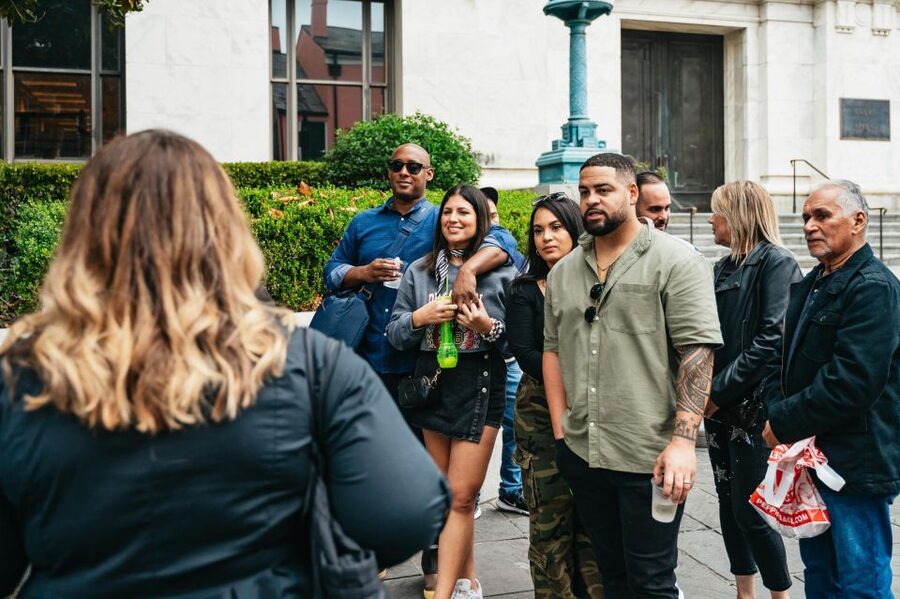
The next short walk leads to Leah’s Pralines, where you sample a classic Creole sweet or the newer bacon pecan brittle.
Pralines are a useful reminder that New Orleans food is not all spice, seafood, and heavy sauces. Sugar, pecans, cream, and careful cooking create a treat with a texture and flavor all its own. The bacon pecan brittle offers a saltier, more modern variation.
This is one of the easier stops to appreciate because the portion is sweet, focused, and simple to understand. It also gives you a chance to browse a boutique candy shop rather than another full restaurant.
Keep your appetite in reserve. The tour continues with several savory foods, and the dessert at the end is not a token final bite. The sweets are spaced through the route, but the total amount can add up quickly.
More History Walking Tours in New Orleans
- New Orleans Garden District History Walking Tour
★ 5.0 · 2,879 reviews - French Quarter Historical Sights and Stories Walking Tour
★ 5.0 · 2,724 reviews - New Orleans: Drunk History Walking Tour
★ 4.2 · 165 reviews
Catfish po-boy at NOLA Poboys
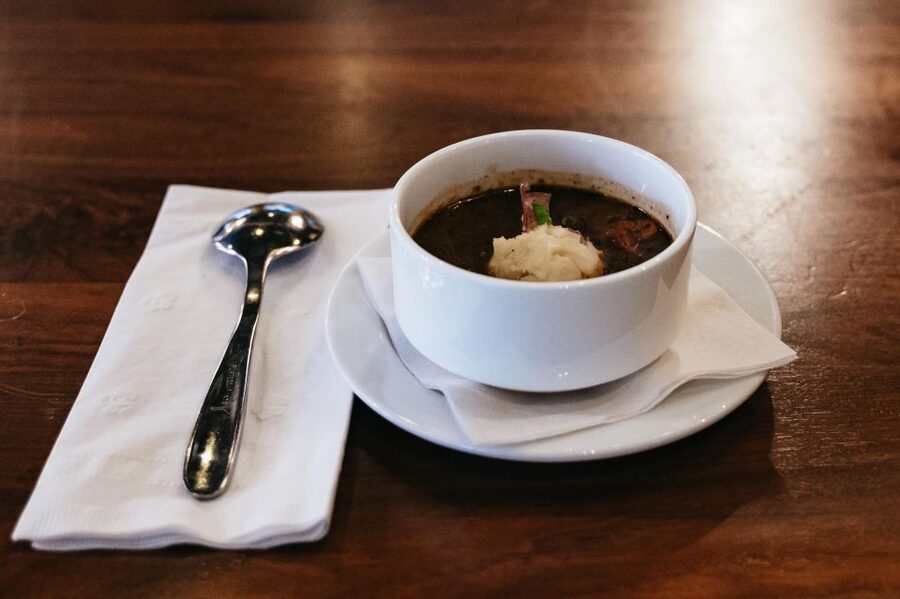
At NOLA Poboys, the guide explains Louisiana’s seafood traditions before you get a freshly fried catfish po-boy. This is one of the central food moments of the tour.
A po-boy is built around contrast: crisp fried filling, soft bread, and toppings that help balance the richness. Catfish gives you a distinctly Southern version of the sandwich, with a mild fish flavor and a fried exterior.
I like this stop because it introduces both the food and the culture of the working sandwich. The po-boy is casual food, meant to be satisfying and accessible, not precious. The guide’s explanation helps you see why it belongs in a serious discussion of New Orleans cuisine.
The limitation is clear. This is not a seafood-free tour. The vegetarian plan includes a Portobello po-boy, but the standard tasting is catfish. If you do not eat seafood, choose the vegetarian option at checkout or ask about your options before paying.
Muffuletta and boudin balls
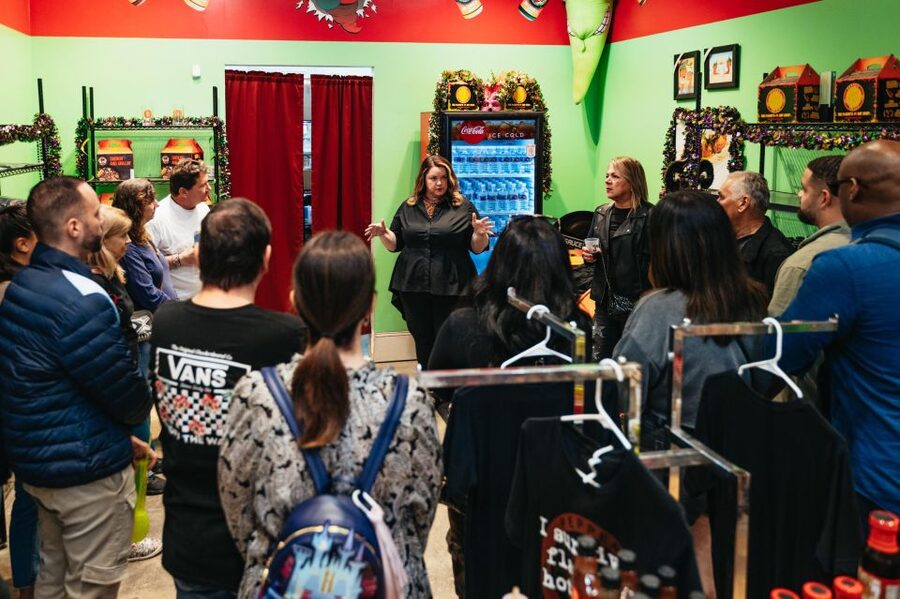
The tour then moves to another New Orleans original, the muffuletta, along with savory boudin balls. These foods give you two different ways to understand local cooking.
The muffuletta is a substantial sandwich, known for its round loaf and filling that includes meat, cheese, and olive salad. It is dense, salty, and very different from the lighter profile of a po-boy. Eating both in one tour lets you compare them directly rather than confusing them as two versions of the same sandwich.
Boudin balls offer another change in texture. Boudin itself is a seasoned sausage mixture, and the fried ball format makes it easy to sample while walking between stops. It is a small bite, but one that reflects Louisiana’s love of seasoned, filling food.
This part of the route may be the most challenging for cautious eaters. The menu leans into local specialties, and you do not receive a full list of choices at every stop. That is part of the appeal for adventurous eaters, but it can be frustrating if you avoid meat, seafood, or unfamiliar ingredients.
Red beans and rice at Creole Cookery
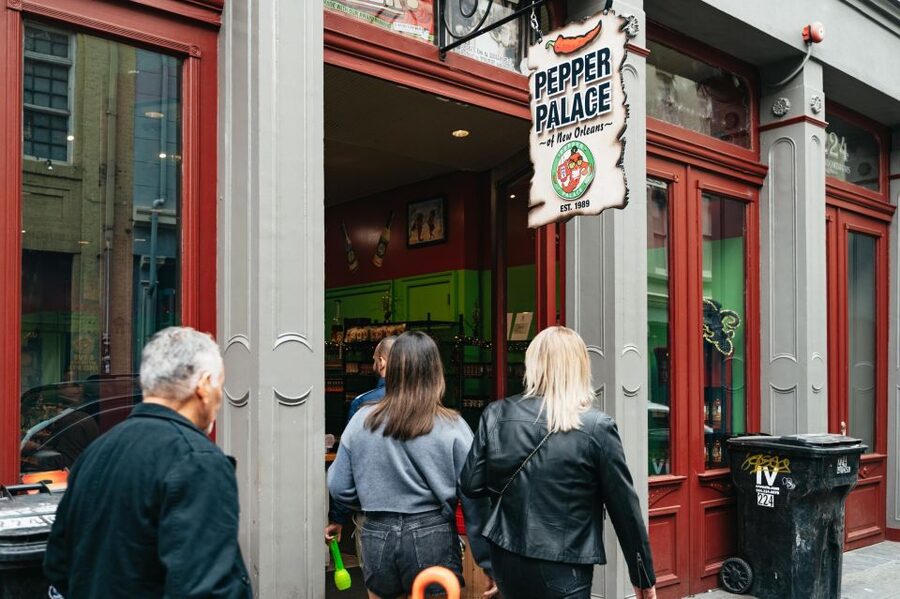
At Creole Cookery, you sit down to red beans and rice, one of the most familiar comfort foods in New Orleans.
The dish is filling without needing a long explanation. Beans, rice, seasoning, and often meat create a simple meal with serious staying power. It also shows the practical side of local cooking, where inexpensive ingredients become a satisfying household staple.
This is the sort of tasting that makes the $85 price easier to judge. You are not only receiving tiny samples at shop counters. The route includes proper restaurant stops where you can sit, eat, and listen.
Red beans and rice has been singled out as a favorite by several people on the tour, and I can see why. After gumbo, fried food, sandwiches, and sweets, its soft texture and savory flavor offer a welcome change.
The vegetarian menu replaces meat-based dishes with alternatives such as black-eyed pea soup and vegetable jambalaya. Those choices keep the same Southern spirit without pretending that a salad is an equal substitute for the original menu.
Ending with bananas foster bread pudding
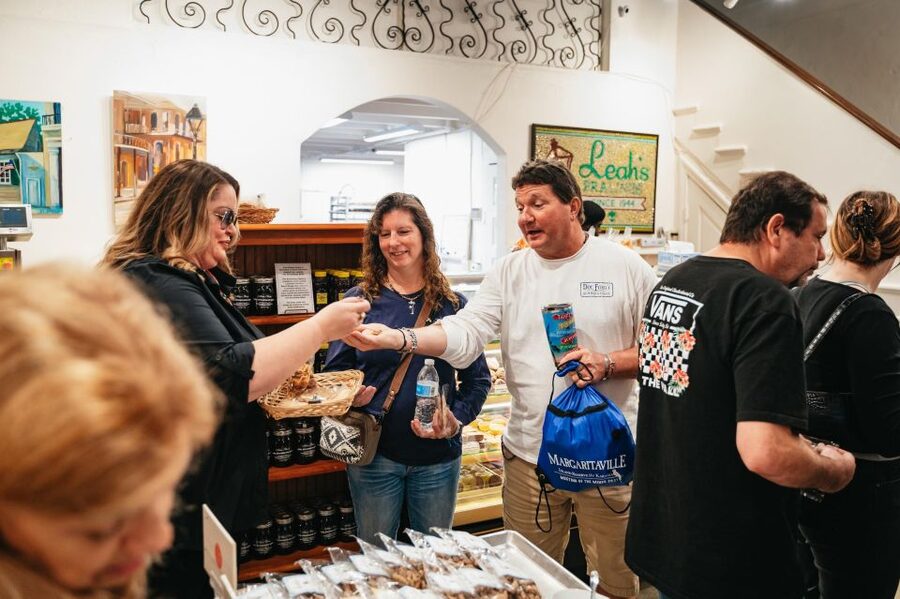
The final tasting is bananas foster bread pudding, a sweet finish after a long run of savory food.
Bread pudding is a fitting New Orleans dessert because it turns a humble base into something warm and rich. Bananas foster adds fruit and caramel-style sweetness, giving the ending more character than a plain pastry.
This last course also helps pace the outing. You finish at Toulouse Street rather than returning to the starting point, so you can continue exploring the French Quarter from there. The ending is practical for a day of sightseeing, since you are already in the middle of the neighborhood rather than being sent back to the first restaurant.
Several people have particularly enjoyed the final dessert, but you should not assume it is light. Arrive with an empty stomach, especially if you want to enjoy every course instead of merely sampling the last one.
The guides make the history memorable
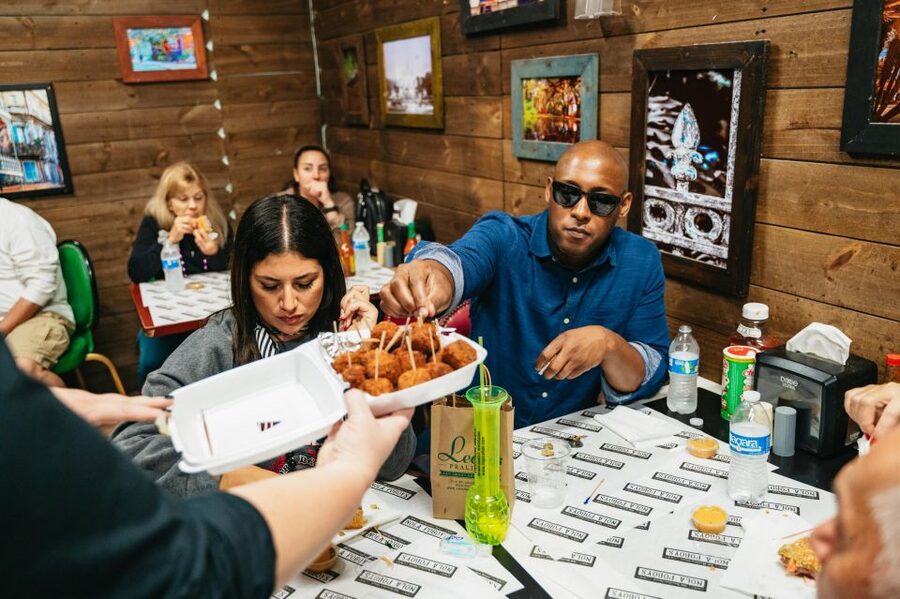
The food is the reason to book, but the guide can decide how much you get from it. The strongest feedback centers on guides who connect local dishes to the city’s people and past without turning the walk into a lecture.
Beth is often praised for her storytelling, warmth, and timing. Gary has been noted for explaining the city and region while linking food to local customs. John, sometimes called the Professor, is described as informative, patient, and easy to follow.
Meg brings a friendly style and personal familiarity with the French Quarter, while Kat and Cat have been praised for keeping the group engaged even in hot, humid weather. Dillon has been appreciated for connecting historical events to the food being served.
Guides vary, so you cannot book a specific personality from the information provided. That said, the pattern is encouraging: the tour depends on people who can answer questions, keep a steady pace, and make the material entertaining without overacting.
One practical note: a stop can be noisy. At the starting restaurant, one diner found staff conversation distracting while the guide was speaking. If you have trouble hearing in busy rooms, stand close to the guide and ask to repeat anything important.
Price, group size, and practical value
The cost is $85 per person for three hours. That includes the walking tour, an English-speaking guide, up to eight included food samples, water, and tips for restaurant servers and waitstaff.
Alcoholic drinks and soft drinks are not included. Most stops have bars, so you can buy a drink during the tour, but those purchases add to the total. Water is provided, which is helpful in New Orleans heat.
The tour is designed for a small group of up to roughly 9 people, according to the experience description. A small group gives you a better chance to hear the guide and ask questions than a large bus-style food tour.
The value is strongest if you want a full meal plus orientation to the French Quarter. If you only want a few bites and already know the city’s food scene, $85 may feel high. If you would otherwise pay separately for gumbo, a po-boy, a muffuletta, dessert, and several smaller tastings, the cost becomes easier to justify.
I would book it near the beginning of your New Orleans visit. You can use the guide’s food suggestions and neighborhood tips for the rest of your stay, and you will have a better sense of what to order when you eat on your own.
Vegetarian food and other restrictions
The vegetarian option is a real alternative, not simply a request to remove meat from the standard dishes. It can include black-eyed pea soup, vegetable jambalaya, a Portobello po-boy, and other versions of Southern classics.
A pescatarian in one group was able to eat well alongside meat-eating family members. That makes the tour workable for mixed groups, provided everyone understands the available choices.
The limits are firm. There is no vegan, gluten-free, or dairy-free option. People with gluten intolerance, vegans, and those with serious mobility impairments should not book this experience based on the supplied suitability notes.
The operator says the tour is wheelchair accessible, but it also lists the experience as unsuitable for people with mobility impairments. Because the route involves walking between multiple French Quarter stops, contact the provider before booking if you need specific access support.
The tour runs rain or shine. Wear shoes suitable for three hours on city streets, bring weather protection, and do not plan a large meal beforehand.
Should you book this French Quarter food tour?
Book it if you want your first New Orleans meal to come with context. You will taste gumbo, catfish po-boy, muffuletta, boudin balls, red beans and rice, Creole sweets, and dessert while moving through the French Quarter with a guide who explains what connects them.
I would especially recommend it to first-time visitors, curious eaters, and families or couples who want one organized introduction to local food. It also suits mixed groups using the vegetarian menu, though you should check the exact substitutions in advance.
Skip it if you need a vegan, gluten-free, or dairy-free menu, dislike seafood and meat, or prefer to choose every dish yourself. For everyone else, the combination of generous tastings, small-group walking, and lively local history makes this a useful and enjoyable start to New Orleans.
FAQ
Where does the tour begin?
Meet your guide inside the 3rd Block Depot restaurant at 316 Chartres Street in the French Quarter.
Where does the tour finish?
The tour ends on Toulouse Street in New Orleans, Louisiana.
How long does the food tour last?
The experience lasts three hours.
What food is included?
The tastings can include Cajun-style gumbo with warm potato salad, hot sauces, a Creole praline or bacon pecan brittle, a catfish po-boy, muffuletta, boudin balls, red beans and rice, and bananas foster bread pudding. The included details specify up to eight food samples, while the tour description refers to as many as nine tastings.
Is there a vegetarian option?
Yes. Request the vegetarian option at checkout. It can include black-eyed pea soup, vegetable jambalaya, a Portobello po-boy, and other meat-free versions of Southern classics.
Is there a vegan or gluten-free option?
No. The tour does not offer vegan, gluten-free, or dairy-free options.
Are drinks included?
Water is included. Alcoholic drinks and soft drinks are not included, though most restaurant stops have bars where you can buy beverages.
Is the tour wheelchair accessible?
The activity is described as wheelchair accessible, but it is also listed as unsuitable for people with mobility impairments. Contact the provider before booking to discuss your specific needs.
Can I cancel the booking?
You can cancel up to 24 hours in advance for a full refund. The reserve-now, pay-later option is also available.
More Food Walking Tours in New Orleans
- Reykjavik Food Walk – Local Foodie Adventure in Iceland
★ 5.0 · 18,952 reviews - Naples: Street Food Walking Tour with Local Guide
★ 4.9 · 4,976 reviews - Authentic Parisian Gourmet Food Tour with 10 Local Dishes & Wines
★ 5.0 · 4,754 reviews - Greek Food Walking Tour in Athens
★ 5.0 · 4,740 reviews
More History Walking Tours in the USA
- History and Hauntings of Salem Guided Walking Tour
★ 5.0 · 14,564 reviews - Boston: Freedom Trail History Small Group Walking Tour
★ 5.0 · 6,450 reviews - Historic Charleston Guided Sightseeing Walking Tour
★ 5.0 · 6,216 reviews - Savannah History and Haunts Candlelit Ghost Walking Tour
★ 5.0 · 3,235 reviews
Just added around New Orleans
- New Orleans: Witches Coven Garden District Walking Tour★ 4.9 · 113 reviews
- New Orleans: Garden District Guided Walking Tour★ 4.9 · 514 reviews
- New Orleans: French Quarter Ghost and Legends Walking Tour★ 4.3 · 129 reviews
- New Orleans: Drunk History Walking Tour★ 4.2 · 165 reviews
- New Orleans: 2-Hour Homes of the Rich & Famous Walking Tour★ 4.6 · 115 reviews
- New Orleans: French Quarter Photo Shoot and Walking Tour★ 5.0 · 74 reviews
- New Orleans: 2 or 3 Day Hop-On Hop-Off Bus with Walking Tour★ 4.5 · 291 reviews
- New Orleans: Five-in-One City Walking Tour★ 3.8 · 272 reviews
Food Walking Tours, compared.
Reykjavik Food Walk – Local Foodie Adventure in Iceland
Read our review →
New Orleans Food Walking Tour of the French Quarter with Small-Group Option
Read our review →
Authentic Parisian Gourmet Food Tour with 10 Local Dishes & Wines
Read our review →
Tapas Walking Tour with Food, Wine, and History
Read our review →
Browse the lists this tour appears in