
Review · BARCELONA WALKING TOURS
Barcelona: Gothic Quarter Walking Tour
Barcelona’s old stones have plenty to say. This 3.5-hour German-language walk turns the Gothic Quarter and Ribera into an open-air storybook, moving from Roman water systems to medieval power struggles and the scars of the Spanish Civil War. I especially like the small-group private format and the guide’s practical Barcelona advice. The main tradeoff is clear: you see monuments from outside, so this is not the tour for anyone seeking long interior visits.
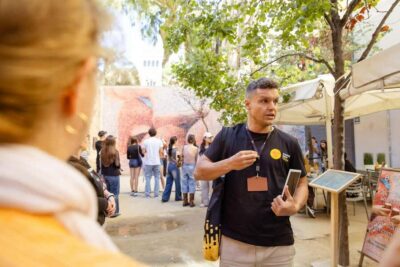
I also like the relaxed pace, with time for photos, questions, and a bathroom stop instead of a forced march. Guide Johannes has been praised for shaping the walk around personal interests and bringing extra photographs to make vanished buildings easier to picture. Still, three and a half hours on old-city streets can feel tiring, and the tour runs in sun, rain, wind, and strong showers.
Key things to know before you book
- German-language storytelling: The tour is built for German-speaking visitors and covers Barcelona from Roman times through the early 18th century.
- A private group for up to four: At $212 per group, the price works out to $53 per person if four people share it.
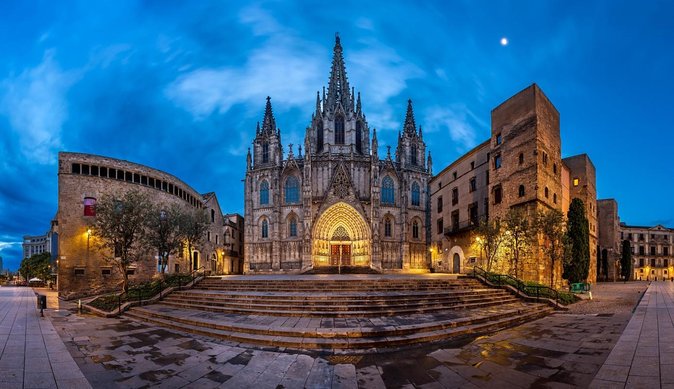
- Two old quarters in one walk: The route covers the Barrio Gotico and the Ribera Quarter, finishing near Passeig del Born.
- Exterior sightseeing is the rule: You’ll study streets, squares, churches, palaces, and façades from outside, with interior visits and entry fees generally excluded.
- History with useful local advice: Restaurant ideas, shopping tips, and guidance on local specialties can make the rest of your Barcelona stay easier.
- A high satisfaction record: The experience carries a 4.9 rating from 383 reviews, with special praise for structure, personal attention, and extra detail.
Starting at Plaça de Catalunya
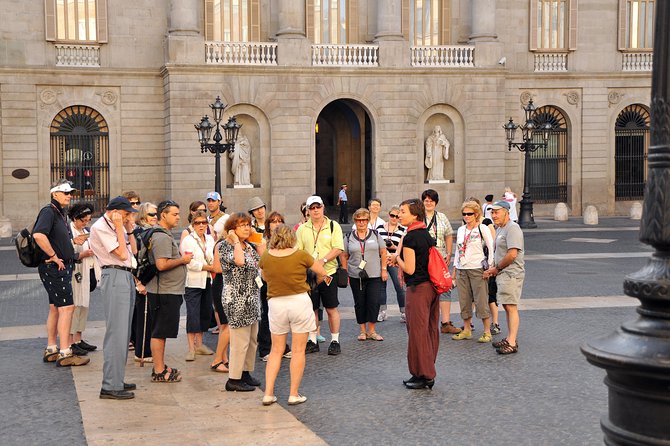
The walk begins in front of Hotel Olivia Plaza at Plaça de Catalunya, 19. This is a practical meeting point because the square is easy to locate and marks the upper edge of the old city.
From here, you move toward the Gothic Quarter rather than beginning inside a quiet medieval lane. That opening gives you a useful sense of Barcelona’s layers. The broad modern city gradually gives way to tighter streets, older walls, and small squares where the city’s past is harder to separate from daily life.
I would arrive a little early. Plaça de Catalunya is large, and a clear meeting point matters when you are trying to find a guide in the middle of a busy urban space. The activity is listed as wheelchair accessible, although the old quarter’s narrow lanes and historic surfaces can still make the pace and route worth discussing with the operator in advance.
A few more walks around Barcelona worth a look
- Barcelona Tapas and Wine Experience Small-Group Walking Tour
★ 5.0 · 5,804 reviews - Barcelona: Tapas Walking Tour with Food, Wine, and History
★ 4.8 · 4,261 reviews - Barcelona: Food Walking Tour with Tapas and Wine
★ 4.9 · 2,180 reviews
Roman Barcelona and the first layer of the city
The tour reaches back to Roman Barcelona before moving into the medieval period. One of the early themes is Roman luxury, including flowing water connected with a convalescent colony.
That detail helps turn a vague ancient past into something practical. You are not just hearing that Romans lived here. You are considering how water, health, comfort, and urban planning shaped the first version of the city.
This is one reason a guided walk works well here. A street may look like an ordinary passage until someone explains what earlier buildings, walls, or uses occupied the same ground. The tour treats Barcelona as a city that keeps changing while carrying earlier versions beneath its surface.
You should expect storytelling rather than a museum-style display. There are no promises of excavated rooms or long indoor explanations. The guide uses the streets and squares as the main classroom.
Gothic lanes, old power, and a city becoming a nation
The route then shifts into the Middle Ages, when Barcelona grew from a smaller city into a major force connected with the Crown of Aragon and maritime trade.
The subjects are not presented as a tidy list of kings and dates. The tour includes political conflict, the role of the people’s council, King Martin’s death, and the eventual weakening of local participation in government. There are also stories involving religious authority, the Inquisition, and the power struggles that shaped everyday life.
I like this approach because medieval Barcelona was not only a collection of pretty buildings. It was a place where merchants, rulers, religious groups, military leaders, and ordinary citizens competed for influence. The narrow streets are more interesting when you understand that power was argued over in real places, not in an abstract textbook.
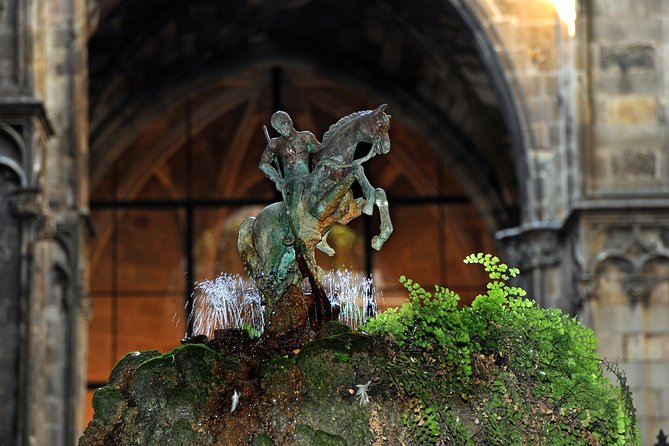
Some stories are deliberately memorable. Themes include a dragon connected with Barcelona, a young girl in the pines, a French soldier’s bayonet, and a slightly eerie brotherhood. These unusual episodes give the walk a human scale. They also help break up the more serious political material.
If you prefer a simple architecture tour, the number of stories may feel dense. If you like connections between buildings, legends, politics, and people, this is likely to be one of the strongest parts of the experience.
The Jewish Quarter and the traces of a lost community
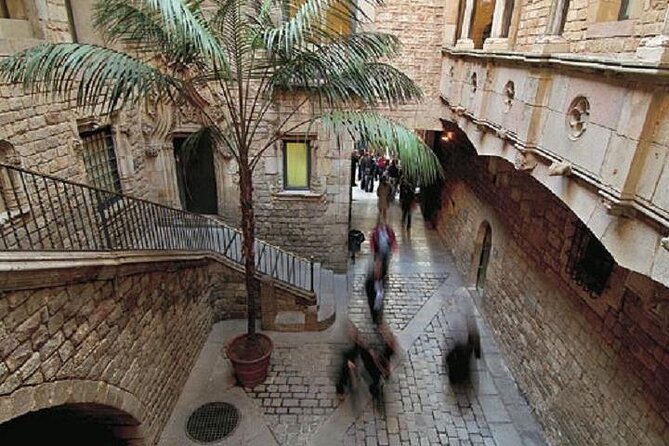
The old Jewish Quarter is another important section. The tour focuses on the remains of a community that once formed part of Barcelona’s urban life, along with the pressure and persecution that eventually destroyed it.
This part deserves time and care. The streets can look small and picturesque today, but the story is not simply romantic. The walk places the Jewish Quarter alongside the Inquisition and other religious conflicts, giving you a more honest view of the city’s past.
You will not be entering a dedicated museum as part of the standard plan. Instead, the guide helps you read the surviving urban fabric and understand what is missing. That can be more powerful than a polished display, though it depends on the guide’s explanation and your willingness to pause over details that are easy to overlook.
Same streets, a different way to see them:
- Barcelona Tapas Walking Tour: Food, Wine & History
★ 4.5 · 1,928 reviews - Barcelona Helicopter, Sailboat & Old Town Private Walking Tour
★ 5.0 · 1,395 reviews - Barcelona: Old Town and Gothic Quarter Walking Tour
★ 4.8 · 1,393 reviews - Barcelona: City Walking Tour with a Local Guide
★ 4.9 · 1,384 reviews
The Gothic Quarter as a changing stage
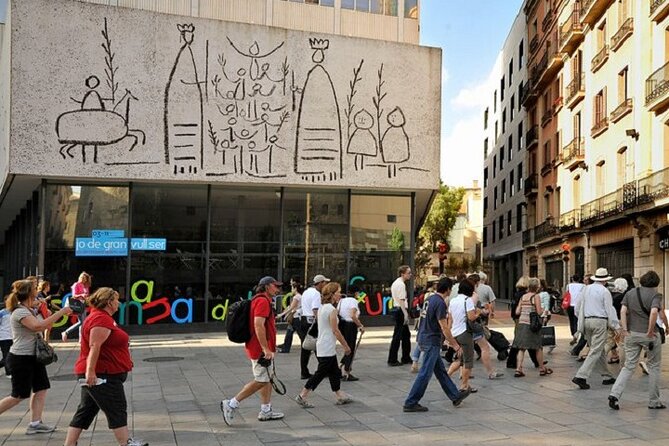
Barcelona’s old center is not frozen in the Middle Ages. One of the tour’s more playful ideas is the Gothic Quarter as a kind of Gothic theme park, where even houses have been moved stone by stone.
That point matters. Some features look ancient because they use old materials or imitate older styles, but the district has been repaired, altered, and reshaped over time. A good guide helps you separate genuine medieval remains from later work without ruining the pleasure of the scene.
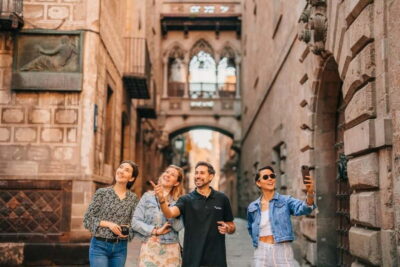
You’ll pass through small alleys and romantic squares, with pauses for photographs. The experience is meant to be calm rather than athletic. Still, the three-and-a-half-hour length is real. The older center can be tiring, especially in summer heat or during wet weather.
The tour runs in all weather, including wind and strong showers. Bring a hat, sunglasses, sunscreen, and water in summer. In winter, a jacket or thin coat should be enough according to the tour information, but Barcelona’s weather can change, so sensible shoes and a light rain layer are still good ideas.
Cloisters, royal anxiety, and the dancing egg
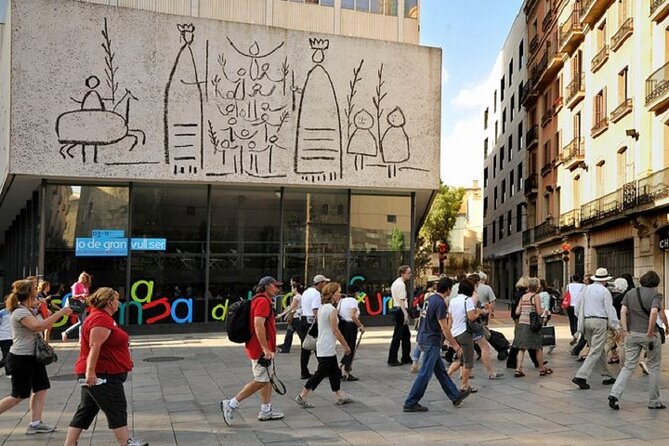
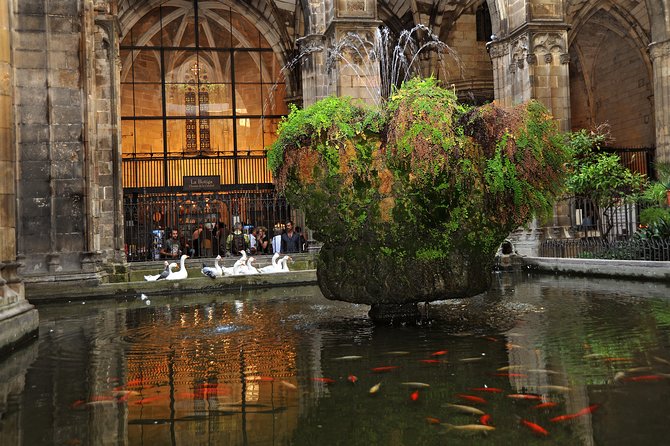
A cloister visit is one of the exceptions to the mostly exterior format. For this stop, you need clothing that reaches at least the knees and covers the shoulders.
The route also includes the tradition of the dancing egg, a distinctly Barcelona custom that brings a little oddness and charm to the walk. It is a reminder that the city’s religious spaces were not only solemn settings. Ritual, festival, local humor, and public spectacle all played a part.
The royal palace section adds another memorable human detail. King Fernando is linked with fear and with the story that he did not receive Columbus at home. These small episodes make royal history less remote. Instead of hearing only about grand campaigns, you get a glimpse of personalities, anxieties, and missed opportunities.
Because interior access is limited, you should think of these locations as carefully explained stops rather than full visits. The value lies in seeing the setting and learning how it fits into the larger story.
Santa Maria del Mar and the Ribera Quarter
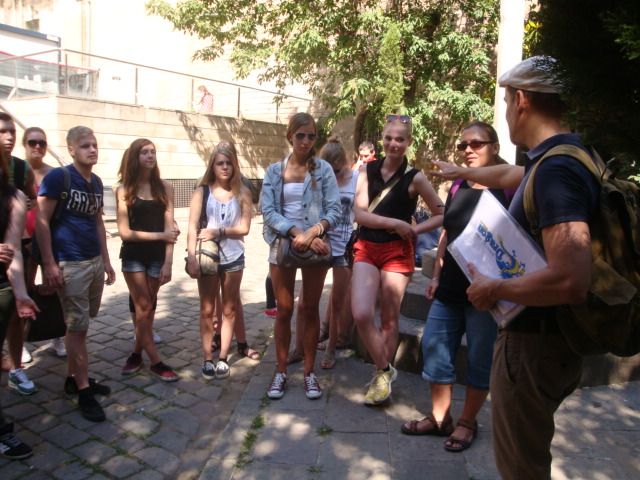
The tour continues toward Santa Maria del Mar and the Ribera Quarter, finishing at Passeig del Born, 22.
Santa Maria del Mar is tied to the idea of a first collaborative project, with legends and heroes connected to the church and its community. The building’s importance is not only architectural. It also represents the work and ambition of ordinary people, merchants, and the wider neighborhood.
The route’s emphasis on collaboration fits the Ribera Quarter well. This was a district connected with work, trade, religious life, and the sea. It offers a useful counterpoint to the royal and ecclesiastical stories earlier in the walk.
The ending near Passeig del Born is convenient for continuing your day, though the tour does not include a meal or a formal final activity. The guide may offer restaurant and shopping suggestions, and those tips can be especially useful after you have learned how the neighborhood developed.
One practical note: the advertised itinerary describes the guided portion as three hours, while the full activity lasts about three and a half hours. Allow the full 3.5 hours in your schedule, especially if you have a timed reservation afterward.
The darker chapters: war, revenge, and memory
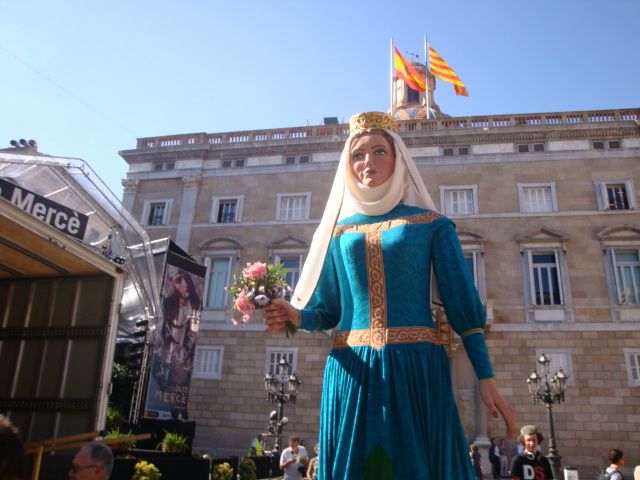
The later parts of the walk connect historic places with the Spanish Civil War and the violence that followed political change. One stop concerns a romantic place carrying the scars of that conflict. Another recalls the vengeance of the Bourbon kings and the death of a general, described through the image of a mulberry grave.
These stories give the old city emotional weight. Barcelona’s past is not only Roman stone and medieval romance. It includes repression, political revenge, religious persecution, and the loss of local control.
The tour also brings in the song of the knife-grinder and the idea of a half house, details that suggest how daily life and street culture survived alongside official history. You get a city made of grand decisions and small human traces.
This material may not suit someone wanting a light, purely decorative stroll. The route includes spooky, bloody, and painful chapters. That is part of its value, but it also means the experience is best for people who want a fuller account of Barcelona.
What the $212 group price really means
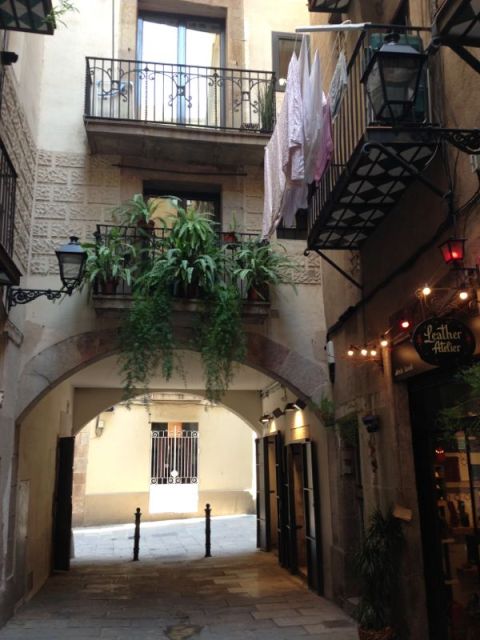
The listed price is $212 per group of up to four people. If four people join, that is $53 each for 3.5 hours, or about $15 per person per hour. For a private group, that is a fair price if you value personal questions, a flexible pace, and German-language guidance.
For only one or two people, the per-person cost rises quickly. At two people, it works out to $106 each. You are paying for the guide’s time rather than for entry tickets, transport, food, or a long indoor visit.
That makes the tour a better fit for four friends or family members than for a solo visitor watching every euro. The private format can also matter if you want to ask about restaurants, shopping, local specialties, or particular periods of Barcelona’s past.
The high 4.9 rating from 383 reviews supports the idea that the personal service is a major strength. Specific praise has focused on clear structure, useful extra photographs, and practical advice that helped people plan the following days. Johannes has been singled out for adapting the walk to individual needs, though guide availability can vary by date.
Who will enjoy this walk most
I would choose this tour if you:
- Prefer German-language guiding
- Want history told through streets and squares
- Like legends mixed with politics and architecture
- Are traveling with up to three companions
- Want restaurant, shopping, and local food suggestions
- Prefer a relaxed walk over a rushed checklist
- Are happy to see most sights from the outside
I would look elsewhere if you need extensive interior access, dislike walking for several hours, or want a tour focused mainly on Gaudi. This experience centers on the old city, Roman Barcelona, medieval power, Jewish history, religious conflict, the Ribera, and later political memory.
Bring water and weather protection. Wear comfortable shoes. If you want to enter the cloister, dress with covered shoulders and at least knee-length clothing. Those simple details can make the day much easier.
Should you book the Barcelona Gothic Quarter walk?
Book it if you want Barcelona explained as a living city rather than reduced to a set of famous façades. The strongest features are the German-language storytelling, the private group setup, the wide historical range, and the practical advice that can help shape the rest of your stay.
The price is most attractive for four people sharing the booking. Just remember that the tour is mainly outdoors and that three and a half hours can feel demanding in bad weather or summer heat.
For German-speaking visitors who want a serious but entertaining introduction to the Gothic Quarter and Ribera, I think this is a strong choice. You leave with more than photographs. You get a clearer sense of how Roman planning, medieval ambition, religious conflict, royal power, war, and modern city life occupy the same few streets.
FAQ
Where does the tour begin?
It begins in front of Hotel Olivia Plaza at Plaça de Catalunya, 19, 08002 Barcelona.
Where does the tour finish?
The tour finishes at Passeig del Born, 22, 08003 Barcelona.
How long does the experience last?
The activity lasts about 3.5 hours. The guided city tour is described as three hours, with the full walking experience lasting longer.
What language is the tour conducted in?
The live tour guide speaks German.
Is the tour private?
Yes. The group type is private, and the listed price covers up to four people.
How much does the tour cost?
The price is $212 per group of up to four people.
Are interior visits included?
No. Interior visits and entry fees are not generally included. The tour mainly views monuments, streets, and squares from outside, with a couple of stated exceptions.
Is the tour wheelchair accessible?
The activity is listed as wheelchair accessible.
Does the tour run in bad weather?
Yes. It operates in sun, rain, wind, and strong showers.
What should I wear for the cloister visit?
You should wear clothing that reaches at least the knees and covers your shoulders.
Can I cancel for a full refund?
Yes. You can cancel up to 24 hours in advance for a full refund.
Do I have to pay when I reserve?
No. The reserve-now, pay-later option lets you book without paying immediately.
Just added around Barcelona
- Barcelona Private Food Tour: Tapas, Paella & 8+ Food Tastings★ 5.0 · 164 reviews
- Barcelona Gothic Quarter Walking Tour with Tapas★ 5.0 · 248 reviews
- Picasso Museum and Walking Tour Plus Optional Wine & Food Tasting★ 5.0 · 596 reviews
- Private Barcelona Old Town and Gothic Quarter Walking Tour★ 5.0 · 134 reviews
- Barcelona Architecture Walking Tour With Casa Batlló Upgrade★ 5.0 · 137 reviews
- Montjuïc Walking Tour With Optional Flamenco Show★ 5.0 · 196 reviews
- Semi-Private Montserrat Monastery, Funicular & Scenic Nature Walk★ 5.0 · 172 reviews
- Gothic Quarter Donation-Based Walking Tour in English★ 5.0 · 72 reviews
Barcelona Walking Tours, compared.

Barcelona Tapas and Wine Experience Small-Group Walking Tour
Read our review →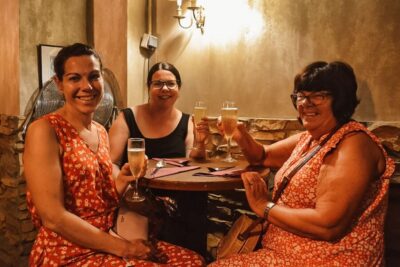
Tapas Walking Tour with Food, Wine, and History
Read our review →
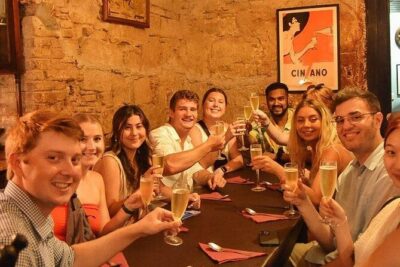
Barcelona Tapas Walking Tour: Food, Wine & History
Read our review →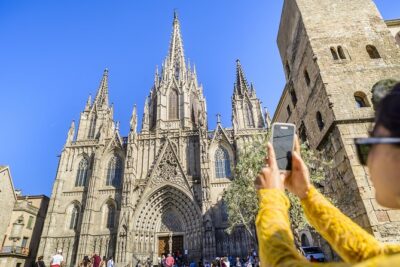
Barcelona Helicopter, Sailboat & Old Town Private Walking Tour
Read our review →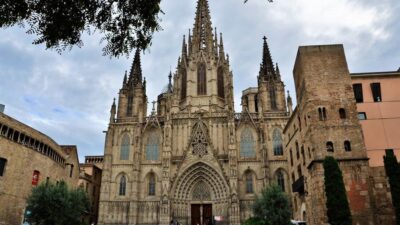
Helicopter Flight, Boat Ride, and Walking Tour
Read our review →Browse the lists this tour appears in