Review · TOURS
Sofia: Communist Walking Tour
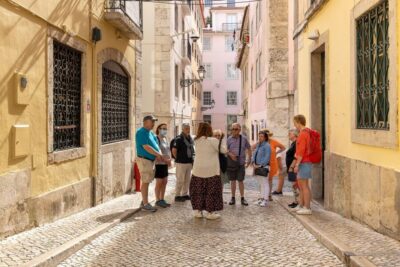
Sofia’s communist past is hiding in plain sight. This three-hour walk connects grand government buildings with darker sites tied to secret police activity, political power, and public memory. I especially like the balanced treatment of communism, with guides explaining both its gains and its costs, and the way personal stories make daily life between 1944 and 1989 easier to understand. The main drawback is the physical demand: you walk for hours, with no hotel pickup and limited accessibility.
The route is especially strong with guides such as Daniel, Vasil, Martin, Stefan, Dino, and Nikolai, all praised for clear explanations and an easy, engaging style. I also like that it finishes near the National Palace of Culture and a section of the Berlin Wall, giving you a useful link between Bulgarian history and the wider Cold War. In winter, book an earlier start if possible, since darkness can make some sites harder to see.
Key points at a glance
- A 1944 to 1989 history lesson on foot: Learn how World War II, Soviet influence, religion, industry, housing, culture, and the economy shaped Bulgaria.
- Power and fear in the city center: See the former Bulgarian Communist Party headquarters and a secret police investigation facility.
- Architecture tells the story: Compare the Rila Hotel and Sofia’s 1950s Stalinist buildings with older Orthodox and civic landmarks.
- A useful two-sided view: The guides explain the period’s social benefits and serious restrictions without turning the tour into a political speech.
- A strong Cold War finish: The route includes the Monument of the Soviet Army, a memorial to victims of the communist regime, the National Palace of Culture, and a Berlin Wall section.
- Good value for history fans: At $21 per person, the price is reasonable if you want context rather than a quick photo stop.
Why this Sofia walking tour is worth your time
Communist-era Sofia is not a museum district with everything neatly labeled. Much of the story is spread across ordinary streets, government offices, gardens, hotels, monuments, and buildings still used today. That is why a guide matters here.
For $21, you get three hours of explanation from a local English-speaking guide. You are not simply taken from one monument to the next. You learn why a building was created, what it represented, and how its meaning changed after 1989.
I find the subject especially useful if Sofia is your first stop in the Balkans. The tour gives you a framework for understanding Bulgaria’s politics, public spaces, architecture, and lingering arguments about the past. It also helps explain why some monuments remain in place, why others were destroyed, and why the communist period still affects present-day Bulgaria.
The rating of 4.9 from 1,106 bookings suggests strong consistency, but the real strength is easy to identify: the guides make a difficult subject clear. Daniel is described as a historian who presents a solid background. Vasil is praised for an objective and interactive approach. Martin is known for warmth and humor, while Stefan has been singled out for making three hours feel surprisingly short.
The tone is not meant to glorify communism or reduce it to a simple horror story. That balance is important. You hear about industry, housing, education, and social order, but also about restrictions, fear, propaganda, and the damage left behind. If you want only a list of photo opportunities, this may feel too talk-heavy. If you want to understand the city, it earns its place in your itinerary.
A few more walks around the world worth a look
- Magical London: Harry Potter Guided Walking Tour
★ 4.7 · 22,044 reviews - Reykjavik Food Walk – Local Foodie Adventure in Iceland
★ 5.0 · 18,952 reviews - History and Hauntings of Salem Guided Walking Tour
★ 5.0 · 14,564 reviews
Palace of Justice: starting with power and law
Meet outside the Palace of Justice on Vitosha Boulevard, in front of the large white building with two lion statues. This is a central, easy-to-find starting point, and it gives the guide a natural way to introduce the political structure of communist Bulgaria.
The building itself is not presented as a communist monument, which is useful. Sofia’s history did not begin in 1944, and the tour works best when it places the communist period inside the city’s older religious, royal, and civic story.
From here, the guide sets out the broad timeline. You learn about the events surrounding World War II, the rise of communist rule in Bulgaria, and the period that lasted from 1944 until 1989. The guide also explains why the system eventually weakened and fell.
I appreciate this opening because it avoids dropping you into a pile of dates. You first get the political setting, then see how that system shaped the streets around you.
Hotel Rila and the city’s mixed architectural language
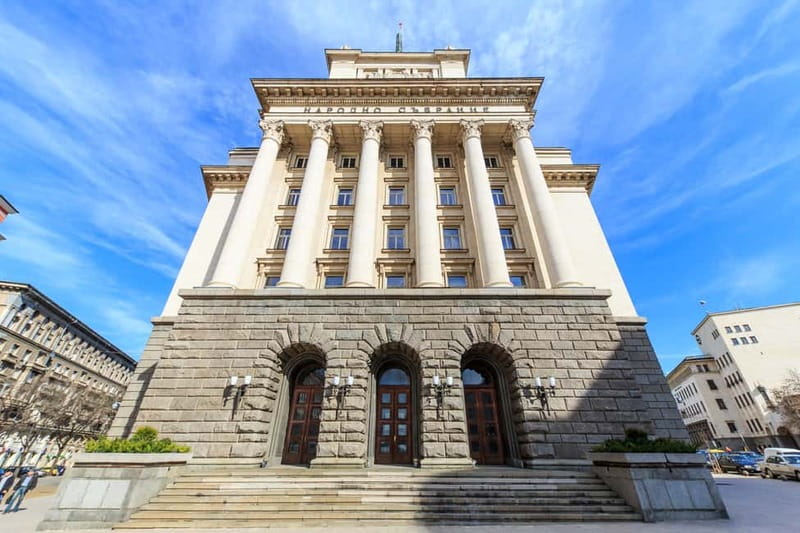
The Hotel Rila is one of the first clear examples of communist-era Sofia. Its scale and location help explain how the city center was reshaped during the period.
The guide uses the hotel to discuss classic communist architecture and the way large public buildings were intended to project order, strength, and modernity. You also get a chance to compare this style with Sofia’s much older structures, which often sit only a short walk away.
That contrast is one of the most rewarding parts of the route. Sofia can shift from medieval stonework to formal state architecture within minutes. You begin to see the city as a record of competing political eras, not just a collection of separate sights.
The walk does not focus on entering every building. The value comes from learning how to read the exteriors, the location, and the role each structure played. If architecture is your main interest, bring patience and listen closely, since the context is more important than a grand interior visit.
St. Nicholas the Wonderworker and the role of religion
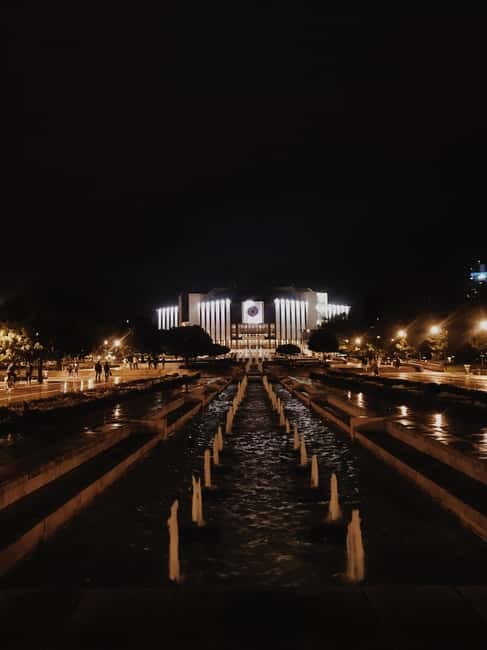
The medieval Orthodox temple of St. Nicholas the Wonderworker adds a strong counterpoint to the communist story. Dating from the 13th century, it reminds you that religion and tradition existed long before the state ideology of the 20th century.
Religion is one of the stated subjects of the tour, and this stop gives the discussion a physical anchor. You learn how communist ideology related to religious life and how older institutions fit into a system that promoted a different set of beliefs.
I like this part because it prevents the tour from becoming architecture alone. Communism affected churches, families, education, culture, and personal identity. A medieval Orthodox temple makes that tension visible without requiring a separate museum visit.
The stop is guided sightseeing rather than a full religious tour. You should expect explanation about the site and its place in the story, not an extended examination of every artistic detail.
Same streets, a different way to see them:
- New Orleans Premier Ghost, Voodoo and Vampire Walking Tour
★ 4.5 · 12,856 reviews - Amsterdam Anne Frank: Small-Group Walking Tour & Local Guide
★ 4.8 · 12,789 reviews - Edinburgh: Harry Potter Magical Guided Walking Tour
★ 4.8 · 11,944 reviews - Edinburgh Castle: Guided Walking Tour with Entry Ticket
★ 4.7 · 11,699 reviews
The National Assembly and the machinery of government
At the National Assembly of Bulgaria, the tour turns back toward public authority. Here, the guide can explain how the state presented itself, how political power operated, and how ideology appeared in official spaces.
This is where the discussion of the economy and industry becomes more useful. You hear how the communist system affected work, production, housing, and the organization of daily life. The tour is not simply about party leaders. It asks what the system meant for ordinary Bulgarians.
That focus on everyday life is one of the experience’s best features. Guides recount what it was like to live during the Cold War, moving beyond formal political events. The personal angle helps you understand why opinions about the era can remain complicated.
A practical note: the group may stop in busy public areas while the guide speaks. One suggestion for improving the experience is to gather to one side of pathways so pedestrians can pass. Stay alert, keep your group together, and expect a city walk rather than a quiet private lecture.
Malko Tarnovo Street and the secret police story
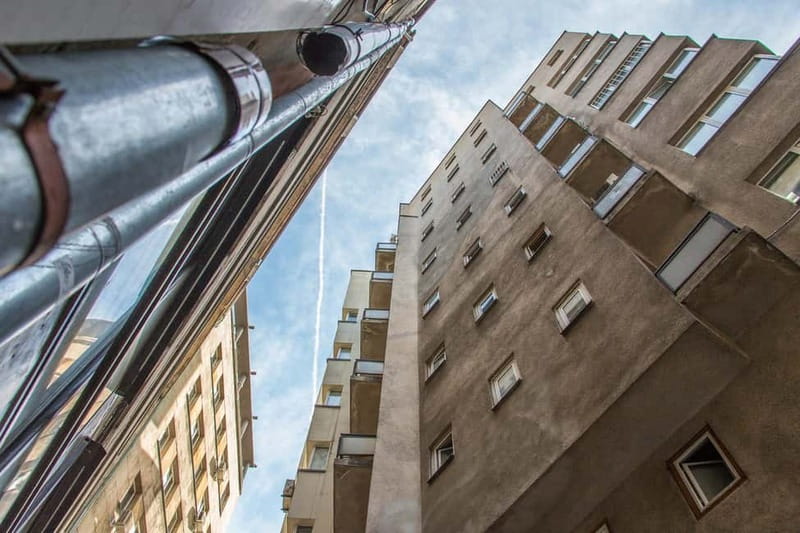
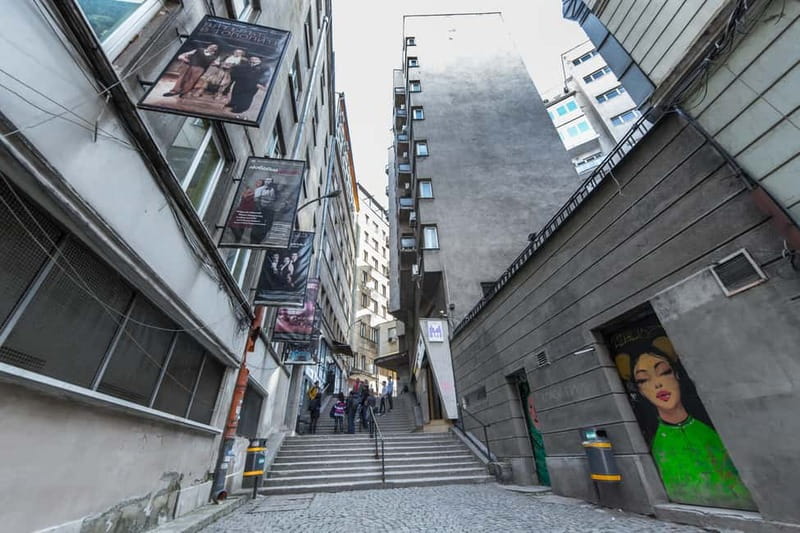
The narrow setting of Malko Tarnovo Street leads into one of the tour’s darker subjects: a secret police investigation facility. This stop gives the political system a human scale.
Large monuments can make history feel abstract. A place connected with investigation and state security feels different. Here, the guide explains how surveillance and political control affected people who fell under suspicion.
The exact emotional effect will depend on your guide and your interest in the subject, but this is likely to be one of the more serious stops. The route does not treat repression as a footnote. It is placed alongside discussions of housing, employment, culture, and industry, which helps you see how control could exist within ordinary life.
This is also where a balanced guide matters most. The experience works best when the explanation remains factual and avoids theatrical language. Guides praised for being objective, including Vasil and Ivo, appear particularly suited to this part of the walk.
The State Archives and the problem of memory
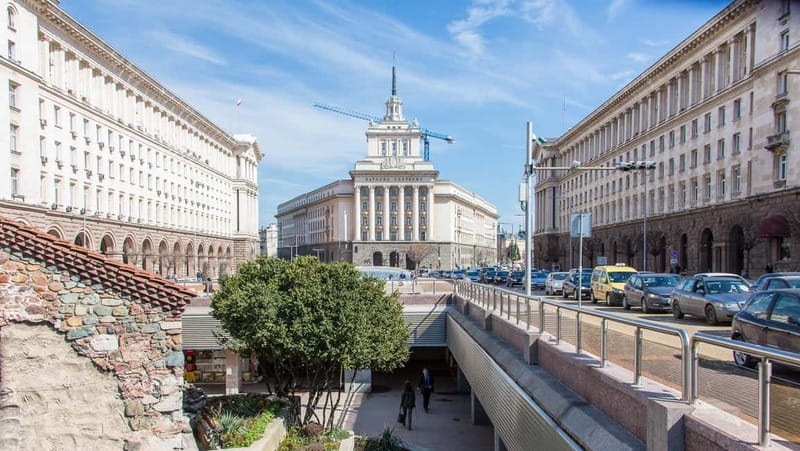
The State Agency Archives provides a natural moment to discuss records, official memory, and the way governments preserve or shape the past. You may not spend time inside the institution, but its presence fits the tour’s larger question: who controls the story of a country?
By this point, the guide has covered the rise of communism, its institutions, and its effect on daily life. The archives help connect those subjects to the present. Bulgaria is still working through how to remember the period, what to preserve, and how to explain it to younger generations.
This is one reason I recommend taking the tour early in your Sofia visit. The information can change how you look at later sights. Buildings that first seem plain or imposing may take on a political meaning after you understand the period behind them.
City Garden and the lost mausoleum
The City Garden and nearby central spaces bring you into the story of Bulgaria’s former communist leadership. One of the key sites is the location of the destroyed mausoleum of Bulgaria’s first communist leader.
The absence is the point. You do not see the mausoleum itself, but you learn what occupied the site, why it mattered, and what its destruction represented after the end of communist rule. A missing building can tell you as much as a surviving one.
This stop also helps explain the physical process of change after 1989. Political symbols were removed, contested, or reinterpreted. The city did not simply erase the past and start over. It had to decide what to do with the spaces left behind.
The City Garden offers some breathing room during the walk, but do not mistake the route for a slow park stroll. You continue across central Sofia, and comfortable shoes are important.
Knyazheska Garden and the Monument of the Soviet Army
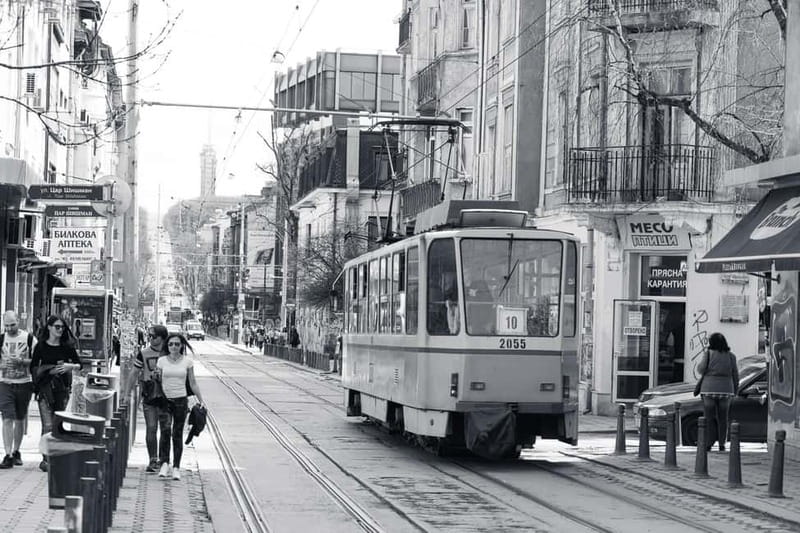
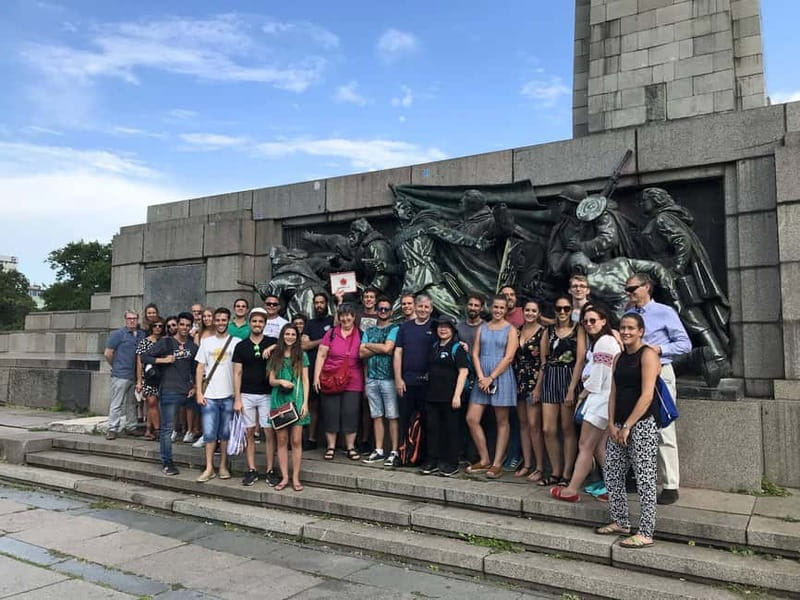
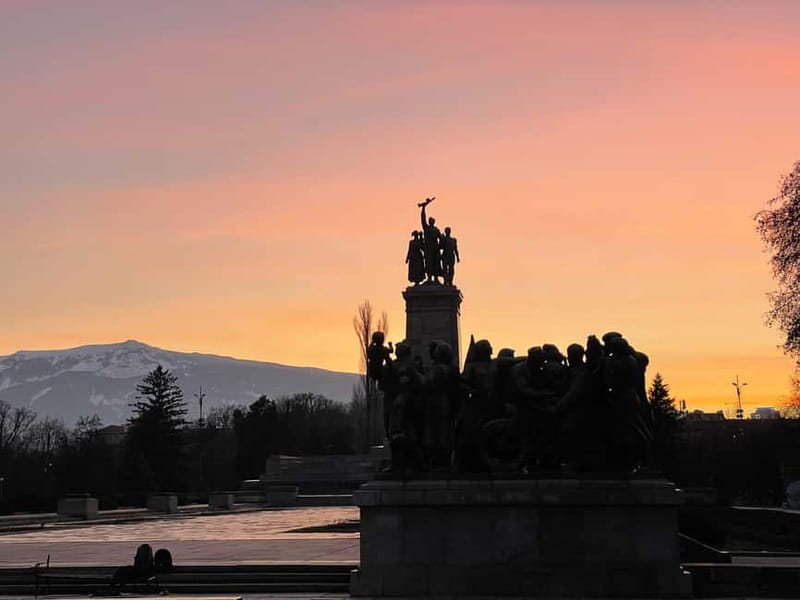
The Knyazheska Garden leads to one of Sofia’s most controversial sights, the Monument of the Soviet Army. Its presence has long raised difficult questions about liberation, occupation, alliance, political symbolism, and national memory.
The value here lies in hearing the competing interpretations. The monument is not treated as a simple photo stop or a one-line symbol. Your guide explains why it remains controversial and how its meaning changes depending on Bulgaria’s political and historical viewpoint.
This is a strong moment for asking questions. The tour is designed to be interactive, and several guides are praised for giving clear answers rather than rushing through a prepared script. If you have visited communist-era cities such as Prague, Budapest, Bratislava, Riga, Vilnius, or Gdańsk, you may find useful comparisons here, but Sofia’s story has its own tensions and details.
In summer, heat can make this stretch tiring. An August booking is likely more pleasant earlier in the day. In winter, the opposite problem appears: an early start gives you better light at sites that are not well lit.
The memorial to victims and the National Palace of Culture
The Memorial to the Victims of the communist regime in Bulgaria shifts the emphasis from state power to human cost. It is a quieter and more reflective stop, and it helps balance earlier discussion of buildings, leaders, and ideology.
You then continue to the National Palace of Culture, one of Sofia’s most recognizable examples of late communist monumental design. Its size and purpose reflect the importance placed on culture as a public project, while also showing the scale of state planning during the period.
This section brings several themes together: culture, propaganda, public events, architecture, and the changing role of state institutions. You can see how buildings were designed to express an idea of society, not merely to provide practical space.
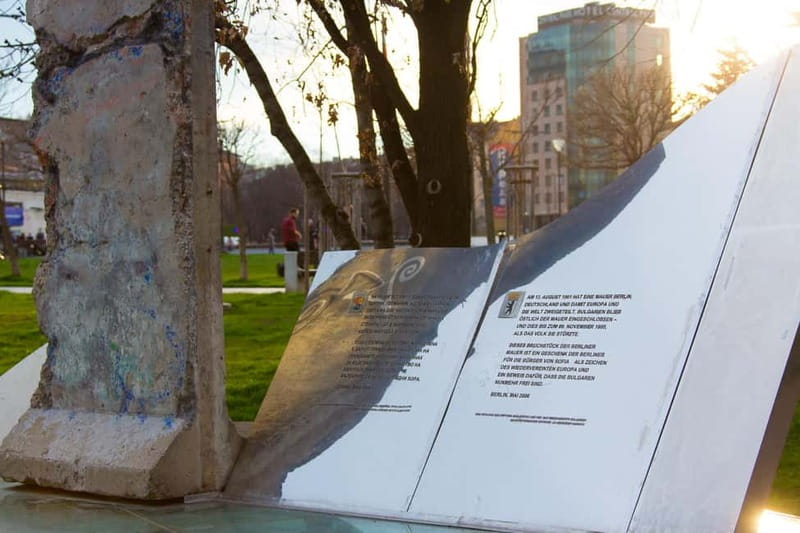
The tour ends in front of the National Palace of Culture, near a section of the Berlin Wall. That ending is well chosen. It links Bulgaria’s national experience to the broader Cold War and gives you a final reminder that the political division of Europe was not distant or abstract.
What the three hours feel like
The advertised duration is three hours, although one group found the walk lasted about three and a half hours. Plan your schedule with a little flexibility rather than placing an immediate reservation right afterward.
You walk between central sites, stopping regularly for explanations. Guides often make the experience easier with humor, questions, personal stories, and practical pacing. During a hot summer walk, Dino was praised for choosing shaded stopping places and finding benches or steps where the group could sit. In cold weather, Martin reportedly stopped for hot chocolate, a thoughtful touch when the temperature drops.
The route is not recommended for people with limited mobility. It is not wheelchair accessible, and you should have a moderate level of physical fitness. Children must be accompanied by an adult, and unaccompanied minors are not allowed.
Food and drinks are not included, though one guide, Niki, gave a useful list of recommended restaurants, bars, food, and attractions at the end. That kind of local advice can add value, but it is not a guaranteed part of every departure.
Is $21 good value?
At $21 per person, I consider this a fair price for a three-hour guided history walk in central Sofia. You are paying for a local English-speaking guide, not admissions, meals, or transportation.
The value depends on how you like to travel. If you prefer to see monuments quickly and move on, the cost may feel high for a walk that spends a lot of time talking. If you want the background that turns government buildings, memorials, and empty sites into meaningful places, the price is modest.
You also get a useful introduction to Sofia without spending time inside a museum. The route covers politics, religion, architecture, industry, housing, culture, and daily life in one sitting. That makes it particularly helpful on a short visit.
The tour offers free cancellation up to 24 hours before departure and lets you reserve while paying later, which is useful if your Sofia plans are still shifting.
Who should book this tour?
You should book it if you enjoy modern European history, political architecture, Cold War stories, or personal accounts of daily life under communism. It is also a good choice if Sofia is unfamiliar to you and you want a clear explanation of how the city became what it is today.
I would be more cautious if you have mobility limits, dislike long walks, or want a tour focused mainly on interiors and art. Much of the experience takes place outdoors, and the route can be hot in summer or dark and chilly in winter.
For the best experience, choose an early start in winter and, if possible, a cooler morning in summer. Come ready to walk, listen, and ask questions. The guides are the main reason this tour works, and names such as Daniel, Vasil, Martin, Stefan, Dino, and Nikolai repeatedly appear alongside praise for their clear, friendly presentation.
If you want Sofia to make more sense than it does from a postcard, I would book this tour. You will leave with more than photographs of monuments. You will understand why the city still carries visible and invisible traces of the communist era.
FAQ
How long is the Sofia Communist Walking Tour?
The advertised duration is three hours. One account described the experience as lasting about three and a half hours, so you should allow some extra time in your schedule.
How much does the tour cost?
The price is $21 per person.
What language is the tour conducted in?
The tour is conducted in English with a live guide.
Where does the tour start and finish?
It starts outside the Palace of Justice at bul. Vitosha 2, Sofia Center, in front of the large white building with two lion statues. It finishes near the National Palace of Culture, by a section of the Berlin Wall.
What is included in the price?
A local guide is included. Hotel pickup and drop-off, food, and drinks are not included.
Is the tour suitable for wheelchair users or people with limited mobility?
No. The tour is not wheelchair accessible and is not recommended for people with mobility impairments. You should have a moderate level of physical fitness. Children must be accompanied by an adult, and unaccompanied minors are not permitted.
Just added around the world
- Walking Tour of Boston’s Freedom Trail★ 4.5 · 77 reviews
- Downtown Freedom Trail Walking Tour – History & Architecture★ 4.5 · 194 reviews
- Boston Seafood Lovers Food and History Walking Tour★ 5.0 · 208 reviews
- Boston “Death and Dying” Walking Ghost Tour★ 4.5 · 223 reviews
- Boston Food of the North End Private Walking Tour★ 5.0 · 174 reviews
- Boston Movie Mile Walking Tour★ 4.5 · 119 reviews
- 1 If By Land Walking Tours★ 5.0 · 95 reviews
- Boston History and Freedom Trail Private Walking Tour★ 5.0 · 117 reviews
Tours, compared.

Magical London: Harry Potter Guided Walking Tour
Read our review →
History and Hauntings of Salem Guided Walking Tour
Read our review →
New Orleans Premier Ghost, Voodoo and Vampire Walking Tour
Read our review →
Amsterdam Anne Frank: Small-Group Walking Tour & Local Guide
Read our review →
Edinburgh Castle: Guided Walking Tour with Entry Ticket
Read our review →
Anne Frank’s Story – Guided Walking Tour through Amsterdam
Read our review →