Review · TOURS
Vilnius: Regular Walking Tour of Soviet Vilnius
Vilnius keeps its Soviet story in plain sight. This 2.5-hour walking tour leads you beyond the Old Town to brutalist buildings, former political squares, and places tied to Lithuania’s painful years under communist rule. I especially like the personal family stories shared by guides such as Ieva, Tadas, and Šarūnas, and the way the tour connects architecture with ordinary life. The main drawback is simple: you cover a lot of ground, so comfortable shoes are essential.
The $24 price is fair for a live English tour of this length, especially when the guide adds historical photographs, local memories, and time for questions. The subject can be grim, including stories linked to the KGB and repression, but the tour also gives you a clear sense of courage, change, and Lithuania’s return to independence.
Key points to know before you go
- The route begins at Gediminas monument: You meet beside the monument in Cathedral Square, then leave the Old Town for a less familiar side of Vilnius.
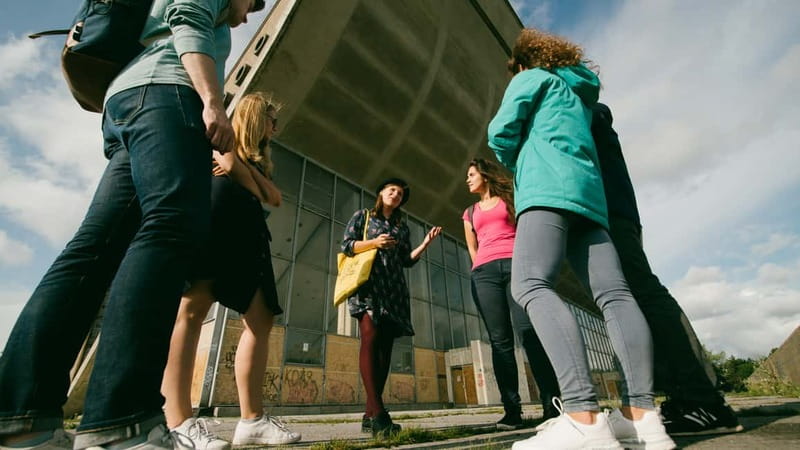
- The Palace of Concerts and Sports is a major visual stop: Its stark Soviet design once hosted concerts and basketball games.
- Personal memories make the history easier to grasp: Guides such as Ieva and Tadas explain how Soviet rule affected families, work, culture, and daily routines.
- The walking is flat but substantial: The pace is generally comfortable, yet you should expect plenty of walking over 2.5 hours.
- The tour ends at Seimas: Lithuania’s parliament was one of the places defended during the 1991 struggle for independence.
- You get strong value for $24: The tour combines architecture, politics, social history, and local storytelling without requiring hotel transport.
Starting at Gediminas monument and leaving the Old Town
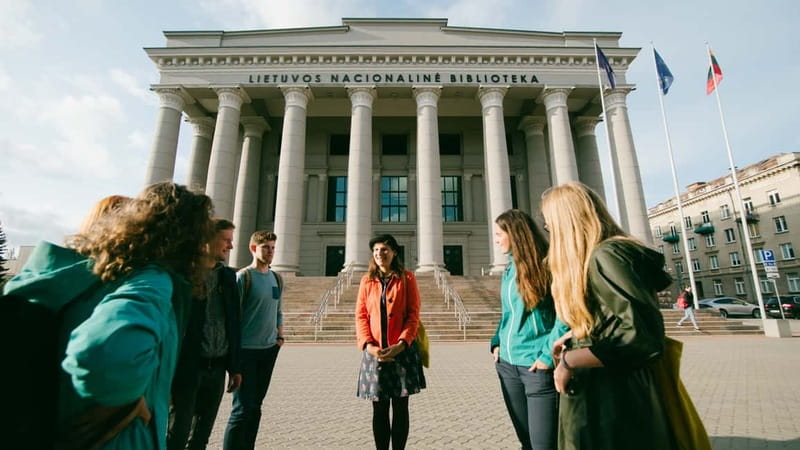
The meeting point is easy to identify. Look for the guide with a yellow bag and a yellow Vilnius with Locals Tours sign in front of the Gediminas monument in Cathedral Square.
This is a useful starting point because most first visits to Vilnius focus heavily on the Old Town, its churches, and its medieval streets. This tour deliberately turns you toward the newer city and the layers of history that many sightseeing routes skip.
Your guide sets the basic timeline as you walk. Lithuania’s Soviet period is not treated as a few isolated dates. Instead, you learn how political control shaped buildings, public spaces, education, work, shopping, family life, and national identity.
That approach is one of the tour’s strengths. I like history best when it explains how systems affected people at home, not only what happened in government offices. The guides do that well, using personal and family experiences to make an unfamiliar political period easier to understand.
The English-language guiding has been praised repeatedly, and the names that come up often include Ieva, Tadas, and Šarūnas. Ieva is known for combining a history background with family memories, while Tadas has shared recollections of growing up during the Soviet period. Šarūnas has also impressed local participants with unusual facts and details they had never noticed in their own city.
A few more walks around the world worth a look
- Magical London: Harry Potter Guided Walking Tour
★ 4.7 · 22,044 reviews - Reykjavik Food Walk – Local Foodie Adventure in Iceland
★ 5.0 · 18,952 reviews - History and Hauntings of Salem Guided Walking Tour
★ 5.0 · 14,564 reviews
The Palace of Concerts and Sports and Soviet design
One of the first major sights is the former Palace of Concerts and Sports. This large brutalist building once hosted concerts and basketball games, giving you an immediate reminder that Soviet architecture was not only about government offices and monuments.
The building is visually forceful. Concrete, broad surfaces, and heavy geometry create a very different mood from the ornate churches and historic facades around Cathedral Square. You do not need to be an architect to appreciate the contrast, but architecture fans will find plenty to discuss.
The building also helps explain how public life was organized. A concert hall or sports arena could be a place for entertainment, civic gatherings, and official messaging at the same time. The guide’s job is to show you how the structure worked within the city and the political system around it.
A useful feature of the tour is that the architecture is never treated as decoration alone. You hear how city planning and construction during the Soviet period changed Vilnius. That includes the impact on the historic center, the development of newer districts, and later decisions about what to preserve, remove, or reuse after independence.
You may find some of the buildings less attractive than the city’s medieval and baroque sights. That is part of the point. The tour asks you to look at plain or severe structures and see the political choices, social needs, and changing attitudes behind them.
Along the river to the Green Bridge
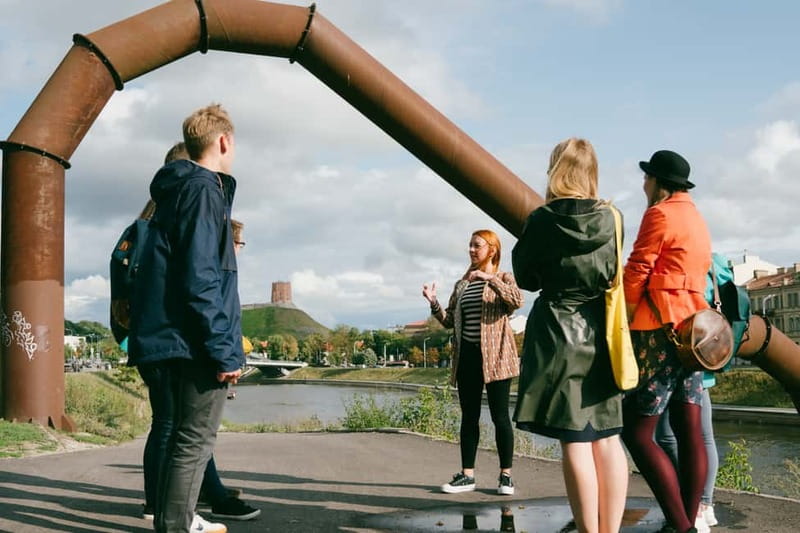
The route continues along the river, where you get broad views toward the Green Bridge. The bridge was once known for its Soviet propaganda statues, which have since been removed.
This stop works especially well because it shows how public art can change meaning. During the Soviet period, statues in prominent places helped present an official version of history and power. After Lithuania declared independence, those same symbols became part of a national argument about memory, occupation, and public space.
The bridge offers a good pause from the denser city streets, but do not expect a long photo stop built into the schedule. One person who enjoyed the tour wished for more time for pictures, and that is a fair point. The tour has many subjects to cover, so you should take quick photos when the group stops rather than wait until the end.
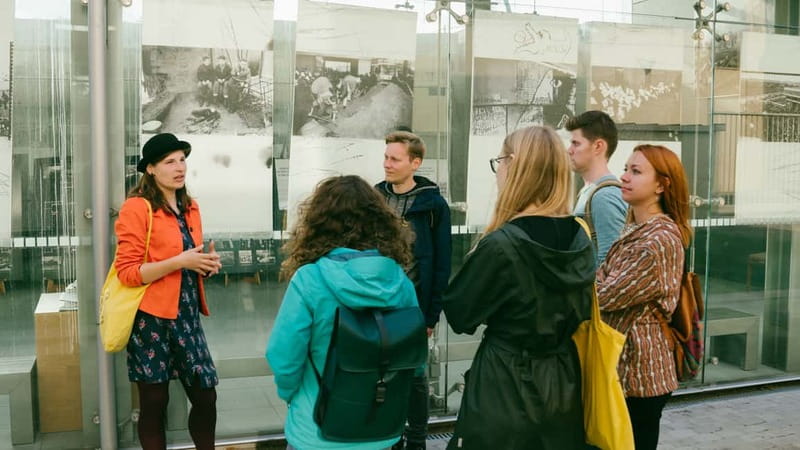
Guides may also use images on an iPad to show how locations looked during the Soviet period or during key events. This is valuable because the modern city can hide the visual clues of the past. A photograph can make a removed statue, renamed square, or changed building instantly understandable.
Lukiškės Square and the darker side of Soviet Vilnius
The tone becomes more serious at Lukiškės Square, near the KGB Museum. Here, the focus shifts from architecture and public symbolism to repression and the human cost of Soviet rule.
The area is associated with some of the most distressing stories on the route. You hear about fear, control, and the experiences of people who lived under a system that could punish dissent. The material is difficult, but the guides handle it with care rather than turning suffering into spectacle.
This is a tour for adults and older teenagers who can engage with painful history. You should not expect a light sightseeing stroll with occasional Soviet-themed decoration. The subject includes horrific events and personal loss, balanced with discussion of how people adapted, endured, and kept a sense of national identity.
The nearby KGB Museum gives the square extra weight, even though this walking experience is not described as a museum visit. If you plan to visit the museum separately, the tour can give you useful context first. You will already have a framework for understanding why this part of Vilnius matters.
I appreciate that the tour does not present Lithuania’s past as a simple story of helplessness. The guides also explain daily choices, private cultural traditions, and the ways people preserved a sense of who they were. That balance keeps the history human.
Same streets, a different way to see them:
- New Orleans Premier Ghost, Voodoo and Vampire Walking Tour
★ 4.5 · 12,856 reviews - Amsterdam Anne Frank: Small-Group Walking Tour & Local Guide
★ 4.8 · 12,789 reviews - Edinburgh: Harry Potter Magical Guided Walking Tour
★ 4.8 · 11,944 reviews - Edinburgh Castle: Guided Walking Tour with Entry Ticket
★ 4.7 · 11,699 reviews
Former Lenin’s Square and a city changing names
Another important part of the route is the place once known as Lenin’s Square. The guide explains how the square changed after Lithuania declared independence.
Renamed places can seem like a small detail until you understand what they represent. A square is not only an address. It is a public statement about whose history is being honored and which political symbols no longer belong at the center of civic life.
This is where the tour connects physical changes with national identity. You learn how independence affected monuments, names, public ceremonies, and the way Vilnius presented itself.
The stop also gives you a chance to think about the complicated business of removing the past. Taking down a statue or changing a name can be necessary for a newly independent country, but it does not erase the period itself. The empty space, the replacement, and the older photographs all become part of the story.
Several guides have been praised for answering questions clearly and adjusting the discussion to the group. That matters here because the subject can lead to comparisons with other countries that experienced communist rule. A good guide can explain Lithuania’s particular path without losing sight of the wider European picture.
National Opera and Ballet and the everyday city
The route includes or passes sights that help broaden the story beyond repression. The National Opera and Ballet Theatre is one example mentioned in connection with the tour. Its outward appearance may seem bland or heavily institutional, yet its background gives it more meaning.
This is a recurring lesson on the walk. Buildings that look anonymous can reveal a great deal about the priorities of their time. Cultural venues were places for art and entertainment, but they also operated within a state system that regulated public life.
You also hear about the everyday experience of living in Vilnius under Soviet rule. The guide may discuss family memories, work, access to goods, public behavior, and the difference between official messages and private opinions. These details help you picture the period as lived experience rather than a chapter in a textbook.
The most effective guides vary their tone. Ieva has been praised for moving naturally from serious material to humor when appropriate, while Tadas is known for clear storytelling and personal memories. That combination helps the group stay focused during a long walk without making light of the subject.
Ending at Seimas and Lithuania’s fight for independence
The final stop is near Seimas, the parliament building. This was one of the places where Lithuanians defended their independence in 1991.
Ending here gives the tour a strong sense of direction. You begin with Soviet power expressed through architecture and public symbols, then move through repression and changing city spaces, and finish at a place tied to active resistance and national independence.
The 1991 events are especially important because they show that independence was not merely announced in a government document. It had to be defended by ordinary people gathered around important institutions.
The tour’s message is not sentimental. Lithuania’s road to independence involved danger, fear, and difficult choices. Yet the route makes clear why the modern city looks different from the Soviet city, and why certain places still carry strong emotional weight.
This is also a practical ending point for your day. You finish in central Vilnius rather than being returned to your hotel, so you can continue sightseeing on your own. Hotel pickup and drop-off are not included.
How much walking should you expect?
The tour lasts 2.5 hours and includes plenty of walking. The route has been described as generally flat and easy paced, but distance is the main physical challenge.
Wear comfortable shoes. That advice is not filler here. You move from Cathedral Square toward the river, across several city areas, through public spaces, and onward to Seimas. The stops are spaced well enough that many people find the pace manageable, but you are on your feet for most of the experience.
The tour is wheelchair accessible according to the activity information, but it is also specifically not recommended for people with limited mobility because of the amount of walking. If you have mobility concerns, contact the operator before booking and ask whether the current route can meet your needs.
Weather matters too. In cold months, the open route can feel harsh, and one winter participant found the weather more difficult than the history. Rain is also possible, so bring suitable clothing and be ready for an outdoor experience rather than an indoor lecture.
What the $24 price includes
At $24 per person, the tour offers good value if you want more than a basic city orientation. The price includes a live English-language guide for 2.5 hours, with the main value coming from interpretation, personal stories, and the ability to ask questions.
You are not paying for admission to the KGB Museum, transport, food, or hotel pickup. That keeps the cost clear, but you should budget separately if you want to visit museums or return to your accommodation afterward.
The tour can be especially good value for a short stay in Vilnius. In one morning or afternoon, you cover Soviet architecture, public art, urban planning, political history, and the independence movement. It also complements a traditional Old Town tour rather than repeating it.
The large number of strong ratings reflects consistent satisfaction with the guides, storytelling, organization, and price. I would still judge the value by your interests. If Soviet history, architecture, and twentieth-century politics hold little appeal, the route may feel long. If they do interest you, $24 is a modest price for the amount of context provided.
Who should book this walking tour?
I would recommend it to history fans, architecture students, first-time visitors who want a different view of Vilnius, and anyone interested in how communist rule shaped daily life. It also works well for people spending only a short time in the city and wanting a clear introduction to Lithuania’s recent past.
You do not need specialist knowledge. The guides explain complicated subjects in manageable sections and welcome questions. Local participants have enjoyed the tour too, since the guides sometimes point out details that residents had overlooked.
I would be more cautious if you dislike long walks, struggle with cold or wet weather, or want a cheerful sightseeing route. The material includes grief, repression, and frightening stories. The guides bring humor and warmth, but they do not soften the subject beyond recognition.
You can cancel up to 24 hours before the start for a full refund, and the reserve now, pay later option gives you some flexibility. Check the available starting time before booking, especially if you are combining this with an Old Town tour or a museum visit.
Should you book the Soviet Vilnius walking tour?
Book it if you want to understand the city beyond its medieval center. The best parts are the mix of brutalist architecture, personal memories, removed Soviet symbols, and the final connection to the 1991 independence movement.
The tour is not simply a parade of gray buildings. It shows you why those buildings were made, how public spaces carried political meaning, and how ordinary people lived within the system. Bring good shoes, allow for serious subject matter, and expect to look at Vilnius differently by the end.
FAQ
Where does the Soviet Vilnius walking tour start?
It starts in front of the Gediminas monument at Cathedral Square. Look for a guide carrying a yellow bag and a yellow Vilnius with Locals Tours sign.
How long does the tour last?
The walking tour lasts 2.5 hours.
What language is the tour conducted in?
The live tour is conducted in English.
Is hotel pickup included?
No. Hotel pickup and drop-off are not included, so you need to reach the meeting point at Cathedral Square yourself.
Is the tour suitable for people with limited mobility?
The activity is listed as wheelchair accessible, but it is not recommended for people with limited mobility because it involves a lot of walking. Contact the operator before booking if you need specific assistance.
What should I bring?
Bring comfortable shoes. The route covers substantial ground, and suitable clothing is also sensible because much of the experience takes place outdoors.
Just added around the world
- Walking Tour of Boston’s Freedom Trail★ 4.5 · 77 reviews
- Downtown Freedom Trail Walking Tour – History & Architecture★ 4.5 · 194 reviews
- Boston Seafood Lovers Food and History Walking Tour★ 5.0 · 208 reviews
- Boston “Death and Dying” Walking Ghost Tour★ 4.5 · 223 reviews
- Boston Food of the North End Private Walking Tour★ 5.0 · 174 reviews
- Boston Movie Mile Walking Tour★ 4.5 · 119 reviews
- 1 If By Land Walking Tours★ 5.0 · 95 reviews
- Boston History and Freedom Trail Private Walking Tour★ 5.0 · 117 reviews
Tours, compared.

Magical London: Harry Potter Guided Walking Tour
Read our review →
History and Hauntings of Salem Guided Walking Tour
Read our review →
New Orleans Premier Ghost, Voodoo and Vampire Walking Tour
Read our review →
Amsterdam Anne Frank: Small-Group Walking Tour & Local Guide
Read our review →
Edinburgh Castle: Guided Walking Tour with Entry Ticket
Read our review →
Anne Frank’s Story – Guided Walking Tour through Amsterdam
Read our review →