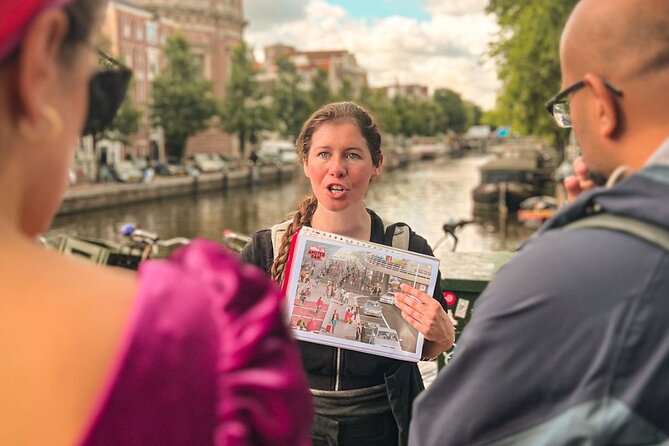
Review · SMALL-GROUP WALKING TOURS
Small Group Walking Tour – Hello Amsterdam
Amsterdam makes more sense on foot. This two-hour walk gives first-time visitors a clear introduction to the city, from Dam Square and the Royal Palace to the canals near Anne Frank House. I especially like the small group of no more than 15 people and the playful quizzes that turn local facts into something you remember. The guide also shares practical suggestions for places to eat and shop.
The tour costs $35.07 per person, which is fair for a two-hour orientation in central Amsterdam. I also like that it ends near the Westerkerk, Anne Frank House, and Homomonument, so you can continue sightseeing without crossing town. The main consideration is the brisk schedule: each stop lasts about 10 minutes, and the walk offers an overview rather than long visits inside attractions.
Key points to know before booking
- Small groups keep the walk personal: The group is limited to 15 people, a useful size for questions and clear access to the guide.
- It covers the central city efficiently: You walk from Dam Square to Westermarkt, passing canals, historic buildings, the Beurs van Berlage, and the Dancing Houses.
- Games make the facts easier to remember: The true-or-false activity at Damrak adds humor while covering Dutch culture, coffeeshops, tolerance, and local customs.
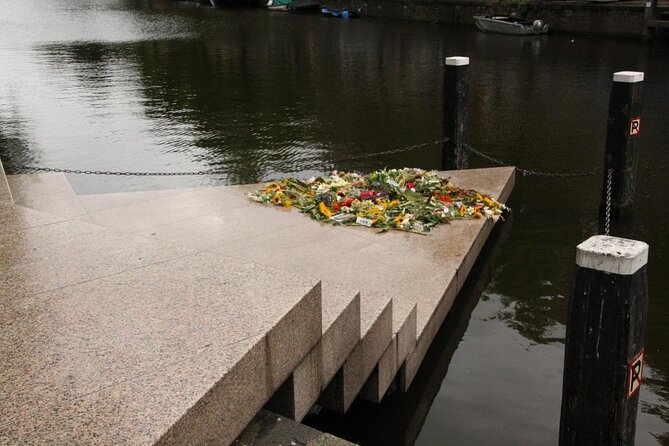
- The ending is useful for your day: The tour finishes by the Homomonument, about two minutes from Anne Frank House and close to Westerkerk.
- Local advice is part of the value: Guides such as Dani, Danni, Jonas, and Adam have been praised for lively storytelling and useful food and sightseeing suggestions.
- Plan around the weather: The walk requires good weather, and poor conditions may lead to a new date or a full refund.
Why this two-hour walk works well in Amsterdam
Amsterdam can feel confusing at first. The canals curve through the center, several streets have similar names, and the city’s stories often overlap. A walking tour gives you a mental map before you spend the rest of your visit choosing museums, restaurants, and neighborhoods.
This route is aimed squarely at first-time visitors. It does not try to cover every major sight in Amsterdam. Instead, it connects a series of central places and explains how the city developed, how people live today, and why certain customs may seem unusual to outsiders.
I like this mix. You get architecture, trade, cycling, family life, social tolerance, and difficult parts of the past. The guide does not treat Amsterdam as a postcard only. At Torensluis, for example, the walk includes the city’s history of slavery. Near the end, it addresses Amsterdam’s reputation for acceptance and the meaning of the Homomonument.
The route begins at 10:00 a.m. and lasts about two hours. That makes it easy to fit into a first full day. You can take it early, use the guide’s suggestions for lunch, then continue toward a museum or canal cruise. Since the tour is conducted in English and uses a mobile ticket, the practical side is simple.
More Small-Group Walking Tours in Amsterdam
- Amsterdam Anne Frank: Small-Group Walking Tour & Local Guide
★ 4.8 · 12,789 reviews - Amsterdam: Anne Frank Guided Small Group Walking Tour
★ 4.8 · 2,722 reviews - Amsterdam Highlights Walking Tour: Small Group Experience
★ 5.0 · 1,132 reviews
Starting at Dam Square and Damstraat
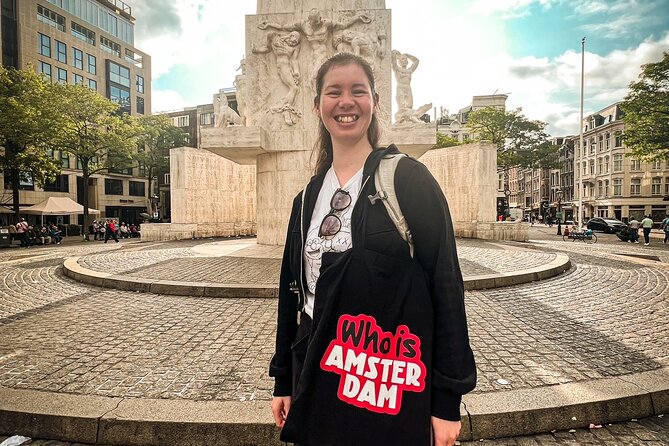
The meeting point is the National Monument in Dam Square. This is one of the easiest central locations to recognize, but give yourself a few minutes to find the guide. One person had trouble identifying the tour leader because the ticket did not make the local operator’s name clear enough. The provider has since checked the instructions, but it is still wise to have the company name, Who Is Amsterdam Tours, ready on your phone.
Dam Square introduces Amsterdam at full volume. The Royal Palace, New Church, and National Monument frame the space, while the surrounding streets lead into the older center. The guide uses these landmarks to explain why the square matters rather than treating it as a quick photo stop.
You spend about 10 minutes here before moving along Damstraat. That is enough time to get your bearings, but not enough for a detailed architectural study. I see this as a strength for a first walk. You are not stuck in one place while the rest of your day waits.
Trade and power at the Beurs van Berlage
The next stop is the Beurs van Berlage, a major building connected to Amsterdam’s financial rise. The discussion centers on the city’s role in pioneering the stock exchange and building its power through trade in the 17th century.
This is a useful piece of context. Amsterdam’s canals and grand houses did not appear by accident. Money, shipping, commerce, and financial systems shaped the city’s growth. The Beurs van Berlage helps connect the elegant city center with the practical forces that paid for it.
The stop lasts about 15 minutes, the longest pause on the route. You receive the story from outside, with admission listed as free. If you want to study the building in detail or visit an interior event, that would require separate planning. The value here is the guide’s explanation, not an extended building visit.
Damrak, dancing houses, and a true-or-false game
At Damrak, the tour shifts from formal history to Amsterdam’s more familiar modern image. You see the narrow, tilted canal houses often called the Dancing Houses, while the guide discusses the Red Light District, coffeeshops, tolerance, and Dutch culture.
The true-or-false game is one of the tour’s best ideas. Amsterdam has a reputation built on half-understood facts, and a quiz lets the guide sort out what is accurate without turning the stop into a lecture. You do not need prior knowledge. You simply listen, guess, and find out how the city handles subjects that may be treated differently elsewhere.
The location is also useful because Damrak sits close to some of Amsterdam’s most visited areas. The drawback is that this part of the center can be crowded and distracting. You may need to stay close to the guide while looking at the houses and listening to the explanations.
More Small-Group Walking Tours in the Netherlands
- Amsterdam Small-Group Walking Tour
★ 4.7 · 995 reviews - Amsterdam: Guided Anne Frank Small-Group Walking Tour
★ 4.2 · 485 reviews - Amsterdam: Small-group Guided Walking Tour (French/English)
★ 5.0 · 289 reviews - Small Group Walking Tour in Amsterdam with Friendly and Fun Guide
★ 5.0 · 281 reviews
Cycling culture at Haarlemmersluis
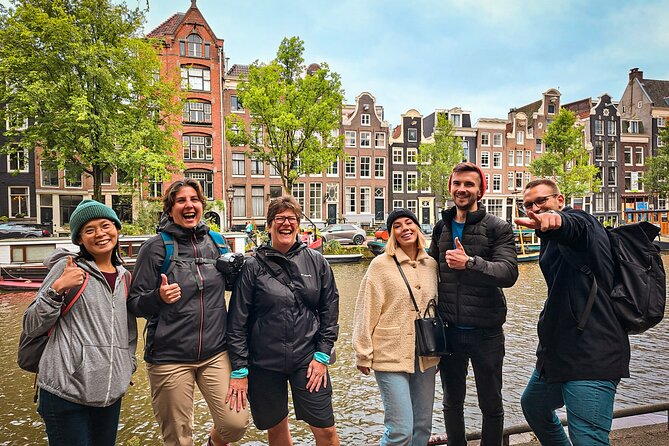
At Haarlemmersluis, the subject is Amsterdam’s bike culture. The guide explains why cycling is so central to daily life and shares the memorable fact that the city has more bikes than people.
This stop matters for more than local color. If you are new to Amsterdam, bicycles are part of your practical education. You need to watch the cycle lanes, listen for bells, and understand that a quiet-looking street may not be safe for wandering across. The tour gives you cultural context and a useful warning at the same time.
The stop also offers a view toward the canal belt. It is a brief pause, around 10 minutes, but the route keeps moving through the city rather than asking you to spend the whole morning at one landmark. Wear comfortable shoes and keep your attention on the guide and surrounding traffic.
Singel and the famous Dancing Houses
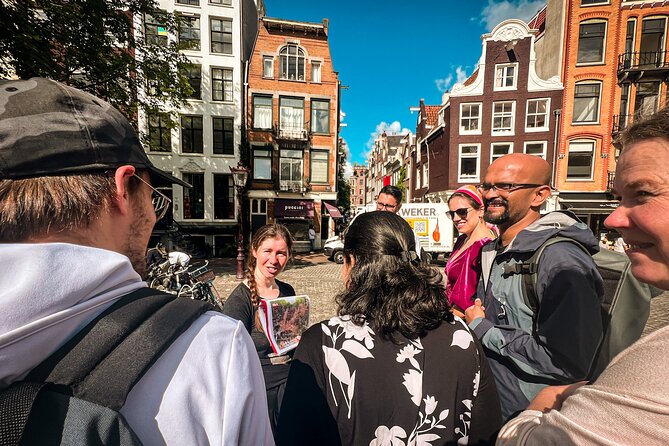
Singel provides one of the route’s most photogenic moments. Along the canal, you see the Dancing Houses, whose tilted facades create the charming, slightly off-kilter look many people associate with Amsterdam.
The guide explains the stories behind these buildings and why their shape has become part of the city’s identity. This is not simply a photo stop. It gives you a better sense of how Amsterdam’s narrow canal homes relate to the water, limited street space, and long urban history.
I like the balance here. The tour does not rush from one serious subject to another. Amsterdam’s beauty gets room to breathe, even if the stop is short. You have about 10 minutes, so take your pictures quickly and stay within earshot.
Torensluis and the canal belt’s harder history
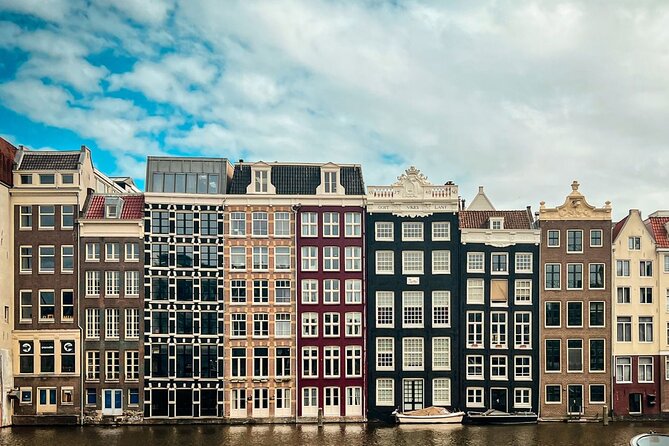
Torensluis brings together architecture, urban planning, and a more serious look at the past. The guide explains the creation of Amsterdam’s UNESCO-listed canal belt and points out unusual buildings in the area.
The important part is the discussion of slavery. A good city walk should not present Amsterdam only as canals, commerce, and tolerance. The route acknowledges that the same trading power that enriched the city also connected it to exploitation and slavery. That short discussion adds needed honesty to the tour.
You should expect this section to be thoughtful rather than light. It is still an introductory walk, so it cannot provide a full account of Dutch colonial history. But including the subject at all gives you a more accurate understanding of the city and its past.
Keizersgracht and the Dutch family way of life
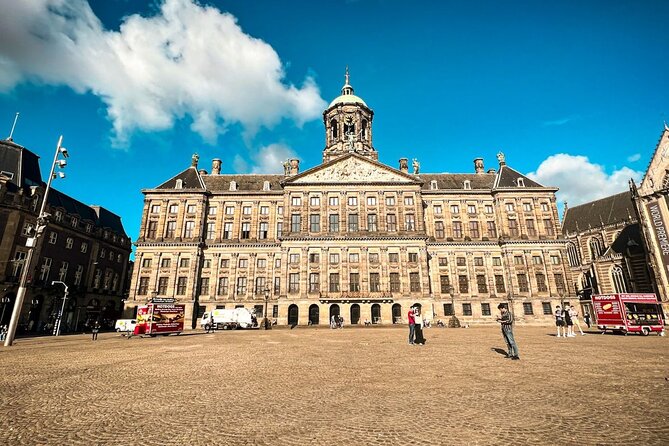
At Keizersgracht, the guide moves from buildings to everyday culture. The topic is Dutch family life and why Dutch children were described as the happiest in the world by UNICEF in 2017.
This is a smart change of pace. Visitors often learn where Amsterdam’s famous buildings are, but not how Dutch society works. A short discussion of family dynamics helps explain local attitudes and gives you a more useful cultural reference point than a list of dates.
The guide aims to help you blend in with local habits. That does not mean you will become Dutch in 10 minutes, of course. It means you get a few ideas about the social values behind the city’s public life. The stop lasts about 10 minutes and keeps the focus on accessible, practical insight.
Westerkerk, Anne Frank House, and the Homomonument
The final area brings several important Amsterdam subjects together. The route ends near Westerkerk, Anne Frank House, and the Homomonument at Westermarkt.
The ending message centers on diversity and the idea of live and let live. Amsterdam’s reputation for acceptance is not presented as a simple slogan. The guide connects the city’s identity to the mentality of its people and to the continuing work of living alongside differences in belief, background, and identity.
The Homomonument is the official end point. It is about a two-minute walk from Anne Frank House and directly beside Westerkerk, which makes the location especially useful for planning the rest of your day. The tour does not include admission to Anne Frank House or Westerkerk, so reserve those separately if you want to go inside.
This final stop also gives the route emotional shape. You begin with royal buildings and national symbols, then finish with a monument about human dignity and equal treatment. That is a more thoughtful ending than simply stopping beside another canal.
Guide style and group size
The guides make a real difference here. Dani and Danni are praised for lively storytelling and games, while Jonas receives strong marks for leading an enjoyable introduction to the city. Adam is noted for combining facts, energy, and useful personal suggestions.
The guide’s personality matters because this is a short walk with many subjects. A flat delivery would make the stops blur together. Games, questions, and local recommendations help keep the pace lively without requiring a long lecture.
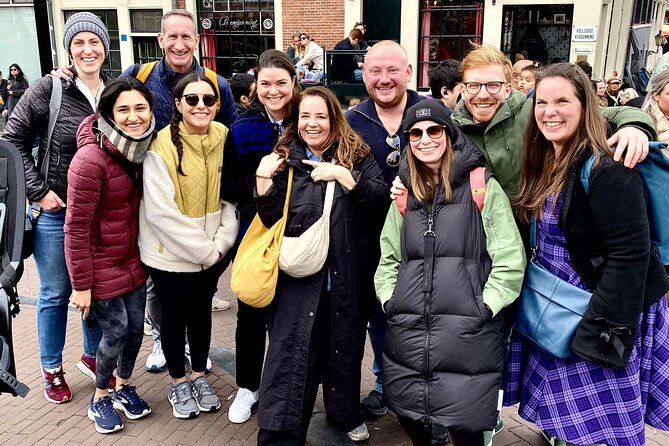
A maximum of 15 people is another clear advantage. You can usually hear the guide more easily than in a large group, and asking a question is less awkward. The tradeoff is that the walk may fill ahead of time. It is booked an average of 56 days in advance, so I would not treat it as a last-minute option during a busy visit.
Is $35.07 a fair price?
At $35.07 per person, this is a reasonable buy if you want a structured introduction to central Amsterdam. You are paying for two hours of guiding, local orientation, cultural explanation, and recommendations that may help shape the rest of your stay.
The value is strongest when you are new to the city. A first-time visitor can learn where the main areas connect, understand bike traffic, identify the canal belt, and leave with ideas for food and shopping. The tour may also save you time by helping you choose what deserves a longer visit.
I would not book it expecting museum admissions, an extended canal cruise, or a specialist history seminar. Every stop is free to view from the street, and most pauses last only 10 minutes. The price pays for the guide and the route, not entry tickets.
The 99 percent recommendation rate and 5 out of 5 score from 505 ratings suggest that the format is working well for its intended audience. One useful criticism is that some people may want a longer walk of three or four hours. If you prefer a slow pace with long stops, this two-hour version may feel quick.
Practical details for your morning
The tour starts at 10:00 a.m. at the National Monument in Dam Square and ends at the Homomonument at Westermarkt. It is offered in English and uses a mobile ticket.
The route stays in central Amsterdam and is near public transportation. Most people can take part, and service animals are allowed. Because you are walking through city streets and canal areas, comfortable shoes and attention around bikes are sensible choices.
The experience requires good weather. If weather cancels the walk, you can be offered another date or a full refund. It also requires a minimum number of participants, so a cancellation for that reason brings the same choice of a new date or a refund.
You can cancel for a full refund up to 24 hours before the start time. Changes or cancellations made inside that 24-hour window are not accepted for a refund. The timing follows Amsterdam local time.
Who should book this Amsterdam walk?
I recommend it most strongly to first-time visitors, solo travelers who want company, couples building a first-day plan, and anyone who likes learning through stories and small activities. It is also useful if you want restaurant and shopping suggestions from a local guide rather than relying only on a phone.
Families and mixed-age groups may enjoy the quiz format, though the tour still requires steady walking and attention. People who already know central Amsterdam well may find the route too basic.
Book it if you want a friendly city orientation with culture, history, and practical advice in a compact format. Skip it if you want long interior visits, a specialist focus, or a relaxed half-day pace. For most first visits, the combination of a small group, central route, lively guides, and a convenient finish makes $35.07 a solid start to Amsterdam.
FAQ
How long is the Small Group Walking Tour?
The tour lasts approximately two hours.
Where does the tour start?
It starts at the National Monument in Dam Square, Amsterdam.
Where does the tour end?
It ends at the Homomonument at Westermarkt, near Westerkerk and about a two-minute walk from Anne Frank House.
What time does the tour begin?
The start time is 10:00 a.m.
Is the tour offered in English?
Yes. The experience is offered in English.
What happens if bad weather cancels the tour?
You will be offered a different date or a full refund if poor weather causes the cancellation.
Just added around Amsterdam
- Small Group Walking Tour in Amsterdam with Friendly and Fun Guide★ 5.0 · 281 reviews
- Amsterdam: Private Introduction Walking Tour (TOP RATED)★ 5.0 · 223 reviews
- Humans of Amsterdam: Cultural Walking Tour incl. meeting 2 locals★ 5.0 · 320 reviews
- Amsterdam Private Historical Walking Tour★ 5.0 · 75 reviews
- Private Tour: Amsterdam City Walking Tour and Canal Cruise★ 4.5 · 142 reviews
- Anne Frank and Jewish Quarter Amsterdam Private Walking Tour★ 5.0 · 684 reviews
- Amsterdam: Anne Frank and World War II Walking Tour (TOP RATED)★ 4.5 · 72 reviews
- Amsterdam: Anne Frank Small Group Walking Tour★ 5.0 · 98 reviews
Small-Group Walking Tours, compared.

Amsterdam Anne Frank: Small-Group Walking Tour & Local Guide
Read our review →
Freedom Trail History Small Group Walking Tour
Read our review →
New Orleans Food Walking Tour of the French Quarter with Small-Group Option
Read our review →
Barcelona Tapas and Wine Experience Small-Group Walking Tour
Read our review →
Reykjavík Small group Walking Tour – by CityWalk
Read our review →
Best of Lisbon Small-Group Guided Walking Tour
Read our review →
Small Group Boat Cruise and Guided Walking Tour
Read our review →