
Review · FOOD WALKING TOURS
East London Indian Food Tour with 8+ Authentic Food Tastings
Spice, stories, and serious portions await. This three-hour East London food walk pairs Indian, Pakistani, and Bangladeshi dishes with the history of Whitechapel and Brick Lane. I like the generous servings, which can add up to several full meals, and I like that the guide explains spices, customs, and the South Asian roots of this part of London. The main catch is that the food is not a broad tour of every Indian region. It leans toward North Indian flavors, with Pakistani dishes and other South Asian influences mixed in.
At $135.92 per person, this is not a cheap lunch. Still, the price includes eight or more tastings, restaurant meals, sweets, drinks, and a small-group setting capped at 12 people. Come very hungry, and the value looks much better. If you want a quick taste of one snack and a cup of chai, choose something else.
Key points at a glance
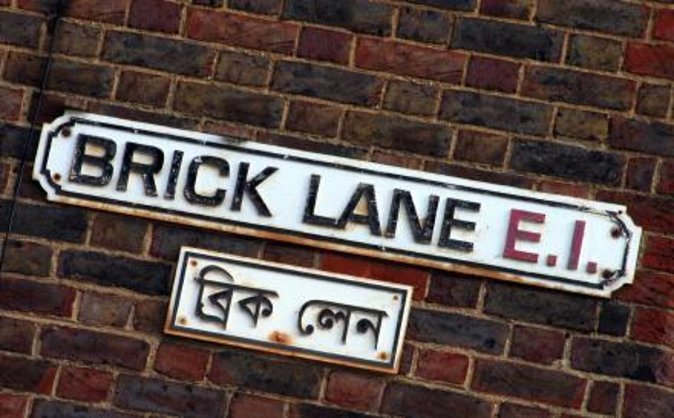
- Three hours through East London: Begin at Whitechapel Gallery and finish near Aldgate East station, with Brick Lane at the heart of the route.
- Eight or more tastings: Expect curries, naan, rice, pakoras, tandoori dishes, sweets, lassi, and a secret dish.
- Large portions: This is closer to several small meals than a parade of tiny samples.
- Small groups: The maximum is 12 people, allowing time for questions and personal attention.
- Food with local context: Guides explain spices, South Asian migration, Banglatown, and the area’s restaurant culture.
- Bring an open mind: The menu and stops can change, and the tour favors North Indian and broader South Asian cooking over a full regional survey.
Starting at Whitechapel Gallery
The tour begins outside Whitechapel Gallery at 77-82 Whitechapel High Street. Aldgate East Underground station is close by, so the meeting point is easy to reach from central London.
The gallery itself is a useful landmark in a busy part of the East End. You do not need to visit it for the food tour, but its location places you near the old commercial streets of Whitechapel and the route toward Brick Lane.
The walk is part of the lesson. As you leave Whitechapel High Street, your guide talks about the area’s South Asian communities and London’s changing food culture. This gives the meal some shape. You are not simply being taken from restaurant to restaurant without knowing why these restaurants are here.
The tour is offered in English and involves a fair amount of walking. Comfortable shoes are a sensible choice. The route ends near Aldgate East, so you are not left at an inconvenient outpost after eating your way across the neighborhood.
More Food Walking Tours in London
- London Bridge & Borough Market Food Tour with 7 Authentic Dishes
★ 5.0 · 1,972 reviews - Private East End Food Tour: 7 Tastings with Bagels & Fish & Chips
★ 5.0 · 263 reviews - Private London Food Tour: Classic British Eats at London Bridge
★ 5.0 · 262 reviews
Brick Lane and London’s Banglatown
Brick Lane is the main stage. Today, it is closely associated with London’s Bangladeshi community and its curry houses, though the street is also known for markets, shops, art, and nightlife.
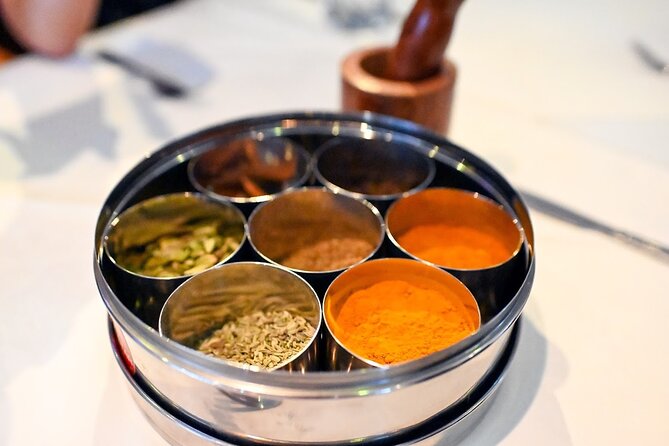
The guide uses the walk to explain the connection between food and place. That is one of the tour’s strongest features. You learn why certain spices appear together, how different dishes are built, and how South Asian cooking became such a visible part of East London.
Several guides receive especially warm praise for this part of the experience. Ricky is noted for explaining both the food and the area’s background, while Amin is praised for connecting dishes with family cooking. Tamiza brings a wider discussion of history, economics, sociology, and culinary science. You may get a different guide, but the experience clearly depends a great deal on who is leading your group.
Some guides add playful touches, including a spice quiz or a guessing exercise. These are small details, but they help break up the walking and give you a better sense of the ingredients before they appear on your plate.
What you actually eat during the three hours
The food is the main reason to book this tour, and the portions are unusually generous for a tasting walk. You may receive several dishes at a stop rather than one small bite passed around the table.
The menu can include:
- Pathia and madras curries
- Vegetarian and meat-based curries
- Fresh naan and fragrant basmati rice
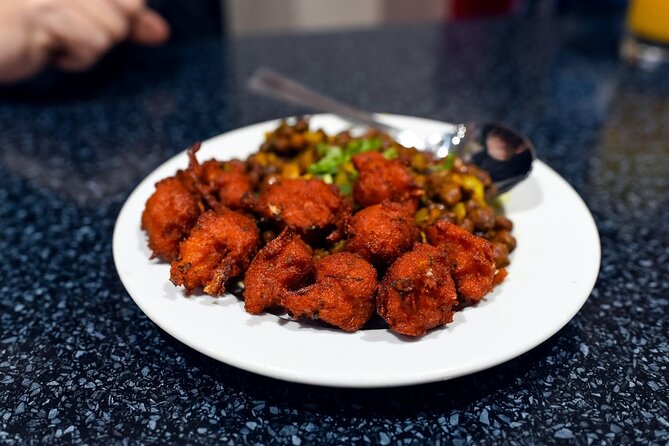
- Pakoras and a fried snack with spiced chickpeas
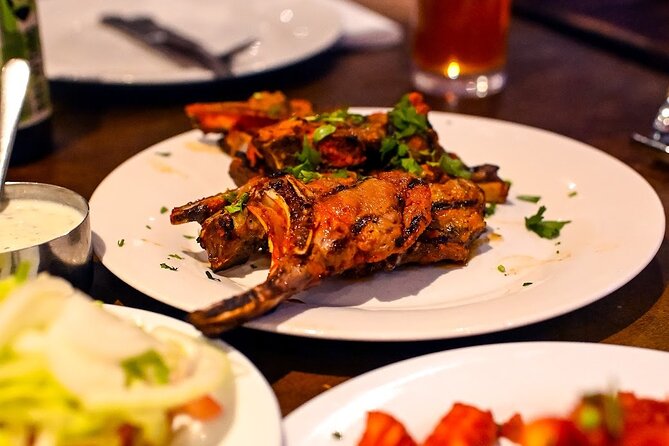
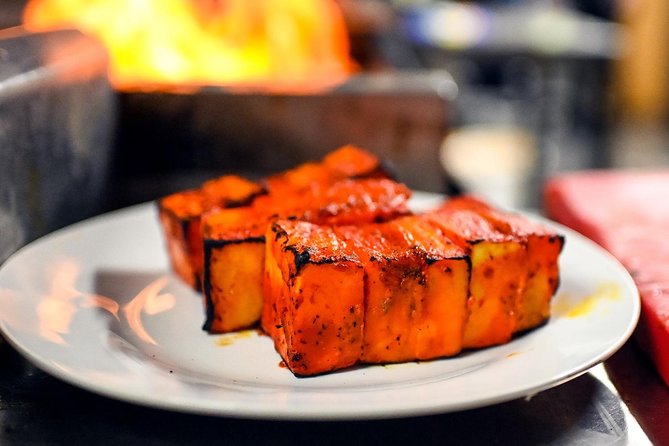
- Tandoori chicken or other smoky specialties
- Chicken or lamb dishes
- Creamy lassi
- Gulab jamun and rasgulla
- Paan
- An undisclosed secret dish
The exact sequence is not fixed. Restaurant availability, weather, and other practical issues can change the route and menu. That is worth understanding before you arrive. You should expect the same general style of food rather than a guaranteed dish-by-dish program.
The tour may include an Indian beer, wine, or soft drink. Some food descriptions also include lassi, a cool and creamy yogurt drink. Paan appears at the end as a traditional refresher made with betel leaf. If you have never tried it, ask your guide what is inside before eating it.
The cooking is not designed as a mild introduction for nervous eaters. You may find familiar dishes, but the sauces, spice blends, sweets, and breads give you a broader look at the food than the standard British curry-house order.
The restaurant stops and their strengths
The first food stop can function as an introduction, with fried snacks, a drink, and explanations of what you are about to eat. Pakoras are especially useful here because they show how spices and texture can work together without requiring a full bowl of curry.
A later stop usually carries more weight. This is where you may receive multiple curries, rice, naan, and meat or vegetable dishes. The strongest part of the experience is often the guide’s ordering choices. Instead of sticking only to the most familiar tikka masala, the guide may select food that reflects family cooking or the local South Asian restaurant tradition.
One particularly well-regarded evening included a full meal with several dishes, followed by another busy eatery serving many types of naan. Naan varieties can include different textures and toppings, giving you a chance to compare the bread itself rather than treating it as a side dish.
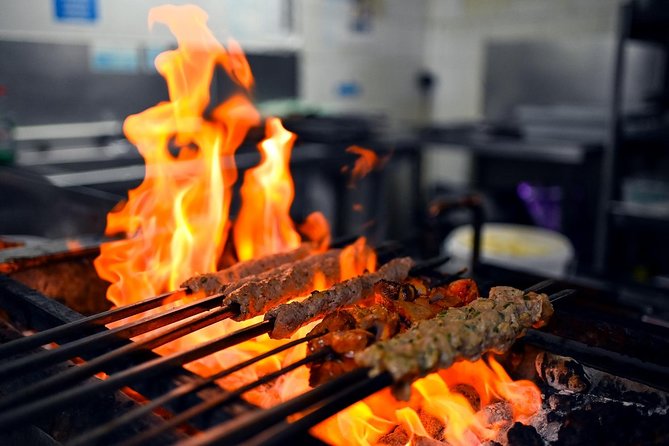
Tandoori food adds another useful contrast. These dishes are cooked at high heat and should bring smoky edges and a firmer texture than a saucy curry. The tour description promises tandoori specialties and sizzling chicken or lamb, though the precise preparation can change.
Not every dish will work equally well for every palate. One account found a chicken dish under-seasoned, while another praised the food as the best Indian cooking encountered in London. That difference is a reminder that restaurant quality can vary from stop to stop, even when the overall meal is strong.
More Food Walking Tours in the UK
- London: Cheese Walking Tour with Tastings
★ 4.7 · 232 reviews - London’s Best Bites: Soho & Chinatown Food Walking Tour
★ 4.8 · 172 reviews - Edinburgh Food Tour with Scotch, Haggis, a Secret Dish & More
★ 5.0 · 1,172 reviews - Belfast Centre Food Tour of 12+ Local Irish Dishes & Drinks
★ 5.0 · 266 reviews
Sweets, drinks, and the final bite
Dessert helps round out the meal. Gulab jamun is soft, sweet, and syrupy, while rasgulla has a lighter, spongier texture. If you usually stop after savory food, these sweets give you a chance to try a different side of the cuisine.
Lassi can provide a cooling break between spicy dishes. You may also receive a beer, wine, or soft drink, depending on the arrangements at the stops.
Paan is a more unusual finish. It is not a conventional dessert, and its flavor may surprise you. The betel leaf is used as a refresher after the meal. If you have dietary restrictions or simply want to know what you are tasting, ask before accepting it.
This is not a tour where you should plan a large dinner afterward. The portions are repeatedly described as enough to leave people extremely full, and some food may be packed up for later. That can improve the value, especially if you are staying nearby and can save leftovers for a midnight snack.
The market or grocery stop

The experience may include a grocery or spice-shop visit in Brick Lane. This part lets you see ingredients used in South Asian cooking and compare the restaurant dishes with the products sold to local families.
For some people, this is a useful pause between meals. You can look at lentils, spice blends, sweets, and different types of naan or cooking ingredients while the guide explains their uses.
For others, the shop portion may feel less natural than the restaurant stops. If your priority is eating, rather than learning about ingredients, this can seem like a detour. I would treat it as a short cultural stop, not as a major attraction.
The broader route information also refers to Liverpool Street and a Victorian market hall. Since the itinerary can change, do not count on every named place receiving equal time. The reliable anchors are Whitechapel Gallery at the start, Brick Lane during the walk, and Aldgate East at the finish.
Guides make the difference
A food tour can be good with average commentary, but it becomes much better when the guide can explain what is on the plate without sounding like a menu being read aloud.
This experience has several guide names attached to particularly strong feedback. Ricky is praised for his warm manner, spice explanations, and ability to keep a group upbeat in cold weather. Amin is described as friendly and highly committed, including one occasion when he led a tour for a single person on a winter evening. Tamiza is praised for tying food to the history and social makeup of the area. Jai, Jez, Jazz, and Nikki also receive positive comments for their enthusiasm and personal attention.
You should not assume you will receive a particular guide unless the operator confirms it. Still, the pattern is clear: the guide is not just there to walk you between tables. The best part of the commentary comes from personal food knowledge, family traditions, spice explanations, and local context.
A guide may also explain the medicinal qualities often associated with spices. Treat those comments as cultural food knowledge rather than medical advice.
Is $135.92 a fair price?
The price is high for a three-hour activity, especially if you compare it with ordering one curry and naan on your own. The calculation changes when you look at what is included.
You may receive eight or more tastings, several substantial dishes, bread, rice, snacks, sweets, a drink, and a guide who provides a walking tour of East London. The portions can be large enough to replace lunch or dinner, and sometimes provide leftovers.
The small group also matters. With a maximum of 12 people, you should have a better chance to ask questions and hear the guide than on a large coach-style food tour. A very small departure may even feel almost private. One person reported being the only one booked and still receiving the full experience.
That situation has a practical downside. Some people would rather know in advance that they will be alone with the guide. If you strongly prefer a group atmosphere, you may want to contact the operator before departure.
The price makes most sense for you if you value both the food and the explanation. If you only want the cheapest way to eat Indian food in London, self-guided Brick Lane dining will cost less.
Who should book this food walk?
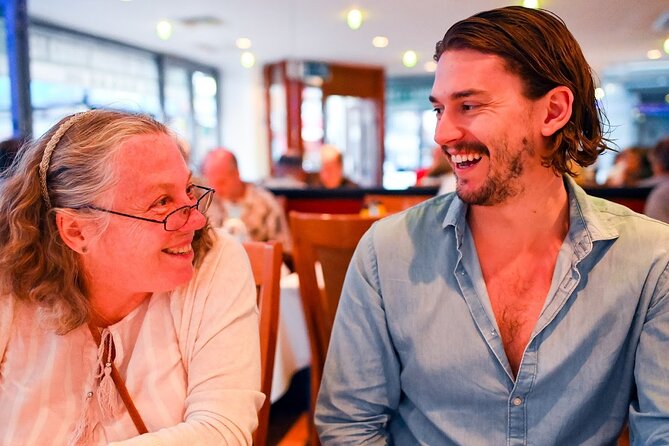
I would recommend it to someone who likes Indian food, wants to understand what they are eating, and has not spent much time in Whitechapel or Brick Lane. It also suits solo visitors who want a social activity without committing to a full-day tour.
It is a good choice for people who prefer full portions to tiny tasting bites. You should also enjoy walking between stops and be willing to try dishes you might not order on your own.
This is less suitable if you want a tightly controlled regional food study. The tour is not a complete guide to North, South, East, and West Indian cooking. One critical experience found the selection too North Indian, with Pakistani kebabs added near the end. The menu may also feel less satisfying if you are looking specifically for street food.
Tell the operator about dietary requirements in advance. The company says it will try to accommodate them, but last-minute requests are not the best approach when the menu changes between restaurants.
Practical details before you book
The experience lasts about three hours and is conducted in English. You receive confirmation within 48 hours of booking, subject to availability.
There is no hotel pickup or drop-off. Meet at Whitechapel Gallery, then make your own way home from near Aldgate East station.
The tour requires a fair amount of walking, so wear comfortable shoes. Pets are not accepted.
Free cancellation is available if you cancel at least 24 hours before the start time. Changes or cancellations inside that window are not accepted for a refund. Poor weather or failure to reach the minimum number of participants can cause cancellation, in which case you are offered another date or a full refund.
Should you book it?
Book this tour if you want a generous, food-heavy introduction to East London’s Indian, Pakistani, and Bangladeshi cooking. The best reasons are the portions, the small group, and the guides who connect spices and recipes with the story of Whitechapel and Banglatown.
Skip it if you want a cheap meal, a precise tour of every Indian region, or a strictly fixed menu. The route and dishes can change, and the grocery stop may not appeal to everyone.
For most food-focused visitors, I think the combination of several restaurant stops, sweets, drinks, and local context makes the price defensible. Arrive hungry, wear good shoes, and save room for naan. You will need it.
FAQ
Where does the East London Indian food tour start?
It starts outside Whitechapel Gallery at 77-82 Whitechapel High Street, London E1 7QX, near Aldgate East Underground station.
Where does the tour finish?
The tour ends near Aldgate East station on Whitechapel High Street.
How long does the experience last?
The tour lasts approximately three hours.
How many food tastings are included?
The experience includes eight or more tastings, though the exact dishes can change because of restaurant availability, weather, and other conditions.
What foods might be served?
Possible tastings include curries, naan, basmati rice, pakoras, tandoori dishes, chicken or lamb, lassi, gulab jamun, rasgulla, paan, and a secret dish revealed during the tour.
Is the tour suitable for people with dietary requirements?
You should contact the operator in advance with any dietary requirements so the team can determine how best to accommodate them.
Can I cancel for a full refund?
Yes. You can cancel at least 24 hours before the experience starts for a full refund. Cancellations or changes made less than 24 hours before the start time are not accepted for a refund.
Just added around London
- German London : The Ultimate Walking tour★ 4.8 · 400 reviews
- London: Medieval History Walking Tour from The Tower★ 4.9 · 318 reviews
- The Beatles London Walking Tour★ 4.2 · 147 reviews
- London: Sherlock Holmes-Themed Walking Tour★ 4.7 · 756 reviews
- Secret Old London Walking Tour★ 4.8 · 154 reviews
- Secrets of London Walking Tour★ 4.7 · 562 reviews
- London: Notting Hill Walking Tour★ 4.5 · 254 reviews
- London: Old City Walking Tour★ 4.8 · 135 reviews
Food Walking Tours, compared.
Reykjavik Food Walk – Local Foodie Adventure in Iceland
Read our review →
New Orleans Food Walking Tour of the French Quarter with Small-Group Option
Read our review →

Authentic Parisian Gourmet Food Tour with 10 Local Dishes & Wines
Read our review →
Tapas Walking Tour with Food, Wine, and History
Read our review →
Browse the lists this tour appears in