
Review · HIDDEN GEMS WALKING TOURS
Secret Old London Walking Tour
London’s darkest corners are often the most memorable. The Secret Old London Walking Tour takes you through Barbican and the City of London, where plague pits, execution grounds, medieval churches, Roman ruins, and wartime destruction sit close together. I like the mix of major historical events and small, easily missed places, especially the churchyard atmosphere and the bombed-out church shell.
I also like the guide-led storytelling. Jess, Rosie, Jeremy, Jesse, and Pepe have all been praised for making the past feel immediate without turning the walk into a dry lecture. The main drawback is that 90 minutes is not long enough for every stop to receive equal attention, and a winter walk can feel chilly when the group pauses for pictures.
What makes this London walk worth your time
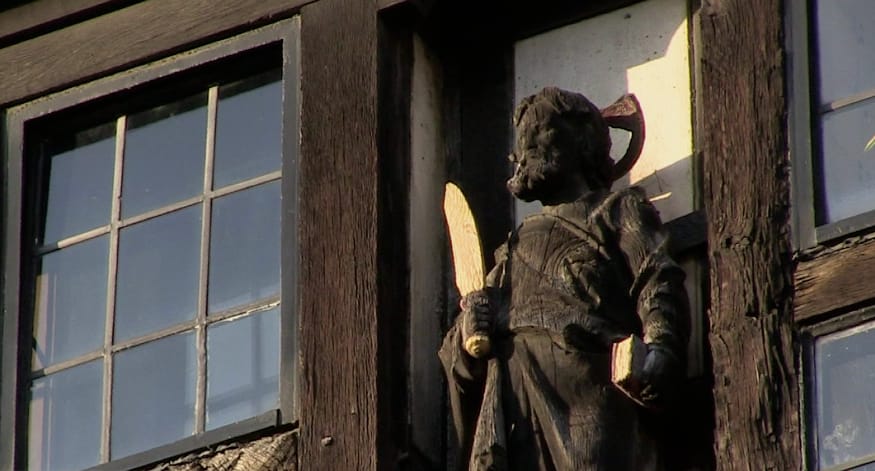
- Charterhouse Square hides a grim plague story: Its calm setting once served as a dumping ground during the Black Death.
- Smithfield brings London’s harshest public past to life: Medieval jousts and executions took place here, including the death of William Wallace.
- St Bartholomew the Great adds real medieval atmosphere: This beautiful church has also appeared in Four Weddings & a Funeral and Sherlock Holmes.
- The walk finds the Roman amphitheatre’s lost footprint: You will locate its perimeter in the modern City.
- A quiet park holds a moving memorial: This stop adds a human story of courage and self-sacrifice.
- The route reveals wartime scars: You pass through the shell of a church destroyed during the Blitz.
Starting at Barbican, where modern London meets old London
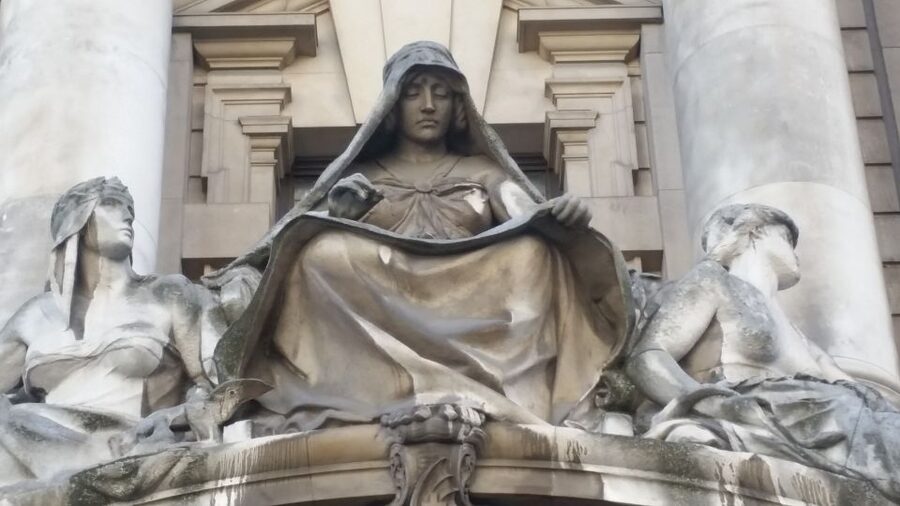
The walk begins outside Barbican Underground Station, a useful meeting point in a part of London known today for concrete towers, offices, and cultural venues. From here, the route quickly shifts your attention from modern architecture to the older street pattern around it.
I like this opening because it gives you a clear lesson in how London works. The City changes from block to block, and a plain-looking lane can carry centuries of stories. The route uses streets that have remained broadly similar for hundreds of years, so you are not simply looking at isolated monuments. You are following the shape of an older city beneath the modern one.
The tour lasts about 1.5 hours, which suits anyone who wants a focused history walk rather than a full-day commitment. You should still wear comfortable shoes. This is a walking experience with regular stops, not a ride between sights.
The guide is the key to the experience. Names praised in connection with the tour include Jess, Rosie, Jeremy, Jesse, and Pepe. Their styles may differ, but the strongest pattern is clear: the walk depends on lively explanation, strong local knowledge, and a willingness to connect history with architecture, politics, language, and everyday city life.
More Hidden Gems Walking Tours in London:
- Secrets of London Walking Tour
★ 4.7 · 562 reviews - London: Secrets of the London Underground Walking Tour
★ 4.6 · 211 reviews - Dublin Highlights and Hidden Gems Guided Walking Tour
★ 5.0 · 6,020 reviews
Charterhouse Square and the memory of the Black Death
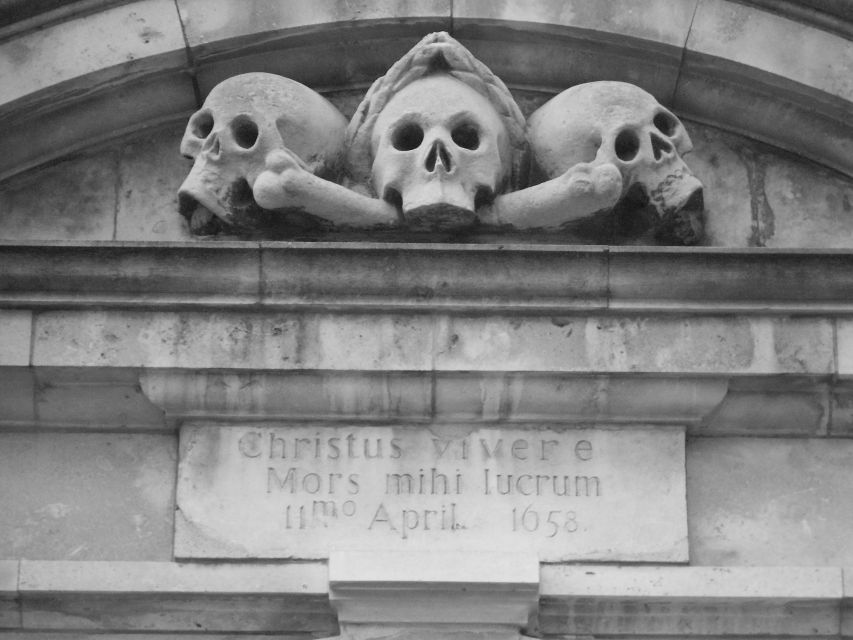
Charterhouse Square is one of the route’s most effective contrasts. Today, it offers a quiet patch of open space in a busy part of London. Six hundred years ago, it was associated with one of the city’s worst plague burial areas.
The Black Death killed a huge part of London’s population in the 14th century, and the square’s peaceful appearance makes the story harder to picture. That contrast is exactly why the stop works. You are not looking at a dramatic ruin or a theatrical reconstruction. You are standing in an ordinary urban space and being asked to imagine what it meant when the city could no longer cope with its dead.
I appreciate stops like this because they make history physical without needing a large museum display. The guide can point out how much of the surrounding area has changed while explaining what has remained in the street plan and open spaces.
This is also an early sign that the tour is not built around London’s most familiar postcard sights. If you have already visited the Tower of London, Westminster Abbey, and St Paul’s Cathedral, this route gives you a different way to read the city.
Smithfield, jousts, executions, and William Wallace
Around the corner, Smithfield brings a much harsher mood. Its history includes medieval jousts, public punishment, and executions. The site is closely associated with William Wallace, the Scottish figure made famous by Braveheart, who was executed here.
The tour description promises the location of one of London’s principal execution sites, and this is where the walk’s darker side comes forward. You will hear about a public world in which executions were not hidden away. They were events, watched by crowds and woven into the life of the city.
That material is not for everyone. The tour is intended for people over 12, and its subject matter includes death, plague, violence, and public suffering. The guide’s tone matters here. The strongest feedback describes the storytelling as entertaining and passionate, but you should still expect the subject to be grim at times.
One useful point is that Smithfield is not treated as a single isolated story. The guide places it within medieval London, linking the square to ceremony, punishment, religion, and city life. That wider context makes the stop more meaningful than simply pointing to a spot and naming someone who died there.
One person who took the walk felt disappointed that William Wallace was not mentioned, despite the tour information highlighting him. That is a fair caution: advertised themes may not receive equal attention on every departure. If this story is your main reason for booking, ask the guide about it at the start.
St Bartholomew the Great, London’s medieval centerpiece
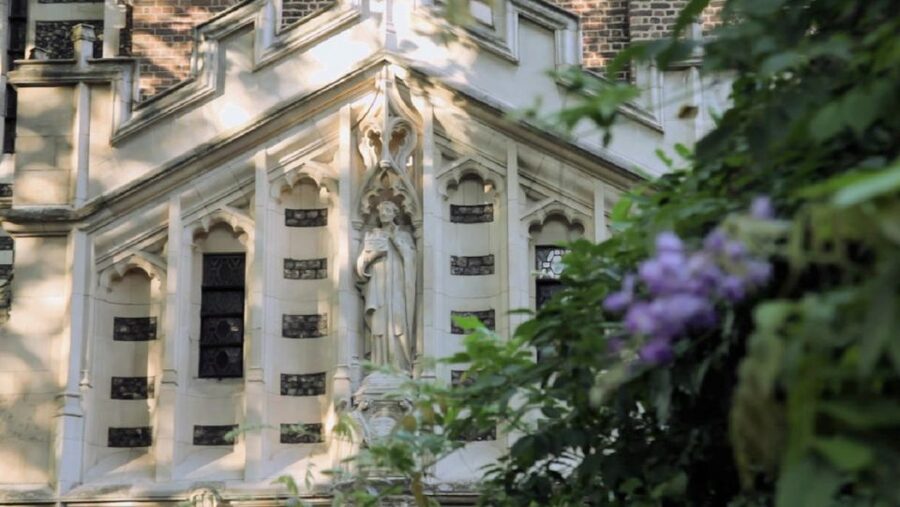
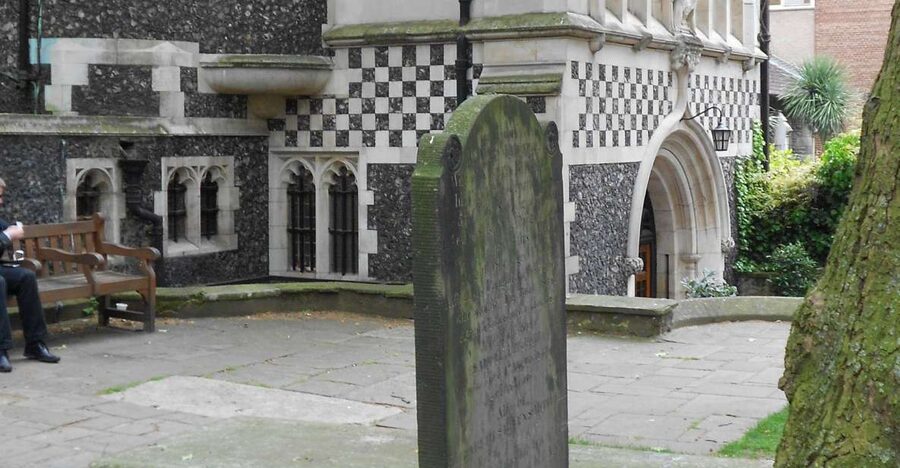
Between the plague and execution sites sits St Bartholomew the Great, one of the most rewarding stops on the route. It is an outstanding medieval church, and the setting helps explain why it has been used in films including Four Weddings & A Funeral and Sherlock Holmes.
The church brings a different kind of atmosphere to the walk. Charterhouse Square and Smithfield make you think about mass suffering and public violence. St Bartholomew the Great shifts the focus to worship, medieval institutions, stonework, and the long religious life of the area.
I like the way this stop breaks up the darker material. A good walking tour needs changes of pace, and a medieval church does that naturally. It gives you a place to look closely at architecture while the guide explains the institutions and communities that shaped old London.
The church is also a reminder that the City is not simply a financial district. Office buildings may dominate the skyline, but old religious sites, narrow passages, and churchyards still give the area its strongest sense of time.
A few more walks around London worth a look
- Magical London: Harry Potter Guided Walking Tour
★ 4.7 · 22,044 reviews - London: The Original Jack the Ripper Walking Tour
★ 4.7 · 7,833 reviews - Tour for Muggles The Ultimate Harry Potter Walking Tour in London
★ 5.0 · 4,684 reviews - London Jack The Ripper Guided Walking Tour
★ 5.0 · 3,131 reviews
The memorial to heroic self-sacrifice
The route includes a hidden memorial in a park, described as one of the most touching memorials on the walk. Its subject is heroic self-sacrifice, so this is a quieter and more personal stop than Smithfield.
The precise appeal here is discovery. You are not only following a list of famous landmarks. You are being led to a place you might pass without understanding, then given the story that makes it matter.
Several people praised the tour for finding parks, gardens, monasteries, and churches they would not have located on their own. That is important for the value of this experience. The walk does not rely solely on famous sights. It teaches you how to notice the small spaces tucked between office blocks and major roads.
Expect the guide to pause and tell the story rather than rush past. That can be moving, but it also means you may spend a little less time walking. On a cold day, one person felt that fewer pauses for pictures would have helped them stay warm.
A church shell left open by the Blitz
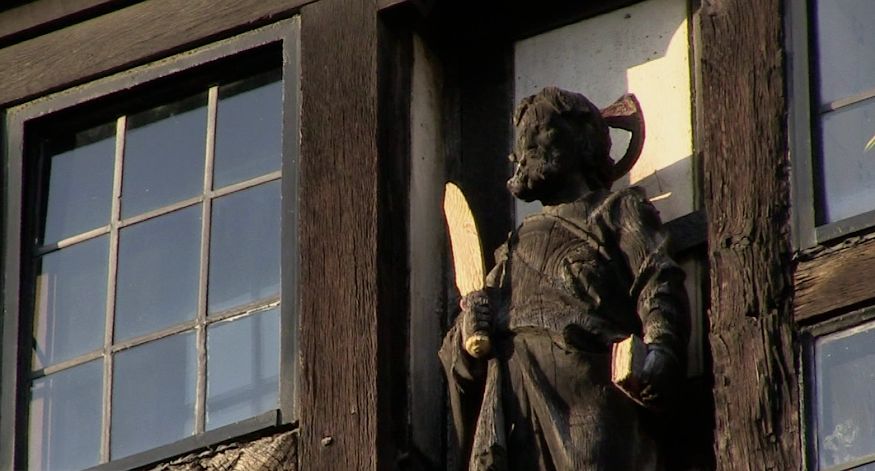
Another memorable stop is the shell of a church destroyed during the Blitz. The experience here is visual: you stand inside a damaged building and see how wartime destruction remains part of the city’s present-day fabric.
London’s Second World War story is often told through museums, monuments, and dates. This stop offers something more direct. A ruined church lets you see destruction in architectural form, while the surrounding modern city shows how London rebuilt and carried on.
I find this kind of site especially useful for first-time visitors because it widens the time span of the walk. You move from Roman London to the medieval period, Tudor-era memories, plague, public executions, and then the 20th century. The tour is not only about old London. It shows how several Londons occupy the same few streets.
The stop also gives the guide room to discuss architecture and urban change. Strong guides on this route have been praised for moving beyond basic dates into politics, language, building styles, and the way the City developed.
Finding the Roman amphitheatre beneath the modern City
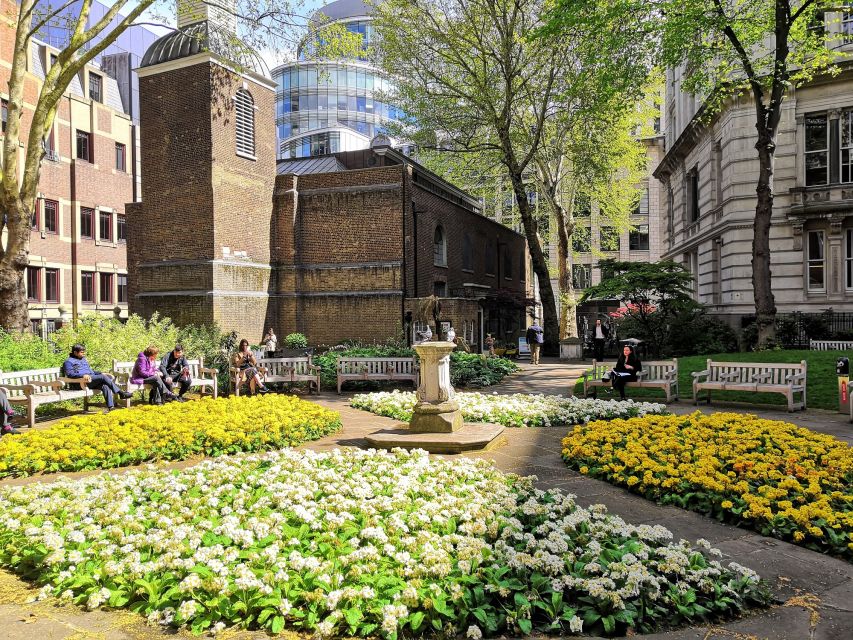
The route finishes by locating the perimeter of London’s lost Roman amphitheatre. You may not see a complete ancient structure rising above the pavement. Instead, the value comes from understanding where it was and how the Roman city once occupied this ground.
That requires imagination, and this is where a good guide earns the £26 price. A map or marked boundary can help you connect the present street plan with a much older city. You begin to see modern London as a layer built over Roman foundations.
The Roman stop also gives the route a useful chronological finish. You have encountered medieval religious life, plague, executions, wartime damage, and now the Roman past beneath it all. In a short walk, the guide gives you several ways to think about London’s age.
If you prefer large ruins that you can explore independently, this may feel modest. If you enjoy reconstructing a vanished site from clues and explanation, it can be one of the most satisfying parts of the walk.
Guides, pace, and the value of the storytelling
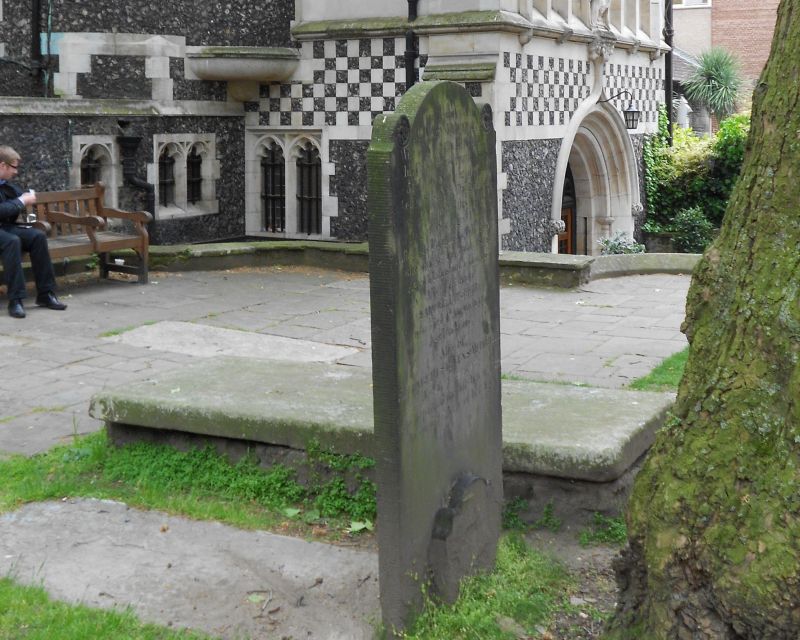
The strongest part of this experience is the guiding. The available feedback repeatedly praises guides for being funny, approachable, enthusiastic, and well informed. Rosie received particular praise for connecting London’s history with politics, architecture, and language, while Jess was noted for making the walk lively and easy to follow.
The pace also receives strong marks. One person described it as perfectly paced for taking in a large amount of information, and another liked the balance between facts and a relaxed setting. That balance matters because the route covers a lot in only 90 minutes.
Still, you should expect plenty of information. One person enjoyed the content but found it difficult to remember everything afterward. I recommend making a short note of the places that interest you most, then returning to them later if you want more detail.
The group experience may vary depending on the guide and the weather. On a warm day, the open spaces should make the pauses pleasant. On a cold or rainy day, you may prefer a faster pace and fewer long stops. The walk does not include refreshments, so bring what you need before meeting the guide.
Price, practical details, and who should book
At $26 per person, the tour offers good value if you want a guide to connect several lesser-known sites. You are paying less for entry tickets and more for interpretation, local stories, and the ability to find places that are easy to miss.
The price makes particular sense for repeat visitors and London residents. Several people who already lived or worked in London said they learned new things and saw corners they had never noticed. That is a good sign if you feel you have already covered the standard sightseeing circuit.
The tour is conducted in English and is described as wheelchair accessible. Dogs are not permitted, except for guide dogs. Large bags and luggage are not allowed, and video recording is prohibited, so arrive with comfortable shoes and minimal belongings.
You can cancel up to 24 hours before the start for a full refund, and you can reserve now while paying later. Those terms are useful if your London schedule depends on weather or other plans.
This tour suits adults, older children over 12, history fans, film-location enthusiasts, and anyone who enjoys the macabre side of a city. It may not suit you if you want a museum-style visit, lots of interior access, or a gentle sightseeing walk with little discussion of death and violence.
Should you book the Secret Old London Walking Tour?
Book it if you want to see London through its forgotten spaces rather than its famous front doors. The combination of Charterhouse Square, Smithfield, St Bartholomew the Great, the memorial, the Blitz-damaged church, and the Roman amphitheatre gives you a compact but varied look at the City.
I would especially recommend it to repeat visitors, curious London residents, and anyone who likes history delivered through stories instead of display cases. Go with comfortable shoes, keep your schedule flexible, and expect the guide’s storytelling to shape the experience.
Skip it if William Wallace is your single main interest, since that subject may not receive the attention you expect. Otherwise, $26 is a fair price for a lively 90-minute walk through plague, punishment, faith, war, and Roman London, all hidden in plain sight.
FAQ
Where does the Secret Old London Walking Tour start?
The tour starts outside Barbican Underground Station.
How long does the tour last?
The walking tour lasts 1.5 hours.
How much does the tour cost?
The listed price is $26 per person.
What language is the tour conducted in?
The live tour is conducted in English.
Is the tour wheelchair accessible?
Yes, the activity is described as wheelchair accessible.
Is the tour suitable for children?
The tour is suitable for people over 12.
Can I bring my dog?
Dogs are not permitted, except for guide dogs.
Can I bring luggage or a large bag?
No. Luggage and large bags are not allowed on the tour.
Can I record the tour on video?
No. Video recording is not allowed.
What should I bring?
Wear comfortable shoes. Refreshments are not included, so plan separately if you want a drink or snack.
Can I cancel for a refund?
Yes. You can cancel up to 24 hours in advance for a full refund.
Do I have to pay when I book?
You can reserve now and pay later, which keeps your plans flexible.
Just added around London
- German London : The Ultimate Walking tour★ 4.8 · 400 reviews
- London: Medieval History Walking Tour from The Tower★ 4.9 · 318 reviews
- The Beatles London Walking Tour★ 4.2 · 147 reviews
- London: Sherlock Holmes-Themed Walking Tour★ 4.7 · 756 reviews
- Secrets of London Walking Tour★ 4.7 · 562 reviews
- London: Notting Hill Walking Tour★ 4.5 · 254 reviews
- London: Old City Walking Tour★ 4.8 · 135 reviews
- London: Winston Churchill and London in WWII Walking Tour★ 4.8 · 143 reviews
Hidden Gems Walking Tours, compared.
Dublin Highlights and Hidden Gems Guided Walking Tour
Read our review →
Explore Berlin: See All The Iconic Sights & Some Hidden Gems
Read our review →
Kyoto Geisha Walking Tour: Gion District & Hidden Gems
Read our review →
Ben Youssef, Secret Garden, & Souks Walking Tour
Read our review →
Montmartre Hidden Gems and Scenic Highlights Walking Tour
Read our review →
Guided Walking Tour of City Highlights & Hidden Gems
Read our review →
Paranormal Night Walking Tour & Secret Backstreets
Read our review →Browse the lists this tour appears in