
Review · HIDDEN GEMS WALKING TOURS
Kyoto Geisha Walking Tour: Gion District & Hidden Gems
Gion rewards a slower walk. This two-hour tour brings you through Kyoto’s famous geisha quarter, where wooden machiya houses, tea houses, temples, and lantern-lit lanes give the district its old-world feel. I especially like the clear explanation of geiko and maiko culture and the guide’s practical food, bar, shopping, and sightseeing suggestions for the rest of your stay. The chance to spot a geiko or maiko on the way adds excitement, though it is never guaranteed.
The price is a major strength. At $25 per person, you get a guided look at several important Gion sights, cultural background, photo stops, and local advice without committing to a costly private experience. The main trade-off is physical: you will spend two hours walking, often on traditional streets and temple grounds, and the tour is not suitable for wheelchair users or people with mobility impairments.
Key Points Before You Book
- Geisha culture explained clearly: Learn the difference between geiko and maiko, how the tradition began in Kyoto, and how it fits into modern Japanese society.
- A useful Gion introduction: Visit well-known sights while also seeing preserved machiya houses, tea houses, small shops, and less obvious corners.
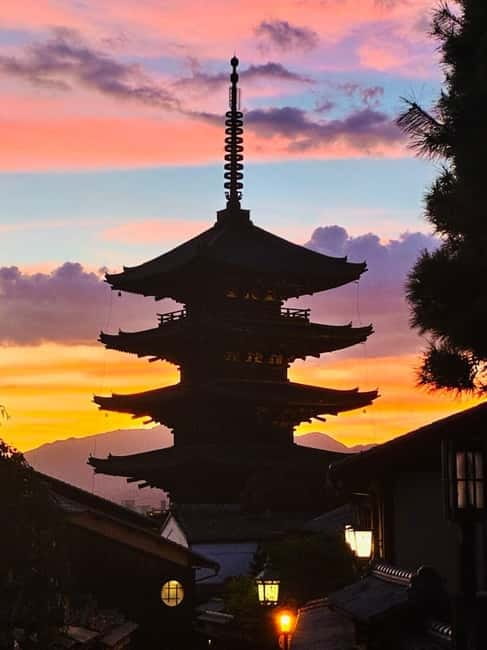
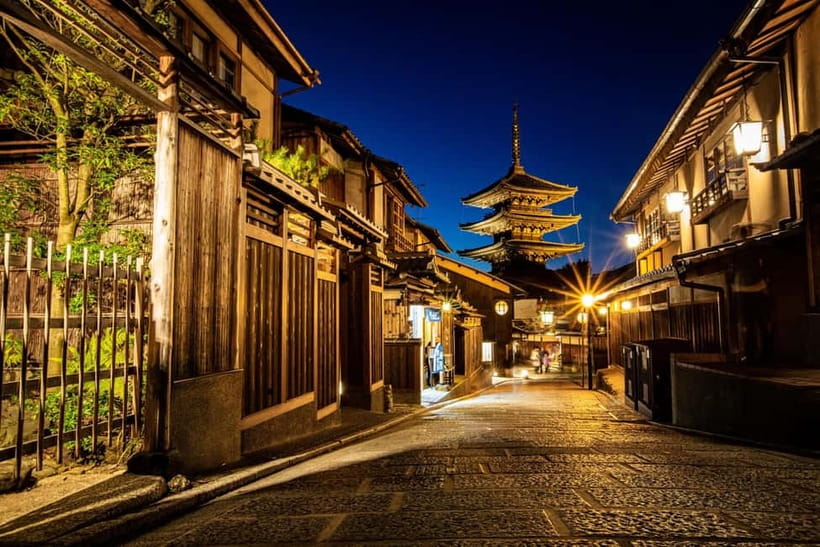
- Several strong photo locations: The route includes views of Hokanji Pagoda, temple grounds, traditional streets, and carefully chosen places away from the busiest paths.
- Guides who add personality: Michael receives especially strong praise for his humor, historical context, and helpful answers. Yuri, Anton, Ikuro, Hiroko, and Ron are also named as warm and engaging guides.
- Practical advice for the rest of Kyoto: You receive recommendations for restaurants, bars, shops, activities, and other places to visit after the walk.
- Best timing depends on daylight: A 3 p.m. start offers more light for photographs, while a 6 p.m. start can give you quieter streets and glowing lanterns.
Meeting the Guide Beside Hotel Alza Kyoto
The meeting point is on the side street next to Hotel Alza Kyoto. Look for the red parasols and marble seats underneath. That landmark is more useful than relying on a general Gion address, since the district has many narrow lanes and several possible starting areas.
The tour is offered in English with a live guide. The group size can vary, but some bookings have turned into very small walks, even private-feeling outings. That matters here. Gion is not a place where a loud, hurried group works well. A smaller group gives you more room to ask about customs, buildings, and the meaning behind what you are seeing.
The starting time changes with availability. I would think about the season and your priorities before choosing one. Earlier afternoon light is better for architecture and photographs. An evening start, especially around 6 p.m., can feel calmer and more atmospheric, with lanterns glowing as the district shifts toward its nighttime work.
One practical point: allow enough time before the meeting point. The tour begins promptly at a specific landmark, and Gion’s side streets can be confusing if you are rushing.
More Hidden Gems Walking Tours in Kyoto:
- Kyoto Arashiyama Walking Tour: Bamboo, Monkeys, Gardens & Secrets
★ 5.0 · 1,216 reviews - Kyoto: Gion Hidden Gems & Geisha Culture Tour
★ 4.9 · 126 reviews - Dublin Highlights and Hidden Gems Guided Walking Tour
★ 5.0 · 6,020 reviews
Walking Through Gion’s Wooden Streets
Gion is best understood on foot. Cars and modern businesses exist around the district, but the traditional lanes reveal a different Kyoto: dark timber facades, narrow entrances, tiled roofs, small signs, and carefully maintained streets.
Your guide explains how the area developed around tea houses and entertainment traditions. That context helps you see more than attractive buildings. A machiya is not simply an old wooden townhouse. It is part of the architectural character that makes Gion feel distinct from ordinary commercial streets.
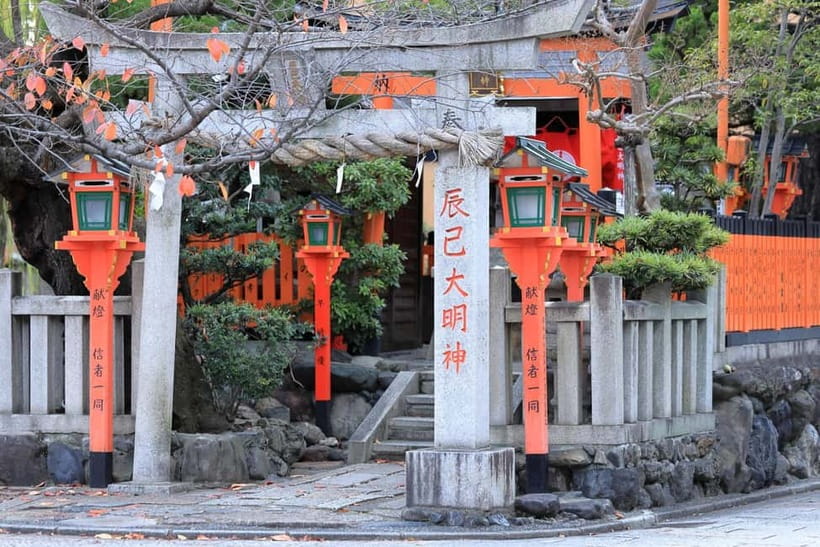
The tour also points out tea houses connected with private geisha performances. These are not standard shows that you can casually enter from the pavement. They are associated with exclusive clientele, which explains why the district can feel mysterious to first-time visitors. A guide helps separate the real customs from the simplified version often presented in popular culture.
You will also pass boutique-style souvenir shops and smaller streets away from the main tourist flow. These stops are useful because Gion can otherwise become a quick photo exercise: take a picture, follow the crowd, move on. The guide gives the area a human and historical frame.
Understanding Geiko and Maiko Culture
The word geisha is widely known, but it often carries outside assumptions. During the walk, you learn about Kyoto’s terms, including geiko and maiko, along with the training, appearance, and social setting connected to the tradition.
That explanation is one of the strongest reasons to book this tour. Seeing someone in an elaborate kimono can be striking, but without context you may miss what the clothing, makeup, hairstyle, and movement signify. The guide also discusses the origins of geisha culture in Kyoto and its place in present-day society.
The experience gives you an opportunity to see geiko or maiko as they make their way to appointments. Some people do see them, while others do not. One booking specifically noted that no geisha appeared, yet the historical walk still felt worthwhile. That is the right expectation: treat a sighting as a fortunate possibility, not the product being guaranteed.
If you do see one, the moment may be brief. They are going to work, not posing for a tour group. The value of the walk should come from the setting and explanations even if the streets stay empty.
Hokanji Pagoda and the Classic Gion View
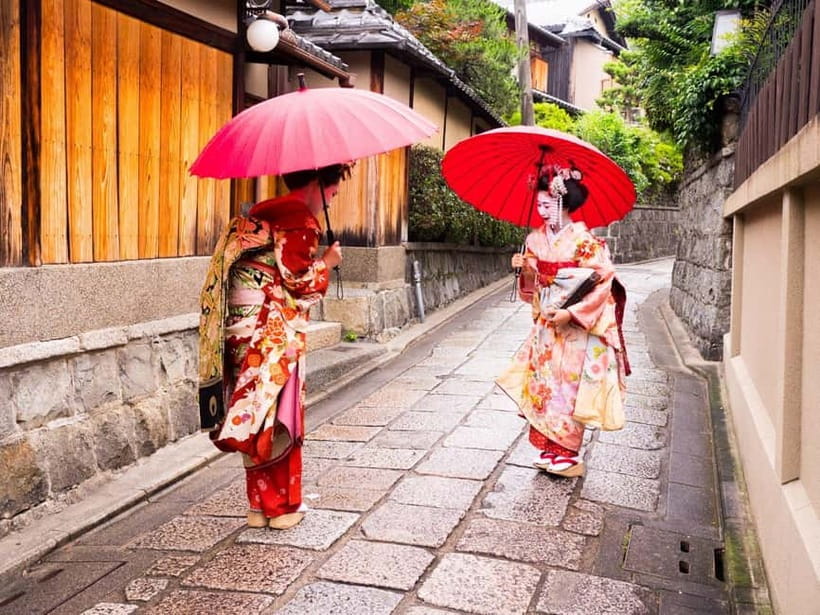
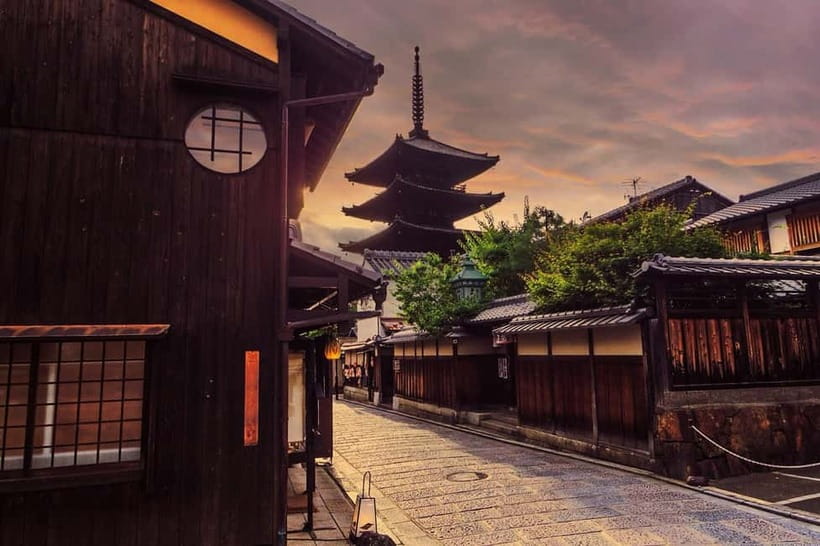
Hokanji Pagoda is one of the visual anchors of the route. Its shape rises above the surrounding streets and gives you one of Kyoto’s most recognizable traditional views.
The pagoda is often photographed with the old buildings around it, and the guide helps you find better angles than you might notice while passing through alone. This is particularly useful for visitors who want strong photographs without spending the entire walk at the busiest viewpoint.
The attraction is visual, but it also connects the surrounding streets with Kyoto’s religious architecture. You are not only looking at a famous tower. You are seeing how temples, homes, tea houses, and narrow lanes occupy the same historic district.
Crowds and light will affect the experience. A later walk may offer a more atmospheric scene, while an afternoon start gives you clearer detail in the buildings. You should not expect every photograph to be empty or perfectly lit, but the guide’s route provides several chances to capture the character of the neighborhood.
A few more walks around Kyoto worth a look
- Kyoto: Gion Magical Night Walking Tour with Geisha Trivia
★ 4.9 · 2,393 reviews - Kyoto: Gion Geisha District Walking Tour – Stories of Geisha
★ 4.7 · 2,187 reviews - Night Walk in Gion: Kyoto’s Geisha District
★ 4.5 · 2,003 reviews - Kyoto Gion Geisha District Walking Tour – The Stories of Geisha
★ 5.0 · 1,441 reviews
Kennin-ji Temple, Kyoto’s Oldest Zen Temple
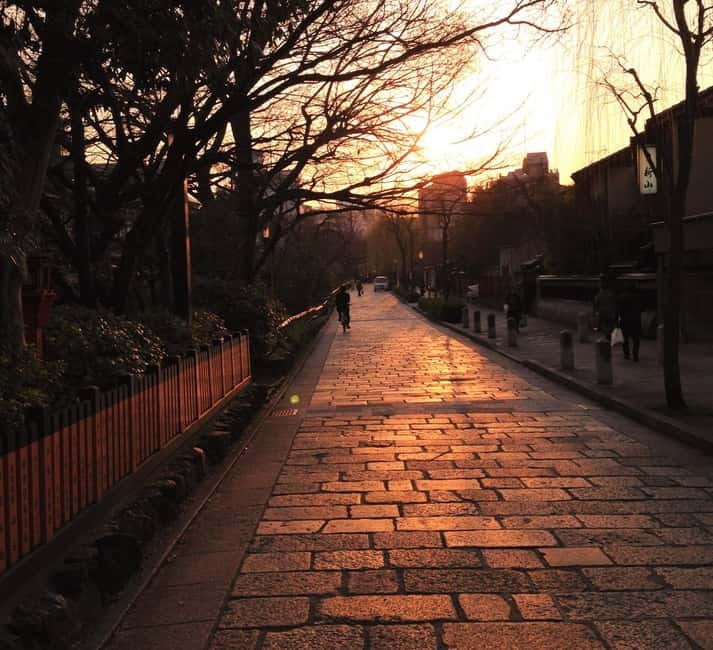
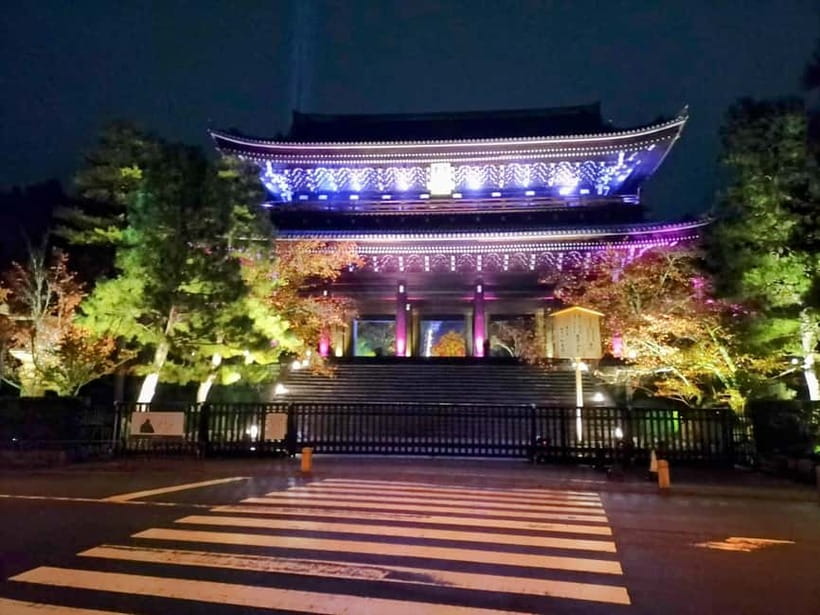
Kennin-ji Temple adds a quieter, more reflective section to the route. It is described as the oldest Zen temple in Kyoto, and its grounds offer a break from the narrow streets of Gion.
The temple matters because it shows another side of the district. Gion is associated with nightlife, elegant clothing, and tea houses, but Kyoto’s religious life is always close by. Kennin-ji helps connect the entertainment quarter with the city’s Buddhist traditions.
I like this contrast. You can spend one moment looking at a small tea house entrance and the next walking through a temple setting with a very different mood. The guide explains the history and architecture along the way, so the temple visit does not feel like a disconnected stop on a checklist.
Remember that the tour continues on foot through several areas. If you want a long, unhurried temple visit, you may need to return separately. This is an introductory walk, not an in-depth temple study.
Chion-in and the Broad Temple Grounds
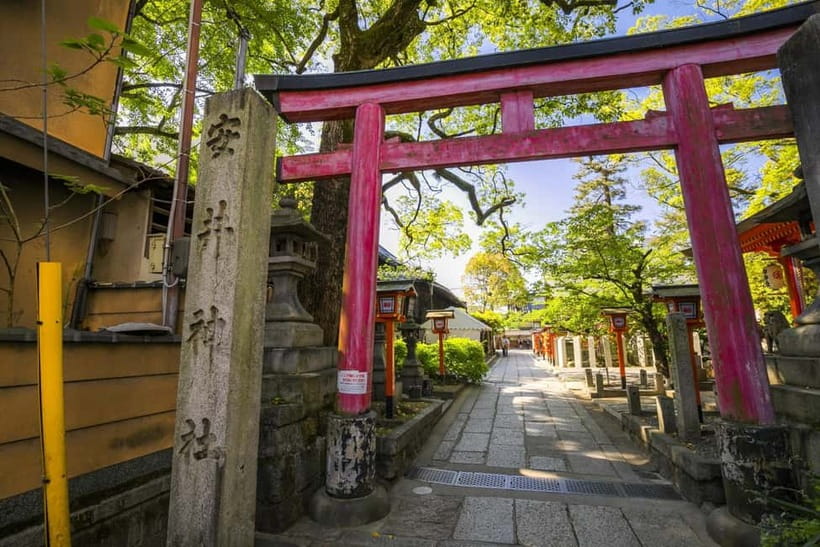
Chion-in is presented as one of the less noticed highlights of the route. Its grounds are broad and scenic, and the temple is home to three designated national treasures.
This stop gives you a sense of scale that the compact lanes of Gion cannot provide. Instead of intimate wooden facades and private-looking entrances, you get a larger religious setting with more space to appreciate architecture and surroundings.
The guide’s explanation is especially useful here because large temple grounds can be difficult to read on your own. A short stop can otherwise blur into a series of impressive gates and buildings. Historical context helps you understand why Chion-in deserves time, even if you had not placed it high on your Kyoto list.
As with Kennin-ji, do not expect a full temple tour within the two-hour schedule. You will gain an introduction and see important parts of the grounds, but visitors who want extended quiet time should plan a separate visit.
The Best Part May Come After the Walk
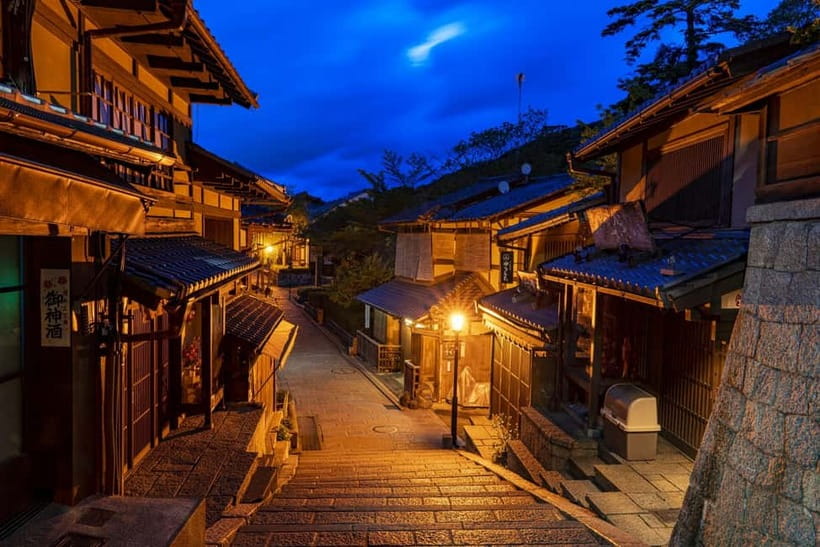
Near the end, the guide shares personal recommendations for restaurants, bars, shops, and other activities. This is more useful than a generic list because you can ask questions based on your own plans.
Several guides are praised for this practical help. Michael is repeatedly singled out for offering food suggestions and ideas for the rest of a Kyoto stay. One particularly useful tip is to leave time after the tour for eating, shopping, and activities such as making perfume or pottery.
I would book the walk early in your Kyoto visit if possible. That way, you can use the advice for later meals and sightseeing rather than receiving it on your final night. The tour works well as an orientation: after two hours, Gion’s streets make more sense, and you have a better idea of where to return.
Do note that recommendations are still personal suggestions, not reservations. The tour does not include meals, drinks, shopping, or temple admission details beyond the guided walk itself.
How Much Walking and What Kind of Pace?
The advertised duration is two hours. The pace is generally described as comfortable rather than rushed, but the route covers several areas and includes plenty of walking.
You should wear comfortable shoes. Traditional lanes and temple grounds are not the same as walking on a smooth city sidewalk, and the tour is not suitable for wheelchair users or people with mobility impairments.
Weather also matters. One booking described a very cold walk and suggested that a warm-up stop would have helped. Since the route takes place outdoors, dress for the conditions and think carefully about the season. In cold weather, a 6 p.m. start may look beautiful under the lanterns but feel uncomfortable if you are not prepared.
The afternoon has its own advantage. A 3 p.m. start can provide better daylight for the architecture and photographs. The right choice depends on whether you value clear views or evening atmosphere.
What the Guides Add
The strongest feature of this experience is the guiding. Michael is frequently praised for his historical knowledge, friendly manner, humor, and ability to answer questions. Several people describe him as passionate and easy to understand, and one small group found that he adjusted the walk to match their interests.
Other named guides receive warm praise too. Yuri is described as fantastic, Anton as relaxed and personable, Ikuro as respectful and engaging, and Hiroko as interesting and enthusiastic. Ron is mentioned as part of a particularly personal tour alongside Michael.
That range matters because a walking tour depends heavily on the person leading it. The route has attractive sights, but the guide turns them into a connected story about Kyoto, Gion, architecture, religion, and geisha traditions.
The style is not a formal lecture. Expect questions, conversation, historical facts, and suggestions for the rest of your trip. If you prefer to explore silently at your own speed, a self-guided visit may suit you better.
Is $25 a Fair Price?
At $25, this is strong value for visitors who want an introduction rather than a private geisha performance or a full-day cultural program.
You receive two hours with an English-speaking guide, an organized route through Gion, explanations of geiko and maiko culture, temple and architecture stops, photo opportunities, and practical recommendations. Hiring a guide for all of those elements separately would usually require more planning and money.
The price also keeps the risk low. If you discover that Gion is not your favorite part of Kyoto, you have lost only a modest amount of time and money. If you enjoy the district, the tour gives you enough background to return with more purpose.
The limits are clear. It does not guarantee a geisha sighting, it does not provide a private performance, and two hours is too short for a detailed visit inside every temple or tea house. Think of it as a well-priced orientation to one of Kyoto’s most famous neighborhoods.
Free cancellation is available up to 24 hours before the start, and you can reserve now and pay later. Those terms are useful if your Kyoto schedule is still shifting.
Who Should Book This Gion Walk?
I would recommend it to first-time visitors who want cultural context before exploring Gion alone. It is also a good fit for anyone curious about geisha traditions but unsure how the district actually works.
Families can benefit from the guide’s explanations, and one guide is specifically praised for being good with children. History enthusiasts will appreciate the connections between temples, architecture, and Kyoto’s past. Photographers will value the pagoda, old streets, temple grounds, and less obvious viewpoints.
I would be more cautious if you have limited mobility, dislike walking, or expect a guaranteed geisha encounter. You should also consider the weather, especially for an evening booking in winter.
Should You Book It?
Book this tour if you want a friendly, affordable introduction to Gion with real cultural explanation rather than a quick photo stop. The combination of geisha history, traditional streets, Hokanji Pagoda, Kennin-ji, Chion-in, and practical food advice makes it especially useful early in a Kyoto visit.
Skip it only if you want a private performance, a long temple study, or complete freedom to set your own pace. For most visitors, $25 is a sensible price for two hours of orientation, local stories, and a much clearer understanding of what you are seeing.
FAQ
How much does the Kyoto Geisha Walking Tour cost?
The tour costs $25 per person.
How long does the tour last?
The walking tour lasts two hours.
What language is the tour offered in?
The tour is conducted in English with a live guide.
Where is the meeting point?
Meet on the side street next to Hotel Alza Kyoto. Look for the red parasols or umbrellas with marble seats underneath.
Will I definitely see a geiko or maiko?
No. The tour offers an opportunity to spot geiko and maiko as they travel to appointments, but a sighting is not guaranteed.
What places are included on the walk?
The route includes the Gion district, traditional machiya houses, tea houses, boutique-style souvenir shops, Hokanji Pagoda, Kennin-ji Temple, and Chion-in Temple.
Is the tour suitable for wheelchair users?
No. The experience is not suitable for wheelchair users or people with mobility impairments.
Can I cancel for a full refund?
Yes. You can cancel up to 24 hours in advance for a full refund.
Can I reserve now and pay later?
Yes. You can reserve your place and pay later, which keeps your travel plans flexible.
Just added around Kyoto
- Kyoto : Private Custom Walking Tour With A Local Guide★ 4.6 · 144 reviews
- Kyoto: Private 2.5 Hour Historical Walking Tour★ 4.9 · 121 reviews
- Kyoto: Private Walking Tour with a Local★ 4.6 · 118 reviews
- Kyoto: Gion Walking Tour★ 5.0 · 195 reviews
- Kyoto: Izakaya Bars Guided Walking Tour★ 4.9 · 815 reviews
- Kyoto: Gion Sunset Walking Tour with Local Guide★ 4.7 · 351 reviews
- Kyoto Gion Cultural Walk & Geisha Show with Dining Options★ 5.0 · 518 reviews
- Kyoto: Gion Hidden Gems & Geisha Culture Tour★ 4.9 · 126 reviews
Hidden Gems Walking Tours, compared.
Dublin Highlights and Hidden Gems Guided Walking Tour
Read our review →
Explore Berlin: See All The Iconic Sights & Some Hidden Gems
Read our review →
Ben Youssef, Secret Garden, & Souks Walking Tour
Read our review →
Montmartre Hidden Gems and Scenic Highlights Walking Tour
Read our review →
Guided Walking Tour of City Highlights & Hidden Gems
Read our review →
Paranormal Night Walking Tour & Secret Backstreets
Read our review →
Secrets of Grand Central Station Walking Tour New York City
Read our review →Browse the lists this tour appears in