
Review · JAPAN WALKING TOURS
Kyoto: Gion Walking Tour
Kyoto reveals itself slowly. This two-hour walk links Pontocho, Gion-Kobu, Gion-Higashi, and Yasaka Shrine while explaining the history, customs, architecture, and daily life behind the streets. I like the small maximum of six people, and I like that the guides invite questions instead of delivering a fixed speech. The main catch is that Hanamikoji-dori is not included, and seeing a Maiko or Geiko is never promised.
The $35 price is fair for a personal 3.3-kilometer walk led by guides who clearly care about Kyoto. Jose and Saskia receive the strongest praise for their warmth, humor, visual aids, and ability to adapt the discussion to each group. You should still bring water, sun protection, and good shoes, since this is a real city walk with no refreshments or other amenities supplied.
Key points at a glance
- Three hanamachi in two hours: The route includes Pontocho, Gion-Kobu, and Gion-Higashi, giving you a wider view of Kyoto’s traditional entertainment districts.
- A maximum of six people: The small group makes it easier to hear, ask questions, and pause for details without waiting for a large crowd.
- A question-friendly format: Guides explain Japan, Kyoto, Gion, Maiko and Geiko customs, food, daily life, and anything else you want to ask about.
- A 3.3-kilometer route: Expect about two miles of walking, with frequent stops for short explanations, photos, maps, and stories.
- No guaranteed geisha sighting: You may see a Maiko or Geiko, but the tour does not promise one, and the route avoids Hanamikoji-dori.
- Strong guide coverage: Tours are offered in English, Spanish, Dutch, and French, with Jose and Saskia especially praised for their energy and personal approach.
Why this Gion walk feels different
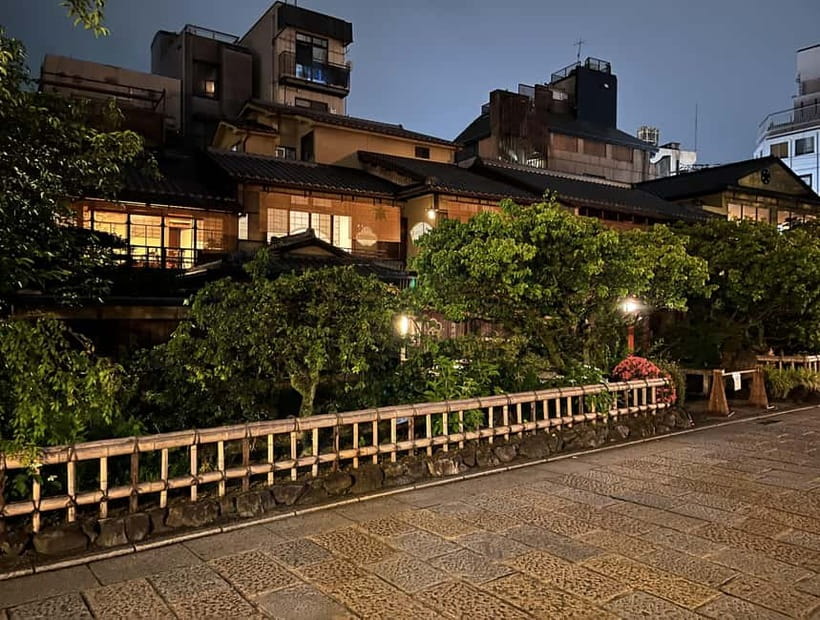
Gion is often reduced to one picture: a kimono-clad figure moving past wooden houses. That image is attractive, but it leaves out much of what makes the area worth understanding. Gion is also a network of historic neighborhoods, bridges, shrines, theaters, restaurants, tea houses, and traditional homes.
This tour gives you the background needed to read those streets. You learn why the hanamachi developed, how Maiko and Geiko fit into the district, and how older customs still connect with modern Kyoto. The guides also explain the difference between Maiko and Geiko, along with their routines, work, and cultural role.
I particularly like the conversational format. The guide is not simply pointing at buildings and reciting dates. You can ask about something you have noticed in Japan, compare customs with your home country, or stop the group for clarification. Several people found that the two hours became a useful question-and-answer session about Japan as a whole, not only Gion.
Jose is praised for using an iPad to show maps, older photographs, and changes in Kyoto over time. That is a smart touch. A street can look ordinary until you see how it changed, where an old boundary ran, or what stood there in an earlier period.
A few more walks around Kyoto worth a look
- Kyoto Geisha Walking Tour: Gion District & Hidden Gems
★ 4.7 · 3,273 reviews - Kyoto: Gion Magical Night Walking Tour with Geisha Trivia
★ 4.9 · 2,393 reviews - Kyoto: Gion Geisha District Walking Tour – Stories of Geisha
★ 4.7 · 2,187 reviews
Starting near the Disney Store in central Kyoto
The meeting point is in front of the Disney Store at Kyoto Shijo-Kawaramachi. There is only one Disney Store in Kyoto, which makes the location relatively simple to identify. The guide sits out front holding an iPad with the Get Your Guide image and the tour title.
This is a central starting point, close to the shopping and restaurant streets around Shijo-Kawaramachi. You should arrive ready to walk, since the tour does not provide water, snacks, or other equipment. Comfortable shoes matter more than stylish ones. The route covers 3.3 kilometers, and the group stops often, but you are still on your feet for two hours.
The tour is available at different starting times, so check the schedule when booking. The listed morning and midday departures at 9:45 and 12:30 may also include a free visit to the Gion Gallery if you want to extend your time. That extra visit is optional, not part of every departure.
Pontocho Alley and the Kamo River
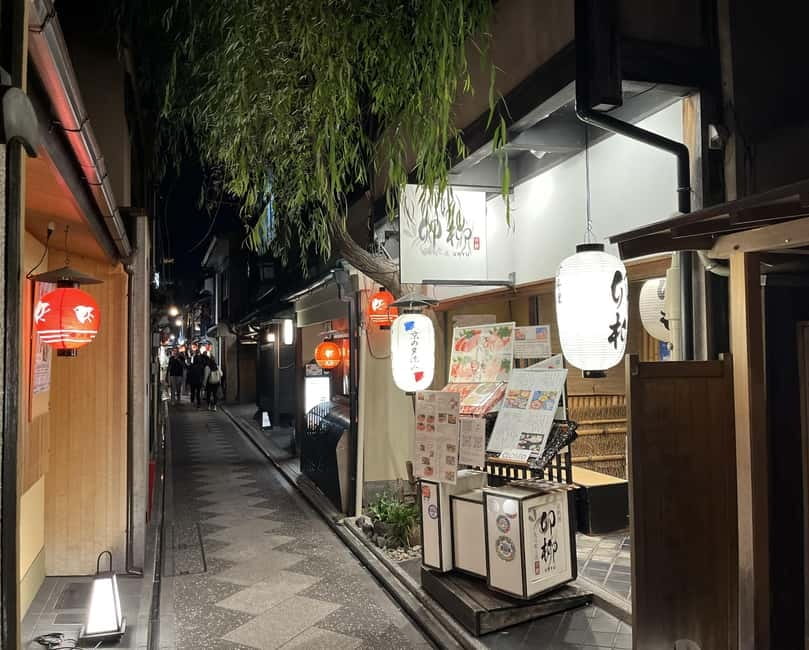
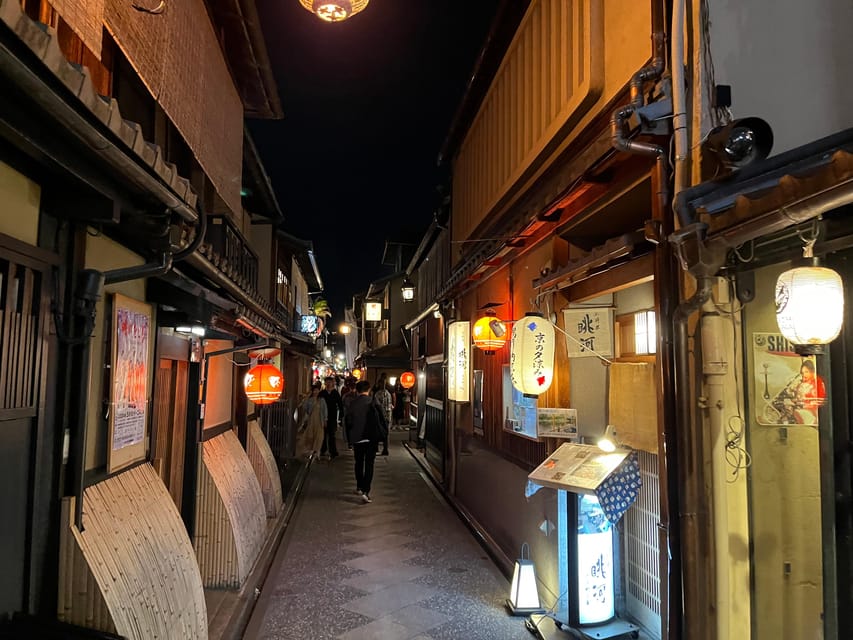
The walk begins around Pontocho Alley, one of Kyoto’s best-known traditional entertainment quarters. The narrow passage is easy to rush through, especially when you are focused on taking pictures. A guide helps you notice how the buildings, entrances, and street plan relate to the district’s older role.
From Pontocho, the route reaches Pontocho Kaburenjo. This theater is linked with traditional dance and music performances, and it helps explain how Kyoto’s performing arts remain connected to the hanamachi system. The stop gives useful context before you enter the Gion neighborhoods themselves.
The group also passes the Kamo River and the Yagi-san and Kita-san statues, then reaches Sanjo Ohashi. Bridges are good orientation points in Kyoto, and this stretch gives you a sense of how the river relates to the old entertainment districts. You are not simply moving from one photo stop to another. You are learning how the city’s neighborhoods fit together.
The route then continues along Yamato Dori. This section is valuable because it connects the better-known sights with streets you might otherwise pass without understanding. Guides point out details that are easy to miss, including features of traditional buildings and small signs of how the area functions today.
Gion-Kobu and Gion Shirakawa
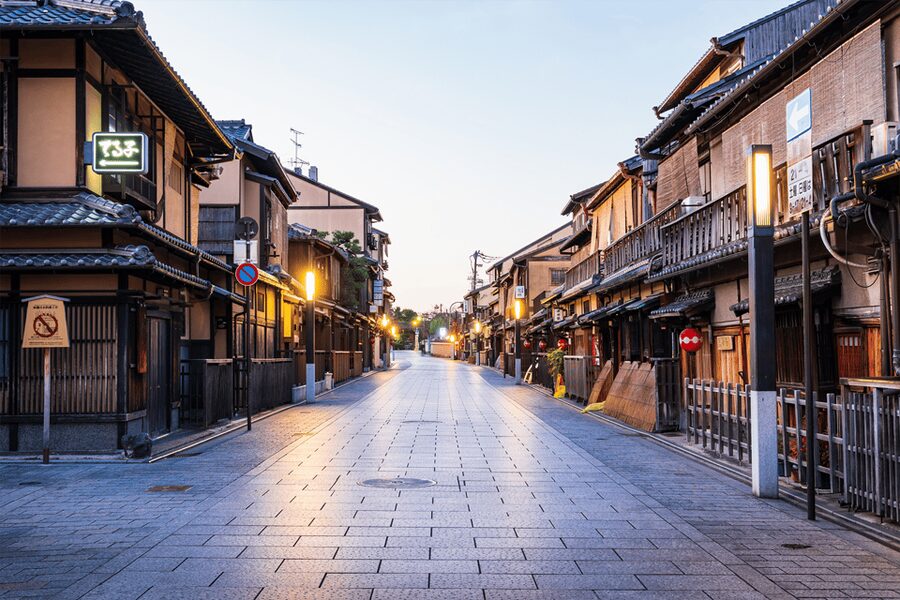
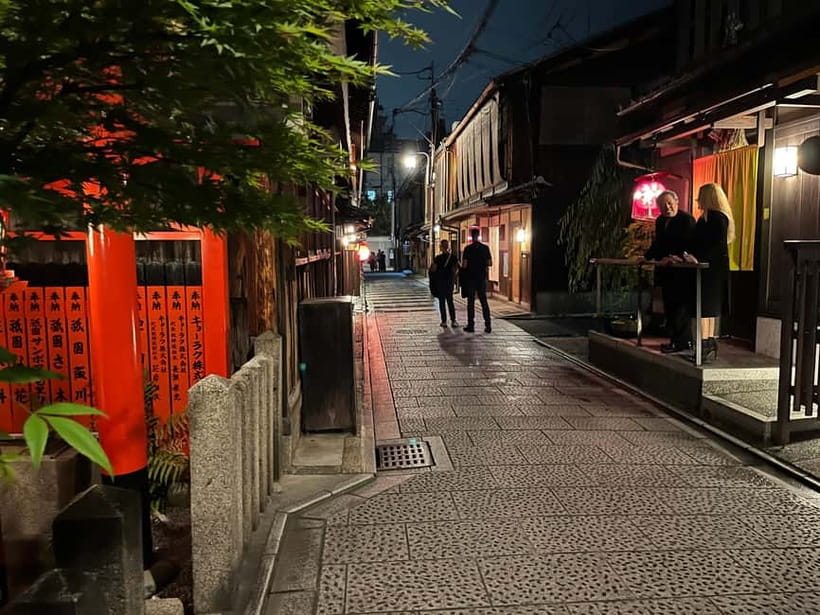
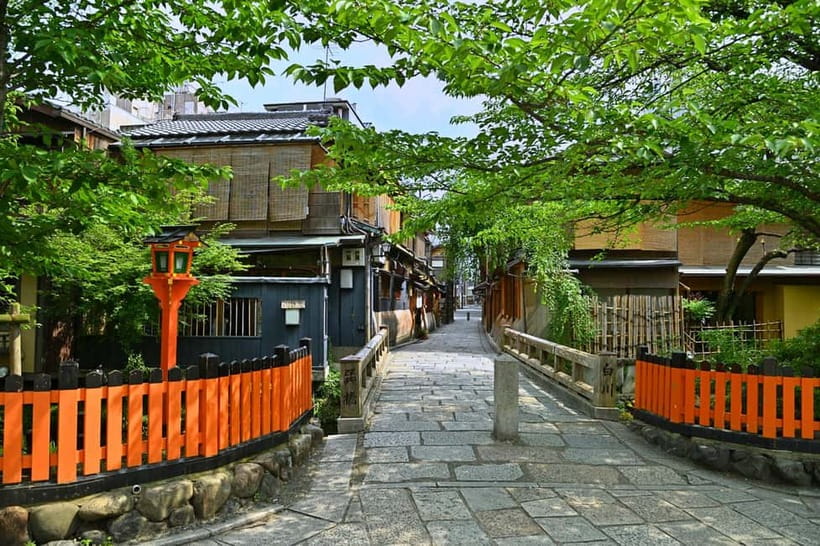
Gion-Kobu is one of the central parts of the walk. You pass through Gion-Kobu, including Gion-Shinbashi Dori and Gion Shirakawa, where traditional wooden architecture gives the district much of its character.
The preserved neighborhood is attractive, but the explanation matters more than the photo. The guide discusses Machiya houses, the organization of the hanamachi, and the work of Maiko and Geiko. You also hear about practices, routines, and the relationship between performance, hospitality, and training.
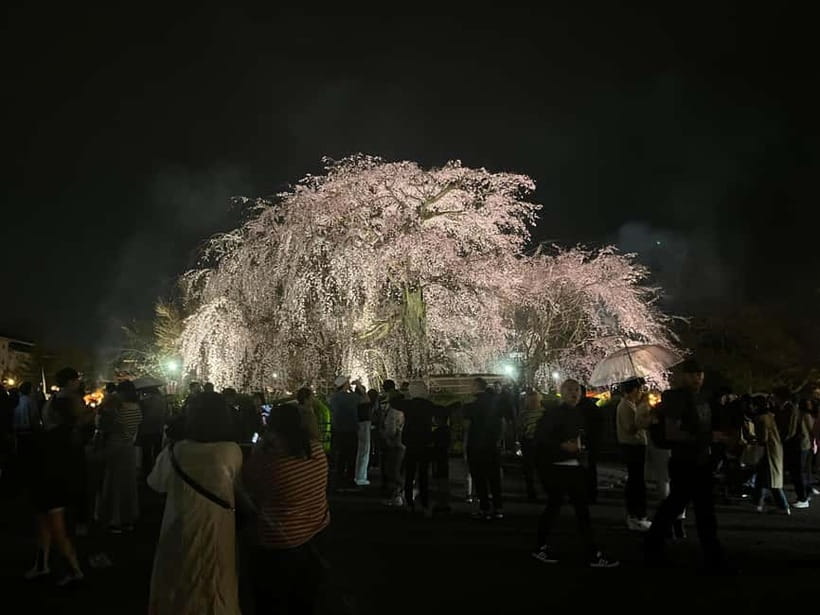
Gion Shirakawa is especially pleasant during cherry blossom season, usually from late March into early April, though exact timing varies. At that time, the route may be changed slightly to include better blossom views around Gion. This is a seasonal bonus, not a guarantee of peak flowers, so do not book solely for blossoms.
Tatsumi Jinja and Tatsumi Bridge are among the smaller stops that help give the walk its rhythm. The guides tend to pause frequently for short explanations rather than speaking for a long stretch while the group walks. That format works well in crowded streets because you can listen, look around, and then move on.
One practical point is worth stressing: Hanamikoji-dori is not included. Many people associate Gion with that famous street, so check your expectations before booking. The route focuses on other sections of the district and on the connections between Pontocho, Gion-Kobu, Gion-Higashi, and Yasaka Shrine.
Same streets, a different way to see them:
- Best of Kyoto: Gion, Geisha, Pagodas & Cobblestones
★ 4.9 · 2,058 reviews - Night Walk in Gion: Kyoto’s Geisha District
★ 4.5 · 2,003 reviews - Kyoto Gion Geisha District Walking Tour – The Stories of Geisha
★ 5.0 · 1,441 reviews - Nishiki Market Brunch Walking Tour (7 Tastings + Brunch)
★ 5.0 · 1,355 reviews
Gion-Higashi and Yasaka Shrine
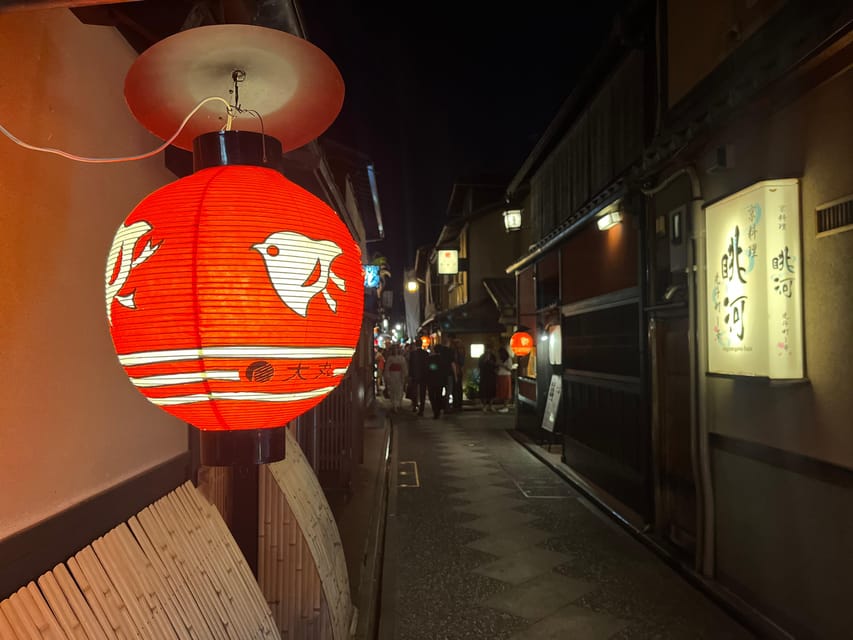
The route continues to Gion-Higashi, one of Kyoto’s five hanamachi. Visiting three of the five in a single two-hour walk gives the tour a broader scope than a short stroll through one famous lane.
Gion-Higashi also reinforces an important point: Gion is not one uniform neighborhood. Each hanamachi has its own identity, buildings, performance traditions, and local story. A guide can show you these differences more clearly than a map or a quick self-guided walk.
The final major stop is Yasaka Shrine, formerly called Gion Shrine. The shrine is important to the district’s name and to the Gion Festival, one of Japan’s three most famous and important festivals. Both the shrine and the festival have roots reaching back more than 1,100 years.
The guide may explain the festival if time allows. That qualification matters because walking speed, questions, and crowd conditions can affect how much time remains at the shrine. Still, Yasaka Shrine gives the tour a strong ending, linking the entertainment quarter with religion, public life, and Kyoto’s long story.
One evening walk description praised the shrine at night, along with visits to the shrines associated with beauty and love. The exact timing and stops may vary, so treat those details as possibilities rather than fixed promises.
What the guides add to the walk
The guide makes or breaks a history walk, and this experience has several names worth noting. Jose is often praised for his humor, clear English, energy, and passion for Kyoto. Saskia receives similar praise, especially for Dutch-language tours, careful explanations, and her ability to answer a steady stream of questions without losing enthusiasm.
The guides are foreigners who have lived in Japan for years, according to the provided information. That can appeal to you if you prefer fluent international-language explanations and a guide who can explain both Japanese customs and the experience of living in Japan as an outsider.
This does not mean the tour is only for first-time visitors. People who already knew a fair amount about Kyoto still appreciated the small details, historical comparisons, and links between old customs and modern life. If you have already walked through Gion, the guide may help you see familiar streets differently.
The small group is a major advantage. With no more than six participants, you can hear the guide, see an iPad photo or map, and ask a question without raising your voice. If only two people book, the walk can feel close to a private tour. That intimacy also allows the guide to adjust the pace and focus.
The format is not a silent, formal lecture. It is more like walking with an enthusiastic friend who has prepared carefully. That suits you if you enjoy conversation. If you want to cover a large number of monuments quickly with minimal commentary, this may feel too slow.
Maiko and Geiko sightings: keep expectations realistic
A Maiko or Geiko sighting can be exciting, but it is not the purpose or promise of this tour. The experience explains their lives, training, customs, activities, and routines, which gives you something useful even if you do not see one in person.
Several people enjoyed spotting a Maiko after learning how to recognize the clues. That is a nice outcome, but timing and chance control sightings. You should never treat performers as photo props, and you should not book this walk as a guaranteed geisha hunt.
The route also does not include Hanamikoji-dori, one of the streets most closely linked with Gion photography. That may disappoint you if you want the classic postcard route. On the other hand, the omission helps the walk focus on less obvious streets and a wider explanation of the district.
Price, pace, and practical comfort
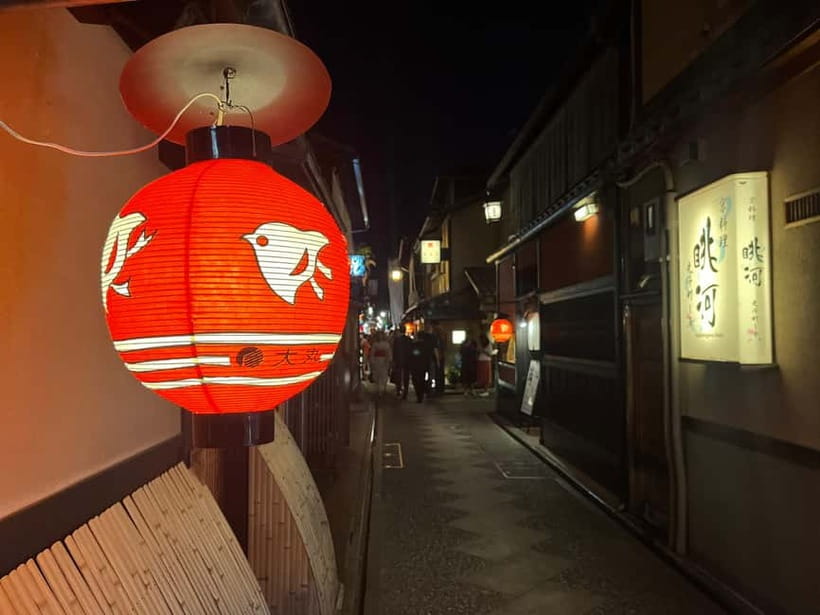
At $35 per person, the tour offers solid value if you want interpretation rather than simply directions. You are paying for two hours with a small group, a 3.3-kilometer route, multilingual support, visual material, and the chance to ask questions throughout.
The value is strongest for first-time visitors to Kyoto, families, and anyone trying to understand Japanese customs quickly. Families in particular may appreciate the ability to ask questions at the level of children or teenagers, rather than follow a fixed adult lecture.
The two-hour length is sensible. It is long enough to connect three hanamachi and Yasaka Shrine, yet short enough to fit around another Kyoto visit. The pace has been described as comfortable, with frequent stops. Still, you should plan for continuous walking and bring water.
There are no included amenities. Bring:
- Comfortable walking shoes
- Water
- Sunscreen
- A hat
- An umbrella in wet weather
Cancellation is flexible, with a full refund available when you cancel at least 24 hours ahead. You can also reserve now and pay later, which helps if your Kyoto schedule is still changing.
Who should book this Gion experience?
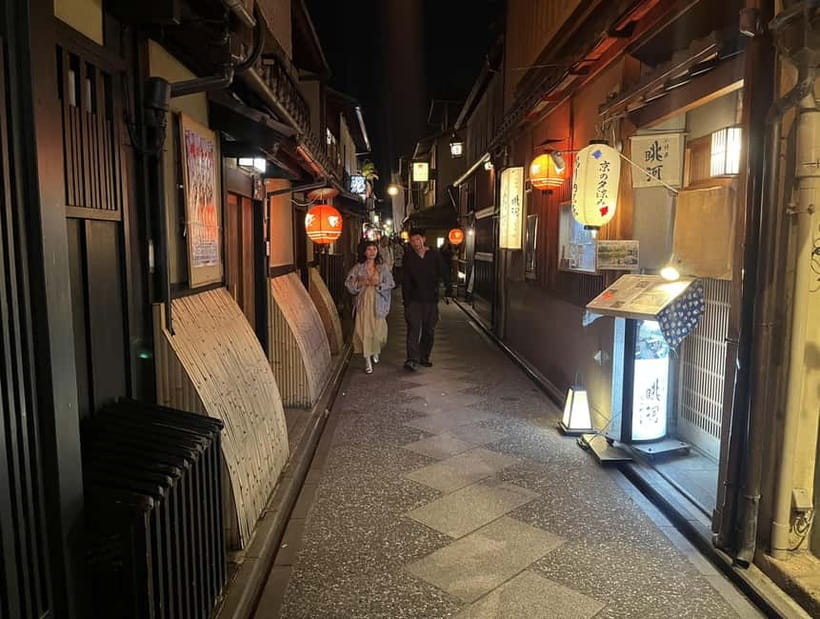
I would choose this tour early in a Kyoto visit, ideally when you want a cultural foundation for later sightseeing. Once you understand the hanamachi, Machiya homes, shrine connections, and Maiko and Geiko traditions, other parts of the city make more sense.
It suits you best if you:
- Prefer a small group over a large walking crowd
- Like asking many questions
- Want history mixed with personal stories about life in Japan
- Are interested in Maiko and Geiko culture without expecting a sighting
- Want to see more than one section of Gion
- Need a two-hour introduction rather than a full-day tour
- Prefer English, Spanish, Dutch, or French
It may not suit you if your main goal is Hanamikoji-dori, shopping, food tasting, or guaranteed entertainment. It also may feel too information-heavy if you only want photographs and a casual stroll.
Should you book the Kyoto Gion Walking Tour?
Book it if you want Gion explained, not just photographed. The small group, flexible conversation, and strong guide personalities are the main reasons to choose it. Jose and Saskia bring energy, maps, old images, personal stories, and plenty of patience to the walk.
Go in knowing the limits: Hanamikoji-dori is excluded, no amenities are included, and a Maiko or Geiko sighting is pure chance. If those points work for you, $35 buys a useful and personal introduction to three hanamachi, Gion’s old streets, and Yasaka Shrine.
FAQ
How long is the Kyoto Gion Walking Tour?
The tour lasts two hours.
How far do you walk?
The route covers about 3.3 kilometers, or two miles.
How many people are in the group?
The group is limited to six participants.
Which areas are included?
The walk visits Pontocho, Gion-Kobu, and Gion-Higashi, along with several streets, bridges, shrines, and Yasaka Shrine.
Is Hanamikoji-dori included?
No. Hanamikoji-dori is not included in the route.
Will I definitely see a Maiko or Geiko?
No. A Maiko or Geiko sighting cannot be guaranteed.
Which languages are available?
The tour is offered in English, Spanish, Dutch, and French.
What should I bring?
Bring comfortable shoes, water, sunscreen, a sun hat, and an umbrella. No amenities are provided.
Just added around Kyoto
- Kyoto : Private Custom Walking Tour With A Local Guide★ 4.6 · 144 reviews
- Kyoto: Private 2.5 Hour Historical Walking Tour★ 4.9 · 121 reviews
- Kyoto: Private Walking Tour with a Local★ 4.6 · 118 reviews
- Kyoto: Izakaya Bars Guided Walking Tour★ 4.9 · 815 reviews
- Kyoto: Gion Sunset Walking Tour with Local Guide★ 4.7 · 351 reviews
- Kyoto Gion Cultural Walk & Geisha Show with Dining Options★ 5.0 · 518 reviews
- Kyoto: Gion Hidden Gems & Geisha Culture Tour★ 4.9 · 126 reviews
- Kyoto: Imperial Palace & Nijo Castle Guided Walking Tour★ 4.7 · 453 reviews
Japan Walking Tours, compared.
Kyoto Geisha Walking Tour: Gion District & Hidden Gems
Read our review →
Tokyo Tsukiji Fish Market Food and Culture Walking Tour
Read our review →
Gion Magical Night Walking Tour with Geisha Trivia
Read our review →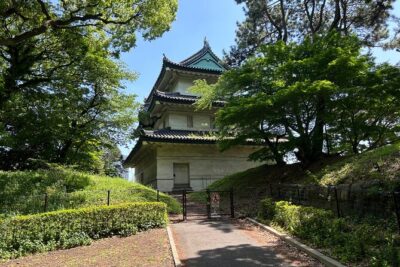
Imperial Palace and Shogun Historical Walking Tour
Read our review →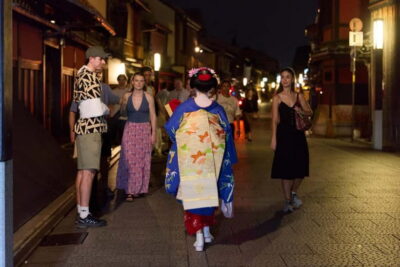
Gion Geisha District Walking Tour – Stories of Geisha
Read our review →
Best of Kyoto: Gion, Geisha, Pagodas & Cobblestones
Read our review →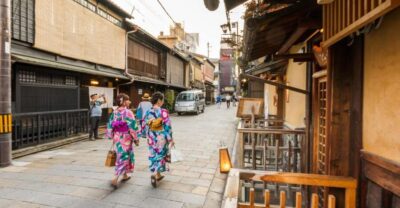
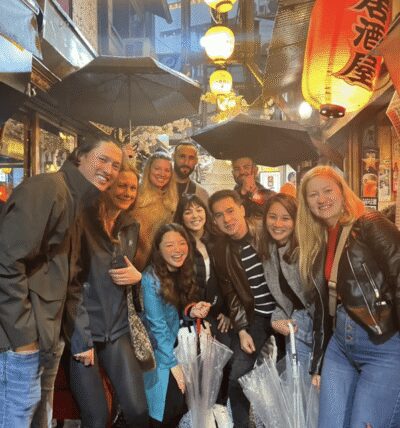
Shinjuku Local Bar and Izakaya Guided Walking Tour
Read our review →Browse the lists this tour appears in