Review · FOOD WALKING TOURS
Tokyo Tsukiji Fish Market Food and Culture Walking Tour
Tsukiji is best tasted, not just photographed. This three-hour walk through Tokyo’s famous outer market gives you a friendly guide, a string of small food samples, and a final serving of sushi or a seafood bowl. I especially like the chance to try Wagyu beef, fish cakes, Japanese omelette, seasonal fruit, and fresh seafood without guessing which stalls deserve your time. I also like the cultural context, from the market’s past to the customs behind Japanese ingredients and cooking.
The main catch is expectation. This is not a tour of Tokyo’s former inner wholesale fish market, which moved to Toyosu. It focuses on the outer Tsukiji Market and nearby food areas. You should also expect tasting portions rather than a nonstop feast, although lunch and snacks are included and the final fish bowl or sushi helps fill you up.
The tour costs $99.49 per person and has earned a 4.9 rating from more than 3,100 reviews, with 97 percent recommending it. That is a strong record, but the price makes the guide’s role important. You are paying for navigation, explanations, arranged tastings, and a meal, not simply access to the market. Come hungry, wear walking shoes, and arrive early, since the group leaves sharply from the temple gate.
Key points to know before booking
- Meet at Tsukiji Hongan-ji Temple: The correct meeting point is the main gate at 3-chōme-15-1 Tsukiji. Google Maps may guide you to the back side, so check carefully.
- Taste more than seafood: The planned samples can include Wagyu skewers, tuna, sushi or a seafood bowl, fish cakes, Japanese omelette, dashi soup, green tea, and seasonal fruit.
- The old inner market is not included: You explore the outer market and Tsukiji Uogashi area, not the former wholesale market that relocated to Toyosu.
- The final meal varies: Depending on the day, you receive sushi or a seafood bowl. Food shops may close on Wednesdays, Sundays, and other market holidays.
- Small groups make a difference: The maximum group size is 20, but several strong experiences involved groups of four or fewer, making it easier to hear the guide and move through crowded lanes.
- Dietary limits are strict: Vegetarian, halal, gluten-free, allergy-related, and fish-free requests cannot be accommodated.
Starting beneath the Tsukiji Hongan-ji Temple
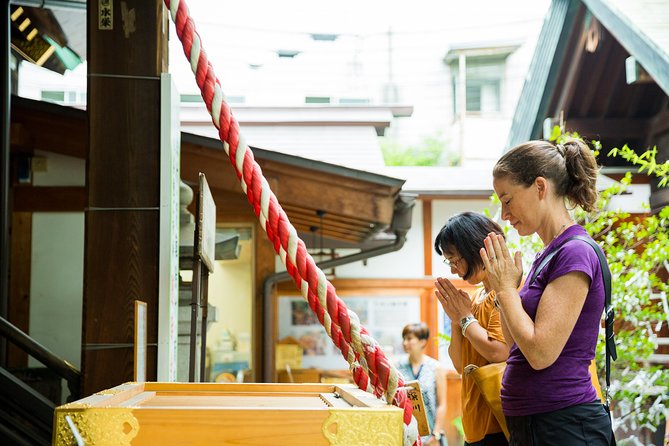
Your guide meets you at the main gate of Tsukiji Hongan-ji Temple. This is a useful starting point, not just a convenient landmark. The temple’s unusual architecture and background often form the first cultural stop, and several guides have used it to explain local history before leading the group toward the market.
Pay attention to the meeting instructions. The tour leaves at the stated start time and cannot wait for late arrivals. The operator also says a late arrival does not extend the tour, and same-day late arrivals or cancellations do not receive a refund.
The temple sits near public transportation, but transportation to the meeting point is not included. Give yourself extra time to find the correct gate. The front side is the one you need, not the back side shown by some map directions.
More Food Walking Tours in Japan
- Tokyo: Tsukiji Fish Market Food and Walking tour
★ 5.0 · 1,724 reviews - Tsukiji Fish Market Small-Group Food Walking Tour
★ 5.0 · 621 reviews - Shinjuku: Food Tour – 15 Dishes at 4 Eateries
★ 5.0 · 493 reviews
Tsukiji Jogai Market, where the food walk begins
The first major stretch takes about 90 minutes in Tsukiji Jogai Market, the outer market. This is the part that gives you the strongest sense of daily food shopping in the district. You move past stalls selling seafood, shellfish, seasonings, prepared foods, kitchen goods, and ingredients used in Japanese homes and restaurants.
Your guide explains why the market matters and how it developed over roughly 80 years as one of Japan’s best-known seafood centers. You may see boxes of sea urchin, tanks holding pufferfish, and large tuna being cut down for sale. The sights are useful, but the explanations are what make them easier to understand.
The market can be confusing on your own. Its lanes are compact, busy, and packed with shops that may look similar at first glance. A guide can point out what you are seeing, explain how ingredients are used, and help you avoid spending your limited morning wandering without a plan.
Early tastings may include dashi soup and green tea. These are small but useful introductions to Japanese flavor. Dashi is a basic stock used in many dishes, and tasting it in the market gives you a practical reference for the savory taste that appears in Japanese cooking.
The food samples, from omelette to Wagyu
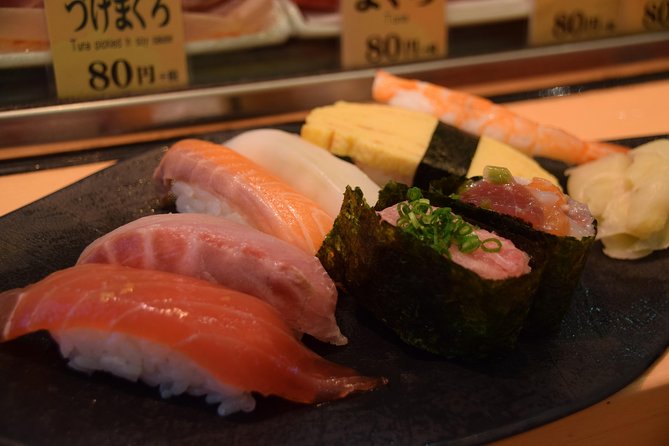
The food is the reason to book this experience, but it helps to understand the format. This is a series of stops and samples rather than one long sit-down meal. Depending on the route and the day, you may taste tuna, fish cakes, Japanese omelette, seaweed, fruit, Wagyu beef skewers, sushi, and other market foods.
The Japanese omelette, often sold in thick rectangular pieces, is a popular stop. Fish cakes offer another texture and flavor, while seasonal fruit provides a sweet pause between savory samples. Some tours also include tempura, squid, eel, or additional seafood selected by the guide.
The Wagyu skewer is a welcome change from the fish-heavy menu. It also makes the experience easier for anyone who wants to sample Japanese cuisine beyond sushi. Still, you should not assume every item appears on every departure. Shop hours, market closures, and the guide’s route affect the exact selection.
A few people may find the tasting portions lighter than expected. For that reason, I would not arrive after skipping food all day if you need a large breakfast. You can expect a satisfying collection of bites, followed by a proper fish-based lunch, but this is not an all-you-can-eat outing.
The old Tsukiji Market and local cooking culture
The itinerary includes about 30 minutes in the old Tsukiji Market area. This section connects the food stalls with everyday Japanese cooking. A good guide may explain how local ingredients are used at home, how to choose products, or which seasonings and kitchen items are worth taking home.
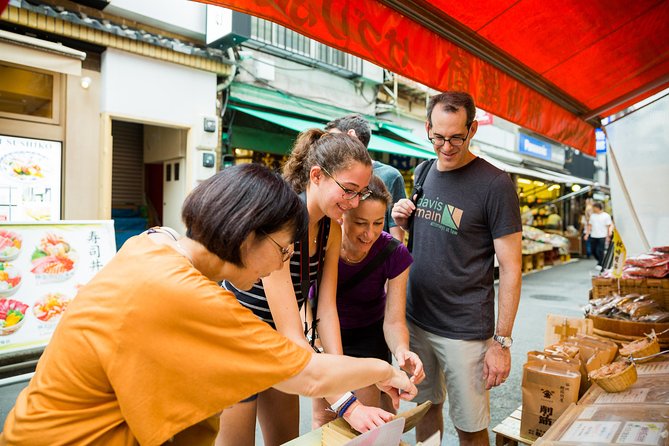
This is where the tour can become more useful than a simple tasting route. One guide helped a small group select ingredients and offered practical advice about using foods and spices in Japanese cooking. If you want souvenirs you can actually use, ask questions here rather than buying the first attractive package you see.
The route may also include a kitchen-tool shop. This is not a separate shopping excursion, and personal purchases are your responsibility, but it gives you a chance to look at the knives, utensils, and cooking tools associated with Japanese kitchens.
Because the market remains an active shopping area, the pace can change. Some groups move quickly through crowded passages, while others pause for explanations or shopping. Small groups tend to work best here. They make it easier to stay together and give you a better chance to hear the guide.
Same streets, a different way to see them:
- Tokyo: Imperial Palace and Shogun Historical Walking Tour
★ 5.0 · 2,251 reviews - Tokyo: Shinjuku Local Bar and Izakaya Guided Walking Tour
★ 4.9 · 1,794 reviews - Tokyo: Asakusa Walking Tour with Sensoji Temple Visit
★ 4.8 · 1,583 reviews - Tokyo: Tsukiji Fish Market Guided Walking Tour
★ 4.9 · 1,397 reviews
Tsukiji Uogashi and the wholesale-market confusion
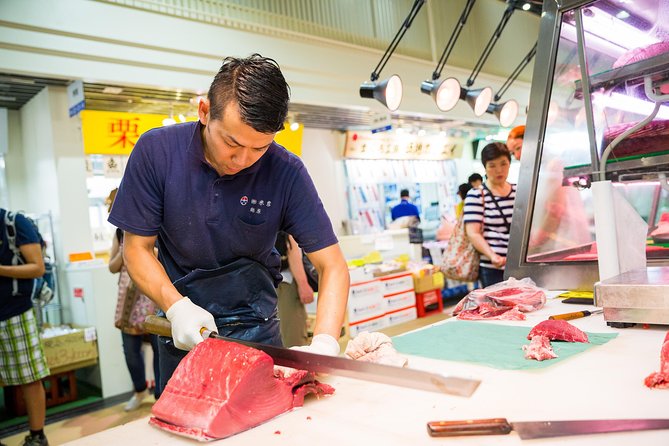
The itinerary allows about 30 minutes at Tsukiji Uogashi, a smaller wholesale-style market area where you can see many types of fresh fish. This is a useful stop, but it needs a clear explanation: the famous inner wholesale market is no longer at Tsukiji. It relocated to Toyosu.
If you arrive expecting to walk through the old wholesale complex, you may feel disappointed. This tour does not take you into that former market. Instead, it shows you the outer market and a smaller wholesale area within the Tsukiji district.
That distinction is the single most important booking detail. The experience still offers seafood stalls, fish preparation, market activity, and cultural background, but it is not a behind-the-scenes tour of the current Toyosu wholesale facilities.
Tsukiji Uogashi is closed on Wednesdays, Sundays, and holidays, along with other official market closure days. On those days, the route and food selection change. Japanese omelette, fish cake, and fruit may not be available because the relevant shops are closed.
Finishing with sushi or a seafood bowl
The tour ends with a fish bowl or sushi meal, served in the Tsukiji area. The exact choice depends on the day and the operating restaurant. This final stop matters because it turns the earlier tastings into a more substantial meal.
The seafood bowl can offer a range of fish over rice, while sushi gives you a more direct look at the market’s central product. Some groups have watched fish being prepared and even made their own sushi. Another memorable stop involved a sashimi lunch prepared at a local restaurant praised by the guide for its fish quality.
Do not assume that every group receives the same restaurant or exact menu. The provider notes that a restaurant may be replaced if it closes unexpectedly. You may receive sushi on one departure and a seafood bowl on another.
For many people, the meal is the tour’s strongest value point. At nearly $100, the included food needs to feel like more than a few samples, and the final dish helps justify the cost. If your priority is simply eating as much as possible, you may find the tour expensive. If you want context, help choosing food, and a planned market meal, the price becomes easier to defend.
What the guides add to the experience
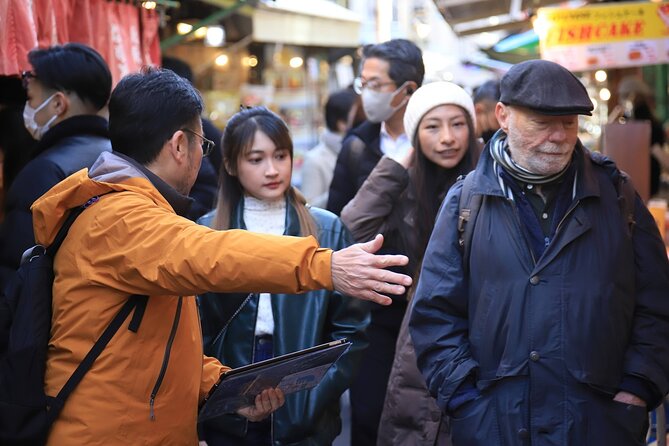
The guide can make or break this tour. The strongest experiences have come from guides who combine food knowledge with local history, clear English, patience, and a good sense of humor.
Guides named Kiyo, Naz, Miky, Kayoko, Joy, Mieko, Shibuya, Yuki, KK, Shoko, Sean, Take, Masa, Nick, and Yuko have all been praised for different strengths. Masa was described as calm, patient, funny, and good at linking food with culture. Shoko helped with shopping and explained how she used ingredients in her own cooking. Nick paired tastings with nearby landmarks and finished with a highly regarded sashimi lunch.
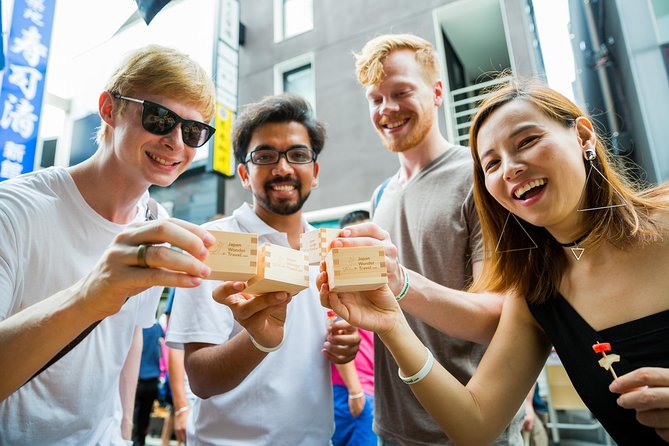
The guide may also adjust the experience to the group. One guide arranged a sake tasting when the group asked for one. Another extended the route slightly to help a participant find a shop. These small decisions are where a local guide can offer value that a self-guided walk cannot.
The quality is not guaranteed to be identical every time. A few experiences were marked by slow pacing, waiting, weak enthusiasm, or unclear explanations. One person felt the final restaurant was too tourist-oriented and disliked having little choice. That criticism is worth taking seriously, especially if you have done many food tours before.
Is $99.49 a fair price?
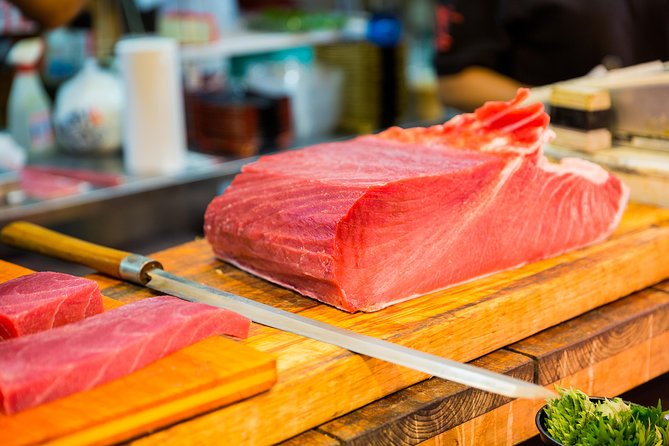
At $99.49 per person, this is not a bargain market snack crawl. You could visit Tsukiji independently, buy food at your own pace, and spend less. The market itself does not charge an admission fee.
The tour earns its price through four things:
- A guide who helps you understand unfamiliar foods
- Several arranged tastings
- A final sushi or seafood-bowl meal
- Help navigating a crowded market and choosing places you might otherwise miss
The value is strongest for first-time visitors to Tsukiji, people nervous about ordering seafood, and anyone who wants cultural explanations alongside food. It is weaker for confident Tokyo eaters who enjoy researching stalls and prefer complete control over their menu.
The high overall rating suggests that the format works well for most people. Still, food expectations vary. Think of the tour as a guided introduction with lunch, not a luxury tasting menu or a visit to the working wholesale market.
Practical details that affect your morning
The tour lasts about three hours and ends back at the temple meeting point. It is mainly a walking experience, so comfortable walking shoes are essential. You should expect market crowds, uneven pauses, and time on your feet.
The maximum group size is 20 people. A group of that size may feel less personal in narrow market lanes, although smaller departures have allowed more questions and easier shopping stops.
The minimum drinking age in Japan is 20. If a tasting includes alcohol and you are under 20, the provider says another drink is offered instead.
The tour does not accommodate vegetarian, halal, gluten-free, allergy-related, or fish-free diets. If you cannot eat fish, this is not the right food experience for you. Extra food, extra drinks, personal purchases, transportation to the meeting point, and hotel pickup are not included.
Free cancellation is available up to 24 hours before the start time. Changes or cancellations made inside that window are not accepted for a refund.
Who should book this Tsukiji food walk?
I would recommend it to first-time visitors who want a clear introduction to Tsukiji without spending their morning decoding every sign and stall. It also suits food-curious people who want to try sea urchin, eel, squid, tuna, fish cakes, and other Japanese foods with someone explaining what is on the plate.
Families with older relatives may appreciate the guide’s pacing, although everyone needs moderate physical fitness. Couples and small groups should enjoy the chance to ask for shopping help or adjust the pace when the group is small.
I would skip it if you need a carefully controlled diet, dislike seafood, want to visit the current Toyosu wholesale market, or prefer a large, leisurely restaurant meal. I would also skip it if you expect unlimited tastings. The tour is about access and explanation as much as eating.
Should you book it?
Book this tour if you want Tsukiji to make sense quickly. The temple start, market walk, local tastings, cooking advice, and final sushi or seafood bowl create a useful first look at Tokyo’s food culture.
Go in with the right picture: you are visiting the outer market, not the old inner wholesale market, and the exact menu changes with the day. Arrive on time, wear good shoes, and keep room in your appetite for the final meal. For most first-time visitors, the guide and the carefully chosen stops make the $99.49 cost reasonable. For independent eaters, the market alone may be enough.
FAQ
Where does the tour meet?
The meeting point is the main gate of Tsukiji Hongan-ji Temple at 3-chōme-15-1 Tsukiji, Chuo City, Tokyo 104-8435, Japan. Use the front side of the temple, since some map directions lead to the back.
Where does the tour end?
The tour ends back at the meeting point near Tsukiji Hongan-ji Temple.
How long does the tour last?
The walking tour lasts approximately three hours.
What food is included?
Lunch and snacks are included. Tastings may include sushi or a seafood bowl, Wagyu beef skewers, fish cakes, Japanese omelette, seasonal fruit, dashi soup, green tea, tuna, and other market foods. The exact items can vary.
Will I receive sushi or a seafood bowl?
You may receive either sushi or a seafood bowl, depending on the day and the restaurant arrangements.
Is the former inner wholesale fish market included?
No. The tour focuses on Tsukiji Jogai Market, the old Tsukiji Market area, and Tsukiji Uogashi. The former inner wholesale market moved elsewhere.
What should I wear?
Wear comfortable walking shoes because the experience involves walking through the market for about three hours.
Can the tour accommodate dietary restrictions?
No. Vegetarian, halal, gluten-free, allergy-related, and fish-free requests cannot be accommodated.
What happens if I need to cancel?
You can receive a full refund if you cancel at least 24 hours before the experience starts. Cancellations or changes made less than 24 hours before the start time are not accepted, and late arrivals do not receive a refund.
More Food Walking Tours in Tokyo
- Reykjavik Food Walk – Local Foodie Adventure in Iceland
★ 5.0 · 18,952 reviews - Little Havana Food and Walking Tour in Miami
★ 5.0 · 8,882 reviews - New Orleans Food Walking Tour of the French Quarter with Small-Group Option
★ 5.0 · 6,118 reviews - Naples: Street Food Walking Tour with Local Guide
★ 4.9 · 4,976 reviews
More Market Walking Tours in Japan
- Tokyo: Guided Walking Tour of Tsukiji Market with Breakfast
★ 4.4 · 134 reviews - Tokyo: Tsukiji Market Walking Tour & Sushi Cooking Class
★ 4.6 · 122 reviews - Nishiki Market Brunch Walking Tour (7 Tastings + Brunch)
★ 5.0 · 1,355 reviews - Osaka: Kuromon Market Food Walking Tour (6 stops, 6 tastes)
★ 4.6 · 272 reviews
Just added around Tokyo
- Tokyo: Tsukiji Market Walking Tour & Sushi Cooking Class★ 4.6 · 122 reviews
- Tokyo: Dark Side of Tokyo Shinjuku Red Light Walking Tour★ 4.7 · 862 reviews
- Tokyo: Shinjuku Nightlife & Secret Backstreets Walking Tour★ 4.8 · 229 reviews
- Tokyo: Shibuya Highlights Walking Tour★ 4.8 · 601 reviews
- Tokyo: Shibuya Highlights Walking Tour & Secret View Spot★ 4.9 · 196 reviews
- Tokyo: Shinjuku Bar Hopping & Night Walking Tour★ 4.6 · 137 reviews
- Tokyo: Shibuya Crossing & Hidden Streets Walking Tour★ 4.8 · 128 reviews
- Tokyo: Private Custom Walking Tour with Local Guide★ 4.9 · 350 reviews
Food Walking Tours, compared.
Reykjavik Food Walk – Local Foodie Adventure in Iceland
Read our review →

New Orleans Food Walking Tour of the French Quarter with Small-Group Option
Read our review →
Authentic Parisian Gourmet Food Tour with 10 Local Dishes & Wines
Read our review →

Tapas Walking Tour with Food, Wine, and History
Read our review →