
Review · MARKET WALKING TOURS
Tokyo: Guided Walking Tour of Tsukiji Market with Breakfast
Tokyo wakes up early, and breakfast may include wagyu, grilled seafood, and dashi. This 150-minute walk through Tsukiji Outer Market combines seven tastings with local stories, making it a useful introduction to Japanese food and daily market life. I especially like the small group limit of 10 and the guides’ willingness to adjust tastings for picky eaters or dietary preferences. The one concern is that $85 per person is not cheap for a morning walk, particularly if you already know your way around Japanese food markets.
I also like the easy meeting point at Tsukiji Hongwanji Temple and the fact that the tour ends early enough for you to keep exploring on your own. Past guests have singled out guides including Yumi, Nori, Minoko, and Rico for their friendly help and market advice. English was occasionally hard to follow for one participant, so clear communication may vary by guide.
Five useful things to know before you book

- Seven breakfast tastings include grilled seafood or beef skewers, Japanese omelette, tuna sandwiches, fried fish paste, a drink, tea, and dashi soup.
- Tsukiji Hongwanji Temple provides a striking cultural opening, though the visit focuses on the exterior.
- Small groups of up to 10 make it easier to ask questions, keep together, and request food changes.
- The guides can help with translation and purchases, which is valuable in a crowded market with many unfamiliar foods.
- The tour lasts 150 minutes and ends early, leaving time to continue around Tsukiji on your own.
- Comfortable shoes matter, and the activity is listed as wheelchair accessible.
Meeting at Tsukiji Hongwanji Temple
Your morning begins in front of Tsukiji Hongwanji Temple, a practical spot just 50 meters from Tsukiji Station on the Hibiya Line. Use Exit A1, turn left, and the temple entrance is close by. This is one of those rare Tokyo meeting points that is simple to find without a long walk through side streets.
Before food takes over, you get a look at the temple’s unusual exterior. Its design has Indian-inspired elements, which makes it unlike the more familiar wooden Buddhist temples you may see elsewhere in Japan. The guide uses this opening to explain how Japanese religion and food connect, giving the market visit more meaning than a simple eating tour.
The temple portion is not a full interior visit. You should think of it as a short cultural introduction and a useful place to get your bearings. If you are hoping for a long temple tour, this activity will feel light on that front. If you want a quick dose of context before entering the market, it works well.
More Market Walking Tours in Japan
- Tokyo Tsukiji Fish Market Food and Culture Walking Tour
★ 5.0 · 3,184 reviews - Tokyo: Tsukiji Fish Market Food and Walking tour
★ 5.0 · 1,724 reviews - Tokyo: Tsukiji Fish Market Guided Walking Tour
★ 4.9 · 1,397 reviews
Entering Tsukiji Outer Market with a guide
From the temple, you walk into Tsukiji Outer Market, an area filled with restaurants, food shops, stalls, and businesses serving both locals and visitors. The market can feel confusing at first. Small lanes, busy workers, unusual products, and food queues create plenty to see, but not always an obvious route through it.
That is where the guide earns the fee. Instead of spending your first half hour simply trying to decide where to go, you follow someone who knows the area and can explain what you are seeing. Several past participants valued help with translation, ordering, and speaking with vendors. That support is useful when a menu or product is unfamiliar.
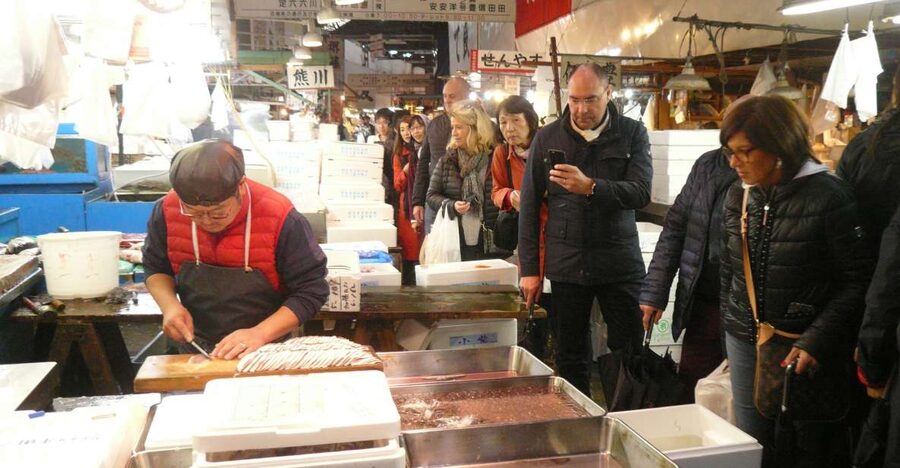
The tour also gives you a glimpse of professional market work. Expert wholesalers and other workers go about their jobs while you pass through. You are observing a working food district, not just a staged attraction, so the pace and flow can be energetic. Stay close to the guide, especially when the group moves between stops.
A small group helps here. With a maximum of 10 people, you have a better chance of hearing explanations and asking questions than you would on a large coach-style outing. Some bookings have turned into very small groups, including one family group and one booking with only a parent and adult daughter. That level of flexibility is not guaranteed, but it can make the morning feel personal.
Seven tastings that make up breakfast
The food is the main reason to book this experience. You receive seven local tastings rather than one large sit-down meal. That format lets you sample different parts of Japanese market cooking while continuing to walk.
The exact order can change, but the advertised selection includes:
- Grilled seafood or beef skewers
- A Japanese-style omelette
- Tuna sandwiches
- Fried fish paste skewers
- A drink
- Japanese tea
- Dashi soup stock
The skewers give you the most obvious street-food moment. You may receive grilled seafood or beef, with wagyu specifically highlighted as one possible treat. These are easy foods to eat while standing or walking, and they provide a direct taste of the market’s focus on fresh ingredients and quick preparation.
The Japanese omelette offers a different texture and style from the grilled items. The tuna sandwich is another useful contrast, showing how market ingredients can appear in a familiar Western-style format. Fried fish paste skewers bring yet another texture and are a good choice if you want to try something less predictable.
Tea and dashi slow the pace a little. Dashi is a basic Japanese soup stock, and tasting it on its own helps you understand a flavor that appears in many Japanese dishes. The tea sample adds a quieter cultural note to a breakfast that otherwise leans heavily toward grilled and fried food.
Come hungry. One person found the amount of food substantial, and several participants described eating a great deal. This is not a token tasting where you receive a single bite at each stop. For a light eater, child, or picky teenager, seven items may be more than you want.
The good news is that the guides have shown flexibility. They have replaced foods people did not want, adjusted selections, and helped groups choose items that suited them better. One family valued this because a teenager was selective about food. Another participant did not eat everything but still enjoyed the visit after explaining preferences to the guide.
You should still share food concerns at the start. The supplied information does not promise allergy-specific arrangements, vegetarian substitutions, or a fixed menu, so do not assume every item can be changed. The tour does offer a practical level of adjustment, but you should make your needs clear before the tastings begin.
Food culture, religion, and market life
The best part of this tour is not simply the number of samples. It connects what you eat with how food fits into Japanese culture and religion. The temple visit gives the guide a natural place to discuss those links before you enter a market built around fish, meat, stock, tea, and prepared foods.
You also see how food is sold and handled in a working setting. The guide can explain unfamiliar products and help you understand what you are looking at. That turns random browsing into a lesson in local eating habits.
I would not book this as a formal history tour. The emphasis is food, daily life, and the market itself. Still, the cultural explanations make each tasting more useful. You are not only asking if you like a skewer. You are learning where it fits within the broader food culture.
The guides have also offered advice for later meals and further sightseeing. One participant received help finding the next tour, while another was guided back toward a hotel. Those extra touches are not listed as guaranteed services, but they show how a friendly guide can make the whole morning easier.
More Market Walking Tours in Tokyo
- Tsukiji Fish Market Small-Group Food Walking Tour
★ 5.0 · 621 reviews - Tokyo: Tsukiji Market Walking Tour & Sushi Cooking Class
★ 4.6 · 122 reviews
What the pace and group size feel like
The tour runs for 150 minutes, or two and a half hours. That is long enough to cover the temple, market lanes, explanations, and seven tastings without taking the entire day. It also finishes early enough for you to continue exploring Tsukiji after the guided portion.
Expect a walking tour, not a seated breakfast. Comfortable shoes are important because you move between stops and spend time on your feet. The market has many people and plenty of visual distractions, so this is not the place for a slow, empty-street stroll.
The group size is limited to 10, and the activity is listed as wheelchair accessible. The accessible designation is helpful, but the market itself remains a working area with crowds and changing conditions. If you use a wheelchair, contact the provider before booking to confirm that the planned route and tasting stops suit your needs.
English is the tour language. Many people found the guides easy to work with and praised their warmth, local advice, and ability to answer questions. One participant found the English difficult to understand at times, so you should allow for some variation in speaking style. The guides’ help with vendors and translation remains one of the strongest practical reasons to join.
Is $85 a fair price?
At $85 per person, this tour costs more than simply buying breakfast at Tsukiji. If you are comfortable ordering on your own and already understand Japanese market etiquette, you may prefer to explore independently and spend only on the foods you choose.
The value improves if you want structure and guidance. Your price covers the guide and seven local tastings, not just a walk past the stalls. You also receive help navigating the market, speaking with vendors, understanding unfamiliar foods, and making the most of a short morning visit.
For a first day in Tokyo, that can be worthwhile. You avoid wasting time choosing random stalls, and you get a broad sample instead of committing to one meal. The small group format adds value because you can ask questions and request changes more easily.
The price is less attractive for people who eat very little, dislike most seafood, or want a private food tour. The tour includes fish, meat, fried items, tea, and dashi, so your enjoyment depends on being open to several types of Japanese food. The guides may adjust choices, but there is no promise of a fully customized menu.
A group of four may find the cost easier to justify because the experience becomes a shared introduction to Tokyo. Families also benefit from the food flexibility. Solo visitors and couples can enjoy the social side of a group limited to 10, though the exact group size can change.
Who should book this Tsukiji experience?
I would recommend it to first-time Tokyo visitors who want a guided introduction to Japanese food without giving up the rest of their morning. It also suits anyone nervous about ordering in a crowded market or unsure how to tell one food stall from another.
Families with older children and teenagers may like the mix of short walking sections and frequent tastings. The guide’s ability to adjust some food choices is a real help for selective eaters. Food fans who want to try several small portions rather than one standard breakfast should also enjoy the format.
It is less suitable for you if you want a quiet temple visit, a long sit-down meal, or a full history lesson. It may also disappoint if you expect the group to be private. Some departures have been very small, but the stated limit is 10 people.
Book an early time if possible, since the activity is built around breakfast and working market life. The available starting times vary, so check the schedule before you commit to other plans. The meeting point is convenient, and the tour’s early finish gives you room to keep exploring.
Should you book the Tsukiji Market breakfast tour?
Book it if you want a well-organized first taste of Tsukiji, especially if translation, local food advice, and a little cultural background will make you more confident. Seven tastings, a distinctive temple stop, and a small group give the morning a clear purpose.
Skip it if you prefer to graze independently, have strict food limits, or consider $85 too much for breakfast and guidance. For most first-time visitors who want to see more than a market from the outside, the structure and personal help make the price reasonable.
FAQ

Where does the tour meet?
Meet in front of Tsukiji Hongwanji Temple. From Tsukiji Station on the Hibiya Line, take Exit A1, turn left, and walk about 50 meters to the temple entrance.
How long does the tour last?
The tour lasts 150 minutes, or two and a half hours.
What language is the tour conducted in?
The live tour guide speaks English.
How many people can join the tour?
The group is limited to 10 participants.
What food is included?
The seven tastings include grilled seafood or beef skewers, a Japanese-style omelette, tuna sandwiches, fried fish paste skewers, a drink, Japanese tea, and dashi soup stock.
Is breakfast included in the price?
Yes. The seven local tastings are provided as a Japanese street-food breakfast.
Is Tsukiji Hongwanji Temple visited inside?
The tour begins at the temple and includes viewing its distinctive exterior. The provided details do not include an interior temple visit.
Is the tour wheelchair accessible?
The activity is listed as wheelchair accessible.
What should I bring?
Wear comfortable shoes, since the experience involves walking through the market.
Just added around Tokyo
- Tokyo: Tsukiji Market Walking Tour & Sushi Cooking Class★ 4.6 · 122 reviews
- Tokyo: Dark Side of Tokyo Shinjuku Red Light Walking Tour★ 4.7 · 862 reviews
- Tokyo: Shinjuku Nightlife & Secret Backstreets Walking Tour★ 4.8 · 229 reviews
- Tokyo: Shibuya Highlights Walking Tour★ 4.8 · 601 reviews
- Tokyo: Shibuya Highlights Walking Tour & Secret View Spot★ 4.9 · 196 reviews
- Tokyo: Shinjuku Bar Hopping & Night Walking Tour★ 4.6 · 137 reviews
- Tokyo: Private Custom Walking Tour with Local Guide★ 4.9 · 350 reviews
- Tokyo: Shibuya Crossing & Hidden Streets Walking Tour★ 4.8 · 128 reviews
Market Walking Tours, compared.
City Highlights Temple and Market Walking Tour
Read our review →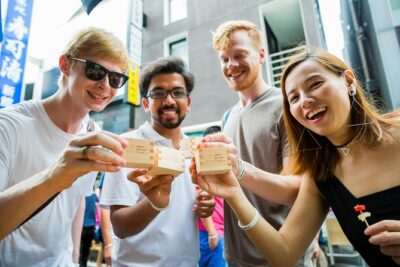
Tokyo Tsukiji Fish Market Food and Culture Walking Tour
Read our review →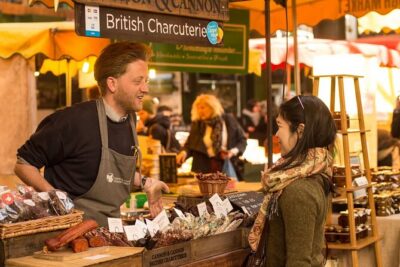
London Bridge & Borough Market Food Tour with 7 Authentic Dishes
Read our review →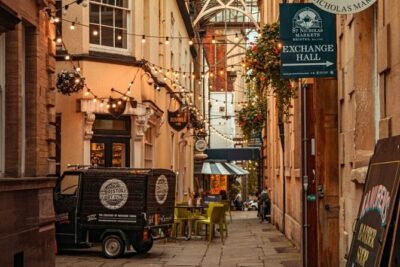
Air Raid Shelter + St. Nicholas Market Walking Tour
Read our review →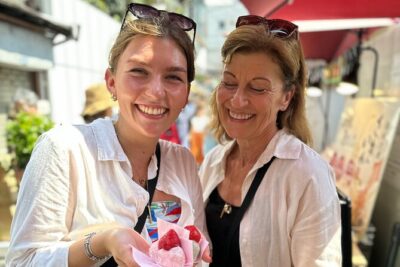

Nishiki Market Brunch Walking Tour (7 Tastings + Brunch)
Read our review →
Bologna Food & Market Tour with 6 Tastings, Pasta, Wines & More
Read our review →Browse the lists this tour appears in