
Review · JAPAN WALKING TOURS
Kyoto: Gion Geisha District Walking Tour – Stories of Geisha
Kyoto’s evening streets tell a different story. This two-hour walk through Gion and Pontocho brings old teahouses, narrow lanes, and geisha traditions into focus, with a local guide explaining what you are seeing. I like the low $20 price and the chance to hear about geiko and maiko culture while walking through the actual districts where it continues today.
I also like the route’s balance of places and stories, from Pontocho Alley to Yasaka Shrine and Hanamikoji Street. The main consideration is that seeing a geiko or maiko is never guaranteed, and nighttime darkness can make some landmarks less easy to appreciate. The tour is also not suitable for children under 10.
Key things to know before you go
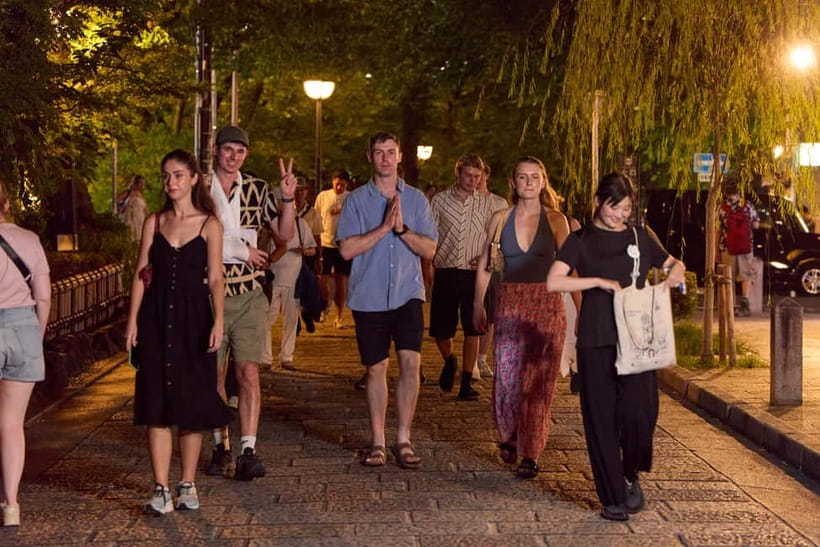
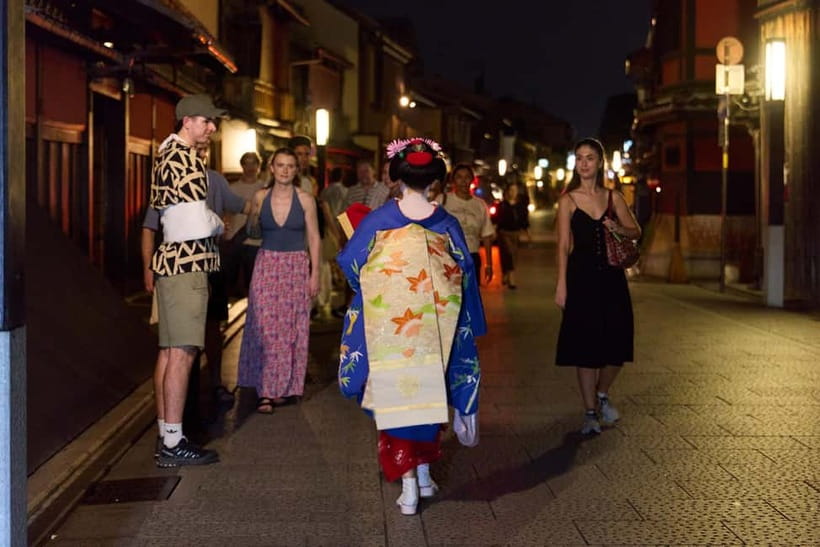
- Nighttime route: Walk through Pontocho and Gion when lanterns glow and teahouses prepare for the evening.
- Two famous districts: Visit Pontocho Alley, Gion, Hanamikoji Street, Yasaka Shrine, and Gion Corner.
- Culture over costume spotting: The guide explains training, etiquette, language, and the difference between geiko and maiko.
- Possible geiko or maiko sightings: You may see one heading to an appointment, but respectful observation matters more than photographs.
- Good value: At $20 per person, the tour offers two hours of local context for less than many Kyoto attractions.
- English and Spanish: Live guiding is available in both languages, with guides such as Yuki, Nami, Yukari, Manuel, Deborah, and Kenji praised for their warmth and clear explanations.
Why this Kyoto night walk works
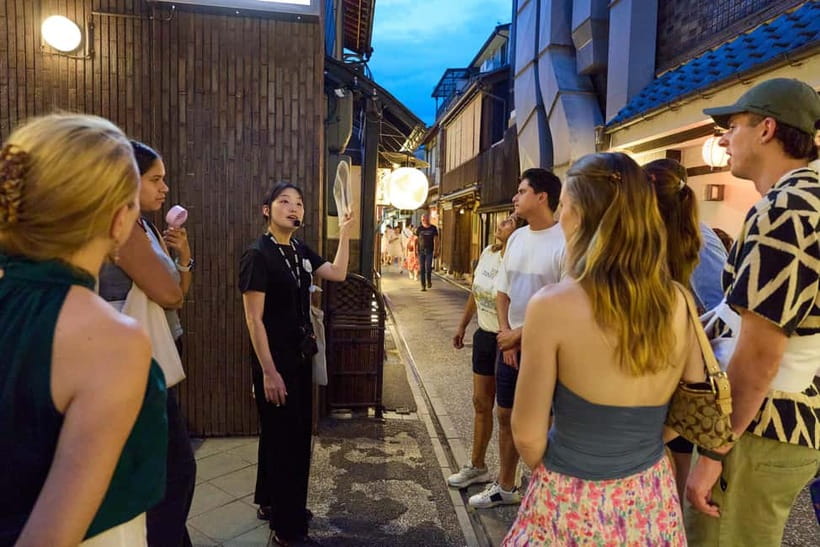
Gion can be confusing at first. Its quiet lanes, closed-looking wooden buildings, and polished teahouses do not explain themselves. Pontocho is even slimmer, a narrow passage between the Kamo River and the main streets. Without context, you may see pretty architecture and miss the social world behind it.
That is where this walk earns its modest price. You are not simply taken to a photo stop. The guide explains how Kyoto’s geiko and maiko traditions developed, how performers train, and why these women are working artists rather than the cartoon version of a geisha often shown outside Japan.
The tour has earned a 4.7 rating from 2,187 reviews, and the strongest praise centers on the guides. Yuki is often singled out for his warmth, local pride, and respect for Kyoto’s customs. Nami receives praise for keeping a good pace and checking that everyone can follow. Deborah is known for bringing the subject alive with photographs, stories, and everyday cultural details.
Guide quality can vary on any walking tour, but the repeated pattern here is encouraging. Manuel, Yukari, Kenji, Michael, Ann, Adrian, Shin, Akari, and others are praised for making room for questions rather than delivering a stiff speech.
A few more walks around Kyoto worth a look
- Kyoto Geisha Walking Tour: Gion District & Hidden Gems
★ 4.7 · 3,273 reviews - Kyoto: Gion Magical Night Walking Tour with Geisha Trivia
★ 4.9 · 2,393 reviews - Night Walk in Gion: Kyoto’s Geisha District
★ 4.5 · 2,003 reviews
Meeting near Ben’s Cookies Kyoto Shijo
The walk begins in front of Ben’s Cookies Kyoto Shijo, where your guide holds a sign board. This is a practical central meeting point, but do not arrive at the last second. Kyoto’s downtown streets can be busy, and finding the correct shop is easier when you have a few spare minutes.
Bring water, even though the tour is in the evening. You will be walking for two hours, with stops for explanations and photographs. Wear shoes that feel good on ordinary city pavement and narrow lanes.
The route finishes at Hanamikoji Street rather than returning to the starting point. One person found the ending slightly confusing, though getting back was not difficult. I would treat this as useful planning information: before you start, check where you want to eat or how you will return to your accommodation from the Gion area.
The tour is offered in English and Spanish. Children under 10 cannot join, and alcohol and drugs are not allowed.
Pontocho Alley: Kyoto’s narrow evening corridor
Pontocho Alley is one of the most atmospheric parts of the walk. This narrow lane is lined with traditional Japanese restaurants, teahouses, and exclusive clubs. In the evening, the street takes on a more secretive mood as businesses prepare for their customers.
Your guide explains what kind of establishments operate here and how the area connects with Kyoto’s entertainment culture. You may not be able to enter the clubs or teahouses, but that is part of the point. These places are working businesses, not museum displays.
The lane is compact, so the guide’s explanation matters more than the walking distance. I like this stop because it gives you a clearer idea of why Kyoto’s geisha districts are still active. They are not theme parks built for sightseeing. They are neighborhoods where private dinners, artistic performances, and long-established social customs continue behind closed doors.
That also means you should keep your manners in check. Do not block entrances, chase people for photographs, or treat a passing maiko as a character in a show. A quiet look and a little distance are the right approach.
Izumo-no-Okuni and the story behind kabuki
After Pontocho, the route crosses the river to the statue of Izumo-no-Okuni. This stop adds an important piece of Kyoto’s performing arts story.
Izumo-no-Okuni is associated with the creation of kabuki. The guide uses the statue to explain how performance, dance, music, and entertainment developed in Kyoto. It also helps connect geisha culture with the wider artistic life of Japan rather than presenting it as an isolated curiosity.
The stop lasts about 15 minutes, so expect a focused explanation rather than a long visit. It is a useful pause in the walk, especially if you have little background in Japanese theater. You can ask questions here, and the guide can tie the story back to the performers and teahouses you will see later in Gion.
Same streets, a different way to see them:
- Best of Kyoto: Gion, Geisha, Pagodas & Cobblestones
★ 4.9 · 2,058 reviews - Kyoto Gion Geisha District Walking Tour – The Stories of Geisha
★ 5.0 · 1,441 reviews - Nishiki Market Brunch Walking Tour (7 Tastings + Brunch)
★ 5.0 · 1,355 reviews - Kyoto Arashiyama Walking Tour: Bamboo, Monkeys, Gardens & Secrets
★ 5.0 · 1,216 reviews
Entering Gion after dark
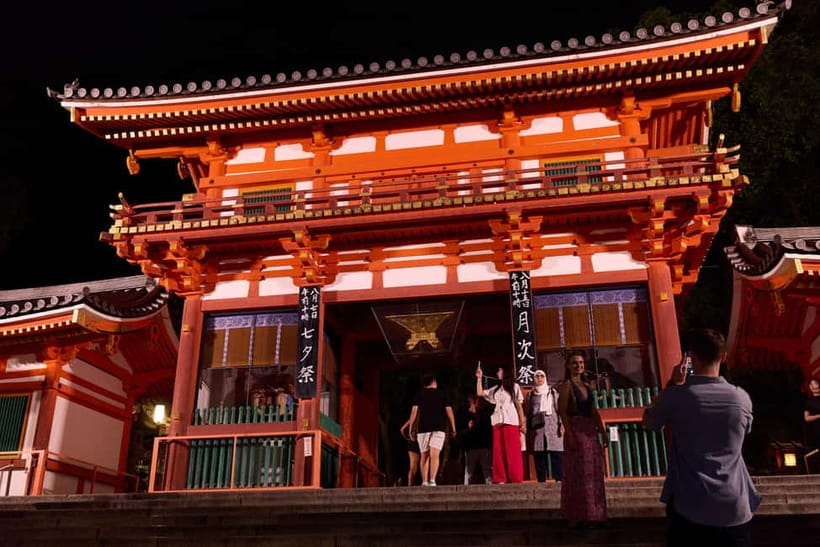
Gion is Kyoto’s best-known geisha district, and the evening setting suits it. Wooden facades, quiet side streets, and traditional entrances create a strong sense of place, but the district is not uniformly old or silent. Some streets are busy, some are calm, and some businesses are difficult to identify from outside.
The guide helps you read these details. You learn about the difference between a geiko, the Kyoto term for a fully trained geisha, and a maiko, an apprentice. You also hear about training, clothing, makeup, hairstyles, performance skills, and the importance of ceremony.
This is one of the most valuable parts of the experience. A visitor who sees a maiko without explanation may focus only on the elaborate appearance. The guide gives you a better way to understand the work behind it: years of training, careful etiquette, and the role of music, dance, conversation, and hospitality.
Several guides use photographs during the walk. That is particularly helpful when explaining clothing and training stages in the dim evening streets. Deborah is praised for using photographs well, while other guides are noted for adjusting explanations for people with no previous knowledge and those already familiar with the subject.
Yasaka Shrine and a change of pace
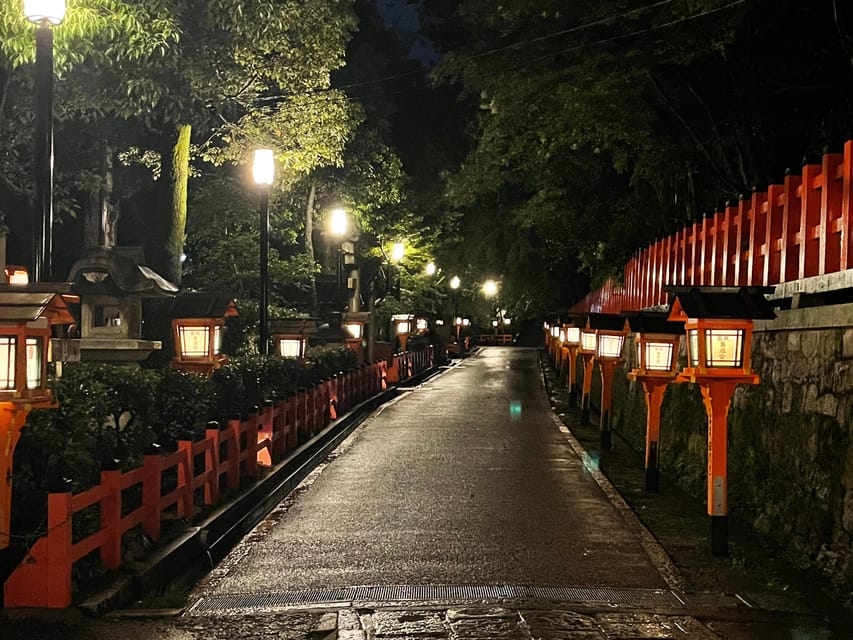
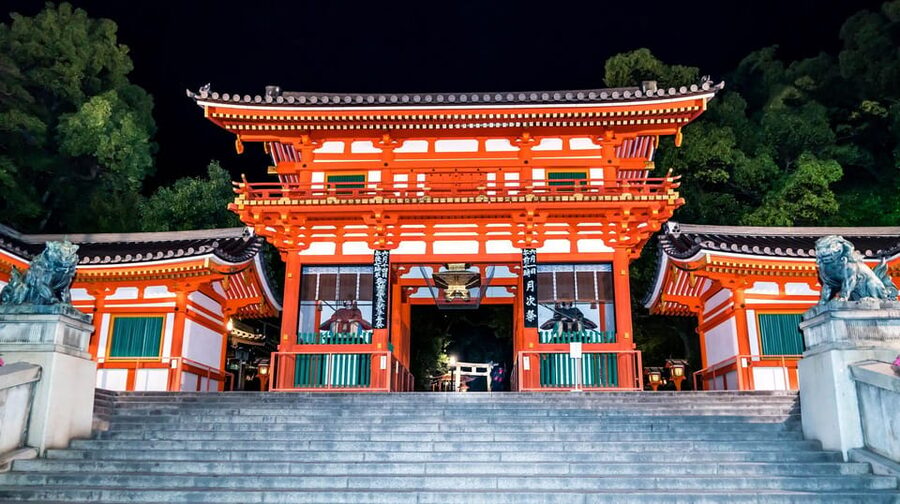
Yasaka Shrine is one of the major stops, with about 25 minutes set aside for a visit and explanation. The shrine gives the tour a useful change of pace. Until this point, much of the focus is on entertainment districts and private teahouses. Here, the guide can connect Gion with Kyoto’s religious and public life.
The shrine is also a practical place to pause. The walk is easy for most people, but two hours on your feet still calls for occasional breaks. The guide can answer questions, and you have time to take photographs without feeling rushed.
Do not expect a full shrine tour or an extended religious lecture. This is one part of a broader evening walk. Its value is in showing how close the shrine is to Gion’s entertainment streets, and how several parts of Kyoto’s culture sit side by side.
Weather can affect this stop. One tour continued successfully in poor weather, with the guide finding sheltered places for explanations. Still, rain will make the stone streets and dark lanes less comfortable, so check the forecast and dress sensibly.
Gion Corner and the performing arts connection
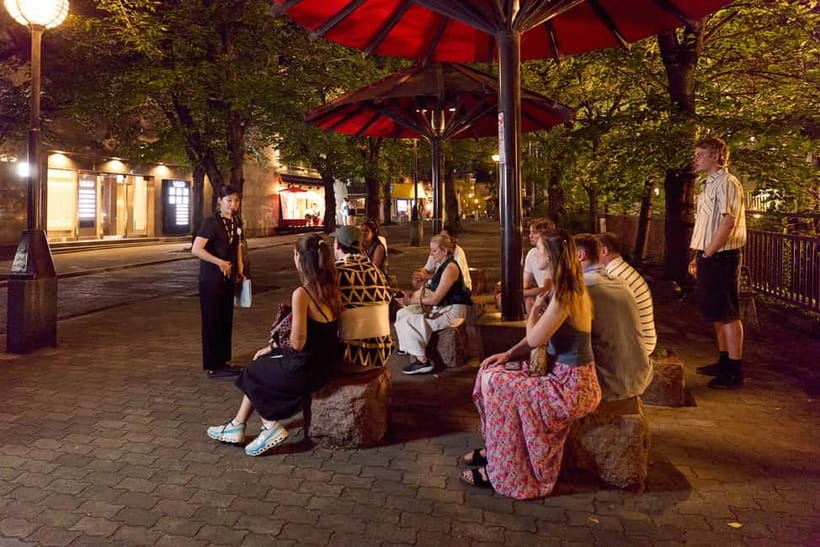
Gion Corner is scheduled for a short visit of about 10 minutes. The stop adds another link between geiko and maiko traditions and the wider performing arts of Kyoto.
You should think of this as an orientation stop rather than a full performance. The guide explains what the venue represents and how traditional arts fit into the district’s cultural life. If you are hoping to attend a formal show, this walk does not appear to include a performance ticket.
That distinction matters. This tour is designed around storytelling and walking through the districts, not watching a staged geisha presentation. If you want a seated performance, you will need to arrange that separately.
Hanamikoji Street and the chance to see a maiko
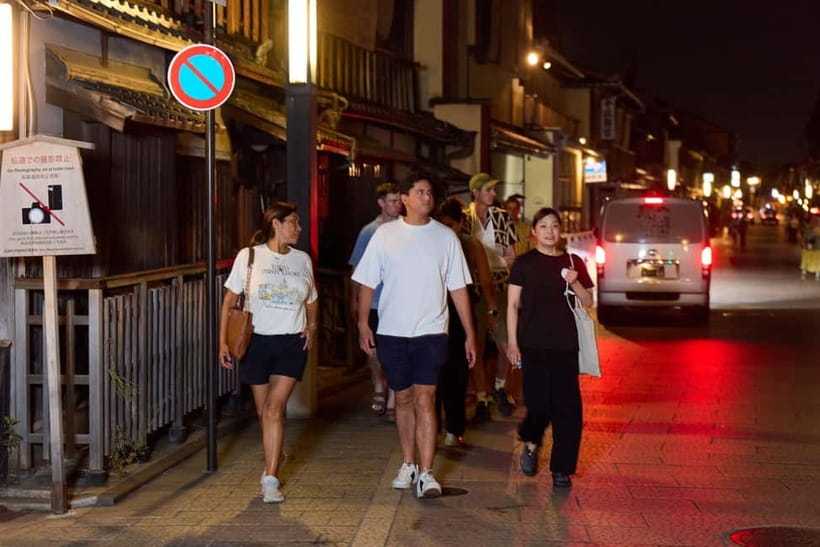
Hanamikoji Street is the final listed stop and one of the most recognizable streets in Gion. Traditional wooden buildings line the route, and the guide points out details you might otherwise pass without noticing.
This is also where you may see geiko or maiko heading to appointments. Some people have been lucky enough to see a maiko, while others have seen few or none. One person saw authentic geiko rather than maiko, while another enjoyed the tour even though not many performers were out.
That uncertainty is not a flaw in the tour. It is simply the reality of observing people at work. The guide can help you notice a geiko or maiko respectfully, but no responsible tour can promise a sighting.
The best reason to visit Hanamikoji is the explanation. If you happen to see a performer, treat it as a brief part of the evening, not the whole goal. Do not follow, touch, call out to, or photograph someone at close range. The tour’s repeated emphasis on respect is one of its strongest qualities.
What the $20 price really buys you
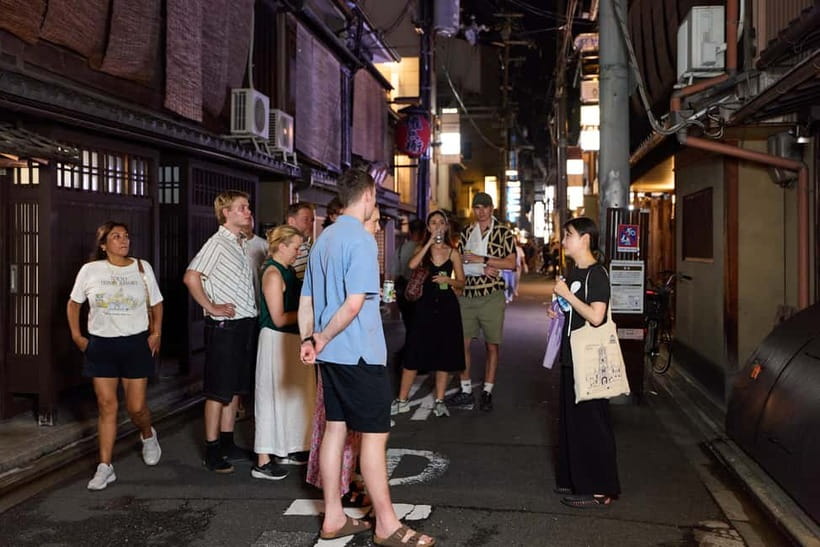
At $20 per person, this is a strong value for Kyoto. You receive two hours with a live local guide, several major Gion and Pontocho stops, and background that would be difficult to gather from signs alone.
The price is especially fair if you are visiting Kyoto for a short stay. One guide, Ann, helped a visitor make better use of limited time by suggesting other things to do after the walk. Another participant felt the tour provided a useful base for understanding the city early in a Kyoto visit.
The tour does not include food, drinks, entry to private teahouses, or a geisha performance. You are paying for walking, interpretation, and local context. If you expect a guaranteed encounter with a geiko or maiko, the value will depend too heavily on luck. If you want to understand what you are seeing, $20 is easy to justify.
The free cancellation option up to 24 hours before the start and reserve now, pay later booking also make it easier to fit into a changing schedule. Check the available starting times, since the evening atmosphere is part of the appeal.
Who should book this experience?
I would recommend this tour to first-time Kyoto visitors who want a clear introduction to Gion without committing to an expensive dinner or formal performance. It also suits anyone curious about Japanese theater, ceremony, women’s working lives, and the difference between popular images of geisha culture and the real tradition.
It is a good choice for couples, friends, solo visitors, and families with older children. The minimum age is 10, and the easy pace gives you time to ask questions and take photographs.
People who already know a great deal about geiko and maiko life may find some explanations familiar. Still, a strong guide can add local details and point out places you would likely miss alone. The quality depends partly on the guide assigned, but the range of praise for Yuki, Nami, Yukari, Manuel, Deborah, Kenji, Michael, and others suggests that the provider has a solid team.
I would not book this as a guaranteed photo opportunity. I would book it as an introduction to a living cultural district, with the possibility of seeing a performer along the way.
Should you book the Gion Geisha District Walking Tour?
Yes, if you want good value, a manageable two-hour route, and clear cultural background. The strongest part is not simply walking past wooden teahouses. It is learning why those streets matter and how geiko and maiko fit into Kyoto’s artistic traditions.
Book early in your Kyoto stay if you want the stories to shape later walks through Gion. Choose another experience if you need a formal performance, food tasting, or guaranteed access to a teahouse. For most visitors, this is a sensible and respectful way to begin understanding one of Kyoto’s most misunderstood districts.
FAQ
How long does the Gion geisha walking tour last?
The tour lasts two hours.
How much does the tour cost?
The price is $20 per person.
Where does the tour meet?
Meet in front of the Ben’s Cookies Kyoto Shijo shop. The guide will be holding a sign board.
Which areas does the tour visit?
The route includes Pontocho Alley, the statue of Izumo-no-Okuni, Gion, Yasaka Shrine, Gion Corner, and Hanamikoji Street.
Can I see a geisha or maiko?
You may encounter a geiko or maiko heading to an appointment, but sightings are not guaranteed.
What languages are available?
Live guides are available in English and Spanish.
Can children join the tour?
Children under 10 are not permitted to join.
Just added around Kyoto
- Kyoto : Private Custom Walking Tour With A Local Guide★ 4.6 · 144 reviews
- Kyoto: Private 2.5 Hour Historical Walking Tour★ 4.9 · 121 reviews
- Kyoto: Private Walking Tour with a Local★ 4.6 · 118 reviews
- Kyoto: Gion Sunset Walking Tour with Local Guide★ 4.7 · 351 reviews
- Kyoto: Gion Walking Tour★ 5.0 · 195 reviews
- Kyoto: Izakaya Bars Guided Walking Tour★ 4.9 · 815 reviews
- Kyoto Gion Cultural Walk & Geisha Show with Dining Options★ 5.0 · 518 reviews
- Kyoto: Gion Hidden Gems & Geisha Culture Tour★ 4.9 · 126 reviews
Japan Walking Tours, compared.
Kyoto Geisha Walking Tour: Gion District & Hidden Gems
Read our review →
Tokyo Tsukiji Fish Market Food and Culture Walking Tour
Read our review →
Gion Magical Night Walking Tour with Geisha Trivia
Read our review →
Imperial Palace and Shogun Historical Walking Tour
Read our review →
Best of Kyoto: Gion, Geisha, Pagodas & Cobblestones
Read our review →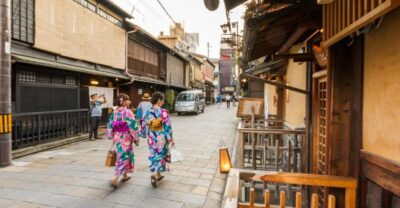
Shinjuku Local Bar and Izakaya Guided Walking Tour
Read our review →
Browse the lists this tour appears in