
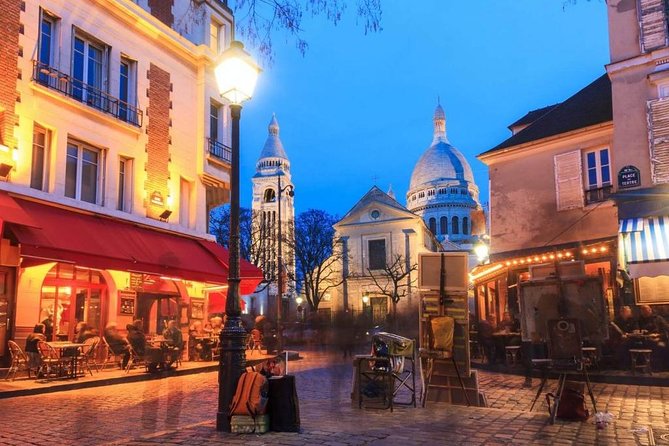
Review · HIDDEN GEMS WALKING TOURS
Montmartre Hidden Gems and Scenic Highlights Walking Tour
Montmartre rewards curious walkers. This 90-minute English tour gives you a compact introduction to the neighborhood through artists’ studios, old streets, local legends, cafés, and broad views from Sacré-Coeur. I like the way it mixes famous sights with easy-to-miss corners, and I like that guides such as Laura, Denise, Sylvia, David, and Linda add personal stories rather than simply pointing at buildings. The main consideration is pace and terrain: the route avoids stairs but includes hills, cobblestones, narrow streets, and some busy sections.
At $38.70 per person, the tour is reasonably priced for a short orientation walk, especially if Montmartre is new to you. You will not enter Sacré-Coeur with the group, and the 25-person maximum can make it harder to hear at times. Arrive 15 minutes early, wear sensible shoes, and think of this as a lively first look rather than a complete day in Montmartre.
Five things to know before you book
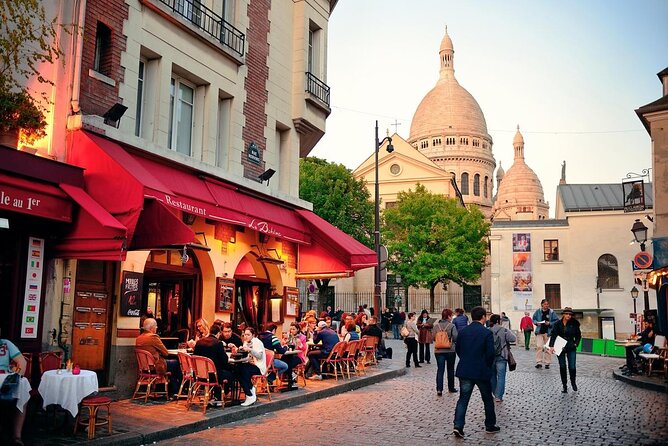
- You see Montmartre through art and local stories: Picasso, Modigliani, Braque, Renoir, Van Gogh, Dalida, and Marcel Aymé all appear along the route.
- The walk ends near Sacré-Coeur: You get exterior views and advice for visiting the basilica independently.
- The route covers hills but no stairs: It is manageable for many people with moderate fitness, but it is not a good choice for anyone who struggles with steep streets or cobblestones.
- Morning departures may be easier: The area becomes crowded quickly, so an early start can make the streets more pleasant.
- Guide quality is a major strength: Past guide names include Laura, Denise, Sylvia, David, Linda, Sonia, Sophie, Ben, and Anastasia.
- The tour is short and focused: Ninety minutes gives you a useful introduction, but not enough time for every major Montmartre sight.
Starting among cafés on Rue des Abbesses
The tour begins at 19 Rue des Abbesses, a practical starting point in one of Montmartre’s most attractive areas. Rue des Abbesses gives you an immediate sense of the neighborhood’s mix of daily Paris life and tourism, with cafés, small shops, and old architecture close together.
From the start, expect an orientation to Montmartre’s character. This is not a museum-style presentation with long lectures. The better guides keep the group moving, answer questions, and connect the streets to the artists and residents who shaped the district.
Laura has been praised for making the walk funny and easygoing while explaining how Montmartre changed from one of the cheaper parts of Paris into one of its more expensive neighborhoods. That shift is useful context. The district’s painted façades and postcard views can make it seem like a preserved village, but it is also a fashionable and heavily visited part of the city.
More Hidden Gems Walking Tours in Paris:
- Paris: Montmartre Hidden Gems and Highlights Walking Tour
★ 4.7 · 378 reviews - Paris: Montmartre Food Tasting Walking Tour with Secret Dish
★ 4.8 · 107 reviews - Paris: Montmartre hidden gems walking Tour with Local Guide
★ 4.9 · 78 reviews
The I Love You Wall and Montmartre’s softer side

One of the first stops is the I Love You Wall, a small-square installation displaying the words I Love You in more than 300 languages. It is a simple place, but it gives the walk a gentle opening before the route turns toward Montmartre’s artistic past.
You get a quick photo opportunity here, though it can be difficult to take a quiet picture if other people are gathered around the wall. The value comes less from the installation itself than from the way your guide places it within Montmartre’s romantic image.
This is also a good point to pay attention to the guide’s style. Sylvia has been praised for asking questions and keeping people involved, while David is noted for making sure the group stays together. Those small skills matter on narrow streets, where a group can spread out quickly.
Rue des Abbesses and the old bohemian quarter
The walk then follows one of Montmartre’s older streets. Rue des Abbesses has cafés, boutiques, historic façades, and plenty of movement. It is a good place to see how the neighborhood functions as a real residential district, not only as a backdrop for photographs.
Your guide explains the area’s bohemian past and points out details you could easily miss when walking alone. This is where the tour’s value becomes clear. A self-guided stroll can show you the street, but a guide can explain why it mattered and how the neighborhood changed.
I would not expect a long stop at every shop or café. The tour is built around stories and landmarks, not shopping time. If you want to browse, eat, or take photographs at a relaxed pace, plan to stay in the area after the tour ends.
Bateau-Lavoir and the artists who changed modern art
Bateau-Lavoir was once a modest artists’ residence. Picasso, Modigliani, and Braque lived or worked here, and the building is linked with major changes in modern art.
The site does not provide a grand interior visit during this experience. Its importance comes from the stories your guide tells outside. Linda has been praised for bringing the artists to life with humorous anecdotes, which suits Montmartre better than a dry list of dates.
This stop is especially worthwhile if you like art but do not want a full museum tour. You get a street-level connection to famous painters and the cramped, informal world in which new ideas developed.
The tradeoff is that the stop may feel modest if you expect a large gallery or a preserved studio. Montmartre often works this way. The history is attached to ordinary streets, plaques, façades, and corners rather than grand attractions.
More City Highlights Walking Tours in Paris:
- Paris: Montmartre Highlights Walking Tour with a Local Guide
★ 4.9 · 2,318 reviews - Paris: Montmartre Must-See Walking Tour with a Local Guide
★ 4.9 · 661 reviews - Paris: Le Marais Highlights Guided Small Group Walking Tour
★ 4.7 · 169 reviews - Historic Charleston Guided Sightseeing Walking Tour
★ 5.0 · 6,216 reviews
Moulin de la Galette and Renoir’s Montmartre
Moulin de la Galette is one of the district’s best-known symbols. The windmill appeared in paintings by Renoir and Van Gogh, and it once served as a popular dance hall.
You see it from outside, so this is another stop where the guide’s explanation matters more than an interior visit. The windmill helps you picture Montmartre before its streets filled with restaurants, souvenir shops, and photo stops. It also connects the neighborhood to the social life of artists and local residents.
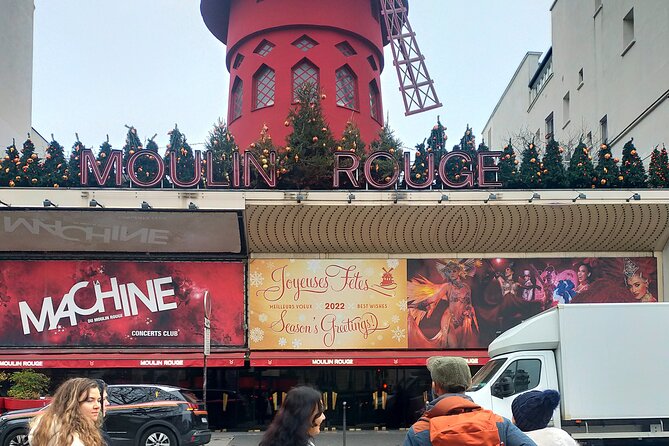
Do not confuse this stop with the Moulin Rouge. The Moulin Rouge is not part of the route. If that cabaret is important to your plans, visit it separately. One unhappy customer expected it to be included, which shows why checking the stops in advance is worthwhile.
A man walking through a wall
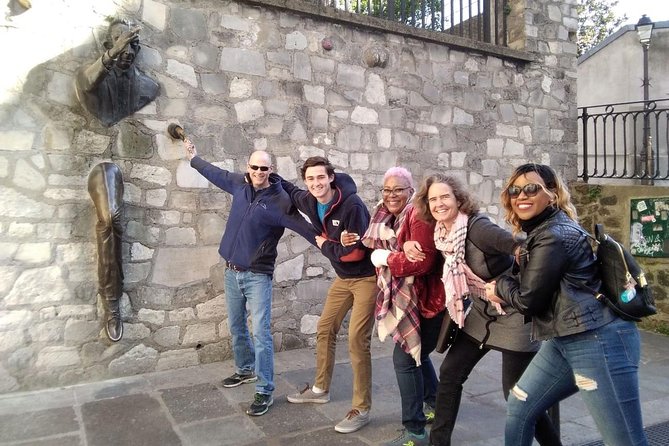
Near the former home of writer Marcel Aymé, you find the Man Who Walked Through the Wall sculpture. It shows a figure emerging from a wall, based on one of Aymé’s short stories.
This is one of the tour’s more playful moments. The sculpture fits Montmartre’s connection with writers, artists, and odd little pieces of public art. It also breaks up the more familiar stops with something you might not think to seek out on your own.
The attraction is small, so do not expect a long visit. Its value is in the story and the surprise. A good guide gives you enough background to make the sculpture memorable without turning a quick stop into a lecture.
Dalida, the Pink House, and local atmosphere
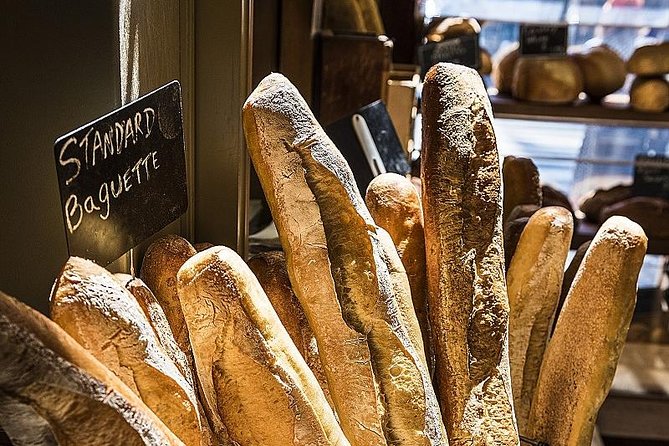
The bronze bust of singer Dalida sits in a peaceful square. Dalida lived in Montmartre for many years, and her fans continue to visit the sculpture. Your guide explains her connection to the neighborhood and the way this quiet spot became a place of tribute.
This stop adds a personal layer to the tour. Montmartre is not only about painters from the late 19th and early 20th centuries. Its identity also comes from singers, writers, café owners, residents, and people who made the streets their home.
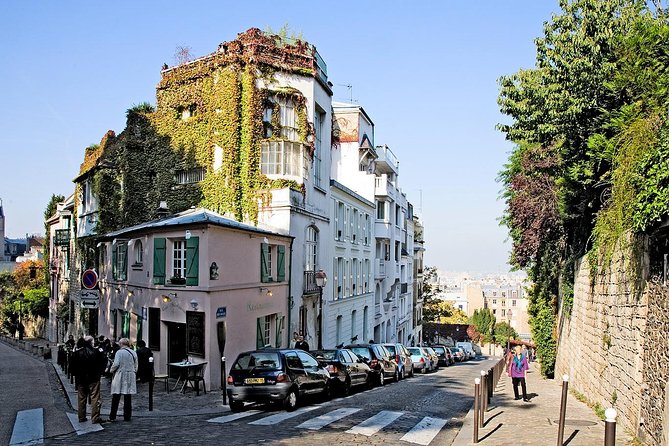
The Pink House provides one of the route’s most recognizable photo opportunities. Artists such as Picasso and Utrillo once frequented the area, and the building now operates as a café serving French food. The view is charming, but the restaurant is not included in the tour, and you may need to return later if you want to eat there.
A guide’s restaurant suggestions can be useful here. Several guides, including Laura and Linda, have been praised for offering practical advice about where to eat and what to do after the walk. Still, treat those suggestions as starting points rather than reservations.
The vineyard tucked into Montmartre
Montmartre has a small vineyard, a surprising reminder that this hill once had a more rural feel. The vineyard was established in 1933 to protect the area’s winemaking tradition and now produces wine associated with the neighborhood.
You view the vineyard from outside. It is not a wine-tasting stop, so do not book the tour expecting a cellar visit or a glass of local wine.
For me, this is one of the most useful stops because it complicates the usual picture of Montmartre. The district is famous for art and nightlife, but the vines recall an older, quieter side of the hill. The stop also helps explain why Montmartre can feel different from the rest of Paris, with small lanes and open spaces appearing between dense city streets.
Reaching Sacré-Coeur without a stair climb
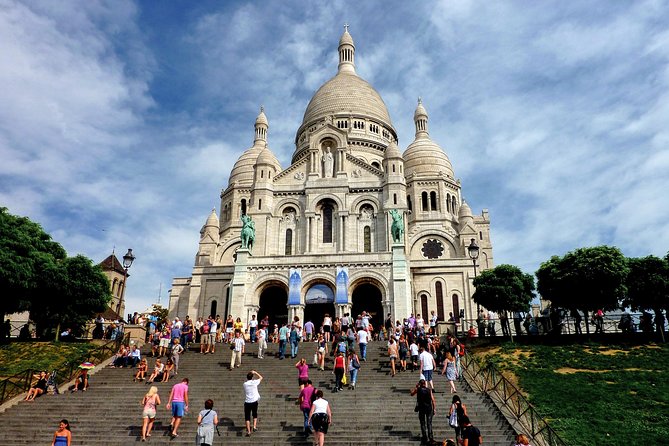
The route continues uphill toward Sacré-Coeur Basilica, one of the main reasons people come to Montmartre. The basilica sits at the highest point in Paris and is known for its white domes, mosaics, and wide city views.
The tour passes the exterior. Admission inside is not included, but your guide explains what to look for if you decide to enter on your own after the walk. Entry is free when the basilica is open.
This arrangement keeps the tour within its 90-minute limit, but it also means you need to plan extra time if you want to see the interior. Do not assume the walk ends with a guided basilica visit.
The climb itself deserves attention. The route does not include stairs, yet it still involves hills, narrow streets, and uneven surfaces. Some people find the walk easy at a steady pace, while others may find the slopes tiring. Montmartre is not suitable for every wheelchair user or anyone who needs a fully level route. Cobblestones and steep grades can be difficult, even when stairs are avoided.
Place du Tertre and the final stop
The walk finishes around Place du Tertre, the square most closely linked with Montmartre’s working artists. Painters, caricaturists, and street performers gather here, with cafés and restaurants around the edges.
It can be crowded, particularly later in the day. That is part of the atmosphere, but it can also make the square feel more commercial than quiet. Your guide helps you understand how the place fits into Montmartre’s artistic image, then gives you ideas for continuing on your own.
The official end point is La Bonne Franquette at 18 Rue Saint-Rustique. This puts you close to restaurants and further Montmartre wandering. You can visit Sacré-Coeur, explore the nearby lanes, or stop for lunch without needing to cross the city.
What $38.70 buys you
At $38.70, this tour offers fair value if you want a guide to connect several scattered sights. In 90 minutes, you get an introduction to the I Love You Wall, Rue des Abbesses, Bateau-Lavoir, Moulin de la Galette, the Man Who Walked Through the Wall, Dalida’s bust, the Pink House, the vineyard, Sacré-Coeur, and Place du Tertre.
You are paying for organization and interpretation, not admission tickets. That is important because the tour does not include entry to Sacré-Coeur, food, drinks, or a special art demonstration.
The group can include up to 25 people. That is not enormous, but it is large enough for sound to become an issue in a busy square. One person found it difficult to hear in a large group. Stay near the guide, especially on narrow streets, and ask to move closer if needed.
The high rating, 4.9 from 2,684 ratings, reflects a strong pattern of satisfaction, particularly with the guides and the easy pace. The praise is not uniform, however. A few people found the art and street-art discussion too long and felt the tour did not cover enough ground. If you want a brisk checklist of major sights, make that clear at the start.
Choosing the best time and preparing well
An early departure is a smart choice. David’s morning group found the area less crowded, and Montmartre becomes harder to navigate as the day progresses. Early light can also make the views from the hill more pleasant.
Arrive 15 minutes before the scheduled start at Rue des Abbesses. The walk starts on time, and you may not be able to catch up if you arrive late.
Dress for the weather because the tour operates in rain or shine. Wear shoes with good grip, bring water, and leave room in your schedule for a stop after the tour. The walk is short, but hills and uneven pavement can make it more tiring than the distance suggests.
Free cancellation is available up to 24 hours before the start time. Within 24 hours, you should expect no refund. The tour is offered in English and uses a mobile ticket.
Who should book this Montmartre walk?
I would choose this tour if you are visiting Montmartre for the first time, want a short orientation, or enjoy art stories mixed with neighborhood details. It also suits families of adults, couples, and people with only half a day available.
You will get the most from it if you like a relaxed pace and do not need every major sight packed into one fast circuit. Guides such as Sophie, Denise, Sylvia, and Laura have been praised for clear English, humor, local advice, and careful attention to the group.
I would skip it if you specifically want the Moulin Rouge, the funicular, a stair climb to Sacré-Coeur, or an interior basilica tour. It is also not the right choice for anyone needing an accessible, flat route.
Should you book it?
Book this walk if you want a friendly introduction to Montmartre’s art, odd corners, and famous views without spending half a day in a museum. The price is reasonable, the route is well chosen, and the best guides make the neighborhood feel personal.
Just set the right expectations. You will see many places from the outside, cover hills, share the streets with a group, and need extra time for Sacré-Coeur. Arrive early, choose a morning departure if possible, and stay after the finish to explore at your own pace.
FAQ
How long is the Montmartre walking tour?
The tour lasts approximately 90 minutes.
What language is the tour offered in?
The guided walk is offered in English.
Where does the tour begin?
It begins at 19 Rue des Abbesses, 75018 Paris, France.
Where does the tour finish?
The tour ends at La Bonne Franquette, 18 Rue Saint-Rustique, 75018 Paris, France.
Is entry to Sacré-Coeur included?
No. The tour visits the exterior of the basilica, and the guide shares advice for visiting the interior independently. Entry is free when the basilica is open.
Does the route include stairs?
The stated route does not include stairs, but it does include hills, narrow streets, and uneven or busy areas.
How fit do I need to be?
You should have a moderate level of physical fitness and feel comfortable walking uphill on narrow streets.
What happens if it rains?
The tour operates in all weather conditions, so you should dress appropriately.
Can I cancel for a full refund?
Yes, if you cancel at least 24 hours before the experience starts. Cancellations within 24 hours are not refunded.
Just added around Paris
- The Official Emily in Paris Locations Walking Tour★ 4.9 · 383 reviews
- Paris: Montmartre Food Tasting Walking Tour with Secret Dish★ 4.8 · 107 reviews
- Paris: Emily Inspired Walking Tour★ 4.9 · 312 reviews
- Saint-Germain: Gourmet Chocolate & Pastry Walking Food Tour★ 4.8 · 495 reviews
- Paris: Walking Tour of Montmartre★ 4.7 · 470 reviews
- Paris: Ghosts, Legends & Mysteries Evening Walking Tour★ 4.5 · 241 reviews
- Paris: Walking Tour with Notre Dame or Ste-Chapelle Access★ 4.4 · 198 reviews
- Paris Top Sights Half Day Walking Tour with a Fun Guide★ 4.9 · 92 reviews
Hidden Gems Walking Tours, compared.
Dublin Highlights and Hidden Gems Guided Walking Tour
Read our review →
Explore Berlin: See All The Iconic Sights & Some Hidden Gems
Read our review →
Kyoto Geisha Walking Tour: Gion District & Hidden Gems
Read our review →
Ben Youssef, Secret Garden, & Souks Walking Tour
Read our review →
Guided Walking Tour of City Highlights & Hidden Gems
Read our review →
Paranormal Night Walking Tour & Secret Backstreets
Read our review →
Secrets of Grand Central Station Walking Tour New York City
Read our review →Browse the lists this tour appears in