
Review · PARIS WALKING TOURS
Paris: Walking Tour of Montmartre
Montmartre rewards curious walkers. This $34 tour gives you a lively introduction to Paris’s hilltop artists’ quarter, linking the Moulin Rouge, Moulin de la Galette, La Maison Rose, Place du Tertre, and Sacré-Cœur in two hours. I like the gradual climb, which makes the neighborhood easier to understand, and the local stories that bring its painters, cabarets, and everyday Parisian life into focus. The main drawback is that the walk is uphill and the English schedule is limited.
I also like the small-group approach and the chance to hear more than a list of monument dates. Guides such as Vera, Solene, Nadine, and Christin have been praised for their humor, warmth, clear English, and willingness to answer questions. Do check the meeting point carefully, though: the traffic island outside the Blanche Métro station can be confusing, and one language mix-up led to a poor experience.
Key points to know before you book
- The route climbs Montmartre gradually: You move from the Moulin Rouge toward Sacré-Cœur rather than tackling the hill all at once.
- It connects famous sights with quieter streets: The route includes the headline landmarks but also aims to show a less crowded side of the neighborhood.
- The guide is the main value: At $34, you are paying for stories, local context, and navigation rather than admission tickets or food.
- English tours run only three days a week: Choose Monday, Wednesday, or Saturday, with the Saturday English departure at 5 p.m.
- The meeting point needs care: Find the guide outside Blanche Métro station, on the traffic island in front of the Moulin Rouge.
- The walk is not wheelchair suitable: Cobbled streets and the hill make this a poor fit for anyone needing step-free access.
Why a guided walk works well in Montmartre
Montmartre is easy to visit badly. You can take a few photographs at the Moulin Rouge, walk up to Sacré-Cœur, pause at Place du Tertre, and feel that you have checked the neighborhood off your Paris list. But the district makes more sense when someone explains how cabaret, painting, village life, and tourism came together here.
That is the purpose of this two-hour walk. Your guide supplies the thread connecting the sights. You hear about the people who lived and worked in Montmartre, the stories behind familiar places, and the curious details that are easy to miss when you walk alone.
I especially like the route direction. Starting near Blanche and ending at Sacré-Cœur gives the outing a natural shape. You begin in the lively Pigalle area, then climb through streets associated with artists and old village life before reaching the basilica and its broad city views.
The experience is also reasonably priced for Paris. At $34 per person, it costs more than wandering with a map, but far less than a private guide. Since there are no included meals, drinks, or attraction tickets, the price only makes sense if you want interpretation. If you prefer to move silently at your own speed and stop whenever you like, a self-guided walk will suit you better.
A few more walks around Paris worth a look
- Paris Top Sights Half Day Walking Tour with a Fun Guide
★ 5.0 · 2,893 reviews - Montmartre Hidden Gems and Scenic Highlights Walking Tour
★ 5.0 · 2,684 reviews - Montmartre Hill French Gourmet Food and Wine Tasting Walking Tour
★ 5.0 · 2,588 reviews
Meeting the guide outside the Moulin Rouge
The official meeting point is outside Blanche Métro station, at the traffic island in front of the Moulin Rouge. Look for a guide carrying a HelpTourists bag and wearing a pink base cap.
Give yourself extra time to identify the exact spot. There is more than one traffic circle in the area, and the meeting instructions can be easy to misread. The Moulin Rouge itself is an obvious landmark, but the road layout around it is busy and not always intuitive.
The walk begins at ABI Assurances, listed as the starting location. From there, you set off on foot toward Montmartre. Wear shoes with decent grip. You will be walking on cobbled streets and going uphill, and the route is not suitable for wheelchair users.
The provider tries to keep groups small, which matters in narrow streets and around popular photo stops. On public or national holidays, the group may be larger. That can make it harder to hear, especially near crowded squares, so a non-holiday date is preferable if your schedule allows.
Moulin Rouge: more than a red windmill
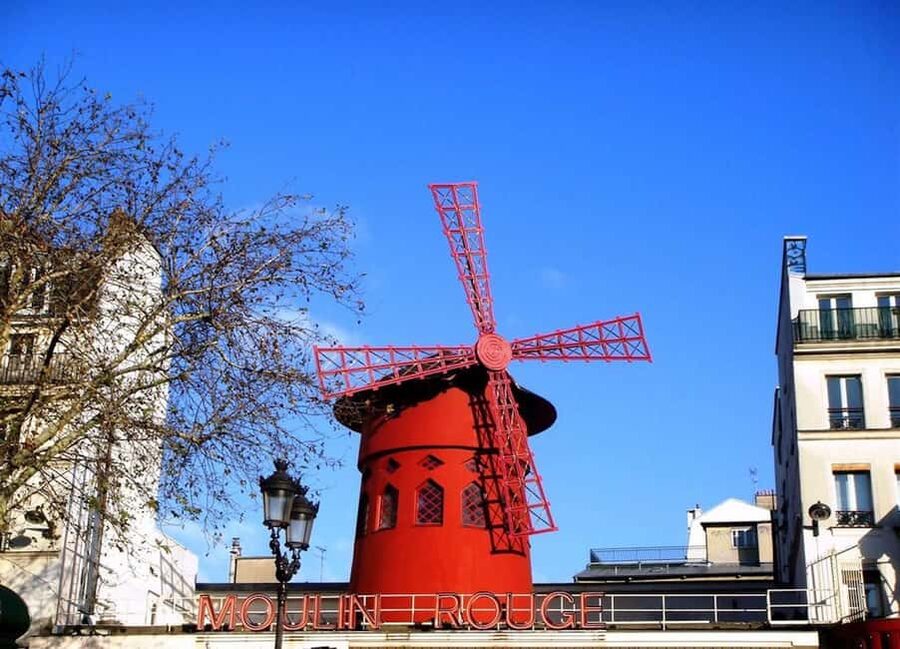
The first major stop is the Moulin Rouge, the famous cabaret with its striking red windmill. You have time for photographs and sightseeing, but this is not a cabaret performance and admission is not included.
The useful part of the stop is the storytelling. The tour promises surprising details about the building and its place in Parisian culture, rather than treating it as just a bright façade. A good guide can explain why this corner became linked with nightlife, artists, and the bohemian image that still attracts people to Montmartre.
This is also a practical place to get your bearings. Blanche Métro station is close by, and the Moulin Rouge gives you an unmistakable starting landmark. If you arrive early, you can look over the area before the group begins, but keep an eye on the time and return to the traffic island.
Moulin de la Galette and Montmartre’s artistic past
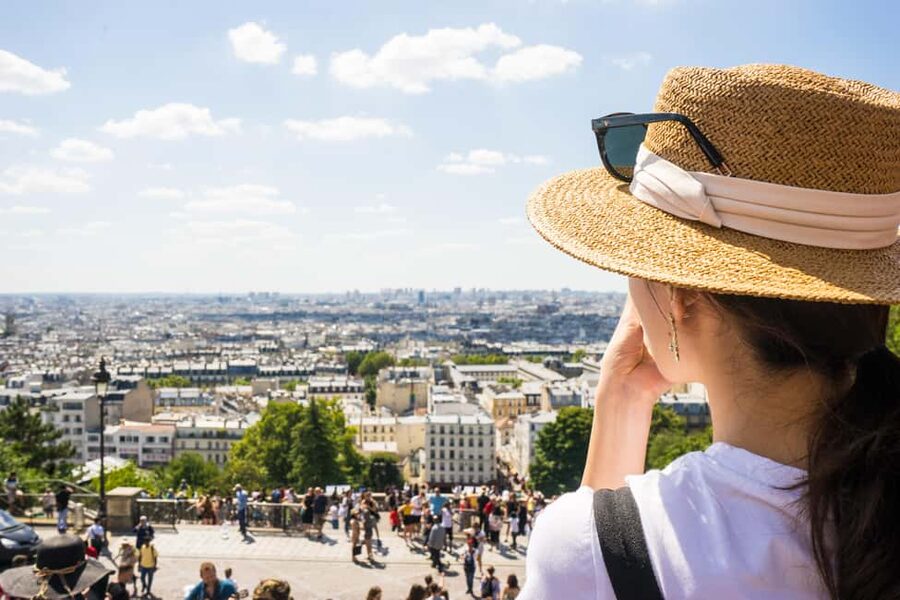
From the Moulin Rouge, the group continues uphill to the Moulin de la Galette. This stop offers a different view of Montmartre. Instead of the theatrical glamour of Pigalle, you encounter a place connected with the neighborhood’s older windmills and its artistic identity.
The guide’s commentary is particularly important here. A windmill can look like a simple photo subject unless someone explains why it mattered to the area and to the artists who recorded Montmartre in paintings and posters.
Expect a walking stop rather than a formal interior visit. You pause, hear the story, and take photographs before continuing. The route helps you see how quickly Montmartre changes from busy entertainment district to quiet residential streets.
That contrast is one of the best reasons to take the tour. You are not simply moving between famous addresses. You are watching the character of the neighborhood shift as you climb.
Same streets, a different way to see them:
- Authentic Parisian Gourmet Food Tour with 10 Local Dishes & Wines
★ 5.0 · 4,754 reviews - Paris: Montmartre Highlights Walking Tour with a Local Guide
★ 4.9 · 2,318 reviews - Paris Île de la Cité and Notre-Dame Walking Tour With Crypt
★ 5.0 · 2,272 reviews - Paris: Montmartre Cheese, Wine & Pastry Guided Walking Tour
★ 4.8 · 2,255 reviews
La Maison Rose and the quieter streets
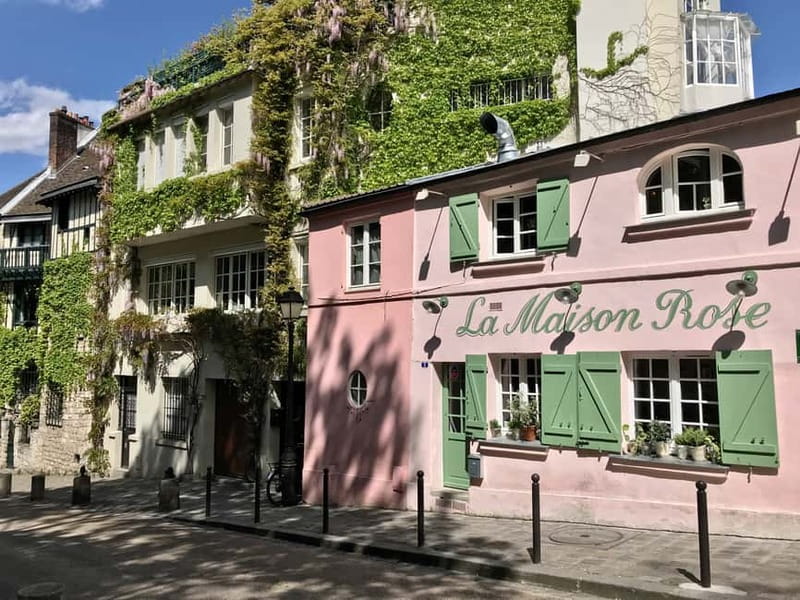
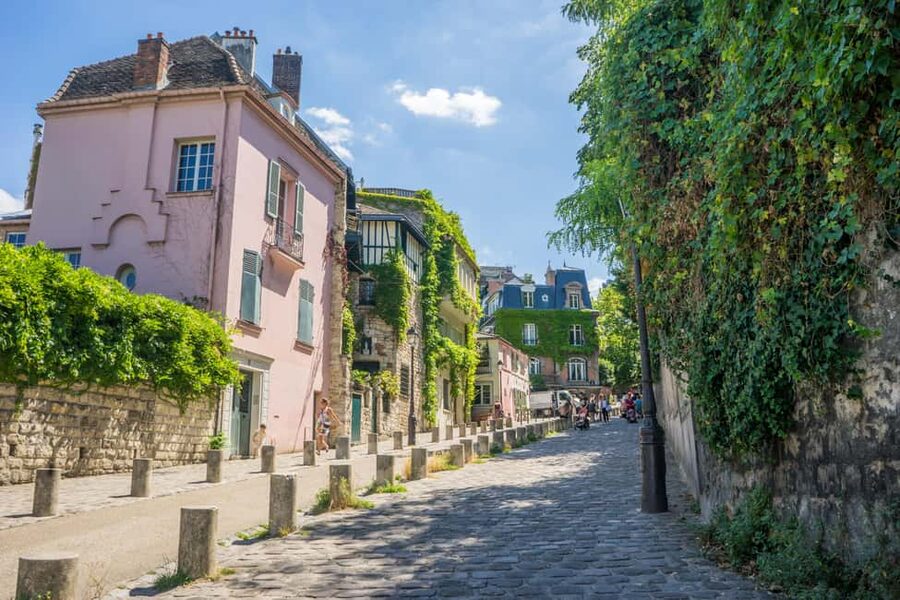
La Maison Rose is one of Montmartre’s most recognizable corners, with its pink exterior and picturesque setting. It is a natural photo stop, but the value comes from placing it within the surrounding streets rather than treating it as an isolated social-media backdrop.
The route aims to show a less tourist-heavy side of Montmartre. That does not mean you will avoid all crowds. This is one of Paris’s most photographed districts, and popular streets can be busy. Still, a guide who knows the area can point out quieter corners and explain how ordinary Parisian life fits beside the cafés, studios, and souvenir shops.
Christin has been especially praised for showing the calmer side of Montmartre and for taking time with questions. That kind of guiding suits this neighborhood well. You want enough structure to understand what you are seeing, but also enough room to notice the small details along the way.
There is no food or drink included, so do not count on a café break during the two hours. If you want lunch or a coffee before the walk, plan it separately and allow enough time to reach Blanche.
Place du Tertre: art, portraits, and crowds
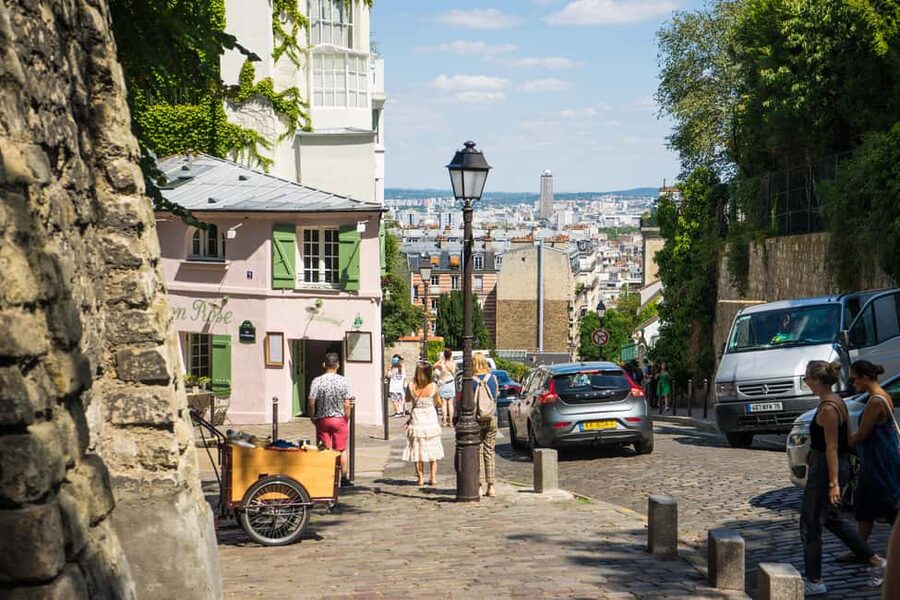
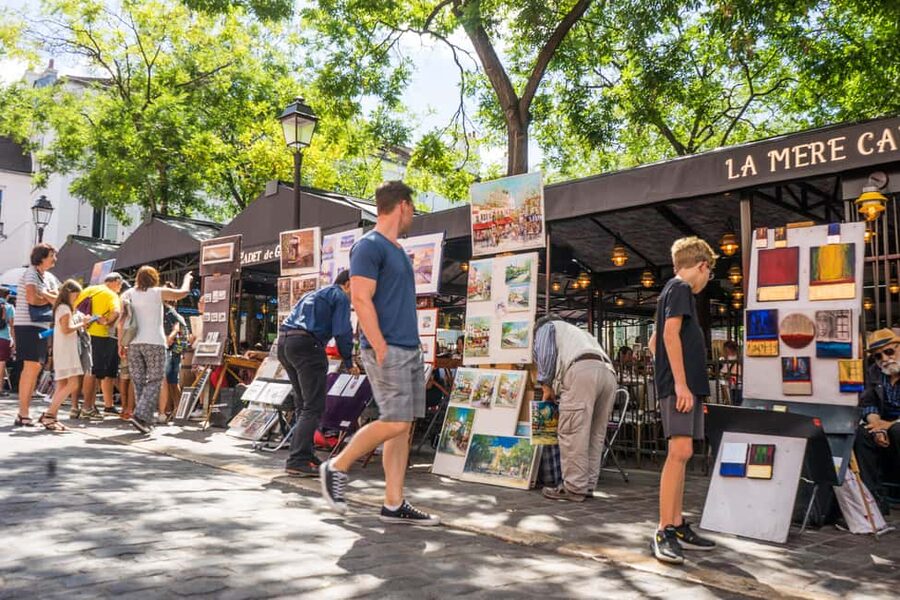
Place du Tertre is the classic Montmartre square, where artists still work outdoors. It is one of the tour’s main visits and gives you a chance to see the public face of the district’s artistic tradition.
This is a good place to learn how the square functions today. You may see painters working, portrait artists offering their services, and people browsing the surrounding cafés. The atmosphere can be lively, but it can also feel crowded and commercial. The tour does not promise a private or quiet visit, so set your expectations accordingly.
I would avoid rushing into a portrait or artwork purchase simply because you are in the square. The tour gives you context first, which helps you decide if something appeals to you. One person paired the walk with lunch nearby and later bought art, but food and purchases are personal extras, not part of the activity.
The guide can also help you read the square as more than a pretty stop. Montmartre’s artistic reputation is not only about famous names from the past. It is also about the continued habit of artists working in public and making the neighborhood feel creative in the present.
Sacré-Cœur: the natural finish

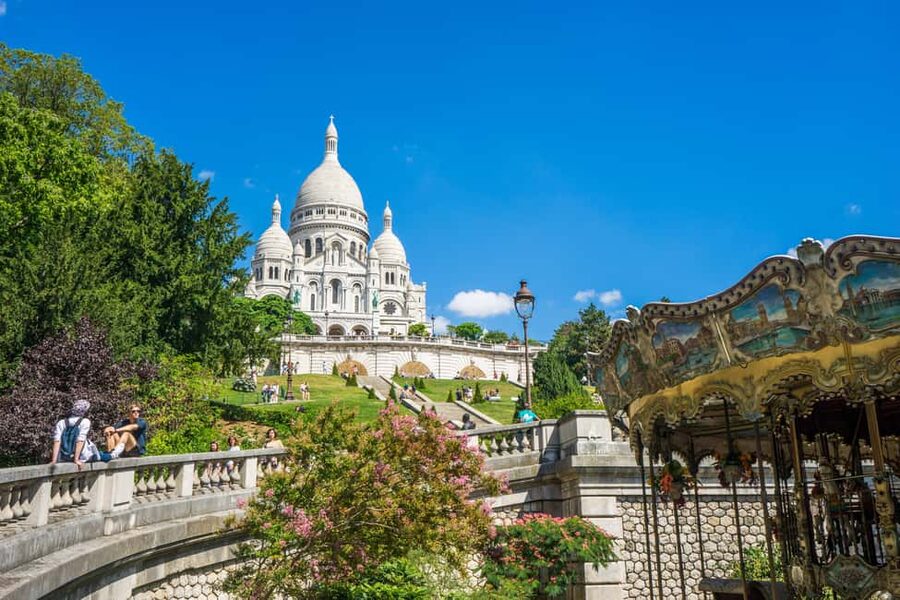
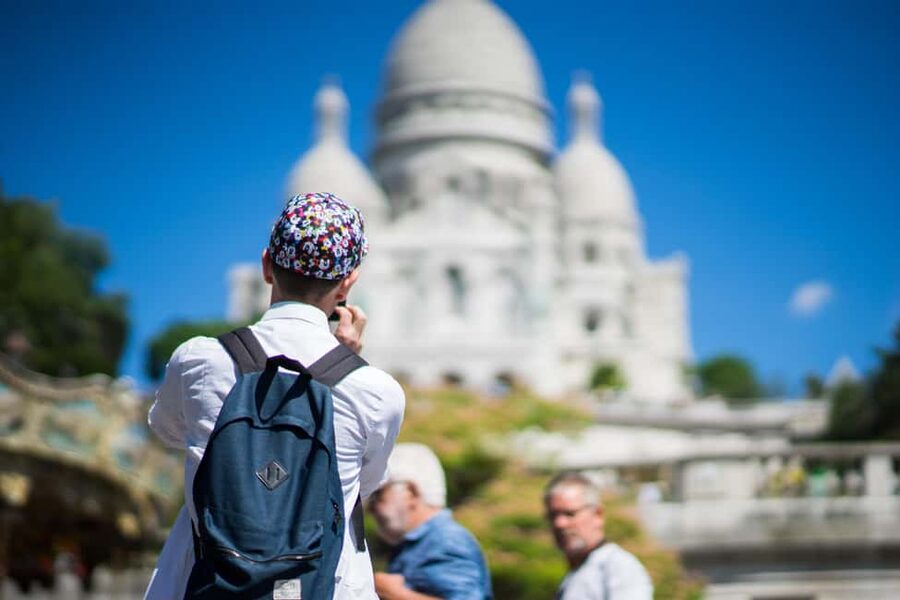
The final major stop is the Basilica of Sacré-Cœur. Its white exterior is one of Paris’s best-known sights, and its position on the highest hill in the city gives the end of the walk a strong sense of arrival.
You have time for photographs, sightseeing, and a visit. The basilica is a calmer counterpoint to the Moulin Rouge and Place du Tertre, though the steps and forecourt can be busy. The walk’s gradual climb makes this finish more comfortable than beginning here and walking downhill through the district without context.
The basilica also gives you a chance to look back at the route. You have crossed from Pigalle through the older streets of Montmartre, passing places tied to cabaret, artists, cafés, and daily life. That sequence is more satisfying than seeing Sacré-Cœur as a single isolated attraction.
The supplied details contain a small inconsistency about the ending. The itinerary places the finish at Sacré-Cœur, while the meeting information says the activity ends back at the meeting point. Ask your guide at the start if you need to know exactly where the group will finish, especially if you have another booking afterward.
The guides make or break the experience
The strongest part of this tour is the person leading it. The guides are described as a group of German local guides who also conduct English tours, and the best experiences depend on a guide who can tell stories naturally while keeping the group together.
Vera has been praised for her energy and for filling the uphill walk with historical and personal anecdotes. Solene is noted for clear, fluent English and an engaging manner. Nadine brings humor, detail, and close attention to questions. Christin is particularly suited to people who want quieter streets and patient answers.
That range matters because Montmartre can be explained in several ways. One guide may focus on artists and bohemian life, another on odd local stories, and another on the practical details of modern Paris. You should expect a personal interpretation rather than a uniform audio guide.
There is one important caution. The English guide did not appear for one scheduled walk, leaving a French guide to speak mainly in German and give only a short English recap to two participants. This seems to be an exception, not the normal pattern, but it is worth keeping in mind if language access is essential. Confirm the language at the meeting point and speak up immediately if there is a problem.
Timing, languages, and the best day to go
The tour lasts two hours. That is enough time for a clear introduction, but not enough for long interior visits, a meal, or an unhurried exploration of every side street.
English departures are:
- Monday at 3 p.m.
- Wednesday at 3 p.m.
- Saturday at 5 p.m.
German departures are:
- Tuesday at 4 p.m.
- Thursday at 4 p.m.
- Saturday at 3 p.m.
- Sunday at 2 p.m.
The Saturday English departure is useful if you spend the morning at another Paris sight, but it may leave less daylight depending on the season. The weekday 3 p.m. departures offer a straightforward afternoon plan. Check current availability before building your day around a particular time.
If you want the quietest possible experience, avoid public and national holidays. Groups may be larger then, and Montmartre’s most famous streets can become difficult places to hear or move through.
Who should book this Montmartre walk?
I would recommend it to a first-time Paris visitor who wants an efficient introduction to Montmartre without spending hours researching the district beforehand. It is also a good choice if you enjoy stories, local anecdotes, and a guide who can explain why an ordinary-looking street matters.
It suits reasonably mobile walkers who can manage cobblestones and an uphill route. Families with older children may appreciate the changing scenery and short stops, though very young children may find two hours of commentary tiring.
You should think twice if you need step-free access, dislike hills, or want plenty of free time for cafés and shops. The tour follows a set route, so you will not be able to pause for a long meal or spend half an hour at every photo stop.
At $34, the value is solid if the guide is lively and the group stays small. You get a concentrated route through several famous parts of Montmartre, plus stories that are difficult to gather from signs alone. You are not paying for transport, food, drinks, or entry to a cabaret, so compare the price with what you actually want from the outing.
Should you book it?
Book this walk if you want Montmartre explained as a neighborhood, not just photographed as a collection of famous corners. The gradual uphill route, strong guide feedback, and mix of major sights with quieter streets make it a useful first look at the district.
I would skip it if you already know Montmartre well or prefer complete freedom to wander. For most visitors with two spare hours, though, it is a fair-priced way to connect the Moulin Rouge, Moulin de la Galette, La Maison Rose, Place du Tertre, and Sacré-Cœur in one coherent outing. Choose an English departure carefully, arrive early at the Blanche meeting point, and confirm where the walk ends.
FAQ
How much does the Montmartre walking tour cost?
The tour costs $34 per person.
How long does the tour last?
The walking tour lasts two hours.
Where does the tour start?
It starts outside Blanche Métro station, at the traffic island in front of the Moulin Rouge. Look for a guide with a HelpTourists bag and a pink base cap.
Which languages are available?
Live guiding is available in English and German. English tours run on Mondays, Wednesdays, and Saturdays. German tours run on Tuesdays, Thursdays, Saturdays, and Sundays.
Is food or drink included?
No. Food and drinks are not included in the tour.
Is the tour suitable for wheelchair users?
No. The activity is not suitable for wheelchair users.
Just added around Paris
- The Official Emily in Paris Locations Walking Tour★ 4.9 · 383 reviews
- Paris: Montmartre Food Tasting Walking Tour with Secret Dish★ 4.8 · 107 reviews
- Paris: Emily Inspired Walking Tour★ 4.9 · 312 reviews
- Saint-Germain: Gourmet Chocolate & Pastry Walking Food Tour★ 4.8 · 495 reviews
- Paris: Ghosts, Legends & Mysteries Evening Walking Tour★ 4.5 · 241 reviews
- Paris: Walking Tour with Notre Dame or Ste-Chapelle Access★ 4.4 · 198 reviews
- Paris Top Sights Half Day Walking Tour with a Fun Guide★ 4.9 · 92 reviews
- Paris Uncovered: Unique Guided Walking Tours with a Twist★ 4.8 · 582 reviews
Paris Walking Tours, compared.

Authentic Parisian Gourmet Food Tour with 10 Local Dishes & Wines
Read our review →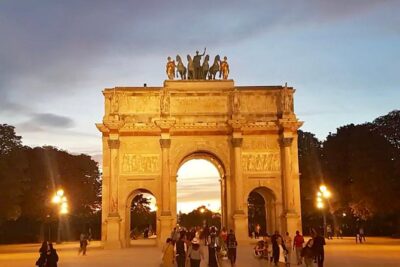
Paris Top Sights Half Day Walking Tour with a Fun Guide
Read our review →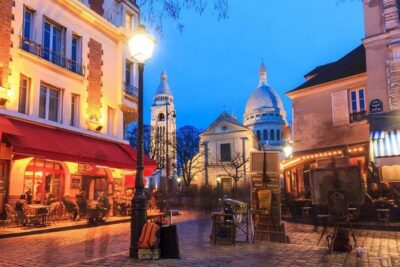
Montmartre Hidden Gems and Scenic Highlights Walking Tour
Read our review →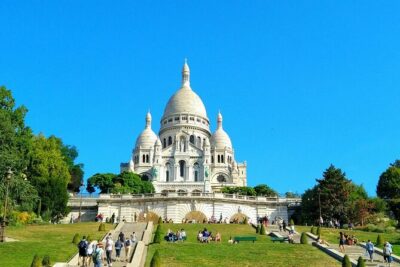
Montmartre Hill French Gourmet Food and Wine Tasting Walking Tour
Read our review →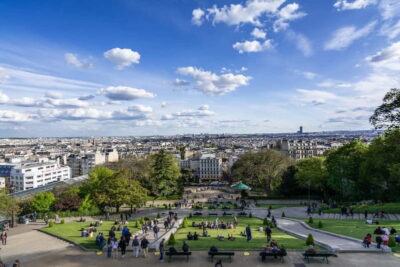
Montmartre Highlights Walking Tour with a Local Guide
Read our review →
Paris Île de la Cité and Notre-Dame Walking Tour With Crypt
Read our review →
Montmartre Cheese, Wine & Pastry Guided Walking Tour
Read our review →
Paris in a Day: Louvre or Orsay, Eiffel Tower, City Walk & Cruise
Read our review →Browse the lists this tour appears in