
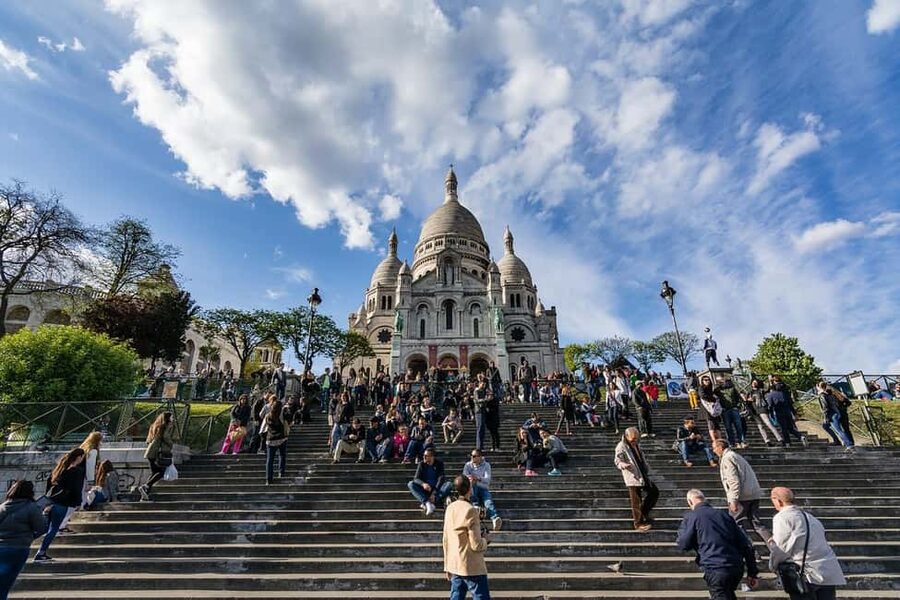
Review · HIDDEN GEMS WALKING TOURS
Paris: Montmartre hidden gems walking Tour with Local Guide
Montmartre rewards slow walking. This 140-minute small-group tour takes you through the district’s best-known sights and quieter lanes while explaining how a hilltop village of windmills and farms became Paris’s artists’ quarter. You’ll see Sacré-Cœur, Place du Tertre, Moulin de la Galette, Picasso’s studio, vineyards, cabarets, and the famous Pink House.
I especially like the small group of no more than 16 people, which gives the guide room to answer questions and keep the walk personal. I also like the strong focus on people and stories, from Picasso and Van Gogh to Dalida, Aznavour, Salvador Dalí, and the street artists working today. The main drawback is the pace and terrain: you’ll walk uphill on winding streets and cobblestones, and one hour may feel that the tour does not reach as many sights as expected.
The guides are a major part of the experience. Yazid has earned praise for lively stories about the artists and their connection to Montmartre, while Sylvia, Zoe, Marcela, and Marcella have also been singled out for clear explanations, warmth, and good group management. If you want a quick orientation with real local color, this is a strong choice.
Key points to know before booking
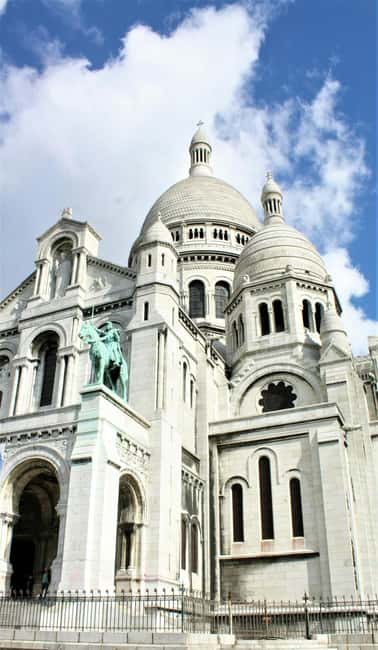
- Sacré-Cœur begins the story: Start at the basilica and learn about its huge Sacred Heart of Jesus mosaic.
- Montmartre unfolds on foot: The route uses winding streets, uphill sections, and cobblestones rather than a bus or fixed sightseeing circuit.
- Artists take center stage: Picasso, Van Gogh, Dalí, Dalida, Aznavour, and other figures help explain the district’s transformation.
- The group stays manageable: A maximum of 16 people makes it easier to hear the guide and ask questions.
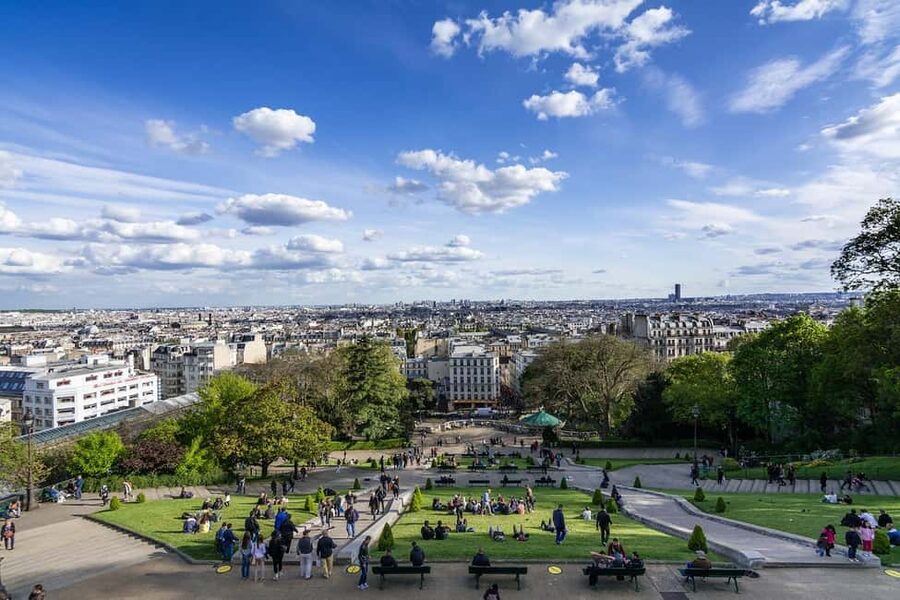
- The view comes from Paris’s highest hill: Sacré-Cœur gives you a broad look over the city.
- Families can join: The walk is described as suitable for children, with guides who keep the information lively.
Why 140 minutes is a useful amount of time
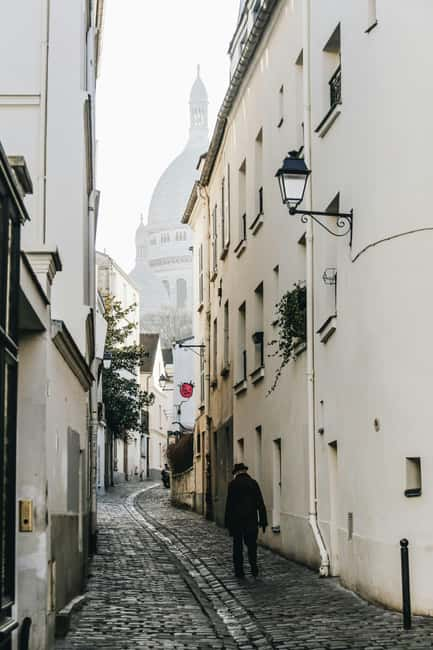
Two hours and 20 minutes is long enough to build a story without turning Montmartre into an exhausting full-day project. You get a guided introduction to the area, then plenty of time afterward to return to a favorite street, sit at Place du Tertre, visit a museum, or continue toward Pigalle.
I like this length for a first visit. A shorter walk might show you Sacré-Cœur and Place du Tertre but leave Montmartre feeling like a postcard. This tour has time to connect the landmarks: the old mills, the artists, the cabarets, the vineyards, and the famous residents who helped make the district what it is.
The tradeoff is that 140 minutes still cannot cover every corner. One participant felt the walk did not include as many sites as hoped. That is a fair warning. This is an overview with plenty of stories, not an exhaustive tour of every staircase, studio, church, and museum.
More Hidden Gems Walking Tours in Paris:
- Montmartre Hidden Gems and Scenic Highlights Walking Tour
★ 5.0 · 2,684 reviews - Paris: Montmartre Hidden Gems and Highlights Walking Tour
★ 4.7 · 378 reviews - Paris: Montmartre Food Tasting Walking Tour with Secret Dish
★ 4.8 · 107 reviews
Starting at Sacré-Cœur and Place Saint-Pierre
You meet the guide near the carrousel at Place Saint-Pierre, close to the Sacré-Cœur basilica. Look for Paris Tours Experiences and a guide wearing a name tag. The listed coordinates are 48.88438415527344, 2.3435277938842773.
This meeting point puts you right at the foot of one of Montmartre’s most recognizable sights. It also means you should allow a little time to find the guide. The instructions are clear enough, but a busy square, a carrousel, and crowds around the basilica can make a last-minute arrival stressful.
The tour begins with Sacré-Cœur itself. The guide explains the basilica and points out its huge mosaic of the Sacred Heart of Jesus, described here as the largest mosaic in the world. The image shows Jesus venerated by the Virgin Mary, Joan of Arc, and the Archangel Saint Michael.
That detail gives the building more meaning than a quick photograph from the steps. You’ll hear why the interior matters, then move from religious art into the secular and artistic story of the neighborhood. The contrast is part of Montmartre’s appeal: a grand basilica above, old village streets below, and a long tradition of artists, performers, and political activists in between.
Walking downhill and uphill through the old village
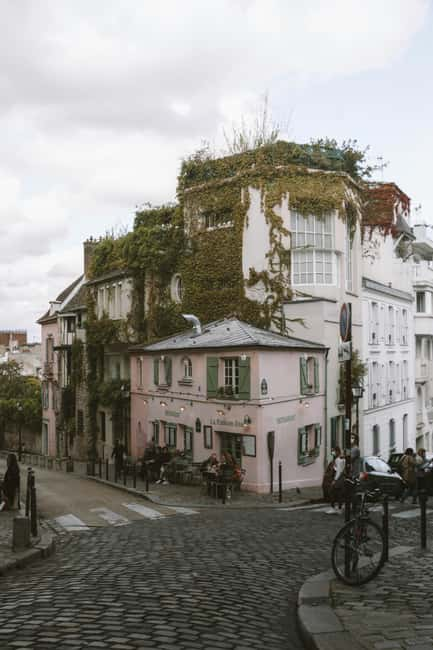
Montmartre is best understood from its streets. The walk uses narrow lanes and less direct routes rather than simply moving from one famous square to the next. That gives you a better sense of the old village, though it also brings some uphill walking and uneven cobblestones.
Sylvia’s route was praised for using streets that are not always the obvious tourist paths. She also stopped often enough for the uphill sections to feel manageable. That matters because Montmartre can be deceptively tiring. The hill is not vast, but the stairs, slopes, and hard paving ask more of you than a flat Paris boulevard.
Wear comfortable shoes and expect to walk for most of the 140 minutes. The tour is described as suitable for children, and a family with children aged six and nine enjoyed it. Still, younger children may need patience during the history portions, especially if the group pauses often for explanations.
The guide’s storytelling helps keep the route moving. Yazid was especially praised for making the artists feel connected to the streets rather than treating them as names in a textbook. He also kept the mood light on cold days, which is useful in a neighborhood where weather can change the feel of the walk quickly.
Place du Tertre and Montmartre’s public face
Place du Tertre is one of the most recognizable stops. It is the square most closely associated with Montmartre’s artists, portrait painters, and tourist energy. You’ll learn how the district became a magnet for creative people and how its public image grew over time.
This is one place where the tour’s context adds value. On your own, you can see artists working and cafés around the square. With a guide, you get the background that turns the scene into part of a longer story about artists living, working, and socializing in Montmartre.
The square can also feel busy and commercial. That is not a flaw in the tour, but you should not expect an untouched artists’ village. The guide helps you look past the most obvious tourist layer and understand why the area became famous in the first place.
The small-group format works well here. With up to 16 people, you are more likely to stay together and hear the explanation without a guide shouting across a large crowd. A larger group could make this stop feel more like a standard photo pause.
More Guided Walks in Paris:
- Paris Top Sights Half Day Walking Tour with a Fun Guide
★ 5.0 · 2,893 reviews - Paris: Montmartre Highlights Walking Tour with a Local Guide
★ 4.9 · 2,318 reviews - Paris: Montmartre Cheese, Wine & Pastry Guided Walking Tour
★ 4.8 · 2,255 reviews - Paris: Dark History and Ghostly Guided Walking Tour
★ 4.7 · 1,000 reviews
Moulin de la Galette and the old windmill country
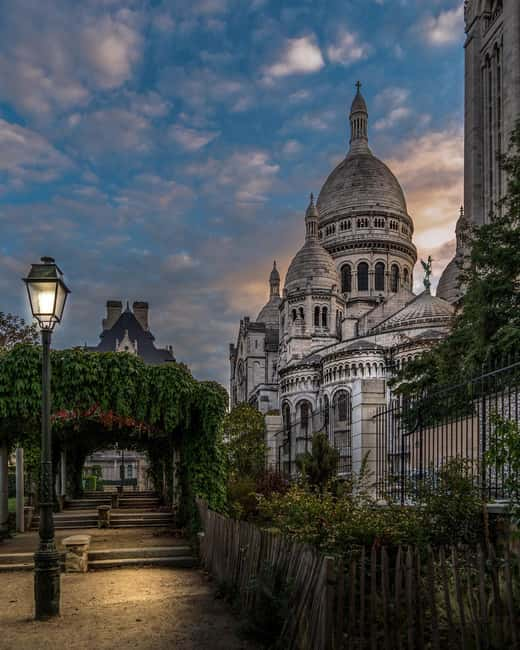
Moulin de la Galette connects modern Montmartre with its rural past. Before it became a fashionable district, the hill was known for agriculture and windmills. The tour explains how an area once associated with mills and village life changed into a place where artists and nightlife took over.
That change is one of the most useful parts of the walk. Montmartre was not created as an artists’ theme park. It developed from a separate village into part of Paris, and its open land, mills, cheap rooms, cabarets, and informal atmosphere helped draw painters and performers.
The name Moulin de la Galette also brings you into the artistic story. The district was not only a place where artists painted. It became a subject in paintings, a setting for social life, and a symbol of bohemian Paris.
I appreciate tours that explain this kind of change because it helps you read the neighborhood. A crooked lane, an old building, or a remaining vineyard is not just attractive scenery. It shows how much of Montmartre’s village character survived after the district became one of Paris’s best-known areas.
Picasso’s studio and the artists behind the legend
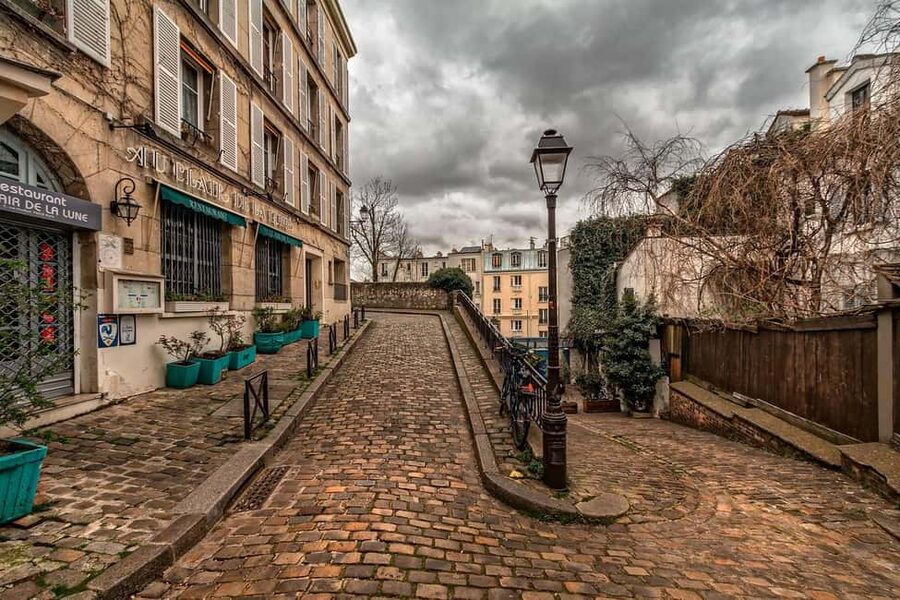
Picasso is one of the key figures on this walk. You’ll pass his studio and hear about his life in Montmartre, along with the wider circle of artists who shaped the area.
The guide does not limit the story to Picasso. Van Gogh, Salvador Dalí, and other artists appear in the account, as do musicians such as Dalida and Charles Aznavour. You also hear about revolutionaries who played a role in the city’s history.
This broad approach suits you if you want more than a narrow art tour. You get art, music, Parisian history, and neighborhood character in one walk. Yazid has been praised for making connections between artists and the places where they lived or worked, while Zoe has added music recordings to help bring famous singers into the story.
That is a memorable touch, especially if you respond better to sound and personal anecdotes than to dates alone. The information appears to be delivered in a friendly, conversational way, with room for questions. Several guides have been praised for adjusting their explanations to the group, which is useful when adults, children, art fans, and first-time visitors are walking together.
You should not book this expecting entry into every artist’s former home or a museum-style lecture. The experience is a street-level tour. You see locations from outside and learn why they matter as you move through the neighborhood.
The Pink House, vineyards, cabarets, and side streets
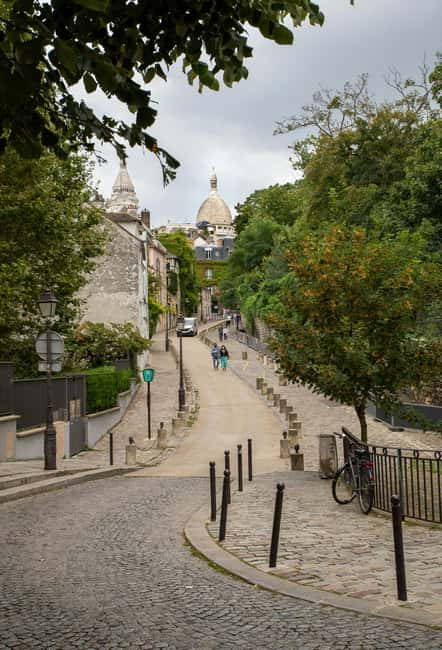
The Pink House and Montmartre’s vineyards add variety to the walk. These sights help you see the district as more than Sacré-Cœur plus Place du Tertre. You move through a neighborhood with small reminders of its village past, even though modern Paris surrounds it.
The vineyards are particularly useful in explaining the agricultural side of Montmartre. They show that the hill once had a working rural identity, not just a reputation for painters and nightlife. The cabarets and alleys then bring you into the district’s more theatrical side.
I like this combination because it gives the route texture. A basilica provides the grand landmark. Place du Tertre provides the famous public square. The Pink House, vineyards, alleys, and cabarets fill in the spaces between those headline sights.
The route may feel less dramatic in individual moments than a museum visit. You are often looking at streets and exteriors while listening to the guide. The reward is the sense of place, not a long list of indoor attractions.
The panorama from Paris’s highest hill
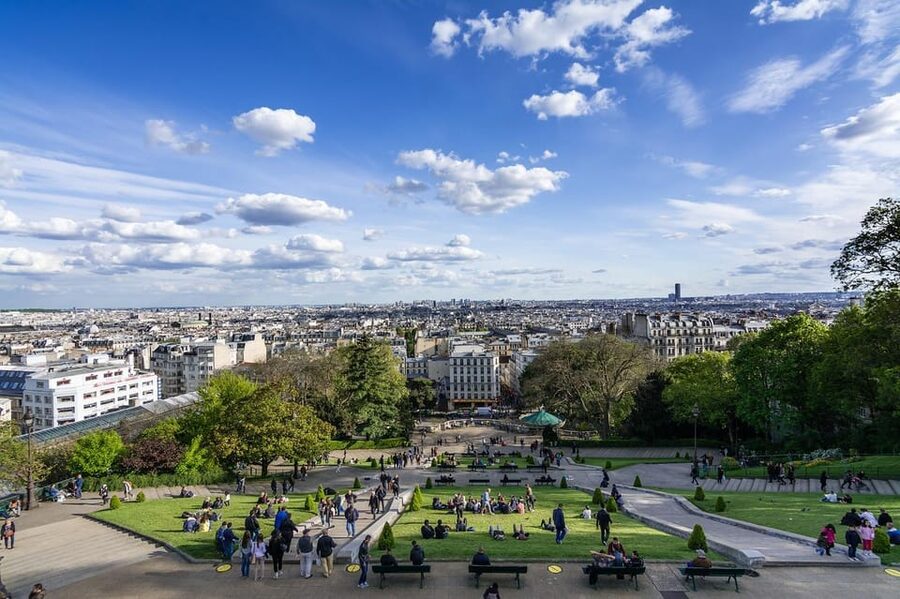
Montmartre sits on the highest hill in Paris, and the view from the Sacré-Cœur area is a natural high point of the walk. You get a broad panorama of the city, which makes the climb worthwhile.
This is an excellent moment to pause and orient yourself. After walking through enclosed lanes, you suddenly see Paris spread out below. The view also explains why Montmartre has always felt separate from the city even though it is firmly part of Paris today.
The panorama is weather dependent. On a clear day, it can be one of the most satisfying parts of the tour. On a gray day, the guide’s stories and the basilica carry more of the experience. Either way, the elevated setting gives the walk a clear ending point and helps you understand Montmartre’s physical character.
Because the walk starts near Sacré-Cœur, you do not need to save a separate visit just to find the viewpoint. You can return later if you want more time for photographs or a quieter look.
Guides who make the difference
The strongest part of this experience is the guide. The route itself is easy to find independently, but the connections between the places are harder to build without someone explaining them.
Yazid receives the most enthusiastic praise in the feedback provided. He is described as energetic, passionate, and particularly strong on artists and their relationships with Montmartre. He also helped a late-arriving participant catch up after a delayed train, which shows useful attention to the people in his group.
Sylvia has been praised for her warmth, clear speaking style, practical advice, and choice of less obvious streets. Zoe adds music to the history and keeps the subject engaging. Marcela and Marcella have been praised for friendliness, good group control, and adjusting the amount of information to the audience.
Guide assignments can change, so you should not book on the assumption that one particular person will lead your departure. Still, the pattern is encouraging: the experience depends on lively human explanation, and the guides appear to be selected for that strength.
The small group matters here. A limit of 16 is not private touring, but it is far more personal than a large walking crowd. You can hear the guide, ask questions, and stay connected while moving through narrow streets.
Value, flexibility, and practical planning
No tour price is provided here, so I cannot judge the exact cost in euros. I can judge the value offered: 140 minutes, an English-speaking live guide, a small group capped at 16, and a route covering both famous sights and less obvious streets.
That is good value if you want context and orientation on your first Montmartre visit. You are paying for the guide’s local knowledge, storytelling, and route planning, not just access to a viewpoint or basilica.
The booking terms are useful for a Paris schedule. You can cancel up to 24 hours before the start for a full refund, and the reserve-now, pay-later option lets you hold a place without paying immediately. Check the available start times before booking because the duration is fixed at 140 minutes, while departure times can vary.
The tour is in English only. If you need another language, this is not the right fit based on the details available. You should also plan for walking on slopes and cobbles, and arrive at Place Saint-Pierre with enough time to find the carrousel and the guide’s name tag.
Who should book this Montmartre walk?
I would choose this tour for a first-time Paris visitor who wants Montmartre explained in one sitting. It suits anyone interested in artists, music, local history, and the way a neighborhood changes over time.
Families can also consider it. The walk is specifically described as suitable for children, and the guides’ energy helps keep the experience from becoming a long lecture. Parents should still prepare children for hills, cobblestones, and standing while listening.
Art lovers will get the most from the Picasso, Van Gogh, Dalí, and street-art material. Music fans may especially enjoy the references to Dalida and Aznavour, along with Zoe’s use of recordings. You do not need a formal art background. The storytelling is aimed at a general audience.
I would choose something else if you want a private guide, a museum visit, a food-focused outing, or a totally flat route. I would also look elsewhere if your priority is seeing the maximum number of landmarks with almost no pauses. This tour gives space to stories, and that naturally limits the number of stops.
Should you book this Montmartre tour?
Yes, if you want Montmartre to feel like a real neighborhood rather than a checklist of famous names. The best reasons to book are the small group, the view from the hill, and the guides’ ability to connect artists, musicians, windmills, vineyards, cabarets, and village streets into one clear story.
Go in with realistic expectations. You will walk uphill, spend much of the time outdoors, and may not see every sight you hoped for. But if you wear good shoes and value a lively explanation of why Montmartre became Paris’s artists’ quarter, this tour offers a practical and personable introduction.
FAQ
How long does the Montmartre walking tour last?
The tour lasts 140 minutes, or two hours and 20 minutes.
Where does the tour meet?
Meet near the carrousel at Place Saint-Pierre by the Sacré-Cœur basilica. Look for Paris Tours Experiences and a guide wearing a name tag.
What sights are included?
The route includes Sacré-Cœur, Place du Tertre, Moulin de la Galette, Picasso’s studio, the Pink House, Montmartre’s vineyards, cabarets, and winding alleys.
Is the tour conducted in English?
Yes. The listed live tour language is English.
How large is the group?
The group has a maximum of 16 people.
Is this tour suitable for children?
Yes. The walk is described as suitable for kids. Keep in mind that it includes uphill sections and cobblestone streets.
Can I cancel for a full refund?
Yes. You can cancel up to 24 hours before the tour for a full refund.
Can I reserve now and pay later?
Yes. The reserve-now, pay-later option lets you book a place without paying immediately.
Just added around Paris
- The Official Emily in Paris Locations Walking Tour★ 4.9 · 383 reviews
- Paris: Montmartre Food Tasting Walking Tour with Secret Dish★ 4.8 · 107 reviews
- Paris: Emily Inspired Walking Tour★ 4.9 · 312 reviews
- Saint-Germain: Gourmet Chocolate & Pastry Walking Food Tour★ 4.8 · 495 reviews
- Paris: Walking Tour of Montmartre★ 4.7 · 470 reviews
- Paris: Ghosts, Legends & Mysteries Evening Walking Tour★ 4.5 · 241 reviews
- Paris: Walking Tour with Notre Dame or Ste-Chapelle Access★ 4.4 · 198 reviews
- Paris Top Sights Half Day Walking Tour with a Fun Guide★ 4.9 · 92 reviews
Hidden Gems Walking Tours, compared.
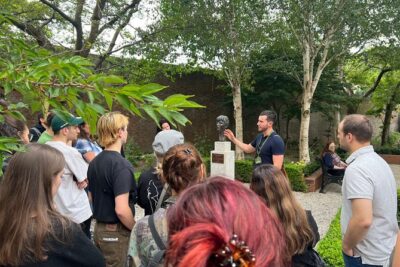
Dublin Highlights and Hidden Gems Guided Walking Tour
Read our review →
Explore Berlin: See All The Iconic Sights & Some Hidden Gems
Read our review →
Kyoto Geisha Walking Tour: Gion District & Hidden Gems
Read our review →
Ben Youssef, Secret Garden, & Souks Walking Tour
Read our review →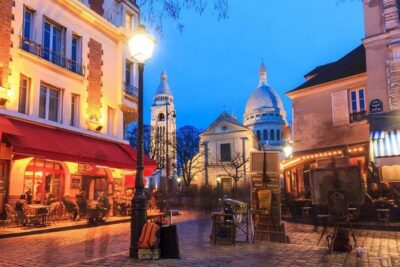
Montmartre Hidden Gems and Scenic Highlights Walking Tour
Read our review →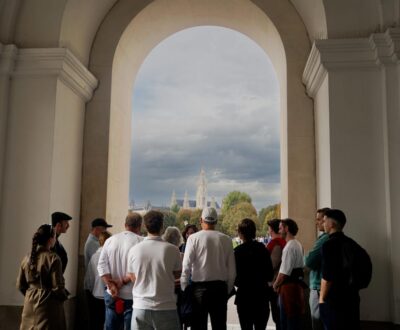
Guided Walking Tour of City Highlights & Hidden Gems
Read our review →
Paranormal Night Walking Tour & Secret Backstreets
Read our review →Browse the lists this tour appears in