
Review · HIDDEN GEMS WALKING TOURS
London: Secrets of the London Underground Walking Tour
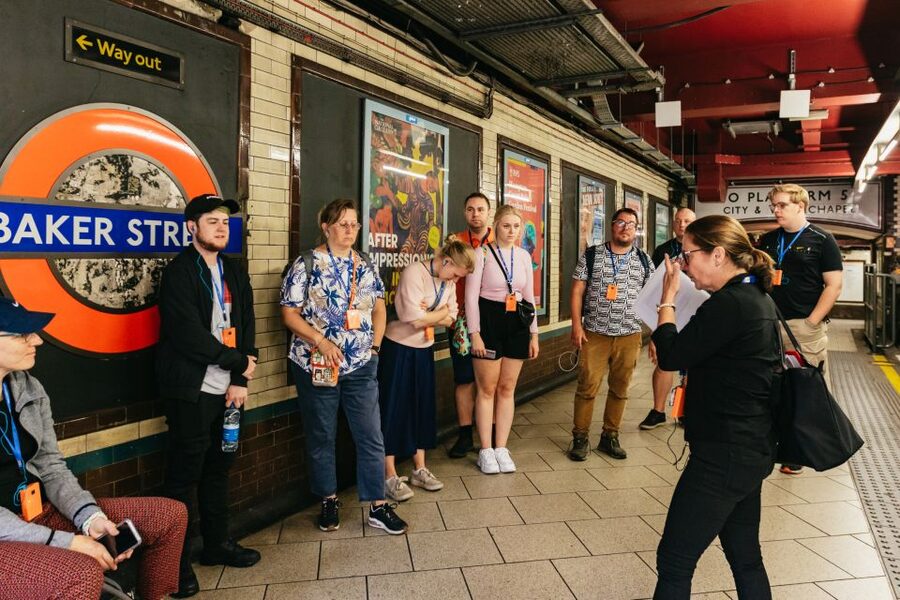
The Tube has secrets beneath every commute. I like that this tour begins at Baker Street Station, one of the original Metropolitan Railway stops opened in 1863, then uses the working Underground to show how London’s transport system grew. I also like the range of stories, from steam trains and early tunnels to wartime shelters, aircraft production, and British Museum treasures stored below ground.
The main drawback is clear: this is not a behind-the-scenes tour into abandoned stations. You may see or discuss disused platforms and ghost stations, but you should not expect to wander through sealed tunnels. You will also need a separate Zones 1 to 2 travel card or Oyster card, and the route involves plenty of stairs.
Guide quality is a major strength. John, Aaron, Angela, Peter, and other guides have been praised for making technical history easy to follow, often with humor. The headsets help in noisy stations, though one person found them crackly above ground.
Key points to know before booking
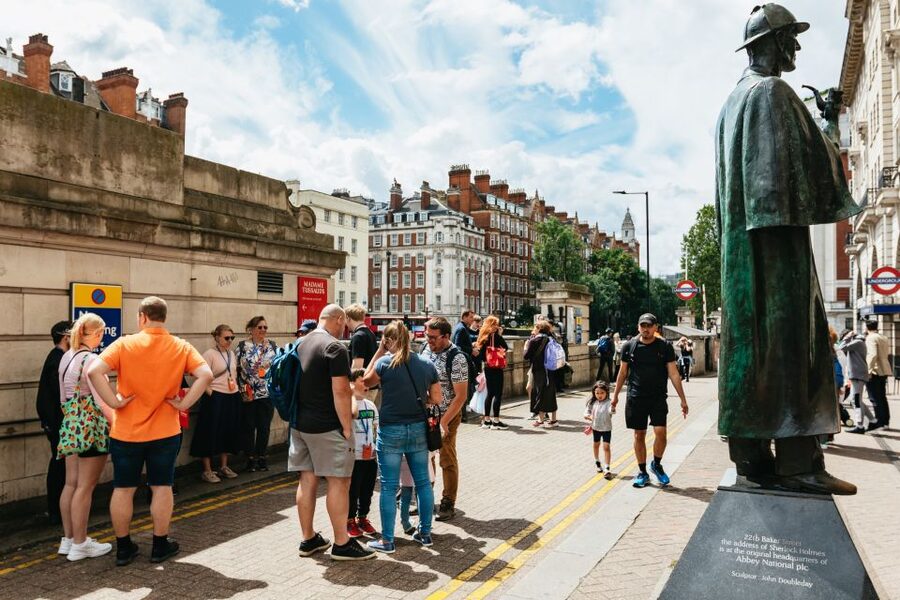
- Begin at a railway landmark: Meet beside the Sherlock Holmes statue outside Baker Street Station, close to one of the world’s first underground railway stops.
- See the Tube as more than transport: The tour explains its changing roles during the Blitz, in aircraft production, and as secure storage for museum treasures.
- Expect stories, not secret tunnels: Disused and haunted stations are part of the subject, but access inside closed stations is not promised.
- Budget for local transport: The $40 tour price does not include your Underground fare. A Zones 1 to 2 day travel card or Oyster card is needed.
- Plan for steps and walking: This is a 2.5-hour walking tour with Underground transfers, and it is not suitable for wheelchair users or people with reduced mobility.
- Best for curious London visitors: The tour suits anyone who uses the Tube but wants to understand the engineering, symbols, stations, and odd stories behind it.
Why Baker Street is the right place to start
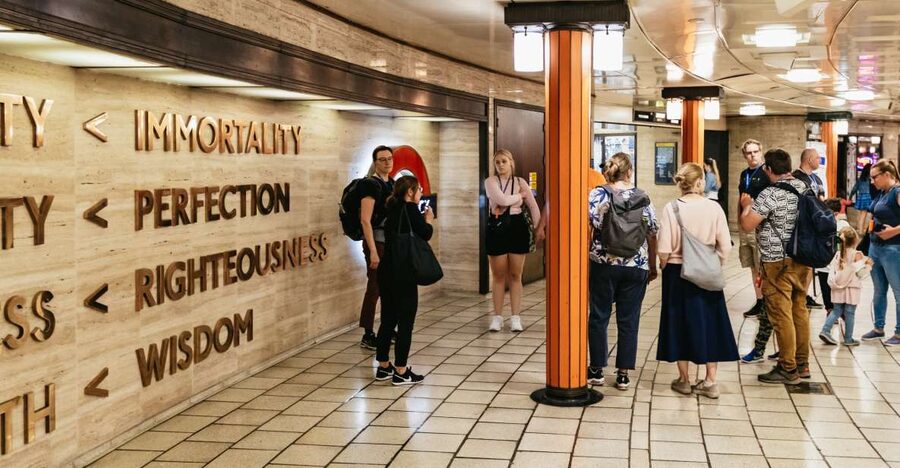
Baker Street Station gives the tour a strong opening because the story begins here, not with a modern train map. The station was part of the Metropolitan Railway, which opened in 1863 as the world’s first underground railway.
That date matters. London’s first underground trains were powered by steam, which meant engineers had to solve problems that feel strange today: smoke, ventilation, tunnel construction, passenger safety, and how to place a railway beneath a crowded city.
Your guide meets you beside the Sherlock Holmes statue outside the station. It is an easy landmark, though Baker Street can be busy, so allow enough time to find the meeting point before the start.
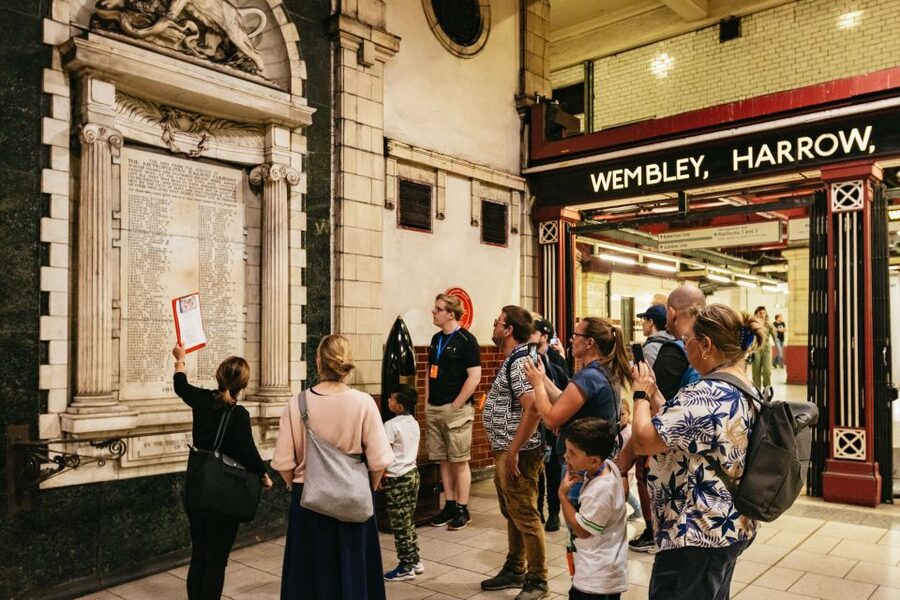
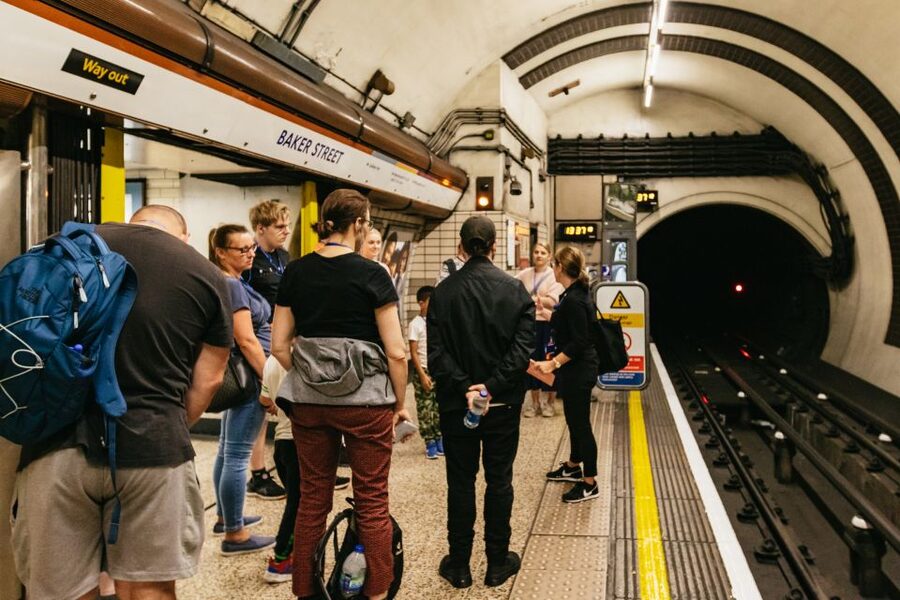
From here, the tour uses the station itself as part of the lesson. You will hear how the Underground changed from steam-powered trains to electric railways, and how early tunnels were built. The value is in seeing these places while the guide explains them. A station entrance or platform detail can look ordinary until you know why it was designed that way.
The tour is conducted in English, with a live guide and audio headset. That headset is especially useful when trains are arriving or announcements are echoing around the station. It lets you stay with the guide without needing to crowd around them.
More Hidden Gems Walking Tours in London:
- Secrets of London Walking Tour
★ 4.7 · 562 reviews - Secret Old London Walking Tour
★ 4.8 · 154 reviews - Dublin Highlights and Hidden Gems Guided Walking Tour
★ 5.0 · 6,020 reviews
The Tube’s story is really a story about London
It is tempting to think of the Underground as a practical way to get from one museum to another. This tour asks you to see it differently. The Tube is part of London’s growth, politics, engineering, wartime survival, and popular culture.
The guide explains how the network expanded and why more than 40 stations have been abandoned. Some closed because routes changed, passenger patterns shifted, or newer stations made older stops less useful. Others survive only as fragments, glimpsed from passing trains or remembered through maps and local stories.
You will also learn about the famous Underground roundel. It is one of the clearest symbols of London, yet many people use it every day without considering how much work went into making the system readable and consistent. The sign is not just decoration. It helps visitors and residents find their way through a complicated network.
The tour also connects the Underground to places above street level. That is useful because the Tube never exists in isolation. A station may reflect the neighborhood around it, while a walk between stops can point out landmarks and details you would normally pass without a second look.
Several people who know London well have found fresh information here. That is an important part of the tour’s appeal. You do not need to be a first-time visitor, and you do not need to be a railway enthusiast. Regular Tube users may enjoy seeing a familiar system with new eyes.
Wartime shelters, aircraft work, and museum storage
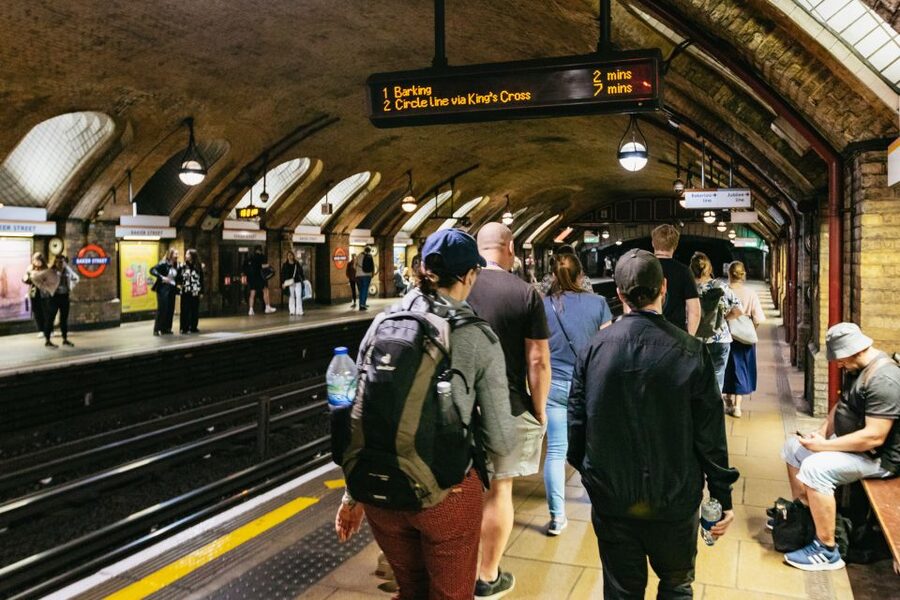
The most surprising material concerns the different jobs the Underground has performed. During the Blitz, stations were used as refuges from bombing. The railway system became more than a way to move people. It offered shelter when London was under attack.
The Underground was also used as an aircraft factory and as storage for treasures from the British Museum. These details give the tour a wider purpose. You are not simply learning dates and station names. You are seeing how London adapted an existing public system during moments of crisis.
The British Museum connection is particularly useful for visitors planning a wider London trip. It shows how cultural institutions and transport infrastructure were linked during wartime. The Underground helped protect objects that could not easily be replaced, while still carrying people across the city.
Your guide may also explain which station lies above the remains of 1,000 bodies. That detail is a reminder that London’s streets and stations were built over older layers of the city. It is one of the tour’s darker stories, so this outing is not only about engineering and design.
Haunted stations and the limits of the ghost stories
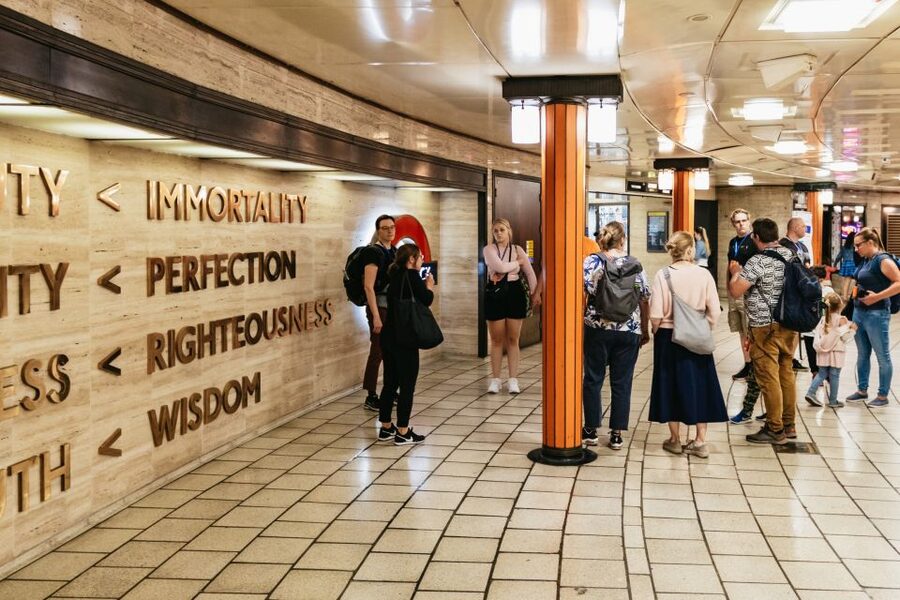
Ghost stories are part of the fun, but they work best when treated as local legends rather than the main event. The tour covers stations reputed to be haunted by the ghost of a Pharaoh’s daughter and by a nun.
These tales add atmosphere, especially when you are standing in an old station with tiled walls, dim corners, and the sound of trains nearby. They also show how Underground stations became part of London folklore.
Still, I would not book this experience solely for ghosts. The stronger material is the combination of engineering, wartime use, abandoned stations, symbols, and city history. The supernatural stories are seasoning, not the meal.
You should also set your expectations about disused stations. Some people arrive hoping to enter a closed station or walk through a forgotten platform. That is not the normal promise here. You may see a ghost station, notice details hidden in plain sight, or hear the story of a closed stop, but access depends on what is legally and safely available on the day.
That distinction explains why the tour can be excellent for one person and slightly disappointing for another. If you want a guided history of the Underground with glimpses of its lost places, it should suit you well. If you want restricted access and abandoned tunnels, choose a specialist event that specifically promises entry.
A few more walks around London worth a look
- Magical London: Harry Potter Guided Walking Tour
★ 4.7 · 22,044 reviews - London: The Original Jack the Ripper Walking Tour
★ 4.7 · 7,833 reviews - Tour for Muggles The Ultimate Harry Potter Walking Tour in London
★ 5.0 · 4,684 reviews - London Jack The Ripper Guided Walking Tour
★ 5.0 · 3,131 reviews
Riding between stations keeps the history practical
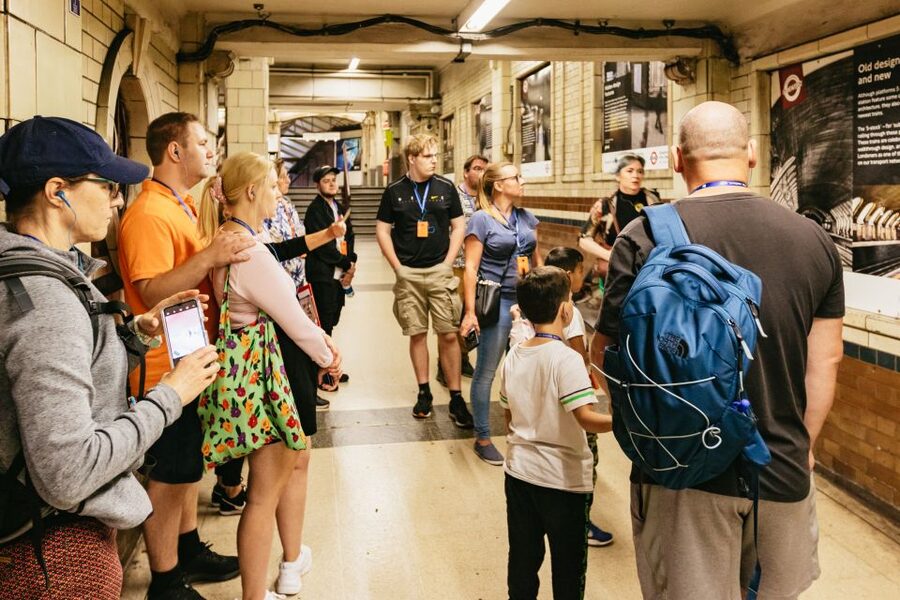
The itinerary is not a lecture in one room. After the walking portion around Baker Street, you use public transport for about 10 minutes before visiting the London Transport Museum and finishing at 10B Bridge Street in Westminster.
That short Tube journey matters. It gives you a chance to use the system while discussing it. The experience becomes more concrete when you are watching station signs, moving through passageways, listening for announcements, and noticing how many small decisions are needed to keep the network working.
The route can be affected by delays, closures, or strikes. One guide, Aaron, was praised for changing the route when train problems disrupted the planned journey. That is a useful sign of practical guiding, but it also means you should allow some flexibility in your day.
The tour ends near Westminster, which is convenient for continuing to central London sights. The exact finish is 10B Bridge Street, Westminster, London SW1A 2JR. You will need to arrange your own return journey, hotel transport, food, and drinks.
The London Transport Museum adds a useful final stop
The visit to the London Transport Museum gives the tour a natural finish. After seeing stations in use, you get a place devoted to transport history and design.
The museum stop is valuable because the Underground can be hard to study while trains are moving and commuters are passing. A museum setting gives you time to look at the system as an object of design and history.
The provided information does not promise a particular exhibition or length of time inside the museum, so do not plan your entire museum visit around the tour unless you confirm the schedule. Treat this part as an included visit that rounds out the guided route.
Ending in Westminster also shifts the focus from the Tube’s early beginnings to the modern city it serves. The tour starts with a railway system that was new and experimental, then finishes in a part of London closely tied to national government and major landmarks.
What the guides do best
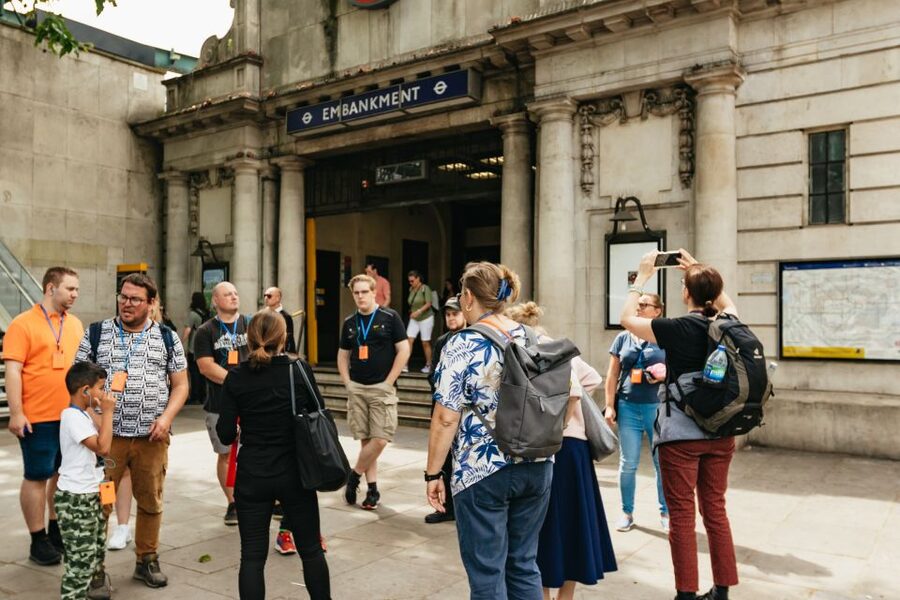
The strongest praise is directed at the guides. John is repeatedly described as funny, patient, courteous, and very well prepared. Aaron is praised for bringing the Underground’s history to life and for adding information about landmarks above ground. Angela is noted for her clear delivery and ability to manage a group.
That variety matters because this tour depends heavily on storytelling. The stations themselves remain open public spaces, not private museum rooms. A good guide has to point out details, explain why they matter, keep the group together, and speak clearly over transport noise.
The best guides also adjust to questions. One family found John especially helpful with an inquisitive child, while another person who had lived in London for years still learned new facts. That suggests the tour can work for mixed groups, provided you enjoy listening and walking.
The headsets are a practical benefit. One person found them crackly above ground, but they worked well underground. Without them, it can be difficult to hear a guide beside a busy entrance or an arriving train.
Walking, stairs, tickets, and comfort

The tour lasts 2.5 hours and includes a moderate amount of walking. You will also encounter stairs in the Underground system. The tour is not suitable for wheelchair users or people with reduced mobility.
Do not bring large bags or luggage, and baby strollers are not allowed. Wear comfortable shoes and keep your hands free. Even if you use London transport every day, station corridors, escalators, staircases, and street connections can add up.
Your $40 ticket covers the guide and audio headset. It does not cover the Underground fare. You need a public transport ticket before joining, specifically a Zones 1 to 2 day travel card or an Oyster card.
Pay attention to this extra cost. One participant noted that using a bank card for the tour journey resulted in a charge of £17, while a travel pass was cheaper. The exact fare can change, but the practical lesson remains: arrange your transport before meeting the guide and check the current price.
Food and drinks are not included. This is not a meal-based outing, and the schedule is built around stations and walking rather than a long break.
Is $40 good value?
I think the price is reasonable if you enjoy guided city history and want more than a standard Tube ride. You are paying for a live guide who interprets several locations, handles the public transport route, provides an audio headset, and links engineering with wartime and cultural stories.
The value drops if you expect exclusive access to abandoned stations. The experience does not guarantee entry into closed areas, and that is the most important point to understand before paying.
It is also better value for a visitor who would not otherwise notice the Underground’s design and history. If you already have a strong interest in railway engineering, you may find some subjects familiar, but the route can still reveal details at stations you have used many times.
A 4.6 rating from 211 ratings suggests consistently strong satisfaction, with guide quality repeatedly at the center. The occasional four-star criticism focuses mainly on expectations about disused stations, headset sound, or the tour feeling a little long.
Who should book the London Underground tour?
I would recommend it to first-time London visitors who want a clear story behind the Tube, repeat visitors who use the network often, and families with older children who enjoy unusual city facts. It is also a good choice if you like tours that mix indoor transport spaces with short walks above ground.
You should book it if stories about steam trains, abandoned stations, wartime shelters, museum storage, and London folklore sound more appealing than a standard sightseeing bus.
You should think twice if stairs are difficult, if you are carrying luggage, or if your main goal is to enter sealed stations. The tour is about understanding the Underground while using it, not gaining unrestricted access to places the public normally cannot enter.
FAQ
Where does the London Underground tour begin?
Meet the guide by the Sherlock Holmes statue outside Baker Street Station.
Where does the tour finish?
The tour finishes at 10B Bridge Street in Westminster, London SW1A 2JR.
How long does the tour last?
The tour lasts 2.5 hours.
Is an Underground ticket included?
No. You need to purchase a Zones 1 to 2 day travel card or an Oyster card before joining the tour.
Is the tour suitable for wheelchair users?
No. The tour involves Underground stairs and is not suitable for wheelchair users or people with reduced mobility.
What is included in the price?
The $40 price includes a live English-speaking guide and an audio headset. Food, drinks, hotel transfers, and public transport fares are not included.
Just added around London
- German London : The Ultimate Walking tour★ 4.8 · 400 reviews
- London: Medieval History Walking Tour from The Tower★ 4.9 · 318 reviews
- The Beatles London Walking Tour★ 4.2 · 147 reviews
- London: Sherlock Holmes-Themed Walking Tour★ 4.7 · 756 reviews
- Secret Old London Walking Tour★ 4.8 · 154 reviews
- Secrets of London Walking Tour★ 4.7 · 562 reviews
- London: Notting Hill Walking Tour★ 4.5 · 254 reviews
- London: Old City Walking Tour★ 4.8 · 135 reviews
Hidden Gems Walking Tours, compared.
Dublin Highlights and Hidden Gems Guided Walking Tour
Read our review →
Explore Berlin: See All The Iconic Sights & Some Hidden Gems
Read our review →
Kyoto Geisha Walking Tour: Gion District & Hidden Gems
Read our review →
Ben Youssef, Secret Garden, & Souks Walking Tour
Read our review →
Montmartre Hidden Gems and Scenic Highlights Walking Tour
Read our review →
Guided Walking Tour of City Highlights & Hidden Gems
Read our review →
Paranormal Night Walking Tour & Secret Backstreets
Read our review →Browse the lists this tour appears in