
Review · LONDON WALKING TOURS
London: Winston Churchill and London in WWII Walking Tour
War changed Westminster forever. This focused walking tour connects Churchill’s wartime leadership with the streets, monuments, and government buildings where Britain directed the Second World War. I like the way it treats Westminster as more than a postcard backdrop, and I especially like the guides’ use of personal stories about pilots, civilians, politicians, and everyday life.
The strongest guides, including Nathan, Richard, Francis, Babs, and Rosie, bring plenty of energy and humor to the subject. The main drawback is the short format: 1.5 hours can feel rushed if you want a full account of the war or time inside Churchill’s War Rooms, since that admission is not included.
Key points to know before you book
- You begin near Westminster Station: Meet beside the Boadicea and Her Daughters Statue at Exit 2, where your guide carries an orange Urban Saunters sign.
- The route links famous landmarks to wartime events: Big Ben, Westminster Abbey, Whitehall, Downing Street, the Cenotaph, and the Houses of Parliament all gain a WWII connection.
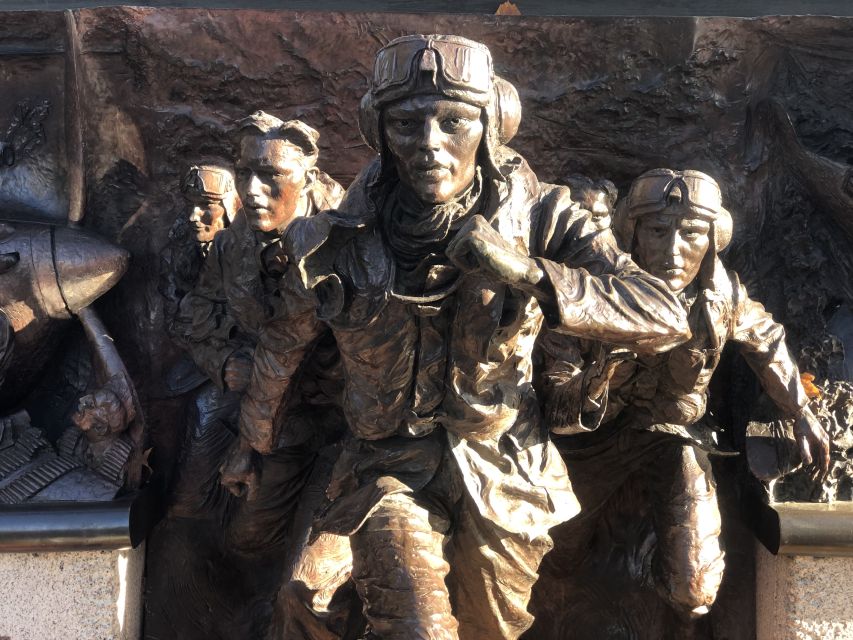
- The RAF Monument sets the tone: The memorial honors those who took part in the Battle of Britain and provides a fitting opening to the story.
- The guides are the main attraction: Nathan is praised for his storytelling, while Richard, Francis, Babs, Rosie, and others add humor, detail, and personal touches.
- The walk finishes at Churchill’s War Rooms: You can visit the underground command center afterward, but you must buy a separate entrance ticket.
- Plan for ordinary city walking: Comfortable shoes are essential, and large bags or luggage are not allowed.
Why Westminster works so well for a WWII tour
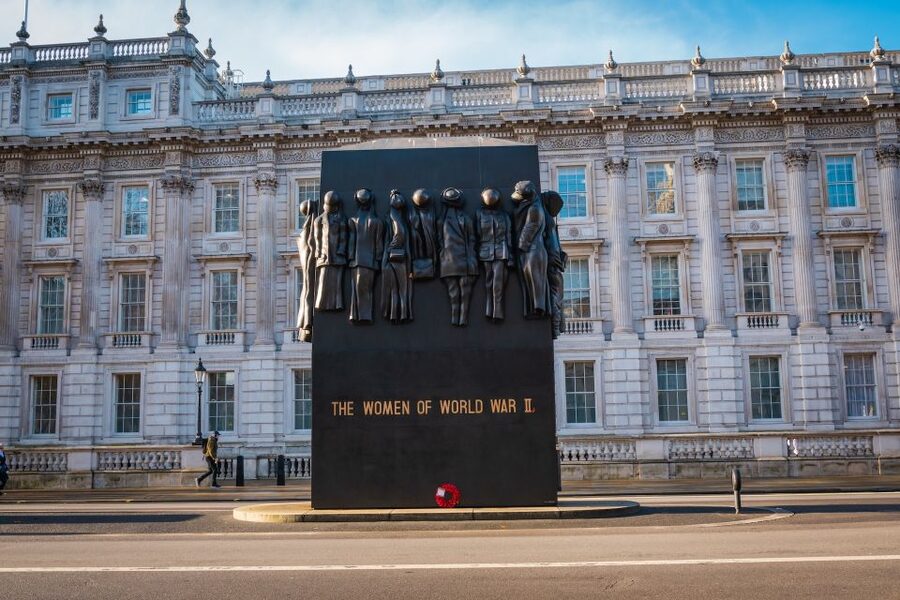
Westminster gives you a compact lesson in British wartime power. Parliament, the prime minister’s residence, military offices, national memorials, and royal landmarks all sit within a walkable area. You are not simply crossing from one attraction to another. You are following the places where Britain debated, planned, endured, and remembered the war.
That setting also helps explain the difference between public ceremony and private fear. The grand buildings suggest confidence and continuity, while the stories of air raids, military losses, and civilian hardship show how uncertain daily life could be.
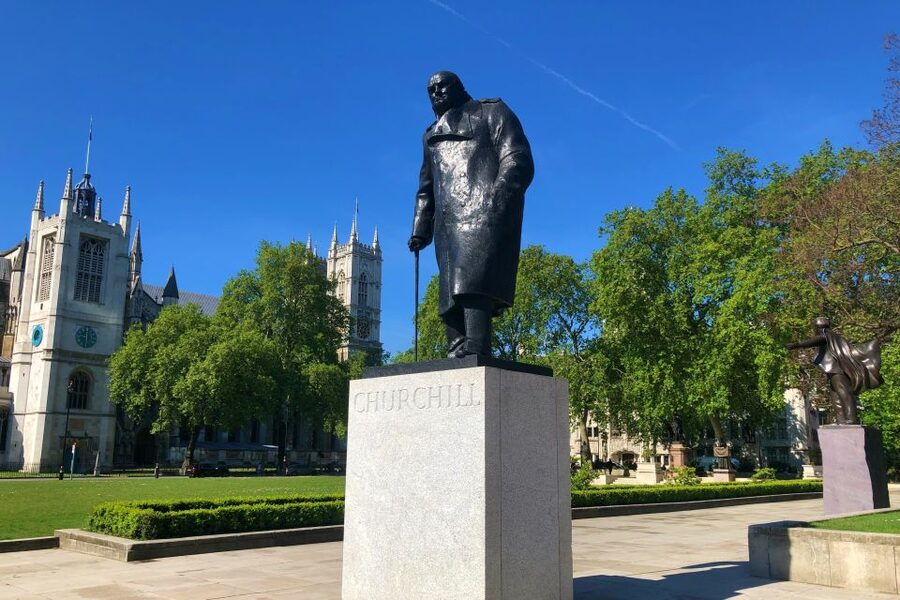
I like this approach because it gives familiar sights a second meaning. Big Ben is not only a landmark for photographs. Whitehall is not merely a government street. The Cenotaph is not just a monument passed on the way to somewhere else. Your guide uses each location to explain how wartime decisions affected both national leaders and ordinary people.
The tour is conducted in English, and its quality depends heavily on the guide assigned to your group. The strongest feedback has centered on guides who can explain facts clearly while keeping the pace lively. Nathan is repeatedly praised for his command of WWII events and his ability to keep teenagers and non-history fans interested. Richard is noted for British humor and the way he made Churchill feel like a real person rather than a statue.
A few more walks around London worth a look
- Magical London: Harry Potter Guided Walking Tour
★ 4.7 · 22,044 reviews - London: The Original Jack the Ripper Walking Tour
★ 4.7 · 7,833 reviews - Tour for Muggles The Ultimate Harry Potter Walking Tour in London
★ 5.0 · 4,684 reviews
Meeting at Westminster Station and finding the RAF memorial
The official meeting point is outside Westminster Station, at Exit 2 for Victoria Embankment. Follow the station signs carefully, then take the stairs to street level. The group gathers at the top beside the Boadicea and Her Daughters Statue, with an orange Urban Saunters sign identifying the guide.
This is useful to know because Westminster Station has several exits, and choosing the wrong one can put you on the opposite side of a very busy area. Give yourself enough time to get out of the station and locate the statue without making the group wait.
The route includes the Monument to the RAF, which commemorates the people who took part in the Battle of Britain. It offers a strong opening because the story begins with individuals rather than only generals and government leaders. Your guide introduces the wider setting, then explains how London and Britain faced the threat from the air.
The memorial also establishes one of the tour’s best qualities: its attention to people whose names are less familiar. The guides have been praised for telling the stories of pilots and for adding details not always found in a standard overview of WWII. If you enjoy military history, you will appreciate that extra layer. If you do not, the personal accounts help keep the subject from becoming a list of dates.
Big Ben and the Houses of Parliament under pressure
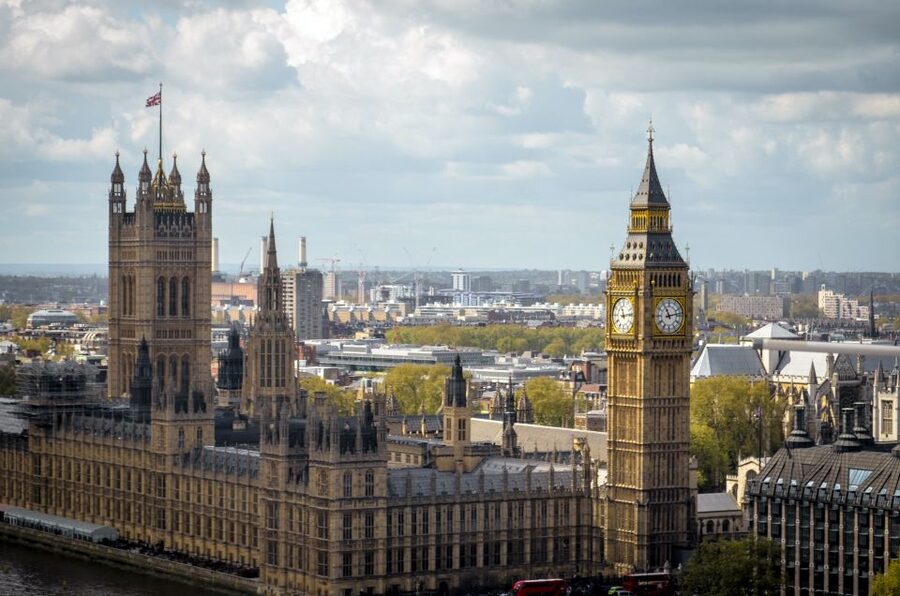
From the memorial area, the walk continues through Westminster toward Big Ben and the Houses of Parliament. These buildings are among London’s most recognizable sights, but the WWII focus changes how you look at them.
Your guide explains the impact of the war on Westminster and the decisions made around this political center. The point is not simply to admire the architecture. You are encouraged to picture a capital city trying to maintain public confidence while facing bombing, military crisis, and the demands of running a nation at war.
This section should appeal to first-time visitors because it combines sightseeing with context. You can take in Parliament and Big Ben while learning why the area mattered so much during the conflict. It also works well for families. One parent described a 10-year-old military history enthusiast as fully engaged, while another found that a 15-year-old stayed interested throughout the walk.
The tour does not include entry to Parliament or any named monument. You remain outside, listening to the guide. That is both a limitation and a practical advantage: you spend your short tour moving through the public spaces of Westminster rather than waiting in security lines.
The route is often described as more of a talking tour than a strenuous hike. You will walk between locations, but much of the value comes from stopping while the guide speaks. That makes the tour manageable for many people who want history without a long march across London, though it is not suitable for wheelchair users or people with mobility impairments.
Westminster Abbey and the human cost of war
Westminster Abbey adds a different mood. Its significance comes from centuries of national ceremony, but during a WWII tour it also becomes a place to consider how Britain presented unity and endurance.
Your guide connects the Abbey and its surroundings with the wartime experience of Westminster. The emphasis is not on entering the building or touring its interior. Instead, you hear about the effect of the war on the area and the country as a whole while viewing the Abbey from outside.
This is where the better guides move beyond official history. Several have been praised for describing the civilians who lived through the war, not only the leaders whose names appear in textbooks. That distinction matters. Churchill’s speeches and decisions are central to the tour, but the experience also asks you to think about the millions who dealt with disruption, uncertainty, and danger.
I would pay attention to the guide’s anecdotes here. The stories can be more memorable than a long explanation of military strategy. Nathan is especially well regarded for mixing biographies, lesser-known facts, and humor without making the subject feel careless or trivial.
Same streets, a different way to see them:
- London Jack The Ripper Guided Walking Tour
★ 5.0 · 3,131 reviews - London: Harry Potter Movies Walking Tour (Kids Go Free)
★ 4.7 · 3,071 reviews - London Bridge & Borough Market Food Tour with 7 Authentic Dishes
★ 5.0 · 1,972 reviews - Changing of the Guard Guided Walking Tour in London
★ 5.0 · 1,793 reviews
Whitehall, the Cenotaph, and the machinery of war
Whitehall brings the political and military side of the story into sharper focus. The street contains major government offices and monuments, making it a natural place to discuss how Britain organized its response to the war.
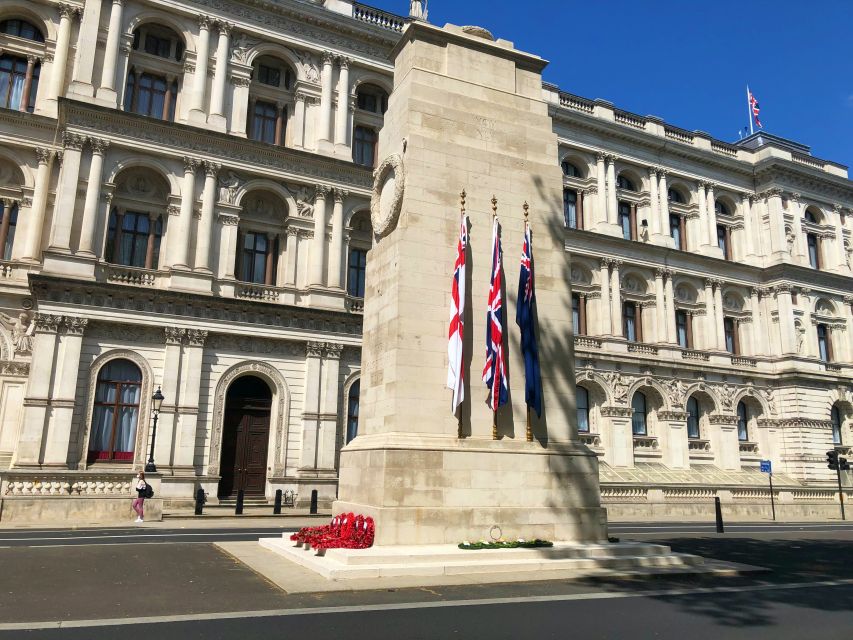
The route takes in the Cenotaph and the Ministry of War. These stops help you connect national remembrance with the practical work of government. One represents public commemoration. The other points toward military administration and the decisions required to keep the country fighting.
The Cenotaph is especially useful because it connects WWII with the wider memory of British conflict. Your guide can place the Second World War within that continuing national story, while still keeping the focus on Westminster and Churchill’s period.
This is also a good point to ask questions. The guides are praised for answering questions carefully and for handling subjects beyond the narrow route. That does not mean every tour will become a private seminar. The group still has a schedule, and the 1.5-hour version leaves limited time for long discussions. But an engaged guide can help you understand how the buildings, monuments, and people fit together.
Downing Street and Churchill’s public image
The stop near 10 Downing Street brings the story close to the office associated with Britain’s wartime prime minister. Here, the tour focuses on Churchill, his role, and the way his leadership shaped Britain’s response.
The best guides avoid presenting Churchill as a flat heroic figure. Richard, for example, has been praised for using descriptive stories and anecdotes that make Churchill’s personality easier to picture. That style gives you a more useful understanding than a simple list of speeches and victories.
You may hear about Churchill’s determination, public presence, and political importance, but the tour also places him among the people and institutions around him. That balance is valuable. Churchill mattered enormously, yet the war was carried by cabinet officials, military personnel, workers, families, and civilians across the country.
Downing Street is also a practical stop because it gives you a close look at the center of British government without requiring an interior visit. You should not expect access to Number 10. The value comes from the location, the explanation, and the sense of how close the wartime decision-making happened to the streets you are walking.
Finishing at Churchill’s War Rooms
The walking tour ends outside Churchill’s War Rooms. This is a logical finish, since the underground complex served as the wartime command center for Churchill and his cabinet.
Your guide leaves you here, allowing you to continue into the museum if you choose. The separate admission is important to budget for. The walking tour explains the surrounding story, while the War Rooms provide the chance to spend more time with the rooms, displays, and preserved wartime setting.
Several people have found the War Rooms to be one of the most interesting parts of the overall experience. That makes sense, but you should allow extra time and plan for an additional ticket. The walking tour itself does not include entrance to the War Rooms or to other monuments named along the route.
I recommend treating the walk and the museum as two connected activities rather than expecting the first to replace the second. The tour gives you a guided framework and explains the streets above ground. The War Rooms let you continue the subject at your own pace.
The guides make or break the experience
This tour has received a very high rating, 4.8 out of 5 from 143 ratings, and the praise is unusually consistent about one thing: the guide.
Nathan appears particularly often in positive feedback. He is described as punctual, witty, articulate, and able to explain both major events and small human details. He has also kept younger participants engaged, which is a useful sign if you are booking for a family.
Richard is a strong choice in spirit if you enjoy a mix of British humor, broad London knowledge, and vivid storytelling. Francis is praised for keeping the group moving without making anyone feel hurried. Babs brings enthusiasm and passion, while Rosie is noted for being funny, lively, and clear.
You cannot normally choose the guide in advance, so the experience may vary in tone. Still, the repeated praise for several different guides suggests that Urban Saunters has a strong team rather than relying on one standout person.
The tour is best for you if you want interpretation, not a silent walk from one famous building to another. You will hear a lot of information in a short time. One person found the 1.5-hour format too brief and wished for more time, while another felt the two hours passed quickly. That difference comes down to how much detail you want.
Is $39 good value for 1.5 hours?
At $39 per person, the price is fair if your priority is a focused guide who can connect several Westminster sights through one subject. You are paying for access to a well-planned route and an English-speaking local expert, not for admission to attractions.
The value is strongest when you already plan to see Westminster and want more than surface-level sightseeing. Instead of paying simply to walk past Big Ben, the Abbey, Whitehall, and Downing Street, you receive a connected explanation of their wartime importance.
The price feels less attractive if you want a long tour or expect to enter the buildings. The standard guided portion is 1.5 hours, while the advertised duration can range from 1.5 to 3 hours depending on the selected option. Check the exact starting time and duration when booking.
A private option may make sense for families or small groups who want to ask many questions. A shared group tour should suit most people who want the lower-cost way to hear the stories. Food, drinks, hotel pickup, transport, and entrance tickets are not included, so plan for those separately.
Practical advice for a smoother walk
Wear comfortable shoes. The route is not described as a punishing hike, but you will be on London streets and standing while the guide speaks.
Do not bring luggage or a large bag. This is particularly important if you are arriving before a hotel check-in or leaving London after the tour.
Allow time to find Exit 2 at Westminster Station. Meet beside the Boadicea and Her Daughters Statue at street level, not somewhere inside the station.
Bring questions if you have them. The guides are praised for handling subjects beyond the basic route, and a good question can turn a standard stop into the most memorable part of your walk.
If you want to visit Churchill’s War Rooms, plan that as a separate activity after the tour. You finish directly outside, which makes the combination convenient, but the entrance ticket is extra.
The activity is not suitable for wheelchair users or people with mobility impairments. If that applies to you, check carefully before booking.
Who should book this Westminster WWII walk?
I would recommend it to first-time London visitors who want a strong introduction to Westminster, families with older children, military history fans, and anyone interested in Churchill but unsure where to begin.
It also suits people who dislike long museum visits. You get a clear outdoor overview, plenty of stories, and the option to add the War Rooms afterward rather than committing to a full day indoors.
I would be more cautious if you want extensive time at each landmark, a slow architectural tour, or a detailed military lecture. The tour covers a lot quickly, and some of the stops are talking points viewed from outside.
Should you book the Winston Churchill and London in WWII Walking Tour?
Book it if you want Westminster to make sense as a wartime center, not just a collection of famous buildings. The guides’ storytelling is the strongest reason to go, with Nathan, Richard, Francis, Babs, and Rosie receiving particularly warm praise for clarity, humor, and personal detail.
The $39 cost is reasonable for a lively 1.5-hour introduction, especially if you add Churchill’s War Rooms afterward. Just keep your expectations clear: you are buying a guided outdoor history walk, not attraction admission or a full-day WWII course.
FAQ
Where does the tour meet?
Meet beside the Boadicea and Her Daughters Statue outside Westminster Station, using Exit 2 for Victoria Embankment. The guide will hold an orange Urban Saunters tour sign.
How long does the tour last?
The guided walking tour lasts 1.5 hours. The available activity duration may range from 1.5 to 3 hours depending on the selected option and starting time.
What landmarks are included?
The route discusses Big Ben, the Houses of Parliament, Westminster Abbey, the Cenotaph, the Ministry of War, 10 Downing Street, Whitehall, and the Monument to the RAF.
Does the tour include Churchill’s War Rooms?
No. The tour finishes outside Churchill’s War Rooms, but entrance requires a separate ticket.
Are monument entrance fees included?
No. Entrance tickets to the named monuments are not included in the tour price.
Is hotel pickup provided?
No. Hotel pickup and drop-off are not included.
What should I bring?
Bring comfortable shoes. Luggage and large bags are not allowed.
Is the tour suitable for wheelchair users?
No. The activity is not suitable for wheelchair users or people with mobility impairments.
Just added around London
- German London : The Ultimate Walking tour★ 4.8 · 400 reviews
- London: Medieval History Walking Tour from The Tower★ 4.9 · 318 reviews
- The Beatles London Walking Tour★ 4.2 · 147 reviews
- London: Sherlock Holmes-Themed Walking Tour★ 4.7 · 756 reviews
- Secret Old London Walking Tour★ 4.8 · 154 reviews
- Secrets of London Walking Tour★ 4.7 · 562 reviews
- London: Notting Hill Walking Tour★ 4.5 · 254 reviews
- London: Old City Walking Tour★ 4.8 · 135 reviews
London Walking Tours, compared.

Magical London: Harry Potter Guided Walking Tour
Read our review →
Tour for Muggles The Ultimate Harry Potter Walking Tour in London
Read our review →
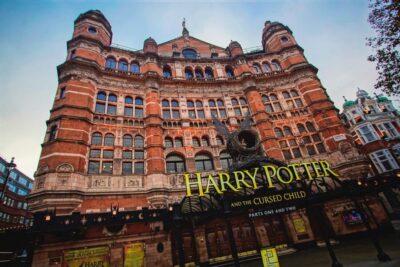
Harry Potter Movies Walking Tour (Kids Go Free)
Read our review →
London Bridge & Borough Market Food Tour with 7 Authentic Dishes
Read our review →
Changing of the Guard Guided Walking Tour in London
Read our review →
The Great British Rock and Roll Music Walking Tour
Read our review →Browse the lists this tour appears in