
Review · CULTURAL WALKING TOURS
New Orleans French Quarter, Voodoo and Culture Walking Tour
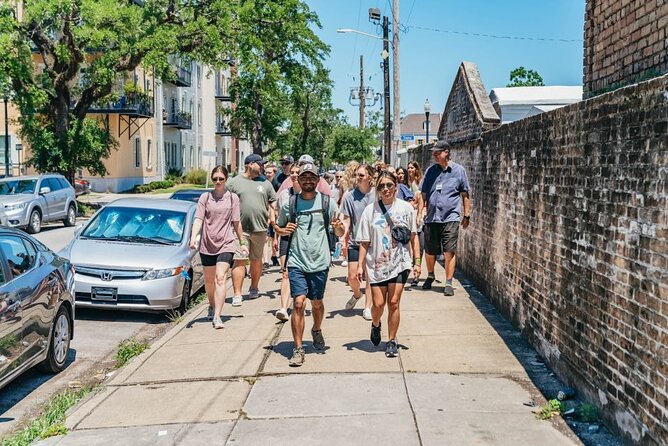
New Orleans keeps its best stories on the street. This two-hour walk combines voodoo history and French Quarter architecture, with stops at Jackson Square, Congo Square, Voodoo Authentica, and the former Storyville district. I like the way it treats voodoo as a serious spiritual tradition rather than a movie prop, and I like the chance to see small architectural details that are easy to miss alone. The main caution is simple: this is a history and culture walk, not a theatrical ghost show, so anyone seeking scares may find it too mild.
At $27.99, the tour offers a useful introduction to several sides of New Orleans in one mile of walking. Guides such as William, Logan, Jimmy, James, and Bill have earned praise for clear storytelling, local perspective, and friendly conversation. Still, guide quality can vary, and one participant found the pace of speech difficult to follow. Arrive early, wear comfortable shoes, and expect the tour to leave you with context rather than a staged thrill.
Key points to know before you book
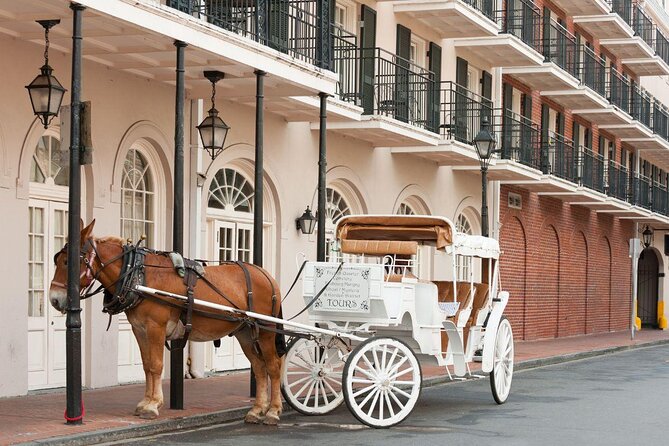
- Voodoo is explained with historical context: The tour connects African spiritual traditions, slavery, music, dance, and the development of jazz.
- The route covers about one mile: Walking is leisurely, but French Quarter paving can be hard on feet and mobility aids.
- Congo Square is a major highlight: Louis Armstrong Park provides the setting for stories about Sunday gatherings, music, dance, trade, and ritual.
- Architecture gets plenty of attention: Look for Creole townhouses, shotgun homes, entresol houses, courtyards, and French and Spanish influences.
- You do not enter cemeteries: The route may discuss burial customs and famous names, but cemetery admission is not included.
- The tone is informative rather than frightening: It suits curious adults, families with older children, and anyone wanting a grounded introduction to New Orleans culture.
Why this walk works at $27.99
The price is fair if you want an orientation to the French Quarter with a specific cultural focus. You are paying for a licensed guide, a planned route, and the chance to connect places with stories that are difficult to assemble from a street map.
The value comes from the combination. A standard French Quarter walk might focus mainly on buildings and famous squares. This one adds Marie Laveau, African spiritual traditions, Congo Square, the history of slavery, and the roots of jazz. You also see how the city’s architecture reflects French, Spanish, Creole, and Southern influences.
At the same time, do not expect museum admissions, food, drinks, or a long presentation inside a historic building. The attraction is the guide and the streets themselves. At two hours, the tour is a reasonably priced first look, not a complete study of New Orleans voodoo.
The rating is strong, at 4.7 from 2,961 ratings, with 92 percent recommending the experience. The most consistent praise goes to the guides, especially William, who is described as warm, engaging, and able to connect voodoo with slavery, jazz, and daily life. That human element matters here. The subject needs explanation, not just dramatic claims.
More Cultural Walking Tours in New Orleans:
- Savannah First Squares Culinary & Cultural Walking Food Tour
★ 5.0 · 3,229 reviews - Tokyo Tsukiji Fish Market Food and Culture Walking Tour
★ 5.0 · 3,184 reviews - Amsterdam: Cultural Highlights Walking Tour
★ 4.9 · 2,629 reviews
Starting at Witches Brew Gallery
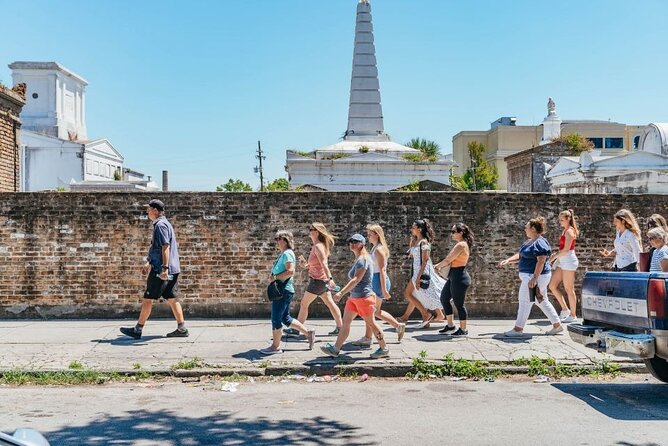
The tour begins at Witches Brew Gallery and Haunted Sanctuary, at 311 Exchange Place, across from the Pelican Club Restaurant. Check-in begins 30 minutes before departure, and the group leaves on time. Do not cut it close. Late arrivals are not accepted and are not refunded.
You can choose a morning or afternoon departure. Morning may be easier during New Orleans heat, while an afternoon start can fit well after breakfast or a visit to another French Quarter sight. The tour operates in most weather, including rain, cold, snow, and sleet, so dress for the forecast and bring water. Cancellation is reserved for serious conditions such as flooding, tropical storms, hurricanes, fires, or cloud-to-ground lightning in the French Quarter.
The maximum group size is 28 people. That is not a tiny private walk, but some participants have experienced smaller groups and appreciated the extra chance to ask questions. A smaller group can make a real difference on narrow sidewalks, especially when the guide is discussing a courtyard or pointing out a detail above street level.
French Quarter streets and the architecture above eye level
The opening hour moves through the French Quarter, where the buildings provide the first lesson in how New Orleans developed. You may see French and Spanish-inspired façades, Creole townhouses, shotgun homes, and entresol houses.
The architectural portion is more than decoration. Your guide explains how different building forms reflect climate, land use, class, and the city’s changing population. Shotgun homes, associated with the early 1860s in the tour’s discussion, are especially useful for understanding Southern urban housing. Their long, narrow design is easy to overlook if you are concentrating only on balconies and ironwork.
You may also glimpse a cloistered courtyard and hear about its practical purpose. These enclosed spaces helped organize daily life in dense urban blocks. The detail gives you a better way to read the Quarter after the tour ends. Instead of seeing a wall or gate as background, you begin asking what happened behind it and why it was built that way.
This section is also where the tour’s tone becomes clear. The guide is not simply pointing out spooky buildings. The goal is to connect streets, homes, belief, and local memory. Guides William and Logan received particular praise for making the past easy to follow, while other participants appreciated the recommendations and personal observations offered along the way.
Jackson Square and the city’s early story
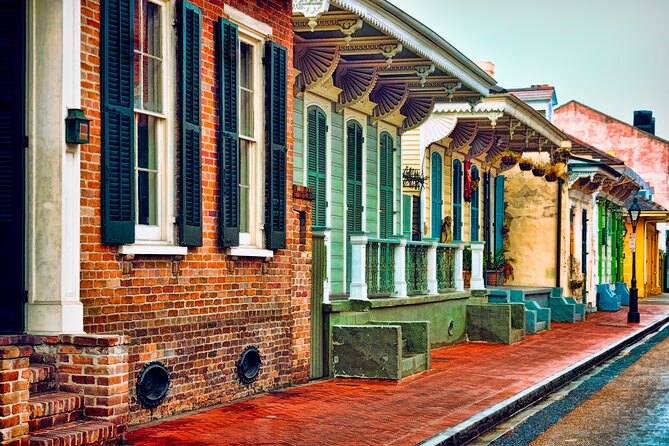
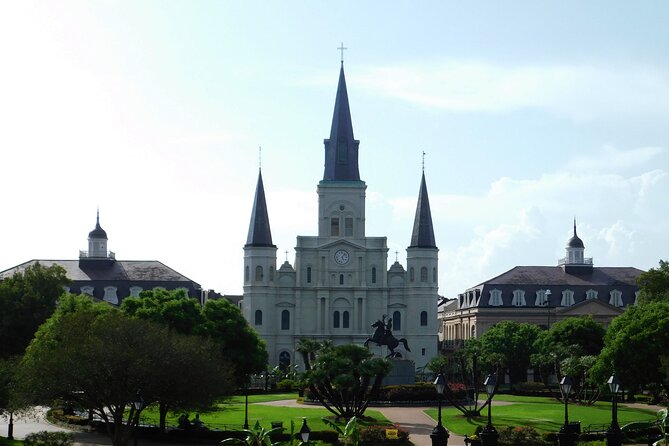
Jackson Square is a short but important stop. Here, you hear about the first settlements of New Orleans and see major landmarks around the square, including St. Louis Cathedral and early apartment buildings described as the first of their kind in the United States.
The stop lasts about 15 minutes, so think of it as a focused explanation rather than a full historical tour of the square. You will have time to orient yourself and understand why this central space matters, but not necessarily to study every statue, building, and artist stall.
This is one place where the experience benefits from taking notes mentally for later. Jackson Square is easy to revisit on your own after the tour, and the guide’s explanation gives you a useful framework before you return for photographs or a closer look.
A few more walks around New Orleans worth a look
- New Orleans Premier Ghost, Voodoo and Vampire Walking Tour
★ 4.5 · 12,856 reviews - New Orleans Food Walking Tour of the French Quarter with Small-Group Option
★ 5.0 · 6,118 reviews - St. Louis Cemetery No. 1 Official Walking Tour
★ 4.5 · 3,941 reviews - New Orleans Garden District History Walking Tour
★ 5.0 · 2,879 reviews
St. Louis Cathedral and the city after fire
The St. Louis Cathedral stop lasts about 10 minutes. The guide discusses the cathedral and the fire that destroyed much of the city. That story helps explain why New Orleans contains such a mix of surviving structures, rebuilt façades, and architectural styles.
The tour information does not promise an interior visit, so plan on seeing and discussing the cathedral rather than assuming you will enter. If you want a longer look inside, set aside separate time before or after the walk.
This brief stop works well because it ties a famous landmark to the city’s vulnerability. New Orleans history is not only about grand buildings and legends. Fire, weather, rebuilding, and changing populations shaped what you see today.
Voodoo Authentica and a less cartoonish tradition
Voodoo Authentica provides a tangible point for the discussion. The shop specializes in materials associated with ritual practice, including herbs, oils, and amulets. You can browse the setting while the guide explains traditions and the role of Marie Laveau.
This is the heart of the tour for many people, but expectations matter. You are learning about voodoo, not attending a ritual or receiving a supernatural demonstration. The most useful part is the correction of familiar movie images. The guide explains voodoo as a religion with spiritual practices, symbols, and historical roots, rather than the collection of clichés often attached to the word.
Marie Laveau receives substantial attention. She remains one of New Orleans’ best-known spiritual figures, and her name appears throughout the city’s stories. The tour presents her place in local tradition, while also addressing the continuing uncertainty around some legends connected with her life and burial.
One participant felt the tour needed more direct voodoo exposure. That is a fair criticism if your main goal is a strongly ritual-focused experience. For a broader walk that places voodoo beside architecture, slavery, music, and city history, the balance is more suitable.
Congo Square in Louis Armstrong Park
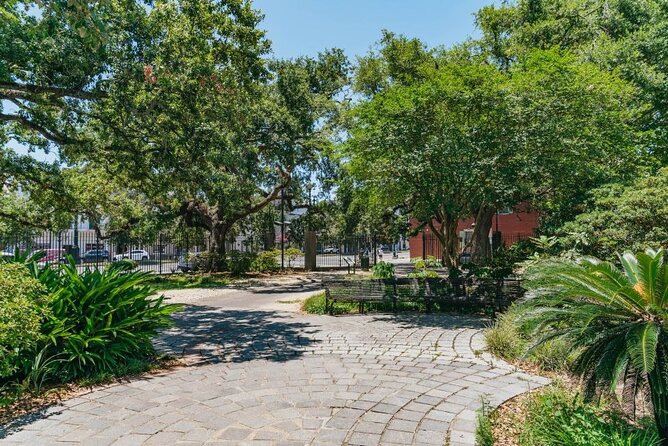
Louis Armstrong Park is the most important historical setting on the route. At Congo Square, the guide discusses gatherings in the 1800s when enslaved and free people met on Sundays to trade, socialize, play music, dance, and practice spiritual traditions.
This stop gives the tour its strongest cultural connection. The square was not just an open patch of land. It was a place where people maintained community, expression, and memory under harsh conditions. The discussion also links African dance and drumming traditions to the later development of jazz, giving you a more grounded way to think about New Orleans music.
Some participants especially valued the introduction to African gods and goddesses here. A guide may use books or visual material to explain the spiritual figures and their place in voodoo tradition. That added context can be useful because it turns an abstract explanation into something easier to follow.
The park also offers a change of pace from the tight blocks of the French Quarter. You have more room to listen and look around. Still, this is a walking tour, not a long park visit. The scheduled stop is about 15 minutes, so the guide has to keep the story moving.
Storyville and the edge of the Quarter
The final listed stop is the former Storyville district, just outside the French Quarter. It was New Orleans’ historic red-light district, and the guide explains its place in the city’s past.
The stop lasts about 10 minutes, which is enough for a concise introduction but not a full examination of the district. If Storyville is a central interest for you, plan to research or visit related sites separately. The value here is seeing how the district fits into the wider story of New Orleans nightlife, music, and social history.
The route then ends at Jackson Square, in the center of the French Quarter. That is a practical finish. You can continue sightseeing, find lunch, visit the cathedral area, or return to a shop without arranging transport back to the starting point.
What the walk feels like in practice
The pace is leisurely, and the total distance is about one mile. On paper, that sounds easy. In practice, heat, humidity, rain, uneven paving, and crowded sidewalks can make the walk more tiring than the distance suggests.
Bring bottled water, especially in summer. Wear shoes with good support rather than thin sandals. The tour runs in all ordinary weather, and wet streets can make the historic paving more awkward.
The French Quarter’s terrain can be difficult for some people with mobility issues. The company tries to accommodate participants, but the old streets and surfaces create real limits. Service animals are allowed, and most people can take part, but you should book with those conditions in mind.
The group is capped at 28, and the guide is licensed by the City of New Orleans. The strongest accounts praise guides for inviting questions and making solo participants feel comfortable. One participant found a guide spoke too quickly and was hard to understand, so do not hesitate to ask for a slower explanation or repetition.
Who should book this New Orleans walk
I would choose this tour if you want:
- A first introduction to New Orleans voodoo without a horror-show approach
- French Quarter architecture explained in plain language
- A connection between African traditions, slavery, Congo Square, and jazz
- A short walking route that fits easily into a day of sightseeing
- A guide-led experience rather than a self-guided history app
- A family activity that can work for older children and teenagers interested in unusual history
I would choose something else if you want cemetery entry, a long museum visit, a highly theatrical ghost tour, or an in-depth academic study of voodoo. The tour does not enter cemeteries, even though it may discuss burial customs, famous names, and local legends.
It also may not suit very young children who need constant action. One family found the information good but the experience less exciting than expected. The tour is best for curious listeners who enjoy stories, buildings, and cultural explanation.
Should you book the Voodoo and Culture Walking Tour?
Book it if you want a reasonably priced, carefully structured introduction to several important New Orleans themes. The best guides make the hour in the French Quarter feel connected to Congo Square, Marie Laveau, jazz, slavery, and the city’s layered architecture.
Skip it if your picture of a voodoo tour involves scares, rituals, or cemetery access. At $27.99, the value is strongest for people who want context and a local guide’s storytelling. Arrive 30 minutes early, carry water, wear good shoes, and keep an open mind. You will get the most from it if you treat voodoo as a living religious tradition and New Orleans as a city whose buildings and music carry difficult, fascinating stories.
FAQ
Where does the tour begin?
It begins at Witches Brew Gallery and Haunted Sanctuary, 311 Exchange Place, New Orleans, Louisiana 70130, directly across from the Pelican Club Restaurant.
Where does the tour end?
The tour ends at Jackson Square in the heart of the French Quarter.
How long is the experience?
The walking tour lasts approximately two hours.
How far will I walk?
You will cover about one mile, or 1.6 kilometers, at a leisurely pace.
Is the tour offered in English?
Yes. The tour is offered in English.
Does the tour enter cemeteries?
No. Cemetery entry is not included.
What should I bring?
Bring bottled water and wear comfortable walking shoes. Dress appropriately for the weather because the tour operates outdoors.
How early should I arrive?
Check-in begins 30 minutes before departure. The tour leaves on time, and late arrivals are not refunded.
Can children participate?
Children under five are free of charge. Most participants can take part, but the historic French Quarter terrain can create challenges for people with mobility issues.
What happens if the weather is bad?
Tours generally operate in rain, cold, snow, sleet, and other ordinary inclement weather. The experience may be canceled for flooding, tropical storms, hurricanes, fires, or cloud-to-ground lightning in the French Quarter. If the operator cancels, you can receive a full refund or choose another date or experience.
Can I cancel for a full refund?
Yes. Cancel at least 24 hours before the experience begins for a full refund. Cancellations or changes made less than 24 hours before the start time are not refunded or accepted.
Is advance booking required?
Reservations are required because New Orleans limits the number of people each licensed guide may lead. Without a reservation, an available guide cannot be guaranteed.
Just added around New Orleans
- New Orleans: Witches Coven Garden District Walking Tour★ 4.9 · 113 reviews
- New Orleans: French Quarter Ghost and Legends Walking Tour★ 4.3 · 129 reviews
- New Orleans: Garden District Guided Walking Tour★ 4.9 · 514 reviews
- New Orleans: Drunk History Walking Tour★ 4.2 · 165 reviews
- New Orleans: 2-Hour Homes of the Rich & Famous Walking Tour★ 4.6 · 115 reviews
- New Orleans: French Quarter Photo Shoot and Walking Tour★ 5.0 · 74 reviews
- New Orleans: 2 or 3 Day Hop-On Hop-Off Bus with Walking Tour★ 4.5 · 291 reviews
- New Orleans: Five-in-One City Walking Tour★ 3.8 · 272 reviews
Cultural Walking Tours, compared.

Savannah First Squares Culinary & Cultural Walking Food Tour
Read our review →
Tokyo Tsukiji Fish Market Food and Culture Walking Tour
Read our review →

Anne Frank Walking Tour Amsterdam Including Jewish Cultural Quarter
Read our review →
Southernmost Food & Cultural Walking Tour by Key West Food Tours
Read our review →
Ultimate Melbourne Walking Tour: History, Laneways & Culture
Read our review →

Valletta: Street Food and Culture Walking Tour
Read our review →Browse the lists this tour appears in