
Review · CULTURAL WALKING TOURS
Palermo No Mafia walking tour: discover the Anti-mafia culture in Sicily
Palermo’s real story is more than movie scenes. This three-hour walk connects the city’s landmarks with its long fight against organized crime, showing you how resistance changed daily life. I like the clear anti-mafia purpose and the chance to support businesses that refuse to pay pizzo, the protection racket. The small group, capped at 15 people, also gives you room to ask questions.
I also like that the tour does not glorify the Mafia. Guides such as Sylvia, Valeria, Federico, and Ermes focus on victims, civic courage, and present-day change. One consideration: this is not a general Palermo sightseeing walk. If you want art, architecture, and broad city history at every stop, the repeated focus on anti-mafia themes may feel narrow.
- A three-hour route from Teatro Massimo to Fontana Pretoria, crossing some of Palermo’s most important central sights.
- The Wall of Legality, a 70-meter mural honoring people killed by the Mafia.
- A market stop that explains the Mafia’s pressure on shopkeepers, not just its portrayal in films.
- Addiopizzo businesses, including Cappadonia Gelati, where your purchase supports a no-extortion campaign.
- A small group of no more than 15 people, useful for questions and discussion.
- A solidarity contribution to Addiopizzo, the local organization behind the tour.
Why This Palermo Walk Matters
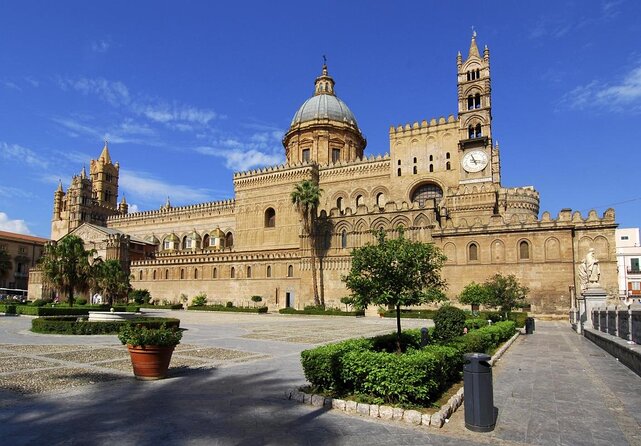
Palermo is often presented through two easy images: glorious Arab-Norman buildings and the cinematic Mafia of The Godfather. Both are part of the city’s identity, but neither tells the whole story.
This walk puts the focus on ordinary people, public officials, judges, shopkeepers, church leaders, and community groups who resisted organized crime. You will hear about violence and corruption, but the main subject is how Palermo pushed back and how that effort continues.
That distinction matters. The tour is not designed as a Mafia spectacle. It aims to correct the movie version of Sicily, where criminal power can look glamorous, secretive, or inevitable. Here, the emphasis is on victims and resistance.
The experience costs $39.30 per person. For a three-hour guided walk with a local guide, a small group, and a contribution to Addiopizzo, I consider that a fair price. You are paying for interpretation and local context rather than admission to a major monument. The value is strongest if you want to understand modern Palermo, not simply collect photographs.
The tour has earned a 4.8 rating from 1,011 reviews, with 95 percent of participants recommending it. Those numbers fit the experience’s strongest feature: the guides bring real purpose to the walk. Names that have received particular praise include Sylvia, Valeria, Federico, Ermes, Mariela, Salvador, Francesco, and Laura.
Starting at Teatro Massimo
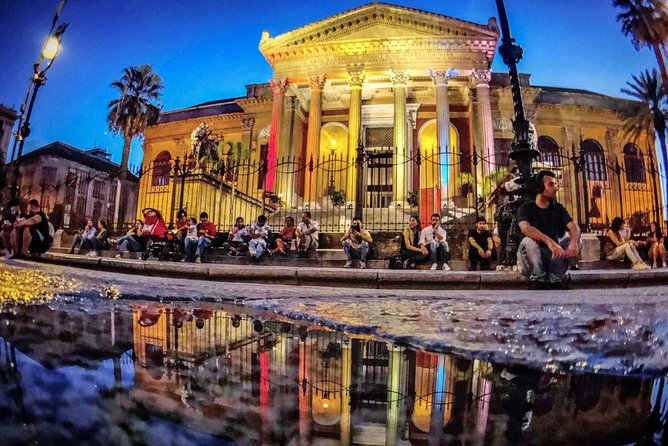
Meet at Piazza Giuseppe Verdi, outside Teatro Massimo. Palermo’s opera house is an imposing first stop, and the guide uses it to connect popular culture with the city’s modern identity.
Many people know Teatro Massimo from the final scenes of The Godfather Part III. The tour does not leave the site at that level of film trivia. Instead, the theater becomes a symbol of Palermo’s attempt to recover after years of Mafia violence and public fear.
You will spend about 30 minutes here. That is enough time for an explanation of the building’s importance and the political atmosphere around it, but this is not an interior theater tour. Admission is free because you are viewing the site from the walking route.
This opening works well because it gives you a familiar reference point, then turns the story in a more serious direction. If you arrive expecting a traditional city tour, pay attention to the guide’s framing. The goal is not to list architectural details. It is to show how a public monument can represent a city trying to reclaim its confidence.
More Cultural Walking Tours in Palermo:
- Savannah First Squares Culinary & Cultural Walking Food Tour
★ 5.0 · 3,229 reviews - Tokyo Tsukiji Fish Market Food and Culture Walking Tour
★ 5.0 · 3,184 reviews - New Orleans French Quarter, Voodoo and Culture Walking Tour
★ 4.5 · 2,961 reviews
Faces on the 70-Meter Wall of Legality
The Wall of Legality is one of the walk’s most visual stops. At about 70 meters long, it is described as Italy’s longest wall painting and features portraits of well-known victims of the Mafia.
You get around 10 minutes here, usually enough to look closely, hear the stories connected to the images, and take photographs. The mural is part of an urban renewal project, so it is more than a memorial. It also gives a neglected or overlooked part of the city a public role.
This stop helps put faces to names. Mafia violence can become an abstract subject when it is reduced to dates, organizations, and court cases. A wall of portraits changes that. You are reminded that judges, prosecutors, activists, and other victims were real people with families and careers.
The time is short, so do not expect a full biography of everyone shown. The guide has to select the most important examples. Still, this is a strong point for anyone who learns best through visual reminders.
The Market and the Cost of Saying No
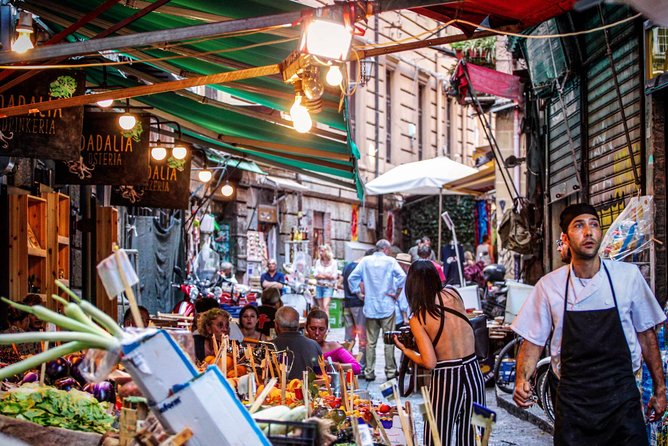
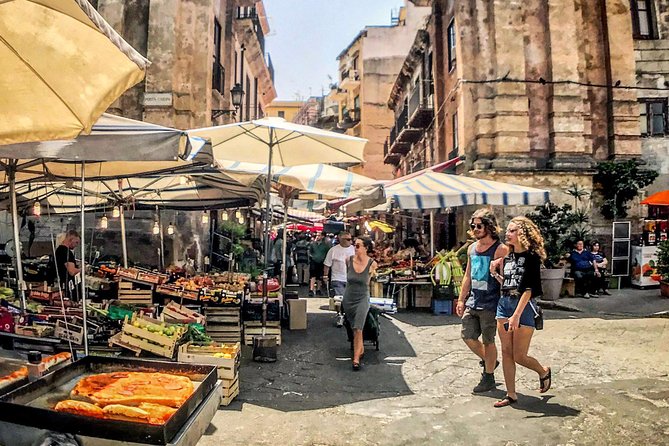
The colorful open-air market is where the tour moves from memorials to everyday economics. Here, the guide explains the relationship between Mafia power and shopkeepers, including the pressure to pay pizzo.
This is an important part of the experience because it shows how organized crime can affect daily business. The issue is not limited to dramatic murders or courtroom battles. It can also appear as a regular demand placed on a small shop, with refusal carrying fear and financial risk.
The market is loud, crowded, and full of movement. That makes it a useful setting for the conversation, but it can also make the guide harder to hear. Stay close to the group and expect to pause rather than walk continuously during every explanation.
One participant felt the tour involved too much standing while the guide spoke and suggested that headphones might make it easier to listen while moving. That is a fair practical criticism. The format favors conversation and direct questions, but it is not a fast-paced walk.
Remembering Judges at Palazzo di Giustizia
Near the Palermo courthouse, Piazza della Memoria honors judges and prosecutors killed by the Mafia. The stop takes about 15 minutes and adds a legal dimension to the story.
Here, the guide explains how the justice system confronted organized crime and why certain judges became symbols of courage. The subject is difficult, but the setting gives it weight. You are not hearing only about criminal groups. You are also hearing about public servants who tried to protect the rule of law.
This is one of the best stops for understanding why Palermo’s anti-mafia movement required more than police action. Courts, prosecutors, journalists, citizens, and local organizations all played a role. The guide may also explain how the movement affected the city’s public mood and its willingness to resist intimidation.
The stop is outdoors and involves standing. Wear comfortable shoes and be ready for a serious tone. This is not a light sightseeing outing, though the guides work to keep the discussion accessible.
A few more walks around Palermo worth a look
- Palermo: NO Mafia Walking Tour
★ 4.8 · 2,431 reviews - Palermo Original Street Food Walking Tour by Streaty
★ 5.0 · 2,105 reviews - Palermo: Street Food and History Walking Tour
★ 4.9 · 1,486 reviews - Palermo: Private Custom Walking Tour with Local Guide
★ 4.7 · 661 reviews
Palermo Cathedral and the Church’s Complicated Role
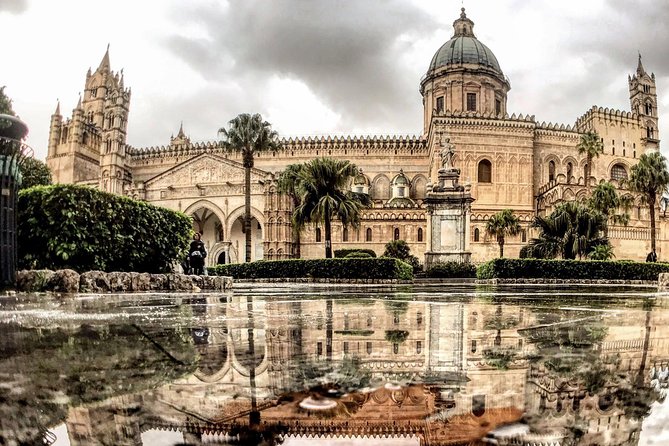
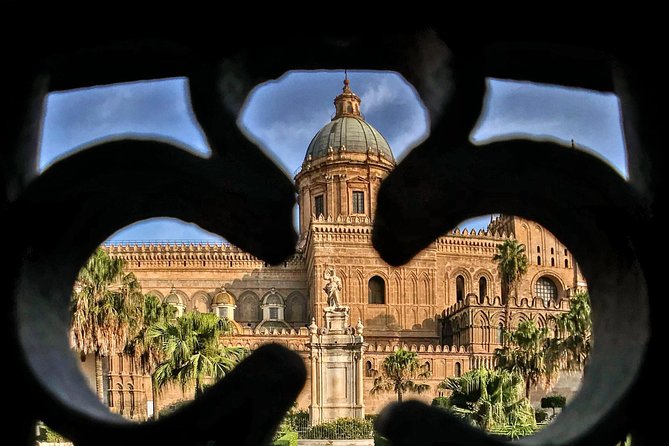
In front of Palermo Cathedral, the guide discusses the relationship between the Catholic Church and the Mafia. The cathedral itself is one of the city’s major Arab-Norman monuments, but the tour uses it mainly as a place to consider religious authority and public influence.
You will spend about 15 minutes here. The cathedral’s setting helps show how civic life, religion, and politics overlap in Palermo. The subject is not presented as a simple story of good and bad institutions. Instead, you hear about the Church’s complicated position and its changing response to Mafia power.
If you want to go inside the cathedral, treat that as a separate visit. The tour does not include interior admission or a detailed architectural explanation. This distinction is important because the building may tempt you to expect a standard cathedral tour.
Still, the location is effective. You see a famous monument while learning why institutions with moral and public authority mattered in the fight against organized crime.
A Gelato Stop With a Civic Choice
Along the Cassaro, the guide points out an orange sticker in the window of Cappadonia Gelati. The sticker identifies a business that has refused to pay pizzo and joined Addiopizzo’s critical consumption campaign.
This is one of the tour’s most useful ideas: your spending can support the kind of city you want to see. Buying gelato is not required, and it does not transform a serious subject into a gimmick. It gives you a simple, practical way to support a business that has taken a public position.
The stop lasts about 15 minutes. You may choose to buy something, but lunch is not included, and the tour price does not cover food. This makes the stop flexible for different budgets and appetites.
Addiopizzo’s role is central throughout the walk. A small part of your tour fee goes to the local nonprofit, so the experience supports the same anti-extortion work it explains. That adds substance to the tour’s message. You are not only hearing about civic action. You are helping fund it in a modest way.
Palazzo Pretorio and the City’s Political Story
The final main stop is Palazzo Pretorio, Palermo’s city hall, in Piazza Pretoria. The building has been associated with both corrupt politicians and people who worked against Mafia influence.
That contrast gives the tour a fitting ending. The story is not that every institution was clean, or that the city solved the problem once and for all. Palermo’s political life has included corruption, resistance, fear, and reform.
The guide uses the site to explain how public officials can either protect old systems or help dismantle them. That point echoes the wider message of the walk: organized crime survives through silence, weak institutions, and social acceptance, while resistance depends on people making different choices.
The tour ends at Fontana Pretoria, in the center of Palermo’s old town. You receive suggestions for continuing your visit and finding Sicilian specialties nearby. Ending here is convenient because you can keep exploring on foot instead of arranging transport back to the starting point.
What the Guides Add
The tour’s success depends heavily on the guide. The strongest descriptions emphasize passion, clarity, and a personal connection to the subject.
Sylvia has been praised for her command of anti-mafia history and her commitment to the mission. Valeria has explained how Mafia influence affected her own life, as well as the lives of friends and family. That kind of personal connection can make the subject feel immediate without turning the walk into a theatrical performance.
Guides including Giuseppe, Mariela, Federico, Ermes, Salvador, Mariella, Francesco, and Laura have also been singled out for clear explanations and strong engagement with questions. English is the offered language, and several accounts specifically praise the guides’ ability to speak clearly and keep the group involved.
You should expect different personalities and presentation styles. One guide may tell more personal stories, while another may focus on court cases, politics, or the anti-mafia movement. The shared strength is the subject knowledge and commitment to correcting stereotypes.
The tour works best when you ask questions. The group is small enough for discussion, and the guides appear comfortable addressing details about the Mafia’s past and its current influence.
Timing, Walking, and Group Comfort
Plan for about three hours. The route includes substantial standing and walking through central Palermo, with pauses at public squares, monuments, a market, and businesses.
Comfortable shoes are strongly advised. You do not need special fitness or medical preparation, and most people can participate. The route is near public transportation, but hotel pickup and drop-off are not included.
Rain changes the practical side of the outing. Bring an umbrella and a dry jacket if the forecast is poor. Since much of the experience takes place outdoors, wet weather can make the standing portions less pleasant.
The maximum group size is 15. That is a useful limit for a topic requiring conversation, though the walk may still feel less personal if the group reaches full capacity. If you prefer a private experience, this is not described as a private tour.
Book ahead if your schedule is fixed. It is booked an average of 24 days in advance, suggesting that popular dates can fill before your arrival. Free cancellation is available until 24 hours before the start time. Changes or cancellations inside that window are not accepted for a refund.
Who Will Get the Most From This Tour
I would choose this walk early in a Palermo visit if you want a better framework for the city. It can help you understand later visits to memorials, museums, churches, markets, and historic streets.
It suits you especially well if you:
- Want the real civic story behind Mafia stereotypes
- Care about ethical spending and local social movements
- Prefer serious discussion to entertainment built around crime
- Enjoy asking questions during a small-group walk
- Want a mix of landmarks and modern social history
- Are comfortable with a sober subject and some standing
It may not suit you if your main goal is architecture. You will see the cathedral, Teatro Massimo, Palazzo Pretorio, and other central sites, but the guide will not spend most of the time on art or construction dates.
It may also disappoint you if you expect secret locations, crime-scene sightseeing, or sensational stories. The tour deliberately moves away from that approach. Its subject is resistance, not Mafia glamour.
Should You Book the Palermo No Mafia Walk?
Yes, if you want to understand Palermo beyond film clichés and grand buildings. The Addiopizzo connection, the 70-meter memorial mural, and the focus on shopkeepers and public officials give the walk a clear purpose.
I would not book it as your only Palermo sightseeing tour. Pair it with a separate visit to the cathedral interior, the Norman Palace, or another architecture-focused experience. Taken on its own, the anti-mafia focus can feel repetitive to someone seeking a broad introduction to the city.
For $39.30, three hours, and a group of no more than 15, this is a solid choice for an informed, serious walk. Put it near the start of your stay, wear good shoes, stay close in the market, and leave room for gelato and further exploring at Fontana Pretoria.
FAQ
How long does the Palermo No Mafia walking tour last?
The tour lasts approximately three hours.
What language is the tour offered in?
The tour is offered in English.
Where does the tour start?
It starts at Piazza Giuseppe Verdi, 455, in Palermo.
Where does the tour end?
It ends at Fontana Pretoria in Piazza Pretoria, in Palermo’s old town center.
What is the maximum group size?
The tour allows a maximum of 15 participants.
Is hotel pickup included?
No. Hotel pickup and drop-off are not included.
Does the tour include food?
No. Lunch is not included. You may choose to buy gelato at Cappadonia Gelati during the stop.
What should I bring for the walk?
Wear comfortable shoes. In rainy weather, bring an umbrella and a dry jacket.
Can I cancel for a full refund?
Yes, if you cancel at least 24 hours before the experience start time. Cancellations made less than 24 hours in advance are not refunded.
Just added around Palermo
- Palermo: Street Food Walking Tour with Local Guide & Tasting★ 4.9 · 632 reviews
- Palermo: UNESCO World Heritage Sites Guided Walking Tour★ 4.8 · 548 reviews
- Palermo: Walking Tour of Historic Markets and Monuments★ 4.9 · 478 reviews
- Palermo: Markets and Monuments City Center Walking Tour★ 4.9 · 238 reviews
- Palermo: Private Custom Walking Tour with Local Guide★ 4.7 · 661 reviews
- Palermo: Private Walking Tour with a Local★ 4.6 · 393 reviews
- Palermo : Historic Markets & monuments Walking Tour★ 4.7 · 129 reviews
- Palermo: Anti-Mafia Heroes Evening Walking Tour★ 4.6 · 172 reviews
Cultural Walking Tours, compared.

Savannah First Squares Culinary & Cultural Walking Food Tour
Read our review →
Tokyo Tsukiji Fish Market Food and Culture Walking Tour
Read our review →
New Orleans French Quarter, Voodoo and Culture Walking Tour
Read our review →
Anne Frank Walking Tour Amsterdam Including Jewish Cultural Quarter
Read our review →
Southernmost Food & Cultural Walking Tour by Key West Food Tours
Read our review →
Ultimate Melbourne Walking Tour: History, Laneways & Culture
Read our review →
Browse the lists this tour appears in