
Review · PORTUGAL WALKING TOURS
Porto’s #1 Walking Tour
Porto rewards a good first walk. This roughly two-and-a-half-hour route gives you a useful introduction to the city center, linking churches, viewpoints, grand squares, the railway station, and Porto Cathedral. I like the easy pace and the way guides such as Andre, Jorge, Natalia, Diogo, and Harold mix history with restaurant, transport, and sightseeing advice. I also like that you finish at the cathedral, where you can continue exploring on your own.
The main catch is simple: the booking price of $0.91 is not the tour price. It only reserves your place. You are expected to pay the guide directly at the end, choosing the amount yourself. The route also stays within a fairly limited central area, so it is best for getting your bearings, not for seeing all of Porto.
Key points to know before booking
- Ten central sights in about two and a half hours: You visit major landmarks including Clérigos Tower, Livraria Lello, São Bento Station, and Porto Cathedral.
- Pay what you want format: The small online booking charge guarantees your place, but your guide’s payment comes from your own tip.
- English-speaking guides with strong personalities: Andre, Jorge, Natalia, Harold, Diogo, and others are praised for clear storytelling, humor, and useful local advice.
- A good first-day activity: The route helps you understand Porto’s layout before you return to individual sights.
- Walking means hills and standing: The pace is generally manageable, but Porto is not flat, and you will be on your feet for most of the tour.
- The group can reach 28 people: Some departures feel personal, while larger groups may require a microphone and careful positioning near the guide.
Why this walk works best on your first day
Porto can feel confusing at first. Streets rise and drop without warning, the old center folds around churches and plazas, and several major sights sit close together but are not always obvious from street level. A guided walk gives you a map in your head before you start making your own plans.
I like this route because it connects the city’s cultural and civic landmarks rather than focusing on only one theme. You see the former prison that now houses a photography center, a high viewpoint, ornate churches, the university, a famous bookshop, a grand avenue, a railway station, and the cathedral.
You should think of the experience as a city orientation with stories, not as a sequence of full museum visits. Most stops last about 10 minutes. That is enough time for an explanation, a few photographs, and some questions, but not enough for a thorough interior visit at every sight.
The route is especially useful if you have only a short stay in Porto. It shows you where the key sights are, then leaves you with a list of places to revisit. If you already know central Porto well, the limited coverage may feel less satisfying.
A few more walks around Porto worth a look
- Porto Walking Tour, Lello Bookshop, River Cruise and Cable Car
★ 5.0 · 3,354 reviews - Experience Porto’s Charm: 3-Hour Guided Walking Tour
★ 5.0 · 2,432 reviews - Porto: 3-Hour Guided City Highlights Walking Tour
★ 4.8 · 2,050 reviews
Starting at the old prison and Porto’s best viewpoint
The meeting point is at Largo Amor de Perdição, beside the Centro Português de Fotografia. The building’s past gives the tour an immediate historical setting. It once served as a prison and now holds photography exhibitions, creating a sharp contrast between Porto’s older civic life and its current cultural use.
The stop is brief, so do not expect time for a full exhibition visit. It works more as an introduction to the city’s layers. You begin by looking at a place that was not designed as a tourist attraction, which is often more revealing than starting with a postcard monument.
From there, the walk reaches Miradouro da Vitória. This viewpoint is one of the most useful stops on the route because it helps you see how Porto’s upper and lower areas fit together. You can pause for photographs and get a sense of the city’s slopes, rooftops, and riverward direction.
This is also where the shape of the walk becomes clear. Porto’s hills are part of the experience. The route is not described as an intense hike, and several people found the pace comfortable, but you still need sensible shoes and enough energy for standing and walking.
Clérigos Tower, the old court, and Porto’s church tiles
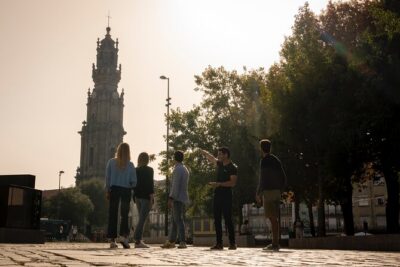
The next section brings you to Torre dos Clérigos, one of Porto’s most recognizable landmarks. The tower is an important visual marker, and your guide can place it within the surrounding streets and buildings. The tour does not include the admission fee, so you should treat this stop as an exterior explanation unless you decide to visit separately.
After Clérigos comes the Tribunal da Relação do Porto. This former court adds a different note to the walk. Porto’s story is not only churches and scenic views. Legal buildings, prisons, government offices, and public squares also show how the city worked.
I appreciate this kind of stop because it keeps the tour from becoming a parade of famous façades. You get a little more context about public life and the institutions that shaped the city. Again, the short time means you will hear the main points rather than receive a full architectural lecture.
Igreja do Carmo is one of the more visually rewarding pauses. The church is known for its decoration and tilework, and the guide explains both the building and the famous tiles. Porto’s azulejos are easy to admire, but a short explanation helps you notice how much work is packed into a blue and white wall.
Admission is not included here. If you want to see the interior properly, you may need to return later. That is one reason to keep your afternoon flexible. This walk introduces the church, but it is not designed to give you unlimited time inside each landmark.
The university and Livraria Lello
The route continues past Universidade do Porto. The university brings student life and education into the story of the city. It also helps explain why this part of central Porto has a younger, more active feel alongside its older monuments.
You will then reach Livraria Lello, perhaps the most famous stop on the walk. Its ornate interior and literary reputation have made it one of Porto’s busiest attractions. The guide can explain why the bookshop matters, but the tour does not include admission.
That detail matters. Livraria Lello often requires separate planning, and a 10-minute stop is not the same as an entry visit. If you want to go inside, check the current entry arrangements independently and plan it for another time unless your tour schedule clearly allows it.
The benefit of seeing it during the walk is that you can decide if it deserves your time. The drawback is that some people may feel frustrated seeing such a major sight without entering. The route is built around orientation, so that limitation is part of the design.
Same streets, a different way to see them:
- Porto: Wine Tasting with Tapas Walking Tour
★ 4.4 · 1,541 reviews - Porto: Historic City Center Walking Tour
★ 4.7 · 1,172 reviews - Porto: Delicious Food and Wine Walking Tour
★ 4.8 · 977 reviews - Porto: Walking Tour, Lello Bookshop, Boat and Cable Car
★ 4.8 · 965 reviews
Avenida dos Aliados and São Bento Station
Avenida dos Aliados provides a change of scale. The avenue is lined with grand civic architecture and leads toward central Porto’s main public spaces. It is a good place to understand the city’s formal, public face after the narrower streets around the churches and bookshop.
The guide’s commentary here can help you read the buildings rather than simply pass them. You may hear about city development, public institutions, and the role of the avenue in Porto life. The stop is still short, but the open space makes it easier to look around and take photographs.
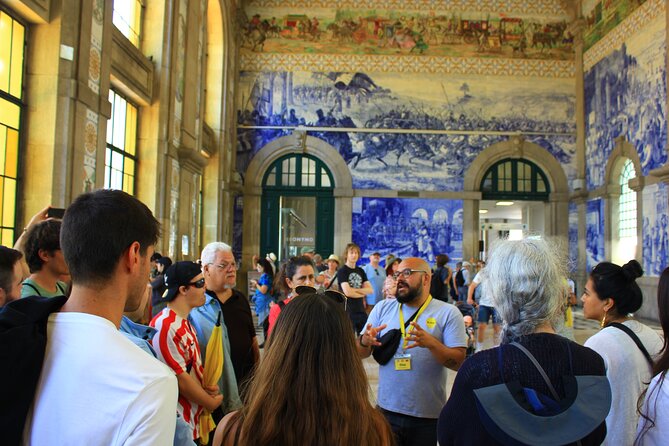
São Bento Railway Station is one of the route’s strongest stops. Its interior tile panels are a major attraction, and admission is included. Even if you have no train to catch, the station is worth entering for the tilework and the sense of movement around it.
This is a practical highlight because you can easily return later. The station is central, free to enter as part of the tour stop, and close to several other sights. I would pay close attention here, then return when the station is less crowded if you want more time with the details.
The walk’s sequence also makes sense geographically. You move from the upper central streets toward a major transport hub, then continue to the cathedral area. That progression helps you understand how Porto’s commercial, civic, and religious centers connect.
Finishing at Porto Cathedral
The final stop is Catedral do Porto, where the tour ends. The cathedral sits in one of the city’s most important historic areas, and finishing here gives you a natural next step. You can explore the cathedral, wander around the surrounding square, or continue downhill toward the river.
Admission is not included, so check the ticket arrangements if you want to enter. The tour itself provides the setting and background, but you decide how much additional time to spend inside.
Ending at the cathedral is useful for planning the rest of your day. You are no longer guessing where the old center leads. You can choose to continue exploring on foot, find a restaurant, or make your way toward another part of Porto using public transport.
The route does not cover every major area of the city. It is concentrated in the central historic zone, which explains why one person might find it an excellent introduction while another might want a tuk-tuk or a broader city tour. If your main goal is to see a wider area, you will need another activity.
The guides make more difference than the route
The strongest part of this experience is the guide. Andre is praised for being animated and full of useful historical detail. Jorge is repeatedly described as funny, friendly, and clear, with a good balance of stories and practical information. Natalia is noted for her energy, easy pace, and willingness to answer questions.
Diogo brings a lively storytelling style and strong command of Portuguese history. Harold is especially helpful if you want advice about transport, food, and other activities after the walk. Sofia is described as warm, funny, and very approachable.
These details matter because the route itself is made up of familiar central sights. A good guide turns a list of buildings into a connected story. A weaker guide would leave you with photographs but little sense of how Porto developed.
English is the offered language. Most direct comments about the guides praise their fluency and ability to explain difficult points clearly. One poor experience involved someone who had joined a different company’s tour by mistake, so it should not be used to judge this operation.
A few practical issues are worth keeping in mind. Large groups can reduce the personal feel, although guides may use a microphone. One person found that lengthy photo stops reduced the distance covered. Another disliked business recommendations and a request to scan a QR code. Those concerns are not dealbreakers for everyone, but they show why expectations matter.
Group size, hills, weather, and pace
The maximum group size is 28 people. That is not a tiny walking party. In a full group, stay near the guide, especially at busy crossings or open plazas. If you prefer quiet, detailed conversation, a small-group or private walk may suit you better.
The walk lasts about two hours and 30 minutes. The ten listed stops are generally allocated about 10 minutes each, with the rest of the time used for walking and commentary. You will be on your feet for much of it, so comfortable shoes are more important than stylish ones.
Porto’s hills cannot be removed from the route. Several people found the pace manageable, and the walk is not described as intense, but you should still be ready for slopes and uneven city streets. Most people can participate, and service animals are allowed.
The experience depends on good weather. If poor weather forces cancellation, you are offered another date or a full refund. The same applies if the minimum number of participants is not reached.
You can cancel for a full refund up to 24 hours before the start time. Cancellations or changes inside that 24-hour window are not refunded or accepted, so do not leave the decision until the last minute.
Is the pay-what-you-want price good value?
The $0.91 charge looks almost free, but it is only the reservation cost. Your booking guarantees your presence on the tour, not payment for the guide. At the end, you decide what the walk was worth and tip the guide directly.
That format can be excellent value if you want a low-risk introduction to Porto. You can reserve a place without committing to a fixed tour price, then judge the experience based on the guide, the group, and the amount of useful information you receive.
You should still budget for a tip. Calling the booking nearly free would be misleading because the guide’s income depends on participants paying what they consider fair. If you dislike uncertain final pricing, a fixed-price tour may feel more comfortable.
The value is strongest for a first visit. You get a route through ten central sights, historical commentary, and advice about transport, food, and other activities. The value is weaker if you expect entry to every monument or coverage of the entire city.
Who should book this Porto walk?
I would choose this tour if you are visiting Porto for the first time, have limited time, or want help understanding the center before exploring alone. It also suits families because the pace is generally easy, the route includes frequent stops, and guides have been praised for keeping children engaged.
It is a good match if you enjoy stories more than formal lectures. Guides such as Diogo, Andre, Jorge, and Natalia are praised for humor and personality, which can make two and a half hours pass quickly.
You may want another option if you have limited mobility, dislike hills, or want long visits inside churches and monuments. You should also look elsewhere if your priority is a broad view of Porto beyond the historic center. One person specifically felt that a tuk-tuk would be better for seeing more of the city.
Should you book Porto’s #1 Walking Tour?
Book it for orientation, local advice, and lively history in central Porto. The route covers the essential old-city area, includes São Bento Station, finishes at the cathedral, and gives you a useful plan for the rest of your stay.
Go in with the right expectations. The $0.91 booking amount is not the final cost, tickets are not included at most stops, and a group of up to 28 can feel crowded. If you accept the pay-what-you-want system and treat the walk as an introduction rather than a full city tour, it offers strong value.
FAQ
How long does the Porto walking tour last?
The tour lasts approximately two hours and 30 minutes.
What is the price of the tour?
The booking price is listed as $0.91 per person, but that payment only guarantees your place. The tour uses a pay-what-you-want format, so you pay or tip the guide separately at your discretion.
Is the tour offered in English?
Yes. An English-speaking guide is included.
Where does the tour start?
The meeting point is Largo Amor de Perdição, Campo dos Mártires da Pátria 2117, 4050-600 Porto, Portugal.
Where does the tour end?
The tour ends at Porto Cathedral, Terreiro da Sé, 4050-573 Porto, Portugal.
Which sights are included in the route?
The route includes Centro Português de Fotografia, Miradouro da Vitória, Torre dos Clérigos, Tribunal da Relação do Porto, Igreja do Carmo, Universidade do Porto, Livraria Lello, Avenida dos Aliados, São Bento Railway Station, and Porto Cathedral.
Are admission tickets included?
Admission is included for São Bento Railway Station. The listed stops at Centro Português de Fotografia and Miradouro da Vitória are free. Admission is not included at Torre dos Clérigos, Tribunal da Relação do Porto, Igreja do Carmo, Universidade do Porto, Livraria Lello, Avenida dos Aliados, or Porto Cathedral.
How large can the group be?
The maximum group size is 28 participants.
Can I cancel the tour?
Yes. You can cancel up to 24 hours before the start time for a full refund. Cancellations or changes made less than 24 hours before the start time are not refunded or accepted. If poor weather or an insufficient number of participants cancels the experience, you are offered another date or a full refund.
Just added around Porto
- Porto: Sunset Walking Tour with Port Wine and Views★ 4.6 · 95 reviews
- PORTO: Historical Walking Tour★ 4.8 · 92 reviews
- Porto: City Center Walking Tour★ 4.6 · 227 reviews
- Porto: Highlights & hidden gems Walk – max 10★ 5.0 · 441 reviews
- Porto: Historical Center Walking Tour★ 4.8 · 898 reviews
- Porto: 3-Hour Walking City Tour & Lello Bookstore Visit★ 4.7 · 99 reviews
- Porto: Harry Potter and City of Porto Guided Walking Tour★ 4.9 · 501 reviews
- Porto: Jewish Heritage Walking Tour★ 4.7 · 266 reviews
Portugal Walking Tours, compared.

Best of Lisbon Small-Group Guided Walking Tour
Read our review →
Porto Walking Tour, Lello Bookshop, River Cruise and Cable Car
Read our review →
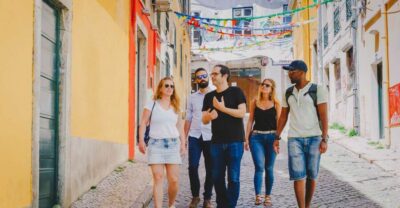
Best of Lisbon Walking Tour: Rossio, Chiado & Alfama
Read our review →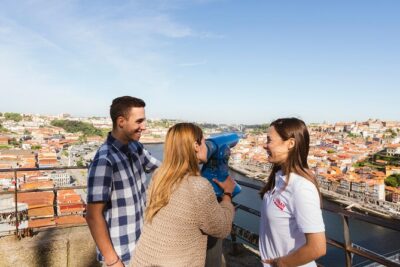
Experience Porto’s Charm: 3-Hour Guided Walking Tour
Read our review →
Madeira: Enjoy a Guided Levada Walk in the Rabaçal Valley
Read our review →Browse the lists this tour appears in