
Review · OLD TOWN WALKING TOURS
Walking Tour of Stockholm Old Town
Stockholm’s story fits surprisingly well on foot. This 2.5-hour walk links Gamla Stan’s grand squares, royal buildings, churches, statues, and tiny lanes, giving you a useful first look at Sweden’s capital without taking over your day. I especially like the broad historical sweep, from Parliament and the Royal Palace to the Stockholm Bloodbath at Stortorget, and the practical local advice, including food suggestions and tips for seeing the changing of the guard.
The tour costs about $24.07 per person, a fair price for a small-group introduction led in English. Guides such as Gaia, Sophie, Aggie, Katherine, Dante, and Kyra have been praised for making the history clear, warm, and often funny. The main consideration is simple: you need to walk for most of the morning, and several stops are viewed from outside rather than entered.
Key points to know before you book
- Covers most of Gamla Stan in one morning: The route connects the Old Town’s main sights in about 2.5 hours.
- Strong choice for a first Stockholm day: You get useful context before exploring the Royal Palace, museums, and waterfront on your own.
- History comes through stories, not lectures: Guides explain politics, royal power, Swedish culture, and local legends in an easygoing way.
- Small groups keep the walk manageable: The maximum group size is 20, with some departures described as having around 11 people.
- No long museum visit is built in: Admission is not included at several major sights, so plan separate visits if you want to go inside.
- Good practical add-on: The route ends at Stortorget, close to many Old Town sights and places to continue your day.
Why this walk works as a Stockholm introduction
I like starting a Stockholm visit with a walking tour because Gamla Stan can feel like a pretty maze at first. This route gives the maze a structure. You move from the modern political center near Parliament into the medieval core, then finish among the colorful facades and historic stories of Stortorget.
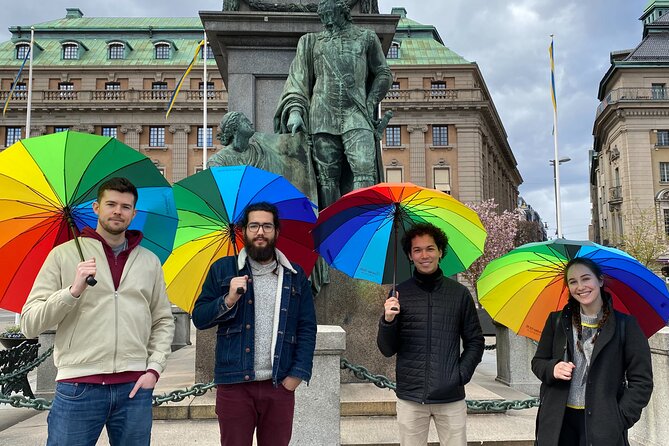
The tour begins at 10:00 a.m. at Gustav Adolfs torg, a central meeting point near public transportation. From there, the route crosses into the Old Town and continues through Riddarholmen and Gamla Stan before ending at Stortorget. The listed stops add up to far less than 2.5 hours, which is normal for a walking tour: the remaining time is used getting between sights and hearing the guide explain what you are seeing.
That pacing matters. You are not being rushed through a string of photo stops, but you also are not spending an hour inside one building. The tour gives you a city overview, then leaves room for lunch, a museum, or another Stockholm district afterward.
The experience is offered in English and is limited to a maximum of 20 people. That is large enough to provide energy but small enough for questions and conversation. One group was reported at 11 people, a particularly comfortable size. The tour is also described as suitable for most people, though it remains an active city walk, so good shoes and weather-ready clothing are sensible.
More Old Town Walking Tours in Stockholm:
- Stockholm Gamla Stan: Old Town Walking Tour with Local Guide
★ 4.7 · 1,714 reviews - Stockholm: Old Town Private Walking Tour
★ 4.7 · 675 reviews - Stockholm: Guided Historic Old Town Walking Tour with Local
★ 4.8 · 618 reviews
Parliament Building and the move into Gamla Stan
The first stop is the Parliament Building, or Riksdagshuset, built between 1895 and 1904. You spend only about five minutes here, and admission is not included. That short stop is less about touring the interior and more about placing modern Swedish government in the city’s historic setting.
This is a smart opening. Stockholm is not only royal palaces and old stone streets. It is also a working capital with a living political system. A good guide can use Parliament to connect the city’s past with its present, and several guides have been praised for bringing politics into the story without turning the walk into a classroom.
From here, the route heads toward Stockholm Old Town. You learn how the district was founded and how it developed into the part of Stockholm you see today. This early explanation helps the rest of the walk make sense. Narrow lanes, churches, royal buildings, and public squares are not random attractions. They are pieces of a city that grew around power, trade, religion, and defense.
Riddarholmen and the German Church
The German Church, called Tyska kyrkan in Swedish, is a quick five-minute stop. It has served Stockholm’s German community for centuries and is described as having a neoclassical style. Admission is not included, so you should treat this as an exterior visit unless you arrange a separate entry.
The value here is context. Stockholm was connected to wider European trade and culture, and the church points to the international communities that helped shape the city. It is easy to hurry past a church facade while wandering alone. With a guide, you get a reason to pause.
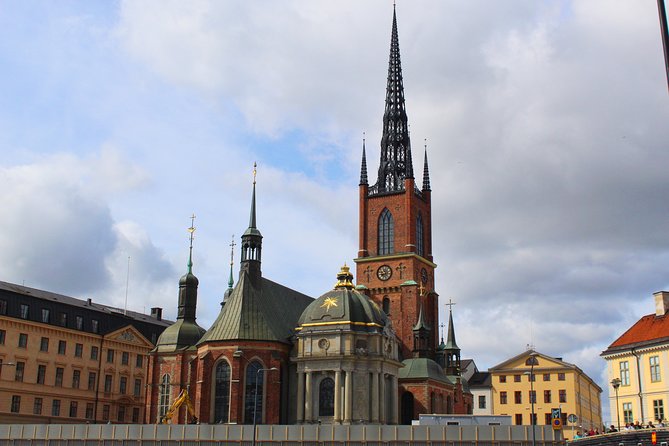
The walk then reaches Riddarholmen, or the Knights’ Islet. This ten-minute stop explains the early foundations of Gamla Stan and includes a look at its own palace, described as the first palace in Stockholm. Riddarholmen gives the tour a broader sense of place because it is not simply another old street. It shows how royal and noble power helped form the capital.
The stop is especially useful for first-time visitors who want more than pretty architecture. Your guide can help you understand why Stockholm developed around these islands and how the old center relates to the wider city.
Järnpojken and Storkyrkan
One of the tour’s most memorable small stops is Järnpojken, known as the Iron Boy or the child looking at the moon. Built in 1950, it is described as Stockholm’s smallest statue and its most visited statue. You spend about ten minutes here, and admission is included because this is a public artwork rather than a ticketed attraction.
This is exactly the sort of detail I want from a city walk. Grand palaces are easy to find in a guidebook. A tiny statue tucked into the Old Town is easier to miss, and it gives you a more personal connection to the streets. The stop also breaks up the larger political and royal subjects with something modest and human.
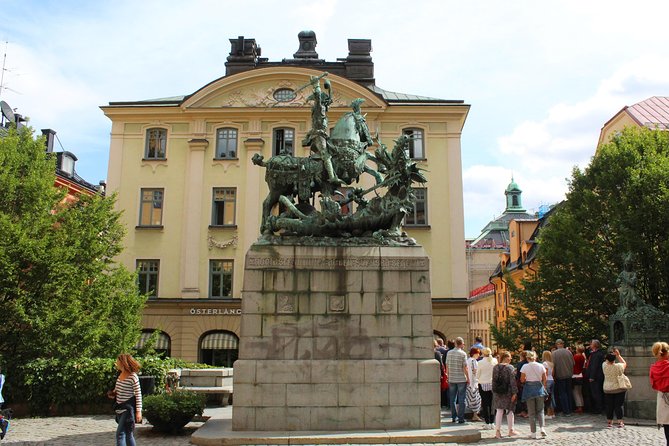
Next comes Storkyrkan, Stockholm Cathedral, the main church of Gamla Stan. The stop lasts about five minutes, and admission is not included. The cathedral is associated with the famous Saint George and the Dragon sculpture, a key piece of Stockholm’s public art and medieval symbolism.
Since you do not have a full interior visit built into the tour, think of this as an introduction. If the cathedral interests you, you can return later and arrange your own admission. The short stop works well for orientation, but it will not satisfy anyone hoping for a detailed look inside every major church.
A few more walks around Stockholm worth a look
- Stockholm: Ghost Walk and Historical Tour
★ 4.7 · 2,685 reviews - Stockholm: Swedish Food Guided Walking Tour
★ 4.5 · 1,167 reviews - The Original Stockholm Ghost Walk and Historical Tour – Gamla Stan
★ 4.5 · 1,165 reviews - Stockholm: Old Town Walking Tour
★ 4.3 · 596 reviews
Nobel Prize Museum and the Royal Palace
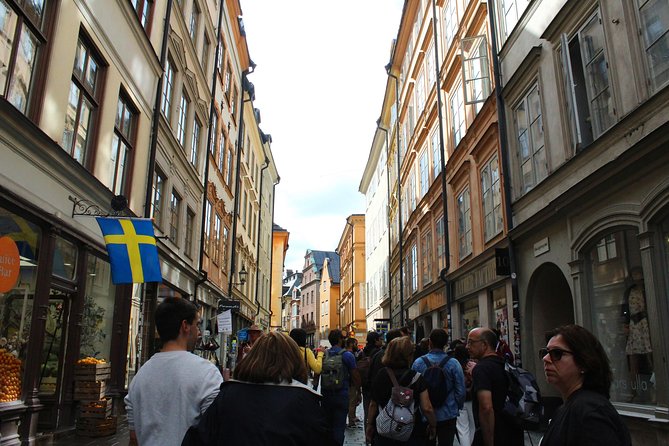
The Nobel Prize Museum is another ten-minute stop. It is connected with the Nobel Prize and the Swedish Academy, which decides the literature prize. Admission is not included, so the tour gives you the setting and the story, not a museum visit.
This is a useful part of the walk because it adds modern intellectual and cultural life to the older royal narrative. Stockholm’s identity is not limited to kings, battles, and churches. The Nobel tradition gives the city an international role in science, literature, and public recognition.
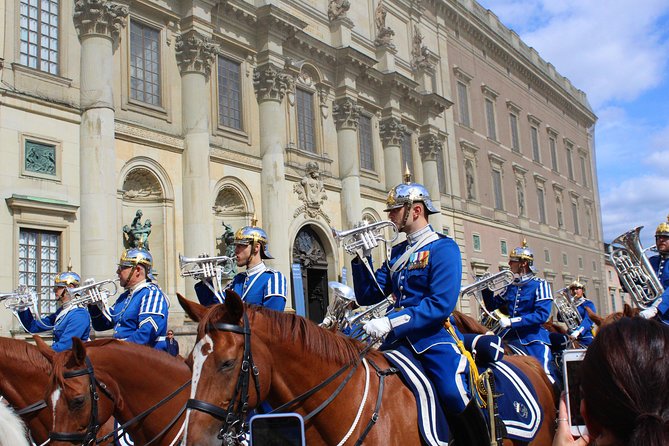
The nearby Royal Palace receives another ten minutes. Stockholm’s Royal Palace has four museums, but entry is not included in the walking tour. Again, the guide helps you understand what you are looking at, while you decide if a later visit is worth the extra time and ticket cost.
I see this as one of the tour’s strongest practical features. You get a clear explanation of the palace before committing to a longer indoor visit. If royal collections are high on your list, plan to return. If you mainly want the exterior, the tour provides a useful overview without adding a separate admission fee to the booking.
Stortorget and the Stockholm Bloodbath
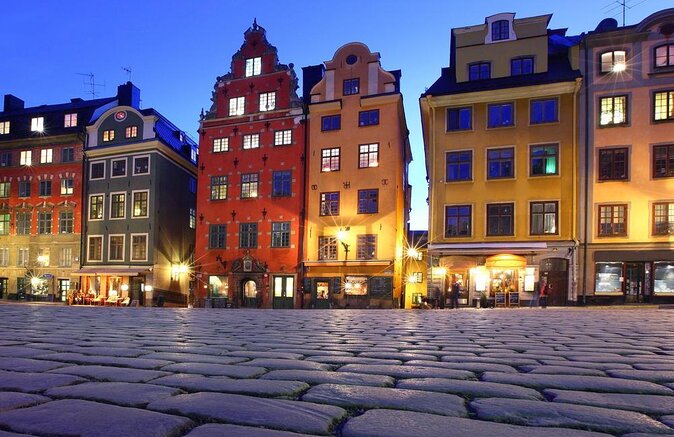
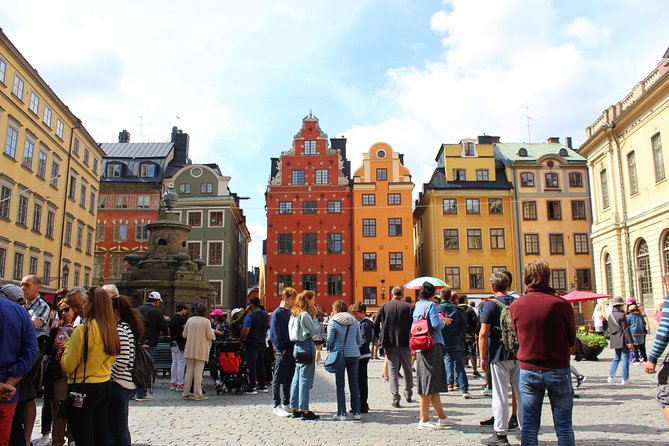
The walk reaches Stortorget, Gamla Stan’s main square, for about ten minutes. This is one of the most important stops because the square ties together architecture and difficult political history. The Stockholm Bloodbath took place here, and the event remains a major part of the city’s story.
Stortorget is also an easy place to appreciate how history sits beside daily life. Colorful buildings frame the square, while cafes and pedestrians carry on around them. A good guide helps you see both layers at once: the attractive public space and the events that gave it lasting meaning.
The tour ends here, which is convenient. You can stay in the square, continue exploring the Old Town, visit the Nobel Prize Museum or Royal Palace, or stop for food. Several guides have offered eating suggestions and advice about where and when to see the changing of the guard. Those tips can be more useful than another list of dates, especially early in a trip when you are still learning how Stockholm fits together.
The narrow lane, the opera, and Saint George
Mårten Trotzigs gränd is one of the tour’s quickest stops, at about five minutes. It is described as the narrowest street in the city and is named after a prominent Stockholm businessman. This is a classic Old Town moment: a tight passage that makes you slow down, look up, and take a photograph.
The lane is not a major historical site on the scale of the palace, but it adds texture to the walk. You see how the Old Town changes from formal squares to intimate passages within a few steps.
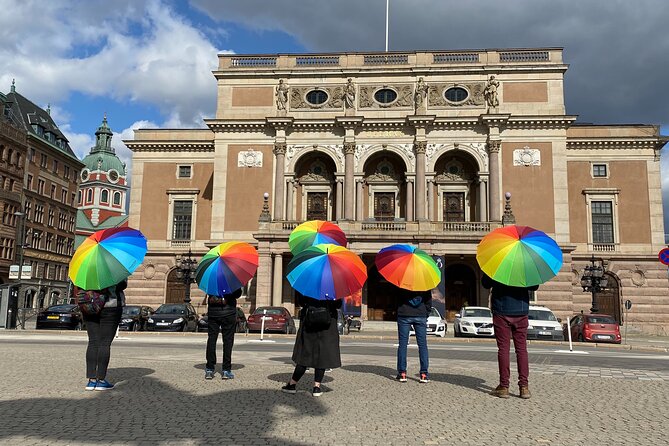
The route also includes the Royal Swedish Opera, another ten-minute stop. The Opera House offers a reminder that Stockholm’s cultural life extends beyond its medieval center. Admission is not included, and the itinerary presents it as an exterior sight and part of the city’s wider story.
Finally, the tour includes the statue of Saint George and the Dragon. It represents the Battle of Brunkeberg in 1471, when Sten Sture defeated the forces of Christian I of Denmark. The stop lasts about five minutes and admission is included.
This is a useful closing piece of history because it shows how Swedish identity was shaped through conflict with Denmark. The statue also links art, legend, and national memory. By this point, you have seen enough sites for the separate stories to begin forming one larger picture.
The guides make the biggest difference
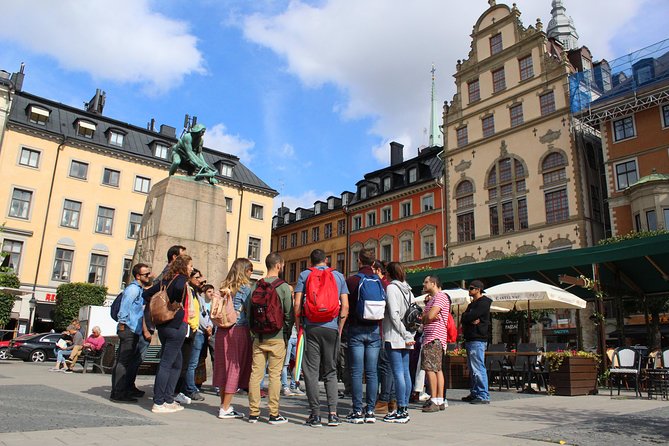
The most consistent praise is aimed at the guides’ delivery. Gaia is described as warm, funny, and engaging, with useful suggestions for food and the changing of the guard. Sophie is praised for making complicated history easy to follow, while Aggie is described as energetic and attentive, especially with a group of 11.
Other guides, including Olivia, Dante, Rose, Katherine, Kyra, Lova, Zoe, Tale, and Gya, have also been praised for clear storytelling and friendly interaction. The specific guide you receive will vary, so I would not book this expecting one particular person. Still, the repeated pattern is encouraging: the experience depends on guides who explain rather than recite.
A few details make the guiding style especially appealing. Guides have learned names, answered questions, added observations about Swedish culture, and adjusted the conversation to the group’s interests. One guide was praised for keeping the history in story form rather than sounding like a formal lesson. That is important on a 2.5-hour walk. You want enough information to remember Stockholm, but not so much that every church becomes a test.
The published score is 4.9 from 1,175 ratings, with 98 percent recommending the experience. That is a very strong record. Still, expectations should stay realistic: the quality of a live walking tour depends on the guide, the weather, the pace of the group, and how much you enjoy history told outdoors.
Price, pace, and what is not included
At $24.07 per person, the tour offers good value if you want orientation and a human explanation of the city. You are paying for 2.5 hours of guiding, a planned route through the main sights, and the chance to ask questions. Compared with paying separate entrance fees for several museums, it remains modest.
The price does not cover admission to the Parliament Building, German Church, Riddarholmen Church, Storkyrkan, Nobel Prize Museum, Royal Palace, or Royal Swedish Opera. Several of those are short exterior stops, so this is not a weakness if your goal is to see the Old Town rather than tour every interior. It does matter if you want a museum-heavy morning.
The walk is offered in English, uses a mobile ticket, and is booked around 45 days ahead on average. That advance demand suggests you should not leave it until the last moment if your schedule is fixed. Confirmation arrives at booking, and service animals are allowed.
The experience requires good weather. If poor weather forces cancellation, you are offered another date or a full refund. You can cancel for a full refund up to 24 hours before the start time, but changes or cancellations inside that window are not accepted. A minimum group size also applies, with a different date, another experience, or a full refund offered if the minimum is not met.
Who should book this Old Town walk?
I would choose this tour for a first morning in Stockholm. It gives you a mental map, introduces the key stories, and leaves the rest of the day open. It is also a good fit if you enjoy history but prefer it delivered through conversation, anecdotes, and buildings rather than a long museum audio guide.
You should be comfortable walking for about 2.5 hours and spending much of that time outdoors. The tour is described as accessible for most people, but the format is still active. Anyone who needs frequent seated breaks should check their own comfort before booking.
This is less suitable if you have already spent several days exploring Gamla Stan or if you want detailed interior access to the cathedral, palace, and museums. In that case, a self-guided route with dedicated tickets may suit you better.
Should you book the Stockholm Old Town walking tour?
Book it if you want a well-paced overview, clear English guiding, and a route that covers nearly all of Gamla Stan without filling your whole day. The guide’s local tips, from food to the changing of the guard, add value beyond the buildings themselves.
Skip it if you dislike group walking tours, need a slow indoor schedule, or want extended visits inside Stockholm’s major attractions. For most first-time visitors, though, $24.07 is a sensible way to get oriented. Take the tour early, note the places you want to revisit, and use the rest of your Stockholm stay to explore them at your own speed.
FAQ
Where does the walking tour start?
It starts at Gustav Adolfs torg, 111 52 Stockholm, Sweden, at 10:00 a.m.
Where does the tour end?
The tour ends at Stortorget, 111 29 Stockholm, Sweden.
How long does the experience last?
The walking tour lasts approximately 2 hours and 30 minutes.
What language is the tour offered in?
The tour is offered in English.
How much does the tour cost?
The listed price is $24.07 per person.
How many people can join the tour?
The maximum group size is 20 people.
Are attraction admission fees included?
Admission is included for the Stockholm Old Town walk, Järnpojken, Stortorget, Mårten Trotzigs gränd, and the Saint George and the Dragon statue. Admission is not included at the Parliament Building, German Church, Riddarholmen Church, Storkyrkan, Nobel Prize Museum, Royal Palace, or Royal Swedish Opera.
Is the tour suitable for most people?
The experience states that most people can participate, and it is best suited to active participants because it is a walking tour. Service animals are allowed.
Can I cancel for a refund?
You can cancel at least 24 hours before the start time for a full refund. Cancellations or changes made less than 24 hours before the experience are not refunded or accepted. If bad weather or an insufficient minimum group causes cancellation, you are offered another date or a full refund.
Just added around Stockholm
- Stockholm: Walking tour of Gamla Stan, the Old Town★ 4.9 · 101 reviews
- Stockholm: Private Walking Tour with a Local★ 4.4 · 291 reviews
- Stockholm: Old Town Walking Tour★ 4.3 · 596 reviews
- Stockholm: Old Town Walking Tour★ 4.6 · 400 reviews
- Stockholm: Guided Historic Old Town Walking Tour with Local★ 4.8 · 618 reviews
- Stockholm: Old Town Historical Walking Tour, small group★ 4.9 · 411 reviews
- Stockholm: Old Town Walking Tour, stories and secrets★ 4.8 · 275 reviews
- Stockholm: Old Town Private Walking Tour★ 4.7 · 675 reviews
Old Town Walking Tours, compared.
Underground Vaults Walking Tour in Edinburgh Old Town
Read our review →
3-Hour Walking Tour of Old Town & Prague Castle
Read our review →
Old Town and Jewish Quarter Guided Walking Tour
Read our review →
Cartagena: Historic Center and Getsemaní Shared Walking Tour
Read our review →Browse the lists this tour appears in