
Review · SPAIN WALKING TOURS
Guided Walking Tour of Immortal Toledo
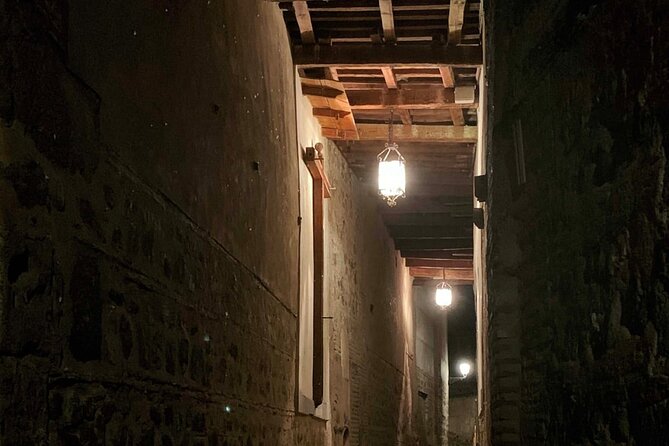
Toledo gets more mysterious after sunset. This two-hour walking tour moves through quiet convent streets, old squares, and high viewpoints while telling the darker stories of Imperial Toledo. I like the focus on nighttime atmosphere and the way the route links the Holy Inquisition, epidemics, relics, executions, and 19th-century romantic legends. It offers more than a standard monument walk.
I also like the small price of $13.90, especially for a guided experience with local historical context. The main drawback is that most stops are external, so this is about stories, streets, and views rather than entering Toledo’s major buildings. The walk also requires good weather, and the group can include up to 30 people.
Key Points at a Glance
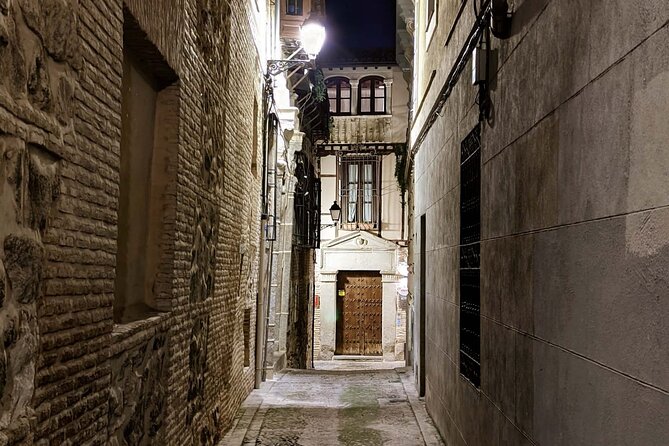
- Toledo after sunset: See the city when its convent quarter grows quiet and its narrow streets take on a more mysterious mood.
- Stories beyond the usual monuments: Learn about the Holy Inquisition, a secret jail, hospitals, executions, epidemics, and sacred relics.
- Several notable exterior stops: The route includes San Ildefonso, San Pedro Mártir, Casa de Mesa, San Román, and a site linked to El Greco.
- A strong local guiding style: Guides such as Alberto and Lara have been praised for clear explanations, passion, and an entertaining pace.
- A high viewpoint finish: End at Mirador del Azor, about five minutes from Plaza de Zocodover, with views across part of Toledo.
- Easy booking terms: You receive confirmation at booking, and cancellation is free up to 24 hours before the start time.
Why Toledo Works So Well at Night
Toledo is already a city of layers. Roman, Visigoth, Muslim, Jewish, Christian, imperial, and romantic Spain all appear in its streets and buildings. After dark, the city’s silence becomes part of the experience.
This tour uses that mood well. Instead of treating Toledo as a collection of famous facades, it follows the less obvious side of the city. You hear about institutions, prisons, hospitals, religious brotherhoods, and relics. These subjects give you a glimpse of how ordinary people faced faith, illness, punishment, and death during the Renaissance and Baroque periods.
I like this approach because Toledo can feel almost too dense during the day. A guide helps you make sense of the city’s layers without forcing you to stop and read every plaque. The night setting also makes the stories feel closer to the place. A tale about an execution or a stolen relic lands differently in a quiet alley than it would in a bright square filled with daytime activity.
The experience is not designed as a ghost tour in the narrow sense. It draws on legends and mysterious details, but it also covers real institutions and religious traditions. That balance should suit you if you want atmosphere without giving up historical context.
More Guided Walks in Spain:
- Granada: Albaicín and Sacromonte Guided Sunset Walking Tour
★ 4.9 · 2,962 reviews - Madrid: Tapas & Wine Tasting Tour with Local Guide
★ 4.8 · 2,171 reviews - Madrid: Royal Palace Skip-the-Line Guided Tour
★ 4.5 · 2,140 reviews
Starting at Plaza de Zocodover
The tour begins at Plaza de Zocodover, Toledo’s central meeting point. This is a practical place to start because it is easy to recognize and close to public transportation. You should arrive with your mobile ticket ready and allow a little time to find the guide in the square.
From there, the route heads into the older quarters. The change can be quick. Plaza de Zocodover has a more open, central feel, while Toledo’s side streets soon become tighter and quieter. That contrast helps explain why an evening walk works so well here.
The tour lasts about two hours, so you get enough time for a proper story-led route without giving up the entire evening. It ends at Mirador del Azor on Callejón de San José, about five minutes from Plaza de Zocodover. The endpoint is useful to know in advance. You will not finish at the same spot where you began, but you will remain close to the city center.
The Mozarabic Community and Spain’s Oldest Brotherhood
One early stop looks at the Mozarabic community and the Cofradía de la Caridad, described as the oldest brotherhood in Spain. The building is visited from the outside, so the guide’s explanation is the main event.
The Mozarabs were Christians who lived under Muslim rule and preserved their own religious customs. Even without entering a building, this subject gives you an important key to Toledo. The city’s identity was shaped by communities living side by side, sometimes peacefully and sometimes under pressure.
The Cofradía de la Caridad adds another practical side to the story. Brotherhoods were not simply ceremonial groups. They could be tied to charity, care, burial, and public religious life. This is where the route begins to connect grand Toledo with the systems that supported people in sickness, poverty, and death.
If you prefer tours that spend most of their time inside major monuments, this stop may feel modest. If you enjoy the meaning behind a place, it is a useful opening chapter.
San Ildefonso and a Stolen Relic
The next stop focuses on San Ildefonso, Toledo’s patron, along with the theft of one of his relics in the 17th century. This is another exterior visit, but the story gives the location a clear purpose.
Relics mattered greatly in early modern Europe. They were objects of devotion, symbols of civic pride, and sometimes targets of theft. The story of a stolen relic shows how religious objects could carry social and political weight far beyond their physical size.
This part of the walk should appeal to you if you enjoy the unusual details that rarely appear in a basic city overview. Instead of hearing only dates and architectural labels, you get a story about belief, ownership, and the value placed on sacred remains.
Keep in mind that the quality of this stop depends heavily on the guide. The place itself may not be visually dramatic from the street. A guide such as Lara can make the difference by explaining the story with energy and keeping the pace light. Her explanations have been praised as both clear and passionate, without becoming tiring.
A few more walks around Spain worth a look
- Barcelona Tapas and Wine Experience Small-Group Walking Tour
★ 5.0 · 5,804 reviews - Barcelona: Tapas Walking Tour with Food, Wine, and History
★ 4.8 · 4,261 reviews - Madrid Tapas & Wine Tasting Walking Tour – Small Group Local Bars
★ 5.0 · 3,644 reviews - Toledo Tour & Vineyard Walk with Wine Tasting from Madrid
★ 5.0 · 2,546 reviews
The High Point Around San Pedro Mártir
The route reaches one of the highest points in Toledo near the front of the Church of the Convent of San Pedro Mártir. You also see Casa de Mesa and the former Church of San Román, now the Visigoth Councils Museum.
This section packs several layers of Toledo into one area. Convents point to the city’s religious life. Casa de Mesa adds a civic and historic reference. The former church, now a museum, connects the setting to the Visigoth councils and the period before Toledo became the imperial city most people picture today.
The high position matters. Even before the final viewpoint, you begin to understand Toledo’s unusual topography. Streets rise and fall, buildings appear above one another, and a short walk can shift your view across the city.
You should wear comfortable shoes. The supplied information does not describe the exact surface or level of difficulty, but this is a walking route through Toledo’s old quarters, with at least one high point included. The practical reward is a stronger sense of place, while the practical cost is that the route may not suit anyone looking for a completely level stroll.
El Greco’s First Spanish Commission
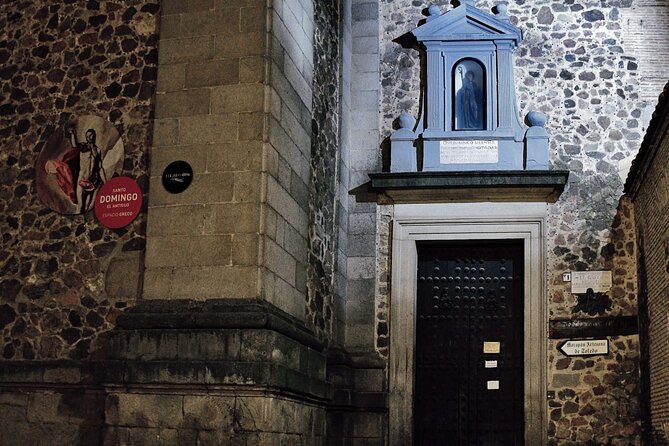
Another stop marks the first place for which El Greco painted in Spain. Two original Cretan works are still preserved there, but the visit is from the outside.
This is one of the most appealing stops for art lovers. El Greco is closely linked with Toledo, yet his story began elsewhere. Knowing that this was his first Spanish commission gives the location extra weight. It also helps you see the artist as a newcomer finding his place, not only as the famous painter later associated with Toledo.
The mention of two original Cretan works adds another useful detail. El Greco was born in Crete, and this connection helps explain the transition between his early artistic background and his later Spanish career.
You should be clear about the limits here. You are not promised entry to see the paintings during the walk. The guide discusses the site from outside, so you get context rather than an art museum visit. I would treat this as a bonus for the evening route, not a replacement for visiting Toledo’s main art collections.
A Small Square Where Legend Takes Over
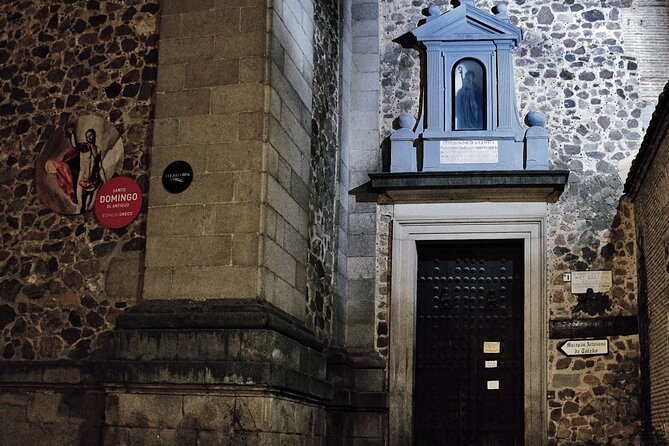
The route also pauses outside a small, charming square where history and legend meet. The exact name is not specified, so you should not expect a formal landmark visit with a long list of architectural features.
That lack of a famous label is part of the appeal. Toledo’s character often comes through in spaces that would be easy to pass without a guide. A square can hold a local tale, a connection to a former institution, or a story shaped by the city’s long religious and civic life.
This is likely one of the more atmospheric moments of the tour. At night, a small square can feel removed from the main visitor routes. The guide’s storytelling matters more here than the monument itself. Alberto, one of the guides praised for excellent knowledge and natural conversation, seems to represent the kind of relaxed presentation that works best in this setting.
Convents, Inquisition, Hospitals, and Death
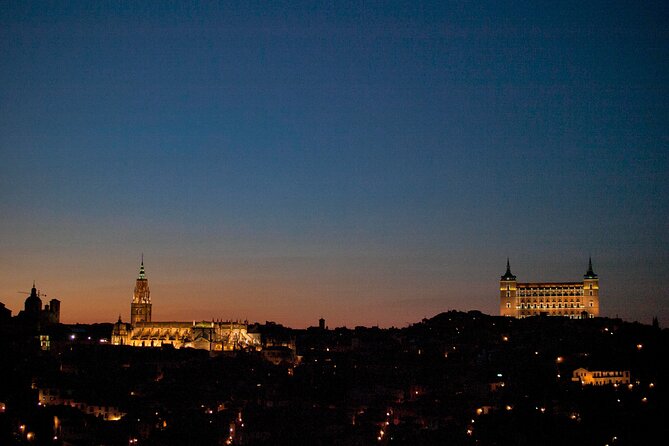
The central theme of the route is Toledo’s life and death during the Renaissance and Baroque periods. You hear about the Holy Inquisition, its secret jail, institutions, hospitals, executions, epidemics, and ancestral relics.
That is a serious list, but the experience is not presented as a dry lecture. The walk uses the quiet convent district as a setting for these subjects. You get a picture of a city where religious authority, public punishment, charity, disease, and devotion were closely connected.
The Inquisition material may be the most familiar part to many people, yet the inclusion of hospitals and epidemics gives the route more range. It shows how public life was shaped not only by kings and churches, but also by illness and care. The stories about executions and prisons add a darker edge, while the relics bring in questions of faith and tradition.
I appreciate that the route also looks through the eyes of 19th-century romantics. Romantic writers and artists often saw Toledo as mysterious, ancient, and emotionally charged. Their view helped shape the city’s modern image. You get to compare that dramatic vision with the more concrete stories of institutions and people who lived there.
This mix should suit you if you like history with a human angle. It may not suit young children or anyone who wants a light, purely scenic evening stroll. The themes include death, punishment, disease, and religious conflict.
Finishing at Mirador del Azor
The final stop is Mirador del Azor on Callejón de San José. It offers a striking view across the Toledo district and includes views of some gates and walls.
Ending at a viewpoint is a smart choice. After two hours of narrow streets and enclosed corners, the open view gives you a chance to place the city’s parts together. You can see how the walls and gates relate to the urban center, rather than encountering them one at a time.
The viewpoint is about five minutes from Plaza de Zocodover, so you are not stranded at the edge of the city. It is a useful ending if you want to continue with dinner or make your way back toward the central square.
The final view may be especially valuable if this is your first night in Toledo. It gives you a visual reference for later walks and daytime sightseeing. If you already know the city well, the storytelling and evening mood will probably matter more than the view itself.
Guide Quality Makes the Difference
The strongest praise for this experience centers on the guides. Alberto has been credited with strong knowledge and a conversational style that lasted well through the two-hour walk. Lara has been praised for magnificent explanations, passion, and an entertaining delivery.
Those details matter because the route includes many exterior stops. A weaker guide could make a church front or small square feel like a pause between better-known sights. A good guide turns each stop into part of a connected story.
The available rating is 5 out of 5 from 1,116 reviews, with 100 percent recommending the experience. That is an unusually strong response, though you should still match the subject matter to your own interests. High praise for the guide does not change the fact that the route deals with dark topics and does not include regular interior visits.
The best experience will come from listening closely and allowing the guide to set the pace. This is not a walk where you simply collect photographs. The stories are the main reason to book.
Is $13.90 Good Value?
At $13.90 per person, I consider this a strong value for a two-hour guided walk in Toledo. You are paying for local interpretation, a carefully chosen evening route, and access to stories that are hard to assemble on your own.
The price is especially fair if you are visiting Toledo for only a short time. A self-guided walk could show you the same streets, but it would not easily connect the Mozarabic community, the Cofradía de la Caridad, San Ildefonso, the Inquisition, El Greco, and the romantic view of the city.
The group can include up to 30 people. That is not an intimate private tour, and a larger group can make it harder to hear in narrow streets. Still, the size remains manageable for a standard guided walk, especially if the guide keeps the group together.
The tour is often booked about 24 days ahead. That suggests you should reserve before your trip if the timing matters, particularly during busy periods. Confirmation arrives at booking, and the mobile ticket keeps the arrangement simple.
Who Should Book This Toledo Walk?
I would choose this tour if you want to see Toledo after dark, prefer stories to a checklist of monuments, and enjoy the connection between place and local legend. It is a good fit for adults, couples, and anyone visiting Toledo for the first time who wants a different view of the city.
It also suits repeat visitors who have already seen the major daytime sights. The focus on convent neighborhoods, relics, prisons, hospitals, epidemics, and romantic legends gives you material beyond the usual cathedral and palace route.
I would think twice if you need interior access, want a completely lighthearted outing, or find long walking tours uncomfortable. The exact accessibility of the route is not specified, although most people can participate and service animals are allowed.
The experience requires good weather. If poor weather forces cancellation, you are offered another date or a full refund. If the minimum group size is not reached, you are also offered another date or experience, or a full refund. You can cancel for a full refund up to 24 hours before the start time, but cancellations or changes inside that window are not refunded or accepted.
FAQ
How long is the Guided Walking Tour of Immortal Toledo?
The tour lasts approximately two hours.
Where does the tour begin?
It begins at Plaza de Zocodover, Toledo, Spain.
Where does the tour end?
It ends at Mirador del Azor on Callejón de San José, about five minutes from Plaza de Zocodover.
How much does the tour cost?
The listed price is $13.90 per person.
Is the ticket mobile?
Yes. The experience provides a mobile ticket.
What subjects does the tour cover?
It covers the Holy Inquisition, a secret jail, institutions, hospitals, executions, epidemics, ancestral relics, Renaissance and Baroque Toledo, and the city as seen by 19th-century romantics.
Does the tour enter the buildings?
The specified visits to San Ildefonso and the El Greco site are external visits. The other listed stops also describe exterior views, so you should expect a street-based tour rather than regular interior access.
How many people can join the tour?
The maximum group size is 30 people.
Can I cancel for a refund?
Yes. You can cancel at least 24 hours before the start time for a full refund. Cancellations within 24 hours are not refunded, and changes during that period are not accepted.
Should You Book It?
Book it if you want Toledo’s quieter, darker side and value a strong guide more than building interiors. At $13.90, the route offers good value, especially for a first evening in the city.
I would book ahead if you want a particular date, arrive prepared for a two-hour walk, and keep your expectations focused on storytelling and atmosphere. The best reason to go is simple: after sunset, Toledo’s streets become part of the story.
Just added around Spain
- Bilbao Food Tour – Basque Gastronomy Experience★ 5.0 · 79 reviews
- Bilbao´s Old Town Responsible Free Walking Tour★ 4.5 · 98 reviews
- Bilbao Walking Small Group Tour★ 5.0 · 203 reviews
- Barcelona Private Food Tour: Tapas, Paella & 8+ Food Tastings★ 5.0 · 164 reviews
- Barcelona Gothic Quarter Walking Tour with Tapas★ 5.0 · 248 reviews
- Picasso Museum and Walking Tour Plus Optional Wine & Food Tasting★ 5.0 · 596 reviews
- Private Barcelona Old Town and Gothic Quarter Walking Tour★ 5.0 · 134 reviews
- Barcelona Architecture Walking Tour With Casa Batlló Upgrade★ 5.0 · 137 reviews
Spain Walking Tours, compared.

Barcelona Tapas and Wine Experience Small-Group Walking Tour
Read our review →
Tapas Walking Tour with Food, Wine, and History
Read our review →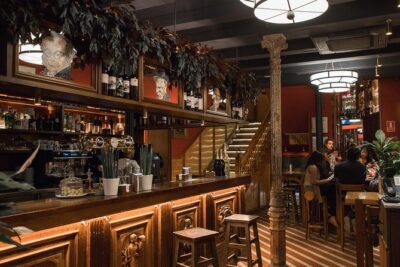
Madrid Tapas & Wine Tasting Walking Tour – Small Group Local Bars
Read our review →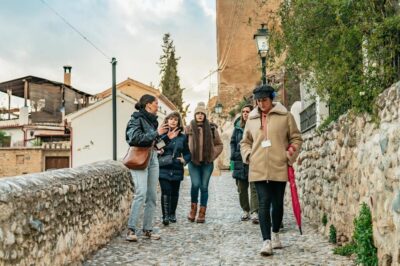
Albaicín and Sacromonte Guided Sunset Walking Tour
Read our review →
Toledo Tour & Vineyard Walk with Wine Tasting from Madrid
Read our review →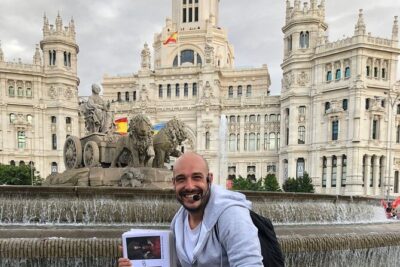

Browse the lists this tour appears in