
Review · VALLETTA WALKING TOURS
The Original Valletta Walking Tour
Valletta rewards a closer look. This three-hour guided walk brings Malta’s compact capital to life through its grand churches, military monuments, gardens, and Baroque streets. I like the manageable group size of up to 25 people, and I like that the tour gives first-time visitors a clear sense of how Valletta fits together. The main consideration is that much of the tour involves standing while the guide explains the details.
The $26.60 price is fair for a professional guide and a well-paced introduction to the city. Guides such as Matthew, Carmel, Giulia, and Mario have been praised for their clear English, humor, patience, and command of Maltese history. Allow extra time to find the start at the New Parliament Building, especially if you are coming from the cruise port.
Key points to know before booking
- A strong first look at Valletta: You see the city gate, Upper Barrakka Gardens, St. John’s Co-Cathedral, St. George’s Square, and the Grand Master’s Palace area in one morning.
- Small group, up to 25 people: This is more personal than a large coach-style outing, with time for questions and conversation.
- A history-heavy walk: Guides explain the Knights of St John, the Great Siege, Malta’s art and architecture, and the city’s modern changes.
- Mostly exterior sightseeing: Entry fees for St. John’s Co-Cathedral, the Grand Master’s Palace, and the new Museum of Fine Arts are not included.
- A useful cruise-port tip: The public elevator from the port area costs one euro for a return trip and leads toward Valletta through the gardens.
- Allow time for standing: The walking pace is gentle, but some stops become mini history lessons rather than quick photo pauses.
Why this three-hour walk works well in Valletta
Valletta is small enough to cross on foot, yet it packs centuries of military, religious, and political history into a tight grid. That makes a guided walk useful. You can see the main streets alone, but it is harder to understand why the city was built where it was, how the Knights of St John shaped it, or why certain buildings carry so much weight.
This tour is designed for that first orientation. It starts near the modern entrance to Valletta and moves through the central streets toward the harbour views and major historic buildings. You are not simply ticking off monuments. The guide connects them to the Great Siege of 1565, the city’s Baroque character, its British period, and its role as European Capital of Culture in 2018.
The tour has earned a 4.9 rating from 2,719 ratings, with 98 percent of customers recommending it. That is a strong signal, especially because the praise is consistent about the guides. Mario, a former professor, is admired for his detailed talks on geography, art, architecture, and history. Matthew is often praised for his calm manner and useful advice about visiting attractions. Carmel is described as warm, clear, and good at mixing facts with stories.
The one caution is that guide style can vary. If you like a brisk walk with short explanations, a guide who spends several minutes on one building may feel slow. If you enjoy context and questions, that extra detail is the point.
A few more walks around the world worth a look
- Magical London: Harry Potter Guided Walking Tour
★ 4.7 · 22,044 reviews - Reykjavik Food Walk – Local Foodie Adventure in Iceland
★ 5.0 · 18,952 reviews - History and Hauntings of Salem Guided Walking Tour
★ 5.0 · 14,564 reviews
Starting at Valletta City Gate and the New Parliament
The meeting point is outside the New Parliament Building on Republic Street. This is an important practical detail because the city has more than one major square and several nearby landmarks, and map apps can sometimes send you toward the wrong place.
Look for the modern Parliament building near the entrance to the city, before the bridge. If you reach the bridge, you have gone too far. The guide and group may be identified by a yellow shirt or yellow umbrella, but one customer reported confusion because two tours used similar signs and clothing. It is wise to check the exact start time and tour length when you arrive.
The opening section gives you a useful contrast. Valletta was built by the Knights of St John after the events of 1565, yet you begin beside a very modern building. The city gate and Parliament area show how Malta has tried to add contemporary architecture without ignoring the old fortified setting.
From here, the guide explains the basic story of Valletta before leading you toward Pjazza Teatru Rjal, or the Royal Opera House site.
The Royal Opera House ruins and Our Lady of Victories
The Royal Opera House ruins are a quick but memorable stop. The remains tell a story of destruction, change, and reuse rather than a perfectly preserved monument. Your guide explains what once occupied the site and why the open ruins remain part of the city’s present-day identity.
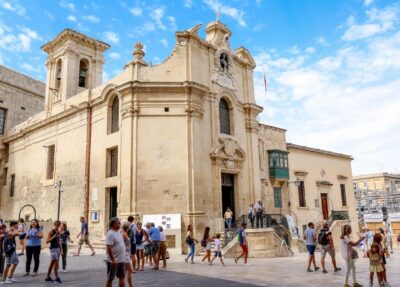
Next comes Our Lady of Victories Church. The stop is brief, but it adds an important religious and military note to the walk. The church is connected with the Knights and Malta’s long tradition of marking victories through sacred buildings. You are also asked to consider which famous Maltese historical figure was buried there, a small detail that helps turn a passing facade into a place with a story.
This early part of the tour is not physically demanding. You walk a short distance, stop often, and listen. The tradeoff is that the pace depends heavily on the guide’s presentation style. A detailed guide may spend more time here than you expect.
Auberge de Castille and the Knights’ political power
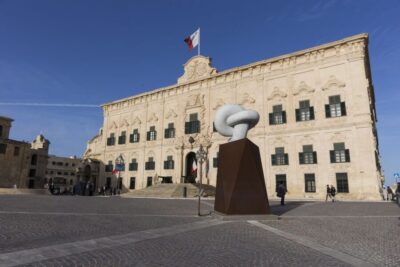
Il-Berga ta’ Kastilja, better known as the Auberge de Castille, is one of Valletta’s most impressive facades. It once served as the residence of the Knights from the Castile, León, and Portugal language group. Today it is associated with Malta’s government, but the building still reflects the order’s wealth and political importance.
This is one of the places where a guide adds real value. Without explanation, you see an ornate stone building. With context, you begin to understand that the Knights of St John were not simply religious figures. They were administrators, soldiers, diplomats, and patrons of art. Their organization shaped the city’s streets and buildings.
The guide may also point out nearby sites linked to Malta’s wartime past, including the Great Siege Monument, the Siege Bell Memorial, and Fort St. Elmo. These details help connect Valletta’s ceremonial architecture with the defensive role that made the city important.
Same streets, a different way to see them:
- New Orleans Premier Ghost, Voodoo and Vampire Walking Tour
★ 4.5 · 12,856 reviews - Amsterdam Anne Frank: Small-Group Walking Tour & Local Guide
★ 4.8 · 12,789 reviews - Edinburgh: Harry Potter Magical Guided Walking Tour
★ 4.8 · 11,944 reviews - Edinburgh Castle: Guided Walking Tour with Entry Ticket
★ 4.7 · 11,699 reviews
Upper Barrakka Gardens and the Grand Harbour view
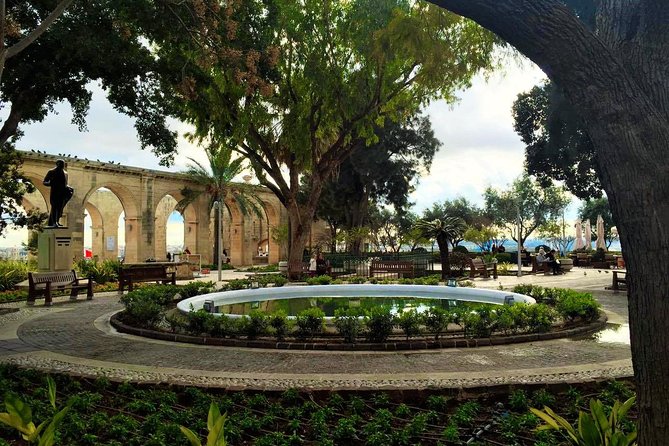
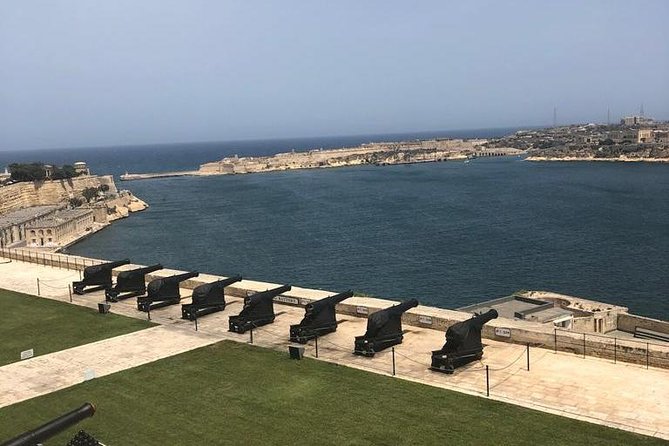
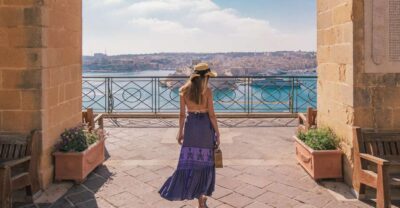
Upper Barrakka Gardens is the visual high point of the walk. You get around 30 minutes here, enough time to pause, take photographs, and look across the Grand Harbour. From this elevated position, the harbour becomes a map rather than a postcard. You can see how waterways, forts, and bastions helped protect Valletta.
The guide also places the city’s modern cultural life in context, including its year as European Capital of Culture in 2018. This keeps the tour from becoming a museum lesson focused only on knights and sieges.
I would treat this stop as a welcome break in the rhythm of the tour. Several people praised the gentle pace and a short rest period around the middle. You may find a coffee break or pause particularly helpful during a warm morning, though the exact break depends on the group and guide.
If you are arriving from the cruise port, the gardens are also part of the easiest route into central Valletta. Walk roughly 200 metres from the port area, cross at the marked crossing, and use the elevator up to the city. The return ride costs one euro. From the top, walk through the gardens, go right through the arched gate, and continue toward the square and Parliament area.
Auberge d’Italie and Palazzo Parisio
The walk continues to Auberge d’Italie, now associated with Malta’s Museum of Fine Arts. The tour description lists the admission as not included, so do not assume you will have time or entry for an interior visit during the walk. The guide’s role here is mainly to explain the building and its place in Valletta’s network of auberges.
That distinction matters. The tour gives you an overview of important interiors, but it is not an admission-inclusive museum tour. If you want to explore the fine arts collection, plan a separate visit.
Palazzo Parisio brings another layer of Valletta’s story. The guide asks which world-famous historical figure once lived there, using the building as a doorway into the people who passed through the city. This kind of question can make the walk more engaging than a string of dates and names.
Some guides are especially good at this style. Giulia has been praised for turning the city’s people and events into an understandable story, while other guides have been appreciated for adding restaurant suggestions and practical advice for the rest of your stay.
St. John’s Co-Cathedral and the city’s art
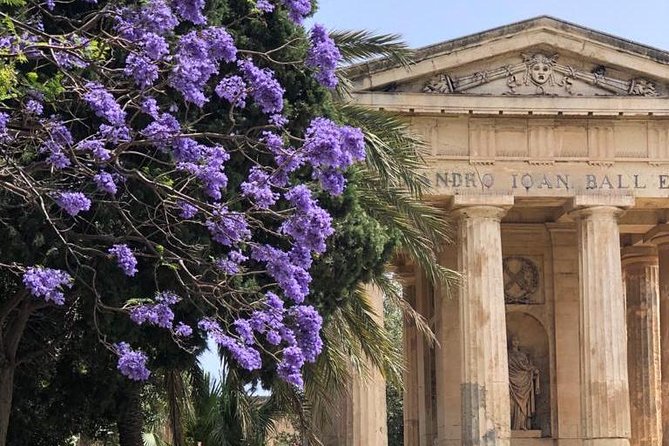
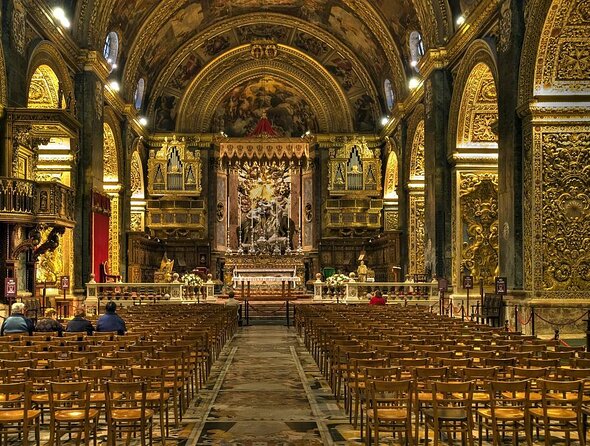
St. John’s Co-Cathedral is one of Valletta’s essential sights, even if you only see it from outside during the walk. The guide discusses the famous artists whose work appears inside and explains why the cathedral matters to the Knights and to Malta’s artistic identity.
Admission is not included. That is perhaps the biggest value question in the whole tour. The walk gives you the background you need, but the interior is where much of the cathedral’s visual impact lies. If you have time, consider returning separately so you can visit without rushing. One guide strongly encouraged a customer to try the cathedral when it reopened for a service, which shows how useful local advice can be when opening arrangements change.
Do not expect the guide to escort you through every interior. The stated route includes several buildings where admission is separate, including St. John’s Co-Cathedral and the Grand Master’s Palace. Think of the tour as a guided city introduction with selected exterior stops, not as a package of entrance tickets.
St. George’s Square and the Grand Master’s Palace
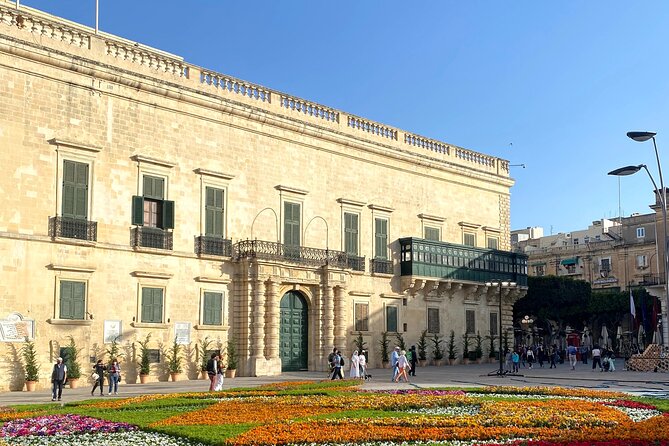
St. George’s Square is the final major section of the walk. It is Valletta’s main square and a good place to discuss the Grand Master’s Palace, one of the city’s most important political buildings.
The palace has served different roles over the centuries, and the guide explains its importance from the time of the Knights through later periods of Maltese government. The stop gives the tour a strong finish because it links architecture with power. Valletta was not built only as a pretty city. It was a headquarters, a fortress, and a seat of administration.
The tour ends in or near St. George’s Square on Republic Street. That is convenient if you want to continue exploring, find lunch, visit the palace, or return to St. John’s Co-Cathedral. It also means you finish in a central area rather than being left at a distant transport point.
How much walking and standing should you expect?
The walk is described as gentle, and the city itself is compact. You do not cover a huge distance in three hours. Instead, you move between stops and listen to explanations that can last several minutes.
That makes the tour suitable for most people, and service animals are allowed. Still, comfortable shoes are sensible because the experience is on foot and includes repeated periods of standing. The tour is not described as physically demanding, but the amount of standing may matter more than the distance.
Weather is another consideration. A January morning can be sunny, but conditions can change. Bring water and protection from the sun, and be prepared for rain. Valletta offers little shelter while a guide is speaking outdoors, so a light waterproof layer is useful.
Is $26.60 good value?
At $26.60 per person, the tour is reasonably priced for a three-hour small-group introduction with a professional guide. The value comes from explanation, not from included admissions. You are paying to understand the city, ask questions, and get a sensible route through the main sights.
I think the price works best if you are visiting Valletta for the first time, arriving by cruise ship, or staying only briefly. A guide can save you from wandering past the city’s important buildings without understanding them. You also receive practical suggestions for later visits, such as advice about entering St. John’s Co-Cathedral or planning attractions.
The value is lower if you have already spent several days studying Valletta or prefer to explore at your own pace. You can walk the streets without a guide, and the tour does not include entrance fees. In that case, you might prefer to choose one major interior and spend the same morning there.
The tour is usually booked about 28 days ahead, so popular dates may fill. It is offered in English and uses a mobile ticket. Free cancellation is available up to 24 hours before the start time. Cancellations or changes within 24 hours are not refunded, and the operator may offer a new date or full refund if minimum numbers are not met.
Who should book this Valletta walk?
I would recommend it to first-time visitors who want the city explained before exploring alone. It also suits cruise passengers because the route begins and ends in central Valletta, with a practical elevator connection from the port area.
It is a good match for people who enjoy history, art, architecture, and stories about political power. The strongest guides turn the three hours into a lively lesson, and the small group gives you a fair chance to ask questions. English is described as clear, even for guides covering complicated subjects.
I would be more cautious if you dislike long explanations or need a very fast sightseeing pace. I would also check the meeting instructions carefully. One customer had trouble with a map app that showed a destination an hour away, while the correct route from the port took about 15 minutes using the elevator and gardens. If you are late, contact the operator through WhatsApp if possible, since guides have used it to direct late arrivals.
Final verdict: a smart first morning in Valletta
Book this tour if you want a clear introduction to Valletta rather than a simple walk past old buildings. The best part is the guides’ ability to explain why the city looks and functions as it does, from the Knights’ auberges to the harbour defenses and the grand churches.
The tour is not perfect. Admission fees are separate, some presentations may feel very detailed, and the meeting point can cause confusion if you rely blindly on a map app. But for $26.60, the route, harbour views, central finish, and quality of the better guides make it a strong choice for a first visit.
FAQ
How long does the Valletta walking tour last?
The tour lasts approximately three hours.
Where does the tour start?
It starts at the New Parliament Building on Republic Street in Valletta, Malta.
Where does the tour end?
It ends at St. George’s Square on Republic Street in central Valletta.
What is included in the price?
A professional guide is included. Hotel pickup and drop-off are not included.
Are entrance fees included?
No. Admission to St. John’s Co-Cathedral, the Grand Master’s Palace, and the Museum of Fine Arts at Auberge d’Italie is not included.
How large is the group?
The tour has a maximum of 25 participants.
Just added around the world
- Walking Tour of Boston’s Freedom Trail★ 4.5 · 77 reviews
- Downtown Freedom Trail Walking Tour – History & Architecture★ 4.5 · 194 reviews
- Boston Seafood Lovers Food and History Walking Tour★ 5.0 · 208 reviews
- Boston “Death and Dying” Walking Ghost Tour★ 4.5 · 223 reviews
- Boston Food of the North End Private Walking Tour★ 5.0 · 174 reviews
- Boston Movie Mile Walking Tour★ 4.5 · 119 reviews
- 1 If By Land Walking Tours★ 5.0 · 95 reviews
- Boston History and Freedom Trail Private Walking Tour★ 5.0 · 117 reviews
Valletta Walking Tours, compared.

Valletta: Street Food and Culture Walking Tour
Read our review →
Browse the lists this tour appears in